
You are currently browsing the monthly archive for March 2009.
(By Fr. Gheorghe Calciu, Washington D.C., Nov. 9, 1885)
It is by God’s will that I stand before you today. Three months ago I was a prisoner of the communist regime in Romania, persecuted and watched together with my family by agents of the secret police, though I did nothing other than preach Jesus Christ in the church where I served. Two years ago I was in the Romanian prisons and the same agents endeavored to destroy me. There were many of them; I was alone and defenseless. There was no law to prevent them from committing such a crime; there were no moral principles to stop them. I had faith, they had force; then again, they had nothing because they did not have God. I had the love and spiritual help of my fellow man, praying for me throughout the world; they had nothing but their hate. And because this conflict was a spiritual one, they were defeated, in spite of all the material power on their side.
Three months have passed since I was forced to leave my country. I left behind a life of 60 years with all that encompasses: good deeds and mistakes, times of falling and rising up again, friends and enemies, and an enormous treasury of suffering which I value above all else because it is a suffering for Christ.
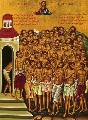
The beatitudes: fericirile-gl-i-de-macarie-ieromonahul-byzantion
For the Christian youth in Romania, as well as for the non-Christian, I became a symbol of suffering for Jesus Christ and a symbol of nonviolent resistance against the brutal communist ideology which violates a young person’s soul. Had I remained there and perhaps suffered martyrdom, it may have had greater impact, but it was God’s will that I come here to fulfill His plan for me which is being gradually revealed.
Death holds a certain fascination. It is like a deep precipice that at once attracts and repels you. It frightens you with physical destruction, but when death becomes intimate with you, when for years death has been your companion, it is difficult to resist its call. In the spring of ’81 I had a deep longing for a martyr’s death, but God did not grant it to me. During my confinement I was visited spiritually by Christ, by many of the saints of the Church and some of my deceased relatives–my mother in particular. They talked to me in spirit…comforting me in my sufferings and loneliness.
When translated into words these sufferings acquire a blend of remoteness, even fabrication, But when experienced with every fiber of my being, when I was encompassed only by walls and by the depressing malice of the guards–the only human faces I could see –had not God’s Grace surrounded me more so than at any time in freedom, I should have come to think that the world was made only of executioners and victims. Everything was intensely “hot” then: pain and faith. I had such a keen sensibility that not only the blows and insults caused me pain, but even the evil thoughts of my torturers.
When Daniel the Prophet was cast into the den of lions, God sent His angel and shut the lions’ mouths and they did not hurt him because he was found blameless before them (Dan. 6:22). But God did not shut the mouths of his denouncers. When I was cast into the lions’ den–the communist prisons-God did not shut the mouths of the lions nor the mouths of my denouncers, but He took me out of there and preserved me…
During a period of over one hundred days, the administration of Aiud prison tried to kill me by hunger, by cold and by terror. This was begun at a time when Nicolae Ceausescu, the chief of the communist party in Romania, was traveling all over Europe attending merry banquets offered him by presidents, kings and queens of Europe. But nothing from these banquets reached poor Lazarus.
The triumphant reception of their president convinced the guards that Ceausescu was esteemed in the Free World and precious to Romania, and therefore, anyone who didn’t accept his decisions had to be killed. And I was one of those people. Their course of extermination started on July 20 and ended after November l, 1980. For ten days I was isolated in a windowless cell without air, with a jacket and a pair of pants both torn to pieces, without buttons, without a belt, and with food only once every days. In the evening a wooden board was lowered from the wall and I was allowed to rest for six hours. The remaining l8 hours I had to spend on the concrete floor of the cell. After ten days they put me back in my regular cell for two days, then isolated me again for another ten days. This game of death lasted more than one hundred days.
The guard assigned to me was the party secretary of the prison. Poisoned by communist indoctrination, he insulted me with such dirty and humiliating words that I preferred to be beaten rather than listen to his insults. Nothing was holy for him, no one was spared his insults–neither I nor my parents, nor my wife, nor my son, not my priesthood, not even God.
Twice a day I was walked to the restroom to empty the “tineta” (a wooden or clay bowl which served as a latrine bucket). Those walks were the worst torture I experienced. I was insulted, hit and sometimes pushed; it happened that the contents of the “tineta” spilled onto the concrete and I was then forced to clean it up with my bare hands.
During my internment I served the Holy Liturgy every Sunday and Church holiday. At first the guards insulted me and beat me to make me give it up. I held fast and at last they left me alone. To their way of thinking I was crazy, but my craziness was the kind spoken of by Saint Paul: “For the preaching of the cross is to them that perish, foolishness; but unto us which are saved, it is the power of God. For it is written, I will destroy the wisdom of the wise, and will bring to nothing the understanding of the prudent” (l Cor. l:l8-19).
It was Sunday and I was isolated. It was one of the days without food and I couldn’t serve the Divine Liturgy because I had no bread. The Orthodox Liturgy is celebrated with bread and wine, and the central moment is then when the Holy Spirit descends and transforms bread and wine into the Body and Blood of Christ in a real though invisible way· From that moment our attitude towards the Holy Chalice is humble, loving and fearful, as inspired by the presence of the Saviour. In prison we had no wine, but we had bread and through necessity admitted by these extreme circumstances, my service was complete.
and through necessity admitted by these extreme circumstances, my service was complete.
On that Sunday I asked the Lord to help me forget my sadness at the impossibility of serving the Holy Liturgy for lack of bread. Nevertheless, a thought came to me: to ask the guard for some bread. The evil guard was on duty and I knew that my request would make him angry; he would insult me and he would ruin the peace I had in my soul for that holy day. But the thought persisted and grew so strong that I knocked on the iron door of the cell. A few minutes later the door was violently opened and the furious guard asked me what was the matter. I asked him for a piece of bread, no more than an ounce, for serving the Holy Liturgy. My request seemed absurd to him; it was so unexpected that his mouth dropped open in amazement. He left slamming the door as violently a s he had opened it. Many other hungry prisoners asked him for bread, but I was the first to ask for bread in order to serve the Divine Liturgy.
I regretted my impulse.
Twenty minutes later the door of my cell opened half-way and quietly the guard gave me the ration for a whole day: four ounces of bread. He shut the door as quietly as he had opened it· And if I had not been holding the bread I would have thought that it was all an illusion.
This was the most profound and most sublime Holy Sacrament I have ever experienced. The service was two hours long and the guard did not disturb or insult me as at other times; the entire duration of the isolation section was peaceful.
Later, after I had finished the Liturgy and the fragrance of the prayer was still in my cell, the door opened quietly and the guard whispered: “Father, don’t tell anyone I gave you bread, or you’ll ruin me.” “How could I tell this to anybody, mister first sergeant? You acted as an angel of God · ..because the bread you gave me became the Body of Christ. In so doing you served by my side, and your deed is now recorded in eternity. ‘
Without answering, he quietly shut the door, looking at me until the last moment. After that he never insulted me and during his eight hours of duty I had the most peaceful time of isolation.
I have related this double aspect of my confinement–the suffering and the divine consolation-to make you understand that God secretly balances our lives. If we have God we shall never collapse from the pain of this world. During our most atrocious suffering we suddenly discover oases of light and sacred joy.
In his Diary, the Russian writer F.M. Dostoevsky wrote prophetically of what would happen in this century: “My people will descend to such depths that they will desecrate the holy altars with their bloody boots, with their blasphemous hands they will take the Holy Chalice with God’s Blood in it and will spit in it while they will kill the priest before the Holy Table and, dissatisfied with even this, they will crush the Chalice itself on the ground and fire shots into the Holy Blood, But then the triumphant Cross will rise and my people will return to God.” If the first part of this prophecy has been accomplished, why should the second part not be fulfilled? People that turned coat under the communist terror are coming back to faith, the youth are turning their eyes to Christ.
If the world oppresses us, then Jesus comforts us; if the earthly powers kill us, Jesus gives us the martyr’s crown; if the kings cast us into the lions’den, the Son of God shuts the mouths of the animals; if we are sad, our joy is Jesus. We are not alone and we are not deserted…
Suffering has many faces and it is very difficult to describe all of them here. I know an Orthodox priest, Fr. Gavrila Stefan, whose life is spent on Golgotha. He was defrocked in 197l. Ever since then he lives in poverty and terror along with his wife and eight children, the oldest of whom is 16. He was arrested and released several times and his only hope is Divine Pity. While I was in prison he visited my family several times, and after each visit the secret police arrested him because he was forbidden to enter Bucharest, On his last visit, shortly before I was released from prison, he told my wife a terrible thing: “Madam, three days ago I killed our last sheep.” This was in the summer of 1984 when his wife was in the eighth month of pregnancy. How are they living now? What is their new-born baby eating?
Where the pain is great, great also is the mercy of God, because God never gives a man more than he can carry.
In 1978, before the Feast of Pascha, I preached in the church to the youth. I delivered a series of sermons called “Seven Words to the Youth.” As a consequence my hierarchs, upon the order of the communist supreme authority–Nicolae Ceausescu–excluded me from the church and delivered me into the hands of the secret police. I was despondent and terrified at the very prospect of imprisonment and maybe death in prison. I went to my older sister who was then about 70 years old, a simple woman who has always been in contact with the wisdom of the Romanian soul. After I had finished complaining she said to me: “My dear, I’ll tell you a story from here. from the countryside. You are educated and you will understand its meaning.
“When God created the world He also created sorrow, suffering and trouble; and He laid them on a big stone and the stone broke; He laid them on a big tree and the tree withered; and finally He laid them on man and man carried them. And so will you, my brother, carry your sufferings.”
And so I did. The proof is that I’m here before you and told you this wise Romanian folktale.
Taken from a talk delivered by Fr. Gheorghe Calciu at a conference in Washington D.C. on Nov. 9, 1885 sponsored by CREED-the Christian
Relief Effort for the Emancipation of Dissidents-which was
instrumental in Fr. Gheorghe’s release.
1. Not of compulsion is the doctrine; of free-will is the word of life. Whoso is willing to hear the doctrine, let him cleanse the field of his will that the good seed fall not among the thorns of vain enquirings. If thou wouldst heed the word of life, cut thyself off from evil things; the hearing of the word profits nothing to the man that is busied with sins. If thou willest to be good, love not dissolute customs. First of all, trust in God, and then hearken thou to His law.
2. Thou canst not hear His words, while thou dost not know thyself; and if thou keepest His judgments while thy understanding is aloof from Him, who will give thee thy reward? Who will keep for thee thy recompense? Thou wast baptised in His Name; confess His Name! In the Persons and in the naming, Father and Son and Holy Spirit, three Names and Persons, these three shall be a wall to thee, against divisions and wranglings. Doubt not thou of the truth, lest thou perish through the truth. Thou wast baptised from the water; thou hast put on Christ in His naming; the seat of the Lord is on thy person and His stamp on thy forehead. See that thou become not another’s, for other Lord hast thou none. One is He Who formed us in His mercy; one is He Who redeemed us on His cross. He it is Who guides our life; He it is Who has power over our feebleness; He it is Who brings to pass our Resurrection. He rewards us according to our works. Blessed is he that confesses Him, and hears and keeps His commandments! Thou, O man, art a son of God Who is high over all. See that thou vex not by thy works the Father Who is good and gracious.
3. If thou art wroth against thy neighbour, thou art wroth against God; and if thou bearest anger in thy heart, against thy Lord is thy boldness uplifted. If in envy thou rebukest, wicked is all thy reproof. But if charity dwell in thee, thou hast on earth no enemy. And if thou art a true son of peace, thou wilt stir up wrath in no man. If thou art just and upright, thou wilt not do wrong to thy fellow. And if thou lovest to be angry, be angry with the wicked and it will become thee; if to wage war thou seekest, lo! Satan is thy adversary; if thou desirest to revile, against the demons display thy curses. If thou shouldst insult the King’s image, thou shalt pay the penalty of murder; and if thou revilest a man, thou revilest the image of God. Do honour to thy neighbour, and lo! thou hast honoured God. But if thou wouldst dishonour Him, in wrath assail thy neighbour!
4. This is the first Commandment,—Thou shalt love the Lord thy God with all thy heart and thy soul, and with thy might according as thou art able. The sign that thou lovest God, is this, that thou lovest thy fellow; and if thou hatest thy fellow, thy hatred is towards God. For it is blasphemy if thou prayest prayest before God while thou art wroth. For thy heart also convicts thee, that in vain thou multipliest words: thy conscience rightly judges that in thy prayers thou profitest nought. Christ as He hung on the height of the tree, interceded for His murderers; and thou (who art) dust, son of the clay, rage fills thee at its will. Thou keepest anger against thy brother; and dost thou yet dare to pray? Even he that stands on thy side, though he be not neighbour to thy sins, the taint of iniquity reaches unto him, and his petition is not heard. Leave off rage and then pray; and unless thou wouldst further provoke, restrain anger and so shalt thou supplicate. And if he (the other) is not to encounter thee in fury, banish rage from that body, because it is holden with lusts.
5. Thou hast a spiritual nature; the soul is the image of the Creator; honour the image of God, by being in agreement with all men. Remember death, and be not angry, that thy peace be not of constraint. As long as thy life remains to thee, cleanse thy soul from wrath; for if it should go to Sheol with thee, thy road will be straight to Gehenna. Keep not anger in thy heart; hold not fury in thy soul; thou hast not power over thy soul, save to do that which is good. Thou art bought with the blood of God; thou art redeemed by the passion of Christ; for thy sake He suffered death, that thou mightest die to thy sins. His face endured spitting, that thou mightest not shrink from scorn. Vinegar and gall did He drink, that thou mightest be set apart from wrath. He received stripes on His body, that thou mightest not fear suffering. If thou art in truth His servant, fear thy holy Lord; if thou art His true disciple, walk in thy Master’s footsteps. Endure scorn from thy brother, that thou mayest be the companion of Christ. Display not anger against man, that thou be not set apart from thy Redeemer.
6. Thou art a man, the dust of the earth, clay, kinsman of the clod; thou art the son of the race of beasts. If thou knowest not thy honour; separate thy soul from animals, by works and not by words. If thou lovest derision, thou art altogether as Satan; and if thou mockest at thy fellow, thou art the mouth of the Devil; if against defects and flaws, in (injurious) names thou delightest, Satan is not in creation but his place thou hast seized by force. Get thee far, O man, from this; for it is altogether hurtful; and if thou desirest to live well, sit not with the scorner, lest thou become the partner of his sin and of his punishment. Hate mockery which is altogether (the cause of weeping), and mirth which is (the cause of) cleansing. And if thou shouldst hear a mocker by chance, when thou art not desiring it, sign thyself with the cross of light, and hasten from thence like an antelope. Where Satan lodges, Christ will in nowise dwell; a spacious dwelling for Satan is the man that mocks at his neighbour; a palace of the Enemy is the heart of the mocker. Satan does not desire to add any other evil to it. Mockery is sufficient for him to supply the place of all. Neither his belly nor yet his purse can (the sinner) fill with that sin of his. By his laughter is the wretch despoiled, and he knows not nor does he perceive it. For his wound, there is no cure; for his sickness, there is no healing; his pain, admits no remedy; and his sore, endures no medicine. I desire not with such a one to put forth my tongue to reprove him: enough for him is his own shame; sufficient for him is his boldness. Blessed is he that has not heard him; and blessed is he that has not known him. Be it far from thee, O Church, that he should enter thee, that evil leaven of Satan!
7. Narrow is the way of life, and broad the way of torment; prayer is able to bring a man to the house of the kingdom. This is the perfect work; prayer that is pure from iniquity. The righteousness of man is as nothing accounted. The work of men, what is it? His labour is altogether vanity. Of Thee, O Lord, of Thy grace it is that in our nature we should become good. Of Thee is righteousness, that we from men should become righteous. Of Thee is the mercy and favour, that we from the dust should become Thy image. Give power to our will, that we be not sunk in sin! Pour into our heart memory, that at every hour we may know Thy honour! Plant Thou truth in our minds, that we perish not among doubts! Occupy our understanding with Thy law, that it wander not in vain thoughts! Order the motions of our members, that they bring no hurt upon us! Draw thou near to God, that Satan may flee from thee. Cast out passions from thy heart, and lo! thou hast put to flight the enemy. Hate thou sins and wickedness, and Satan at once will have fled. Whatsoever sins thou servest, thou art worshipping secret idols. Whatsoever transgressions thou lovest, thou art serving demons in thy soul. Whensoever thou strivest with thy brother, Satan abides in peace. Whensoever thou enviest thy fellow, thou givest rest to Devils. Whensoever thou tellest the shortcoming of others who are not present, thy tongue has made a harp for the music of the devil. Whensoever hatred is in thy soul, great is the peace of the Deceiver. Whensoever thou lovest incantations, thy labour is altogether of the left hand. (I.e., such as fits for a place on Christ’s left hand, at the Judgment). If thou lovest unseemly discourse, thou preparest a feast for demons. For this is the worship of idols, the working of the lusts (of the flesh).
8. If so be thou givest a gift in pride, this is not of God. If thou art lifted up by reason of thy knowledge, thou hast denied the grace of God. If thou art poor and proud, lo! thy end is in thy torment. If thou art haughty and needy, lo! thy need is toward thy destruction. If thou art sick and criest out, lo! thy trouble is full of harm. If thou art in need of food, yet thy mind longs for riches; thy distress is with the poor, but thy torment with the rich. If thou shalt look unchastely, and shalt desire thy neighbour’s wife, lo! thy portion shall be with the adulterers, and thy hell with the fornicators. Let thine own fountain be for thyself, and drink waters from thy well. Let thy fountains be for thyself alone, and let not another drink with thee. Require purity of thy body as thou requirest of thy yoke-fellow. Thou wouldst not have her commit lewdness, the wife of thy youth, with another man; commit not thou lewdness with another woman, the wife of a different husband. Let the defilement of her be hateful in thine eyes; keep aloof from it altogether. Chastity beseems the wife; purity is as her adornment; law becomes the husband; justice is the crown for his head. Desire not thou the bed of thy neighbour lest another desire thy bed. Preserve purity in thy marriage, that thy marriage may be holy. His conscience reproves the man, who corrupts the wife of his neighbour. He fears, and deceives through terror, whoso has engaged in fornication. Darkness is dearer to him than light, whose manner of life is not pure. Every hour he stands in dread, who commits adultery secretly. The adulterer is also a thief who breaks into houses in darkness. The very place reproves him, where he does the evil and wickedness. He enters the chamber and sins; in the darkness he does his will. The time will come when it shall be disclosed, when his secret deeds shall be manifested. With what eyes dost thou look towards God in prayer? What hands dost thou raise when thou askest pardon? Be ashamed and dismayed for thyself, that thou art void of understanding. If when thy neighbour see thee, thou art ashamed and dismayed, how much more shouldst thou be ashamed before God Who sees all? Thou art like the sow, thy companion, that wallows altogether in mire. Even in seeing, thou mayest sin, if thy mind is not watchful; and in hearing thou mayest transgress, if thou dost not guard thy hearing. The fornicator’s heart waxes wanton through speech that is full of uncleanness. The passion hidden in the mind, sight and hearing awaken it.
9. He puts on garments of shame who desires to commit fornication, that from the lust of raiment, lewdness may enter and dwell in his heart. Make thou not snares of thy garments for that which is openly wanton. Speak not a word in craftiness, nor dig thy neighbour’s well. Look not after the harlot; be not snared by the beauty of her face. She is even as the dog that is mad, yea, much more bold than it. Modesty is removed from her face, she knows not what shame is. With spitting accept her person; with reviling meet herself; with a rod pursue her like a dog, for she is like one, and to be compared with such. Reject the sweetness of her words lest thou fall into her net. She empties purses and wallets, and her gains are without number. Flee from her, for she is the daughter of vipers, that she tear not in pieces thy whole body.
10. Thou shalt not slander any man, lest they call thee Satan. If thou hatest the name, go not near to the act; but if thou lovest the act, be not angry at the name. Count thyself rebuked first of all by the beasts and birds, how that every kind cleaves to its kind; and so agree thou with thy yokefellow. Rejoice not in men’s dishonour, that thou become not a Satan thyself. If evil should happen to him that hates thee, see thou rejoice not, lest thou sin. If thine adversary should fall, be thou in pain and mourning. Keep thy heart with all diligence, that it sin not in secret; for there is to be a laying bare of thoughts and of actions. Employ thy hands in labour, and let thy heart meditate in prayer. Love not vain discourse, for discourse that shall be profitable alike to the soul and the body lightens the burden of thy labour.
11. Does the poor man cry at thy door? Arise and open for him gladly: refresh him when he is wearied; sustain his heart, for it is sad. Thou knowest by experience the affliction of poverty: receive not others in thy house, and drive not out the beggar. Have thou also a law, a comely law for thy household. Establish an order that is wise, that the abjects laugh not at thee. Be careful in all thy doings, that thou be not a sport for fools; be upright and prudent, and both simple and wise. Let thy body be quiet and cheerful, thy greeting seemly and simple; thy discourse without fault, thy speech brief and savoury; thy words few and sound, full of savour and understanding. Speak not overmuch, not even words that are wise; for all things that are over many, though they be wise are wearisome.—To them of thy household be as a father. Amongst thy brethren esteem thyself least, and inferior amongst thy fellows, and of little account with all men. With thy friend keep a secret; to those that love thee be true. See that there be no wrangling; the secrets of thy friends reveal not, lest all that hear thee hate thee and esteem thee a mischiefmaker. With those that hate thee wrangle not, neither face to face nor yet in thy heart. No enemy shalt thou have but Satan his very self. Give counsel to the wife thou hast wedded; give heed to her doings; as stronger thou art answerable that thou shouldst sustain her weakness. For weak is womankind, and very ready to fall. Be thou as a hawk, when kindled (to anger), but when wrath departs from thee, be gladsome and also firm, in the blending of diverse qualities. Keep silence among the aged; to the elders give due honour. Honour the priests with diligence, as good stewards of the household. Give due honour to their degree, and search not out their doings. In his degree the priest is an angel, but in his doings a man. By mercy he is made a mediator, between God and mankind.
12. Search not out the faults of men; reveal not the sin of thy fellow; the shortcomings of thy neighbours, in speech of the mouth repeat not. Thou art not judge in creation, thou hast not dominion over the earth. If thou lovest righteousness, reprove thy soul and thyself. Be thou judge unto thine own sins, and chastener of thy own transgressions. Make thou not inquiry maliciously, into the misdeeds of men. For if thou doest this, injuries will not be lacking to thee. Trust not the hearing of the ear, for many are the deceivers. Vain reports believe thou not, for false rumours are not few.
13. Regard not spells and divinations, for that is communion with Satan. Love not idle prating, not even in behalf of righteousness. Discourse concerning thyself begin thou not, even in behalf of what is becoming. Flee and hide thyself from wrangling, as from a violent robber. See that thou be not a surety in a loan, lest thou sin. According as thou hast, assist him, (even) the man that is poorer than thou. Mock not the foolish man; pray that thou be not even as he. Him that sins blame not, lest thou also be put to confusion. To him that repents of his sins be a helper and counsellor, and encourage him that is able to rise. Let him hold fast hope in God, and his sin shall be burned as stubble. Visit the sick and be not wearied, that thou mayest be beloved of men. Be familiar with the house of mourning, but a stranger to the house of feasting. Be not constant in drinking wine, lest thy shortcomings multiply. Cast a wall round thy lips, and set a guard upon thy mouth; endure suffering with thy neighbour and share also in his tribulation. A good friend in tribulation is made known to him that loves him. In charity follow the deceased, with sorrow and with offerings, and pray that he may have rest in the hidden place whither he is going.
14. When thou standest in prayer, cry in thy soul: Have mercy on me, I am a sinner and weak; be gracious, O God, to my weakness, and grant strength to me to pray a prayer that shall be pleasing to Thy Will. “Punish Thou not mine enemies, take not vengeance on them that hate me; but grant them in Thy grace that they may become doers of Thy Will.” At the time of prayer and petition, in contemplations such as these continue thou. Bow thy head before the Mighty One.
15. Do not thou resist evil, for he is evil from the Evil One, whoso resists evil Keep not back aught from any man, that if he perishes thou mayest not be blamed. Change not thy respect for a man’s person, according to goods and possessions. Make all things as though they were not and God alone were in being. If thou shalt ask of thy neighbour and he shall not give thee according to thy wish, see that thou say not in anger a word that is full of bitterness. Oppose not thou [fit] seasons, for many are the changes. Put sorrow far from thy flesh, and sadness from thy thoughts; save only that for thy sins thou shouldst be constant in sadness. Cease not from labour, not even though thou be rich, for the slothful man gains manifold guilt by his idleness.
16. Be thou a lover of poverty, and be desirous of neediness. If thou hast them both for thy portion, thou art an inheritor on high. Despise not the voice of the poor and give him not cause to curse thee. For if he curse whose palate is bitter, the Lord will hear his petition. If his garments are foul, wash them in water, which freely is bought. Has a poor man entered into thy house? God has entered into thy house; God dwells within thy abode. He, whom thou hast refreshed from his troubles, from troubles will deliver thee. Hast thou washed the feet of the stranger? Thou hast washed away the filth of thy sins. Hast thou prepared a table before him? Behold God eating at it], and Christ likewise drinking [at it], and the Holy Spirit resting [on it]: Is the poor satisfied at thy table and refreshed? Thou hast satisfied Christ thy Lord. He is ready to be thy rewarder; in presence of angels and men He will confess thou hast fed His hunger; He will give thanks unto thee that thou didst give Him drink, and quench His thirst. O how gracious is the Lord! O how measureless are His mercies! Happy the race of mortals when God confesses it! Woe to the soul which He denies! Fire is stored up for its punishment. Be of good cheer, my son, in hope; sow good [seedand faint not. The husbandman sows in hope, and the merchant journeys in hope, thou also lovest good [seed]; in the hope look for the reward. Do not thou aught at all without the beginning of prayer. With the sign of the living cross, seal all thy doings, my son. Go not forth from the door of thy house till thou hast signed the cross. Whether in eating or in drinking, whether in sleeping or in waking, whether in thy house or on the road, or again in the season of leisure, neglect not this sign; for there is no guardian like it. It shall be unto thee as a wall, in the forefront of all thy doings. And teach this to thy children, that heedfully they be conformed to it.
18. Yoke thyself under the law, that thou mayest be a freeman in very truth. Work not the desire of thy soul apart from the law of God. How many commandments must I write, and how many laws must I engrave; which, if thou desirest thy freedom, thou canst learn all from thyself? And if thou lovest purity, thou wilt teach it to others also. Let nature be thy book, and all creation thy tables; and learn from them the laws, and meditate things unwritten. The sun in his course teaches thee that thou rest from labour. The night in her silence cries to thee that a limit is set to thy works. The earth and the fruit of the tree cry that there is a season for all things. The seed thou sowest in the winter, in the summer thou gatherest its harvest. Thus in the world sow seeds of righteousness, and in the Resurrection gather them in. The bird in its daily gleaning reproves the covetous and his greed, and rebukes the extortion that grasps the store of others. Death, the limit of all things, is itself the reprover of all things.
19. Take thou refuge in God Who passes not away nor is changed. Restrain laughter by suffering, and mirthfulness by sorrow. Console suffering by hope, and sadness by expectation. Believe and trust, thou that art wise, for God is He Who guides thee; and if His care leaves thee not, there is nothing that can harm thee. If one man by another man, the lowly by the great, can be saved, how much more shall the refuge of God preserve the man that believes? Fear not because of adversaries who with violence come upon thee. He will watchfully guard thy soul, and hurtful things become profitable. No one shall lead thee by compulsion, save only where there is freedom. No one falls into temptation, that passes the measure of his strength. There is no evil in chastisement, if so be that freedom is willing. The doings are not perverse of freedom, its will is perverted.
20. To men that are just and upright, temptations become helps. Job, a man of discernment, was victorious in temptations. Sickness came upon him, and he complained not; disease afflicted him and he murmured not; his body failed and his strength departed, but his will was not weakened. He proved perfect in all by sufferings, for as much as temptations crushed him not. Abraham was a stranger, from his place, his race [and his kindred]. But by this he was not harmed; nay rather he triumphed greatly. So Joseph from the house of bondage was made to rule as king of Egypt. They of the company of Ananias and Daniel delivered others from bondage. See then, O thou that art wise, the power that freedom possesses; that nothing can injure it unless the will is weakened. Israel with sumptuous living waxed fat, and kicked, and forgot his covenant. He worshipped vain gods, and forgot the nature of his creation. The bondage that was in Egypt he forgat in the repose of the desert. As often as he was afflicted, he acknowledged the Lord alone; but when he was dwelling in repose, he forgot God his Redeemer. Seek thou not here repose, for this is a world of toil. And if thou canst wisely discern, change thou not time for time; that which abides for that which abides not; that which ceases not for that which ceases; nor truth for lying; nor body for shadow; nor watching for slumber; nor that which is in season for that which is out of season; nor the Time for the times. Collect thy mind, let it not wander among varieties which profit not.
21. No one in creation is rich but he that fears God; no one is truly poor but he that lacks the truth. How needy is he, and not rich, whose need witnesses against him that even from the abject and the beggars he needs to receive a gift. He is truly a bondman, and many are his masters: he renders service to money, to riches, and possessions. His lords are void of mercy, for they grant him no repose. Flee, and live in poverty; (as) a mother she pities her beloved. Seek thou refuge in indigence, who nourishes her children with choice things; her yoke is light and pleasant, and sweet to the palate her memory. The sick in conscience alone abhors the draught of poverty; the fainthearted dreads the yoke of indigence that is honourable. Who has granted to Thee, Son of man, in the world to find repose? Who has granted to thee, thing of dust, to be rich amidst poverty? Be not thou through desires needy and looking to others. Sufficient for thee is thy daily bread, that comes of the sweat of thy face. Let this be (the measure of thy need, that which the day gives thee; and if thou findest for thyself a feast, take of it that which thou needest. Thou shalt not take in a day (the provision) of days, for the belly keeps no treasure. Praise and give thanks when thou art satisfied, that therein thou provoke not the Giver to anger. In purity strengthen thyself, that thou mayest gain from it profit. In everything give thanks and praise unto God as the Redeemer, that He may grant thee by His grace, that we may hear and do His Will.
Thou to whom I have given the counsel of life, be not thou negligent in it. From that which is other men’s (doctrine) have I written to thee; see thou despise not their words. And if I depart before thee, in thy prayer make mention of me. In every season pray and beseech that our love may continue true. But as for us, on behalf of these things let us offer up praise and honour to Father, to Son, and to Holy Spirit, now and for ever. Amen.
O Lord and Master of my life, take from me the spirit of sloth, despondency, lust for power and idle talk.
(Prostration)
But grant unto me, Thy servant, a spirit of chastity, humility, patience and love.
(Prostration)
Yea, O Lord and King, grant me to see mine own faults and not to judge my brothers and sisters. For blessed art Thou unto ages of ages. Amen.
(Prostration)
O God, cleanse Thou me a sinner (12 times, with as many bows, and then again the whole prayer from the beginning throughout, and after that one great Prostration)
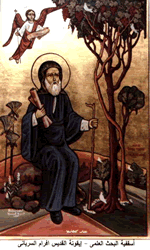
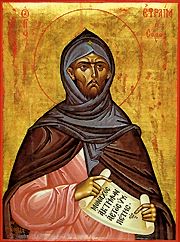
St Life at: http://www.bishopantony.org/saints/StEphraimOfSyria.htm
St Ephraim the Syrian
Spiritual Psalter, 120:
“How Many Times Have I Promised,
Yet Every Time I Failed to Keep My Word.
But Disregard This According to Thy Grace.”
Grant forgiveness, O Lord, send also strength. Convert me, that I might live in sanctity, according to Thy holy will. Sanctify my heart that has become a den and dwelling-place of demons.
I am unworthy to ask forgiveness for myself, O Lord, for many times have I promised to repent and proved myself a liar by not fulfilling my promise. Thou hast picked me up many times already, but every time I freely chose to fall again.
Therefore I condemn myself and admit that I deserve all manner of punishment and torture. How many times hast Thou enlightened my darkened mind; yet every time I return again to base thoughts! My whole body trembles when I contemplate this; yet every time sinful sensuality reconquers me.
How shall I recount all the gifts of Thy grace, O Lord, that I the pitiful one have received? Yet I have reduced them all to nothing by my apathy — and I continue on in this manner. Thou has bestowed upon me thousands of gifts, yet miserable me, I offer in return things repulsive to Thee.
Yet Thou, O Lord, inasmuch as Thou containest a sea of longsuffering and an abyss of kindness, do not allow me to be felled as a fruitless fig tree; and do not let me be burned without having ripened on the field of life. Snatch me not away unprepared; seize not me who have not yet lit my lamp; take not away me who have no wedding garment; but, because Thou art good and the lover of mankind, have mercy on me. Give me time to repent, and place not my soul stripped naked before Thy terrible and unwavering throne as a pitiful spectacle of infamy.
If a righteous man can barely be saved, then where will I end up, I who am lawless and sinful? If the path that leads to life is strait and narrow, then how can I be vouchsafed such good things, I who live a life of luxury, indulging in my own pleasures and dissipation? But Thou, O Lord, my Saviour, Son of the true God, as Thou knowest and desirest it, by Thy grace alone, freely turn me away from the sin that abides in me and save me from ruin.
From A Spiritual Psalter by our Holy Father St Ephraim of Edessa, the Syrian; excerpted and arranged by Bishop Theophan the Recluse according to the manner of the psalter of the Old Testament. (The text presented here is of the 120th ‘Psalm’ in St Ephraim’s Spiritual Psalter).
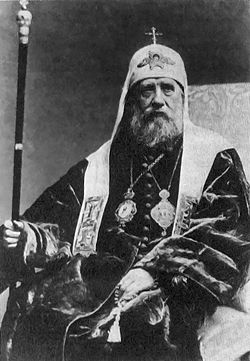 This Sunday, Brethren, begins the week of Orthodoxy, or the week of the Triumph of Orthodoxy, because it is today that the Holy Orthodox Church solemnly recalls its victory over the Iconoclast heresy and other heresies and gratefully remembers all who fought for the Orthodox faith in word, writing, teaching, suffering, or godly living.
Keeping the day of Orthodoxy, Orthodox people ought to remember it is their sacred duty to stand firm in their Orthodox faith and carefully to keep it.
For us it is a precious treasure: in it we were born and raised; all the important events of our life are related to it, and it is ever ready to give us its help and blessing in all our needs and good undertakings, however unimportant they may seem. It supplies us with strength, good cheer and consolation, it heals, purifies and saves us.
The Orthodox faith is also dear to us because it is the Faith of our Fathers. For its sake the Apostles bore pain and labored; martyrs and preachers suffered for it; champions, who were like unto the saints, shed their tears and their blood; pastors and teachers fought for it; and our ancestors stood for it, whose legacy it was that to us it should be dearer than the pupil of our eyes.
And as to us, their descendants – do we preserve the Orthodox faith, do we keep to its Gospels? Of yore, the prophet Elijah, this great worker for the glory of God, complained that the Sons of Israel have abandoned the Testament of the Lord, leaning away from it towards the gods of the heathen. Yet the Lord revealed to His prophet, that amongst the Israelites there still were seven thousand people who have not knelt before Baal (3 Kings 19 LXX [Note]). Likewise, no doubt, in our days also there are some true followers of Christ. ‘The Lord knoweth them that are His.’ (2 Tim 2.19)
We do occasionally meet sons of the Church, who are obedient to Her decrees, who honor their spiritual pastors, love the Church of God and the beauty of its exterior, who are eager to attend to its Divine Service and to lead a good life, who recognize their human failings and sincerely repent of their sins.
But are there many such among us? Are there not more people, ‘in whom the weeds of vanity and passion allow but little fruit to the influence of the Gospel, or even in whom it is altogether fruitless, who resist the truth of the Gospel, because of the increase of their sins, who renounce the gift of the Lord and repudiate the Grace of God’.
‘I have given birth to sons and have glorified them, yet they deny Me,’ said the Lord in the olden days concerning Israel. And today also there are many who were born, raised and glorified by the Lord in the Orthodox faith, yet who deny their faith, pay no attention to the teachings of the Church, do not keep its injunctions, do not listen to their spiritual pastors and remain cold towards the divine service and the Church of God.
How speedily some of us lose the Orthodox faith in this country of many creeds and tribes! They begin their apostasy with things, which in their eyes have but little importance. They judge it is ‘old fashioned’ and ‘not accepted amongst educated people’ to observe all such customs as: praying before and after meals, or even morning and night, to wear a cross, to keep icons in their houses and to keep church holidays and fast days. They even do not stop at this, but go further: they seldom go to church and sometimes not at all, as a man has to have some rest on a Sunday (…in a saloon); they do not go to confession, they dispense with church marriage and delay baptizing their children.
And in this way their ties with Orthodox faith are broken! They remember the Church on their deathbed, and some don’t even do that! To excuse their apostasy they naively say: ‘this is not the old country, this is America, and consequently it is impossible to observe all the demands of the Church.’, as if the word of Christ is of use for the old country only and not for the whole world. As if the Orthodox faith is not the foundation of the world!
‘Ah, sinful nation, a people laden with iniquity, a seed of evil doers, children that are corrupters: they have forsaken the Lord, they have provoked the Holy One of Israel into anger.’ (Is 1.4)
If you do not preserve the Orthodox faith and the commandments of God, the least you can do is not to humiliate your hearts by inventing false excuses for your sins!
If you do not honor our customs, the least you can do is not to laugh at things you do not know or understand.
If you do not accept the motherly care of the Holy Orthodox Church, the least you can do is to confess you act wrongly, that you are sinning against the Church and behave like children!
If you do, the Orthodox Church may forgive you, like a loving mother, your coldness and slights, and will receive you back into her embrace, as if you were erring children.
Holding to the Orthodox faith, as to something holy, loving it with all their hearts and prizing it above all, Orthodox people ought, moreover, to endeavor to spread it amongst people of other creeds.
Christ the Savior has said that ‘neither do men light a candle and put it under a bushel, but on a candle stick, and it giveth light unto all that are in the house.’ (Mt 5.15)
The light of Orthodoxy was not lit to shine only on a small number of men. The Orthodox Church is universal; it remembers the words of its Founder: ‘Go ye into the world, and preach the gospel to every creature’ (Lk 16.15), ‘go ye therefore and teach all nations’ (Mt 28.19).
We ought to share our spiritual wealth, our truth, light and joy with others, who are deprived of these blessings, but often are seeking them and thirsting for them.
Once ‘a vision appeared to Paul in the night, there stood a man from Macedonia and prayed him, saying, come over into Macedonia, and help us,’ (Acts 16.9) after which the apostle started for this country to preach Christ. We also hear a similar inviting voice. We live surrounded by people of alien creeds; in the sea of other religions, our Church is a small island of salvation, towards which swim some of the people, plunged in the sea of life. ‘Come, hurry, help,’ we sometimes hear from the heathen of far Alaska, and oftener from those who are our brothers in blood and once were our brothers in faith also, the Uniates. ‘Receive us into your community, give us one of your good pastors, send us a Priest that we might have the Divine Service performed for us of a holy day, help us to build a church, to start a school for our children, so that they do not lose in America their faith and nationality,’ those are the wails we often hear, especially of late.
And are we to remain deaf and insensible? God save us from such a lack of sympathy. Otherwise woe unto us, ‘for we have taken away the key of knowledge, we entered not in ourselves, and them that were entering in we hindered.’ (Lk 11.52)
But who is to work for the spread of the Orthodox faith, for the increase of the children of the Orthodox Church? Pastors and missionaries, you answer. You are right; but are they to be alone?
St. Paul wisely compares the Church of Christ to a body, and the life of a body is shared by all the members. So it ought to be in the life of the Church also. ‘The whole body fitly joined together and compacted by that which every joint supplieth, according to the effectual working in the measure of every part, maketh increase of the body unto the edifying of itself in love.’ (Eph 4.16)
At the beginning, not only pastors alone suffered for the faith of Christ, but lay people also, men, women and even children. Heresies were fought against by lay people as well. Likewise, the spread of Christ’s faith ought to be near and precious to the heart of every Christian. In this work every member of the Church ought to take a lively and heart-felt interest. This interest may show itself in personal preaching of the Gospel of Christ.
And to our great joy, we know of such examples amongst our lay brethren. In Sitka, members of the Indian brotherhood do missionary work amongst other inhabitants of their villages. And one zealous brother took a trip to a distant village (Kilisno), and helped the local Priest very much in shielding the simple and credulous children of the Orthodox Church against alien influences, by his own explanations and persuasions. Moreover, in many places of the United States, those who have left Uniatism to join Orthodoxy point out to their friends where the truth is to be found, and dispose them to enter the Orthodox Church.
Needless to say, it is not everybody among us who has the opportunity or the faculty to preach the gospel personally. And in view of this I shall indicate to you, Brethren, what every man can do for the spread of Orthodoxy and what he ought to do.
The Apostolic Epistles often disclose the fact, that when the Apostles went to distant places to preach, the faithful often helped them with their prayers and their offerings. Saint Paul sought this help of the Christians especially.
Consequently we can express the interests we take in the cause of the Gospel in praying to the Lord,
that He should take this holy cause under His protection,
that He should give its servants the strength to do their work worthily,
that He should help them to conquer difficulties and dangers, which are part of the work,
that He should not allow them to grow depressed or weaken in their zeal;
that He should open the hearts of the unbelieving for the hearing and acceptance of the Gospel of Christ,
that He should impart to them the word of truth,
that He should unite them to the Holy Catholic and Apostolic Church;
that He should confirm, increase and pacify His Church, keeping it forever invincible, we pray for all this, but mostly with lips and but seldom with the heart.
Don’t we often hear such remarks as these: ‘what is the use of these special prayers for the newly initiated? They do not exist in our time, except, perhaps, in the out of the way places of America and Asia; let them pray for such where there are any; as to our country such prayers only needlessly prolong the service which is not short by any means, as it is.’ Woe to our lack of wisdom! Woe to our carelessness and idleness!
Offering earnest prayers for the successful preaching of Christ, we can also show our interest by helping it materially. It was so in the primitive Church, and the Apostles lovingly accepted material help to the cause of the preaching, seeing in it an expression of Christian love and zeal.
In our days, these offerings are especially needed, because for the lack of them the work often comes to a dead stop. For the lack of them preachers can not be sent out, or supported, churches can not be built or schools founded, the needy amongst the newly converted can not be helped. All this needs money and members of other religions always find a way of supplying it.
Perhaps, you will say, that these people are richer than ourselves. This is true enough, but great means are accumulated by small, and if everybody amongst us gave what he could towards this purpose, we also could raise considerable means. Accordingly, do not be ashamed of the smallness of your offering. If you have much, offer all you can, but do offer, do not lose the chance of helping the cause of the conversion of your neighbors to Christ, because by so doing, in the words of St. James, ‘you shall save your own soul from death and shall hide a multitude of sins’ (Jas 5.19-20).
Orthodox people! In celebrating the day of Orthodoxy, you must devote yourselves to the Orthodox faith not in word or tongue only, but in deed and in truth.
NOTES:
[1] The book of 3 Kingdoms in the Septuagint version of the Old Testament is coordinate with the book of 1 Kings in the Hebrew Bible on which most English translations are based. As such, the text of 3 Kings 19 can be found in most English Bibles as 1 Kings 19.
Retrieved from:
“http://www.monachos.net/library/Tikhon%2C Metropolitan_of_Moscow:_Homily_on_the_Triumph_of_Orthodoxy”
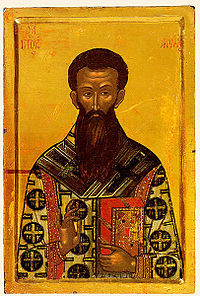
‘You shall not make an image of anything in the heavens above, or in the earth below, or in the sea’ (cf. Ex 20.4), in such a way that you worship these things and glorify them as gods. For all are the creations of the one God, created by Him in the Holy Spirit through His Son and Logos, who as Logos of God in these latter times took flesh from a virgin’s womb, appeared on earth and associated with men, and who for the salvation of men suffered, died and rose again, ascended with His body into the heavens, and ‘sat down on the right hand of the Majesty on High’ (Heb 1.3), and who will come again with His body to judge the living and the dead. Out of love for Him you should make, therefore, an icon of Him who became man for our sakes, and through His icon you should bring Him to mind and worship Him, elevating your intellect through it to the venerable body of the Saviour, that is set on the right hand of the Father in heaven.
In like manner you should also make icons of the saints and venerate them, not as gods –for this is forbidden– but because of the attachment, inner affection and sense of surpassing honour that you feel for the saints when by means of their icons the intellect is raised up to them. It was in this spirit that Moses made icons of the Cherubim within the Holy of Holies (cf. Ex 25.18). The Holy of Holies itself was an image of things supercelestial (cf. Ex 25.40; Heb 8.5), while the Holy Place was an image of the entire world. Moses called these things holy, not glorifying what is created, but through it glorifying God the Creator of the world. You must not, then, deify the icons of Christ and of the saints, but through them you should venerate Him who originally created us in His own image, and who subsequently consented in His ineffable compassion to assume the human image and to be circumscribed by it.
You should venerate not only the icon of Christ, but also the similitude of His cross. For the cross is Christ’s great sign and trophy of victory over the devil and all his hostile hosts; for this reason they tremble and flee when they see the figuration of the cross. This figure, even prior to the crucifixion, was greatly glorified by the prophets and wrought great wonders; and when He who was hung upon it, our Lord Jesus Christ, comes again to judge the living and the dead, this His great and terrible sign will precede Him, full of power and glory (cf. Mt 24.30). So glorify the cross now, so that you may boldly look upon it then and be glorified with it. And you should venerate icons of the saints, for the saints have been crucified with the Lord; and you should make the sign of the cross upon your person before doing so, bringing to mind their communion in the sufferings of Christ. In the same way you should venerate their holy shrines and any relic of their bones; for God’s grace is not sundered from these things, even as the divinity was not sundered from Christ’s venerable body at the time of His life-quickening death. By doing this and by glorifying those who glorified God –for through their actions they showed themselves to be perfect in their love for God– you too will be glorified together with them by God, and with David you will chant: ‘I have held Thy friends in high honour, O Lord’ (Ps 139.17 LXX).
Retrieved from:
“http://www.monachos.net/library/Gregory_Palamas%2C_On_the_Holy_Icons”

This day the Holy Church commemorates the victory of Orthodoxy over heresies and is why this day is also called the “Sunday of Orthodoxy”. The Synaxarion explains that the day celebrates “the restoration of the holy and venerable icons”, which happened in first half of the 9th century (in 842) “by the Emperor Michael (the Byzantine Emperor), the holy and blessed Empress Theodora (see page 80) and the Holy Methodius (see page 206), Patriarch of Constantinople”. This commemoration was established to celebrate the final victory of the Holy Church over the iconoclastic heresy. In the hymns for this day the Holy Church, glorifying the holy icons, and also its iconodule adherents and inspiring in us the obligation of venerating icons, sings: “A feast of joy and gladness is revealed to us today. For the teachings of the true Faith shines in all their glory, and the Church of Christ is bright with splendor, adorned with the holy icons which now have been restored; and God has granted to the faithful unity of mind.” “Now a pious brightness stretches over all, dispersing the flattery of the impious like a cloud, enlightening the hearts of the pious: come let us fall down with pious wisdom before the honorable icons of Christ worshipping in the Orthodox way”, “and with due honor let us venerate the holy icons of Christ, of the all pure Virgin and the saints, whether depicted on walls, on wooden panels or on holy vessels, rejecting the impious teaching of the heretics”. But in this way the Holy Church at the time of victory over the iconoclasts in the struggle against various heresies finally explained and defined in the canons of the Seventh Ecumenical Council the Orthodox Christian teaching that is now a celebrated event and is not called the celebration of iconolatry but the Triumph of Orthodoxy. It does not mean that after the 10th Century heresies would or could not appear any more; but it means that all following heresies, even though they were numerous and various, find their accusation and refutation in the definitions of the Seven Ecumenical Councils.
The victory of Orthodoxy in the Greek Church itself was first celebrated on the first Sunday of Great Lent, and thus the basis of the present Triumph of Orthodoxy is historical. Together with these things the Holy Church through the celebration of the present day means to grant great comfort to those who attend. This intention agrees with the rules of faith and piety and the ascetic effort of the fast. It sees in this action the proof of their living communion according to their faith and life, and finds in this the foundation for prayerful petition to God for them. After the end of the liturgy on this day it is necessary to serve the special Rite of Orthodoxy (see below), composed by St. Methodius. Again the restoration of honoring and venerating the holy and venerable icons was annually prescribed “from that time these holy confessors appointed the annual commemoration of this solemnity, so that we might never again fall into a similar ignominy” (see the Synaxarion).
Troparion, tone 2
We venerate Your immaculate image, gracious Lord,
As we beg You to forgive our transgressions.
For, in the flesh, Christ our God,
You voluntarily ascended the cross
In order to release Your creatures from enslavement by their Enemy.
Gratefully, then, we cry out to You, our Savior:
‘You filled all things with joy when You came to save the world!’
(tr.: Monk James Silver)
Kontakion, tone 8
See Also a video with Orthodox vespers:
Pan-Orthodox Vespers/Sunday of Orthodoxy
The indefinable Word of the Father was defined
when He became incarnate of you, O Theotokos.
And he reformed the image which had been stained at the beginning
when He joined it to His divine beauty.
And we profess this means of our salvation
As we portray it in our words and deeds.
(tr.: Monk James Silver)
S. V. Bulgakov, Handbook for Church Servers, 2nd ed., 1274 pp.
(Kharkov, 1900) pp. 511-515.Translated by Archpriest Eugene D. Tarry)
PROCLAMATION OF THE SYNODICON OF ORTHODOXY:
As the Prophets beheld, as the Apostles have taught, as the Church has received, as the Teachers have dogmatized, as the Universe has agreed, as Grace has shown forth, as Truth has revealed, as falsehood has been dissolved, as Wisdom has presented, as Christ has awarded, let us declare, let us assert, let us preach in like manner Christ our true God and honor His Saints in words, in writings, in thoughts, in deeds, in churches, in holy icons — worshiping Him as God and Lord and honoring them as His true servants of the master of all, and offering to them due veneration.
This is the Faith of the Apostles! This is the Faith of the Fathers! This is the Faith of the Orthodox! This is the Faith, which has established the Universe!
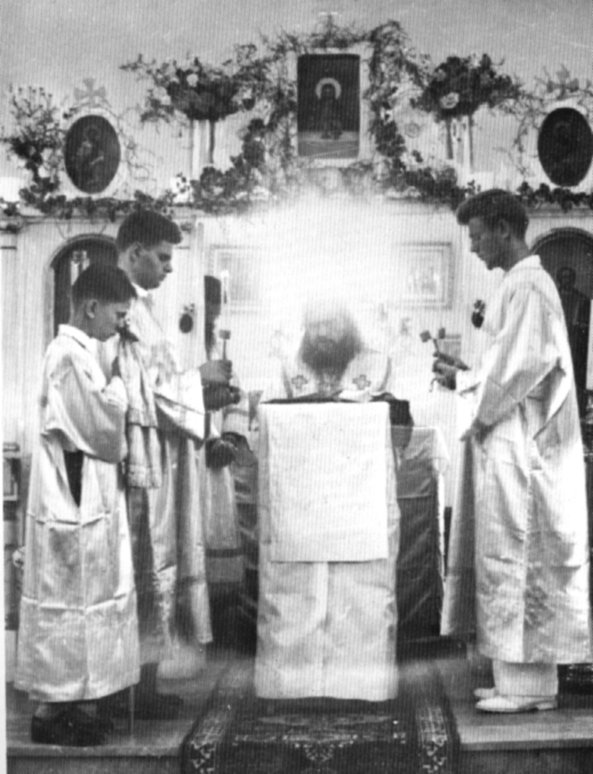
(By Archbishop John, the Pascha of Christ, 1956, Paris)
The doors of repentance are opening, Great Lent is beginning. Every year Great Lent is repeated, and each time it brings us great benefit if we spend it as we should. It is a preparation for the life to come and, more immediately, a preparation for the Bright Resurrection.
Just as a stairway is built into a tall building in order to enable one, by climbing the steps, to easily reach the top, so too, the various days in the year serve as steps for our spiritual ascent. This is especially true of the days of Great Lent and Holy Pascha.
By means of Great Lent we cleanse ourselves of the filth of sin, and at Holy Pascha we experience the blessedness of Christ’s Kingdom that is to come. In climbing a high mountain, one tries to eliminate all unnecessary weight. The less a person carries, the easier it is for him to climb and the higher he is able to climb. So, too, in order to ascend spiritually, it is necessary first of all to free oneself from the weight of sin. This weight is lifted from us through repentance, provided that we banish from ourselves all enmity and forgive each person whom we consider to be at fault before us. Once cleansed and forgiven by God, we then greet the Bright Resurrection of Christ.
And what a priceless gift of God we receive, at the culmination of our lenten struggle. We already hear about this in the first hymns of the daily lenten stichera: “Our food shall be the Lamb of God, on the holy and radiant night of His Awakening: the Victim offered for us, given in communion to the disciples on the evening of the Mystery.” (Aposticha sticheron, Sunday of the Last Judgment).
Communing of the Body and Blood of the Risen Christ, unto life eternal — this is the aim of the holy Quadragesima [Forty Days]. Not only on Pascha do we commune, but during Lent also. On Pascha those people should commune who have fasted, confessed and received the Holy Mysteries during Great Lent. Just before Pascha itself there is little opportunity for a proper and thorough confession; the priests are very busy and most of the time occupied with the Passion services. Rather one must prepare ahead of time.
Each time one receives the Mysteries of Christ, one is united with Christ Himself; each time it is a soul‑saving act. Why, then, is such significance attached to receiving Holy Communion on the night of Holy Pascha, and why are we all called to do so?
Then, especially, we are given to experience the Kingdom of Christ. Then, especially, we are illumined with the Eternal Light and strengthened for the spiritual ascent.
This is an irreplaceable gift of Christ, an incomparable good. Let no one deprive himself of this joy and, instead of receiving Holy Communion on Pascha night, hasten to eat meat and other foods. Communing of the Holy Mysteries on that night prepares us for the banquet in the eternal Kingdom of God.
(Translated into English by G. Spruksts from the Russian text appearing in “Pravoslavnaya Rus‘” (“Orthodox Rus’”), No. 7, 1996, p.5. English-language translations copyright (c) 1998 by The St. Stefan Of Perm’ Guild; The Russian Cultural Heritage Society). Retrieved from The Holy Protection Russian Orthodox Church web site, 2049 Argyle Ave. LA, CA).Day 4: Epistle of Polycarp to the Philippians
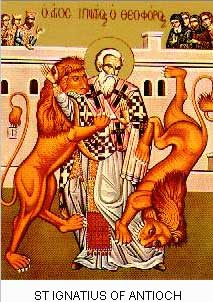
Day 5: St. Ignatius of Antioch: Letter to the Ephesians
(By Father George Calciu)
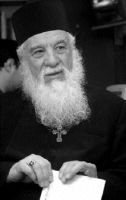
My will for you is to never cease praying. My hope of you is to understand that, if there is a protection extending over human society, over our country, this is the power of prayer. Do not execute a prayer of routine, but put your heart in motion, fill yourself with the shiver of prayer. I am convinced that many of you are praying; I too was praying, and believed – before they placed me in prison (see note) – that I knew how to pray. There, (in gulag), I discovered that I do not know how to pray. (…). If the shiver of faith does not penetrate you from the head to the soles of your feet, you are not in true prayer. It is not easy. But if you persist, the Lord will help you and grant you the grace of prayer. And this grace is only given as you ask it. The grace of prayer is gained through great effort and persistence. Our Savior had said: “From John the Baptist on, the Kingdom of Heaven is taken by force (conquest)!” And this is “our conquest” – to ask with persistence for the grace that only the Lord can grant.
Now, Iwould like to address a word to the theologians and advise them: learn how to pray, so then you may teach others! As long as you do not know how to pray, it is in vain to say to your spiritual children “Pray!” When the priest will know how to pray, he will transmit this flow of power to his spiritual child.
(Fragments from a speech given in Bucharest, 1998, to ASCOR – Association of Christian Orthodox College Students of Romania and translated from Romanian by EC)
Note: Fr. George Calciu reposed in 2006 at the age of 81, having spent unjustly more than a quarter of his life in the diabolic prisons of Communist Romania, only because he confessed the Christian faith. From these experiences in prison, he emerged as a witness to God’s love, forgiveness, and ability to resurrect man from the death of his soul.
Church Fathers Lenten Reading Day 2:
Epistle to of Mathetes to Diognetus: Chaps. 1-6
Since I see thee, most excellent Diognetus, exceedingly desirous to learn the mode of worshipping God prevalent among the Christians, and inquiring very carefully and earnestly concerning them, what God they trust in, and what form of religion they observe, so as all to look down upon the world itself, and despise death, while they neither esteem those to be gods that are reckoned such by the Greeks, nor hold to the superstition of the Jews; and what is the affection which they cherish among themselves; and why, in fine, this new kind or practice [of piety] has only now entered into the world, and not long ago; I cordially welcome this thy desire, and I implore God, who enables us both to speak and to hear, to grant to me so to speak, that, above all, I may hear you have been edified, and to you so to hear, that I who speak may have no cause of regret for having done so.
CHAPTER II — THE VANITY OF IDOLS
Come, then, after you have freed yourself from all prejudices possessing your mind, and laid aside what you have been accustomed to, as something apt to deceive you, and being made, as if from the beginning, a new man, inasmuch as, according to your own confession, you are to be the hearer of a new [system of] doctrine; come and contemplate, not with your eyes only, but with your understanding, the substance and the form of those whom ye declare and deem to be gods. Is not one of them a stone similar to that on which we tread? Is not a second brass, in no way superior to those vessels which are constructed for our ordinary use? Is not a third wood and that already rotten? Is not a fourth silver, which needs a man to watch it, lest it be stolen? Is not a fifth iron, consumed by rust? Is not a sixth earthenware, in no degree more valuable than that which is formed for the humblest purposes? Are not all these of corruptible matter? Are they not fabricated by means of iron and fire? Did not the sculptor fashion one of them, the brazier a second, the silversmith a third, and the potter a fourth? Was not every one of them, before they were formed by the arts of these [workmen] into the shape of these [gods], each in its own way subject to change? Would not those things which are now vessels, formed of the same materials, become like to such, if they met with the same artificers? Might not these, which are now worshipped by you, again be made by men vessels similar to others? Are they not all deaf? Are they not blind? Are they not without life? Are they not destitute of feeling? Are they not incapable of motion? Are they not all liable to rot?
Are they not all corruptible? These things ye call gods; these ye serve; these ye worship; and ye become altogether like to them. For this reason ye hate the Christians, because they do not deem these to be gods. But do not ye yourselves, who now think and suppose [such to be gods], much more cast contempt upon them than they [the Christians do]? Do ye not much more mock and insult them, when ye worship those that are made of stone and earthenware, without appointing any persons to guard them; but those made of silver and gold ye shut up by night, and appoint watchers to look after them by day, lest they be stolen?
And by those gifts which ye mean to present to them, do ye not, if they are possessed of sense, rather punish [than honor] them? But if, on the other hand, they are destitute of sense, ye convict them of this fact, while ye worship them with blood and the smoke of sacrifices. Let any one of you suffer such indignities! Let any one of you endure to have such things done to himself! But not a single human being will, unless compelled to it, endure such treatment, since he is endowed with sense and reason. A stone, however, readily bears it, seeing it is insensible. Certainly you do not show [by your conduct] that he [your God] is possessed of sense. And as to the fact that Christians are not accustomed to serve such gods, I might easily find many other things to say; but if even what has been said does not seem to any one
sufficient, I deem it idle to say anything further.
CHAPTER III – SUPERSTITIONS OF THE JEWS
And next, I imagine that you are most desirous of hearing something on this point, that the Christians do not observe the same forms of divine worship as do the Jews. The Jews, then, if they abstain from the kind of service above described, and deem it proper to worship one God as being Lord of all, [are right]; but if they offer Him worship in the way which we have described, they greatly err. For while the Gentiles, by offering such things to those that are destitute of sense and hearing, furnish an example of madness; they, on the other hand by thinking to offer these things to God as if He needed them, might justly reckon it rather an act of folly than of divine worship. For He that made heaven and earth, and all that is therein, and gives to us all the things of which we stand in need, certainly requires none of those things which He Himself bestows on such as think of furnishing them to Him. But those who imagine that, by means of blood, and the smoke of sacrifices and burnt-offerings, they offer sacrifices [acceptable] to Him, and that by such honors they show Him respect,–these, by supposing that they can give anything to Him who stands in need of nothing, appear to me in no respect to differ from those who studiously confer the same honor on things destitute of sense, and which therefore are unable to enjoy such honors.
CHAPTER IV – THE OTHER OBSERVANCES OF THE JEWS
But as to their scrupulosity concerning meats, and their superstition as respects the Sabbaths, and their boasting about circumcision, and their fancies about fasting and the new moons, which are utterly ridiculous and unworthy of notice,–I do not think that you require to learn anything from me. For, to accept some of those things which have been formed by God for the use of men as properly formed, and to reject others as useless and redundant,–how can this be lawful? And to speak falsely of God, as if He forbade us to do what is good on the Sabbath-days,–how is not this impious? And to glory in the circumcision of the flesh as a proof of election, and as if, on account of it, they were specially beloved by God,–how is it not a subject of ridicule? And as to their observing months and days, as if waiting upon the stars and the moon, and their distributing, according to their own tendencies, the appointments of God, and the vicissitudes of the seasons, some for festivities, and others for mourning,–who would deem this a part of divine worship, and not much rather a manifestation of folly? I suppose, then, you are sufficiently convinced that the Christians properly abstain from the vanity and error common [to both Jews and Gentiles], and from the busy-body spirit and vain boasting of the Jews; but you must not hope to learn the mystery of their peculiar mode of worshipping God from any mortal.
CHAPTER V – THE MANNERS OF THE CHRISTIANS
For the Christians are distinguished from other men neither by country, nor language, nor the customs which they observe. For they neither inhabit cities of their own, nor employ a peculiar form of speech, nor lead a life which is marked out by any singularity. The course of conduct which they follow has not been devised by any speculation or deliberation of inquisitive men; nor do they, like some, proclaim themselves the advocates of any merely human doctrines. But, inhabiting Greek as well as barbarian cities, according as the lot of each of them has determined, and following the customs of the natives in respect to clothing, food, and the rest of their ordinary conduct, they display to us their wonderful and confessedly striking method of life. They dwell in their own countries, but simply as sojourners. As citizens, they share in all things with others, and yet endure all things as if foreigners. Every foreign land is to them as their native country, and every land of their birth as a land of strangers. They marry, as do all [others]; they beget children; but they do not destroy their offspring. They have a common table, but not a common bed. They are in the flesh, but they do not live after the flesh. They pass their days on earth, but they are citizens of heaven. They obey the prescribed laws, and at the same time surpass the laws by their lives. They love all men, and are persecuted by all. They are unknown and condemned; they are put to death, and restored to life. They are poor, yet make many rich; they are in lack of all things, and yet abound in all; they are dishonored, and yet in their very dishonor are glorified. They are evil spoken of, and yet are justified; they are reviled, and bless; they are insulted, and repay the insult with honor; they
do good, yet are punished as evil-doers. When punished, they rejoice as if quickened into life; they are assailed by the Jews as foreigners, and are persecuted by the Greeks; yet those who hate them are unable to assign any reason for their hatred.
Day 3 Epistle to Diognetus: Chaps. 7-12
CHAPTER VI – THE RELATION OF CHRISTIANS TO THE WORLD
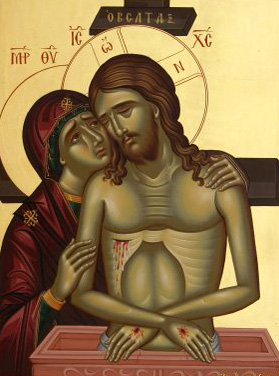
To sum up all in one word–what the soul is in the body, that are Christians in the world. The soul is dispersed through all the members of the body, and Christians are scattered through all the cities of the world. The soul dwells in the body, yet is not of the body; and Christians dwell in the world, yet are not of the world. The invisible soul is guarded by the visible body, and Christians are known indeed to be in the world, but their godliness remains invisible. The flesh hates the soul, and wars against it, though itself suffering no injury, because it is prevented from enjoying pleasures; the world also hates the Christians, though in nowise injured, because they abjure pleasures. The soul loves the flesh that hates it, and [loves also] the members; Christians likewise love those that hate them. The soul is imprisoned in the body, yet preserves that very body; and Christians are confined in the world as in a prison, and yet they are the preservers of the world. The immortal soul dwells in a mortal tabernacle; and Christians dwell as sojourners in corruptible [bodies], looking for an incorruptible dwelling in the heavens. The soul, when but ill-provided with food and drink, becomes better; in like manner, the Christians, though subjected day by day to punishment, increase the more in number. God has assigned them this illustrious position, which it were unlawful for them to forsake.
CHAPTER VII – THE MANIFESTATION OF CHRIST
For, as I said, this was no mere earthly invention which was delivered to them, nor is it a mere human system of opinion, which they judge it right to preserve so carefully, nor has a dispensation of mere human mysteries been committed to them, but truly God Himself, who is almighty, the Creator of all things, and invisible, has sent from heaven, and placed among men, [Him who is] the truth, and the holy and incomprehensible Word, and has firmly established Him in their hearts. He did not, as one might have imagined, send to men any servant, or angel, or ruler, or any one of those who bear sway over earthly things, or one of those to whom the government of things in the heavens has been entrusted, but the very Creator and Fashioner of all things–by whom He made the heavens–by whom he enclosed the sea within its proper bounds–whose ordinances all the stars faithfully observe–from whom the sun has received the measure of his daily course to be observed–whom the moon obeys, being commanded to shine in the night, and whom the stars also obey, following the moon in her course; by whom all things have been arranged, and placed within their proper limits, and to whom all are subject–the heavens and the things that are therein, the earth and the things that are therein, the sea and the things that are therein–fire, air, and the abyss–the things which are in the heights, the things which are in the depths, and the things which lie between. This [messenger] He sent to them. Was it then, as one might conceive, for the purpose of exercising tyranny, or of inspiring fear and terror? By no means, but under the influence of clemency and meekness. As a king sends his son, who is also a king, so sent He Him; as God He sent Him; as to men He sent Him; as a Savior He sent Him, and as seeking to persuade, not to compel us; for violence has no place in the character of God. As calling us He sent Him, not as vengefully pursuing us; as loving us He sent Him, not as judging us. For He will yet send Him to judge us, and who shall endure His appearing? … Do you not see them exposed to wild beasts, that they may be persuaded to deny the Lord, and yet not overcome? Do you not see that the more of them are punished, the greater becomes the number of the rest? This does not seem to be the work of man: this is the power of God; these are the evidences of His manifestation.
CHAPTER VIII – THE MISERABLE STATE OF MEN BEFORE THE COMING OF THE WORD
For, who of men at all understood before His coming what God is? Do you accept of the vain and silly doctrines of those who are deemed trustworthy philosophers? of whom some said that fire was God, calling that God to which they themselves were by and by to come; and some water; and others some other of the elements formed by God. But if any one of these theories be worthy of approbation, every one of the rest of created things might also be declared to be God. But such declarations are simply the startling and erroneous utterances of deceivers; and no man has either seen Him, or made Him known, but He has revealed Himself. And He has manifested Himself through faith, to which alone it is given to behold God. For God, the Lord and Fashioner of all things, who made all things, and assigned them their several positions, proved Himself not merely a friend of mankind, but also long-suffering [in His dealings with them.] Yea, He was always of such a character, and still is, and will ever be, kind and good, and free from wrath, and true, and the only one who is [absolutely] good; and He formed in His mind a great and unspeakable conception, which He communicated to His Son alone. As long, then, as He held and preserved His own wise counsel in concealment, He appeared to neglect us, and to have no care over us. But after He revealed and laid open, through His beloved Son, the things which had been prepared from the beginning, He conferred every blessing all at once upon us, so that we should both share in His benefits, and see and be active [in His service]. Who of us would ever have expected these things? He
was aware, then, of all things in His own mind, along with His Son, according to the relation subsisting between them.
CHAPTER IX – WHY THE SON WAS SENT SO LATE
As long then as the former time endured, He permitted us to be borne along by unruly impulses, being drawn away by the desire of pleasure and various lusts. This was not that He at all delighted in our sins, but that He simply endured them; nor that He approved the time of working iniquity which then was, but that He sought to form a mind conscious of righteousness, so that being convinced in that time of our unworthiness of attaining life through our own works, it should now, through the kindness of God, be vouchsafed to us; and having made it manifest that in ourselves we were unable to enter into the kingdom of God, we might through the power of God be made able. But when our wickedness had reached its height, and it had been clearly shown that its reward, punishment and death, was impending over us; and when the time had come which God had before appointed for manifesting His own kindness and power, how the one love of God, through exceeding regard for men, did not regard us with hatred, nor thrust us away, nor remember our iniquity against us, but showed great long-suffering, and bore with us, He Himself took on Him the burden of our iniquities, He gave His own Son as a ransom for us, the holy One for transgressors, the blameless One for the wicked, the righteous One for the unrighteous, the incorruptible One for the corruptible, the immortal One for them that are mortal. For what other thing was capable of covering our sins than His righteousness? By what other one was it possible that we, the wicked and ungodly, could be justified, than by the only Son of God? O sweet exchange! O unsearchable operation! O benefits surpassing all expectation! that the wickedness of many should be hid in a single righteous One, and that the righteousness of One should justify many transgressors! Having therefore convinced us in the former time that our nature was unable to attain to life, and having now revealed the Savior who is able to save even those things which it was [formerly] impossible to save, by both these facts He desired to lead us to trust in His kindness, to esteem Him our Nourisher, Father, Teacher, Counselor, Healer, our Wisdom, Light, Honor, Glory, Power, and Life, so that we should not be anxious[ concerning clothing and food.
CHAPTER X – THE BLESSINGS THAT WILL FLOW FROM FAITH
If you also desire [to possess] this faith, you likewise shall receive first of all the knowledge of the Father.
For God has loved mankind, on whose account He made the world, to whom He rendered subject all the things that are in it, to whom He gave reason and understanding, to whom alone He imparted the privilege of looking upwards to Himself, whom He formed after His own image, to whom He sent His only begotten Son, to whom He has promised a kingdom in heaven, and will give it to those who have loved Him. And when you have attained this knowledge, with what joy do you think you will be filled? Or, how will you love Him who has first so loved you? And if you love Him, you will be an imitator of His kindness. And do not wonder that a man may become an imitator of God. He can, if he is willing. For it is not by ruling over his neighbors, or by seeking to hold the supremacy over those that are weaker, or by being rich, and showing violence towards those that are inferior, that happiness is found; nor can any one by these things become an imitator of God. But these things do not at all constitute His majesty. On the contrary he who takes upon himself the burden of his neighbor; he who, in whatsoever respect he may be superior, is ready to benefit another who is deficient; he who, whatsoever things he has received from God, by distributing these to the needy, becomes a god to those who receive [his benefits]: he is an imitator of God. Then thou shalt see, while still on earth, that God in the heavens rules over [the universe]; then thou shall begin to speak the mysteries of God; then shalt thou both love and admire those that suffer punishment because they will not deny God; then shall thou condemn the deceit and error of the world when thou shall know what it is to live truly in heaven, when thou shalt despise that which is here esteemed to be death, when thou shalt fear what is truly death, which is reserved for those who shall be condemned to the eternal fire, which shall afflict those even to the end that are committed to it. Then shalt thou admire those who for righteousness’ sake endure the fire that is but for a moment, and shalt count them happy when thou shalt know [the nature of] that fire.
CHAPTER XI – THESE THINGS ARE WORTHY TO BE KNOWN AND BELIEVED
I do not speak of things strange to me, nor do I aim at anything inconsistent with right reason; but having been a disciple of the Apostles, I am become a teacher of the Gentiles. I minister the things delivered to me to those that are disciples worthy of the truth. For who that is rightly taught and begotten by the loving Word, would not seek to learn accurately the things which have been clearly shown by the Word to His disciples, to whom the Word being manifested has revealed them, speaking plainly [to them], not understood indeed by the unbelieving, but conversing with the disciples, who, being esteemed faithful by Him, acquired a knowledge of the mysteries of the Father? For which s reason He sent the Word, that He might be manifested to the world; and He, being despised by the people [of the Jews], was, when preached by the Apostles, believed on by the Gentiles. This is He who was from the beginning, who appeared as if new, and was found old, and yet who is ever born afresh in the hearts of the saints. This is He who, being from everlasting, is to-day called the Son; through whom the Church is enriched, and grace, widely spread, increases in the saints. furnishing understanding, revealing mysteries, announcing times, rejoicing over the faithful. giving to those that seek, by whom the limits of faith are not broken through, nor the boundaries set by the fathers passed over. Then the fear of the law is chanted, and the grace of the prophets is known, and the faith of the gospels is established, and the tradition of the Apostles is preserved, and the grace of the Church exults; which grace if you grieve not, you shall know those things which the Word teaches, by whom He wills, and when He pleases. For whatever things we are moved to utter by the will of the Word commanding us, we communicate to you with pains, and from a love of the things that have been revealed to us.
CHAPTER XII – THE IMPORTANCE OF KNOWLEDGE TO TRUE SPIRITUAL LIFE
When you have read and carefully listened to these things, you shall know what God bestows on such as rightly love Him, being made [as ye are] a paradise of delight, presenting in yourselves a tree bearing all kinds of produce and flourishing well, being adorned with various fruits. For in this place the tree of knowledge and the tree of life have been planted; but it is not the tree of knowledge that destroys–it is disobedience that proves destructive. Nor truly are those words without significance which are written, how God from the beginning planted the tree of life in the midst of paradise, revealing through knowledge the way to life, and when those who were first formed did not use this [knowledge] properly, they were, through the fraud of the Serpent, stripped naked. For neither can life exist without knowledge, nor is knowledge secure without life. Wherefore both were planted close together. The Apostle, perceiving the force [of this conjunction], and blaming that knowledge which, without true doctrine, is admitted to influence life, declares, “Knowledge puffers up, but love edifies.” For he who thinks he knows anything without true knowledge, and such as is witnessed to by life, knows nothing, but is deceived by the Serpent, as not loving life. But he who combines knowledge with fear, and seeks after life, plants in hope, looking for fruit. Let your heart be your wisdom; and let your life be true knowledge inwardly received.
Bearing this tree and displaying its fruit, thou shalt always gather in those things which are desired by God, which the Serpent cannot reach, and to which deception does not approach; nor is Eve then corrupted, but is trusted as a virgin; and salvation is manifested, and the Apostles are filled with understanding, and the Passover of the Lord advances, and the choirs are gathered together, and are arranged in proper order, and the Word rejoices in teaching the saints, by whom the Father is glorified: to whom be glory for ever. Amen.
 Christian Dogma
 Christian Martyrs
 Christian Orthodox Churches and Monasteries
 Christian Sermons and News
 Church's Teachings on Fasting
 Ecumenism – a Great Heresy
 Father George Calciu
 Life_a Sacred Gift form God
 Orthodox Saints and Church Fathers
 Spiritual Elders
 Daily Bible Readings
 Journey to Orthodoxy
 Listen to Ancient Faith Radio
 Orthodox Calendar of Feasts and Saints
 Orthodox Christian Mission Center
 Orthodox Institute
 OrthodoxChristianNetwork TV


Recent Comments