
You are currently browsing the monthly archive for February 2010.
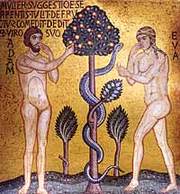
The Holy Fathers have appointed the commemoration of Adam’s exile from the Paradise of delight here, on the eve of the holy Forty-day Fast, demonstrating to us not by simple words, but by actual deeds, how beneficial fasting is for man, and how harmful and destructive are insatiety and the transgressing of the divine commandments. For the first commandment that God gave to man was that of fasting, which the first-fashioned received but did not keep; and not only did they not become gods, as they had imagined, but they lost even that blessed life which they had, and they fell into corruption and death, and transmitted these and innumerable other evils to all of mankind. The God-bearing Fathers set these things before us today, that by bringing to mind what we have fallen from, and what we have suffered because of the insatiety and disobedience of the first-fashioned, we might be diligent to return again to that ancient bliss and glory by means of fasting and obedience to all the divine commands. Taking occasion from today’s Gospel (Matt. 6:14-21) to begin the Fast unencumbered by enmity, we also ask forgiveness this day, first from God, then from one another and all creation.
(Taken from the Orthodox Weekly Bulletin)
A Sermon by Metropolitan Kallistos Ware
on the Sunday of Forgiveness
(delivered at St. Mark Orthodox Church in Washington, DC)
See also: Adams’ Lament by St. Siluan of Mount Athos
Please note:
This video is for viewing purpose only! Not to be reproduced (Copyright)! If you’d like to own any of his eminence talks (in the professional format) on the Eastern Spirituality, please go to www.oltv.tv or www.olconference.com
Lecture given February 12, 2010 at St. Katherine Greek Orthodox Church
Metropolitan Kallistos
(formerly Timothy Ware)
Titular Metropolitan of the Ecumenical Patriarch in Great Britain
Professor Emeritus, Oxford University
Best known as the author of the book The Orthodox Church and its companion volume The Orthodox Way
Co-translator of the Philokalia
Produced English translations of the Lenten Triodion and
the Festal Menaion

Rarely does a documentary film about Medieval history evoke such heated discussion and growing polemic in society as did the film, The Fall of an Empire—the Lesson of Byzantium, the latest work by Archimandrite Tikhon (Shevkunov), the Superior of Moscow’s Sretensky Monastery.
The film is very aptly named—this is truly a lesson, a warning. Anyone who was looking for a video illustration of a history textbook was no doubt disappointed; anyone who dreamed of finally hearing a truthful word on Byzantium, the cradle of our Orthodox civilization, was probably also disappointed—a film on the true history of the Byzantine Empire and its place in the development of world civilization still awaits its historical hour. We are in great need of such a documentary today—a detailed, concerned history of the fate of Byzantium and its inheritance. Fr. Tikhon’s work has made us feel this need even more acutely.
The authors’ intention was not to “rehabilitate Byzantium” or give a lecture, but to break through our routine perceptions and awaken our thoughts. They undoubtedly succeeded in their aim. The unusual historical fate of an Empire that existed on one-sixth of the inhabited world for nearly ten centuries is definitely instructive. Even more instructive to those who live in Russia at the beginning of the 21st century is the history of that Empire’s collapse.
For Commentaries on this documentary please also see:
– Byzantium was Intentionally Removed from European Historical Consciousness at: http://vizantia.info/docs/163.htm
– http://vizantia.info/docs/164.htm
– An Interview with Archimandrite Tikhon at: http://vizantia.info/docs/183.htm
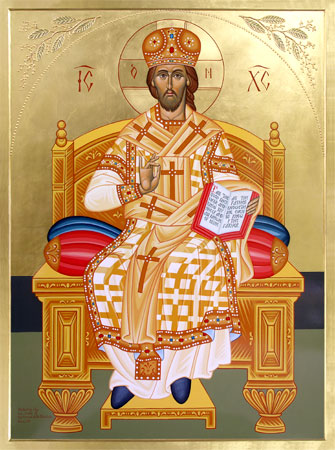
Vesperal Stichera for the Sunday of the Last Judgment
Righteous Judge of all mankind!
Every man will stand in fear before Thee,
Trembling at the river of fire flowing past Thy throne,
As each one waits to hear the sentence he deserves.
On that awesome day have mercy on us as well, O Christ;
Count us worthy of salvation,
For, worthless as we are, we turn to Thee in faith,
Compassionate and merciful Lord!
The books will be opened and the works of all men laid bare:
The vale of tears will echo with gnashing of teeth;
The sinners will mourn in vain, as they depart to eternal damnation.
Thy judgements are just, O Lord Almighty!
We beg Thee, Master, full of goodness and compassion:
Take pity on us who sing to Thee, most merciful One!
The trumpet shall sound and the graves shall be opened:
All mankind will arise in trembling;
The righteous will rejoice, as they receive their reward,
But the wicked will depart to eternal fire with wailing and horror.
Lord of Glory, have mercy on us!
Number us with those who love Thee, Master,
For Thou alone art good!
I shudder in terror when I think of that dreadful day;
I weep as I consider the darkness that will never see light:
There the worm shall not cease, or the fire be quenched;
The pain of those who reject Thee will never end.
Save me, Thy most worthless servant, Righteous Judge,
For Thy mercy and compassion are my only hope!
When the thrones are set in place and the books are opened,
Then God will take His place on the judgment-seat.
What a fearful sight,
As the angels stand in awe and the river of fire flows by:
What shall we do, who are already condemned by our many sins,
As we hear Christ call the righteous to His Father’s Kingdom,
And send the wicked to eternal damnation?
Who among us can bear that terrible verdict?
Hasten to us, Lover of mankind and King of the universe:
Grant us the grace of repentance before the end and have mercy on us!
Apostikha
Woe to thee, my darkened soul!
Thy life is stained by depravity and laziness;
Thy folly makes thee shun all thought of death.
How complacent thou dost remain!
How canst thou flee the awesome thought of judgement day?
When wilt thou change thy way of life?
On that day all thy sins will rise against thee:
What wilt thine answer be then?
Thine acts will condemn thee; thy deeds will expose thee.
The time is at hand, O my soul.
Turn to the good and loving Saviour!
Beg Him to forgive thy malice and weakness, and cry in faith:
I have sinned, Lord; I have sinned against Thee!
But I know Thee as the Lover of mankind.
Good Shepherd, call me to enjoy Thy lasting presence on Thy right hand!
Unwedded Virgin,
Thou hast ineffably conceived God in the flesh!
Mother of God Most High!
Accept the cries of thy servants, blameless one!
Grant cleansing of transgressions to all!
Receive our prayers and pray to save our souls!
St Theodore the Studite, Catechesis 50:
On the great and manifest day of our Lord Jesus Christ.
It was spoken on Meat Sunday.
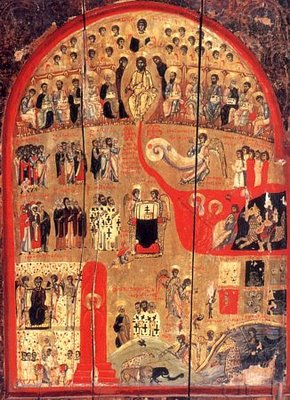
Brethren and fathers, it is a universal law on this day for those who live in the world to stop eating meat and one may see among them great competition in meat-eating and wine-bibbing, and even spectacles of outrageous pastimes which it is shameful to speak about. It is necessary to participate with moderation and to give thanks to the Lord for what we have and to make worthy preparation for the banquet before us; while they possessed by the wiles of the devil do the opposite, demonstrating that they have accepted one rather than the other. Why have I mentioned these things? So that we humble monks may not direct our thoughts in that direction, nor desire their desire, which is not worthy of desire, but rather of misery; let us rather turn to consider the Gospel we are going to listen to, thinking, while the canon is being chanted, about the great and manifest day of the coming of our Lord Jesus Christ, when the judge will stand the sheep on his right but the goats on his left. And to those on the right he will utter that blessed and most longed for invitation, Come, blessed of my Father, inherit the kingdom prepared for you from the foundation of the world; while to those on the left he will utter that most unwelcome and piteous sentence, Depart from me, accursed, into the everlasting fire that was prepared for the devil and his angels. These words are full of dread, fear and alarm; they should make us, and them, as we reflect fall down and weep and make God merciful to us, before he has come to test those who listen. But although they are thus, let us, I beg, hear and heed the message of the Gospel, striving keenly to serve the Lord with fear and trembling, removing all wickedness from the soul, introducing instead all knowledge of good works, compassionate pity, goodness, humility, meekness, longsuffering, and whatever else is good and estimable, that when we have led lives worthy of the Gospel of Christ we may become heirs of the kingdom of heaven, in Christ Jesus our Lord, to whom belong glory and might with the Father and the Holy Spirit, now and for ever, and to the ages of ages. Amen.
Sermon On The Last Judgment by St. John Maximovitch
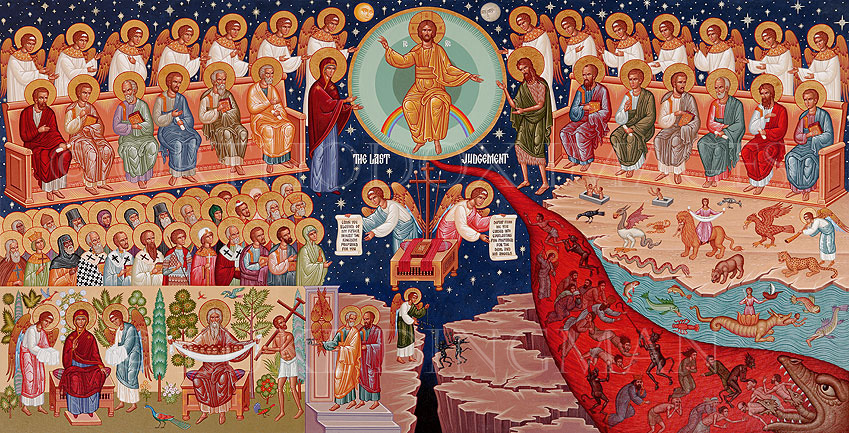
The day of the Last Judgement! That day no one knows — only God the Father knows — but its signs are given in the Gospel and in the Apocalypse of the holy Apostle John the Theologian. Revelation speaks of the events at the end of the world and of the Last Judgement primarily in images and in a veiled manner.
However, the Holy Fathers have explained these images, and there is an authentic Church tradition that speaks clearly concerning the signs of the approach of the end, and concerning the Last Judgement. Before the end of life on earth there will be agitation, wars, civil war, hunger, earthquakes… Men will suffer from fear, will die from expectation of calamity. There will be no life, no joy of life but a tormented state of falling away from life. Nevertheless there will be a falling away not only from life, but from faith also, and
“when the Son of Man cometh, shall He find faith on the earth?” St. Luke 18:8
Men will become proud, ungrateful, rejecting Divine law. Together with the falling away from life will be a weakening of moral life. There will be an exhaustion of good and an increase of evil.
Of these times, the holy Apostle John the Theologian speaks in his God-inspired work, the Apocalypse. He says that he:
“was in the Spirit”
when he wrote it; this means that the Holy Spirit Himself was in him, when under the form of various images, the fate of the Church and the world was opened to him, and so this is a Divine Revelation.

The Apocalypse represents the fate of the Church in the image of a woman who hides herself in the wilderness: she does not show herself in public life, as today in Russia. In public life, forces that prepare the possibility for the appearance of Antichrist will play the leading role.
Antichrist will be a man, and not the devil incarnate. “Anti” means “old,” and it also signifies “in place of” or “against.” Antichrist is a man who desires to be in place of Christ, to occupy His place and possess what Christ should possess. He desires to possess the attraction of Christ and authority over the whole world. Moreover, Antichrist will receive that authority before his destruction and the destruction of the world.
What is known of this man — Antichrist? His precise ancestry is unknown: his father is completely unknown, and his mother a foul pretended virgin. He will be a Jew of the tribe of Dan. He will be very intelligent and endowed with skill in handling people. He will be fascinating and kind. The philosopher Vladimir Soloviev worked a long time at presenting the advent and person of Antichrist. He carefully made use of all material on this question, not only Patristic, but also Moslem, and he worked out a brilliant picture.

Before the advent of Antichrist, there was a preparation in the world, the possibility of his appearance. The mystery of iniquity doth already work (II Thes. 2:7). The forces preparing for his appearance fight above all against the lawful Imperial authority.
The holy Apostle Paul says that Antichrist cannot be manifested until what withholdest is taken away (II Thes. 2:6-7). St. John Chrysostom explains that the “withholding one” is the lawful pious authority: such an authority fights with evil. For this reason the “mystery,” already at work in the world, fights with this authority; it desires a lawless authority. When the “mystery” decisively achieves that authority, nothing will hinder the appearance of Antichrist any longer.
Fascinating, intelligent, kind, he will be merciful — he will act with mercy and goodness; but not for the sake of mercy and goodness, but for the strengthening of his own authority. When he will have strengthened it to the point where the whole world acknowledges him, then he will reveal his face.
For his capital, he will choose Jerusalem, because it was here that the Savior revealed His Divine teaching and His person. It was here that the entire world was called to the blessedness of goodness and salvation. The world did not acknowledge Christ and crucified Him in Jerusalem; whereas, the whole world will acknowledge the Antichrist’s authority and Jerusalem will become the capital of the world.
Having attained the pinnacle of authority, Antichrist will demand the acknowledgement that he has attained what no earthly power had ever attained or could attain and then demand the worship of himself as a higher being, as a god.
V. Soloviev describes the character of his activity well, as “Supreme Ruler.” He will do what is pleasing to all — on the condition of being recognized as Supreme Authority. He will allow the Church to exist, permit her Divine services, promise to build magnificent churches…. on the condition, that all recognize him as “Supreme Being” and worship him. Antichrist will have a personal hatred for Christ; he will see Him as a rival and look upon Him as a personal enemy. He will live by this hatred and rejoice in men’s apostasy from Christ.
Under Antichrist, there will be an immense falling away from the faith. Many bishops will change in faith and in justification will point to the brilliant situation of the Church. The search for compromise will be the characteristic disposition of men. Straight-forwardness of confession will disappear. Men will cleverly justify their fall, and gracious evil will support such a general disposition. There will be the habit of apostasy from truth and the sweetness of compromise and sin in men.
Antichrist will allow men everything, as long as they:
“fall down and worship him”
and the whole world will submit to him. Then there will appear the two righteous men, who will fearlessly preach the faith and accuse Antichrist.
According to Church tradition, they are the two Prophets of the Old Testament, Elijah and Enoch, who did not taste of death, but will taste it now for three days, and in three days they must rise. Their death will call forth the great rejoicing of Antichrist and his servants. Their resurrection will plunge them into great confusion and terror. Then, the end of the world will come.
The Apostle Peter said that the first world was made out of water — an image of the primordial chaos, and perished by water — in the Flood. Now the world is reserved unto fire. The earth and the works that are therein shall be burned up (II Peter 3:5-7, 10). All the elements will ignite. This present world will perish in a single instant. In an instant all will be changed.
Moreover, the Sign of the Son of God, the Sign of the Cross, will appear. The whole world, having willingly submitted to Antichrist, will weep. Everything is finished forever: Antichrist killed, the end of his kingdom of warfare with Christ, the end, and one is held accountable; one must answer to the true God.

“The end of the world” signifies not the annihilation of the world, but its transformation. Everything will be transformed suddenly, in the twinkling of an eye. The dead will rise in new bodies: their own, but renewed, just as the Savior rose in His own body and traces of wounds from the nails and spear were on it, yet it possessed new faculties, and in this sense it was a new body. It is not clear whether this new body will be the same as Adam was made, or whether it will be an entirely new body.
Afterward, the Lord will appear in glory on the clouds. Trumpets will sound, loud, with power! They will sound in the soul and conscience! All will become clear to the human conscience.

The Prophet Daniel, speaking of the Last Judgement, relates how the Ancient of Days, the Judge sits on His throne, and before Him is a fiery stream (Daniel 7:9-10). Fire is a purifying element; it burns sin. Woe to a man if sin has become a part of his nature: then the fire will burn the man, himself.
This fire will be kindled within man: seeing the Cross, some will rejoice, but others will fall into confusion, terror and despair. Thus, men will be divided instantly. The very state of a man’s soul casts him to one side or the other, to right or to left.
The more consciously and persistently man strives toward God in his life, the greater will be his joy when he hears:
“Come unto Me, ye blessed.”
Conversely: the same words will call the fire of horror and torture to those who did not desire Him, who fled and fought or blasphemed Him during their lifetime!
The Last Judgement knows of no witnesses or written protocols! Everything is inscribed in the souls of men and these records, these “books,” are opened at the Judgement. Everything becomes clear to all and to oneself.
Moreover, some will go to joy, while others — to horror.
When “the books are opened,” it will become clear that the roots of all vices lie in the human soul. Here is a drunkard or a lecher: when the body has died, some may think that sin is dead too. No! There was an inclination to sin in the soul, and that sin was sweet to the soul, and if the soul has not repented and has not freed itself of the sin, it will come to the Last Judgement with the same desire for sin. It will never satisfy that desire and in that soul there will be the suffering of hatred. It will accuse everyone and everything in its tortured condition; it will hate everyone and everything. “There will be gnashing of teeth” of powerless malice and the unquenchable fire of hatred.
A “fiery gehenna” — such is the inner fire.
“There will be wailing and gnashing of teeth.”
Such is the state of hell.
(Last Sermon of St John is taken from Preachers Institute)
Please also see:
WHY STUDY THE SIGNS OF THE TIMES? By Blessed Hieromonk Seraphim Rose
The Prophetic Gift by Schema-Archimandrite Lavrenty of Chernigov on the Antichrist
Written by Valeriu Gafencu – While in the Communist Gulag
(Continued from the previous post)
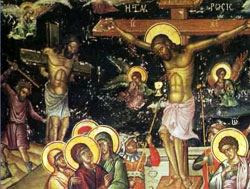
The Seven Deadly Sins
Pride: is the source of all spiritual evil. It is a spiritual greed through which the demons fell from the grace of God.
1) Are you proud, haughty, conceited?
2) Do you put too much faith in your own beauty or your wealth, have you grown proud because of them?
3) How do you behave with those who are rich or important?
4) Do you despise anyone?
5) Are you willing to talk to anyone?
6) Are you hypocritical (you say one thing, and do another)?
7) Have you bragged through deeds, words, or clothing?
8. Have you said something in order to be praised?
9) Have you slandered your neighbor in order to lower his honor and in order to raise up your own?
10) Have you born the offenses of him who offended you?
11) Have you forgiven those who upset you?
12) Have you prided yourself on your learning and knowledge?
Greed: Starting out as something abstract, egotism is put into effect through greed.
The Holy Apostle Paul is looking from this point of view when he says that greed is the root of all evil.
1) Are you greedy for food and drink [gluttony]?
2) Do you want to collect wealth or other things?
3) Are you greedy in accumulating money, have you deceived your neighbor for this reason?
4) Have you eaten or drunk secretly?
5) Have you eaten on fast days or before the Holy Liturgy?
6) Have you eaten carrion?
Laziness: is the failure to make use of the physical and spiritual powers that God has granted us to use in our lives.
1) Are you lazy?
2) Do you waste time without working?
3) Do you occupy yourself with things that are vain or pointless?
4) Do you pray regularly?
5) Do you look after your soul?
6) Do you do your duty as a clerk, worker, servant?
7) Do you force those smaller than you to do your work?
8. Have you sought a spiritual father who is more lenient?
9) Have you fulfilled your penance?
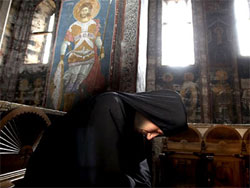
Anger: is also based upon the pivot or axis of greed.
When a man cannot fulfill his desires, he becomes angry because he is prevented from achieving his evil goal. Man is allowed to be angry only against sin.
1) Have you done evil through anger, cursing, beatings, etc.?
2) Do you get angry often? How long do you stay angry? You should know that St. Paul said, “Do not let the sun set on your anger.” (Eph 4:26)
3) Are you presently angry with anyone?
4) Have you beaten or struck anyone with a stick, a club, or your palm?
5) Have you angered or scolded anyone without good reason, spitefully?
6) Have you wished evil to someone who did you evil? Or to someone who did you good?
7) Have you gotten angry with a neighbor because he is somehow better than you? Have you envied him?
8. Have you shed anyone’s blood (in drunkenness)?
9) Have you engaged in a duel?
10) Have you prayed, in anger, that evil come upon your enemies?
Avarice (Greed): is material and spiritual.
Material when someone does not want to provide physical comfort to the poor, while spiritual when one does not want to steer someone away from evil.
1) Are you stingy?
2) Have you ever deprived a neighbor of necessary things out of stinginess?
3) Have you helped the poor?
4) Have you called both the rich and the poor to eat at your table? You should know that the Savior urges us to call to our table those who cannot repay us.
5) Do you sell items at too high a price?
6) Do you cheat people?
7) Do you regret any good deed that you have done?
8. Do you eat little and clothe yourself or your family poorly in order to grow rich?
9) Do you neglect the health of your children, wife, parents, brothers, in order to avoid spending money?
Envy (Quarreling or Jealousy): When an angry man cannot prevail over the obstacles that are in his way by anger, unable to do anything else, he sweetens his heart with the passion of envy, so that he might conceal his neighbor’s spiritual and physical honor and exalt himself.
1) Have you argued with anyone?
2) Do you like to argue?
3) Do you hate anyone?
4) Do you deride or disdain anyone?
5) Do you give advice maliciously?
6) Are you presently jealous of anyone?
7) Are you on speaking terms with everyone?
8. Have you given anyone a bad nickname?
9) Have you sown dissension between brothers?
10) Have you been jealous of anyone because he is somehow better than you and enjoys more honor, wealth, social standing, etc.?
Lust: is also a form of greed, but not of a material or spiritual order, but of a sentimental order. The sin of dissoluteness, unlike all other sins, is committed with the body.
The body is the temple of the Holy Spirit. (You can commit the sin of dissoluteness by looking at or hearing things that cause you to sin. Even eating, sleeping too much, speaking, etc.)
1) Have you fallen into fornication?
2) Or adultery?
3) Do you like to see or read books that cause you to sin in your thoughts, do you like to hear or to speak vulgar or shameful words? You should know that St.
Paul tells us that there should not be heard from our mouth any foul or filthy words, nor silly jokes that are improper, nor words that are imprudent.
4) Do you like to speak sensibly or senselessly?
5) Are you mastered by any passion?
6) Do you eat or sleep too much? You should know that St. Paul also said “All things are permitted to me, but not all things are useful.” (1 Cor. 6:12)
7) Do you have in your home paintings with naked bodies? Do you look at them passionately?
8. Have you committed sexual sins with blood relatives or spiritual relatives (godchildren, godparents)?
9) Have you touched someone’s body, overcome by the passion of lust?
10) Have you wanted to see the shameful parts of the body?
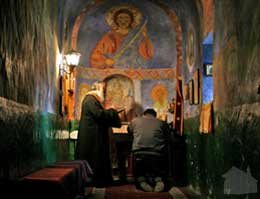
Sins That Cry Out to Heaven
A. Voluntary Killing
1) Have you killed anyone?
2) Have you sought to kill?
3) Do you want to kill anyone?
4) Have you sought to gain revenge by killing someone?
5) Have you beaten anyone?
6) Have you quarreled with or threatened anyone?
B. Sodomy (coupling against nature)
1) A man with a man or any kind of animal?
2) A man with a woman against nature?
3) Masturbation. Have you masturbated?
C. Withholding the pension or the wages of orphans, widows, workers, employees, or servants.
1) Have you withheld pensions or salaries?
For what reason, as reimbursement for something broken, or other reasons?
2) Have you withheld pay partially or unjustly?
3) Have you always compensated others for the work they have done?
D. Oppressing widows, orphans, invalids, or the helpless.
1) Have you beaten children, old people, or orphans?
2) Have you derided or made fun of them?
3) Have you oppressed anyone weaker or smaller than you?
4) Have you laughed at the crippled or the helpless?
5) Have you angered or irritated them?
6) Have you somehow been obligated to help them and failed to do so?
7) Have you helped those whom you were not required to help, or did you pass them by like the priest and the Levite in the Gospel in the story of the good Samaritan?
8. Have you deliberately caused a blind man to fall by guiding him wrong?
9) Have you made fun of anyone who is helpless, deaf, a stutterer, lame, crippled, one-eyed?
Obligations Regarding the Spiritual Life of our Neighbor
1) To protect our neighbor from sin
2) To teach the uneducated (ignorant)
3) To give good advice to those who have need of it
4) To pray to God for others
5) To comfort the sad/grieving
6) To suffer patiently when we are treated unjustly
7) To forgive the sins of others
Commandments Regarding the Physical Life of Our Neighbor
1) To give food to the hungry. Have you given or not?
2) To quench the thirst of the thirsty
3) To clothe the naked
4) To care for the sick
5) To take in and show hospitality to strangers
6) To inquire after those in prison
7) To bury the dead
Strange Sins
1) When you advise someone to sin
2) When you order someone to sin
3) When you permit someone to sin
4) When you help someone to sin
5) When you praise someone who sins
6) When you were able to but didn’t want to prevent someone from sinning
7) When you know that someone is sinning but you don’t tell him
Sins against the Holy Spirit
1) Disregarding the grace of God and having excessive trust in one’s own self
2) To believe that God does not have the power to forgive you is a very great sin.
3) To believe that you are everything and that
God has no power in the world
4) Lack of trust in God
5) Opposition to the Truth established by the
Holy Church
6) Leaving the Orthodox Church. Guard yourself from this sin, for Christ says, “He who blasphemes against the Holy Spirit has no forgiveness, but is guilty of eternal condemnation.” (Mk 3:29)
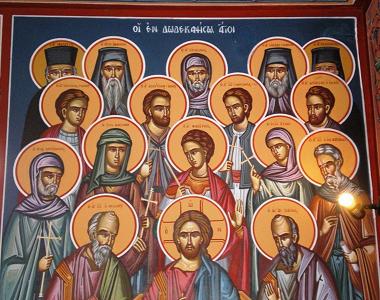
The Nine Church Commandments
1) Church attendance every Sunday and every feast day
2) Keeping the four fasting periods of the year
3) Respect toward the Church’s representatives (priests, monks, nuns)
4) Confession of sin during the four fasts
5) Guarding ourselves from heretics
6) To pray for our country’s leaders and the officials of the church
7) To abstain from weddings and parties during the fast periods
8. To protect those things belonging to the church from inappropriate use
9) To keep the fasts and to say the prayers that the bishop ordains in times of trouble
Various Sins
1) Failure to carry out one’s obligations:
a) Have you carried out all your obligations to God, to your own self, to your neighbor?
b) Have you carried out the penance given to you in confession?
2) Theft of holy things
a) Have you lied at confession?
b) Have you avoided telling everything and for what reason have you done so?
Counsels
a) Go to confession at least four times a year, during the fasts.
b) Fast before confession.
c) Maintain the same spiritual father.
d) Make a serious examination of conscience before going to confession.
e) Write down all your sins, otherwise you might forget them. After confession, burn the paper
at once.
f) Confess not only sins you have committed, but also those of your heart.
g) Do not conceal any sin.
h) Be reconciled with those who have offended you.
i) Avoid occasions of sin.
j) Give up your sins – make a promise that you will no longer sin.
k) Feel contrition for your sinfulness.
l) Guard yourself from sins.
m) Receive Communion only if you feel clean.
Otherwise, it will be for condemnation.
n) Fulfill in a holy manner the penance given to you by your spiritual father.
o) Judge only yourself for the sins you have committed.
Each one of us has his or her own mission to fulfill, but we must heed the advice of our spiritual father, who puts aside our own ill-informed will, making room for the will of God in each one of us. Our spiritual father reveals the will of God in us. If we don’t heed him, we can wander astray and make mistakes that are even worse than the passions. I consider a friend anyone who sends me even one thought of love. And I wish and request that every one of my friends copy down this guide to confession. I have written this as best as I could, in great haste, out of a genuine wish to send you this guide to confession.
With all my love, Valeriu.
The end and glory be to God!
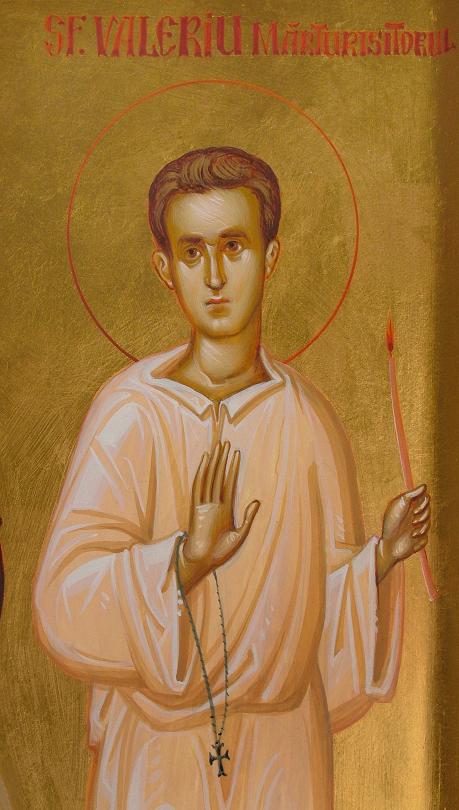
(Taken from the book “The Saint of the Prison”, Translated by Monk Sava – an American convert to Orthodoxy from Oasa Monastery)
Written by Valeriu Gafencu – while in the Communist Gulag
(continued from the previous post)
The Ten Commandments
The First Commandment:
I am the Lord thy God, thou shall not have any gods before me.
1) Do you believe in God?
2) Do you believe in the Holy Trinity?
3) Do you worship God?
4) Do you love Him?
5) Do you know Him? Have you compelled yourself to learn something about God from the books of Holy Scripture, church books, or from somewhere else?
6) Do you somehow believe in charms and magic spells?
7) Have you visited fortune tellers and astrologers?
8. Do you practice occultism?
9) Do you believe in dreams? Believe only in God.
10) Do you somehow bestow more honor upon some creature or things than to God?
11) Do you value money, food or wine, a woman or a man, more than God?
12) Have you ever grumbled against God?
13) Have you despaired because of any trouble, misfortune, or any other evil that has befallen you?
14) Have you opposed the truths of Christian teaching?
15) Have you read books that are against religion?
16) Have you given such books to someone else to read
17) Have you attended gatherings of nonbelievers?
18) Have you read their books and magazines with the intention of discovering another truth other than that of the Church?
19) Have you defended lack of faith or sects or Islam?
20) Have you brought gifts to sectarians?
21) Do you believe in superstition or paganism?
22) Is God your main concern?
23) Have you always put hope in God?
24) Do you believe that heaven and hell exist?
25) Do you believe that there will be a judgment?
26) Do you put too much trust in the goodness of God and in this way not fear judgment?
27) Do you believe that God can no longer forgive you because of the multitude and gravity of your sins?
28) Have you always sought the help of God?
29) Have you prayed regularly? Evening, morning, and at noon?
30) Do you go to church regularly?
31) At prayers and at church do you think only of God?
32) At the end of the day, do you remember God?
33) Have you brought thanks to God through all your deeds?
34) Have you sought His help before doing something?
35) Do you sometimes say prayers only from habit?
36) Do you think of other things during the time of prayer?
37) Does the thought ever come to you that you cannot be saved?
38) Have you put off repentance until old age?
39) Do you deliberately go late to church?
40) Do you pay attention to the service?
41) Do you laugh or talk or look at other people when in church?
The Second Commandment:
Thou shall make no graven image or the likeness of any thing of what is in heaven or on earth, in the sea or on the earth, nor shall you worship them or serve them.
1) Do you believe that some men are great and have the same value that Christ had? For example, philosophers or religious leaders.
2) Do you believe in the holy icons?
3) What kind of worship do you accord them?
4) Do you believe that an icon is in fact the very saint that it depicts?
5) Do you believe in people – your wife, your husband, your child – instead of believing in God?
6) Do you worship things such as money, food, drink, or other pleasures?
7) Is your own mind your only law and do you do only that which it tells you?
The Third Commandment:
Do not take the name of the Lord Thy God in vain.
1) Have you ever sworn by God the Father or by the Savior Jesus Christ?
2) Have you sworn by the angels, archangels?
3) Have you sworn by the Holy Virgin?
4) Have you sworn by the saints, the church, Pascha, the oil lamps, the icons, the cross, or other things?
5) Have you brought false witness to the Name of God?
6) Have you sworn other kinds of oaths, for example on your eyes, your life, the salvation of your soul? For the Savior said, „Let your speech be yes and no; for anything more than that is of the devil.”
7) Have you cursed anyone? Have you sent others to the devil or yourself?
8. Do you have the habit of cursing those who do you wrong? The Savior taught us to pray for them.
9) Have you sworn a false oath?
10) Have you sworn a true oath?
11) Do you use as an oath the word “zău,” which is an abbreviation for “pe Dumnezeul meu” [upon my God]?
The Fourth Commandment:
Remember to keep holy the Sabbath day.
Sunday is the Lord’s day. And all the feast days instituted by the church throughout the year have the same value.
1) Have you kept all Sundays and feast days?
2) Were you in church on each of those days?
3) Did the other members of your household keep them, did they attend church, did you prevent them for any reason?
4) Have you given others work on those days? Do you go to church late?
5) Did you keep the Lord’s day in a worthy manner? Or is it for you an ordinary day or a day for parties and amusements? Do you go to church in the morning? In the afternoon do you read books that are useful and constructive for the soul?
6) Do you look after your soul more on those days than on others?
7) Have you done or participated in a clacă (see 199)?
8. Do you behave improperly in church?
9) Have you cursed the church or the servants of the Holy Altar?
10) Do you honor priests as the servants of God?
Do you make fun of them or disdain them? Do you gossip about them and speak of their sins?
11) Do you pray for them? Do you obey them?
_____________________________________________________________
(199 Clacă: An informal gathering around a campfire for conversation,
music, and dancing. – Translator’s note)
The Fifth Commandment:
Honor thy father and thy mother.
1) Have you beaten your parents or in-laws?
2) Have you abused them or persecuted them?
3) Have you heeded their advice?
4) Have you deceived them in any way?
5) Have you taken advantage of their good faith?
6) Have you helped them when they are in difficulty?
7) Have you done church services for them after their deaths?
8. Have you helped your brothers and sisters?
9) Have you taken care of your wife and children?
For St. Paul says, If anyone does not look after his own, and especially those of his own household, such a one has abandoned the faith and is worse than a non-believer. (1 Tim 5:8)
10) Have you beaten your wife? Have you held anything against her? Have you abused her?
11) Have you honored your husband? Have you loved your husband or wife as your own self?
12) Have you deceived your husband or wife?
13) Have you made his/her life more difficult? Do you nag or criticize?
14) Have you sufficiently looked after the spiritual well-being of those in your household?
15) How have you behaved with your spiritual fathers? Godparents, teachers, priests? Have you respected them and helped them?
16) Have you been insolent or stubborn with your parents?
17) Have you upset them? Angered them?
18) Have you spoken ill of them or derided them?
19) Have you made fun of their weaknesses?
20) Have you been mindful of your religious obligations?
21) Have you been ashamed of them?
22) Have you spent money on useless things (tobacco or other pleasures), causing your family to be lacking in necessary things?
If you are a parent:
23) Have you steered your children on the path of the Church, in word and in deed?
24) Have you set a bad example with arguments, drunkenness, filthy language, lying, stealing, dishonor, gossiping, laziness?
25) Do you live with a concubine and the children see it?
26) Have you punished them for bad deeds: such as arguing, lying, fighting, stealing? Have you spared them out of mercy?
27) Have you prayed for your children, wife, husband, brothers, sisters, parents?
28) Were you too harsh or too easy on your children?
29) Have you had bad servants who taught your children things harmful for the soul? If you are a guardian:
30) Have you fulfilled all your material and moral obligations toward the children?
31) How have you behaved with your servants or apprentices?
32) Have you paid them honest wages, have you held anything back for any reason?
33) Have you encouraged them to fulfill their religious duties?
34) Have you encouraged them to commit any sin?
If you are a servant:
35) Have you obeyed your master or boss?
36) Have you diligently fulfilled all your duties?
37) Have you done your work in a careless, slipshod manner?
38) Have you stolen anything?
39) Have you told bad stories about the house to others?
The Sixth Commandment: Thou shall not kill.
1) Have you ever killed anyone, voluntarily or involuntarily?
2) Do you want to kill anyone, or have thoughts of revenge? Have you ever praised anyone who killed?
3) Do you want anyone to die, in order to gain their wealth, wife, husband, etc.?
4) Have you beaten anyone?
5) Have you threatened anyone?
6) Do you hate anyone, are you reconciled with all those you know?
7) Do you wish anyone evil, death, or harm?
8. Do you rejoice when evil befalls your fellow man?
9) How do you behave with those around you?
10) If you are a man, have you abandoned your children?
11) If you are a woman, have you voluntarily abandoned your baby?
12) Have you sought to kill yourself, directly or indirectly?
13) Have you gone hunting?
The Seventh Commandment:
Thou shalt not commit adultery.
Those unmarried commit fornication, those married adultery.
1) Have you committed fornication, or if you are married, adultery?
2) Do you live as a concubine?
3) Do you sin against nature – masturbation or homosexuality?
4) Do you desire to sin with the husband or wife of another?
5) Do you seek opportunities to commit sexual sins?
6) Do you think about shameful things too much?
7) Do you seek to recall such scenes?
8. Do you want to see the shameful parts of the body?
9) Do you speak about shameful things?
10) Have you read books that give you sexual pleasure?
11) Have you urged anyone to commit such sins?
12) Have you caused someone else to sin through clothing or dressing up?
The Eighth Commandment:
Thou shalt not steal.
A priest cannot forgive the theft of something that has not been returned. Therefore, give back what you stole and then go to confession.
1) Have you stolen money or other objects from the state, society, or any man?
2) Have you done harm to others?
3) Have you helped those you have harmed to recover?
4) Have you taken adequate care of the wealth of another man that has been entrusted to you?
5) Have you given back money or other objects that you borrowed?
6) Have you received stolen things (things that were stolen)?
7) Have you given back things that you found?
8. Have you secretly changed the property line between you and your neighbor?
9) Have you urged someone else to do this?
10) Have you charged too much interest for borrowed monies?
11) Have you altered merchandise and then sold
it as if it were good?
12) Have you deceived anyone by weighing or counting goods wrongly?
13) Have you taken things by force from someone smaller than you?
14) Have you accepted bribes?
15) Have you taught children to steal?
16) Do you have thoughts about making money by dishonorable means?
The Ninth Commandment:
Thou shall not bear false witness.
1) Have you sworn a false oath?
2) Have you lied?
3) Have you born false witness?
4) Have you behaved correctly with your neighbor?
5) Have you lied to him?
6) Have you told lies about others?
7) Have you purposefully spread false account about others?
The Tenth Commandment:
Thou shall not covet thy neighbor’s wife.
Thou shall not covet thy neighbor’s goods.
1) Have you desired the wife, daughter, husband, or son of your neighbors?
2) Have you desired the wealth of your neighbor?
3) Have you desired the social status of someone higher than you?
4) Have you hated your neighbor for any reason?
5) Have you desired the house, the land, the vineyard, or the work of your brother?
(Taken from the book “The Saint of the Prison”
Translated by Monk Sava – an American convert to Orthodoxy from Oasa Monastery) to be continued…
“A man, as well as people, has value to the degree
to which he has understood the Gospel and can
follow the teaching of Christ”
(scholar: Simion Mehedinti)
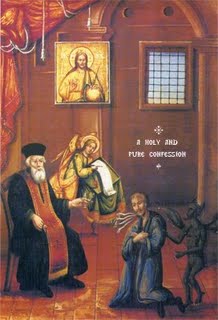
A Guide to Confession – Written while in the Communist Gulag by Valeriu Gafencu
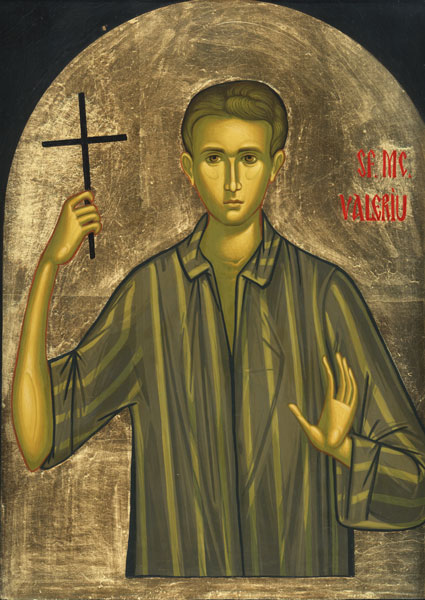
Introductory Notes: In general, too little is known about the spiritual life of confessors in Communist prisons and the various types of such confessors. It is true that until the collapse of Communism it was impossible to uncover anything, while after the collapse in 1990 testimonies of the survivors were not always available to those who were interested. Nevertheless, it would be of no small benefit to anyone to devote oneself to reading testimonies of those who passed through these prisons. In them, one would find such valuables which can rightly be compared to those found in a Paterikon or in the lives of the saints. Among the many portraits of the confessors, one will be found in particular that is recalled with reverence by all and is considered a saint: Valeriu Gafencu. Nicknamed “the saint of the prisons”3 by Father Nicolae Steinhardt) a Jew converted to Orthodoxy) in a truly inspired moment, Valeriu Gafencu was one of the more impressive figures who lived an admirable spiritual life amidst prison conditions. Through his sacrificial love springing from a perfect dedication of his life to Christ, he remains painted in the most luminous of colors in the hearts of those who knew him. Father Gheorghe Calciu wrote, “I have no doubt that he is a saint. He lived the word of God to such a level that it was incomprehensible for us”.
The spiritual atmosphere of Aiud played an important role in Valeriu’s spiritual formation. It was here that he experienced a moment of Illumination and succeeded, through the grace of God, to see his own sins. The work of repentance that began at that time gave rise to a state of spiritual joy that would accompany him through all of his trials. After Aiud came the prison at Pitesti (1948 – 1949), then a few months at Văcăresti, and finally the convalescent prison at Targu-Ocna (1950 – 1952). Confined to bed rest at Targu-Ocna in an advanced stage of tuberculosis, Valeriu was the haven where his prison mates found comfort and drew their strength. Through his faith and influence many things were made possible. Several atheistic prisoners returned to God, so-called re-education-through-torture attempts were thwarted, bonds of special brotherly love among prisoners were forged, a spirit of sacrifice for the sake of the more seriously ill was promulgated. His grace-filled presence created a spiritual atmosphere unique in the history of the Communist gulag. Knowing beforehand the day of his passing to the Lord, Valeriu was found at the moment of death in such a state of grace, that his friend Ioan Ianolide, who was beside him at the time of his passing, later testified,
“In eternity I could not wish to be in a more exalted state, for then [at the moment of Valeriu’s passing] I was totally, completely happy.”
Men like Valeriu Gafencu and other confessors of the prisons through whom the Holy Spirit worked with power, men worthy of high regard, await their place in the calendar, being the surest models of Christianity for us in these times dominated by confusion. Their lives deserve to be made known not for earthly glory, but “so that people living in these times, darkened by so much stray wandering, a result of estrangement from God, will know that such chosen ones existed in the twentieth century, men who raised themselves to the same level of faith and sacrifice as that of the early Christian martyrs.
Let him who is without sin be the first to cast a stone at her.
(John 8:7).
Most assuredly I say to you that you will weep and lament, but the world will rejoice; and you will be sorrowful, but your sorrow will be turned into joy. (John 16:20)
He arose from supper and laid aside his garments, took a towel and girded Himself. After that, he poured water into a basin and began to wash the disciples’ feet, and to wipe them with the towel with which he was girded. (John 13: 4-5)
Now there was leaning on Jesus’ bosom one of His disciples, whom Jesus loved. (John 13:23) “A new commandment I give unto you, that you love one another; as I have loved you, that you also love one another.” (John 13: 34)
“By this all will know that you are my disciples, if you have love for one another.” (John 13: 35)
What sin is!
Sin is treading upon the law of God, a voluntary or involuntary treading, in knowledge or in ignorance, in deed, in word, in thought. Sin is dishonor toward God, insult, disdain, defamation, ingratitude and wounding toward the Divine being, in an egocentric spirit.
Sin is a lack of faith and a lack of confidence in God and in His law, and too much faith and confidence in oneself, such that a man becomes a law unto himself, because whenever you break the law of God, you obey another law, your own, or the devil’s.
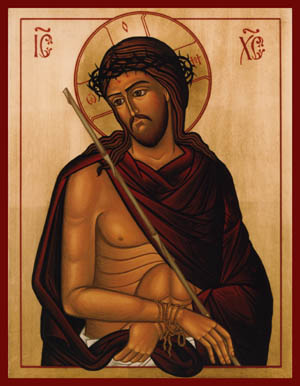
Sin is a second crucifixion of Christ, for through sin all the insults, mockery, and beatings are renewed. The nails, the spear, the thorns, through sin, Christ feels them all again. Today, however, the blows no longer come from those who defamed Him and shouted, “Crucify Him! Crucify Him!” Now they are administered by those who say they believe in Him, who say that they follow His commandments, that they love Him. Now it is those who are baptized who spit in His face, it is those who call themselves Christians who put the crown of thorns on His head, now it is they who slap Him, who nail Him to the cross, who goad Him with the spear, those for whom Christ suffered mockery and beating and for whom He shed His blood on Golgotha in order to make them sons of God, in order to open the gates of heaven for them, to destroy death and demolish hell.
Sin is estrangement from God and drawing near to the devil. It is estrangement from the house of the Father and life in a faraway country with the devil’s pigs.
Because we are the servants of him whom we serve (John 8:34), sin means slavery to the devil. When you sin, you no longer consider what God has done for you, you are no longer His son, and you do not think about His justice, by which He will punish those who sin against His will. Through sin, all the creatures of God act contrary to the purpose for which they were created. The mouth was not created by God that we might curse and swear with it or slander and curse our neighbor, but that we might use it to speak things useful to the soul. God did not give you a mind so that you can find arguments to distance yourself from Him, but that you might find arguments to draw near Him. The eyes were not made so that we might look at things that damage the soul, but that we might look upon God’s creation and give Him thanks. Just so, the ears, hands, and feet were not made in order that we might distance ourselves from God. Don’t you want to acknowledge the goodness and long-suffering of God? For you should know that time was given to you in order to gain paradise, and you waste it believing that God will no longer judge, that He will forgive us, that there are others much worse than you.
The Consequences of Sin
The evil brought about by sin:
1) Through sin, we lose the most precious gift that we have received from God. Without this gift, the soul remains deformed.
2) Through sin, the Holy Spirit is taken from us and we are no longer recognized as sons.
3) Through sin, we lose the eternal blessedness of heaven. We lose the possibility of union with God and life together with the saints. We lose eternal light and rest.
4) We attain unto hell with its unquenchable fire and its eternal darkness.
5) Through sin, we lose all the good deeds that we may have done previously, for God will judge you according to the state in which He finds you.
6) Through sin, we lose the help of God (to the extent that you are found in sin).
Confession
Do you not weep at the thought that you have lost heaven? Does the sorrow you have caused God not make you tremble?
Does the thought of hell not frighten you? Do you not seek to acquire the state that you have lost? Is it still possible? Yes! But you must want it….
From the very beginning, God has known our powerlessness and has given us the possibility of being purified from sins. He knew that man will sin as long as he lives and that no one is without sin, and therefore He said to His disciples: Whatever you bind on earth will be bound in heaven, and whatever you loose on earth will be loosed in heaven, words through which He instituted the sacrament of Confession.
Confession or repentance is a bath from which the soul emerges relieved from the weight of sin and cleansed from the filth of sin, a bath in which we are cleansed of all our defilements and errors.
Confession is a medicine that heals the soul of the wounds inflicted by demons, a medicine that renders ineffective the poison of sin.
Confession turns a sinner away from the devil and back to God and restores His connection with his Creator.
Confession leads the soul to deeds and things that are for the sake of and according to the soul. Confession restores a man clean before God. Confession prepares the soul and body to receive the body and blood of our Savior Jesus Christ. Confess in the Church four times a year to the same spiritual father.
When you examine your conscience, consider yourself guilty, don’t justify yourself; think about the following things:
1) The motive or aim with which or for which you sinned. The following day, try to avoid the same situation.
2) The intention with which you sinned.
3) The surroundings, avoid them the following day.
4) The place where you sinned.
5) Whether your sin influenced others by encouraging them to sin also.
6) The number [of times you’ve performed this particular sin] …. Confession must be done with contrition of heart and a sense of regret. Contrition of heart is the grief and pain that the memory of the sin causes you. This pain consists not only in feeling the sin, to sigh and weep for it, but consists primarily in hating the sin. Regret is the pain that the repentant feels because he now lacks the grace of God and has earned torment. The church has established the rule that one should fast for seven days before confession, or possibly less. The sick are excused. Write down your sins on paper and read them alone before your spiritual father. Make a promise before God to not repeat your sins.
The Ten Commandments (to be continued)….
(Taken From the book “The Saint of the Prison” Translated by Monk Sava – an American convert to Orthodoxy, from Oasa Monastery)
Troparion |
|
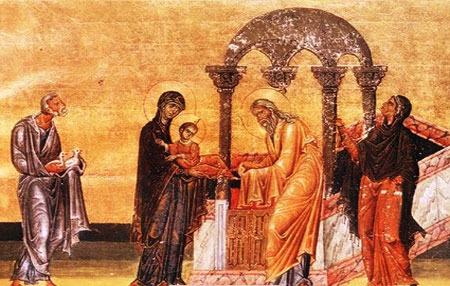
Rejoice, thou who art full of grace, O Virgin Theotokos, for from thee hath risen the Sun of Righteousness, Christ our God, enlightening those in darkness. Rejoice, thou also, O righteous Elder, as thou receivest in thine arms the Redeemer of our souls, Who also granteth unto us the Resurrection. |
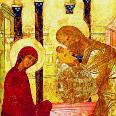
Byzantion Choir: on the meeting of the Lord (Mp3)
A Sermon by St. Sophronius of Jerusalem
(Our father among the saints, Sophronius, was the Patriarch of Jerusalem. An Arab by birth, he was a monk and theologian who was the chief protagonist for Orthodox teaching in the doctrinal controversy on the essential nature of Jesus and his volitional acts).

Our lighted candles are a sign of the divine splendor of the one who comes to expel the dark shadows of evil and to make the whole universe radiant with the brilliance of his eternal light. Our candles also show how bright our souls should be when we go to meet Christ.
The Mother of God, the most pure Virgin, carried the true light in her arms and brought him to those who lay in darkness. We too should carry a light for all to see and reflect the radiance of the true light as we hasten to meet him.
The light has come and has shone upon a world enveloped in shadows; the Dayspring from on high has visited us and given light to those who lived in darkness. This, then, is our feast, and we join in procession with lighted candles to reveal the light that has shone upon us and the glory that is yet to come to us through him. So let us hasten all together to meet our God.
The true light has come, the light that enlightens every man who is born into this world. Let all of us, my brethren, be enlightened and made radiant by this light. Let all of us share in its splendor, and be so filled with it that no one remains in the darkness. Let us be shining ourselves as we go together to meet and to receive with the aged Simeon the light whose brilliance is eternal.
Rejoicing with Simeon, let us sing a hymn of thanksgiving to God, the Father of the light, who sent the true light to dispel the darkness and to give us all a share in his splendor.
Through Simeon’s eyes we too have seen the salvation of God which he prepared for all the nations and revealed as the glory of the new Israel, which is ourselves. As Simeon was released from the bonds of this life when he had seen Christ, so we too were at once freed from our old state of sinfulness.
By faith we, too embraced, Christ, the salvation of God the Father, as he came to us from Bethlehem. Gentiles before, we have now become the people of God. Our eyes have seen God incarnate, and because we have seen him present among us and have mentally received him into our arms, we are called the new Israel.
Never shall we forget this presence; every year we keep a feast in his honor.
(Taken from Preachers Institute at: http://preachersinstitute.com)
Fr. Peter Gilquist at St. Elijah
“Why Protestant Clergy are coming to the Orthodox Church.”
On the Infallibility of the Pope
For Roman Catholics
 Christian Dogma
 Christian Martyrs
 Christian Orthodox Churches and Monasteries
 Christian Sermons and News
 Church's Teachings on Fasting
 Ecumenism – a Great Heresy
 Father George Calciu
 Life_a Sacred Gift form God
 Orthodox Saints and Church Fathers
 Spiritual Elders
 Daily Bible Readings
 Journey to Orthodoxy
 Listen to Ancient Faith Radio
 Orthodox Calendar of Feasts and Saints
 Orthodox Christian Mission Center
 Orthodox Institute
 OrthodoxChristianNetwork TV


Recent Comments