
You are currently browsing the monthly archive for May 2010.
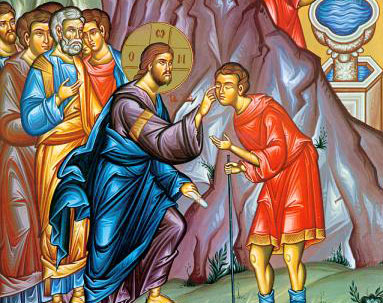
Elder Cleopa on Spiritual blindness
(…) Let’s now turn to the word “spiritual blindness”. We all had seen blind people, either from birth or accidents or as a result of other severe illnesses. Whenever we see a blind we sense sympathy, been sometimes moved to tears; that he cannot walk alone, nor that he is able to see the sky, or the sun, or the beauty of flowers (…)
However, much heavier and more worthy of tears is the blindness of man’ mind and heart, of his will and of his consciousness. For the soul is more precious than the body. As our Savior had saith: “For what will it profit a man if he gains the whole world, and loses his own soul? Or what will a man give in exchange for his soul?” (Mark 8, 36-37). Spiritual blindness is one of the weightiest diseases of the soul – created by God for immortality – causing its death and eternal condemnation. And so the healing of this illness is of a much grater difficulty and has more importance than the physical blindness.
And, what do we understand by spiritual blindness? What else than the darkness and enslavement of man soul through all kinds of spiritual and bodily sins; the pride of the mind, the hardness of heart, the weakening of man will and conscience, the unbelief, the doubt in the faith, the sectarianism and despair, the pride and suicide, the killing of body and soul, the killing of the unborn, the hate and the anger among people, divorce, fornication, lies, desire for wealth, stinginess, greediness, drunkenness, laziness and many others.
All sins sicken and drag the soul into blindness and apathy, and the body into heavy disease with no cure. And if we don’t renounce of those sins that enslave us, through repentance, confession and spiritual renewal, this spiritual blindness, as any disease, will lead to spiritual death and to condemnation of our soul to the torments of hell.
And so is the Christian man that renounces the faith and abandons the church founded by Christ and by His Holy Apostles and falls into all sorts of heresies – no other than a spiritually blinded man! How about the Christian who does not come to the holy churches for years, does not pray nor read holy books and postpones repentance and confession until the hour of his death; is he someone other than a sick and a blinded man?
And the man so called Christian who spends his time, his wealth and his health in earthly worries and deadly sins; what is he, if not a blind and an unfortunate soul? (…)
Dear faithful,
This earthly life is short, full of suffering and misleading, and the heavenly life is blessed and full of eternal bliss. Let us renounce the sins that blind and kill our soul and let us return to Christ. It is not enough to make the sing of the cross and say: “Lord, Lord!” For we need a spiritual and profound renewal of life. We are required to free the eyes of our soul from passions and to wash them off into the water of Siloam, through the bath of confession, and to follow Christ and His church established on this earth. Let us pray, be humble and reconciled with one another so by regularly attending church, doing charity and raise our children in the true faith and love of God, we may become good Christians and true sons of the Orthodox Church and inheritors of the Kingdom of Heaven. Amen. “
(Excerpts from Elder Cleopa’ Sermons, translated by EC)
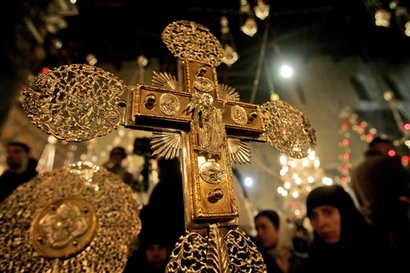
Homily about the sin of those who assert that they can see
By St Nikolai Velimirovic in the Prolog from Ohrid
Motto: “If you were blind you would have no sin” (St. John 9:41).
These words were spoken to the Jews by Him Who gave them the Law through the prophets that the Law may serve them as the sight of the soul. The Jews received that sight but they closed their eyes intentionally and nefariously. That is why the Just Lord spoke these righteous words to them.
These words are true justice then, today and forever, for a blind man has no sin if he tramples someone else’s crop or if he removes someone else’s garment instead of his own. If he who has sight commits this, he will be committing a sin and will incur punishment. If he who has eyes, but intentionally closes his eyes and committed that, he also will be committing a sin and will incur punishment.
Nevertheless, what can be said about those who have received Baptism and Chrismation as the two eyes of the soul and, in spite of that, sin as those who are unbaptized? At the Last Judgment, they will not be treated as those who are born blind, rather they will be treated like transgressors who willfully disfigured and blinded themselves.
Still, what can be said about those who received the other Mysteries of Grace in the fullness of Orthodoxy and who have before them the examples of the saints and who constantly listen to the warnings and admonitions of God’s Church but, nevertheless, depart and go astray? At the Last Judgment, such will not be able to justify themselves with any type of blindness, rather they will be judged as transgressors who have disfigured themselves and others around them with blindness.
O awesome Lord, save us from sin. O merciful Lord, open our eyes to the path of salvation.
To You be glory and thanks always. Amen.
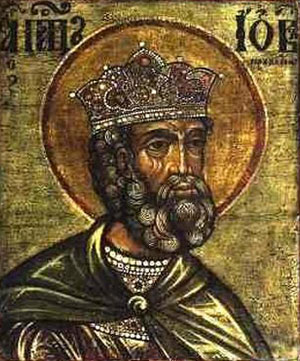
“How long will you torment me and crush me with words? Ten times now you have reproached me; shamelessly you attack me. If it is true that I have gone astray, my error remains my concern alone. If indeed you would exalt yourselves above me and use my humiliation against me, then know that God has wronged me and drawn his net around me.” (Job 19: 2-6)
Holy and righteous Job lived in Avsitida, a teritory between S. Arabia and Edomit. His father was Zaret and his mother, Vosora. The story of Job is historical and Scriptural and not merely a legend or a myth. This is certified by profet Ezekiel who calls Job – one of the greatest Old Testament righteous, along with Noah, Daniel and Jesus, the son of Sirah. For us faithful Christians, Job is a great model of patience, love and obedience towards God.
Sufferings are a Medicine
Sufferings are bitter medicines with blessed effects. They cure our various sins, especially pride, and humble us. When the doctor treats a sick man, he does not give him sweet dainties, but medicines which are usually bitter. If the sick man is wise, he accepts these bitter drugs with gratitude and without grumbling, knowing that they will cure him. Only foolish children make faces and do not want to drink the saving medicines because they are bitter to the tongue! How much we resemble foolish children when we grumble against the sufferings and sorrows in life which God sends to us! In our times of deepest grief, we must remember righteous Job who suffered without guilt and, despite that, accepted all misfortunes which piled upon him without grumbling and blaspheming. He lost his property, his herds, his servants, and even his children. One after the other came the messages which informed him of the woes which had come upon him. At receiving every tragic piece of news, he only repeated the wonderful words: The Lord gave, and the Lord hath taken away; blessed be the name of the Lord. In all this, Job sinned not, nor charged God foolishly (Job 1:21- 22).

Patience to the End
Through his sufferings, Job received salvation. However, not all suffering is beneficial to the soul and elevates it, taking it into the Heavenly Kingdom. It is only that suffering which is endured patiently, with gratitude and trust in God, and without grumbling. Those who suffer must have great patience, so that they will be able to see how the bitter green buds on the branches of the virtuous life slowly and gradually, under the care of the warm Sun of righteousness, ripen and turn into sweet fruits of perfection and salvation. Those who suffer must have great patience lest they despair and, because of their impatience, the fruits fall before their due time-sour, bitter, and green. In such a case their suffering is in vain. Only he that shall endure unto the end shall be saved (Matt. 24: 13). According to the teaching of St. Ephraim the Syrian, ”The Christian must stand among the various sorrows and temptations like an anvil which, even though it is constantly hammered upon, does not move from its place, nor does it get ruined, but stays the same [as firm as it was in the beginning].”
We cannot be saved without suffering; how else could we be tested by God for being firm and unwavering in virtue? God arranges many things in life in such a way that man is tempted, so that his free will can be manifested, and he, through the enduring of all trials, can receive salvation. “Because those,” according to the words of St. Macarius the Great, “who live in suffering and temptations and endure to the end will not lose the Kingdom of Heaven.”
It is told about a saint that he, like the holy Apostle Paul, was seized and taken to heaven where he saw the bright homes of the righteous. He stopped in front of a wondrous palace in which a righteous and blissful soul was shining, and he asked: “What were you on earth?” It answered: “I was a leper, and I constantly thanked God for that mercy.” Such are the fruits of sufferings which are borne with gratitude and without grumbling.
Some are bothered by the thought that their suffering may be pointless and fruitless for the salvation of their souls. They tell themselves: the saints endured for Christ’s sake, and that is why they were certain that through the enduring of suffering they would save their souls. But we, unlike the saints, suffer either for our sins, or because of the envy of evil people, or by some chance; and because we do not suffer for Christ’s sake our sufferings weigh us down with their aimlessness and torment us doubly because of their uselessness. To this we should answer that nothing in this world happens by chance-without God’s will or God’s permission. Even a single hair does not fall from our heads without God’s knowledge (cf. Luke 21: 18). If we are suffering because of our own sins but we endure and repent before God, these sufferings free us from future punishment in the life beyond the grave and save us. The thief who was saved was crucified for his sins on a cross on the right side of Christ but through his endurance and repentance, he entered Paradise.
Suffering is to the soul what fire is to ore. Ore, mixed with dirt, gravel, and other things, is purified when it passes through fire. The soul, muddied by sins, clears up when it passes patiently through sufferings. Even though the sinner does not suffer like the martyrs for Christ’s sake, these woes of his are counted as sufferings for God s sake and are beneficial to him when he consumed with a yearning to be saved, humbles himself in his sorrows, repents of his sins, and says: “For my lawlessness, I deserve much greater sufferings than the merciful God has sent me”. St. John Chrysostom says that “the soul is cleansed when it suffers sorrows for God’s sake.” Muddy water cannot be made clear unless it passes through the filter of sand. In the same way the soul cannot be cleansed unless it goes through sufferings.
If we undergo troubles without guilt, from the malice of evil people, then, according to the words of Sr. Dimitry of Rostov, even though we are not enduring persecution because of Christ our sorrows will be counted as suffering for Christ’s sake an will bring us martyrs’ crowns if we give thanks to God and do not grumble. Thus every suffering can become suffering for God s sake.
(Archimandrite Seraphim Aleksiev in “The Meaning of Suffering & Strife and Reconciliation” @ St Herman Press and St Xenia Skete, 1994).
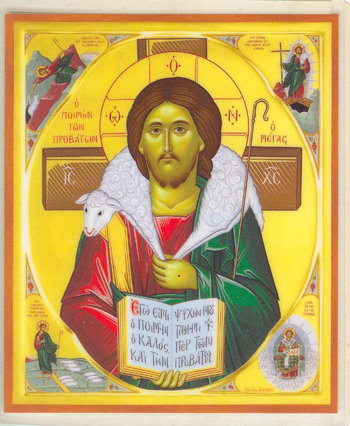
The Reason That God Allows the Devil to Tempt Us
– Geronda (Elder in Greek), why does God allow the devil to tempt people?
– So that He can select His children. “Do whatever you can” God tells the devil, because no matter what he does, in the end, the devil will be smashed on the cornerstone that is Christ. If we believe that Christ is the cornerstone, then nothing will scare us.
God does not give the devil the permission to test us unless something good is to come out of it. When He sees that a greater good will come out of it, He lets the devil do his job. Do you remember what Herod7 did? He killed fourteen thousand infants, but, in so doing, he made fourteen thousand martyr angels. Can you believe it fourteen thousand martyrs and angels! The devil had his face crushed. Diocletian8 became the devil’s partner when he brutally persecuted Christians, but, against his will, he great good to the Church of Christ because he enriched it with Saints. He thought that he would eliminate all Christians, but in the end, he fell short of his expectations. He left countless holy Relics for us to venerate and made the Church of Christ stronger.
God could easily have wiped the devil off. He is God, after all. If He wishes, He can wrap him up and send him to hell, but He lets him be for our benefit. He would never allow him to torment and torture His creature without any reason.
He let the devil loose up to a point, and for a specific time, so that the devil can help us with his malice, by tempting us and sending us running to God for help.
He will only allow the devil to tempt us if that is going to do us good. If nothing good will come out of it, He will not allow it. God permits everything for our own good; we should believe this.
______________________________________________________
7. King of Judea (40 RCA A.D.) who ordered the death of all children’ under the age of two in Bethlehem in order to kill the infant Jesus.
8. Emperor of Rome (284-305 A.D.) who instigated the last major persecution of the Christians in 303 A.D.
He lets the devil be so that man may keep up the fight. No pain, no gain. If the devil did not torment us, we would have taken ourselves for saints. Thus, God allows the devil to attack us with malice, because these beatings clear out all the dust from our dusty soul. Other times God lets him bite us hard so that we may seek refuge in Him. God is constantly calling us close to Him, but we usually stray away and will run to Him only when we are in danger. When man becomes one with God, there is no place for the evil one to enter and there is no reason for God to permit him to tempt us so that we may take refuge in Him. Whatever is the case, the devil can benefit us; he helps us become holy. This is main reason that God tolerates him.
God has given freedom not only to human beings but also to the demons, because they do not and cannot damage the human soul; unless of course we ourselves want to harm our soul. On the contrary, evil or careless people, who unwillingly harm us, provide a gain for our soul.
Why do you think the Abba says, “Take away temptations and no one will be saved”? (The Sayings of the Desert Fathers, Abba Evagrios, p. 54:5). Temptations can do us great good. Not that the devil can ever do good – since he is all evil – but our Good God blocks the stone he throws at us to break our head, puts it in our hand, and gives us a handful of almonds to crack and eat! God, in other wards, allows temptations not because He wants the devil to torment us, but in order for us to take in this way our “exams” for the next life and have no unreasonable expectations for the Second Coming. We must realize that we are at war, and we have to go on fighting against the devil himself as long as we are alive. During this lifetime, we’ve got a lot of work to do to improve our souls, but we also have the right to take spiritual exams. If we die without having passed the test, there will be no other chance. There will be no make ups!
(Excerpt from Elder Paisios of the Holy Mountain in “With Pain and Love for Contemporary Man” @ Holy Monastery St John the Theologian, Souroti – Greece).
Holy Righteous Job, pray to God for us!
In the absence of other worries … this is what the „papal servants” are preocupied with!
… News from Versailles…
70 Catholic priests will take part in the championship race-karts “Padre Cup” in Trappes (Yvelines), this been the 3rd edition of the championship of karting for priests, a charity race that will involve 70 Catholic priests from 19 dioceses in France, “thus sanctifying those mechanical vehicles”, organizers say.
“We wanted to provide a ‘more de-complexed’ image of the priests, during a practical reality that tries to destroy them,” told AFP news, Rev. Pierre Amar – one of the organizers of the race. “Priests are down to earth, able to relax and remain people,” he added.
“We like the meetings between priests around a movie poster, in organizing marches, or in this case, a race, but we never talk about it because it seems something trivial,” continued Rev. Amar.
During the race, each lap of the circuit will provide the opportunity to winning some prizes in euros, for „charitable actions”. (However, it is not known whether donations will cover costs, repairs, transportation of participants…)
Evangelism or secularization?
An Orthodox Response
By Fr. Mihail (Michael) – Abbot of Antim Monastery
The presence of a priest, even without preaching anything, is a testimony of God’s presence. But God-the most pure One, can not be dragged into any place of temptation or any activity where human passions and idolatry are glorified!
And no priest can go on and assure that through his presence, all things are pleasing to God. This is because, instead of evangelizing the world, unfortunately the priest, without discernment, by letting himself „ordained” in such “human activities”, will start to work in the devil’ favor and towards his own desacramentalization (secularization) as well as of the world. From a shepherd gathering his sheep, he turns into a ravaged wolf…
For more than a thousand years now and far from being over – the fall of the Christian West (see 1054) in almost any heresy, has been officially accelerated by so-called „aggiornamento-area” – a continuous and progressive adaptation to the spirit and the fashion of the world.
Already formed and integrated (or more precisely re-educated) from childhood in this atheistic or anti-Thy mentality, man – in this pitiful state, no longer distinguishes the natural good from the unnatural evil so he may avoid the death of his soul; he works evil believing that is what’s “good”, “natural”, „right,” all for the sake of Satan. It is the acme of decadence and demonism….
We notice with sorrow, how this phenomenon of de-sacramentalization (of secularization) invades the whole world as a pandemic, the worst pandemic ever, with countless victims across the globe; from bishops to laymen, from the old to the young, from business to hobbies, turning us – submissive victims into pathogens …
In other words, if we do not stimulate our spiritual „immunity” in the “right faith” through sacraments and holy virtues, fasting and prayer, we risk to become our own criminals; and, our communities and families, rather than becoming resurrection „cores” transfigurated by love, will soon become death scaffolds of sin and disfigurement; with us the executioners but also the convicted. (…)
Let us pray to our Lord and Saviour Jesus Christ with a contrite heart, that He may grant us wisdom and strength, humility and love, so we may remain through His grace, alive and fruitful in the faith, enlighten and stilled in the good deeds, fighting the goog fight to raise our ecclesial consciousness and our communion in the Holy Spirit; to fulfill the call of the Apostle Peter: ‘you also be holy in all your conduct, as He who called you is holy, because it is written „Be holy for I am holy. “ (1 Peter 1, 15). Amen!
* * *
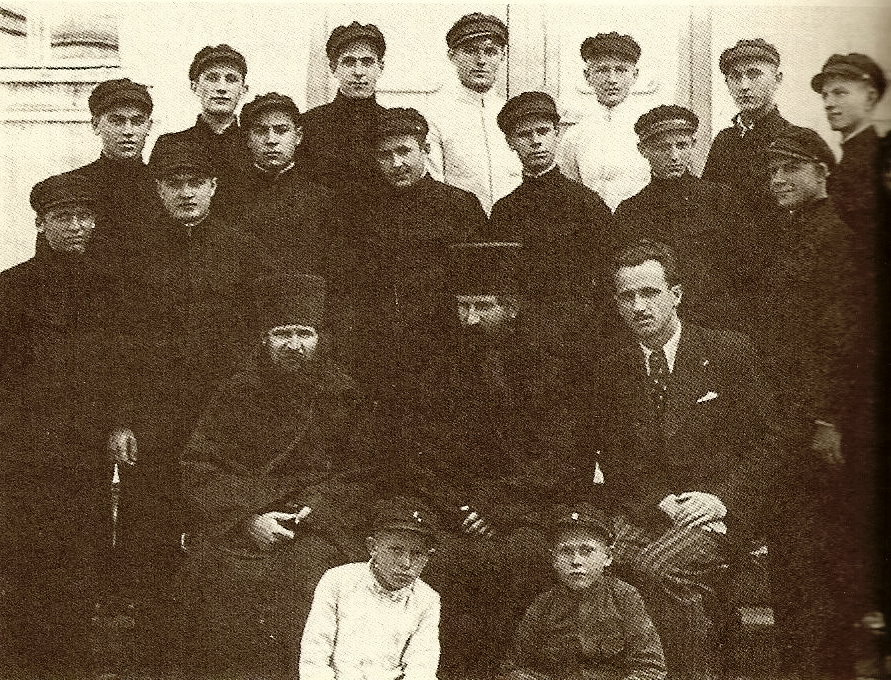
(Above photo: Seminary students with instructors: Archbishop St. John Maximivitch and St. Justin Popovich in center, 1933)
• From the moment when the question of the human soul will be brought forth, there will be extended before us a vast ocean of divine and awesome mysteries. When again, there is brought forth the question of sin, every human conscience will be transformed into a spasm before the inexplicable “a mystery of sin” (2 Thes. 2: 7), and its power. The human soul, due to its nature, continuously overflows beyond all boundaries, but the soul and sin as if they are not of this world but from another. And truly this is taking place; the soul is from God, the sin is from the Devil. When the soul surrenders to God and lives according to His laws, gradually its life is transformed into paradise. When, however, the soul is given to sin, this “law” of Satan, its life is gradually transformed into hell.
• Sin is the only thing that is unnatural in the nature of man and of the world. Stranger, alien, intruder, criminal, executioner, homicide-this is sin in everyone of us. But, in its destructive power, this sin is something worse and more horrible than all else. What? In its essence, in its energy, it is identified with the Devil since it also corrupts and destroys. According to the unrivaled definition of St. John Chrysostom “Satan is sin”. Within this definition lies the entire “mystery of sin and lawlessness” and the entire power of sin and the entire hell of iniquity. There exists no Satan without sin, and no sin without Satan. Even in the smallest sin the devil is concealed. Satan is uncharitable to man because “sin, when it is finished, bringeth forth death’ (James 1: 15), and “the wages of sin is death’ (Romans 6: 23). This is the final atrocity of sin: death. The experience of the human race testifies that sin and death are identical destructive energies of the devil. With these, the Devil holds man is his horrible embrace. But for how long? As long as man remains unrepentant. The one who repents according to God’s will is saved.
• In our earthly world, the “mystery of iniquity”, the mystery of sin, and the mystery of evil are enormously rising. While, on the contrary, the mystery of good which exists within the innate conscience of man, is always connected with its life-giving roots, with the foundation of every good, God, and certainly our Lord and Savior Jesus Christ. Life and immortality are nourished and maintained through Him. Christ, the God 0 every good, came into our earthly world to give us the medication for every sin, for every evil. Outside of the sin of human nature, there is no evil. This is the repentance: “Repent for the Kingdom of Heaven is at hand’ (Matth. 4: 17). The salvation, the cure, the immortal and sinless life is at hand. If man rejects this unique pan- medication, the penitence, then the human being it inevitably led to demonism, to Satanism, to the kingdom of evil, to hell.
• Through sin, man opposes God, he becomes God-fighting, an opposition to God. Sin is the main energy of the Devil because he can bear neither God, nor anything divine. When he is firmly established in the soul of man, he gradually destroys all goodness within him, first faith, then prayer, then love, fasting, alms-giving. With the desire to sin, man is gradually planning his suicide. There is no worse form of homicide than that which occurs through sin; it is truly the murder of man. Therefore, the main task of the spiritually vigilant man is to kill the sin within himself and, in this way, kill the devil himself, which assassinates us through sin. But how can man kill sin? How will man kill Satan? This can only be done through the God-man Jesus Christ, who became man for this purpose only. He accomplishes this through our faith in Him, our love for Him, our repentance before Him, our prayer to Him.
• Our road and journey of human life, even here on Earth, is extended from hell to paradise, from Satan to God. Within this also lie the immortality and the eternity of man. The unrepentant sin, even on this Earth, becomes for man an unbearable torture, a hell with all of its consequences: Anger – one torment, pride – another torment; hatred – the third torment; avarice wickedness, malice – hell, hell hell. This is because within every sin lies Satan, and within him is hell. This always happens when a sin, any sin, dominates the soul of man. The salvation of the soul from these torments of hell is only one: through faith and repentance, the Life-giver and All-merciful Lord Jesus Christ, who overflows the soul with the eternal paradisiacal peace and Immortal Joy. Only thus can man find, through the Holy Spirit, his justification in Christ, his immortality, his eternity.
• Only the gospel of Christ fully knows the mystery of sin and the problem of sin and everything which hides within it. The prodigal son of the Gospel is the perfect example of the repentant sinner. The Gospel shows us that man, through his free will, can share life with Earth and with Heaven, with Satan and with God, with paradise and with hell. Sin gradually strips man of everything divine in him, paralyzes his ever divine inclination and desire, until it finally throws him into the bosom of Satan. And then man reaches the plight of grazing the swine of his master, the Devil. The swine are passions, which are always greedy and gluttonous. In such a life, the unfortunate man is nothing more than insane. In a shocking parable of the Gospel, the Lord says about the prodigal son, “he cam to himself,” (Luke 15: 17). How did he come to himself He came to himself through repentance. Through sin man becomes mad, insane. Every sin, even the most seemingly insignificant one, is always an insanity of the soul. Through repentance, man comes to his sense becomes complete again, comes to himself. Then he cries out loud to God, runs to Him, and cries towards Heaven, “Father, I have sinned against Heaven, and in thy sight” (Luke 15: 21). And what is the heavenly Father doing? He is always infinitely merciful upon seeing His child in a state of repentance. He has compassion for him, runs, embraces him, and kisses him. He orders His heavenly hosts, the holy angels: “Bring forth the best robe and put it on him; and put a ring on his hand, and shoes on his feet: and bring hither the fatted calf, and kill it; and let us eat, and be merry: for this is My son who was dead, and is alive again; and he was lost, and is found. And they began to be merry.” (Luke 15: 22-24) And this is taking place for each and everyone of us, and for the sake of every sinner who repents. Namely, joy and happiness is taking place in the heaven of the All-merciful Lord and God, and together with Him, all of the holy angels.
Taken from “The preface to the book of Fr. Justin, Sinful Souls, Belgrade, 1968” in Orthodox Faith and Life in Christ, Belmont, MA: Institute for Byzantine and Modern Greek Studies, 1994, Asterios Gerostergios, ed.)

THE YEAR 1952
In 1952 there occurred a great miracle in the bakery of Chelije Monastery. In the monastery there were forty sisters, and Mother Nina was assigned to the kitchen. Having prepared bread for supper, she realized that there remained only one cup of flour. As she lamented this problem to the other sisters during dinner, Fr. Justin said: “Pray to God-the Lord will take care of us!” Early the next morning, as Mother Nina entered the bakery, she found two large canisters of flour. Fr. Justin, Mother Sarah and all the other sisters witnessed this miracle, and all together gave thanks unto God.
THE YEAR 1953
Stojka Jankovich from the village of Leskovac, in the vicinity of the city ofValjevo, had been ill for twelve years from demonic possession. She frequently saw demons, which beat, tortured and wounded her. When her family censed the house, she saw the demons fleeing from the incense. She went frequently to Fr. Justin for Holy Confession and Communion, and was eventually healed. Later she accepted the monastic vocation, and is now Sister Tatijana.

THE YEAR 1959
The daughter of one Nicholas, from Strmne Gore near Lelich, was ill. For three years she lay immobile in her bed. Once, they took her by car to the monastery and, using a blanket, carried her into church. Fr. Justin read a prayer service over her. After the prayer service she was able to sit up, and after three years she was able to walk. As she had the first time, she again came to the monastery by car and was carried into church. After the prayer service, she walked back to the car by herself. The engine, however, would not start. The men began to push the car, but all was in vain. But when she got out of the car, the motor did start; however, as soon as she entered the car again, the motor stopped. Then she said, “I’ll walk up the hill” (there are a number of hills around the monastery). She was accompanied by a small child. Taking the child by the hand, she proceeded to walk up the highest of the hills.
THE YEAR 1963
On the Feast of the Transfiguration, Fr. Justin was serving the Divine Liturgy. The church was full and all partook of Holy Communion. Present among the people was a Muslim who was in the employment of a construction company (“Zhegrap”) that was working on the railway from Belgrade to Bar (a coastal city in Montenegro). His name was Ismet, and until then Fr. Justin had never met him. When the people came forward for Holy Communion, he went forward with them. When he came before the Holy Chalice, Fr. Justin looked at him and said, “You cannot commune, since you’re not baptized.”

Radisha Miljokovich, a six-year-old boy from the village ofTrlicha, in the vicinity of the town of Ub, suffered from fainting spells. Fr. Justin held a prayer service for him, and he was healed.
Slavko Molovich from the village of Pambukovice, in the vicinity ofUb, did not have children. He came to Fr. Justin for a prayer service. He was subsequently blessed with two sons.
Milovan from the village of Stave, in the vicinity of Valjevo, a teacher by profession, was severely sick spiritually. One evening, his mother brought him to Chelije Monastery for Vespers, and they spent the night there. At four in the morning they arose for Matins. Walking to the church with Sister Anisija, at the entrance Milovan became ill and fell unconscious. His mother knew that when this state came upon him, calamity and dangers followed, so she shouted to the sister to flee. At that time, the chapel was being built in the monastery, and twenty workers were present. Every morning, at four a.m., they first went to the church for services and then proceeded to work. Milovan began to throw stones at his mother, forcing her to flee to the building where the workers were staying and preparing to go to church. In front of the building there was a lamp. Throwing stones, Milovan damaged all the doors and walls of the building. He threw stones at it without ceasing, so that it was impossible for anyone to exit. Besides the workers, Frs. Makarije and Mardarije from the Rezhvich Monastery, the construction manager, and some other men were present in the building. The whole time he was throwing stones, Milovan was shrieking, “Black one, white one, yellow one, help! Strike! Rapid fire!”-and he continued to heap stones before the door.

Above the monastery was a hill with a road on it. People who were traveling on the road heard what was happening. Their astonished voices could be heard in the monastery: “What’s happening in the monastery? This is something dangerous!”
For two hours, Fr. Mardarije and Fr. Makarije were unable to subdue Milovan. When at last they caught him, they bound him and took him into the church. In the church they bound his hands and feet and, during the Divine Liturgy, five men guarded him. Mter the Divine Liturgy, Fr. Justin performed the Holy Mystery of Unction over him. For the first half of the service he showed no sign of change. At the halfway point, he said: “Untie my hands, they’re hurting me.” By the end of the service, he had fully recovered. He had breakfast with the tradesmen and returned home with his mother, completely healthy and normal. A few days later, Fr. Justin went to Belgrade. When he returned, Milovan, now completely normal and healthy, approached him with thanks. Thereafter, he and his mother came frequently to the monastery.
In the village of Stubo, in the vicinity of V alj evo, lived three sisters: Milenja, Obrenija and Krynija. All three suffered from neuroses. Milenja was the first to become ill and, after a few years, so did the other two. All three came to the monastery. Fr. Justin read prayers for them, confessed and communed them. All three recovered to full health, and Krynija became the nunParaskeva.

THE YEAR 1964
A mother from the village of Velika Plane brought her daughter Slavka, who suffered from demonic possession, to the monastery. Slavka was twenty-six years old, and the demon spoke through her. Fr. Justin prayed much for her. On the eve of the Feast of the Holy Archangel Michael, the church was filled with people, and Fr. Justin was reading the Holy Gospel, when the demon spoke through the girl. Fr. Justin stopped and said: “It is not she who is speaking, but the demon in her!” To this the demon replied: “I would enter into you, but I can’t.”
Slavka was in the monastery for a long time and Fr. Justin read prayers for her every day. Three times he performed the Holy Mystery of Unction over her. During this time she went to Holy Confession and Holy Communion, but her condition did not improve. Fr. Justin said: “I am ceasing my prayers; there is some great unconfessed sin here.” He instructed the sisters that perhaps Slavka did not know what sin encompassed, and that they should converse with her regarding this.
In conversations with the sisters, Slavka confessed her sin: “My parents had myself and my brother. My brother became engaged to a girl named Dushica. She was an only child and worked as a telephone operator, as did my brother. He asked my mother and me to come and see his future wife. The girl was fine and pretty, but she had a clubfoot; this was unacceptable to both of us, and we were against the engagement. My brother called her on the phone while she was at work and canceled the engagement. Later, her fellow workers said that although she had always gone home the same way, on this day she had gone down a road that crossed the railway. From a distance a train was approaching and she began to run. At that moment, an elderly gentleman (who later told of all this) approached her, grabbed her by the hand, and said: “Where are you going, child?” She freed herself from his grasp and at the last moment threw herself in front of the train. In relating this to the sisters, Slavka did not realize that she had committed a sin.
Afterwards, Slavka went to Confession, and sent an appeal to the bishop that a funeral service be held for Dushica. The funeral service was performed at Dushica’s grave, and Fr. Justin served forty Divine Liturgies for the departed. When all was completed, Slavka then departed for home completely healthy.

THE YEAR 1969
One day, a student by the name of Milica arrived. She came to the monastery before Vespers. Fr. Justin was going toward the church, and they met in the church’s courtyard. This was the first time in her life that she had seen Fr. Justin, and he her. Nevertheless, Fr. Justin greeted her: “God’s help to you, sister Milica; have you arrived? Thanks be to God; rest yourself a little.” That Milica is now the nun Makarija.
Milena, a seven-year-old girl from Ljubinica, could not speak. Her mother brought her to the monastery where she spent an entire month. During this time, Fr. Justin read prayers for her daily and she was healed.
Sreten from Gornje Leskovice (in the vicinity of Valjevo), had an extreme case of mental illness. He slept in the forest, shrieked, chased people, and beat them with stones. He had even killed his own uncle. Once, during the Divine Services, he ran into the church, venerated all the icons and prayed aloud. Fr. Justin read prayers for him, and he became healthy.
The granddaughter of a certain Radovan, Snezhana from Popuchka, in the vicinity of Valjevo, was six years old and could not walk. Her mother brought her to the monastery, and Fr. Justin read prayers for her. She began to walk normally, and often comes to the monastery.
‘Translated by Fr. Milorad Orlic from Banatski Vesnik: Banat Messenger: Journal of the Serbian Orthodox Diocese of Banat), vol. 51, no. 11, June 1991.”
Excerpts from: “The Orthodox Word” No. 256, 2007, p. 226-230 @St Herman Press (Edition dedicated entirely to Archimandrite Justin Popovich)
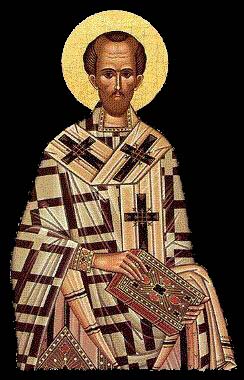
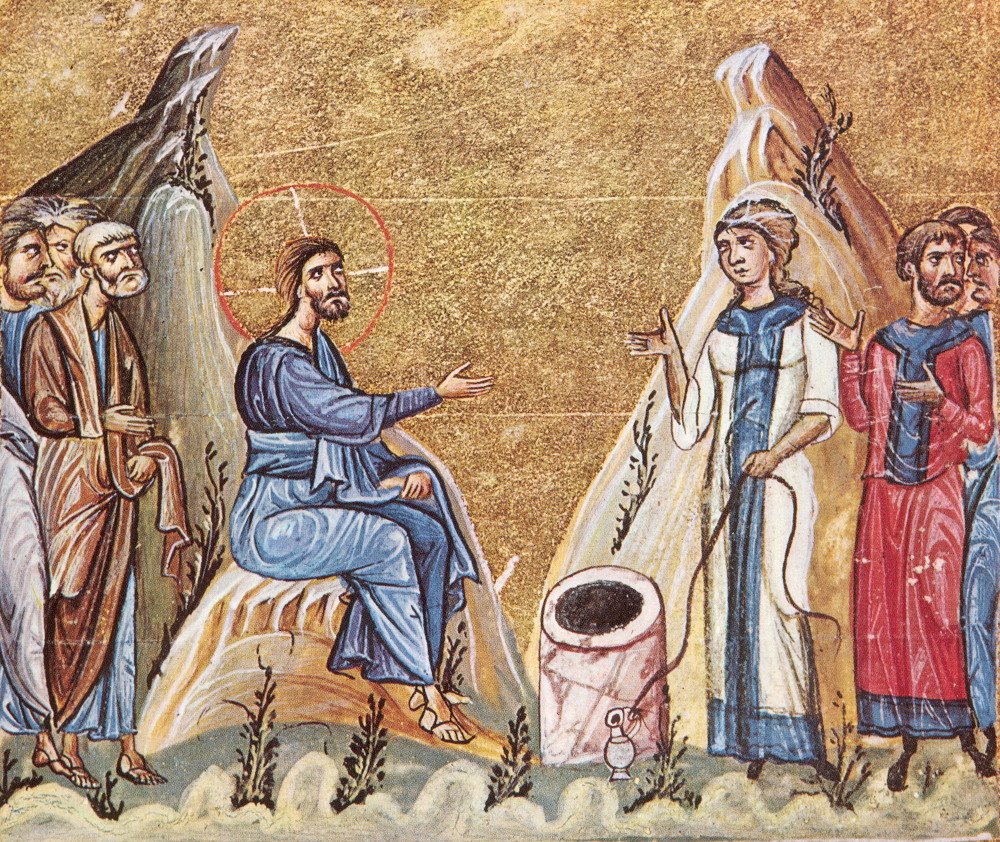
“Jesus answered and said unto her, Whosoever drinketh of this water shall thirst again: but whosoever drinketh of the water that I shall give him, shall never thirst; but the water that I shall give him, shall be in him a well of water springing up into everlasting Life.” (John 4:13-14)
Scripture calls the grace of the Spirit sometimes “Fire,” sometimes “Water,” showing that these names are not descriptive of its essence, but of its operation; for the Spirit, being Invisible and Simple, cannot be made up of different substances. Now the one John declares, speaking thus, “He shall baptize you with the Holy Ghost, and with Fire” (Matt. 3:11): the other, Christ, “Out of his belly shall flow rivers of living water.” (John 7:38) “But this,” saith John, “spake He of the Spirit, which they should receive.” So also conversing with the woman, He calleth the Spirit water; for, “Whosoever shall drink of the water which I shall give him, shall never thirst.” So also He calleth the Spirit by the name of “fire,” alluding to the rousing and warming property of grace, and its power of destroying transgressions; but by that of “water,” to declare the cleansing wrought by it, and the great refreshment which it affordeth to those minds which receive it. And with good reason; for it makes the willing soul like some garden thick with all manner of trees fruitful and ever-flourishing, allowing it neither to feel despondency nor the plots of Satan, and quenches all the fiery darts of the wicked one.
And observe, I pray you, the wisdom of Christ, how gently He leads on the woman; for He did not say at first, “If thou knewest who it is that saith to thee, Give Me to drink,” but when He had given her an occasion of calling Him “a Jew,” and brought her beneath the charge of having done so, repelling the accusation He saith, “If thou knewest who it is that saith to thee, Give Me to drink, thou wouldest have asked of Him”; and having compelled her by His great promises to make mention of the Patriarch, He thus alloweth the woman to look through, and then when she objects, “Art thou greater than our father Jacob?” He saith not, “Yea, I am greater,” (for He would have seemed but to boast, since the proof did not as yet appear,) but by what He saith He effecteth this. For He said not simply, “I will give thee water,” but having first set that given by Jacob aside, He exalteth that given by Himself, desiring to show from the nature of the things given, how great is the interval and difference between the persons of the givers, and His own superiority to the Patriarch. “If,” saith He, “thou admirest Jacob because he gave thee this water, what wilt thou say if I give thee Water far better than this? Thou hast thyself been first to confess that I am greater than Jacob, by arguing against Me, and asking, `Art thou greater than Jacob, that thou promisest to give me better water?’ If thou receivest that Water, certainly thou wilt confess that I am greater.” Seest thou the upright judgment of the woman, giving her decision from facts, both as to the Patriarch, and as to Christ? The Jews acted not thus; when they even saw Him casting out devils, they not only did not call Him greater than the Patriarch but even said that He had a devil. Not so the woman, she draws her opinion whence Christ would have her, from the demonstration afforded by His works. For by these He justifieth Himself, saying, “If I do not the works of My Father, believe Me not; but if I do, if ye believe not Me, believe the works.” (John 10:37-38) And thus the woman is brought over to the faith.
Wherefore also He, having heard, “Art thou greater than our father Jacob,” leaveth Jacob, and speaketh concerning the water, saying, “Whosoever shall drink of this water, shall thirst again”; and He maketh His comparison, not by depreciating one, but by showing the excellence of the other; for He saith not, that “this water is naught,” nor “that it is inferior and contemptible,” but what even nature testifies that He saith: “Whosoever shall drink of this water shall thirst again; but whosoever shall drink of the Water which I shall give him, shall never thirst.” The woman before this had heard of “living Water” (v. 10), but had not known its meaning. Since because that water is called “living” which is perennial and bubbles up unceasingly from uninterrupted springs, she thought that this was the water meant. Wherefore He points out this more clearly by speaking thus, and establishing by a comparison the superiority (of the water which He would give). What then saith He? “Whosoever shall drink of the Water that I shall give him, shall never thirst.” This and what was said next especially showed the superiority, for material water possesses none of these qualities. And what is it that follows? “It shall be in him a well of water springing up into everlasting life.” For as one that hath a well within him could never be seized by thirst, so neither can he that hath this Water.
The woman straightway believed, showing herself much wiser than Nicodemus, and not only wiser, but more manly. For he when he heard ten thousand such things neither invited any others to this hearing, nor himself spake forth openly; but she exhibited the actions of an Apostle, preaching the Gospel to all, and calling them to Jesus, and drawing a whole city forth to Him. Nicodemus when he had heard said, “How can these things be?” And when Christ set before him a clear illustration, that of “the wind,” he did not even so receive the Word. But the woman not so; at first she doubted, but afterwards receiving the Word not by any regular demonstration, but in the form of an assertion, she straightway hastened to embrace it. For when Christ said, “It shall be in him a well of water springing up into everlasting Life,” immediately the woman saith,
“Give me this water, that I thirst not, neither come hither to draw.” (John 4:15).
Seest thou how little by little she is led up to the highest doctrines? First she thought Him some Jew who was transgressing the Law; then when He had repelled that accusation, (for it was necessary that the person who was to teach her such things should not be suspected,) having heard of “living water,” she supposed that this was spoken of material water; afterwards, having learnt that the words were spiritual, she believed that the water could remove the necessity caused by thirst, but knew not yet what this could be; she still doubted, deeming it indeed to be above material things, but not being exactly informed. But here having gained a clearer insight, but not yet fully perceiving the whole, (for she saith, “Give me this water, that I thirst not, neither come hither to draw,”) she for the time preferreth Him to Jacob. “For” (saith she) “I need not this well if I receive from thee that water.” Seest thou how she setteth Him before the Patriarch? This is the act of a fairly-judging soul. She had shown how great an opinion she had of Jacob, she saw One better than he, and was not held back by her prepossession. Thus this woman was neither of an easy temper, (she did not carelessly receive what was said, how can she have done so when she enquired with so great exactness?) nor yet disobedient, nor disputatious, and this she showed by her petition. Yet to the Jews once He said, “Whosoever shall eat of My flesh shall never hunger, and he that believeth on Me shall never thirst” (John 6:35); but they not only did not believe, but were offended at Him. The woman had no such feeling, she remains and petitions. To the Jews He said, “He that believeth on Me shall never thirst”; not so to the woman, but more grossly, “He that drinketh of this Water shall never thirst.” For the promise referred to spiritual and unseen things. Wherefore having raised her mind by His promises, He still lingers among expressions relating to sense, because she could not as yet comprehend the exact expression of spiritual things. Since had He said, “If thou believest in Me thou shalt not thirst,” she would not have understood His saying, not knowing who it could be that spake to her, nor concerning what kind of thirst He spake. Wherefore then did He not this in the case of the Jews? Because they had seen many signs, while she had seen no sign, but heard these words first. For which reason He afterwards reveals His power by prophecy, and does not directly introduce His reproof, but what saith He?
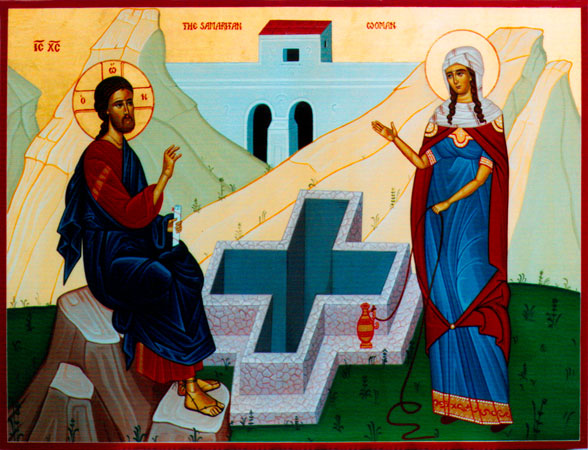
“Go, call thy husband, and come thither. The woman answered and said I have no husband. Jesus saith unto her, Thou hast well said, I have no husband: for thou hast had five husbands, and he whom thou now hast is not thy husband: in that saidst thou truly. The woman saith unto Him, Sir, I perceive that Thou art a Prophet.” (John 4:16-19).
O how great the wisdom of the woman! how meekly doth she receive the reproof! “How should she not,” saith some one? Tell me, why should she? Did He not often reprove the Jews also, and with greater reproofs than these? (for it is not the same to bring forward the hidden thoughts of the heart, as to make manifest a thing that was done in secret; the first are known to God alone, and none other knoweth them but he who hath them in his heart; the second, all who were sharers in it know;) but still when reproved did not bear it patiently. When He said, “Why seek ye to kill me?” (John 7:19), they not only did not admire as the woman did but even mocked at and insulted Him; yet they had a demonstration from other miracles, she had only heard this speech. Still they not only did not admire, but even insulted Him, saying, “Thou hast a demon, who seeketh to kill thee?” While she not only doth not insult but admires, and is astonished at Him, and supposes Him to be a Prophet. Yet truly this rebuke touched the woman more than the other touched them; for her fault was hers alone, theirs was a general one; and we are not so much stung by what is general as by what is particular. Besides they thought they should be gaining a great object if they could slay Christ, but that which the woman had done was allowed by all to be wicked; yet was she not indignant, but was astonished and wondered. And Christ did this very same thing in the case of Nathanael. He did not at first introduce the prophecy, nor say, “I saw thee under the fig-tree,” but when Nathanael said, “Whence knowest thou me?” then He introduced this. For He desired to take the beginnings of His signs and prophecies from the very persons who came near to Him, so that they might be more attached by what was done, and He might escape the suspicion of vainglory. Now this He doth here also; for to have charged her first of all that, “Thou hast no husband,” would have seemed burdensome and superfluous, but to take the reason (for speaking) from herself, and then to set right all these points, was very consistent, and softened the disposition of the hearer.
“And what kind of connection,” saith some one, “is there in the saying, `Go, call thy husband’?” The discourse was concerning a gift and grace surpassing mortal nature: the woman was urgent in seeking to receive it. Christ saith, “Call thy husband,” showing that he also must share in these things; but she, eager to receive (the gift), and concealing the shamefulness of the circumstances, and supposing that she was conversing with a man, said, “I have no husband.” Christ having heard this, now seasonably introduces His reproof, mentioning accurately both points; for He enumerated all her former husbands, and reproved her for him whom she now would hide. What then did the woman? she was not annoyed, nor did she leave Him and fly, nor deem the thing an insult, but rather admired Him, and persevered the more. “I perceive,” saith she, “that Thou art a Prophet.” Observe her prudence; she did not straightway run to Him, but still considers Him, and marvels at Him. For, “I perceive,” means, “Thou appearest to me to be a Prophet.” Then when she suspected this, she asks Him nothing concerning this life, not concerning bodily health, or possessions, or wealth, but at once concerning doctrines. For what saith she?
“Our fathers worshiped in this mountain,” (meaning Abraham and his family, for thither they say that he led up his son,) “and how say ye that in Jerusalem is the place where men ought to worship?” (John 4:20).
Seest thou how much more elevated in mind she has become? She who was anxious that she might not be troubled for thirst, now questions concerning doctrines. What then doth Christ? He doth not resolve the question, (for to answer simply to men’s words was not His care, for it was needless) but leads the woman on to the greater height, and doth not converse with her on these matters, until she has confessed that He was a Prophet, so that afterwards she might hear His Word with abundant belief; for having been persuaded of this, she could no longer doubt concerning what should be said to her.
Let us now after this be ashamed, and blush. A woman who had had five husbands, and who was of Samaria, was so eager concerning doctrines, that neither the time of day, nor her having come for another purpose, nor anything else, led her away from enquiring on such matters; but we not only do not enquire concerning doctrines, but towards them all our dispositions are careless and indifferent. Therefore everything is neglected. For which of you when in his house takes some Christian book in hand and goes over its contents, and searches the Scriptures? None can say that he does so, but with most we shall find draughts and dice, but books nowhere, except among a few. And even these few have the same dispositions as the many; for they tie up their books, and keep them always put away in cases, and all their care is for the fineness of the parchments, and the beauty of the letters, not for reading them. For they have not bought them to obtain advantage and benefit from them, but take pains about such matters to show their wealth and pride. Such is the excess of vainglory. I do not hear any one glory that he knows the contents, but that he hath a book written in letters of gold. And what gain, tell me, is this? The Scriptures were not given us for this only, that we might have them in books, but that we might engrave them on our hearts. For this kind of possession, the keeping the commandments merely in letter, belongs to Jewish ambition; but to us the Law was not so given at all, but in the fleshy tables of our hearts. And this I say, not to prevent you from procuring Bibles, on the contrary, I exhort and earnestly pray that you do this, but I desire that from those books you convey the letters and sense into your understanding, that so it may be purified when it receiveth the meaning of the writing. For if the devil will not dare to approach a house where a Gospel is lying, much less will any evil spirit, or any sinful nature, ever touch or enter a soul which bears about with it such sentiments as it contains. Sanctify then thy soul, sanctify thy body, by having these ever in thy heart, and on thy tongue. For if foul speech defiles and invites devils, it is clear that spiritual reading sanctifies and draws down the grace of the Spirit. The Scriptures are divine charms, let us then apply to ourselves and to the passions of our souls the remedies to be derived from them. For if we understand what it is that is read, we shall hear it with much readiness. I am always saying this, and will not cease to say it. Is it not strange that those who sit by the market can tell the names, and families, and cities of charioteers, and dancers, and the kinds of power possessed by each, and can give exact account of the good or bad qualities of the very horses, but that those who come hither should know nothing of what is done here, but should be ignorant of the number even of the sacred Books? If thou pursuest those worldly things for pleasure, I will show thee that here is greater pleasure. Which is sweeter, tell me, which more marvelous, to see a man wrestling with a man, or a man buffering with a devil, a body closing with an incorporeal power, and him who is of thy race victorious? These wrestlings let us look on, these, which also it is seemly and profitable to imitate, and which imitating, we may be crowned; but not those in which emulation brings shame to him who imitates them. If thou beholdest the one kind of contest, thou beholdest it with devils; the other, with Angels and Archangels, and the Lord of Archangels. Say now, if thou wert allowed to sit with governors and kings, and to see and enjoy the spectacle, wouldest thou not deem it to be a very great honor? And here when thou art a spectator in company with the King of Angels, when thou seest the devil grasped by the middle of the back, striving much to have the better, but powerless, dost thou not run and pursue after such a sight as this? “And how can this be?” saith some one. If thou keep the Bible in thy hands; for in it thou shalt see the lists, and the long races, and his grasps, and the skill of the righteous one. For by beholding these things thou shalt learn also how to wrestle so thyself, and shalt escape clear of devils; the performances of the heathen are assemblies of devils, not theaters of men. Wherefore I exhort you to abstain from these Satanic assemblies; for if it is not lawful to enter into an idol’s house, much less to Satan’s festival. I shall not cease to say these things and weary you, until I see some change; for to say these things, as saith Paul, “to me indeed is not grievous, but for you it is safe.” (Phil. 3:1) Be not then offended at my exhortation. If any one ought to be offended, it is I who often speak and am not heard, not you who are always hearing and always disobeying.
God grant that you be not always liable to this charge, but that freed from this shame you be deemed worthy to enjoy the spiritual spectacle, and the glory which is to come, through the grace and lovingkindness of our Lord Jesus Christ, with whom to the Father and the Holy Ghost be glory for ever and ever. Amen.
(Excerpt from: St. Chrysostom’s Homilies on the Gospel of St. John, available through the Christian Classics Ethereal Library).
Fr. Thomas Hopko MP3 Sermon:
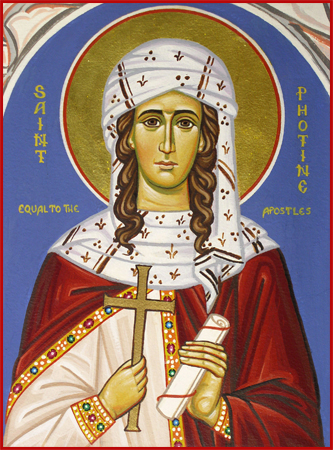
The Samaritan Woman: St. Photini
The New Testament describes the familiar account of the “woman at the well” (John 4:5-42), who was a Samaritan.
Up to that point she had led a sinful life, one which resulted in a rebuke from Jesus Christ. However, she responded to Christ’s stern admonition with genuine repentance, was forgiven her sinful ways, and became a convert to the Christian Faith – taking the name ‘Photini’ at Baptism, which literally means “the enlightened one.”
A significant figure in the Johannine community, the Samaritan Woman, like many other women, contributed to the spread of Christianity. She therefore occupies a place of honor among the apostles. In Greek sermons from the fourth to the fourteenth centuries she is called “apostle” and “evangelist.” In these sermons the Samaritan Woman is often compared to the male disciples and apostles and found to surpass them.
Later, Byzantine hagiographers developed the story of the Samaritan Woman, beginning where Saint John left off. At Pentecost Saint Photini received baptism, along with her five sisters, Anatole, Photo, Photis, Paraskeve, Kyriake, and her two sons, Photeinos and Joseph. She then began a missionary career, traveling far and wide, preaching the good news of the Messiah’s coming, His death and resurrection. When Nero, the emperor of Rome, began to persecute Christians, Photini and her son Joseph were in Carthage, in Africa, where she was preaching the Christian gospel. After Jesus appeared to Photini in a dream, she sailed to Rome. Her son and many Christians from Africa accompanied her. Photini’s arrival and activity aroused curiosity in the capital city. Everyone talked about her, “Who is this woman?” they asked.
“She came here with a crowd of followers and she preaches Christ with great boldness.”
Soldiers were ordered to bring her to the emperor, but Photini anticipated them. Before they could arrest her, Photini, with her son Joseph and her Christian friends, went to Nero. When the emperor saw them, he asked why they had come. Photini answered, “We have come to teach you to believe in Christ.” The half-mad ruler of the Roman Empire did not frighten her.
She wanted to convert him! Nero asked the saints their names. Again Photini answered. By name she introduced herself, her five sisters and younger son. The emperor then demanded to know whether they had all agreed to die for the Nazarene. Photini spoke for them. “Yes, for the love of Him we rejoice and in His name we’ll gladly die.” Hearing their defiant words, Nero ordered their hands beaten with iron rods for three hours. At the end of each hour another persecutor took up the beating. The saints, however, felt no pain. Nothing happened to their hands. Photini joyfully quoted words of a psalm by David: “God is my help. No matter what anyone does to me, I shall not be afraid.” Perplexed by the Christian’s endurance and confidence, Nero ordered the men thrown into jail. Photini and her five sisters were brought to the golden reception hall in the imperial palace. There, the six women were seated on golden thrones, In front of them stood a large golden table covered with gold coins, jewels and dresses. Nero hoped to tempt the women by this display of wealth and luxury. Nero then ordered his daughter Domnina, with her slave girls, to go speak with the Christian women.
Women, he thought, would succeed in persuading their Christian sisters to deny their God. Domnina greeted Photini graciously, mentioning the name of Christ. On hearing the princess’ greeting, the saint thanked God. She then embraced and kissed Domnina. The women talked.
But, the outcome of the women’s talk was not what Nero wished. Photini catechized Domnina and her hundred slave girls and baptized them all. She gave the name Anthousa to Nero’s daughter. After her baptism, Anthousa immediately ordered all the gold and jewels on the golden table distributed to the poor of Rome.
When the emperor heard that his own daughter had been converted to Christianity, he condemned Photini and all her companions to death by fire. For seven days the furnace burned, But when the door of the furnace was opened, it was seen that the fire had not harmed the saints. Next the emperor tried to destroy the saints with poison, Photini offered to be the first to drink it. “O King,” she said, “I will drink the poison first so that you might see the power of my Christ and God.” All the saints then drank the poison after her. None suffered any ill effects from it. In vain Nero subjected Photini, her sisters, sons and friends to every known torture. The saints survived unscathed to taunt and ridicule their persecutor. For three years they were held in a Roman prison. Saint Photini transformed it into a “house of God.” Many Romans came to the prison, were converted and baptized. Finally, the enraged tyrant had all the saints, except for Photini, beheaded. She was thrown first into a deep, dry well and then into prison again. Photini now grieved that she was alone, that she had not received the crown of martyrdom together with her five sisters, Anatole, Photo, Photis, Paraskeve and Kyriake and her two sons, Photeinos and Joseph. Night and day she prayed for release from this life. One night, God appeared to her, made the sign of the cross over her three times. The vision filled her with joy. Many days later, while she hymned and blessed God, Saint Photini gave her soul into God’s hands. The Samaritan Woman conversed with Christ by the well of Jacob, near the city of Sychar. She drank of the “living water” and gained everlasting life and glory. For generation after generation, Orthodox Christians have addressed this prayer to the woman exalted by the Messiah when He sat by the well in Samaria and talked with her:
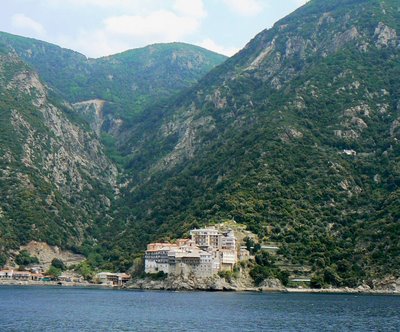
The precious head of St Photini is preserved to day in the Monastery of Grigoriu from the Holy Mt. Athos, Greece.
TROPARION Hymn in tone 3
All illuminated by the Holy Spirit, you drank with great and ardent longing of the waters Christ the Savior gave to you; and with the streams of salvation you was refreshed, which you abundantly gave to those athirst. O Great Martyr and true peer of the Apostles, Photini, entreat Christ God to grant mercy to us.
KONTAKION Hymn in tone 3
Photini the glorious, the crown and glory of Martyrs, has this day ascended to the shining mansions of Heaven, and she called all together to sing her praises, that they might be recompensed with her hallowed graces. Let us all with faith and longing extol her gladly in hymns of triumph and joy!
(From Saints and sisterhood: The lives of forty-eight Holy Women Light and Life Publishing Company)
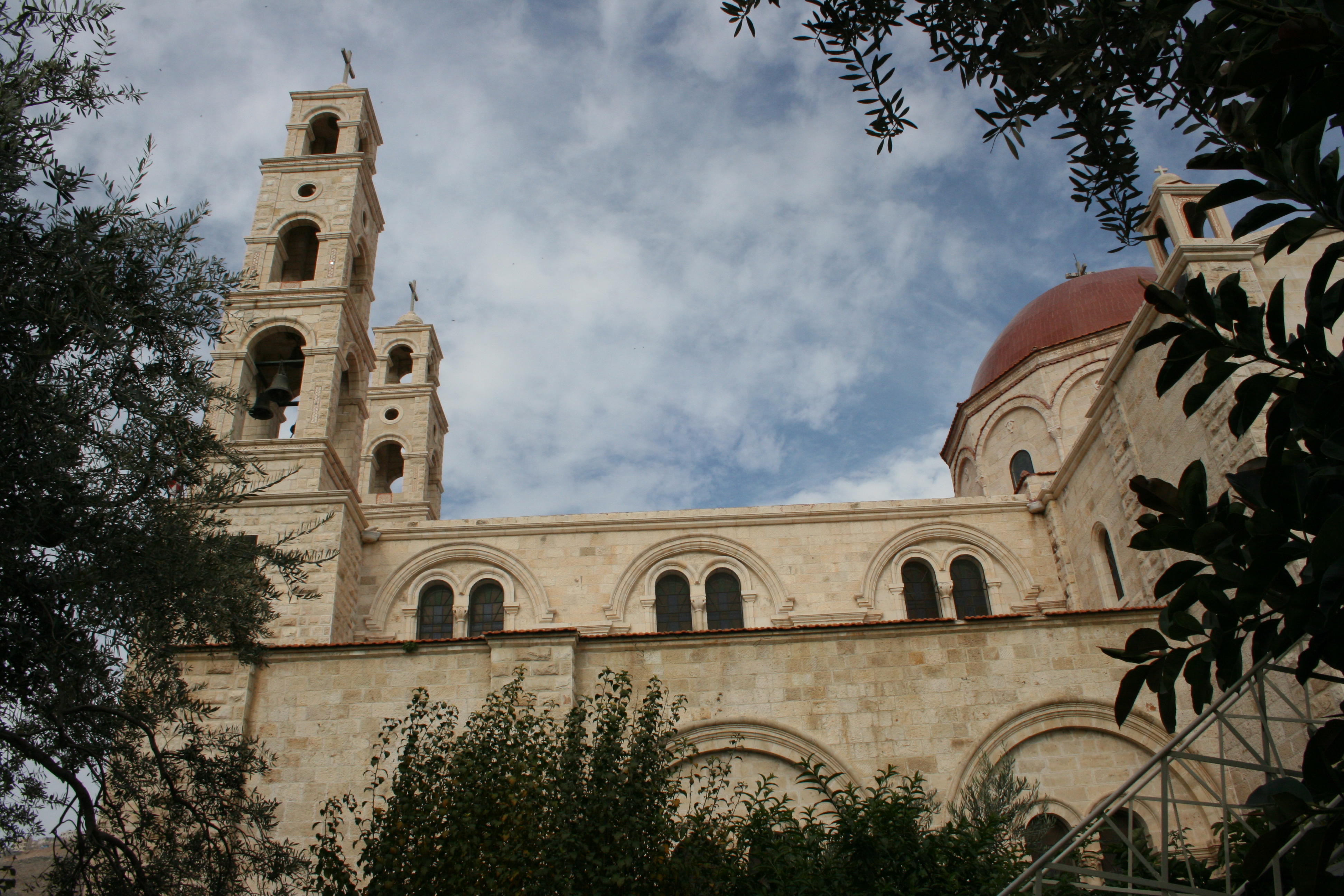
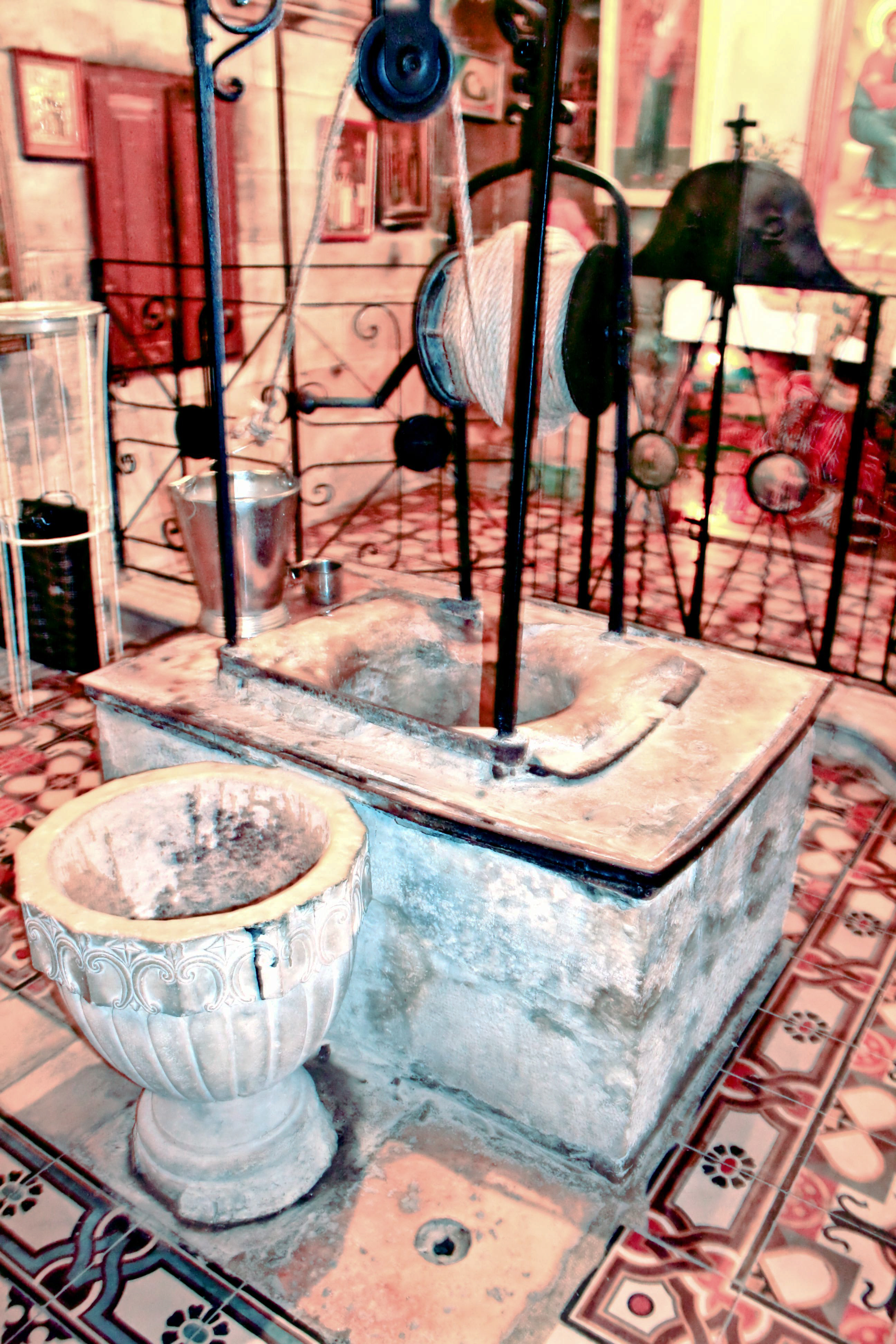
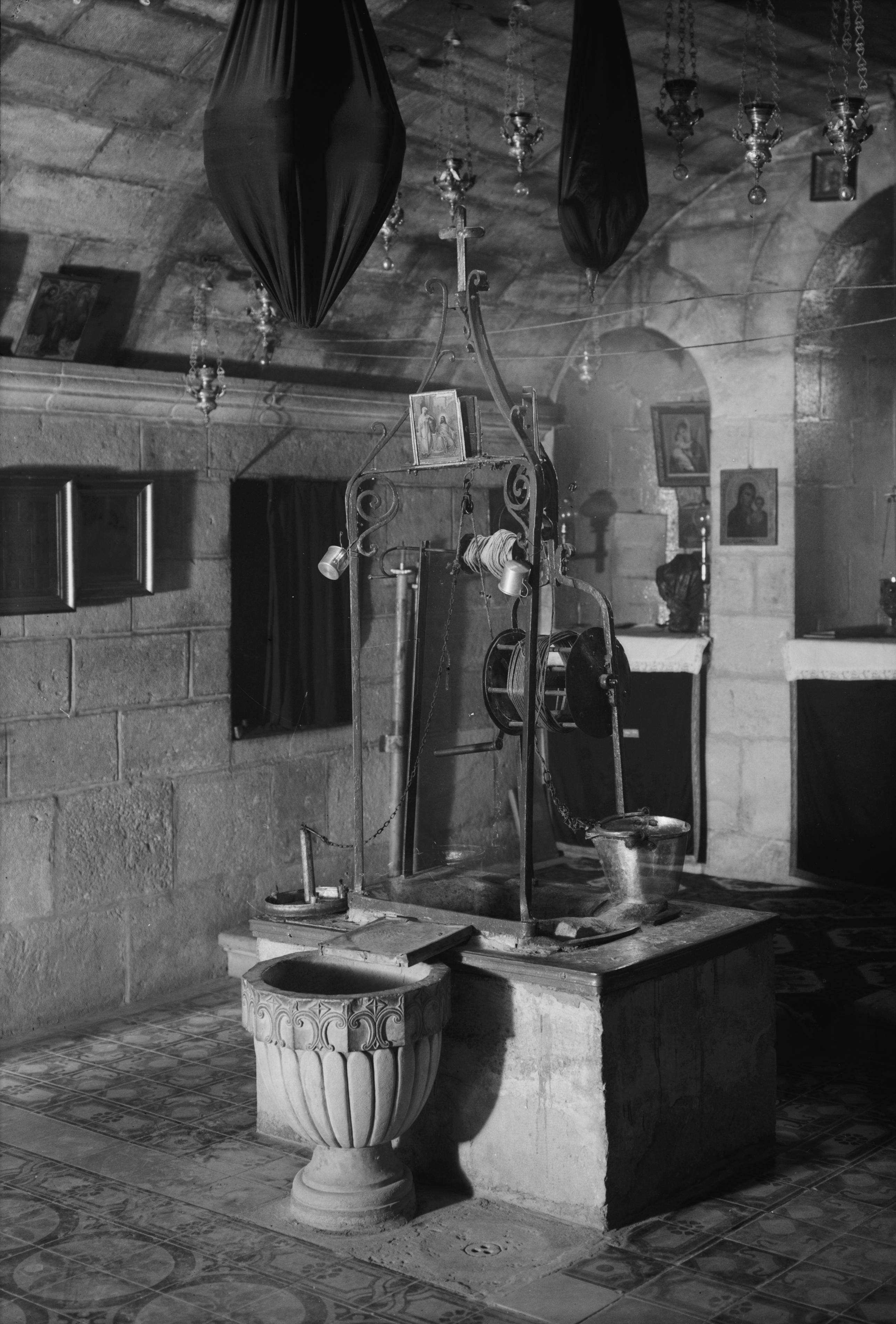
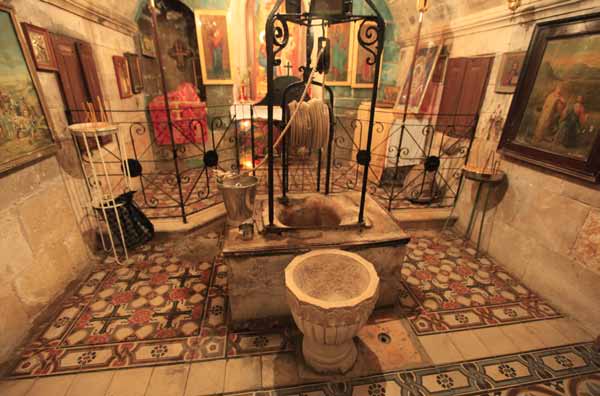
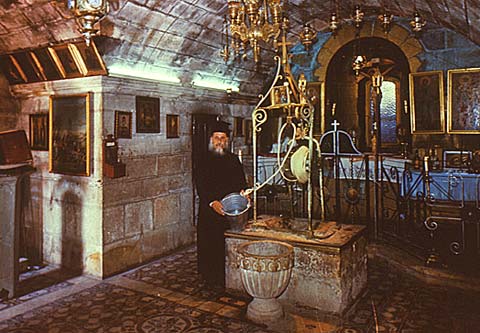
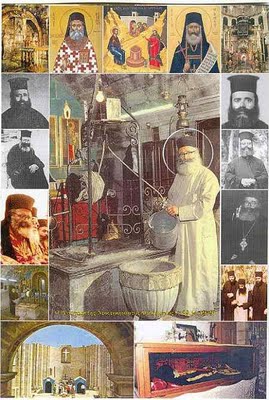
Samara – the capital of Shechem (Nablus) is located at the foot of Mount Garizim – the holy mountain of the Samaritans. Shechem is the place of “the Fountain of Jacob” where our Saviour met the Samaritan woman – St. Martyr Photini. A beautiful Greek Orthodox Church was built here over the place where Empress St. Helena built the initial church in the late IV-th century. On November 29, 1979, fr. Filumen was martyred here, been canonized on November 29. 2009. The precious secred relics of the Holy New Martyr. FILUMEN were brought to the Fountain of Jacob in 2009 (see photo bellow).
 Christian Dogma
 Christian Martyrs
 Christian Orthodox Churches and Monasteries
 Christian Sermons and News
 Church's Teachings on Fasting
 Ecumenism – a Great Heresy
 Father George Calciu
 Life_a Sacred Gift form God
 Orthodox Saints and Church Fathers
 Spiritual Elders
 Daily Bible Readings
 Journey to Orthodoxy
 Listen to Ancient Faith Radio
 Orthodox Calendar of Feasts and Saints
 Orthodox Christian Mission Center
 Orthodox Institute
 OrthodoxChristianNetwork TV


Recent Comments