
You are currently browsing the category archive for the ‘Orthodox Saints and Church Fathers’ category.
Father George CALCIU and a Life Sacrificed for Christ

“The only chance of survival for Eastern Christianity
is that of a warfare through the Word.
Our solution is of Calciu-Dumitreasa… “
N. Steinhardt
The future priest George Calciu-Dumitreasa was born in 1925 in Mahmudia, Tulcea, Romania, having been the eleventh child and the youngest of the faithfull parents Dumitru Calciu and Ileana Calciu (former Balan). In his memoirs (and especially in the book „The life of Father George Calciu – after his testimony and those who knew him”, edited by Diaconesti Monastery, Christiana Press, Bucharest, 2007), father George with his humorous style, noted that he learned more practical theology from his peasant mother than from all the treaties and theological schools he attended.
The young George followed the gimnasium in his native village and, then as a high school student in Tulcea, he came in contact with the Legionary Movement and joined, like most young people of his generation, the Fellowships of the Cross (a youth organization of the „legion of the Archangel Michael” intended for high school and junior college students where political views were only secondary, its primary focus was for an education of its memmers in intellectual, national morals, Christian values and brotherhood).
Eager to help the poor peasants among whom he grew up, the young George opts after the baccalaureate for the School of Medicine in Bucharest. When he was arrested in May 1948 he was a medical student in the second year.
Like many young people of his time zealous in faith and with national pathos, members of the Brotherhood of the Cross or perhaps only supporters of the Legionnaire’ cause, the young student George experinced the hell of Piteşti prison. At Piteşti, between the years of 1949 and 1951, under the worst physical and psychological tortures, overcomed by weakness and confusion („they called me the fallen angel with blue eyes” father used to say), he is „recruited” for a short time in the team of the torturers led by the sinister „instructor” Eugen Ţurcanu. Ţurcanu, a diabolical character, was once part of the legionnaire movemet but then recruted by the communist party as a key collaborator in the “Piteşti’ experiment” and lastly eliminated with no scruples by the regime.
However, the young student George Calciu will have a spectacular moral comeback refusing to take part in the Securitate [comunist’ secret service] wicked plan and overturning the trial intended for Ţurcanu and his colaborors; trial by which the comunists were not seeking justice but just to defend their party, through the old method of „finding the scapegoats”.
The young George Calciu finds the courage to point at the real culprits at large: the Secret Service Department of the Communist party founded by Kremlin which planed this odious process of “re-education” by using Ţurcanu and others like him as instruments in trying to promote the falls idea that everything was done by the exiled Legionaries and not by the regime.
With Piteşti, the redeeming odyssey of Paulinic dimentions of young George began, followed until 1963 by inprisomnent in Gherla, Jilava and Aiud and until 1964 by a house arrest in Bărăgan; a George no longer accepting any compromise and determined after his release to sacrifice the rest of his life for Christ and His Church. As I once commented: “This man’s life after the tragic experiment of Piteşti has become one of repentance, confession of faith and sacrifice. […] Perhaps no one after experiencing Piteşti was able to reach such moral comeback, an unrefuted victory over the evil. Because there is the case: George Calciu, it can be said that the Piteşti experiment has failed. Piteşti has physically crushed people, but it could not ultimalety destroy the Man. The greatly tempted George Calciu was not only tring to save himself but he eventually saved the human dignity in the face of what phylosopher Mircea Eliade called the terror of history.”
Having being released in 1964, George finds the strength to rebuild his life and fulfill that exemplary promise; he marries Adriana Dumitreasa (herself with two brothers that had passed through the communist prisons) who gives birth to their only son, Andrew (currently an attorney in Washington DC and father of a son). He is “tolerated” by the Securitate to enrole in the college of Philology and then – with the support of the brave and skilful Patriarch Justinian – in the school of Theology. He teaches French literature for a short period of time, then he is ordained priest and named professor of the New Testament at the Theological Seminary in Bucharest.
After the great earthquake from 1977 (prompted by the demolishion of Enei Church in Bucharest and the communists villain campaign directed by Ceausescu against the holy churches), Father George resumes his open battle with the communist regime and during the Great Lent of year 1978, he starts preaching in Radu Voda Church (then on its front steps when the church officials of the time had tried to stop him by locking the doors of the church) his famous homilies “Seven Words to the Youth,” – a series of sermons calling the youth and especially the future priests, to resistance in the name of Christ and harshly criticizing the atheistic materialism and the insanity of the Ceausescu’ regime.
His sermons had a local and international resonance, especially through the radio station “The Free Europe” but also circulated in typewritten copies, “under hand”, marking destinyes and consciousness.
After many threats, slanders and prosecution (everted also at his family and at his loyal students, so-called “calcişti”) with the intent to stop him, Father George is arrested again (on May 10, 1979), alleged with absurd charges and sentenced to 10 years of inprisonment (later changed to seven and one-half years) of which he executed five years. Father George was released on April 20, 1984 following the international pressures (from the West) directed at the communist regime of Romania.
So Father George Calciu executed a total of 21 years of inprisonment under the communists: 16 years under Gheorghiu-Dej regime (from 1948 to 1964, including one year of house arrest) and 5 years under Ceauşescu regime (from 1979 to1984)!
In 1985, he was practically forced to leave his country along with his family – once again greatly tested. After a brief stop in Western Europe, father moved to the United States – where he was granted “the honorary citizenship”, however with no pecuniary advantage. So practicly father had to start his life over again, working initially as a construction worker – although he’d already reached the age of 60 – to be able to survive and support his family.
Thus, to the 21 years of inprisonment, 21 more years of exile were added.
In America, Father George Calciu continued to endeavored, as much as the Lord strengthen him, to fight the good fight in the name of Christ and his nation. Besides his parish ministry (in Alexandria, VA), he advocated before many international fora in defending many oppressed Romanians; father had also met – among others – with presidents François Mitterrand, Ronald Reagan, as well as King Michael the Ist of Romania; he was a central presence at all important meetings of the diaspora; he published the book “Christ Is Calling You. A Course in Catacomb Pastorship” (St. Herman of Alaska Press, Platina, California, 1997) and much more…
Starting with 1990 after the fall of Communism, father will return every autumn, to visit the home land he had loved and unwillingly abandoned, bringing the same message of unity and forgiveness. In a travel journal from 2003, he noted with tenderness and bitter introspection: “Every year, the spirit of love for my country and its people, its monasteries and their dwellers, for my dear friends and relatives, draws me back to the steps of my childhood and youth and to the joys and sufferings I’ve experinced there – the most precious treasure of those 6 decades of my living in Romania, until the time of my estrangment [exile] 18 years ago. It is like a endless abiss that split my life in two in 1985, deeper and wider than the inprisonment. Maybe because even in prison, my life was following its course on the country soil, and perhaps it is why I always live contemplating my next visit back, passing over an ocean of waters and memories… “
On November 23, 2006, Father George would had turned 81 years. But he passed on November 21 (at 13.10, or 20.10 Romanian time) after 3 days of coma at the Fairfax Hospital, VA brought – at the request of his family – from the Central Military Hospital in Bucharest, where he had spent a prior month and was visited for the last time by many who loved him; by Patriarch Teoctist of Romania and by Metropolitan Bartolomeu Anania – his spiritual instructor who confessed and communed him for the last time.
Departed in the Lord two days before turning 81 years, father was brought back to Romania on the Feast of the Apostole Andrew and laid in the Monastery Church of Radu Voda, where once father delivered the “Seven Words to the Youth.” The official ceremony [memorial service] took place on December 2, and was led by His Beatitude Patriarch Teoctist of Romania in the presence of his Eminence Archbishop Iosif Pop, Bishop Varsanufie Prahoveanul and Bishop Irenaeus Duvlea from America, representing his Eminence Archbishop Nathaniel of OCA. The Patriarch delivered a memorable speech evoking in addition to the theological and spiritual virtues of the newly reposed, father long struggle against the atheist and materialist regime of Romania as well as father “martyrdom in the communist prisons.”
At noon we departed for Petru Voda, father burial place that he had chosen in his will. Thousands of faithful from all over the country and abroad, gatered at Petru-Voda Monastery for the memorial service led by Archimandrite Justin Pārvu (aboot of the monastery and a former political prisoner under communists) in the presence of 34 priests. Father George was layed to rest – and it’s now seven years! – at the foot of “Romania Holy Mountains”, in the heart of Petru Voda, having as “companions in suffering” Abbot Justin Pārvu and poet Radu Gyr. And with no doubt, powerfull is their threefold prayer before God for those who will receive according to their love.
(Răzvan CODRESCU, Christian Journalist)
Father George 7 years memorial service:
Few Counsels of Elder Justin Pârvu

Love the poor and co-suffer with them, so God may also have mercy on you.
Do not rebuke those sorrowful at heart, that you might not be paid back with the same rod, so that when you’ll seek for someone to have mercy on you, you might find him there!
Remember that you also bear a mortal body, and do good to all with no exception.
Discernment is greater than all other virtues.
Do not reproach anyone for their sins, but consider yourself responsible for everything, even for your neighbor’s sins.
It is better to be despised than to despise. It is better to be insulted than to insult another.
Do not live with a proud man, so that your soul would not lose the grace of the Holy Spirit becoming thus the habitation of evil passions.
He who flees the vain glory of this world, feels the glory of the future life in his soul.
Despise repose and a comfortable existence, so that you might preserve your thoughts in tranquility.
Avoid meeting excessively with others and take care of your own soul, so that you might preserve her peace.
Avoid small sins, so that you might not fall into greater ones.
It is more profitable to resurrect your soul from the passions, contemplating the Divine, than it is to raise the dead.
Many have done wondrous deeds, raised the dead, and labored in asceticism; they worked great miracles in order to bring the lost to the path of salvation. Many have been brought to God through their efforts. However, many who raised the dead have fallen into shameful passions and by their sinful deeds that became known, have led many into temptation. In reality they themselves were sick, but instead of caring for their own soul, they threw themselves into the open sea of this world in order to heal and save the souls of others, thereby ruining both their hope and their souls.
Whoever despises the seductions and distractions of the mind that come from worldly affairs will meet his Master and Lord in his heart.
So that the Lord might pay attention to our virtues, they must be accompanied by physical temperance and a pure conscience.
It is better to live with eagles than with the greedy and insatiable.
It is better to live with a crippled and outcast person than with a proud man.
It is better to be persecuted than to persecute; it is better to be crucified than to crucify; it is better to be insulted than to insult; it is better to be slandered than to slander others.
Self-justification has no place in the life of a Christian, for it’s not found in any of Christ’s teachings.
If you love meekness, you will find peace in your soul. And if you become worthy to acquire peace, you will rejoice in any trial.
God forebears all our infirmities, but He cannot bear one who constantly murmurs, so He punishes him in order to correct him.
The lips and the heart that give thanks to God in any trial or temptation receive His blessing and Divine grace.
God’s grace is preceded by the humble thought, but God’s punishment is preceded by high-mindedness.
When your life is according to God, do not be saddened over afflictions or your passions, for God will lift them from you one day. Fear not death, my child for God has prepared greater things in order to raise us above death.
Source: http://petruvoda.ro/2013/08/08/few-counsels-of-elder-justin-parvu/
See also: The Miracles of Elder Justin following his repose
http://www.johnsanidopoulos.com/2013/06/testimonies-of-miracles-following.html
On the “rights” of the demoniacs
(by Father Constantine S).

Lets go back a couple thousand years ago, somewhere in the land of Gadhara, where our Saviour was greeted by two demoniacs, who lived in the graves (Matt. 8: 28-34) The two possessed men were acting so fiercely that nothing could keep them still, even the most powerful chains, and no one dared to pass by them because of fear. The demons were cast out by Christ Who allowed them to enter a herd of pigs, that once possessed by the unclean spirits run into the nearby sea shore, perishing. The consequence was that the inhabitants of those lands asked Jesus firmly to leave their land.
Surely, a lot can be said on the inhabitants of Gadhara that asked Christ to leave their land for “the damage” He had caused to them. Placing it into the current context, we can also think how the people of that land, by their gesture, have fought for the “demoniacs rights”. If these two possessed men chose to serve the powers of darkness (as no one will get possessed unless he does the devil’ will), why not leave them as such and respect their choice? In other words, why they should be discriminated against just because they are different from other people? You can be a man living in the community, having a normal family, but you can also be demonized, living in isolation… So why should we bother these people? Especially when intervening in their healing, you risk to have a consistent loss. That’s how the inhabitants of Gadara were probably thinking, concerned not to disturb the community of demoniacs, quite large in those days.
The Gergesens of our days however, have progressed as they work preventively. They no longer wait for God’s intervention so they may ask Him to leave their lives, but watch for Christ not be present at all in society, so that He may not heal anyone from certain passions. And for this, they need laws to restrict the access of God in schools and public places, leaving (at least for now) the chance that He may be present in private places.

The contemporary Gergesens, fearing discrimination damages, rush to offer to all the “sexually diverse” [possessed] the “right” to live forever in their tombs of loneliness, in suffering and un-fulfillment as a man and woman in the family. Under the pretext of respecting “human rights”, it is hidden in fact the inability of contemporary man to truly love. We don’t love others when we leave then in a state of been continuously traumatized, we do not help by “respecting their right” to suffer alone or even as a gay couple with pretends to be “married”. We love man when we intervene to free him from the pain that makes him to wrongly choose. A wrong choice to his initial longing for God and paradise, that is impossible to be voided by laws and directives.
We have become accustomed to evil
(by Fr. George Calciu)

Today we’ve got used to all evil. So much we’ve became accustomed to this state that no one is disturbed by a new heresy that arises. We’re no longer troubled by homosexuality, or by a “Da Vinci Code”. We are accustomed to evil. It is the darkest side of us all. We are accustomed to evil in such a way that we no longer notice it. This is our moral state in today’ world. Every heresy that occurs primarily earns its presence in the city, by the dirty laws of society and all modern societies have such laws. They’re all in the service of the Antichrist to destroy all morals, to isolate the person, to create division, to make him a slave, a mare cog of the Government’s agenda. No matter whether you live in the “greatest” democracy! All these have made us to slowly get used to evil. Today no one cries out on what happens near us, or when Jesus is mocked, or that our faith is been transformed into a game. Christians are considered retarded because they believe in Jesus Christ. We are been told that there is no other faith but only what is palpable: and “the right” to enjoy life, without restraint!
Elder Arsenie Papacioc of Romania, blessed memory, was part of the great generation of confessors for Christ that had suffered much while imprisoned for their faith under the atheist [communist] regime of the east. His words, not academic but rather simple, down to earth, have great authority as they are spoken from an experience of suffering and with a burning love for everyone.

On Charity/ Mercy
With God there is no past evil, where there is a good present.
When God forgave you, it means He forgave you for eternity.
God keeps us not that we are worthy, but because He is very merciful.
My brothers do not ignore a begging hand, or one that offers help.
Charity is not only to give something. It means to accept the man sitting next to you, without casts him out in your mind.
In having pity on others – it shows our likeness to Christ.
The beggar stretches out his hand not to ask, but to give you the kingdom of heaven, and you do not notice!
Lets remember my brothers: beggars are biblical characters!
Do you want to get rich? Give everything you have! And you’ll receive a hundredfold!
Man doesn’t account much when he receives, yet he remembers when he gives.
Learn to live not only in you, but to live in [for] all who are with you.
The mercy of God does not abolish hell [judgment].

On Love
We need to love much! For Christ is commanding us!
Lets be attentive, love is the criteria of [the last] judgment!
When Christ asked us to love, He also gave us the strength to do it.
We should love our pain [sorrow] and those that caused it.
You are free and have the possibility to climb [grow], if you do not hate.
Our hearts must always be free for Christ.
This world is not evil; we are at fault for we do not know to love.
The hate of your neighbor is the most devilish work.
If you would try to love people as you love Christ, then you’ll no longer see the wrongs of your neighbor.
Know that the love for the enemies is a commandment. We ought to boast them in our heart.
One question is justified, let us all ask ourselves: “Do I love or I do not…?” – for it’s a commandment, my brother! Do not think that our Savior spoke only to the people of His time or to His apostles. No… He spoke for all men and for eternity.
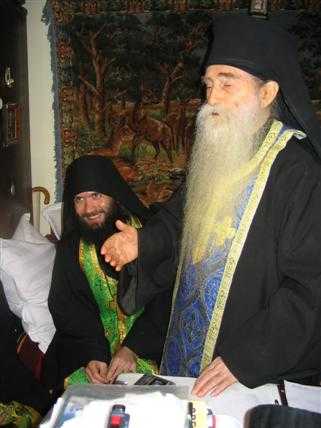
Instructions to the Priests
Fathers, the great battle is to heal their wounds, not to apply penances. We defile His sacrifice on Golgotha when we refuse to absolve those with grievous sins when they repent.
The Canons of the Church are a great guidance. But you are to use them with elasticity [iconomia].
It is said that the deer will not run well for two reasons: when she is too fat, or when she is too weak. Too much asceticism can weaken someone, but also indifference and non-engaging could “fatten” man.
Personally, I’m not for penances that require a lot of time and physical effort.
Penance means the possibility to repent, to commit that sin no more, to struggle not to fall again.
A good penance is to look at the penitent as at someone you love!
We need a … continuous state of love.
We must have “the need” to love. There is never someone near you by coincidence [in vain]. He is there, by God’s providence.
A spiritual father accounts for his child’ weakness.

On Salvation
God does more for our salvation than Satan for our destruction.
Outside the Church, there is no salvation! Hell exists only outside the Church.
He who can do good but does not do it, commits sin.
Only the devil cannot be saved.
Without God’s grace, it is impossible to be saved only by your actions, no matter how great of an ascetic you may be.
It is the Cross that saved mankind! Not God’s justice or His miracles, but His Cross! When Jesus was crucified, Satan was defeated.
I do not see how fasting alone can give us hope for salvation. Humility rooted deeply in our hearts and freedom from resentments, are hopes for our salvation.
What we’re being asked first is: the will to overcome temptations. And by praying to God, His grace will not abandon us.
Heaven is full of repentant sinners.
We ought to strive for the world to be saved, with everything we’ve got!
So every day we may gain eternity. That’s our ideal.
Our Saviour was not crucified only for a “category” of sins, but for everything that means sin on earth.
And He gave everyone the strength to avoid hell, yet He descended into hell.
And those from hell, He also loves. But they are whipped by His love, by His justice. And what Christ did not do to save us from hell?
Fear of death is not caused by death but by life. If you want not to fear death, live as a Christian!
Only those who don’t live in Christ, fear death!
Man, in his foolish pride and suffering, wants all heaven in a moment!
There is no sense or purpose, if there is no God.
We too can overcome the world, not by our power but by His.
Nothing is lost, as long as our faith is alive!
Life it is too precious to be spent in vanity.
On Marriage and Family
When we say during the Holy Sacrament of Marriage’ prayers, that the woman shall be subject to her husband, the husband must also take heed when he is told in the same prayer, that he must love her. If he does not love her, she will not obey him. Man, by not listening to this word, becomes responsible for the woman’s stubbornness. The woman must also not forget that this obedience is her way to salvation. And if the man is the head [of the family] then the woman is the heart, and this heart is made by God that He may find rest in it!
Nothing is better than a good [hearted] woman and nothing is worse than a fallen woman. So husbands, you must labor with all your power to transfigure her.
Love joins everything in the two. This is the symbol of the wedding ring.
A marriage done just for pleasure has no meaning. Marriage means reaching together into eternity.
It is the married woman that gives birth, raises and educates the child.
We cannot accept by any means that the woman will have an abortion… It’s a great matter for she will murder an unbaptized man. We must always ask ourselves: what Christ would’ve done in this case?
Family remains the best instructor.

On the Holy Eucharist
The Eucharist will perfect you; it won’t forgive your sins.
The man that prepares can commune often, but he must be given a time for repentance first. For indeed who is that prepared for such wonder?
Some neglect the mystery of confession and use it just as a pretext to commune.
On Christian Suffering
My dear, suffering is a gift from God!
The mission of Christ on earth was to save the world through suffering, so suffering brings much humility.
It is a mistake to run from your own suffering. You are truly free only when you are struggling, when you are present on the cross.
Suffering brings deep wisdom and make you reflect more seriously on your salvation.
A question arises: how is our heart responding to the suffering around us? The greatest thing we’ll be asked at the last judgment is: “Why have we not paid more attention to our neighbor?”
On the sin of homosexuality
God had punished it by fire! (Genesis 19: 24-25). It is the most grievous sin! It is said that this sin urges The End!
I mean those sins will bring judgment sooner over the world. Save yourself my brother, for many are falling… It’s the word of the Holy Fathers that this very serious sin, of sodomy (homosexuality) brings swiftly Judgment … We are now in an advanced stage, as the West already officiates sodomy (same sex marriages)! …
Other Thoughts
I’m not sad that I’m an old man! I do nothing for myself. Everything that I do, I do it for God and for His children.
I’m not all for a great asceticism. I lean more for a great vigilance! For it is not asceticism [in itself] what God wants from us but our broken and humble hearts, His continuous presence in our lives.
I’ve experienced many things in life and have seen God’s wonders; “I saw the invisible God, I experienced Him!” Our world today strives to see only His contour; she wants to touch Him in a carnal form.

Miscellaneous
The Mother of God represents the human race.
Lets get accustomed to the authority of the words of the Holy Scripture.
Peace is greater than justice.
There is no one thing from what Christ spoke that it cannot be fulfilled.
Our life is our witness! And we ought to confess the Truth, wherever we are.
No matter where [who] we are, we’re all are unprepared, and it’s only by God’s grace that we do the things that we do.
If you’re vengeful, you’ll be indebted to God. But if you ‘resist not evil’, then God “owns” you.
We must refute immediately all [evil] thoughts that come to mind, and they will come until our last breath.
God’s will not delay His help if we’ve purified our heart.
Often, you compare yourself with the man you call evil! Why don’t you see comparing yourself to St. Peter and Paul, or with Saint Siouan the Athonite [of Mt Athos]?
If you went to ask the advice of a bishop or of a man [abbot] of God, know that the answer will come from God not from that bishop or abbot. If you complained about it, know that is God that you slandered.
Elder Cleopas was great father! A great chancellor with much knowledge and also of detail! He created a spiritual era. He leaned more towards an ascetic work with strict fasting, prayers and tears of repentance; I’m more for watchfulness [awakening].
Other Counsels
Believe in God, love the church and follow the [spiritual] fathers of the church. Walk your life on the road of humility. Acquire a good name near Christ. Insist more in prayer. You’ll be free only when you walk with love towards those who hate you! Stay still in Christ for eternity…
(Translations by EC)
Words of Wisdom (I) with Elder Arsenie Papacioc;
Blessed memory, 2 years from his reposal in the Lord.

On Humility
The humble man never acknowledge himself as such… for he would not be humble!
Humility is the only power that can free the human soul and the nations.
There is only one way to follow: humility!
Christ was humble, then who are we not to be…?
Do you wish to overcome evil: humble yourself and do not judge. Then, you will be free.
Humility leads you to God, but love tastes God!
Humble yourself, for the Grace to abound in you.
Humility is the blood of life. One cannot be saved without it.
Man can never say: “I am humble!”
Humility is the art to descend into yourself and to remain there, in the humble you.
Sometimes the grace abandons you, so you may humble yourself before God!
On Prayer

God is very rich! And He’s awaiting us! … He waits for us to ask!
Wherever you are, and whenever you’re tempted, pray and do not be discouraged!
Anyone who wants to acquire the gift of prayer, must keep silent and pray.
We speak so much about prayer. That’s one thing that it cannot be discussed but practiced.
A deep silence is a deep prayer. And a deep prayer is like a deep silence.
Every moment is a time [in eternity] and every sigh can become a prayer.
We must not cease to pray, even with the mind.
If you pray, you are always present in you.
On the Worldly Wisdom
It’s hard for the intellectual to live a life of prayer.
God is not revealed to the sharp mind, but to the humble pure heart that is constantly shown towards Him.
The philosophers have only created some notions, but they did not solve any problem.
Intelligence and education have no value, if they are not in the service of love.
On the Church
Salvation exists only in Christ and His Orthodox Church.
If you are Orthodox, you ought to hold tight to its teachings, if not you’ll fall into heresy.
We cannot renounce even an iota from the Orthodox truth. This is a great matter that concerns God. Such it was with the fall of Catholicism! Personally, I no longer consider it a church, but a government body with a clerical name.
Such it followed the rest…
About Satan
To the devil, we don’t need to give explanations!
We cannot talk about the devil without speaking about God. In God’ creation, the devil is a tolerated.
Do you believe that the devil is free? No! He’s the most bounded for he is not in Christ … So do not be afraid of him. He is a tolerated, not a power.
If you wound know how much zeal Satan puts to interrupt our prayer!
It is a great mistake to enter into conversation with the devil. We ought to converse only with God.
If you want to drive him away, say: “Lord Jesus Christ have mercy on me”, and speak to God. The power of His Name will rid him. It suits the devil to enter into a dialogue for it means that you acknowledge him. Thus through prayer, we ignore him.
If we first address the issue of hell, then we ignore heaven!
Walking on a wrong path, sinning means hell.
Pride is a devilish state, an absolutely diabolical one.
No other passion brings man closer to devil’ resemblance, as does pride.
If you do not listen to those whom God had appointed for you, it is easily understood that you rather obey Satan.
Lucifer fell hopelessly. The greatest fall and only two words: “I am” …
Indirectly, the devil confesses God through temptations.
There is no relationship between good and evil. Our Savior says, “Give Me your whole heart!” But the devil says, “I only need one of your finger.” But through it, soon he’ll take over your whole being. The whole you.
Sin brings humility. So it is understood that the devil plays an indirect “role” in our salvation for he reveals our infirmities, and by this helps us to grow. If he would realize how much help is to our salvation, he would trouble us less…
Whatever may be the reason for your sorrow, it’s only from demons. The grace of God doesn’t come where is grief, or sadness because you would not know what to do with it and waste it.
On Monasticism

The monastic life cannot be defined by any quote.
No philosophical word can explain monasticism.
The monastic life is… an entry into paradise.
Ii’s no small thing to serve Christ and His Pure Mother your whole life!
If we gave ourselves up to God, He will not abandon us!
The monks are not perfect, but they are in the making.
The Cross of the monk is cutting his own will. To give up what he likes. To carry what is not convenient.
The cenobitical [communal] life with renouncing your will is a great work in God’s creation.
Cutting off his will, should be the main focus of the monk, and not the solitude, where he can do what he wants, and not receive reward. If you evaded from obedience, you’re strayed and cannot grow.
If you do not obey your spiritual elder, you’ll be enslaved!
The state of disobedience is diabolic.
Wherever you are, keep vigilant then you’ll live like in the desert… You need to know to live as a hermit, while [physically] been in the midst of the world!
We cannot talk about Hesychasm having cakes on the table.
There is no hermitage if you do not carry the [whole] world’ pain in your heart!
Renouncing the world can also take place in the soul of the layman. The Holy Scripture applies to everyone. The entire world received the Commandments.
On the Monastery
The entrance into the monastery is an entrance into heaven and leaving the monastery is leaving paradise.
No school can compare to the monastic training!
In the monastery one is disbanded from his human personality to enter into the angelic reign. It means that by losing yourself, you are awakened.
If one wishes to embrace the monastic life, cannot do it for the sake of the monastery; but you ought to become “the monastery”!
There is no grace without the abbot’ blessing… if I have a joy at my age [94], is because I did not do one thing without the blessing.
Satan hates monasteries the most. He is able to engage the whole world against you, not to enter the monastery. When you decided to go, do not look back!
One cannot enter the monastery for any another reason, then the spiritual… Only after you have died to yourself, then come to the monastery.
It is no small or insignificant thing to live in the monastery confident in your purpose and without murmuring.

(translations by EC, to be continued)
The Hand of God

My beloved, you ought to never despair, because in the worst circumstances of your life, the Lord will stretch out His hand to deliver you. I could speak to you of hundreds of instances in my life when everything seemed lost on the horizon, when I saw no hope for me, yet at that very moment God opened a door…. Countless times in my life, especially when I was imprisoned [in the gulag-tr. note], God delivered me form sin and from this world.

I remember when I was appointed professor at the theological seminary. It was during the summer time and in the fall, the Patriarch Justinian came to me at the seminary and said:
“Prepare yourself for the priesthood!”
I did not have enough theological training at the time, as I completed only the college training, not yet the Seminary, so I had some knowledge but I wasn’t too confident! When I reflected on how Saint John Chrysostom fled when he was to be ordained a priest, and on St. Gregory [the Theologian], who also wrote of his experience, I too feared! If these saints fled from the priesthood as been a great responsibility, who was I not too? Then the patriarch came to me the second time that fall and said:
“Thursday you’ll be made deacon!”
As that following Thursday was dedicated to the seminary; and I was troubled again, especially when he added:
“And on Sunday, you’ll be ordained priest.”
And it was so. I tried to pray…. but he said: “You’re ready.”
And I was ordained a priest.
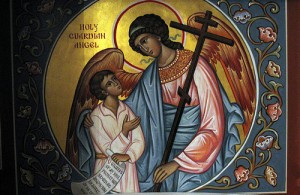
Many [terrible] things have happened in life, which can trouble many people. But God freed me from all as if my guardian angel would have pulled me by the neck and deliver me from everything; from great spiritual temptations while imprisoned, threats, etc. They all passed over me like a cloud, which God drove away. And even though I was in prison with no hope to be freed, God delivered me from this also.
When I go to visit my village and meet with my fellow primary-school mates, there are only two or three left [alive], and they have not lived the gulag experience, and from my fellow high school colleagues, there are only ten left.
All these things that God works with us, we ought to see. We must see the hand of the Lord over us in all circumstances. Let’s not be carried away by temptations that we’re strong, or wealthy, or smart, or that we can accomplish much…
My brother, let’s not give into any temptation, but we ought to always say: “God willing it will do this and that” … And it [His] will be done. Do not imagine that chance, luck or fate governs your life, as our life is in the hands of God. Let us remember what our Savior said:
“Not even one hair from your head will perish without My knowledge.”

(Excerpt from: Father George Calciu’ Living Words: “To serve Christ means suffering”, translations by EC).

If we’re allowed to say… the human soul became a little hell. As we live, move or act in this world, each one of us is wearing his own mask and communicates through it, yet deep down in our soul, it is as dark as it can possibly be. If we do not put out the old man, if we are not been reborn, what would it follow?
We must not be surprised or confused when we see man, in critical times, revealing this image as the evil within comes out. When someone is not reborn in Christ, if the body and soul do not become temples of the Holy Spirit, although this part of the soul remains “protected” [by the mask], no matter how hard he tries to cover it, one day will come out. And it will come out not to vanish but to hurt, to reveal the evil power that reigns within.
Many descended into hell – millions of people – including the prophets and the righteous men of God, from Abel to Christ Himself, still hell remained hell. We can say as we study things, that we believe in the truth of the Gospel of Christ, and try to improve ourselves, to be transformed by it. Of course this has importance, as it ought to produce a change within us that only Christ can do, by descending into the hell He conquered.
To note that the Orthodox icon of the Resurrection is not depicting Christ standing over the grave, but it shows Him in hell, crushing all its power. In this depiction of the Resurrection, there are fallen gates, bolts, nails … Nothing was left as it was. Everything was shaken, the gates were opened, and the souls freed to come out.
So it is with the human soul: if Christ doesn’t enter, nothing will change. Certain truths we receive and believe, but alone are not enough as we filter them through our own understanding, because at a final analysis this does not change the old man.
As Christians, we believe in the truths of Christ’ Gospel, go to church, commune, and all we have gained – especially in the recent times – is [spiritual] comfort.
So we have found “a method” – and how did this happen?- that the old man, the idol within remains intact. Our inner state remained intact, and we have become Christians on the surface!
(Archimandrite Simeon Kraiopoulos, in “The Mystery of Salvation”).
The man perfected in humility does not seek opportunities to humble himself, for he has acquired the gift of humility, when he sees himself worthy to be despised and the first of all sinners.

To gain true humility it is not sufficient to consider ourselves sinners, or the thought of not seeing anything good within us, as indeed all these are true.
In the words of St. Isaac the Syrian, “Not every modest and silent man, wise, or gentle by nature, has reached the heights of humility. On the contrary, humility is when man hides deeply within, something really worthy of praise, yet he is not proud of, but considers it as a speck of dust. “
So we understand that, it is commendable to deeply humble oneself at the remembrance of sins, yet this is not perfect humility.
The man perfected in humility does not seek opportunities to humble himself, for he has acquired the gift of humility, when he sees himself worthy to be despised and the first of all sinners. (…)
This change in man, who’s naturally proud and self loving, is not accomplished by flesh but by the supernatural, gracious humble though, and when it is acquired, manifests itself with great power.
It was this power, the Holy Apostles received at Pentecost in the form of tongues of fire. It is the power of the saints pleasing to God, acquired after long labors and great spiritual toil. To many, such toil seems unbearable and soon they forsake it, but for the spiritual children, the harder the toil, the greater the thirst, for they taste within it the grace that strengthens, comforts and fills them with joy.
(Arhim. Seraphim Alexiev – commentaries on the Prayer of St. Ephrem the Syrian)
Often time, man complains about being unfortunate, but he is not always right.

Once, a poor man went to church to complain to God that he has no shoes to wear.
But in front of the church he saw a man with no legs.
Then our man, ashamed of his thoughts gave thanks to the Lord for his healthy legs.
(Elder Justin Pārvu, “Spiritual gifts”, 2011)

The Fathers say that meekness stands between anger and love. And they add: “Let, gentleness not lead you to cowardice, nor love to carelessness.” So, we must use gentleness wisely, as it stands midway between anger and love. Not so meek as to tolerate blasphemy against God and His Gospel in the name of “love”, but also not rude and unforgiving, with rage or revenge against our brother [neighbor].
As for humility, the Fathers say that, it is Christ’s garment for taking on the human flesh for our salvation. Christ took on the fleshly righteous-passions as: hunger, thirst, pain, fatigue. As for the sinful passions, He did not have.
Elder Cleopas (of Romania)
 Christian Dogma
 Christian Martyrs
 Christian Orthodox Churches and Monasteries
 Christian Sermons and News
 Church's Teachings on Fasting
 Ecumenism – a Great Heresy
 Father George Calciu
 Life_a Sacred Gift form God
 Orthodox Saints and Church Fathers
 Spiritual Elders
 Daily Bible Readings
 Journey to Orthodoxy
 Listen to Ancient Faith Radio
 Orthodox Calendar of Feasts and Saints
 Orthodox Christian Mission Center
 Orthodox Institute
 OrthodoxChristianNetwork TV


Recent Comments