kosmos_jpg

Motto: “For me, the life of my brethren is more precious than my own life.”

  We cannot acquire the image of Christ within us unless we are truly [united] one, as Christ asked His disciples: Love one another, so that the world may know that you belong to Christ (John 15, 12).
For me, the life of my brethren is more precious than my own. When you will understand this, there will be no more misunderstandings between you. The untying of a problem or a disagreement, does not depend on any organization, or a particular code of conduct, but on the decision to bear everything. Each one of us must have a mother’ heart for others.
We ought to be very sensitive to the needs of others. Then we’ll be one and the blessing of God will abound in us.
We must have Christ’ consciousness, Who bears in Him the whole world; therein lies the universality of the human being. The Word of Christ does not change, and it is eternal.
If we confess in the Creed that Christ is the One True God, the Savior of the world, its Creator through Whom all things were made, how can we reduce our faith to a matter of nationality, place, or time…?

(Archimandrite Sophrony of Essex, in “The Life in the Spirit”

donkey-winter

  N. Dramudianos told us a wonderful experience he lived during the war in 1940:
“Our team was ordered to conquer a height and use as a bridgehead. We built barricades over the rocks and after everything was finished, it started snowing. And it snowed continuously for two days and two nights, that in many places the snow reached up to two meters. We became isolated and each one of us had food stock in his haversack for only a day. Because of the cold and hunger, we didn’t care for “tomorrow” so we were left completely without food.
From there on, our “martyrdom” began. We quenched our thirst with snow, but the hunger started to reap us. We spent five days and five nights like this and became like some skeletons. However, we kept our morale high, but the human nature has its limits. Some of us died. The rest of us expected the same “end”, for our “Faith and our Motherland”.

  Then a saving thought of our commander worked the wonder. He took a paper icon of the Theotokos, he was hiding under his vest, and placed it on a mound, called all of us to him and said:
– My brave men, in this critical situation, only a miracle can save us. Let us all kneel and beseech the Blessed Virgin, the Mother of God to help us! We all fell on our knees, lifted up our hands and prayed to her fervently!

  We barely stood up, when we heard some bells. We were cut by surprise so we took our guns resuming the shooting position. It’s been a matter a minutes, when suddenly we saw a giant mule approaching us. We flinched; a stray animal to pass over the mountain on a snow reaching over one meter?! This was very uncommon.
Then we realized that the Holy Mother of God had directed him to us. We thanked the mule, as we all started to sing softly but heartily: ‘Our Protector Lady” and other songs dedicated to her. The mule was caring with him a whole intendance of food: bread, cheese, canned food, brandy and much more.
Great and unbelievable pains I suffered during the war, but this certainly will remain unforgettable to me, for it had no logical explanation. So I owned it to the Mother of God.”

From the Book: “The apparitions and miracles of the Virgin”, Holy Monastery of Parakletos

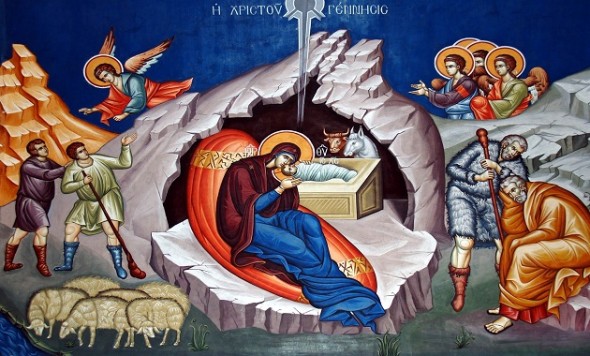
nativity

  From the beginning I would like to ask: do we all feel in good standing for this Christmas celebration? Are we all at peace with each other? Do we welcome this festival – so to say – naturally or are we at unrest or hide anxiety, stress or worries within?

  If someone would walk through the city streets, the markets and see how people rush here and there, to finish shopping, could say: “How unhappy are these people and how they should otherwise feel, as they find themselves worry on all these things? How unfortunate they are!

  How can someone welcome Christmas and celebrate it, I mean every day? As I said today at the Holy Liturgy, we do not only wait for Christmas, but we live it even now. On Christmas day Christ was born. So this fact that Christ was born does not only include the entire time or our whole life, but encompasses eternity, it embraces everything. Therefore, everywhere and every day is Christmas.

  Christmas is not a static day enclosed in time as something “magic: as soon as that day comes, we enter in.” Because that day will come and go like any other, unless we are truly prepared for it.  And we are prepared when these very days we celebrate, leaven within us and help us. Therefore, what kind of Christmas will someone celebrate when he is not in order, when his soul does not rest in God, when agitation, restlessness, emptiness, hopelessness, or despair rest within? Our whole life in this world lays on hope. Man’ existence is one full of hope. If someone misses this, what can Christmas do for him? If someone doesn’t live this belief, can Christmas mean anything? If they do not have the fullness of God within their soul, can Christmas do something for them?

  But what makes man be in good standing? So this question whether are we ready for Christmas, I ask again as we move closer to the feast, to free us from worries and anxieties. Man is not in order when he tries to ignore – as some try to simply forget – nor when he seeks justification or excuses. The one thing that puts man in order, the thing in which man finds rest, is repentance; to repent before God, to humble himself before God, to return wholeheartedly to God. Without repentance there is no Christmas. No matter the circumstances at home, repent before God and before your brothers.

  This of course involves the love for God and the love of neighbor. Mo matter how [difficult] things are… For love creates a different atmosphere, another state, then people can truly come together to celebrate Christmas. But I mean true repentance! Again, repentance is not to forget certain things. As sometimes when someone in a certain place feels exposed, he remembers facts, conditions, things that humiliate and grieve him, so he wants to move to another place hoping that he will be placed in order. This is flying from temptations. Of course, sometimes this could be good, if there is no other choice, or because man has no courage to do otherwise, however this does not bring healing. That one thing that man needs, the thing that really helps with his healing is to repent before God for all that he did, for all that he accused Him for. To repent of every sin before God and sinful as he is, with his ego wounded and exposed, or in whatever sate he may be, to have the courage to stand before God. If you have the courage to stand before God, with your sins …, this means either courage or repentance. And of course, everyone can distinguish between the courage and repentance. Otherwise if man conceals his sins, he will hide his true self and will try to appear before God completely innocent. In this case, man becomes unconscious of his sins, or more precisely in psychological terms, he reject his sinful passions in his sub consciousness then he’ll appears before God somewhat repentant, somewhat in order, somehow humble, somewhat upright, [thinking that] perhaps this is how God wants him to be. However, this does not mean putting oneself in order.

 Repentance is not as easy as we may think. And please take heed of this. […]

 And I would say that repentance is a blessing from God. If God does not give you His grace to repent, you cannot repent. Therefore man must not take repentance at ease. We mentioned another time, what it is written in the Apocalypse (Revelation): There were [will be] disasters, terrible things [will] happened, cities [will be] destroyed, many [will] perished, and yet “people did not repent of their wickedness”. They still did not return to God. And another evil came upon them, another plague, and they still did not repent. And this is written, a second and a third time.

  We not certain whether man [humanity] will repent, even when man is going through difficult times, it may only seem that he repents. This kind of repentance that occurs in a forceful way, let’s say in a moment where you are at limit, it is not true repentance; that there is an earthquake or the world comes to its end, and you’re ready to repent… Or the war is imminent, or your life is in danger, so you repent. Such repentance does not hold. For man forsook God, then God abandons man, and man remains unrepentant and although he sees, he hears, he does not intend to return to God in repentance for God to heal him and save his soul.

  Repentance is a great wonder. For this we say “Lord Jesus Christ, have mercy on me, a sinner.” This prayer is a work of repentance. I mean that you repent when you ask for His grace, His forgiveness, but also you ask for repentance. It’s like asking repentance when you say: ” Lord Jesus Christ, have mercy on me.” He who asks repentance, unceasingly says: “Lord Jesus Christ, have mercy on me,” and when you neither can, nor that nothing happens to you and you’ll give up, it means that you had no real desire for repentance.

 Winter

From Simeon Kraiopoulos – “On repentance” 

Source: http://paterikakeimena.blogspot.ro/2011/12/blog-post_1903.html

The relics of the saints and their power with Father George Calciu

interviewer:
– The holy relics of the saints are venerated with great devotion by the Romanian faithful. Why is this father? Is it because of some inheritance, or is it perhaps that the people really feel their help?

Father George:
– I remember back, during the days of the communist regime, before my detention, that the holy relics were sought less by the faithful than they are today. The relics are incorrupt bodies of the saints; and there is a whole theory on the incorrupt bodies. Even after death, God will flow a special grace to those who had a higher spiritual life. However, I will not insist on this. What I want to emphasize is that, there is a close connection between the saint’s soul and his/her holy relics that we venerate, and it is proper to honor them. Undoubtedly this thirst for the veneration of the relics of the saints involves a close relationship between the believer who asks and the saint who intercedes for him. I am convinced that every believer realizes that the relics alone don’t bring healings, consolations, or relevance from temptations, but the saint through the grace given to him/her by God, can work wonders through those relics. If there are people who believe otherwise, that the relics do wonders by themselves, and not by God’ grace, it means that they fell into an error near idolatry.

In: – If the saint works through the grace granted to him/her by God, and not by this relics or his icon – sometimes called “wonders working icons” – wouldn’t just be better to pray directly to the saint without having to venerate the relics and the icons?

Fr. G: – There are people who also do that. The prayer is what matters first, but the contact with the holy relics and the icons is also useful. For man needs some steps to his ascent to the spiritual life. Man’s personal relationship with the saint is best established this way. Father Dumitru Staniloae wondered: “How is it that, a million people are praying to a saint, and the saint answers to all of them?” The explanation is that the saints receive from God the gift of listening to a million prayers at the same time, of distinguishing between the prayers and offer help to all. The presence of the relics is for most of us, that certainty that the miracle is possible.

When one sees the incorrupt body of a saint, it means that the saint can come to your help. I’ve noticed that, whether you’re a believer or an atheist, the need for the miracle is as great. For instance in the West, the witches and fortune tellers are in great demand. It is a delusion for us humans, invented by the devil, to satisfy our thirst for the miracle. Perhaps, even here in Romania, there are people who seek the relics, but also the fortune tellers. And this is a forbidden mixture.

In: – Father, but if the people are so attached to the relics of the saints, why most of them rash to bow before the relics only on feast days? Is the grace of the saint grater on that day?

Fr. G: – No, but we relate to certain dates, anniversaries and commemorations. So people think that the power of the saint increases on those occasions. And I believe they’re right, for people’ faith and hope is greater on those days so the saint responds accordingly. When I was a professor at the Theological Seminary, the students took turns guarding the holy relics in our church, to keep orderly those who came to venerate them. One day, a boy who was on duty, which I considered very sincere and humble, and with great faith, came to me and said: “Father, now I believe.” He witnessed a miracle: a paralyzed woman was cured by St. Demetrius the New.

So the miracle is done not only for the one who has been healed, but also for those who are present. Then, the prayers done in communion with each other, during the feast, is more appealing to God than the prayer done alone, as the feasts create a certain spiritual emulation, which the soul is deeply involved in. And surely we’ll receive according to our faith. So people come together and encourage each other in the spirit, for their faith, and for the veneration of the holy relics without being much aware of it. It is very important that people will not make from this a mean of idolatry. They ought not to forget that beyond the holy relics, is the spirit of the saint and especially God who gives His power to the saint and who makes the wonder happens. It is known that a faith that is based solely on miracles, is a weak faith. But many times through the miracle, conversions happen, some of which being very dramatic.

In: – How do we know that we sand before a holy relic?

Fr. G – The holy relics are consecrated by the Church, and this is the proof. The healings or the conversions to the faith are the result of the fact that the relics are enshrined by the Church.

In: – How about if we have the incorrupt remains that are fragrant and even miracle-working from a man who has not been glorified by the Church? … for instance the incorrupt body of Father Elijah (Ilie) Lacatusu from Giulesti that has all the signs of the holy relics, yet Father is not glorified by the Church? Are they holy relics or not?

Fr. G: – There are holy relics if they fulfilled all the canons of the Church and they work wonders. So the finding of the Church is important and this comes with prudence, after checking all the signs. It is not wrong that it happens this way.

In: – Elder Justin Parvu, the Abbot of Petru-Voda Monastery – Neamt [now with the Lord], warned that our country is full of holy relics unrecognized by the Church. And for this, says the holy elder, the wrath of God is upon us. Father Abbot Justin emphasized that, in the mass graves where the bodies of the political prisoners martyred for their faith in Christ, were deposited, such as the Ravine Servants (Rapa Robilor) from Aiud, there exist holy relics. Moreover, the elder collected some of their earthly remains and deposited them into a reliquary inside the monastery church. How are we to relate to these bodily remains of those faithful martyred for their faith in Christ?

Fr. G: – In the Romanian Orthodox Church, the hierarchs have no courage to declare that the remains of the former political prisoners martyred in the communists prisons for Christ, are holy relics. Moreover, in the Patriarchate, there are several files pending decision for glorification (canonization), such as that of Father Elijah (ilie) Lacatusu, which I strongly believe that he is a saint, or that of Valeriu Gafencu’s. And the synod did not give an answer. The majority of the former political prisoners were legionaries, and the hierarchies fear that an action towards a possible glorification can be taken as being political. We need to relate to all these wisely and attentively. If God wills, through His saints, whether unknown or unrecognized officially by the church, He can offer us help.

In: – I noticed that in Bucharest, there are many churches that bear pieces of relics of the same saint. How is it that several churches can get holy relics of one saint?

Fr. G: – In general, those who are in custody of the saint’ body, when a church requests a piece, they can offer. And it happens that the priests, when they learn that a certain church has acquired the relics of a particular saint, will try to get a piece. Some relics were purchased and deposited in certain churches. But if the whole body remains incorrupt, generally is been stored as such. The body of St. Nektarios was maintained whole and incorrupt for 20 years, after which the flesh was gone and only the skeleton remained. Those who were in the care of the saint’ body, shared parts of his relics. His bodily corruption sparked some deceptions; there were people who thought that God has lifted his holiness. The priests however, have agreed that God has appointed this way, that pieces form Saint Nektarios’ body may be shared with the world, and by divine grace, to perform miracles.

In: – Isn’t there a danger, to “trade” with the holy relics?

Fr. G: – Well, even the saints are at risk of our trifles… (Father George smiles). I personally believe that, maybe the saint prayed to the Lord to be “bought” in small pieces by certain places (churches) where people need him the most.

In: – Someone foreign to the Orthodox faith could consider the sharing of dead bodies, a barbaric ritual, even if they belong to the saints …

Fr. G: – If the body remains in one place, we limit the possibility for a large number of people to experience wonders, help and comfort. Not everyone can travel to pray at the shrine with the holy relics of a certain saint, that can come to their help.

In: – In many churches in Bucharest, the pieces of garments worn by a saint are being venerated almost as much as the holy relics,…

Fr. G: – It is not proper so. I do not mean that those garments are not impregnated with the divine power, but they are not like the relics. I do not think they can heal. At most, they can help a person have a better connection to the saint they belong and with God.

In – A church building, not a community of believers, can it be consider better, stronger, or more helpful to the faithful, if it bares in it sacred relics?

Fr. G: – The saint works in this matter: people themselves are stimulated to come to the church and to believe. But all [Orthodox] Churches are full of grace, and God is everywhere, not just where the relics are present. Not all the saints become relics. God works through various gifts that He grants to certain people. The relics are only one way of divine manifestation.

In: – Your reverence, do your remember great miracles that impressed masses of people in Romania?

Fr. G – There were many wonders, as the one with my student which I mentioned to you, but they are not being advertised and it is better that way. Thus, we’ll avoid a sort of pride from the churches that bear the holy relics, where miracles happen. If there is too much publicity, and too much fidgeting, it’s not good.

In: – Father, did you experience any miracle?

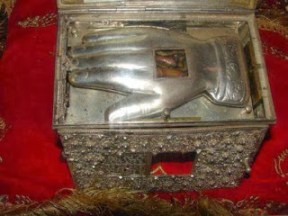
Fr. G: – Yes once back in 1972 or 1973, I went with my seminary students to St. George Church, where is the hand of St. Nicholas [of Myra]. After all of us passed and bowed before the reliquary, the hand of the saint began to spread a whiff of nice fragrance. Until then, the hand did not smell, and I considered it like a sign from the saint. Maybe it predicted what would happen to me later [father is referring to his second arrest] or maybe it was the saint’ joy that those students were proper to become good priests.

In: – At the end of this interview, for which I thank you father, lets summarize: what does an Orthodox faithful need to know about honoring the holy relics and the veneration of the icons?

Fr. G: – That they are all steps, and only steps in our ascent to God. The Orthodox Christians must not limit themselves to the prayer before the relics or even to the saint invoked in their prayer. The Christian ought to be aware that is God Himself Who works through the saints and responds to our prayers before the icons or the relics. Otherwise we’ll fall closely into idolatry. The danger is very great, especially for the people who are pious, but yet do not have a basic theological understanding of God.

  It is almost hallucinatory how Father George exhumation was broadcasted over the local media, TV stations and blogs in Romania. As the events unfolded, upon opening father’ tomb by several monastics during his seven years memorial, we can only say how right was Father George in the statements that he made in his last will, and how the devil can use the spirit of piety manifested upon finding soneone’s incorrupt body, to deceive many.
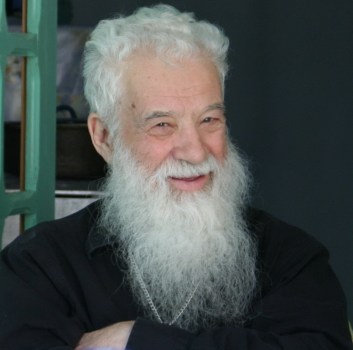
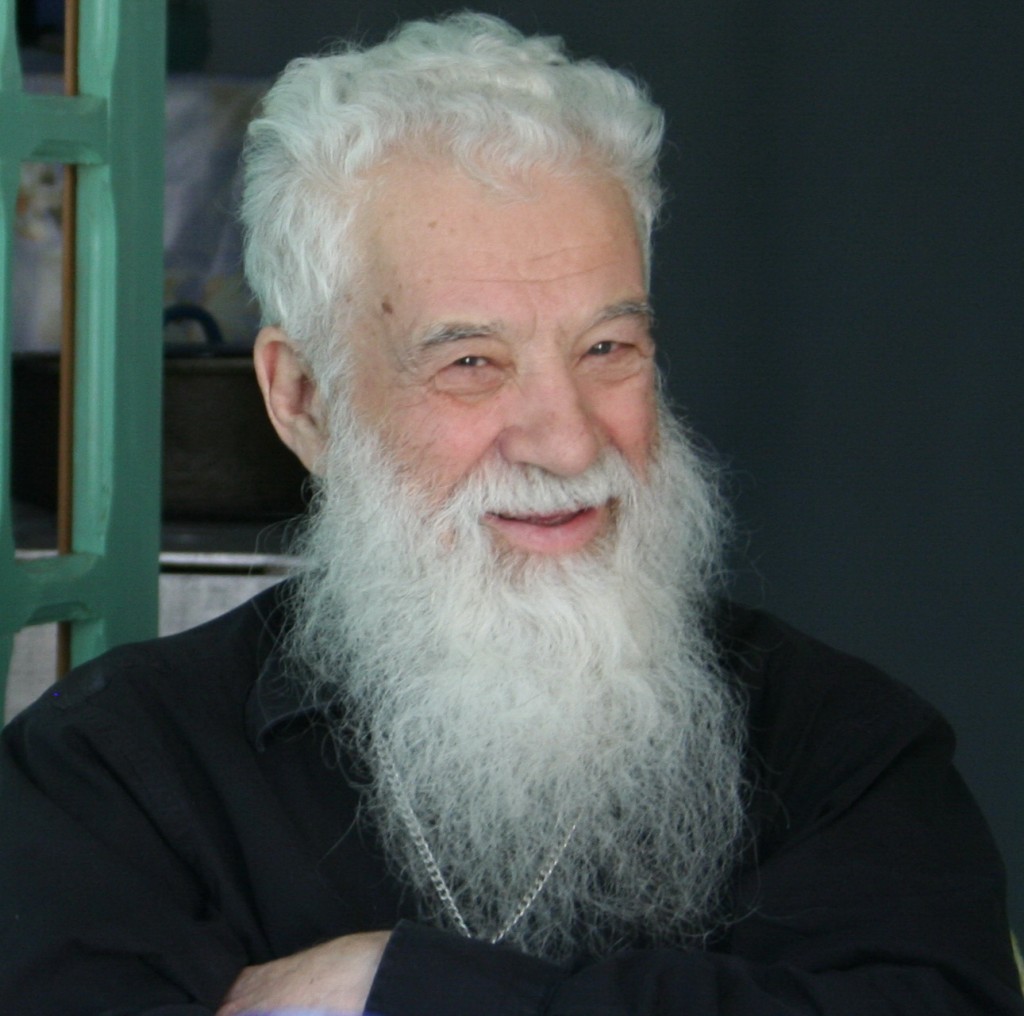
Father George Calciu

  It’s even more troubling to see, after father passing in the Lord, how the devil continues to fight even with his remaining, trying to stain the memory of a man who sanctified his whole life through many hardships. One can wonder, how is this man pleasing to Christ’s rest now?… when his body became the target of attacks that are foreign to the spirit of Orthodoxy.

   And if we understood that someone’ martyrdom happens usually during his life time, in this case Satan is showing a new face, battling in our times even the bodies of those pleasing to God who have stepped into eternity.

Just as Father George once said:

  “Between our bodies and our souls, there exist a relationship that it’s never lost. Even if the body returns to earth, this connection between the body and the soul is not disbanded, as something that will be fulfilled at the last judgment. “

 And despite the hate that the devil manifests towards those pleasing to Christ, I believe that Father George who was tested in the fire of communist prisons, will come out victorious once again from this battle, after his falling asleep.

  And if the Lord allowed this to happen, may it be towards a greater glory to him. May it be that the machinations that took place at the uncovering of Father George relics, will strengthen our prayers and bring us even more in the communion with Father, and with all the saints pleasing to God, part of His Triumphant Church.
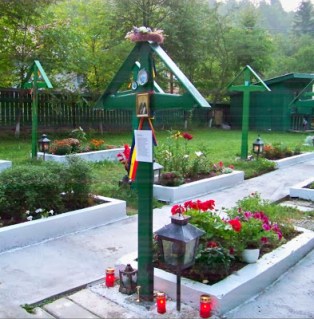
  Father George passed on November 21, 2006. According to his last wish, he was buried in the land that he loved and never forgot, at Petru Voda Monastery, Romania. In his last will father said:

“First, you must know that the Father Abbot of Petru Voda Monastery, Archimandrite Justin Pārvu, offered my wife and I, two near by graves in the monastery cemetery, because as I had lived my life near my wife Adriana, I want to be joined with her after death, as the one who helped me in many difficult circumstances, with a courage that I never suspected at her before. In front of our toms, please place a single stoned cross, barring our names, our date of birth and repose and, a call to those who will visit our tombs to pray for us.

  According to the U.S. custom, my body will be deposited in a funeral home that will fulfill the procedures for a reposed body to be transported in Romania.

  After the washing of my body by the funeral home, ask an Orthodox priest to wash my flesh with wine and oil, saying the customary prayers of the Church over by body. Then dress me with priestly garments and place on my chest the icon of the Virgin Mary, carved in bone and framed in wood, which was given to me at the hospital in Bucharest by his Beatitude Patriarch Teoctist of Romania, which gave the blessing to do so. In my right hand place the Holy Cross and the prayer rope offered to me by the nuns of Diaconesti Monastery; these I will take with me to the grave ‘

(Father George Calciu’ will, November 12, 2006, Military Hospital in Bucharest).

  As if he oversaw what will happen over the years, Fr. George left a very clear and uncontested will:

  “I know that my funeral will be surrounded by a certain solemnity, which I do not merit upon death, neither that I deserved it during my life time. People will talk and create legends, but God will distinguish the truth from the legend and will reveal me as been a sinner and an unworthy (…)

 I spoke above about that spirit of piety manifested among faithful that can go wrong, and can create false miracles. Therefore, please dear Reverend Father Abbot Justin, find a way to prevent such things: whether you leave a document at the monastery or place it in my coffin. The devil might use this popular piety to prevent my body corruption and then to become the works of error.

  If over the years, due to construction needs or for other reasons, my body will be uncovered, and to the astonishment of many, will be found incorrupt, have the priests read prayers over it, for my body to be decomposed into the earthly elements, as not from God was this miracle, but through the deception of the devil.

Let the priests who saw this, be silent, and not speak about this false miracle, and my body be placed in another tomb to be eternally forgotten.”

(Father George Calciu, October 28, 2006, Military Hospital, Bucharest, published in he book “The Life of Father George Calciu, Christiana Press, 2007)

  One of the theologian and father’ spiritual child (Lucian Popescu) present at father 7 years memorial at Petru-Voda, wrote:

  “I recently learned that the body of Father George was uncovered, that it has the appearance of the relics of the saints, that it is fragrant and it was placed in the Elder Justin Pārvu’ cell!

  However, Elder Justin Pārvu, who passed away seven months before Father George’ seven years memorial, instructed that the body of Father George may be unearthed at 7 years. I was aware of this fact, but I’m not in the position to give or find a justification for the decision of Archimandrite Justin. There are spiritual perspectives that are impossible to probe with logic, due to lack of an appropriate forum to judge such.

  At this point, I do not know the details of opening Father George’ tomb and I think they are less important. It is something done, which cannot be undone.

 The important point is that the testamentary letter that Father George left (see above) can be taken as the equivalent of any righteous  attitude before his death, who says with conviction that he is the greatest sinner that ever lived.

  And it is also essential that no treasure, if proven to be true, may be misused, wasted, or worse, turned into a scandal.

 For father George was right when he said that the spirit of popular piety can wander in error and this kind of mistake is still an error…

  A lot has been said when Father Calcium fell asleep, but even more now, after the discovering his relics, due to the fact that Father, wrote in his will addressed to Abbot Justin of Petru Voda Monastery, the following:

  “If over the years, due to construction needs or for other reasons, my body will be uncovered, and to the astonishment of many, will be found incorrupt, have the priests read prayers over it, for my body to be decomposed into the earthy elements, as not from God was this miracle, but through the deception of the devil.

Let the priests who saw this, be silent, and not speak about this false miracle, and my body placed in another tomb to be eternally forgotten.”

  As we will see below, in an interview given by Father George in 2006 and in other sources, Fr. George knowing people thirst for the miraculous, whether being believers or atheists, feared that such event will be speculated by the devil who wants to lead many astray, separating them from God. Father didn’t want that after falling asleep, to become a source of stumbling error for any of his younger brother, and his body, if found incorrupt, to become a means of idolatry for those weak in faith.

  For such reasons, father specified in his will that if his body will be found as such, “to be reburied and forgotten”, and priests be bound “not to ever talk on this.”

 Also kindly Father George gave a similar word in his will, if at his funeral or memorial “will come a bishop who would like to talk, let him talk” but “if no bishop will come, no one may give a sermon”. We can understand from this that if during his relics discovery, any priest saw them, they were bound to silence, however “the local bishop or any hierarch” are not under this infringement regarding desire expressed by Father’ will.

 It is especially the duty of the local bishop to take a wise decision regarding Father exhumation and the finding of his incorrupt body, as this raises questions in relation to father last’ will, more so because the way it was taken out of the grave. Besides the local bishop, it also the duty of the Synod of the Orthodox Church to speak on the finding of any relics, such as Father’s Elijah Lacatusu and more recently of Father George Calciu. (…)
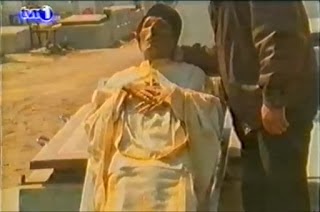
  Personally, I believe that Father George Calciu’ wish for his body to be “placed in another tomb to be eternally forgotten”, provides a deep sense of brotherhood with those who also suffered in communist prisons, yet a lot of them having been thrown by the communists into mass unknown graves.
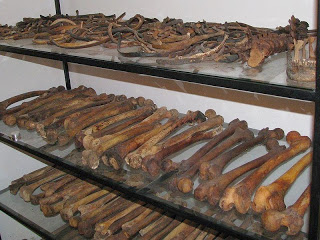
  Thinking of them, father didn’t want to be honored by people, while the bodies of his brothers in suffering are still hidden in the womb of the earth. It is a great mystery of God, and this does not diminish at all the holiness of those worthy, although some of them are (yet) unknown to us or without any trace of their earthly remains, while others also God-holy pleasers, have holy relics that can be touched and venerated by the faithful.

 The veneration of the holy icons and the veneration of the relics of the saints must have reference to God, as One Who made them worthy of His grace, and Who comes to our help by His great mercy. Consequently, overlooking or hiding under the veil of forgetfulness, and not honor what was left to us as a bridge to Him, will impoverish our communion with God through the personal connection with His saints.

  However we must never lose sight of the wiles of the devil who will use the holy objects to mislead those weak in faith, those whose faith is synonymous to superstition, those who find opportunities to confuse holiness with magic, or those who exult themselves though the grace of the saints. All these and many other falls wonderings the enemy of mankind works, from which one can escape only thorough the power of blessed humility.

  May we ask in all things, that the will of God be done first and completely, as we pray that in Father’ case things may happen according to His will. “

 Father George’ body that has been taken out of the tomb few weeks ago was re-buried Tuesday, December 9, in another tomb in the Petru-Voda monastery’ cemetery, following the decision of the local Metropolitan of Moldovia and according to Father George’ will.

May his memory be eternal!

Excerpt from the sermon given by Father George Calciu, December 4, 2005 at Holy Cross Orthodox Church, Falls Church, VA

[…] You have heard of weeping icons, of icons that spring mirth or icons that heal. You have heard of saints who have passed and were found incorrupt. You have heard of saints whose bodies although dead, instead of spreading bad odor, spring nice fragrance. You have heard of relics that spring mirth. All these are things that are against nature, but God, in His power make all these happen. How does God work, for a saint’ body not to become corrupt? How does God work for example, for the holy relics to spring forth mirth? How does the saint work the miracle?

  The Holy Orthodox Church says that, between our bodies and our souls, it exists a relationship that it’s never lost. Even if the body becomes corrupted, this connection between the body and the soul is not disbanded, as something that will be fulfilled at the last judgment.

  At the last judgment we all shall rise again. All the billions of people that ever lived on earth and have died will be resurrected and will have a thinned body, a spiritual body, not a body that is heavy, requiring food and drink, or other things… It will a body that will not suffer if it has done good, or it will otherwise be condemned to hell.

(to be continued)

Father George CALCIU and a Life Sacrificed for Christ


“The only chance of survival for Eastern Christianity

                                                                                        is that of a warfare through the Word.

       Our solution is of Calciu-Dumitreasa… “

N. Steinhardt 

  The future priest George Calciu-Dumitreasa was born in 1925 in Mahmudia, Tulcea, Romania, having been the eleventh child and the youngest of the faithfull parents Dumitru Calciu and Ileana Calciu (former Balan). In his memoirs (and especially in the book „The life of Father George Calciu – after his testimony and those who knew him”, edited by Diaconesti Monastery, Christiana Press, Bucharest, 2007), father George with his humorous style, noted that he learned more practical theology from his peasant mother than from all the treaties and theological schools he attended.

  The young George followed the gimnasium in his native village and, then as a high school student in Tulcea, he came in contact with the Legionary Movement and joined, like most young people of his generation, the Fellowships of the Cross (a youth organization of the „legion of the Archangel Michael” intended for high school and junior college students where political views were only secondary, its primary focus was for an education of its memmers in intellectual, national morals, Christian values and brotherhood).

  Eager to help the poor peasants among whom he grew up, the young George opts after the baccalaureate for the School of Medicine in Bucharest. When he was arrested in May 1948 he was a medical student in the second year.

  Like many young people of his time zealous in faith and with national pathos, members of the Brotherhood of the Cross or perhaps only supporters of the Legionnaire’ cause, the young student George experinced the hell of Piteşti prison. At Piteşti, between the years of 1949 and 1951, under the worst physical and psychological tortures, overcomed by weakness and confusion („they called me the fallen angel with blue eyes” father used to say), he is „recruited” for a short time in the team of the torturers led by the sinister „instructor” Eugen Ţurcanu. Ţurcanu, a diabolical character, was once part of the legionnaire movemet but then recruted by the communist party as a key collaborator in the “Piteşti’ experiment” and lastly eliminated with no scruples by the regime.

  However, the young student George Calciu will have a spectacular moral comeback refusing to take part in the Securitate [comunist’ secret service] wicked plan and overturning the trial intended for Ţurcanu and his colaborors; trial by which the comunists were not seeking justice but just to defend their party, through the old method of „finding the scapegoats”.

  The young George Calciu finds the courage to point at the real culprits at large: the Secret Service Department of the Communist party founded by Kremlin which planed this odious process of “re-education” by using Ţurcanu and others like him as instruments in trying to promote the falls idea that everything was done by the exiled Legionaries and not by the regime.

  With Piteşti, the redeeming odyssey of Paulinic dimentions of young George began, followed until 1963 by inprisomnent in Gherla, Jilava and Aiud and until 1964 by a house arrest in Bărăgan; a George no longer accepting any compromise and determined after his release to sacrifice the rest of his life for Christ and His Church. As I once commented: “This man’s life after the tragic experiment of Piteşti has become one of repentance, confession of faith and sacrifice. […] Perhaps no one after experiencing Piteşti was able to reach such moral comeback, an unrefuted victory over the evil. Because there is the case: George Calciu, it can be said that the Piteşti experiment has failed. Piteşti has physically crushed people, but it could not ultimalety destroy the Man. The greatly tempted George Calciu was not only tring to save himself but he eventually saved the human dignity in the face of what phylosopher Mircea Eliade called the terror of history.” 

  Having being released in 1964, George finds the strength to rebuild his life and fulfill that exemplary promise; he marries Adriana Dumitreasa (herself with two brothers that had passed through the communist prisons) who gives birth to their only son, Andrew (currently an attorney in Washington DC and father of a son). He is “tolerated” by the Securitate to enrole in the college of Philology and then – with the support of the brave and skilful Patriarch Justinian – in the school of Theology. He teaches French literature for a short period of time, then he is ordained priest and named professor of the New Testament at the Theological Seminary in Bucharest.

   After the great earthquake from 1977 (prompted by the demolishion of Enei Church in Bucharest and the communists villain campaign directed by Ceausescu against the holy churches), Father George resumes his open battle with the communist regime and during the Great Lent of year 1978, he starts preaching in Radu Voda Church (then on its front steps when the church officials of the time had tried to stop him by locking the doors of the church) his famous homilies “Seven Words to the Youth,” – a series of sermons calling the youth and especially the future priests, to resistance in the name of Christ and harshly criticizing the atheistic materialism and the insanity of the Ceausescu’ regime.

  His sermons had a local and international resonance, especially through the radio station “The Free Europe” but also circulated in typewritten copies, “under hand”, marking destinyes and consciousness.

  After many threats, slanders and prosecution (everted also at his family and at his loyal students, so-called “calcişti”) with the intent to stop him, Father George is arrested again (on May 10, 1979), alleged with absurd charges and sentenced to 10 years of inprisonment (later changed to seven and one-half years) of which he executed five years. Father George was released on April 20, 1984 following the international pressures (from the West) directed at the communist regime of Romania.

  So Father George Calciu executed a total of 21 years of inprisonment under the communists: 16 years under Gheorghiu-Dej regime (from 1948 to 1964, including one year of house arrest) and 5 years under Ceauşescu regime (from 1979 to1984)!

  In 1985, he was practically forced to leave his country along with his family – once again greatly tested. After a brief stop in Western Europe, father moved to the United States – where he was granted “the honorary citizenship”, however with no pecuniary advantage. So practicly father had to start his life over again, working initially as a construction worker – although he’d already reached the age of 60 – to be able to survive and support his family.

  Thus, to the 21 years of inprisonment, 21 more years of exile were added.

  In America, Father George Calciu continued to endeavored, as much as the Lord strengthen him, to fight the good fight in the name of Christ and his nation. Besides his parish ministry (in Alexandria, VA), he advocated before many international fora in defending many oppressed Romanians; father had also met – among others – with presidents François Mitterrand, Ronald Reagan, as well as King Michael the Ist of Romania; he was a central presence at all important meetings of the diaspora; he published the book “Christ Is Calling You. A Course in Catacomb Pastorship” (St. Herman of Alaska Press, Platina, California, 1997) and much more…

  Starting with 1990 after the fall of Communism, father will return every autumn, to visit the home land he had loved and unwillingly abandoned, bringing the same message of unity and forgiveness. In a travel journal from 2003, he noted with tenderness and bitter introspection: “Every year, the spirit of love for my country and its people, its monasteries and their dwellers, for my dear friends and relatives, draws me back to the steps of my childhood and youth and to the joys and sufferings I’ve experinced there – the most precious treasure of those 6 decades of my living in Romania, until the time of my estrangment [exile] 18 years ago. It is like a endless abiss that split my life in two in 1985, deeper and wider than the inprisonment. Maybe because even in prison, my life was following its course on the country soil, and perhaps it is why I always live contemplating my next visit back, passing over an ocean of waters and memories… “

  On November 23, 2006, Father George would had turned 81 years. But he passed on November 21 (at 13.10, or 20.10 Romanian time) after 3 days of coma at the Fairfax Hospital, VA brought – at the request of his family – from the Central Military Hospital in Bucharest, where he had spent a prior month and was visited for the last time by many who loved him; by Patriarch Teoctist of Romania and by Metropolitan Bartolomeu Anania – his spiritual instructor who confessed and communed him for the last time.

  Departed in the Lord two days before turning 81 years, father was brought back to Romania on the Feast of the Apostole Andrew and laid in the Monastery Church of Radu Voda, where once father delivered the “Seven Words to the Youth.” The official ceremony [memorial service] took place on December 2, and was led by His Beatitude Patriarch Teoctist of Romania in the presence of his Eminence Archbishop Iosif Pop, Bishop Varsanufie Prahoveanul and Bishop Irenaeus Duvlea from America, representing his Eminence Archbishop Nathaniel of OCA. The Patriarch delivered a memorable speech evoking in addition to the theological and spiritual virtues of the newly reposed, father long struggle against the atheist and materialist regime of Romania as well as father “martyrdom in the communist prisons.”

  At noon we departed for Petru Voda, father burial place that he had chosen in his will. Thousands of faithful from all over the country and abroad, gatered at Petru-Voda Monastery for the memorial service led by Archimandrite Justin Pārvu (aboot of the monastery and a former political prisoner under communists) in the presence of 34 priests. Father George was layed to rest – and it’s now seven years! – at the foot of “Romania Holy Mountains”, in the heart of Petru Voda, having as “companions in suffering” Abbot Justin Pārvu and poet Radu Gyr. And with no doubt, powerfull is their threefold prayer before God for those who will receive according to their love.

(Răzvan CODRESCU, Christian Journalist)

Father George 7 years memorial service:

Motto: “I write unto you young men, because you have overcome the evil”

[I epistle of St. John 2:13]

By Rev. Fr. Basil (Vasile) Mihoc, professor of theology

My beloved, victory requires struggle. There is no victory without a battle. We live in a world where it is desired that people, and especially the youth, may be defeated in their struggle and “freed” to become enslaved.

If we observe the demonic work around us, we can see its deception for it wants to give us the impression that in fact, there is no need for a spiritual battle. Many passions are now proclaimed as the norm and it’s no longer desired to fight against them! The enemy hides itself but is at work: “I write unto you young men, because you have overcome the evil” says St John, the apostle of love. The enemy has become very cleaver and it gives us the impression – in various ways – that there’s no need to fight.

In our times, even some churches proclaim a Christ that is nice and sweet, a “new Christ” that accepts man’ sins as normal and unfortunately many so-called “churches” have fallen into this trap. In the West, there are church’ leaders that proclaim loud and clear that the sins against human nature [i.e. homosexuality] are normal. Why not accepting gay couples as normal or why not have priests possessed by such ugly passions? Why not a “Christ” that is a nice guy?… So they’re troubled when they encounter Orthodox Christianity and see icons that depict a Christ who is too serious!

vatopedu icon of Christ

Recently, I was asked by an Orthodox layman, why Christ doesn’t smile in our icons? … so He can look cute. Our Christ is too serious!

My beloved, Christ is serious for He sees the wickedness of the evil one and to what extent we are affected by it!

Life is a serious thing and it involves battle against evil. If you are not aware of this struggle you are the victim of the devil.

“I write unto you young men, because you have overcome the evil one.” – again, victory implies struggle. Any serious thing in this life is gained through hard work! Through a disciplined battle, an ascetical struggle as St. Paul puts it: “He who strives for an earthly crown practices self control…”

But the Apostle of love [St. John the Evangelist] continues:

“I wrote unto you young men, because ye are strong, and the word of God abideth in you, and ye have overcome the evil one”.

We can say that this second word of the apostle addressed to the youth comes with details on this victory. The victory doesn’t just happen by itself.

“I wrote unto you, young men, because ye are strong” – do we realize the youth that the Apostle John was referring to, when he wrote these words? A strong youth!

It seems that we do not know many strong young people today!

Today’s youth seems very fragile spiritually as they are systematically weakened, almost programmed, I may say. Today, we live in a world that weakens the spirit, the people and of course it exercises this the most on our children, in our youth. In order to be strong you need to be strengthened.

There are young people who dream to have strong muscles – so they exercise their body. Sure, this is not a bad thing if it’s done in moderation. But very few young people long for the spiritual strength, the saintly’ strength of an athlete in Christ!

Many long for adventure and dream of a life full of interesting things…

I’d like to tell you that the most exciting adventure is a life lived in Christ. If you desire a life full of wonderful surprises then begin a life in Christ, which is a narrow path in the beginning but it expands as you travel on. This path begins in your heart, the point where Christ meets you and as you advance on it, it widens to the infinite, reaching the Kingdom of God.

The path of sin is broad and it seems wide at first, but it continuously narrows until it reaches a dead-end, where there is no way out.

The narrow path however, requires discipline, struggle and seriousness but by advancing on it, it will reveal itself in its lovely infinity.

So, do you think you’re strong?

To become strong one has to be fortified by the means that we Christians been offered by the power of Christ, through the Holy Spirit. “You are strong and the word of God abideth in you”.

In fact, the explanation follows in Matthew 13 in the parable of the sower; in this parable, it is said that the seed is the word of the kingdom, so we call it God’s word, but in Matthew, it is especially called “the word of the kingdom”.

Does this word “Kingdom”[Βασιλεία του Θεού or vasileia tou theou] or the Kingdom of God interest you, does it find any meaning in your lives today?

Some have devalued its meaning as we see in some places, the houses of the kingdom or the Jehovah’s homes. So, for many the word “kingdom” [βασιλεία – or Vasilia] has lost its meaning.

My beloved, let it not be so! The saving word of Christ is the “word of the kingdom”. We must also consider its substrate [βασιλεία]which in Aramaic is “Malkuta” or the “word of the kingdom of God”! God is accepted as King, He reigns, but this implies that we are reining with Him! It’s an adventure to become king, isn’t? The Lord calls us to this adventure – to reign with Him in His Kingdom!

This word must remain in us… The parable in Mathew gives us a lesson, saying that the seed of the word is often stolen quickly once was sown on stony ground or among thorns. Only some of the seed falls on good ground and bear fruit, one 30, other 60, and another 100 fruits. When St. John the evangelist talks about the youth that is strong, he means that “the word of the kingdom” remains in this youth, and it is not easily stolen, or stifled. It is His word that is germinating, growing, blooming and bears fruit within us. When the word of God abideth within you, says the Apostle, you have overcome the evil one.

Every time we say the Our Father, we ask to be delivered from the evil one!

“You have overcome the evil one” – the devil is this evil one that lurks our lives, our eternal lives, but also this physical life. He wans us to become lost on the way.

  My beloved youth, we are called to a victorious battle! We confess Christ as the One who overcomes evil. On the Holy Cross we read these inscripted words: Jesus Christ NI KA – Jesus Christ who overcomes [conquerors]. He calls us to be victorious in this fight with Him, in this adventurous wonderful battle for the Kingdom of God. Amen.

Few Counsels of Elder Justin Pârvu

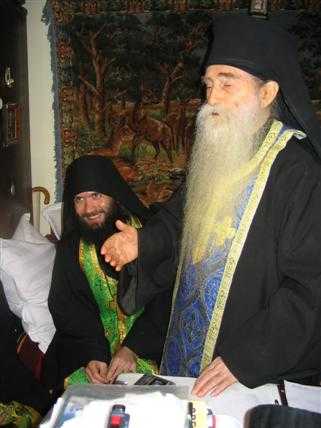
Parintele Justin - noiembrie 2011

Love the poor and co-suffer with them, so God may also have mercy on you.

Do not rebuke those sorrowful at heart, that you might not be paid back with the same rod, so that when you’ll seek for someone to have mercy on you, you might find him there!

Remember that you also bear a mortal body, and do good to all with no exception.

Discernment is greater than all other virtues.

Do not reproach anyone for their sins, but consider yourself responsible for everything, even for your neighbor’s sins.

It is better to be despised than to despise. It is better to be insulted than to insult another.

Do not live with a proud man, so that your soul would not lose the grace of the Holy Spirit  becoming thus the habitation of evil passions.

He who flees the vain glory of this world, feels the glory of the future life in his soul.

Despise repose and a comfortable existence, so that you might preserve your thoughts in tranquility.

Avoid meeting excessively with others and take care of your own soul, so that you might preserve her peace.

Avoid small sins, so that you might not fall into greater ones.

It is more profitable to resurrect your soul from the passions, contemplating the Divine, than it is to raise the dead.

Many have done wondrous deeds, raised the dead, and labored in asceticism; they worked great miracles in order to bring the lost to the path of salvation. Many have been brought to God through their efforts. However, many who raised the dead have fallen into shameful passions and by their sinful deeds that became known, have led many into temptation. In reality they themselves were sick, but instead of caring for their own soul, they threw themselves into the open sea of this world in order to heal and save the souls of others, thereby ruining both their hope and their souls.

Whoever despises the seductions and distractions of the mind that come from worldly affairs will meet his Master and Lord in his heart.

So that the Lord might pay attention to our virtues, they must be accompanied by physical temperance and a pure conscience.

It is better to live with eagles than with the greedy and insatiable.

It is better to live with a crippled and outcast person than with a proud man.

It is better to be persecuted than to persecute; it is better to be crucified than to crucify; it is better to be insulted than to insult; it is better to be slandered than to slander others.

Self-justification has no place in the life of a Christian, for it’s not found in any of Christ’s teachings.

If you love meekness, you will find peace in your soul. And if you become worthy to acquire peace, you will rejoice in any trial.

God forebears all our infirmities, but He cannot bear one who constantly murmurs, so He punishes him in order to correct him.

The lips and the heart that give thanks to God in any trial or temptation receive His blessing and Divine grace.

God’s grace is preceded by the humble thought, but God’s punishment is preceded by high-mindedness.

When your life is according to God, do not be saddened over afflictions or your passions, for God will lift them from you one day. Fear not death, my child for God has prepared greater things in order to raise us above death.

Source: http://petruvoda.ro/2013/08/08/few-counsels-of-elder-justin-parvu/

See also: The Miracles of Elder Justin following his repose

http://www.johnsanidopoulos.com/2013/06/testimonies-of-miracles-following.html

On the “rights” of the demoniacs

(by Father Constantine S).

Lets go back a couple thousand years ago, somewhere in the land of Gadhara, where our Saviour was greeted by two demoniacs, who lived in the graves (Matt. 8: 28-34) The two possessed men were acting so fiercely that nothing could keep them still, even the most powerful chains, and no one dared to pass by them because of fear. The demons were cast out by Christ Who allowed them to enter a herd of pigs, that once possessed by the unclean spirits run into the nearby sea shore, perishing. The consequence was that the inhabitants of those lands asked Jesus firmly to leave their land.

  Surely, a lot can be said on the inhabitants of Gadhara that asked Christ to leave their land for “the damage” He had caused to them. Placing it into the current context, we can also think how the people of that land, by their gesture, have fought for the “demoniacs rights”. If these two possessed men chose to serve the powers of darkness (as no one will get possessed unless he does the devil’ will), why not leave them as such and respect their choice? In other words, why they should be discriminated against just because they are different from other people? You can be a man living in the community, having a normal family, but you can also be demonized, living in isolation… So why should we bother these people? Especially when intervening in their healing, you risk to have a consistent loss. That’s how the inhabitants of Gadara were probably thinking, concerned not to disturb the community of demoniacs, quite large in those days.

  The Gergesens of our days however, have progressed as they work preventively. They no longer wait for God’s intervention so they may ask Him to leave their lives, but watch for Christ not be present at all in society, so that He may not heal anyone from certain passions. And for this, they need laws to restrict the access of God in schools and public places, leaving (at least for now) the chance that He may be present in private places.

 The contemporary Gergesens, fearing discrimination damages, rush to offer to all the “sexually diverse” [possessed] the “right” to live forever in their tombs of loneliness, in suffering and un-fulfillment as a man and woman in the family. Under the pretext of respecting “human rights”, it is hidden in fact the inability of contemporary man to truly love. We don’t love others when we leave then in a state of been continuously traumatized, we do not help by “respecting their right” to suffer alone or even as a gay couple with pretends to be “married”. We love man when we intervene to free him from the pain that makes him to wrongly choose. A wrong choice to his initial longing for God and paradise, that is impossible to be voided by laws and directives.

We have become accustomed to evil

(by Fr. George Calciu)

Today we’ve got used to all evil. So much we’ve became accustomed to this state that no one is disturbed by a new heresy that arises. We’re no longer troubled by homosexuality, or by a “Da Vinci Code”. We are accustomed to evil. It is the darkest side of us all. We are accustomed to evil in such a way that we no longer notice it. This is our moral state in today’ world. Every heresy that occurs primarily earns its presence in the city, by the dirty laws of society and all modern societies have such laws. They’re all in the service of the Antichrist to destroy all morals, to isolate the person, to create division, to make him a slave, a mare cog of the Government’s agenda. No matter whether you live in the “greatest” democracy!  All these have made us to slowly get used to evil. Today no one cries out on what happens near us, or when Jesus is mocked, or that our faith is been transformed into a game. Christians are considered retarded because they believe in Jesus Christ. We are been told that there is no other faith but only what is palpable: and “the right” to enjoy life, without restraint!

Elder Arsenie Papacioc of Romania, blessed memory, was part of the great generation of confessors for Christ that had suffered much  while imprisoned for their faith under the atheist [communist] regime of the east. His words, not academic but rather simple, down to earth, have great authority as they are spoken from an experience of suffering and with a burning love for everyone.  

On Charity/ Mercy

With God there is no past evil, where there is a good present.

When God forgave you, it means He forgave you for eternity.

God keeps us not that we are worthy, but because He is very merciful.

My brothers do not ignore a begging hand, or one that offers help.

Charity is not only to give something. It means to accept the man sitting next to you, without casts him out in your mind.

In having pity on others – it shows our likeness to Christ.

The beggar stretches out his hand not to ask, but to give you the kingdom of heaven, and you do not notice!

Lets remember my brothers: beggars are biblical characters!

Do you want to get rich? Give everything you have! And you’ll receive a hundredfold!

Man doesn’t account much when he receives, yet he remembers when he gives.

Learn to live not only in you, but to live in [for] all who are with you.

The mercy of God does not abolish hell [judgment].

On Love

We need to love much! For Christ is commanding us!

Lets be attentive, love is the criteria of [the last] judgment!

When Christ asked us to love, He also gave us the strength to do it.

We should love our pain [sorrow] and those that caused it.

You are free and have the possibility to climb [grow], if you do not hate.

Our hearts must always be free for Christ.

This world is not evil; we are at fault for we do not know to love.

The hate of your neighbor is the most devilish work.

If you would try to love people as you love Christ, then you’ll no longer see the wrongs of your neighbor.

Know that the love for the enemies is a commandment. We ought to boast them in our heart.

One question is justified, let us all ask ourselves: “Do I love or I do not…?” – for it’s a commandment, my brother! Do not think that our Savior spoke only to the people of His time or to His apostles. No… He spoke for all men and for eternity.

Instructions to the Priests

Fathers, the great battle is to heal their wounds, not to apply penances. We defile His sacrifice on Golgotha when we refuse to absolve those with grievous sins when they repent.

The Canons of the Church are a great guidance. But you are to use them with elasticity [iconomia].

It is said that the deer will not run well for two reasons: when she is too fat, or when she is too weak. Too much asceticism can weaken someone, but also indifference and non-engaging could “fatten” man.

Personally, I’m not for penances that require a lot of time and physical effort.

Penance means the possibility to repent, to commit that sin no more, to struggle not to fall again.

A good penance is to look at the penitent as at someone you love!

We need a … continuous state of love.

We must have “the need” to love. There is never someone near you by coincidence [in vain]. He is there, by God’s providence.

A spiritual father accounts for his child’ weakness.

On Salvation

God does more for our salvation than Satan for our destruction.

Outside the Church, there is no salvation! Hell exists only outside the Church.

He who can do good but does not do it, commits sin.

Only the devil cannot be saved.

Without God’s grace, it is impossible to be saved only by your actions, no matter how great of an ascetic you may be.

It is the Cross that saved mankind! Not God’s justice or His miracles, but His Cross! When Jesus was crucified, Satan was defeated.

I do not see how fasting alone can give us hope for salvation. Humility rooted deeply in our hearts and freedom from resentments, are hopes for our salvation.

What we’re being asked first is: the will to overcome temptations. And by praying to God, His grace will not abandon us.

Heaven is full of repentant sinners.

We ought to strive for the world to be saved, with everything we’ve got!

So every day we may gain eternity. That’s our ideal.

Our Saviour was not crucified only for a “category” of sins, but for everything that means sin on earth.

And He gave everyone the strength to avoid hell, yet He descended into hell.

And those from hell, He also loves. But they are whipped by His love, by His justice. And what Christ did not do to save us from hell?

Fear of death is not caused by death but by life. If you want not to fear death, live as a Christian!

Only those who don’t live in Christ, fear death!

Man, in his foolish pride and suffering, wants all heaven in a moment!

There is no sense or purpose, if there is no God.

We too can overcome the world, not by our power but by His.

Nothing is lost, as long as our faith is alive!

Life it is too precious to be spent in vanity.

On Marriage and Family

When we say during the Holy Sacrament of Marriage’ prayers, that the woman shall be subject to her husband, the husband must also take heed when he is told in the same prayer, that he must love her. If he does not love her, she will not obey him. Man, by not listening to this word, becomes responsible for the woman’s stubbornness. The woman must also not forget that this obedience is her way to salvation. And if the man is the head [of the family] then the woman is the heart, and this heart is made by God that He may find rest in it!

Nothing is better than a good [hearted] woman and nothing is worse than a fallen woman. So husbands, you must labor with all your power to transfigure her.

Love joins everything in the two. This is the symbol of the wedding ring.

A marriage done just for pleasure has no meaning. Marriage means reaching together into eternity.

It is the married woman that gives birth, raises and educates the child.

We cannot accept by any means that the woman will have an abortion… It’s a great matter for she will murder an unbaptized man. We must always ask ourselves: what Christ would’ve done in this case?

Family remains the best instructor.

On the Holy Eucharist

The Eucharist will perfect you; it won’t forgive your sins.

The man that prepares can commune often, but he must be given a time for repentance first. For indeed who is that prepared for such wonder?

Some neglect the mystery of confession and use it just as a pretext to commune.

On Christian Suffering

My dear, suffering is a gift from God!

The mission of Christ on earth was to save the world through suffering, so suffering brings much humility.

It is a mistake to run from your own suffering. You are truly free only when you are struggling, when you are present on the cross.

Suffering brings deep wisdom and make you reflect more seriously on your salvation.

A question arises: how is our heart responding to the suffering around us? The greatest thing we’ll be asked at the last judgment is: “Why have we not paid more attention to our neighbor?”  

On the sin of homosexuality

God had punished it by fire! (Genesis 19: 24-25). It is the most grievous sin! It is said that this sin urges The End!

I mean those sins will bring judgment sooner over the world. Save yourself my brother, for many are falling… It’s the word of the Holy Fathers that this very serious sin, of sodomy (homosexuality) brings swiftly Judgment … We are now in an advanced stage, as the West already officiates sodomy (same sex marriages)! …

Other Thoughts

I’m not sad that I’m an old man! I do nothing for myself. Everything that I do, I do it for God and for His children.

I’m not all for a great asceticism. I lean more for a great vigilance! For it is not asceticism [in itself] what God wants from us but our broken and humble hearts, His continuous presence in our lives.

I’ve experienced many things in life and have seen God’s wonders; “I saw the invisible God, I experienced Him!” Our world today strives to see only His contour; she wants to touch Him in a carnal form.

Miscellaneous

The Mother of God represents the human race.

Lets get accustomed to the authority of the words of the Holy Scripture.

Peace is greater than justice.

There is no one thing from what Christ spoke that it cannot be fulfilled.

Our life is our witness! And we ought to confess the Truth, wherever we are.

No matter where [who] we are, we’re all are unprepared, and it’s only by God’s grace that we do the things that we do.

If you’re vengeful, you’ll be indebted to God. But if you ‘resist not evil’, then God “owns” you.

We must refute immediately all [evil] thoughts that come to mind, and they will come until our last breath.

God’s will not delay His help if we’ve purified our heart.

Often, you compare yourself with the man you call evil! Why don’t you see comparing yourself to St. Peter and Paul, or with Saint Siouan the Athonite [of Mt Athos]?

If you went to ask the advice of a bishop or of a man [abbot] of God, know that the answer will come from God not from that bishop or abbot. If you complained about it, know that is God that you slandered.

Elder Cleopas was great father! A great chancellor with much knowledge and also of detail! He created a spiritual era. He leaned more towards an ascetic work with strict fasting, prayers and tears of repentance; I’m more for watchfulness [awakening].

Other Counsels

Believe in God, love the church and follow the [spiritual] fathers of the church. Walk your life on the road of humility. Acquire a good name near Christ. Insist more in prayer. You’ll be free only when you walk with love towards those who hate you! Stay still in Christ for eternity…

(Translations by EC)

Archives

Categories

Blog Stats

  • 579,325 hits
November 2026
S M T W T F S
1234567
891011121314
15161718192021
22232425262728
2930  

Pages