
You are currently browsing the category archive for the ‘Ecumenism – a Great Heresy’ category.
MUST WE OBEY WHEN OUR SPIRITUAL FATHER DOES NOT UPHOLD THE ORTHODOX WAY OF LIFE?
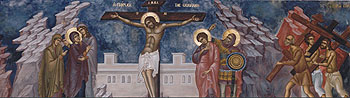
(from the Monastery of Pantokrator website)
What does our ecclesiastical past teach us on the matter of obedience to our spiritual Father when dealing with a matter of Faith, whether of a dogmatic nature or related to the holy Canons? Do we owe our spiritual Father indiscriminate obedience when he opposes the Tradition of the Church or do we not? Do we carry the stigma of “disobedience” before God, or are we ‘covered’, by remaining obedient to Christ in accordance with the infallible Tradition of the Church? It is these questions that we shall attempt to answer in this article.
0. Introduction
1. Our Spiritual Father must be the best possible choice in every sense
2. Since the Spiritual Father is “in type and in place of Christ“, he cannot accept heresies
3. Indifference or silence on matters of heresy on the part of the Spiritual Father is forbidden
4. What the Holy Bible says about praiseworthy disobedience
5. According to the holy Canons, the Monk must move away from obedience to a heretical Hegumen
6. Saint John the Chrysostom recommends disobedience to cacodox ecclesiastical leaders
7. The “Ladder” clarifies that the Monk who is humble may gainsay the Leaders in matters of Faith
8. The exemplar model example of Saint Gregory of Decapolis
9. The teaching of Saint Symeon the New Theologian
10. Saint Ignatius Brianchaninov in favour of cautious obedience
0. Introduction
As regards issues of Faith, the matter of obedience to one’s Spiritual Father (a particularly delicate subject, unknown to many) is contained in the more general subject of obedience to one’s Bishop; for the relationship between the Spiritual Father – Confessor and the faithful Christian is impossible to be considered independently of that of the faithful Christian with the Ecclesiastical Community’s Bishop; a Spiritual Father does not guide the faithful Christians by means of a personal law that relies on his Priesthood but by means of a written warrant by the local Bishop, as determined by in the way that the holy Canons define; and more evidently per the 50th (46) Canon of the Holy Local Synod of Carthage[1]. Thus, whatever has already been mentioned in previous articles on the subject of the Bishop and the interference of the laity in matters of Faith, mostly applies here as well.
In other words if the faithful Christians, based on the example of the Saints who lived through the course of ecclesiastical history as well as the example set by the holy Canons, have the right to defy heretising Bishops and to sever communion with them (by abandoning also their congregations), as it has been ordained chiefly by the 31st Apostolic and the First-Second Synod’s 15th Holy Canons, how much more so do they have the right to distance themselves from unrepentant Spiritual Fathers who persist in developing their heterodox phronema (mindset).
If the Bishop, on whose behalf the Spiritual Father enacts the Mystery of guidance of the faithful Christians to God, namely the Sacrament of Repentance and Confession, is not infallible “ex officio“, how much more so does this hold for the Spiritual Father, who partakes of the grace of Priesthood to a smaller degree than the Bishop does, and is therefore most certainly not infallible.
1. Our Spiritual Father must be the best possible choice in every sense
Very often, we find the Heads of our Church reminding us of the duty of obedience to the Bishops, to the Presbyters and to their given orders; and yet the Flock is mostly unaware of the sort of people the Clerics, who steer the way, are meant to be.
Saint Nicodemus the Haghiorite, in his spiritually most edifying work Spiritual Practices, writes the following when referring to Basil the Great: “Examine the diligence that you have placed in trying to find a good spiritual father; for what other greater need do you have than finding a good guide for such a journey that you need to embark upon, full of dangers, like the one to heaven is? […] Now my beloved child consider in what terrible danger you will find yourself in if not only do you not search for such a spiritually worthy man to guide you correctly to your salvation and to heal you well from your passions and sins, but you end up even avoiding such a man […] So does Basil the Great (Rules in summary 229)[2] also speak and he says: ‘In the same way that people do not reveal the body’s ailments to everyone or to random people they meet but only to those who are experienced in therapy, similarly the confession of sins ought to take place in front of those who can heal them, as it is written: ‘you who are strong are to carry the illnesses of the weak’ [Rom. 15,1]; in other words, you are to carry them with your diligence’“[3].
In relation to the above, father John Romanides provides the following interpretation: “Of course, the spiritual father ought to already be in the state of illumination, so that he can also induct others in this state of illumination and to lead them to the Baptism by water [namely the absolution of sins] and to the Baptism by Spirit, which is the visitation of the Holy Spirit in the heart of the one being baptised and the enlightenment of man’s heart“[4].
Consequently, if the Elder – Spiritual Father – Confessor needs to lead the best possible life and to be able to give the best possible teaching, how much more so does he need to possess the minimum requirements, the “ABC“, namely keeping the purity of Orthodoxy?
2. Since the Spiritual Father is “in type and in place of Christ“, he cannot accept heresies
The degree of the significance in averting and fighting off heresy can be deduced from the fact that the entire dogmatic teaching of the Church has not been fashioned after philosophical contemplation but after its confrontation with heresies, which have always threatened the path of Orthodoxy, the only one that can cure human nature from sin: “The Fathers would change terminology from time to time and they would adapt their terminology in order to find the right terms to use, depending on the needs of the time. They did not do this in order to be able to comprehend the teaching of the Church in a better way but in order to combat the heresies that would crop up. For the comprehension of the Church’s teaching comes from illumination and theosis and not from philosophical or philological fermentation or from philosophical contemplation on the teaching itself. The purpose of dogma, which is formulated by the Fathers, is not to comprehend it, but the dogma-led union of man with God“[5].
Thus we see that the Cleric’s acceptance of heresy destroys the therapeutic nature of his Pastoral Theology. “In the same way that in medicine it is not possible to allow a ‘quack’ to treat patients, it is equally impossible to allow a heretic to treat the souls of men. For since he is a heretic he does not know and thus cannot provide treatment“[6]. Of course, the same also holds for a Cleric who is unable or does not care to discern Orthodoxy from heresy, viz. spiritual “medicine from quackery“, for it is simply a matter of time and of scheming by the evil spirits before both himself and his spiritual children all fall into a fallacy. Saint Ignatius Brianchaninov says: “Through the acceptance of false teachings (i.e. of fallacious concepts about God), and through the distortion of the dogmatic and ethical teaching that God Himself revealed to us, the corruption of the spirit is achieved because of the impact and interference of these false teachings. This way, man ends up as a son of the devil“[7].
Consequently, if the relation between the Spiritual Father – Confessor and the faithful Christian aims at providing a real image of the relation between Christ and the faithful Christian, as the “Ladder“ of Saint John of Sinai accordingly mentions (“Do not consider it below your station to confess your sins in the presence of your helper [i.e. of your Elder], with humility and contrition as if you were doing so in front of God Himself“)[8], then the disruption of the relation between the Spiritual Father and Christ due to the Spiritual Father’s heresy forces the faithful Christian either to seek another Spiritual Father of sound Orthodox judgment or – in case the faithful Christian believes there is still some hope for his Spiritual Father to return to sound dogma – to avoid at the very least abiding by the fallacious positions and counsel of his Spiritual Father. According to Saint Gregory of Nyssa, whoever “heretises“without a doubt the one who has been cut off from the salvific Faith is headless, like Goliath was, who became cut off through his own sword which he sharpened against the truth, divorcing himself thus from the true Head“[9]. How will such a Spiritual Father manage to teach salvation to others? (viz. develops a heretical mindset) becomes cut off from the mystical Head of the Church, Christ: ”
Let us not forget that according to Devout John’s “Ladder“, the transmission of Orthodoxy is an Elder’s foremost goal. In his exhortations directed at Pastors, we find the Saint saying the following: “Above all, you should leave the integral faith and the pious dogmas as a legacy to your children, so that not only your children but your grandchildren too will you manage to guide towards the Lord by walking the path of Orthodoxy“[10].
Thus, if the heretising Spiritual Father chases away the faithful Christian who keeps an Orthodox mindset, then the blame is placed on the misbelieving ill-minded Elder and Spiritual Father, for our Church teaches that our obedience to our Elders must have Christ in mind.
3. Indifference or silence on matters of heresy on the part of the Spiritual Father is forbidden
Therefore, based on both the aforementioned evidence and on ecclesiastical experience, it becomes obvious that the danger from heresy does not only lie in wait for the establishment of complete and official acceptance of the heretical dogmas by a Spiritual Father (or indeed by a Bishop), but also lies in wait for the creation of an environment festering with (a) indifference to the problems of heresy (which is a sinful transgression, being a delinquency) and/or (b) attempts at dissuasion of any opposition to the heresy (e.g. the well-known and totally unacceptable statements “do not talk about matters of Faith“, or “do not talk about Antichrists but about Christ” and so on, which amount to positions well-known in ecclesiastical history often upheld by the lukewarm – unconcerned or blameworthy leaders of every era). As a parenthesis, we mention that it is also a commandment of the Fathers to prepare our spiritual children for the arrival of the Antichrist[11].
Without a question, the Old Testament reproaches the shepherds of old Israel who would remain unconcerned for their flock’s protection. The Old Testament tells us characteristically, through the mouth of Prophet Ezekiel:
“As I live, saith the Lord God, surely because my flock became a prey, and my flock became meat to every beast of the field, because there was no shepherd, neither did my shepherds search for my flock, but the shepherds fed themselves, and fed not my flock. Therefore, O ye shepherds, hear the word of the Lord. Thus saith the Lord God; Behold, I shall visit the shepherds; and I will require my flock at their hand, and cause them to cease from feeding the flock…“[12]
In the New Testament we see Christ criticising the “Angels”, namely the Archbishops of Pergamus and of Thyateira, even more harshly for even though they would nurture their flock in an overall admirable manner, they would nonetheless allow the heretical Nicolaitanes and false prophets (viz. “Jezebel“) to harm their flock: “Notwithstanding I have a few things against thee, because thou sufferest that woman Jezebel, which calleth herself a prophetess, to teach and to seduce my servants to commit fornication, and to eat things sacrificed unto idols.“[13]. On the other hand, He praises the blameworthy (on some issues) “Angel” of Ephesus because he would recognise the false prophets and hate the works of the heretical Nicolaitanes: “But this thou hast, that thou hatest the deeds of the Nicolaitanes, which I also hate“[14].
In practice, the Holy Fathers would either reprove or find ways to bypass the Emperors’ practice of banning conversations on matters of Faith; a practice that aimed at the preservation of political peace and unity in the Empire between Orthodox and heretics. During the course of one of his discussions on the Christological issue with the heretical Monothelete Patriarch of Constantinople Pyrrhus, we find Saint Maximus the Confessor overturning this silencing on matters of Faith that had been enforced from without and replying to Pyrrhus with the following words: “What then? Just because God called us to become aware of His truth because of our hearts’ intention that He foreknew, should these [erroneous things] that have been communicated to some people as regards this, either in writing or by word, not be examined in great detail for the love of all those people who, as it happens, come across them without paying careful attention or even if they do pay attention are more prone to error? PYRRHUS: If the examination aims at this, then it is needful to do so. For to look after the safety of those who are more innocent-minded constitutes imitation of the divine love for man”[15]. This stance of Saint Maximus can only be interpreted as an opposition to the politics of imposed silencing on Christological discussions that had been successfully established through the decree “Typos” (AD 648) dictated by the Monothelete Emperor Constance II[16].
Consequently, it is impermissible to keep silent on matters of Faith when souls are in danger from heresy.
Let us mention a few straightforward yet relevant examples:
- (a) In our days we note a revival of Origenism, a hidden neo-Origenism, in the form of academic exoneration of the heretical theologian Origen for his delusions (3rd century AD). According to this teaching, Origen had supposedly not been a true heretic, for, had that been the case, the Church would have condemned him while he had still been alive and not after his death. Supposedly, his condemnation during the Holy Fifth Œcumenical Synod (AD 553) largely occurred in an attempt to exercise “ecclesiastical diplomacy” in order to appease the spirits of the powerful anti-Origenist theologians and to restore peace in the Church; particularly in the Holy Lands, where, the theological and more general dispute between Origenists and Orthodox had taken a very nasty turn since the time of Saint Sava’s death (AD 532). To this neo-Origenist teaching, which has infected many theological academic writings, chiefly however the oral teaching of academic theologians, one must not forget to add the presentment of the Origenist delusion for the restoration of all as a “theologumen” (i.e. as an issue that is still theologically unclear). The Holy Fathers clearly warned us not to accept this delusion on the restoration of all (namely, that the hell of the demons and of the unrepentant sinners will eventually come to an end), for this will completely cast us into sin, since hell supposedly is not eternal and consequently supposedly we do not need to be afraid of it. On the contrary, Saint John of the Ladder characteristically says: “Let us all take heed, and especially those of us who have experienced falls, that our heart does not become affected with the illness of the impious Origen. For this detestable illness, by supposedly advertising God’s mercy, becomes welcome to those who are lustful“[17]. This is a characteristic example of how a latent heresy in the ecclesiastical body can destroy souls.
- (b) The well-known book “The imitation of Christ“, work of the Latin Monk Thomas à Kempis, is still being projected as soul-edifying reading material for many faithful Christians in Greece; a work that has managed to become an international best seller and whose circulation at some point reached second place to the Holy Bible.
However, here is how Saint Ignatius Branchianinov judges the spirituality of this book: “And a typical example of an ascetic book written by an author who at the time of writing had been found in the state of delusion known as ‘aponoia’ [lack of an Orthodox mindset and utter shamelessness], can be taken to be “The Imitation of Christ” by Thomas à Kempis. It smacks of a subtle sensualism and haughtiness which stimulate a form of hedonism in people full of passions who are blinded by them, which [hedonism] they mistake to be a ‘foretaste of the divine grace’. Woe, the miserable souls! Woe, the blinded ones! […]. We see Francis of Assisi, Ignatius Loyola and many other ascetics of the Latins driven to a terrible demonic delusion analogous to the one that Malpas had fallen into; and yet the Latins place these among their saints“[18].
If such a writing of Latin spirituality has already reached such a dangerous point of widespread public acceptance and propagation in an Orthodox country, thanks to the ignorance or indifference of the Spiritual fathers, how much more will Orthodox countries continue to be imbued with such a heretical spirituality if we do not speak openly against the dangers of the Western heretical, rationalist and emotionalist spirituality?
4. What the Holy Bible says about praiseworthy disobedience
Apostle Paul’s explicit remark on Galatians (Gal. 1, 8.9) (made in fact by using accentuation twice: “as we said before, so say I now again“), not to accept any innovation in preaching the gospel, even if that proceeds from an angel in heaven or from the Apostles themselves, openly abolishes every notion of “Primacy” in the hands of individuals over the Tradition inside the Church (since not even the Apostles can change their Gospel a posteriori, since it is “from above“), and furthermore it alone provides us with sufficient guidance in what happens when we are found obligated to show obedience to the Faith of the Church: we must turn away whoever alters the ancient evangelic kerygma (“let him be anathema“).
As regards another verse, “Obey them that have the rule over you, and submit yourselves: for they watch for your souls, as those who must give account” (Heb. 13, 17), one may also pay attention to another point worthy of note: the reasoning behind the obedience shown to those “that have the rule“, namely to the leaders, is that “they watch for your souls“; obedience is not without its preconditions. If, based on our ecclesiastical experience, we come to the realisation that these rulers neglect their duty, that they do not care for the salvation of the souls that have been entrusted unto them and that they ignore the spiritual dangers and above all the danger of heresy, then the duty of obedience to them is abrogated.
As it has been mentioned accordingly “First of all, the Holy Bible distinguishes between good and evil shepherds; between true and genuine shepherds, teachers and prophets on one hand and false shepherds, false teachers and false prophets on the other […]; obedience is not indiscriminate but discriminate“[19].
5. According to the holy Canons, the Monk must depart from obedience to a heretical Hegumen
In the section of the “Rudder” (that momentous and reputable collection of the holy Canons by Saint Nicodemus the Haghiorite) where the Saint clarifies the number of reasons for which a Monk may leave his Monastery, we find mentioned among them the situation where the Hegumen happens to be a heretic. By referring to Basil the Great, the Saint adds: “Now, Basil the Great (Great Rules 36) forgives one’s departure from his monastery for only one reason, namely when [the Hegumen] has suffered spiritual ruin; something that, according to [Saint Basil], must first be revealed to those who have the power to correct it; and if they do not correct it, then [the Monk] must divorce himself from their company, no longer as if departing from brothers, but as if from strangers“; and he then continues with the remaining interesting and soul-edifying admonitions[20].
In this case, it is also evident that if the Elder – Spiritual Father happens to be a heretic (or if he happens to be pro-heretical, depending also on the degree of his acceptance of the heresy), not only do we owe him no obedience, but it is imperative that we distance ourselves from him.
6. Saint John Chrysostom urges disobedience to the cacodox ecclesiastical leaders
Saint John Chrysostom, who is considered by our Church as “a God-inspired instrument and an inexhaustible ocean of dogmas“[21], when interpreting the apostolic commandment on obedience and submission to the Leaders, to the Hegumens (lit. the word means leaders, “them that have the rule“), “obey them that have the rule over you, and submit yourselves“, makes the following clarifications: “Perchance someone may tell us that [apart from anarchy and indiscipline] there is a third evil, namely when the ruler [of the Church] is evil. I too know it; and this evil is not small, but much worse even than anarchy is: for it is better not to be guided by anyone, instead of being guided by someone evil. For the former [subordinate] many a time was he saved and many a time was he found to be in danger; but the latter will most certainly stay in danger, being led to an abyss. So how come he says ‘Obey them that have the rule over you, and submit yourselves’? After having mentioned further up those ‘whose faith [you must] follow, considering the outcome of their life’ he then says ‘obey them that have the rule over you and submit yourselves’. So what happens then, you ask, when he is cunning and we do not obey him? In what way do you mean “cunning”? If he is such in the faith, avoid him and leave him; not only if he happens to be a man but even if he happens to be an angel descending from heaven [Gal. 1, 8]. If he is so because of the life he leads, then do not be concerned […].Yet do not pay attention to his life, but to his words; for no one could ever be harmed from his ethos. Why? Because it is plain for all to see; and even if he happens to be cunning a thousand times over, he will never teach cunning things. But when he happens to be [cunning] in the faith, neither is this obvious to all nor will the cunning one stop teaching. For even the words ‘Do not judge in order not to be judged’ are meant for one’s life and not for the faith“[22].
7. The “Ladder” clarifies that the Monk who is humble may gainsay the Leaders in matters of Faith
In Saint John of Sinai’s work “Ladder“, this paramount spiritual writing that has been characterised as “a masterpiece of Eastern asceticism” in which “obedience has a fundamental place in virtuousness“[23], it is clarified that exceptions to the rule are allowed. Devout John characteristically mentions the following about the virtue of humility: “You do not find hatred, any form of contradiction or any trace of indiscipline associated with the one who is connected with [this virtue], lest we are dealing with issues of Faith“[24].
8. The exemplar model of Saint Gregory of Decapolis
Saint Gregory of Decapolis, whose memory we celebrate on November 20, and who shone with his life during the second half of the 8th century in Decapolis of Isauria, had been distinguished for his almsgiving, his unassuming stance, his obedience, his humility and his meekness as early as his teenage years and continued to be equally distinguished for these virtues later on when he became a monk. The Saint’s biographer narrates that while the Saint’s mother did not dissuade him from becoming a monk, she convinced him nonetheless to enter the brotherhood of another Monastery where his flesh brother also resided, in order for them to struggle spiritually together, and for one to be consoled by the other’s presence. The biographer continues the narration by telling us how Saint Gregory dealt with the fact that the Monastery’s Hegumen proved to be a heretic: “In order to consent to his mother’s will, Gregory went to that Monastery whose Abbot happened to be a heretic, the wretched soul; and when the Saint realised this, he could not stand it, being the fervent zealot of piety that he was, and instead checked him in the presence of the entire brotherhood; and [the hegumen], becoming greatly angered, beat up the Saint badly, who departed from the monastery with his wounds still fresh on his body; and went to another Monastery in this bloodied state, whose Hegumen happened to be a relative of his mother named Symeon, who also happened to be the Archimandrite of all the Monasteries of Decapolis“[25].
9. The teaching of Saint Symeon the New Theologian
Sublime Saint Symeon the New Theologian, for whom we cannot say here as much as we should, has left us with some wonderful teachings and God-inspired experiences of his divine Eros, but also with a teaching that reproves the state of his era’s clergy. It is believed that Saint Symeon commenced an important spiritual revolution. Father John Romanides characteristically writes: “… there came a time in the Church when people would be ordained as clerics that in the ancient Church would not have been suitable to advance beyond laity […] In other words, they did not have the spiritual presuppositions to join the Holy Orders. Saint Symeon the New Theologian revolted against this irregular situation and he proved so successful that the Church named him New Theologian. From his time until the time of Saint Gregory Palamas, a great conflict took place in the Church as regards the matter of qualifications needed for the election of bishops. Because of this Hesychast controversy, as it became known, which was resolved by the adoption of Saint Symeon the New Theologian’s theology, it was eventually ordained that the bishops of the Church should be chosen from the ranks of the monks who followed the Hesychast tradition, illumination and theosis“[26].
So Saint Symeon, who is a Saintly spiritual giant of such epic proportions that he was the third person in our Church to have been assigned the title of a Theologian, having made such an important contribution to its ascetic teaching, has also left us with a teaching of particular and characteristic importance to our topic: “Plead God with prayers and tears for Him to send you a guide who is dispassionate and holy. At the same time, also study the divine Scriptures by yourself and particularly the practical writings of the Holy Fathers; so that by cross-examining the teachings and works of your teacher and Leader with these [writings] you may become able to see and to comprehend [his teachings]. And those teachings that are in agreement with the Scriptures, you should adopt and hold them dear in your mind, while the adulterated and foreign ones you should learn to perceive them as such and to turn them away, in order not to be deceived. For know this: many deceivers and false teachers have come forth in these days“[27].
Another teaching, analogous to the one mentioned above, has been saved in the Life (i.e. in the biography) of Saint Symeon by his disciple Saint Nicetas Stethatos. Close to the time of his death, Saint Symeon advised his disciples to obey the successor Hegumen Arsenius in all things with one possible exception: “Do not take amiss his words and actions, but even in case these happen to be in opposition to the Fathers’ consensus, you should bow your heads unto him for the time being. Afterwards, those of you that may have surpassed the others in years, life experience and words, let them notify him in private of the reason for the impediment to apply his words, in accordance with the “Rules” of Basil the Great27a. For the sake of God, you should endure him when he happens to be sore or bitter, without contradicting or repugning him; for the one who contradicts or repugns him repugns God’s authority, as Paul says (Rom. 13, 2). Truly, in matters where no transgression of God’s commandments or of the apostolic Canons and ordinances has taken place, you ought to obey him in all things and to submit yourselves unto him as if he were the Lord Himself. However, in all things where the Gospel of Christ and the laws of the Church are in danger of being overturned, not only to him should you not submit when he admonishes and commands you, but not even to an angel who just came down from heaven and who evangelises you things different from what the eyewitnesses of the Logos had been evangelised“[28].
10. Saint Ignatius Brianchaninov in favour of cautious obedience
This celebrated Saint and theologian of the Russian Church of the 19th century, about whom we have already mentioned, dedicates an entire chapter in his valuable book “An offering to Contemporary Monasticism” on the subject of “Obedience to an Elder“. Among the many other references he quotes from the Fathers that are found cited in the topic of indiscriminate obedience to unpurified Spiritual Fathers, he makes important clarifications and additions: “Obedience makes the subordinate one with the one he obeys. The Holy Bible says: ‘and the flocks conceived before the rods‘ (Gen. 30, 39) […]. One may say: the subordinate’s faith can replace the elder’s inadequacy. Wrong! Faith in truth saves. Faith in lies and in diabolical deceit harms! This is said by the Apostle. For those who willingly perish, he says: ‘…they received not the love of the truth, that they might be saved. And for this cause God shall send them strong delusion, that they should believe a lie: That they all might be damned who believed not the truth, but had pleasure in unrighteousness.’ (2 Thess. 2, 10-12) […] In our times, we observe a general degeneration of Christianity. […] And it is a great blessing for us and great joy that we were given the possibility of being fed with the crumbs that fall from the Spiritual table of the Fathers. The crumbs themselves do not constitute the most adequate nourishment. But they can (although not without leaving us with feelings of privation and hunger) save us from spiritual death“[29].
Let us also keep well in our hands these “crumbs” that fall from the patristic teachings, like from the ones presented above, in order to save ourselves from theological chaos as well as from the relativism of and subjection to heresy, by staying firmly disobedient to every type of pro-heretical pseudo-obedience. The homily of Saint Ephraim of Syria on the Second Coming of Christ is formidable: “Woe unto those who pollute the holy Faith with heresies or who subject themselves to heretics“[30]. Whether these happen to be lay, or much more so if these happen to be clerics[i].
- [1]Saint Nicodemus the Haghiorite, Rudder, edition Vas. Rigopoulos, Thessalonica 2003, p. 488.
- [2] Saint Basil the Great, Rules in summary 229, PG 31, 1236A
- [3] Saint Nicodemus the Haghiorite, Spiritual Exercises, Exercise III 4, edition V. Rigopoulos, Thessalonica 19917, p. 320 (and notes). The excerpt taken from Basil the Great is a translation.
- [4] Protopresbyter and University Professor John Romanides, Patristic Theology, redaction by Haghiorite Monk Damascene, edition Parakatatheke (Deposit), Thessalonica 2004, p. 176ff.
- [5] Ibid. p. 70ff
- [6] Ibid. p.203ff
- [7] Saint Ignatius Brianchaninov, An offer to contemporary monasticism, tome III, edition Holy Metropolis of Nicopolis, Preveza 1995, p.203.
- [8] Saint John of Sinai, Ladder, Homily IV, On obedience 58, edition Holy Monastery of Paraclete, Horopos Attica, 19946, p.95
- [9] Saint Gregory of Nyssa, Homily against Eunomius 12, PG 45, 912.
- [10] Saint John of Sinai, On the Shepherd 97, edition Holy Monastery of Paraclete, Horopos Attica, 19946, p.402 (PG 88, 1201A).
- [11] Saint Cyril of Jerusalem, Catechesis for Illuminated 15, 18 PG 33, 896A
- [12] Ezekiel 34, 8-10 (KJV)
- [13] Rev. 2, 12-23
- [14] Rev. 2, 6
- [15] Saint Maximum the Confessor, Discourse to Pyrrhus, PG 91, 333C.D (translation).
- [16] Cf. J. Phidas, Ecclesiastical History, Tome I, Athens 19942, p.747
- [17] Saint John of Sinai, Ladder, Homily V, On repentance 29, op. cit. p.133, PG 88, .
- [18] Saint Ignatius Brianchaninov, op. cit. tome I, edition Holy Metropolis of Nicopolis, Preveza 1993, p.136ff.
- [19] Protopresbyter Theodore Zisis, Bad obedience and holy disobedience, Φίλη Ορθοδοξία (Orthodoxy My Friend) 11, edition “Bryennios”, Thessalonica 2006, pp.21.23
- [20] Saint Nicodemus the Haghiorite, Rudder, op. cit., p.341, footnote (1)
- [21] Great Vespers, November 13, Kekragarion I
- [22] Saint John Chrysostom, Homily on the Epistle to Hebrews 34, 1. PG 63, 231
- [23] Introduction to Saint John of Sinai’s Ladder, op. cit, p.5
- [24] Ibid., Homily 25, On humility 9, p.268
- [25] Matthew Langis, bishop of Oinoe, The Great Synaxarist of the Orthodox Church, tome XI, Athens 19915, p.537ff
- [26] Protopresbyter John Romanides, op. cit. p.104ff
- [27] Saint Symeon the New Theologian, Practical and Theological Chapters 32, by P. Christou in ΕΠΕ (Library of Greek Fathers) Philokalia of the Neptic and Ascetic Fathers 3, Patristic Editions Gregory Palamas, Thessalonica, p.242 (translation)
- [27α] Saint Basil the Great, The Great Rules 27, PG 31, 988A.B
- [28] Saint Nicetas Stethatos, Life of Symeon 66, by P. Christou in ΕΠΕ Philokalia of the Neptic and Ascetic Fathers 19, Patristic Editions Gregory Palamas, Thessalonica, pp.146.147
- [29] Saint Ignatius Brianchaninov, op. cit., tome I, pp.141.143.146ff
- [30] Saint Ephraim of Syria, Homily on the Second Coming of our Lord Jesus Christ in Devout Ephraim of Syria – Works, tome IV, edition “The Garden of Panaghia”, Thessalonica 1992, p.26
[i] For a broader analysis on the subject of obedience and disobedience in matters of Faith, see also the very informative first part of the book Bad obedience and holy disobedience by Professor and Protopresbyter Theodore Zisis, Orthodoxy My Friend 11, edition “Bryennios”, Thessalonica 2006.
No heresy has ever raised up so radically and so completely against the God-Man Christ and His Church as has the Papacy, with its dogma of the infallible Pope-man. There is no doubt about it: this dogma is the heresy of heresies. (Elder Iustin Popovich)
Video links: Papocentral Globalism1
‘For it is a commandment of the Lord not to be silent at a time when the Faith is in jeopardy. Speak, Scripture says, and hold not thy peace…. For this reason, I, the wretched one, fearing the Tribunal, also speak.”
(St. Theodore the Studite, Patrologia Græca, Vol. XCIX, col. 1321)
The Heretical Pope calls for One World Government so called “global authority” on economy http://news.yahoo.com/s/nm/20090707/ts_nm/us_pope_encyclical;_ylt=AmAVd7GbgW6S4btgMieNYbus0NUE;_ylu=X3oDMTFoZGZvNWVhBHBvcwMxNgRzZWMDYWNjb3JkaW9uX3RvcF9zdG9yaWVzBHNsawNwYXBhbG1lc3NhZ2U- As s
As the worldwide apostasy is increasingly gaining momentum in the modern world and dragging along more and more souls with itself, we, as True Orthodox Christians, are called to “stand fast in Truth” and to remain unswayed by its onslaught. Remembering the words of St. Ignatius (Bryanchaninov), we are not trying to stop it with our weak hand, but rather intend to provide to those, who sincerely seek the Truth, some help on this sorrowful and narrow way, which leads to Heaven. In our last times, the Truth is very hard to come by. Almost everywhere, where it is not rejected outright, it is being diluted by servants of devil with lies and fallen human (often, even demonic) wisdom.Apostolic Church, depriving the faithful of the Holy Mysteries and corrupting their souls.
Ecumenism — is one of the mechanisms by which this mixing is achieved in practice. It is a relatively recent satanic invention, which already proved to be a huge success. Under the guise of “super-Christian love” it attempts to blur and, eventually, destroy the boundaries of the Holy, Catholic and
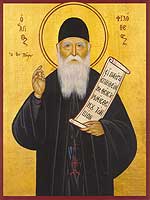 Rise up Chrysostomes, Gregories, Germanuses, Tarasiuses, Nikifori, Fotii and the rest, the old and recent Holy Patriarchs of Constantinople, who sacrificed yourselves for your flocks, to see who is on your throne. You, like the good shepherds have sacrificed your souls for your own sheep, while the present ones sacrifice their sheep for themselves and they open the door and invite the wolves to come in and destroy the flock.
When has a Patriarch fallen in such a slide, that he voluntarily struggles to deliver his flock to the wolves to be torn apart? The cause is pride, the root and cause of all sins, all the evil, all heresies, calamities and sorrows and even greater than the calamities and unhappiness, the deprivation of God’s grace.
The wolf shepherds, false teachers, false prophets and false christs, were expelled from Christ’s flock and as unrepentant , they were placed under everlasting anathemas by the Holy Fathers, the imitators of the Chief Shepherd Christ and His followers, the good, true and divine shepherds, the preservers of the decent and holy seven Ecumenical Synods.
The Orthodox Church is not used to innovations like the Westerners and the Protestants, who after their separation and without ceasing have taken up to perform innovations or reforms, to such a disrespectful and insane degree to innovate all the mysteries and holy tradition and deleting many….
There are two reasons that make the present day Arch-hierarchs to innovate and reform the Church, first pride, which makes most of the hierarchs, save some, to believe they are wiser that the Holy Fathers, and secondly gluttony and love of self. By most of them becoming, lovers of the flesh, they were abandoned by the grace of the Holy Spirit.
If the Patriarch, does not accept but rejects the suggestions of the Government of the Holy Synod, Arch-hierarchs, priests and lay followers, and insists on the union (of the Churches), then he should be renounced. For in case they do not oppose but retreat and say that they will follow the Patriarch, then there would be a far reaching destruction. Then I would have nothing else to say but woe to the Orthodox Church of Greece. Woe and to the Greek nation. For it shall be immeasurably worse than the subjugation to the Muslim and the false prophet Mohammed.
If the Pope wishes the union, let him recognize and confess all his deceits, heresies and innovations made by various Popes from the beginning and over a period of time, having separated themselves from the Orthodox Church, he will be received only if he repents, cries bitterly and humbles himself.
If they do not reject pride, both Patriarch and Pope, and do not humble themselves, imitating our Lord, not only would they not succeed but instead they will increase the separation and they will create many scandals, disturbances, confusions and great damage to and loss of their flocks. If they would imitate the Lord and humble themselves the union will succeed, they will benefit themselves and their flocks and the name of the Father in Heaven will be glorified through them like through the Apostles, for the “Lord opposes the proud and raises the humble”.
Papism is the forerunner of the anti-christ.
Orthodoxy was firmed up by the Holy Apostles and the enacting Fathers through the seven Ecumenical Synods, while illumined by the Holy Spirit.
Papism is the forerunner of the antichrist, for the Pope having been captured by arrogance and conceit, and wishing to have the highest authority of the Church and State, he tore the Church of Christ.
The Pope worshipers have fallen in many false beliefs and heresies modifying the mysteries of the Orthodox Church. Instead of the baptism they are sprinkling, instead of the mystery of communion they have Jewish unleavened bread. They got rid of the fasts and even the holy oil, nor can they perform blessings by sprinkling with holy water because they are excommunicated and thus their blessing does not hold.
I would not refrain to mention something I witnessed myself when I went to the Holy Mountain for pilgrimage. When the Emperor Constantine Michael and Patriarch Vekkos who were Pope worshipers went to the Holy Mountain during the period 1170-1200,they were pressing the monks to receive the Papism and to co-celebrate with the papists. Those that had accepted and co-celebrated, their bodies remained incorrupt but give off a foul odour. Those that refused to co-celebrate and were killed by the papists, their relics give off a pleasant odour. I wish through the grace of the Holy Spirit to enlighten your mind, to give you strength and reject the dream of deceit and languish and return to the bosom of the Church.
“If the present Hierarchs do not accept the decisions, the Canons and the traditions given by the divine Apostles and Holy Fathers of the Church but ignore them, who would then respect their own? ”
The Church and State and their leaders of the present evil days, sleep the heaviest sleep of negligence and laziness, and if they do not wake up, as well as the clergy and the people to repentance in the service of God’s commandments, of the virtues and good works, they will have to answer during the great judgment and will be punished.
Hold fast to your faith.
Hold onto your faith firmly and remain immovable on the traditions of the Divine Fathers, for we have arrived at the age that even the strong in faith are lost. Toil by studying and learning, for everything good is achieved with hard work and suffering. We shall not feel the labourl of virtue when we consider the clouds of martyrs and saints and in the future we shall be glorified.
How happy and blessed we shall be, if through a little toil we shall be judged worthy to camp in the lovely camps of Paradise and inherit the goods of the Heavenly Kingdom of God. Amen.
The apostle Paul, the mouth of Christ, commands: “Do not communicate in the works of sterile darkness that you may not become controlled. In cases where our Orthodox Faith is ignored or slandered, it is permissible to check it and have just anger, most justifiable, but silence is not permissible. But the checking must be done with discernment and prudence not with disturbance and anger, but with divine anger. God does not give up His Church and to those who fight her He will humble them and they will be smashed like a ceramic roof, but those who hold their Orthodox faith and confession till death, shall be blessed.
I bless you from the heart to never be timid in your struggles, even if you see the enemies of the Church becoming stronger….The one that struggles for the Orthodox faith and for our holy Church has the Almighty God for an ally, while the one that struggles for deceit has the ever cunning devil for ally, the weak master of darkness, of lies and all heresies, fallacies and wickedness. There is nothing more honourable, modest and holier when one struggles for the faith. And if while struggling he is killed by the enemies, without bending, he is the brightest victor and he will receive the trophy of the call above and the heavenly crown. So fight for the faith and struggle until death, to become worthy heir of the Kingdom of Heaven.
In the present time, when the Church is attacked in many ways and means by many and diverse fighters, your effort in confronting and combating will succeed, with God’s help and will save some from to- day’s flood of sin.
I congratulate you for your zeal for the dissemination of the Christian truths and for the benefit of the Christians. We should know that according to the toil and willingness each one works, rewards will be given by the wage giver Christ. While there is time, let us work spiritually and sow with labour so that we may reap in peace.
(Elder Philotheos Zervakos –
Ecumenism, Orthodoxy and Heresy)
 The report on the WCC by Bishop Raskas Artemios, that he submitted to the Synod of the Serbian Hierarchy, we publish the following important excerpts).
…… The Church is one and catholic and in her is the complete and all the truth, all the grace, everything the Lord brought with Him to earth and delivered to the people and left for their salvation.
It is one and catholic because it brings together all those that wish to be saved in an interior union, in the body of the God/man Christ.
For this, this idea of one “council” or “union” of the Churches is impossible, not permissible and unacceptable to the conscience of every Orthodox.
The boundaries, set by our Holy Fathers have been trampled, the boundaries between truth and falsehood, light and darkness, Christ and belliol.
The main aim of all these overblown emotions (basically it regards plain hypocrisy) is the wish for the Orthodox Christians to learn the “truth”, that they are brothers in Christ and members of the one and true Church together with the heterodox. This is what is discussed at the meetings, conferences and printed in the newspapers, magazines, books, the broadcasts by radio and television. All these demand to our being led to the “common cup”, the common communion that comprises the founding goal of the “dialogue of love”.
All these, according to Father Justin Popovitz, who likens it to the betrayal of Judas, the terrible betrayal of our Lord Jesus Christ and of the whole Church.
…….. As a result of this cooperation, the Serbian Orthodox Church was receiving for some time material help from the WCC, such as medicines, scholarships, trips to Switzerland, financial subsidies, for example towards the construction of the new building of the theological school. For these crumbs of help we have lost in the spiritual sphere the purity of faith, the canonical heritage of the Church and the faithfulness of the Holy Tradition of the Orthodox Church>
The presence of representatives from the Orthodox Churches at the different ecumenical meetings bear no canonical justification. They do not go there to courageously proclaim openly and firmly the eternal and unaltered truth of the Orthodox Faith and Church, but embark on compromises and more or less to agree in all the decisions and schemes that are offered to us by the non-Orthodox.
Through such actions we arrived at the Balamand, Sambezie, and Assissi, since all these include the unfaithfulness and betrayal of the Holy Orthodox Faith.
During all this period of collapse and even loss of the Church of Saint Savvas, a single and lonely voice was heard, the voice of Archimantrite Augustin Of Tselie (V1979), who alone kept the unaltered and alert conscience of the Serbian Orthodox Church. It was him who felt deeply and lived liturgically the apostolic and patristic spirit of truth and wrote about the “achievement” of Patriarch Athenagoras: “The Patriarch of Constantinople? He, with his neopapist behaviour in words and deeds scandalizes already for approximately ten years the Orthodox conscience, denying the single and totally correct Truth of the Orthodox Church and Faith, while recognizing the Roman Pontiff with all his demonic and anti-ecclesiastical pride….”.
Remembering in one hand what has been said and in the other the extreme and infallible word of the Bible, “every fruit tree is known by its fruit” it is simple to understand what we have to do.
Already in this conference we must decide “the Serbian Orthodox Church must leave the WCC and all similar organizations (such as the Council of European Churches etc) and put an end to the participation in ecumenical and atheistic manifestations.
This must be done for the following reasons.
- 1. In obedience to the Apostle Paul, who advises and recommends: “After a first and second admonition of a heretic let him go”.
- 2. This (the participation) happens to be in conflict with the holy cannons of the Orthodox Church against which we have sinned grievously.
- 3. There is nothing by the Holy Fathers of the Church that could justify the union and continuing participation in the non-ecclesiastical organization of the WCC and other similar with it.
- 4. For the salvation of our souls and the souls of the flock, that has trusted us and which for some time now we have scandalized and damaged by our participation in ecumenism, as well as for the salvation of those who still find themselves outside the ark of salvation, of the Holy Catholic and Apostolic Church and whom our determined and clear action could help them in their search for salvation and Truth, something that cannot be achieved by a retreating and godless comradeship with ecumenism.
Orthodox Kypseli Publications – Thessaloniki
 Christian Dogma
 Christian Martyrs
 Christian Orthodox Churches and Monasteries
 Christian Sermons and News
 Church's Teachings on Fasting
 Ecumenism – a Great Heresy
 Father George Calciu
 Life_a Sacred Gift form God
 Orthodox Saints and Church Fathers
 Spiritual Elders
 Daily Bible Readings
 Journey to Orthodoxy
 Listen to Ancient Faith Radio
 Orthodox Calendar of Feasts and Saints
 Orthodox Christian Mission Center
 Orthodox Institute
 OrthodoxChristianNetwork TV


Recent Comments