
You are currently browsing the category archive for the ‘Spiritual Elders’ category.

“With the holy man wilt Thou be holy… and with the perverse wilt Thou be Perverse (cf. Ps 17)” or “Tell me who’s your friend so I may see who you are,” says a proverb.
The Lord called Lazarus, His friend. The kind of friends you have is of great matter.
Avoid evil. If you see that your friend leads your soul to perdition, end that relationship. Do not partake with the man that speaks evil, with him that judges or slanders. Make friendship with the righteous, the humble, the wise and the good. Thus was Lazarus, a friend of Christ. May your friend be a help to your salvation! “
(From father Valentine Mordashov, the elder of Pskov)

By Hieromonk Moses the Hagiorite, Vatopaidi Monastery, Mt.Athos
Many people ignore or do not will to acknowledge the true meaning of these days (of fast), consuming themselves with their routine (monotonous) everyday life. The modern man complains that life is tiring him, yet makes no step towards a fundamental change. He takes on strict diets sometimes, yet disregards the fast. He can make time for a counseling psychologist, can spend hours in front of television, but finds no time for a spiritual father or for the church.
Today’s man does not want to offer but he’d rather receive with not much effort or personal sacrifice. Too afraid to look himself in the eyes, he runs away from himself and struggles in his inner emptiness.
The Great Fast works like an X-Ray, like a (video) camera or like a mirror. In a certain way, we do not welcome it because it reveals our hidden reality.
Today’ spirit of consumerism, comfort and pride leaves man a prisoner of the many unnecessary things that have filled his life. The Great Lent is a halt in the routine rush of life and an opportunity for transfiguration. The prayer of blessed Ephraim the Syrian that in this period it is said hundreds of times during the religious services, urges us to abandon sloth, a lot of care, love of power and idle talk and gain purity, humble thoughts, patience and love. This beautiful and meaningful prayer ends by asking God: “Grant me to see my own faults and not to judge my brother…”

Let’s abandon gossip, judgment of others that continually stain our soul and let’s move the focus on ourselves correcting our fallings.
The Great Lent urges us to return to one-self and it contributes to our healing from the spiritual diseases that darken our minds and make our lives difficult and bitter.
If we manage to reach this self-knowledge and repentance, then the Great Lent will not be a gloomy and barren time for us, or a simple time to fulfill the “moral duties”, but an opportunity to soften our hardened hearts, which will lead us to the love of people and the love for God.
The excessive rationalism of the difficult time we live in, strives to keep us away from what is mystical, from all that is holy – unspeakable and beyond nature – mystery.
And the result of this state comes to light. Everywhere melancholy and despair reigns, wounding the soul. It is time to see from the depth of our hearts, that we have become estranged and, the time is ripen to return to the cradle of Crucified Love.
Often during the time of Great Lent, temptations, trials, tribulations and failures occur. These will come for us to mature, to acquire balance and a child like nature. Let’s not forget that the life of the Christian is one with the Cross. Without crucifixion comes no resurrection.
The Great Lent is a beautiful time for preparation, a semi-darken corridor leading us to the chamber full of light. The members of this preparatory time are prayer and fasting. But prayer and fasting without humility and love, bares no fruit. The fasting and prayer aim to temper our selfishness.
Let’s not loose this opportunity offered once again by the Great Fast, as we’re slowly approaching its end. In the Church, our problems find their solution. The cold winter is followed by spring. Following the clouds, the sunny weather is even more beautiful. The Triodion is followed by the Pentecostarion. And now, as a wonderful hymn says, is the “time of repentance and the hour for prayer.”
(Translated by blog author).
A prayer composed by Rev Fr Eusebius Vittis (+2009)
“O Lord my Jesus, meek and humble in heart, I wholeheartedly beg and beseech You:
From the desire to be admired by others, release me.
From the desire to be loved by others, release me.
From the desire to be sought out by others, release me.
From the desire to be honored by others, release me.
From the desire to be praised by others, release me.
From the desire to be preferred by others, released me.
From the desire to give advise to others, release me.
From the desire to be commended by others, release me.
From the desire to be cared for by others, release me.
Release me from the fear that they will humiliate me.
Release me from the fear that they scorn me.
Release me from the fear that they will reject me.
Release me from the fear that they will slander me.
Release me form the fear that they will forget me.
Release me form the fear that they will offend me.
Release me from the fear that they will suspect me.
Lord, grant me to desire that others be loved more than me.
Lord, grant me to desire that others be esteemed more than me.
Lord grant me to desire that the good view of others increase, and that my own decrease.
Lord, grant me to desire that others be put to use more than me.
Lord, grant me to desire that others be praised more than me.
Lord, grant me to desire that others be remembered, and not me.
Lord, grant me to desire that others be preferred and chosen over me.
Lord, grant me to desire that others make progress in virtue more than me, if of course I could achieve something like that on my own.”
“Those who fall cannot give the excuse that the trials or temptations they encounter are greater then the power they have to defeat them.”

The tests that the devil brings upon us do not surpass the human power to endure. For if it surpasses this power, man would be at no fault for not enduring and overcoming them.
So those who fall cannot give the excuse that the trials or temptations encountered, were greater then the power they had to defeat them.
Of course, things get complicated, given that man cannot overcome these trials by his power alone, but also with the power of God.
And the power given to man form Above, is granted as such, not to make his effort useless or to require an effort that man could not bare.
Exceptions exist with the wonders (miracles) that are worked though some. But even in these cases, the supernatural power grated to man, is at the measure of his supernatural faith.
However, the line between the order of nature and the supernatural is difficult to draw and (is) very subtle.
In the faithful, this supernatural power, penetrating their being, lifts up their powers at various levels. “
(Father Dumitru Stăniloae, 329 note to “The Ascetic Words” of Saint Isaac the Syrian , Philokalia IX)
FIFTY SPIRITUAL HOMILIES OF St. MACARIUS THE EGYPTIAN, Excerpt from HOMILY V
Those who have the spirit of the world are in heart and mind bound in earthly bonds, but the others long after the love of the heavenly Father, having Him only before their eyes with much desire.

THE world of Christians is one thing their way of living, their mind and speech and action sone and the way of living, and mind and speech and action of the men of this world is another. Those are one thing, and these another, and the difference between them is great. The inhabitants of the earth, the children of this age, are like corn put in the sieve of this earth, sifted by restless thoughts of this world, and by the ceaseless tossing of earthly businesses and desires and of tangled material notions, while Satan waves their souls about, as he sifts in this sieve of earthly businesses the whole sinful race of man, ever since Adam fell by transgressing the commandment and came under the power of the prince of wickedness. […]
As the corn in the sieve is knocked by the man who sifts, and constantly shaken and turned in it, so the prince of wickedness holds all men by means of earthly affairs, and through these he shakes them, and agitates them, and tosses them, and knocks them on vain lines of thought, and base desires, and earthly ties of the world, constantly taking captive and agitating and alluring all the sinful race of Adam ; as the Lord forewarned the apostles how the wicked one would rise up against them :Satan hath desired to have you that he may sift you as wheat ; but I have prayed My Father that your faith fail not. […]
Not in a form or in outward figures lies the distinguishing mark of Christians. Most men think that the difference which distinguishes themselves from the world consists in a form and in figures; and lo ! in mind and frame they are like the world, undergoing the same shaking, and inconstancy of thoughts, and unbelief, and confusion, and helter-skelter as all other men. In out-ward form and appearance they differ from the world, and in a few points of religious ordinance; but in heart and mind they are bound with earthly bonds, never having acquired rest from God and the peace of the heavenly Spirit in their heart, because they never sought it from God, nor believed that He would vouchsafe these things to them.
For it is in the renewing of the mind, and the peace of the thoughts, and the love and heavenly passion for the Lord, that the new creation of Christians distinguishes them from all the men of the world. This was the purpose of the Lord’s coming, to vouchsafe these spiritual blessings to those who truly believe in Him. Christians have a glory and a beauty and a heavenly wealth which is beyond words, and it is won with pains, and sweat, and trials, and many conflicts, and all by the grace of God.
Therefore their longing is towards that love of the heavenly King, and having Him only before their eyes with great desire, they detach them- selves for His sake from all worldly affection, and withdraw from every earthly tie, that they may be free always to cherish in their hearts that one longing, and to mix nothing else with it.
Very few, however, are they who supply a good beginning with a good end, and come through to the end without falling, with no love but one, for God only, and detached from all else. […]
Many are pricked at heart, and many become partakers of heavenly grace, and are smitten with divine passion ; but because of the conflicts and struggles and labours and divers temptations of the devil to be borne on the way, they do not hold out, but are occupied with divers and sundry worldly desires,
Great and unspeakable and inestimable are the promises made by God; and in proportion to them great faith and hope and labours and conflicts are required, and much trial. The blessings for which a seeker of the kingdom of heaven hopes are no trifle. Thou desirest to reign with Christ through ages without end; wilt thou not readily welcome the conflicts and labours and temptations of this short span of life, even unto death? The Lord cries, “If any man will come after Me, let him deny himself, and take up his cross daily rejoicing and follow Me” and again, “If any man hate not father, mother, wife, children, brethren, sisters, yea and his own life also, he cannot be My disciple”. But most men wish to attain the kingdom, and would like to inherit eternal life, but do not refuse to live to their own wills and to follow them out. Not denying themselves, they wish to inherit eternal life; and this is impossible.
Reading from the Synaxarion:
Saint Macarius the Great was from the Thebaid of Egypt, a disciple, as some say, of Saint Anthony the Great. He was born about 331 and struggled in asceticism in the desert at Scete. Although young, he was called “the child elder” because of his great wisdom and austere manner of life. He was ordained presbyter and reposed in 391, at the age of sixty. There are fifty homilies ascribed to him.
It is said of Saint Macarius that he became as a God upon earth, for even as God protects the whole world, so did he cover the faults he saw as if he did not see them. Once he came back to his cell to find a thief taking his things and loading them on a camel. Macarius’ non-possessiveness was so great that he helped the thief load the camel. When the camel refused to rise, Macarius returned to his cell and brought a small hoe, said that the camel wanted the hoe also, loaded it on, and kicked the camel telling it to get up. The camel obeyed Macarius’ command, but soon lay down again, and would not move until everything had been returned to Macarius.
Apolytikion in the First Tone
Thou didst prove to be a citizen of the desert, an angel in the flesh, and a wonderworker, O Macarius, our God-bearing Father. By fasting, vigil, and prayer thou didst obtain heavenly gifts, and thou healest the sick and the souls of them that have recourse to thee with faith. Glory to Him that hath given thee strength. Glory to Him that hath crowned thee. Glory to Him that worketh healings for all through thee.
Kontakion in the Fourth Tone
The Lord God established thee, O great ascetic, in the house of abstinence, like an unerring star that lit the farthest regions with guiding light, Father of Fathers, O righteous Macarius
By Father Valentine Istrate
Another school, another shooting: a 16-year-old had walked into a high school in CA last Thursday shooting one pupil and fired at others. A 20 years young man enters a school in Connecticut killing 27 people, mostly children. In 1996, a man kills 17 children in Dublin, Scotland. In 1999, two young men enter Columbine High School and kills 12 children. In 2007, a man killed 32 people at Virginia Tech University, US. July 2011, a young man kills 69 people in Utoya Island, Norway. And we can go on…

There are several common coordinates of these tragedies.
First they are committed by young people mostly students or former students of those schools.
Another common aspect of these horrors is that the attacker committed suicide. What follows: lamentations, thousands of candles, tears, and incendiary statements… After a week or two everything is erased with a sponge, only to be reminded perhaps a year later, then forgotten…
Some things are to be said about these tragedies from Western schools. One is that today our young people find themselves in an enormous moral drift, having lost their sense and believes in the traditional values in favor of a civilization based on rapidly infused pleasures/fan, visually and not only. Adrenaline surge in youth can manifests in bodily or mental excitements: car competitions, etc.
It is no news that our children have become so “educated” in magic, occultism, extremism, firearms and other sinister “games” by modern television and Internet, that from this to the attacks that kill dozens of victims it’s only one step.
And the fact that the attacker committed suicide means that he can never be held accountable for murder, which is even more absurd.
Why not ban all firearms in the West? Why not immediately arrest those who own weapons to prevent such disasters? Some will say: crimes can also be committed using knifes. Perhaps, not at this scale. A gun can become a weapon of total destruction, without any possibility of defense.
Behind these horrors, lies a profitable industry and the billions obtained from this market are more powerful than the cry of a mother longing for her child.
Meanwhile, world governments indulge in silence, in this “conspiracy” of death, with weapons been only one part of the equation. Thousands of factories working tirelessly to produce death…
On the other hand, in the United States, the “conservative” mentality focusing on traditional values advocates for the right to possess firearms, allegedly for defense.
This residue of the past based on fear and “predator ideology” has nothing to do with Christianity as its adherents claim.
A man carrying a weapon can any time go mad and kill; or it can fall in the hands of an ignorant child, someone educated in violence, or a malevolent. A world ill by nothingness and aberrant in its smallest details should not have access to guns.
Any argument against a total ban to civilian’ weapons is in fact a play on the scaffold of death, a prolegomena to the kingdom of the one who is a murderer from the beginning of the world – Satan.
Once I was called to confess a woman in the terminal stage of her illness. Poor woman had only few days to live. While she barely whispered her confession, her two boys “played” outside with two pistols with compressed air, pulling fervently into a trigger, while laughing hysterically and I passed by them with my heart trembling.
During confession, it was hard for me to ignore the silly shots. The woman in tears tried to excuse her goofy boys. I said only: “God forbid not to shoot at each other.” After only few minutes following her confession, we heard a terrible scream. One of the bullets bounced off the leg of one of the boys. I smiled bitterly and realized that every weapon is actually a toy of the wicked, which eventually triggers his will when you least expect it. The man with a gun in his hand is a device or a prophecy of hades.
“Without the light of God, man alone does not know what is good for him. He believes in his pride, and all that he wants – subject to this temptation – is good.”

“Man alone cannot make sense of his human needs, because without the help of the Lord, he cannot be freed from the power of the enemy. Without the light of God, he does not know what is needed for him. The human will in itself does not know what to do for his profit. Therefore man needs to pray that the Lord may reveal His will so he may know what to do for his interest. Man alone cannot know what’s bad and that malice comes from the devil. He believes in his pride, and all that he wants, subject to this temptation – is good. “
(Father Dumitri Stăniloae, note 282, to Isaiah the Hermit , Twenty-nine words , Philokalia XII)
The Origin of the Feast of Christmas

By Rev. FR. Antony Bassoline
The celebration of the birth of Christ has become the most obvious religious-based public festival of American life. Its arrival in December is prepared for months in advance. It is the one event which generates the most anticipation and to which the most tradition and custom have attached themselves. Individual homes and whole cities dress up for Christmas. In popular sentiment it has eclipsed the greater feast of the Resurrection, and has completely dwarfed its twin festival, the Epiphany.
But how did we get a feast of Christmas? What was its original purpose? How does it actually fit into the life of the Orthodox Christian Church?
The Christian Church in the first three centuries of its existence knew of only one great festival, Pentecost (by Pentecost is here meant the complete celebration of the Christian Passover from the cross and resurrection to the 50th day commemorating the descent of the Holy Spirit). Every Sunday was considered a feast in that it was a gathering to proclaim the mighty redemption brought by the death and resurrection of Christ. This festival of redemption was realized weekly by the Holy Eucharist, the presence of the victorious Risen Christ in the midst of the assembly. It was realized yearly in the great Paschal Feast in the administration of baptism. We see that in this ancient period the interest and emphasis was not at all on the historical facts concerning what happened to Jesus, but rather how what happened to Jesus now happens to those who join His Church; how the new believer dies and rises to new life in Christ through baptism and how in the Eucharist the believer participates directly in the sacrifice of Christ.
In time the celebration of martyrs’ days, that is, the yearly anniversary of a martyr’s death, came to be celebrated. But these festivals were local and usually conducted at the martyr’s tomb.
It is not until the Fourth Century that the idea of celebrating occasions in the earthly life of our Lord started to become popular. Much of this is due to the Church of Jerusalem. Special celebrations which were devised on the actual or supposed sites of the events of the life of Christ lent themselves particularly well to the celebration of historical remembrances. Thus interest developed in where Jesus was born, where He grew up, where He performed His miracles, etc.
It is to the Church of Rome, however, that we must give the credit for the origins of the feast of the birth of Christ. But on what was this feast based and why was December 25th chosen as the day for its celebration?
The actual historical facts surrounding the birth of Christ are clouded in mystery. No one really knows when Jesus was born. Only certain facts can be deducted from the biblical account and from history. For one thing, Jesus was definitely born in B.C. (Before Christ!). This is known because Herod the Great died in 4 B.C., and Herod figures in the account of the Nativity given by St. Matthew. Jesus was definitely not born in winter. St. Luke mentions that the shepherds were staying out in the pasture land with their flocks, an event that does not take place in winter. We must look elsewhere for the origin of the late December celebration of the Nativity.
We find the origin of the winter feast of the Nativity not in the historical facts available concerning the birth of Christ, but in a curious astronomical phenomenon. In late December we reach the shortest day of the year with more hours of darkness than daylight. From this point the hours of daylight become gradually longer. This observable phenomenon was given a religious significance in the pagan Roman world. It became the feast of Sol Invictus (the Unconquerable Sun). It was popularly celebrated in Rome during the last two weeks of December as Saturnalia. What better time for the Christians to celebrate the coming of the true unconquered “Sun”? Thus the feast of Christmas was born; the celebration of the dawning on the world of the Sun of Righteousness.
The feast was not originally called Christmas or Nativity, but Epiphany or “Manifestation.” It celebrated the idea of Christ’s coming and manifesting Himself through several events of the New Testament and its timing was based on the feast of the Unconquered Sun. In the East this feast of “coming” was generally kept on January 6th and in the West on December 25th. It did not originally concentrate exclusively on the birth of our Lord, but celebrated several aspects of His manifestation: the birth in the cave, the adoration of the Magi, the baptism in the Jordan, and the first miracle at Cana in Galilee. All of these themes came in one way or another to be associated with the feast of the Epiphany. The East celebrated all of this on January 6th and knew of no feast on December 25th. (The Armenian Church to this day still celebrates the nativity and the baptism together on January 6th with no celebration whatsoever on December 25th.) Egeria, a nun from Spain, traveling in Palestine at the end of the 4th century mentions a great celebration of our Lord’s coming. Thus it was only later that the East and the West came to share both December 25th and January 6th. The East separated the Nativity from the Baptism, leaving the January date as the feast of the Baptism of Christ and accepting the December date as the feast of the Nativity. The West in turn added January 6th to its “Manifestation” celebration as the commemoration of the Adoration of the Magi.
Once this double feast, Christmas-Epiphany, entered the life of the Church it became, like Easter-Pentecost, an occasion for the celebration of baptism. The feast of Christ’s coming was seen to be appropriate for the administration of the sacrament by which Christ would come to the new believer. Several relics in our present liturgical practice hint at the baptismal connections of Christmas and Epiphany, as the long list of readings of the vigil of both days (meant to cover the time of actual baptizing), and the singing of the baptismal verse “As many as have been baptized into Christ” in place of the Trisagion. The strange notation in the liturgical books: “Nativity of our Lord . . . Three days Passover” and “Epiphany of our Lord . . . Three days Passover” can only be explained in connection with the sacrament of baptism.
The hymns of both Christmas and Epiphany reveal the origin of these days in the old winter festival of the Unconquered Sun. Note how many astronomical references we find in the Nativity Troparion: Christ is described as the “Sun” of Righteousness, who illumines those who worshipped stars (of which the physical sun is one). Jesus has come as the dawning from the East (as the sun does).
The Matins exapostilarion hymn speaks of: A newly risen day. Our Savior is the Dayspring from the East. Those who were in darknessand shadow found the Light.
Epiphany is still known as “ton Foton” (feast of Lights). Its hymns also concentrate on astronomical themes. In Vespers Christ is described as “Bestower of light,” who desires to give light to those in darkness. In the Matins of the feast we find: “With Thy light that never sets, shine forth, O Christ.”
Unfortunately most of society has reverted to celebrating the pagan winter holiday under the excuse of celebrating the birth of Christ. The Romans had their Saturnalia, but modern man has his Santa, reindeer, drinking parties and materialism to highlight his feast. In spite of all of this Christians are still called to celebrate joyfully in the Spirit, the coming of the Messiah. As the Christians of old celebrated under the guise of Saturnalia, so the modern Christian must still celebrate the true feast as the rest of our society keeps its pagan winter holiday. The Church at one time conquered and transformed that pagan holiday into the sublime celebration of the coming of the Sun of Righteousness. She still is challenged to transform and transfigure and to proclaim that coming and to lead men beyond tinsel and cheap lights to the true meaning of this holiday: the glorification of the true Gladsome Light of the Holy Glory of the Immortal Father, heavenly, holy, blessed Jesus Christ.
Source: http://www.antiochian.org/

St John Chrysostom: A Homily for the New Year (On the Kalends of January)
[Translated by Seumas Macdonald], an excerpt…

[…] The whole year will be fortunate for you, not if you are drunk on the new-moon [New Year’ Day], but if both on the new-moon [January 1st], and each day, you do those things approved by God. For days come wicked and good, not from their own nature; for a day differs nothing from another day, but from our zeal and sluggishness. If you perform righteousness, then the day becomes good to you; if you perform sin, then it will be evil and full of retribution. If you contemplate these things, and are so disposed, you will consider the whole year favorable, performing prayers and charity every day; but if you are careless of virtue for yourself, and you entrust the contentment of your soul to beginnings of months and numbers of days, you will be desolate of everything good unto yourself. […]
Strong drink does not produce delight, but spiritual prayer; not wine, but a learned word. Wine effects a storm, but the Word [of God] effects calm; the former transports in an uproar, the latter expels disturbance; the former darkens the understanding, the latter lightens the darkened; the former imports despondencies that are non-existent, the latter drives away those there were [1]. For nothing is so accustomed to produce contentment and delight, as the teachings of [our] philosophy [wisdom]: [which is] to despise present affairs, to yearn for the things to come, to consider nothing of human affairs to be secure, and if you behold some rich man not to be bitten with envy, and if you fall into poverty not to be downcast by that poverty. Thus you are always able to celebrate festivals.
For the Christian ought to hold feasts not for months, nor new moons, nor Lord’s days, but continually through life to conduct a feast befitting him. What is the feast that befits him? Let us listen to Paul speaking, “Therefore let us celebrate the feast, not in the old leaven, nor by leaven of evil and wickedness, but with the unleavened bread of sincerity and truth.” [1 Corinthians 5,8].
If then you have a clean conscience, you hold a feast continually, nourished with good hopes, and reveling in the delight of the good things to come; then just as if you conducted yourself lacking boldness, and you were liable from many sins, and if there be ten thousand feasts and holy-days, you would be in no better state than those grieving. For what is the benefit to me of bright days, if my soul is darkened in its conscience? If then one wishes to gain some benefit from the new moon, do this. When you see the year ending, thank the Lord, because he had led you into this cycle of years. Stab the heart [‘prick the heart’] reckon up the time of your life, say to oneself: “The days run and pass by, the years fill-up, we have progressed much of the way; What good is there for us to do? Will we not depart from here, empty and deserted of all righteousness, the judgment at the doors, the rest of life leads us to our old age.”
These things, [from the new moon], contemplate on New Year’s Day, these from the circuit of the years, recollect. Let us reckon the future day, no longer something spoken to us that, which was said to the Jews by the prophet, “Their days slipped away in vanity, and their years with haste” [Psalm 77:33 LXX]. This is the feast which I mentioned, the continual one, and the one not delayed by the passage of years, not limited by days, both the rich and the poor will be able to celebrate in the same manner: For here there is no want of wealth, nor provision, but only of virtue. Do you not have wealth? But you have the fear of God, a treasure more fruitful than all wealth, not consumed, not changed, not spent-up. Look to heaven, and to the heaven of heavens, the earth, the sea, the air, the kinds of the animals, the manifold plants, the whole nature of human-beings; consider the angels, archangels, the powers above; recall that these are all creations of your Master. It is thus not poverty to be the slave of the providential Master, if you have him as your propitious Lord. The observation of days is not of Christian philosophy [teaching, wisdom, see notes], but of Hellenic error.
Into the city above you are enrolled [i.e. as a citizen] into the polity [2] there you are reckoned, you will mingle with the angels; where light does not give way to darkness, nor day fulfilled to night, but is always day, always light. To these therefore let us look continually. “For seek”, he says, “the things above, where Christ is seated at God’s right hand.” [Col 3:1] You have nothing in common with the earth, where the courses of the sun are, and circuits, and days; but if you live rightly, the night will be day for you; just as then for those living in licentiousness and drunkenness and intemperance, their day is turned into the darkness of night, not with the sun’s extinction, but the darkening of their mind by inebriation.

To be passionately excited towards these days, and to receive greater pleasure in them, and to kindle lights in the forum, and to weave wreaths, is of childish folly. But you have been freed from this weakness, and come into adulthood, and been enrolled in the polity of the heavens. Do not therefore kindle sensate fire in the forum, but kindle spiritual light in your mind. “For let”, he said, “your light shine before men, so they may see your good works, and they will glorify our Father in the heavens.” [Mt 5:16; Chrysostom has ‘our Father’ for ‘your Father’].
This light brings you much recompense. Do not crown the door of the house, but display such a way of life so that you will receive the crown of righteousness on your head from the hand of Christ. Let nothing be done rashly, nor simply; thus Paul enjoins that all things be done for the glory of God. “For whether you eat,” he said, “or drink, or do whatever, do all for the glory of God” [1 Cor. 10:31. This verse provides the theme for the rest of the sermon].
And what is it, he says, to eat and drink for God’s glory? Call the poor man, make Christ a participant of the table, and you eat and drink for God’s glory. But not this alone does he enjoin us to do for God’s glory, but all the rest as well, as to go into the forum, and to remain at home; let these both be done for God’s sake [διὰ τὸν Θεὸν and so throughout]. And how are these both to be done for God’s sake? Whenever you come into church, whenever you partake of prayer, whenever of spiritual teaching, the advance has occurred for God’s glory. Again, it is to remain at home for God’s sake. And how is this? [i.e. How will one glorify God in this action of staying at home?]
Whenever you hear disturbances, disorderly and diabolical processions, the forum filled with wicked and undisciplined men, remain at home, free from this disorder, and you remain for God’s glory. Just as spending time at home and going-out is able to be done for God’s sake, thus also of praise and censure. And what is it to praise something for God’s glory, he says, and to accuse? You sit frequently in workplaces, you see evil and wicked men passing by, raising the eyebrows [a sign of haughtiness and importance], puffed up, trailing many parasites and flatterers, wearing expensive clothes, surrounded with some mystique, seizing all things, avaricious. If you hear someone saying, “Is he not enviable, is he not blessed?” Rebuke [the word], accuse it, [have] silence, pity, and weep; this is what it means to censure for God’s sake.
Censure is teaching of philosophy to those meeting together and is so strong of virtue [3], so as to no longer long [more literally, ‘gape’.] for the things of everyday life. Say to the one saying these things: “Why is this man blessed? Because he has a marvelous horse and a golden bridle, and possesses many servants, and wears bright clothing, and bursts [4] each day in drunkenness and luxury?” But for this reason he would be wretched and cursed, and worthy of a thousand tears. I see then that you are able to praise nothing of him, but all things external to him, the horse, the bridle, the clothing, of which nothing is his. What then, tell me, is more pitiable than this, when his horse, and the horse’s bridle, and the beauty of his clothes, and the bodily vigor of his servants are marveled, but he passes by upraised? Who then could be poorer than this man, having nothing good of his own, nor anything that he is able to carry away from here, but is adorned entirely by external things? For adornment and riches are properly our own, not servants and clothing and horses, but virtue of soul, and wealth of good deeds, and confidence towards God.
Again, you see another man, a pauper, rejected, despised and passing his life in poverty and virtue, considered unhappy by his companions: commend this man, and the praise of this man as he passes by is exhortation and counsel of a useful and good way of life [politeia]. If they say, “He is wretched and miserable,” say that this one is the most blessed of all, having God as his friend, passing life in virtue, possessing a wealth never failing, having a pure conscience. For what harm is there to him from the lack of possessions, when he is going to inherit heaven and the good things in heaven? And if you yourself philosophize in this manner, and instruct others, you will receive a great reward from both censure and from praises, doing both for God’s glory. And that I do not allure you vainly saying these things, but that a certain great recompense exists with the God of all things for those whose intellect is thus disposed, and that the thing has been considered a certain virtue, [that is] the resolving to do such things, hear what the prophet says concerning those so living, and how he places things in an order of perfections, the despising of those doing wickedness, and the glorifying of those fearing God.
 For after recounting the other virtue of the one who will be honored by God, also he says, of what sort one must be to dwell in the holy tabernacle, that is blameless, and performing righteousness, and wicked-less, and this he adds: For saying, “Who did not deceive with his tongue, and did no harm to his neighbor” [Ps 15:3 (Ps 14:3 LXX)] he adds, “The one doing evil is set at naught before him, but those fearing the Lord he glorifies” [Ps 15:4 (Ps 14:4 LXX)] showing that this is one of those perfections, that is to despise the wicked, and to praise and bless the good. And again elsewhere this same thing he makes plain, saying, “Your friends were exceedingly honorable to me, God, their beginnings [poss. authorities] became very strong.”[5] Whom God praises, do not censure: he praises the one living in righteousness, even if he be poor; whom God turns away, do not praise: he turns away the one living in wickedness, even if he be surrounded by much wealth. But if you praise, and if you censure, do both as God wishes. For there is even accusing unto the glory of God. How? Frequently we are vexed with our servants. How then is there accusing for God’s sake? If you see someone drunk, or stealing, whether servant, or friend, or some other of those related to you, whether running into the theatre, or having no concern for their soul, or swearing [i.e. swearing oaths], or perjuring [i.e. to swear falsely] or lying: be angry [6], punish, turn them back, correct; and you did all these things for God’s sake. And if you see someone sinning against you, and omitting something of their service toward you, pardon them, and you are forgiven for God’s sake. But now many do the opposite, both to their friends, and to their servants. For when they sin against them, they become bitter and unforgiving judges; but when they insult God, and ruin their own souls, they produce no rationale. Again, is it necessary to make friends? Make them, for God’s sake. Is it necessary to make enemies? Make them, for God’s sake. And by what means does one make friends and enemies for God’s sake? If we do not attract those friends, whence money is taken, whence sharing of a table, whence obtaining of human patronage, but pursue and make those friends, those able always to order our soul, counsel necessities, rebuke sinners, expose trespassers, restore those fallen, and aiding by counsel and prayers to lead to God. Again, it is permitted to make enemies for God’s sake. If you see someone undisciplined, abominable, full of wickedness, replete with unclean teachings, tripping you up and harming you, stand apart and turn away, just as also Christ commanded, saying, “If your right eye trips you up, pluck it out and cast it from you” [Mt 5:29] commanding those friends, those being desirable in the rank of eyes [7], and necessary in the things of everyday life, to cut off, and to cast out, if they harm you with regard to the salvation of the soul. If you share in their meetings, and you prolong your speech, do even this for God’s sake, and if you keep silent, keep silent for God’s sake.
And what is it to participate in the meeting for God’s sake? If you are seated with someone, converse nothing concerning daily affairs, nor of simple things even vainly and nothing of those related to you, but concerning our philosophy, concerning Hell, concerning the Kingdom of the Heavens, but not superfluities and unprofitable things, such as, “Who entered authority? [8] Who lost power? For what reason was so-and-so injured [possibly with a technical or financial sense: fined, punished]? Whence did so-and-so profit and become better off? What did so-and-so dying leave behind to such-and-such? How did so-and-so miss out, expecting to be listed among the foremost of the heirs?” And many other such things. Let us not then discuss such things, nor bear others discussing [them]; but let us consider what-doing or what-saying is to please God. Again, it is to keep silent for God’s sake, being maltreated, abused, suffering a thousand evils, if you bear them nobly, and emit no blasphemous word against the one doing these things to you. Not to praise and to censure alone, nor to remain indoors and to go out, not to utter and to keep silent, but also to weep and mourn, and to enjoy and delight is to God’s glory.
For when you see either a brother sinning, or yourself falling into a transgression, [if] then you groan and mourn [these two verbs continue the protasis of the conditional], then you gain from the grief a salvation without regret, just as Paul says, “For grief according to God produces a salvation without regret” [2 Cor. 7:10]. If you see another person being highly esteemed, then do not disparage him, but as for one’s own goods give thanks to God, to the one making your brother illustrious, and you receive a great reward from this joy.
What then, tell me, is more pitiable than the envious, when it is permitted both to rejoice and to profit through joy, and they prefer rather to grieve upon the advantages of others, and with the grief to yet also attract a punishment from God, an unendurable retribution. And what need is there to speak of praise, and of blame, and of pain, and of joy, when indeed even from the least of these things and from the meanest [‘mean’ in the sense of cheap, frugal, vulgar] events the greatest things are to be profited, if we do them for God’s sake?
[…]
“Whether you eat, whether you drink, whether you do some other thing, do all for the glory of God” [1 Cor. 10:31]. If we pray, if we fast, if we accuse, if we pardon, if we praise, if we censure, if we enter, if we exit, if we sell, if we buy, if we are silent, if we converse, if we do any thing else whatsoever, let us do all for the glory of God, and if something be not for the glory of God, neither let it be done, nor be spoken by us; but in place of a great staff, in place of arms and safeguard, in place of unspeakable treasures, wherever we might be, let us carry around this word with us, having inscribed it upon our understanding, so that doing and speaking and trafficking all things for the glory of God, we shall obtain the glory that is from him both in this world and after the journey here [i.e. after this life]. “For those that glorified me”, he says, “I will glorify” [1 Sam 2:30; (1 Reg. 2.30 LXX)]. Not therefore with words, but also through deeds let us glorify him continually with Christ our God, because all glory befits him, honor and worship, now and always unto the ages of ages. Amen.
For the entire sermon see Source.
Notes:
Philosophy, both here and throughout Chrysostom, refers to Christianity as both a distinct set of beliefs, and a set of practices or way of life. It highlights the rivalry between the Christian philosophy, and the philosophical schools of the Hellenism.
[1] i.e. the former brings new dependencies that previously were not there, but the latter drives away those that were present beforehand.
[2] politeia, like philosophy, is a key concept-work for Chrysostom. It refers variously to the body of Christians both on earth and in heaven, their way of life as citizens, and their ordered existence in the church. It is also a rival politeia to that of Plato’s Republic and the like.
[3] This first half of the sentence is as confusing in the Greek as in the English.
[4] Migne’s Latin has solvitur which we might render ‘dissolves’, thus picking up the idea of moral dissolution in a wanton life. The Greek διαῤῥήγνυται is difficult to construe.
[5] Ps 138:17 LXX. Ps 139:17 MT differs radically from this reading.
[6] ἀγᾰνακτέω, the same verb used for ‘vexed’ above.
[7] Chrysostom’s meaning seems to be ‘those friends whom we hold as dear as our own eyes’, which Migne’s Latin also implies.
[8] N elected officials would enter office on the Kalends, which presumably explains the kind of political conversation Chrysostom has in view.
Father George Calciu – On New Year’ Eve Celebration

This end of the year – the New Year’ Eve that the world celebrates – not been established or sanctified by the church, cannot be considered sacred, but only a human invention. Do we (Christians) have to celebrate it? Are we to attend the fireworks, the songs and all sorts of scandals, parties? … No.
We praise our Lord in the church. For it is in the church we’re awaiting “the end”. If God would have ordained the end of times tonight, He wouldn’t made His Son’ Nativity at Christmas!
What is the relation between a sacred event and the first of January? Absolutely no connection. And why some say that the end (of the world) is when the world decides – as a new millennium begins – and not when Christ will come? Or at least at the Annunciation!
All these are for the devil’ deceit. The overcrowding of people, the delirium seizing all, the craziness, the fireworks, the drinks, the champagne flowing … I was watching last night what happened in Paris. Someone said that in Rome, where the congregation of the Pope gathered (and I could not understand why he gave blessing to the world and the city on January 1st 2000 when there is no sacred event to celebrate)… we do not know how many millions of bottles of champagne flowed…. And someone else wound announce: more champagne in Paris! Then, more beer in Germany! So, this is the measure of “sanctity” for the New Year! […]
To read the entire sermon see Here.
A wish for the New Year: towards eternity…
(Fragment of a Homily delivered by Metropolitan Augustine of Florina in the Church of St. Panteleimon, Florida, 31.12.1974, during the New Year’ Eve services)

[…] Towards the eternity we step, my brothers. And now, another year had passed. We welcome a new year. What will it bring us? We do not know.
As for us been dull, we do not know if we will live tomorrow. Unceasingly one has to wait his departure, especially us elders, reaching the sunset of life. But also the young. We do not know “What the present moment will offer “. And I wonder next year, in a day like this, how many of us will still be here living? And what events await our people in the New Year? What will it happen in the Balkans, the Mediterranean and the world? … Are you imagining dreams and envision an endless life? But eternity is approaching my dear; the biggest moment is waiting to rise.
What should I wish you, my dear? Wealth, glory, honors, delights, pleasures? … How meaningless is everything. “Vanity of vanities, all is vanity“ (Ecclesiastes 1, 2). Only one thing remains: your belief in Christ. There is no other name that can give us joy and hope during this coming year, Whom us children praise and exalt into the ages of ages. Amen!
(This is part of a retreat given by Fr. George Calciu in Romania
– November 2006 – few weeks before departing in the Lord).
May his memory be eternal!
I would like to speak to you few words on pious prayer.
I do not like definitions because prayer is undoubtedly a work of God that returns to God. The spirit of prayer is a gift that the Holy Spirit places in each of us, according to our more or less intense labor, while eliminating the barrier raised between God and us.
In our attempt to pray, there is always a communion of divine will with the human will. And know that without perseverance and piety, there is no prayer.
I am not a pietistic, but I’d like to say that without the will of God, we wouldn’t be able to pray even the “Our Father”. This is because when we start praying, thousands of demons assail us.
When I was a child, my mother would take me to church. We were eleven children in our family, and when she took us to church, we wound complain that our feet hurt from standing and that we wanted to go outside.
And my mom would say: “As kids you do not understand, but know that the pain of your feet is your prayer before God.”
She would also tell us this story: “In a village there was a bar where people and especially men will go out to drink (because at that time women will not go to bars, but now they do…). There, people would get dank, swear and fight, but in the entire place there was only one demon and perhaps the weakest that slept on the countertop because he had no work to do. In that same village, there was also the house of a widow who had seven children, and they all prayed at night. And her house was surrounded by a legion of demons… laboring hard”
Then know my brethren that our churches and surrounded by legions of demons, striving hard to surrender us. For where the demon ought to accomplish its evil work! at the disco bar or at the beach? It has no work to do there. Of course that the evil spirits are also present in those places, but without much labor.
But in the church, where the true faith is preached and we strive to practice true prayer, so the demons surround us from all sides striking where we’re most vulnerable.
They temp you with doubt that your prayer is in vain, that you have something better to do, or perhaps with thoughts that God will not hear your prayer. But if you persist, this state of doubtfulness will vanish.
When they first arrest me and I entered the Gulag, my faith was weak.
When I started the school of Medicine, I knew some things about prayer and coming to Bucharest, I witnessed the beginning of a movement called the “Burning Bush”, a group of faithful dedicated to prayer that was initiated by Sandu Tudor [the future hieromonk Daniel from Rarau Monastery who later died as a martyr in communist gulag of Ayud – Ed], Father D. Stăniloae, Fr. B. Ghiuş, Father Babus, [Alexander “Codin”] Mironescu and other laymen and clergy engaged in the practice of prayer and catechesis, speaking on the great perils (elders) of the desert, and I was surprised of the deep treasures that prayer hides within and how much we can possibly grow that our prayer may become genuine.
All these men I’m referring to – were extraordinary figures of our Church that with time have passed in the Lord, but they left behind a shinning mark and many of us today follow in the spirit that these fathers have instructed us then.
In their presence I’ve learned greatly, and with time I strived to deepen my prayer life, until 1948 when I was arrested and sent to the gulag where I really felt the work of prayer.
I shared the prison cell with various politicians, bishops, priests and monks, then I understood that prayer is a battle, a great effort.
From the moment you sit or kneel down to pray, many demons attack you, even at your first words of prayer; the evil one fills your mind with many worldly thoughts, all sorts of unimportant things. Even the curiosity to know the time will occupy in your mind. Or the interest to know whether is sunshine or cloudy outside. All these thoughts may seem innocent, but they vanish the voice of prayer from our hearts.
Elder Porphyrios says that these thoughts that assault our mind while we’re praying are like airplanes. You hear them from afar like a soft noise without much disturbance, then they grow stronger and when they fly above your head they overwhelm you with their noise, but then they’ll passed away.
But if you get into conversation with such thoughts – says father Porphyrios – they’ll make your heart an airport.
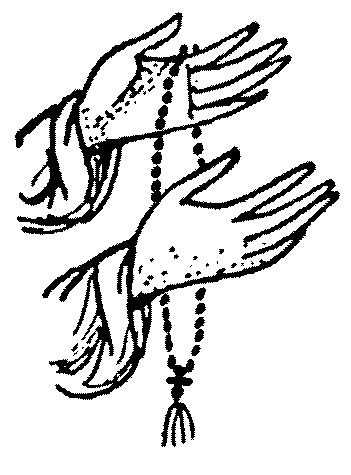
I was asked by many faithful how to fight the human thoughts that come to mind while praying. First, don’t pay attention to them. Let them pass by. Second, call for the help of the Lord and of your guardian angel. And thirdly do not open your heart to the conversation with evil thoughts. Because the demon is stronger than us.
Then we ought to pray with piety and humility. Whilereading the prayers of confession and Holy Communion written by Saint John Chrysostom, St. Simeon the New Theologian and other great saints of our Church that we seek as models for our lives, we see how these fathers confess the temptations that themselves had encountered, the evil thoughts, the malice… explanations given to help us with our prayer.
Here is what St. Symeon Metaphrastes said, quote:
“What evil have I not committed? What sinful things have I not done? What form of wickedness have I not imagined in my soul? You know that I have gone beyond the bounds of depravity in my deeds. I have been proud, arrogant, contemptuous, blasphemous, gossiped, laughed uncontrollably. I have been drunk, gluttonous, malicious, envious, and greedy, judged others, conceded, sought praise, and been unjust, covetous, and consumed with shameful thoughts”…
This is how Saint Metaphrastes was praying!
When I read these prayers before confession and Holy Communion, I reflect on how much I have sinned in my whole life. If these saints were tempted, then how much more am I being (tempted)? If these saints were speaking of committing vain talk, drunkenness, gluttony, envy and love of wealth, then how much darker my thoughts ought to be?
But St. Simeon the New Theologian will then continue: “Lord, You know my many errors, You know my sores and You behold my wounds; but You also know my faith, You behold my will and You hear my sighs. Nothing is hidden from You oh Lord, my God, my creator and deliverer, not a teardrop nor even part of a drop”…
And this is a great consolation for us. Because God does not take into account only my prayer, but also my labor.
Satan is outraged seeing someone praying. This explains why we are so attacked when we pray. There is an army of demons that try to inflict us with many despicable thoughts. They may not seem of a great harm, but are enough to interfere and separate us from God: worldly thoughts, memories that alter your peace, all sorts of unimportant things that imprisoned our minds.
When you have prepared your heart and have emptied your mind of all daily cares – which however you cannot vanish completely – be watchful to see which side the demon will strike. At that moment, the angel of prayer that watches over you will help you “from the right” but the demon will strike “from the left”. The demon will try to distract you from prayer so you may lose the connection with God but the angel of prayer will place in your heart undisturbed thoughts and will aid your mind – its rational part, so you may oppose all evil influences and make a pure prayer.
Father Roman Braga would says that when you sit down to pray, you ought to empty your mind of all images and during prayer to reflect not, so God may place in your emptied mind His Holy Spirit, filling you with His presence.
I must confess that I had tried to follow this instruction – to empty my mind of all images, of anything that connects me to this material world, but I didn’t always succeed. There are moments when I can…. There are times when I raise myself above these images, but these moments don’t last very long because of my weakness.
So I believe that been made of flesh and spirit, having a material body and an earthy mind, we need practice. We need to connect the rational or the imaginative part of our being with what we can see, for instances an icon. The icon especially, is the first step to help to lift up our spirit. It is good if you have an icon in front of you, to gaze your attention on it. To make from its sacred image – the saint represented on it, the link between you and God.
Then can you can reflect on the saint’ holy life, the wonders he has done, the help he offered you in various circumstances, and feel his presence from the icon or his relics, in your soul. In this way you have come to the second stage.
The third stage is when these worldly images no longer work in your mind and everything comes from God, Who fills the empty space in your soul with His divine presence.

If you pray out loud, and many times we pray this was because we can focus more, do not let yourself carried out by the resonance of words, or by the beautiful phrases, as some prayers are indeed very beautiful. Do not be tempted by the “aesthetic”.
I remember when I first read the acathyst prayer of the Burning Bush [composed by Daniel Sandu Tudor: Acathyst Hymn to the Mother of God, the Burning Bush – Ed], I did not comprehend very much. It sounded so beautiful, so theological that I was left only with a pleasant idea. However, this was also good, because through its mystical beauty God worked within us.
Typically when we pray without words, only with our minds, there is a gap between the mind and the words. The doctors would say that when we recite something in the mind – for example the prayer Our Father – we do it in one breath, but the epiglottis – the phonetic organ, works more slowly.
So, there is a gap between my thought and the prayer itself.
Therefore, if you pray in your mind and utter incomplete words, it is good to work a resonance between the word and the thought. Otherwise the image becomes double, once through the thought and then through epiglottis by its small movement that creates inertia. Thus you are been left behind and lose the connection between your thought and the words of prayer.
If your mental concentration leaves you during prayer taking you in vain, strive to return to prayer. Try to strengthen your attention and the angel of prayer would not only guide you in knowing that you last your attentiveness but he will also instruct you when you lost it.
But if this interruption becomes rather a habit while praying, then the angel will no longer instruct you.
Then repeatedly you’ll be losing and gaining… and you’ll advance very little.
Thus, if you hold your attentiveness watching over your thoughts, your mind and your heart, then the angel will remind you where you lost the sweetness of prayer.
These are small exercises to (help you) reconnect your thoughts to prayer. For instance, when you bend down your knees, your whole being is engaged in prayer. The simple union of your palms will engage you back into prayer. The sign of the Cross or other pious acts will help you bring back the payer. Thus, through small and unspectacular gestures, we can attract the angel of the Lord to help us bring back the prayer so we can go forward.
There are people who try to replace all prayers with the prayer of the heart (the Jesus prayer). I think this practice is for those advanced.
Once I went to Essex – England where they practiced the Jesus prayer in the church taking turns and they often replaced the service of Vespers with this prayer. There was a group of monastics, monks and nuns, and each one would say the Jesus prayer a hundred times… It seems like a record/book keeping offered to God, by counting exactly how many times you would say the prayer.
My brethren, I’d like to say this: all prayers should start with the beginning prayers, the troparies: Heavenly King … Holy God…, the prayer to the Most Holy Trinity… Our Father…, the Creed, Psalm 50, then the prayers to the Most Holy Theotokos.
These are the basic prayers. Without them one cannot really get to the essence even thou you may seem advanced; as we’re not at the level of the fathers of the Holy Mountain.
You must prepare your heart before getting to more advanced prayer. You begin with the first prayer dedicated to the Holy Spirit, then to the Holy Trinity, then the third to God the Father – and so on. They all have a purpose. Often I would ask my younger seminarians, to whom is “the Heavenly King prayer” addressed? And they did not know. They would pray without knowing…
For it is better to start with the introductory prayers then to advance. Even if you say only these basic prayers ten times, a hundred times, over and over, with time the prayer works in our heart to restore it and to advance it to deeper prayer.
Then you can utter another prayers and the Jesus prayer (the prayer of the heart).
For I believe that the prayer of the heart, said especially at night, is a gift of the Holy Spirit that works in our hearts, and we ought to practice it with deep piety/humility.
Before I been sent to prison for the second time, I was received to the priesthood and serve from 1972 until 1978.
In 1978 I was removed/band from teaching at the Seminary and from serving the Church, so I was given into the hands of the communist regime (“the Securitate”), with no ecclesiastical protection.
I no longer had a parish or a sit to teach, no one offered me protection, no bishop would take responsibility for me and I felt lost.
I was arrested again and sent to prison.
During my time at the seminary, many days I would pray with my students.
We met in the evening, read from the Bible and said some prayers. If God would inspire one of us with a new word of explaining the biblical text we read, he will speak it out, otherwise we would depart home reflecting on how we ought to approach it next time. And I thought I truly knew prayer…
But when they took me to the gulag, I realized that I knew not how to pray.
For I lived in a permanent fear being always distracted. When I wanted to pray, the guards troubled me or even beat me so I may cease praying and I could not go beyond this inner battle I was fighting… I was not able to concentrate to make a genuine prayer. I could not pray: “Lord Jesus Christ, Son of God, have mercy on me a sinner”. I could not even say this much…
There was a war with myself…
Then I remembered what St. Maximus the Confessor said about prayer and indeed, slowly I started to connect to prayer… the deeper prayer; I was striving to empty my mind of all evil, of all that was negative within me and the evil that surrounded me, so I advanced to a point where an abyss was laying before me… a frighten abyss… and I did not know what would follow.
To throw myself into the abyss as Satan tempted Jesus that God will send His angels to save Him? I was frightened so I pulled back.
But it happened that God sent the angel who saved me, and the stone did not hurt my foot…
(Transcribed and translated by EC. Please do not copy without permission).
Some Thoughts On Fasting
Source: Conciliar Press
(From an Orthodox Pastor, From the Fall 2008 issue of The Handmaiden Journal – Vol. 12)

Fasting is not optional for Christians. Neither are prayer and almsgiving. Our Lord did not say “if you fast,” but rather “when you fast.” He Himself fasted. Those to whom He personally directed His words and teachings maintained a tradition of fasting. Perfecting that tradition by coupling it with prayer and almsgiving, our Lord revealed that the very heart of our lives as Christians is rooted in these ascetic traditions.
However, our Lord was also clear in chastising those who observed the fast, who prayed, and who gave alms for the purpose of being observed and applauded by others or as a means to fulfill the law. Indeed, the Pharisees received their reward: “My,” they delighted in hearing, “aren’t they spiritual, aren’t they righteous, aren’t they generous, and aren’t they worthy of emulation?” But their actions were to no avail, and brought with them no heavenly blessing. Hence, we are taught to fast “in secret,” to pray “in secret,” to give alms “in secret,” not allowing our left hand to know what our right hand is doing, so that our heavenly Father will reward us openly.
Fasting as Preparation for True Celebration
Our Lord fasted for forty days before beginning His public ministry. This indicates that one aspect of fasting is preparation. The Church’s fasting seasons prepare us to celebrate, to feast, and to focus our attention on that which we anticipate celebrating, rather than on the mundane things that all too often compete for, or dominate, our attention.
While food is an essential element of any celebration—as we are reminded on Pascha, as our festal food is blessed, or as we bless fruit on the Great Feast of Transfiguration—it can also be a preoccupation, something that can dominate our time and attention to the detriment of more important aspects of our earthly existence. Sadly, before major celebrations we tend to spend inordinate amounts of time planning menus, testing new recipes, and the like, all with the hope that our celebration will be memorable, enjoyable, and tasty. In the process, the very thing we gather to celebrate is often obscured, misplaced, and lost.
This is especially so in the days—or, to be more specific, the months—leading to the celebration of Christmas, during which we are tempted to focus our preparations on foods, decorations, gifts, and the like, rather than on the glorious mystery of the Incarnation, which is at the very heart of our faith as Christians. The Nativity Fast (like all the fasting seasons) is meant to remind us to prepare ourselves spiritually, to bring under control those things, including food, that are well within our control, but that we have allowed to control us, and to apply the self-control that fasting teaches us to other areas of our lives.
Fasting from Passions, not from “Prohibited Foods”
During the first week of Great Lent we are reminded that, while fasting from food, we must fast from our passions—anger, gossip, jealousy—while intensifying our vigilance, our prayer lives, and our ministry to others, especially the least among us. Hence, fasting as a preparation is quite the opposite of the worldly preparations that all too often focus our celebration on ourselves, rather than on our Lord and the joyous mysteries He so lovingly shares with us and engages us in celebrating.
Of course, fasting from food is at the very heart of the ascetic life. Food can be a passion, a preoccupation that can easily dominate our lives. We fret over what to eat and what not to eat. We agonize over trans fats, cholesterol, carbs, and calories. We drink Ensure to gain weight, and then sign up at a weight loss clinic to lose it. In fact, we have an entire TV network devoted to food! All too often, we have ceased “eating to live” and instead “live to eat.”
If fasting is ever to become a real solution to this preoccupation with food, we need to recognize that fasting does not mean merely avoiding certain “prohibited” foods while partaking of others that are “approved.” Years ago, I was given a Lenten cookbook that, in the preface, offered an extremely detailed explanation of the Church’s fasting tradition. As was to be expected, it noted that one should refrain from eating meat and meat products, dairy products, fish, wine, and oil. And also, as was to be expected, it noted that eating shellfish—lobster tail, crab legs, scallops, prawns and shrimp, clams, and the like—does not violate the fast. But, curiously, this preface offered a warning, in bold underlined letters, that when eating shellfish, one should not use drawn butter, but melted margarine, since butter is a dairy product! How ridiculous, I thought. Emptying ourselves of our passion for food involves reducing not only how much and what we eat, but also how much time we spend thinking about food, preparing food, reading about food, discussing food, and manipulating food to fit the fasting tradition of the Church.
The same cookbook offered a recipe for a Lenten chocolate cake, at the end of which was written, “Your family will enjoy this delicious cake so much that you’ll want to serve it all year ’round!” Consider this: One could devise a Lenten weekly menu that, while fully avoiding meat and meat products, dairy products, fish, wine, and oil, would be anything but ascetic—lobster tail on Monday, grilled prawns on Tuesday, Alaskan king crab legs on Wednesday, lemon-drenched shrimp on Thursday, and scallops on Friday, all with melted margarine so as to avoid butter, of course! Legally, this indeed fulfills the fasting laws, but it completely misses the spirit of fasting, as does the yummy Lenten chocolate cake or the tofu Italian “sausage” or “chicken wings” guaranteed to “taste like the real thing.”
It’s only my opinion, but approaching fasting in this manner—”this is permitted, but that isn’t”—not only misses the mark of fasting, but can become a spiritually dangerous temptation, the same temptation to which the Pharisees succumbed by adhering meticulously to the externals of the law while remaining clueless as to its internal spirit. This approach can easily lead to spiritual pride and delusion and the self-satisfaction that comes in assuring oneself that “while I’m delighting in this tasty cake, I’m relieved to know that it meets all Lenten requirements since there’s not a drop of half-and-half in it.” This, it seems to me, is neither fasting, nor ascetical, nor a desire to free oneself from a preoccupation with food. In fact, it reflects the opposite, as more time is spent figuring out how to make tofu taste like sausage than it would take to simply and mindlessly fry a link of real sausage.

Putting the Time Saved and Money Saved to Work
Taking things one step further, this legalistic approach to fasting is utterly detached from prayer and almsgiving. The time saved by not worrying about what we’ll eat or how we’ll prepare it, much less adapting recipes to fit Lenten rules, could be more wisely spent in prayer, in worship, in meditation and the reading of Scripture or the Holy Fathers. To the degree we rely on very simple and basic foods and spend little time in food preparation during the fast, we’ll have time to reflect on the countless other things (our anger, our jealousy, our self-centeredness, our sloth, our despair, our lust for power, our idle talk) that are surely within our control, but that we so often have allowed to control us.
And, to take all of this one step further, might not the money saved by purchasing simple food be stewarded more wisely by giving it to those who have less, or nothing? By quietly and anonymously giving it to an agency that assists those who are out of work or homeless or abused? Might we not devote a portion of our time to volunteering at one of those agencies, feeding those in need with the loving and personal human contact that reveals God’s presence in this world?
Preparation for the Heavenly Banquet
Fasting is not optional. Neither are repentance, prayer, almsgiving, preparation, asceticism, ministering to the least among us, wisely managing our time and talents and treasures, struggling to overcome our passions, and so on. They’re all related, interconnected, essential. So fast we must—to the extent that we can—without comparing ourselves to others. Still less should we engage in endless and spiritually dangerous public discussions on what we’ve given up this Lent or how weary we’ve become by fasting from those things (including but hardly limited to food) that we’ve allowed to control us even though we have the ability, with God’s help, to control them.
Fast we must, in the Holy Spirit rather than in the spirit of the Pharisees, and in secret, without fanfare or discussion. And fast we must, delighting not in our ability to transform chocolate cake into a Lenten delight, but in allowing our Lord to transform us as we delight in tasting and seeing how good He, the “Bread which came down from heaven,” truly is. Such fasting not only prepares us for the celebration of His Incarnation or Resurrection, but prepares us for the eternal heavenly banquet, to which He invites us, in His Kingdom.
(The author, a priest of thirty-four years, is rector of a parish of the Diocese of the Midwest of the Orthodox Church in America).
 Christian Dogma
 Christian Martyrs
 Christian Orthodox Churches and Monasteries
 Christian Sermons and News
 Church's Teachings on Fasting
 Ecumenism – a Great Heresy
 Father George Calciu
 Life_a Sacred Gift form God
 Orthodox Saints and Church Fathers
 Spiritual Elders
 Daily Bible Readings
 Journey to Orthodoxy
 Listen to Ancient Faith Radio
 Orthodox Calendar of Feasts and Saints
 Orthodox Christian Mission Center
 Orthodox Institute
 OrthodoxChristianNetwork TV


Recent Comments