
You are currently browsing the category archive for the ‘Christian Dogma’ category.
The life of Prophet Isaiah, taken from “Prolog of Ohrid”

This great prophet was of royal lineage. Isaiah was born in Jerusalem of Amoz his father who was the brother of Amaziah, the king of Judah. By the great grace of God that was in him, Isaiah was made worthy to see the Lord Sabaoth on the throne in heaven surrounded by six-winged Seraphims who continuously sing: “Holy, Holy, Holy, is the Lord of Hosts [Sabaoth]” (Isaiah 6:3). Isaiah prophesied many things to individual men as well as to the people. On one occasion, he walked naked around the streets of Jerusalem for three days prophesying the imminent fall of Jerusalem by the Assyrian King Sennacherib, reminding the king and the leaders of the people not to hope in assistance from the Egyptians or Ethiopians for they, also, will be subjugated by the same Sennacherib, but rather to trust in help from God the Most High. This prophesy, as well as other prophecies, were literally fulfilled. Isaiah’s most important prophecies are the ones concerning the Incarnation of God, the conception of the All- Holy Virgin, John the Forerunner and about many other events of the life of Christ. [“Therefore, the Lord Himself shall give you a sign; Behold a virgin shall conceive, and bear a son, and shall call His name Emmanuel” (Isaiah 7:14). “For unto us a child is born, unto us a son is given; and the government shall be upon his shoulder: his name shall be called Wonderful, Counselor, The Mighty God, The Everlasting Father, The Prince of Peace” (Isaiah 9:6). “The voice of him that cries in the wilderness, Prepare ye the way of the Lord and make straight in the desert a highway for our God” (Isaiah 40:3).] This discerning man, because of the purity of his heart and because of his zealousness toward God, also received the gift of working miracles. Thus, when the besieged Jerusalem suffered from drought, Isaiah prayed to God and water flowed from beneath Mount Zion. This water was called Siloam which means: “sent.” Later, the Lord directed the man, blind from birth to bathe in this water in order for him to see. During the reign of King Manasses, when Isaiah thundered against the pagan customs of the king and the leaders comparing that generation with Sodom and Gomorrah, the anger of the leaders and the people rose up against this great prophet. He was captured, led out of Jerusalem and was sawed in half. Isaiah lived and prophesied about seven-hundred years before Christ.
The Holy Prophet Isaiah and some of his prophesies on the Messiah
The Book of the Prophet Isaiah (OT)
Chapter 53
1. O Lord, who has believed our report? and to whom has the arm of the Lord been revealed?
2 We brought a report as of a child before him; he is as a root in a thirsty land: he has no form nor comeliness; and we saw him, but he had no form nor beauty.
3 But his form was ignoble, and inferior to that of the children of men; he was a man in suffering, and acquainted with the bearing of sickness, for his face is turned from us: he was dishonored, and not esteemed.
4 He bears our sins, and is pained for us: yet we accounted him to be in trouble, and in suffering, and in affliction.
5But he was wounded on account of our sins, and was bruised because of our iniquities: the chastisement of our peace was upon him; and by his bruises we were healed.
6 All we as sheep have gone astray; every one has gone astray in his way; and the Lord gave him up for our sins.
7 And he, because of his affliction, opens not his mouth: he was led as a sheep to the slaughter, and as a lamb before the shearer is dumb, so he opens not his mouth.
8 In his humiliation his judgment was taken away: who shall declare his generation? for his life is taken away from the earth: because of the iniquities of my people he was led to death.
9 And I will give the wicked for his burial, and the rich for his death; for he practiced no iniquity, nor craft with his mouth.
10 The Lord also is pleased to purge him from his stroke. If ye can give an offering for sin, your soul shall see a long-lived seed:
11 the Lord also is pleased to take away from the travail of his soul, to shew him light, and to form him with understanding; to justify the just one who serves many well; and he shall bear their sins.
12 Therefore he shall inherit many, and he shall divide the spoils of the mighty; because his soul was delivered to death: and he was numbered among the transgressors; and he bore the sins of many, and was delivered because of their iniquities.
The Gospel according to St. Matthew (NT)
Chapter 27
27:1 When the morning was come, all the chief priests and elders of the people took counsel against Jesus to put him to death:
27:2 And when they had bound him, they led him away, and delivered him to Pontius Pilate the governor.
27:3 Then Judas, which had betrayeth him, when he saw that he was condemned, repented himself, and brought again the thirty pieces of silver to the chief priests and elders,
27:4 Saying, I have sinned in that I have betrayed the innocent blood. And they said, What is that to us? see thou to that.
27:5 And he cast down the pieces of silver in the temple, and departed, and went and hanged himself.
27:6 And the chief priests took the silver pieces, and said, It is not lawful for to put them into the treasury, because it is the price of blood.
27:7 And they took counsel, and bought with them the potter’s field, to bury strangers in. 27:8 Wherefore that field was called, The field of blood, unto this day.
27:9 Then was fulfilled that which was spoken by Jeremy the prophet, saying, And they took the thirty pieces of silver, the price of him that was valued, whom they of the children of Israel did value;
27:10 And gave them for the potter’s field, as the Lord appointed me.
27:11 And Jesus stood before the governor: and the governor asked him, saying, Art thou the King of the Jews? And Jesus said unto him, Thou sayest.
27:12 And when he was accused of the chief priests and elders, he answered nothing.
27:13 Then said Pilate unto him, Hearest thou not how many things they witness against thee?
27:14 And he answered him to never a word; insomuch that the governor marveled greatly. 27:15 Now at that feast the governor was wont to release unto the people a prisoner, whom they would.
27:16 And they had then a notable prisoner, called Barabbas.
27:17 Therefore when they were gathered together, Pilate said unto them, Whom will ye that I release unto you? Barabbas, or Jesus which is called Christ?
27:18 For he knew that for envy they had delivered him.
27:19 When he was set down on the judgment seat, his wife sent unto him, saying, Have thou nothing to do with that just man: for I have suffered many things this day in a dream because of him.
27:20 But the chief priests and elders persuaded the multitude that they should ask Barabbas, and destroy Jesus.
27:21 The governor answered and said unto them, Whether of the twain will ye that I release unto you? They said, Barabbas.
27:22 Pilate saith unto them, What shall I do then with Jesus which is called Christ? They all say unto him, Let him be crucified.
27:23 And the governor said, Why, what evil hath he done? But they cried out the more, saying, Let him be crucified.
27:24 When Pilate saw that he could prevail nothing, but that rather a tumult was made, he took water, and washed his hands before the multitude, saying, I am innocent of the blood of this just person: see ye to it.
27:25 Then answered all the people, and said, His blood be on us, and on our children.
27:26 Then released he Barabbas unto them: and when he had scourged Jesus, he delivered him to be crucified.
27:27 Then the soldiers of the governor took Jesus into the common hall, and gathered unto him the whole band of soldiers.
27:28 And they stripped him, and put on him a scarlet robe.
27:29 And when they had platted a crown of thorns, they put it upon his head, and a reed in his right hand: and they bowed the knee before him, and mocked him, saying, Hail, King of the Jews!
27:30 And they spit upon him, and took the reed, and smote him on the head.
27:31 And after that they had mocked him, they took the robe off from him, and put his own raiment on him, and led him away to crucify him.
27:32 And as they came out, they found a man of Cyrene, Simon by name: him they compelled to bear his cross.
27:33 And when they were come unto a place called Golgotha, that is to say, a place of a skull,
27:34 They gave him vinegar to drink mingled with gall: and when he had tasted thereof, he would not drink.
27:35 And they crucified him, and parted his garments, casting lots: that it might be fulfilled which was spoken by the prophet, They parted my garments among them, and upon my vesture did they cast lots.
27:36 And sitting down they watched him there;
27:37 And set up over his head his accusation written, THIS IS JESUS THE KING OF THE JEWS.
27:38 Then were there two thieves crucified with him, one on the right hand, and another on the left.
27:39 And they that passed by reviled him, wagging their heads,
27:40 And saying, Thou that destroyest the temple, and buildest it in three days, save thyself. If thou be the Son of God, come down from the cross.
27:41 Likewise also the chief priests mocking him, with the scribes and elders, said,
27:42 He saved others; himself he cannot save. If he be the King of Israel, let him now come down from the cross, and we will believe him.
27:43 He trusted in God; let him deliver him now, if he will have him: for he said, I am the Son of God.
27:44 The thieves also, which were crucified with him, cast the same in his teeth.
27:45 Now from the sixth hour there was darkness over all the land unto the ninth hour. 27:46 And about the ninth hour Jesus cried with a loud voice, saying, Eli, Eli, lama sabachthani? that is to say, My God, my God, why hast thou forsaken me?
27:47 Some of them that stood there, when they heard that, said, This man calleth for Elias. 27:48 And straightway one of them ran, and took a sponge, and filled it with vinegar, and put it on a reed, and gave him to drink.
27:49 The rest said, Let be, let us see whether Elias will come to save him.
27:50 Jesus, when he had cried again with a loud voice, yielded up the ghost.
27:51 And, behold, the veil of the temple was rent in twain from the top to the bottom; and the earth did quake, and the rocks rent;
27:52 And the graves were opened; and many bodies of the saints which slept arose,
27:53 And came out of the graves after his resurrection, and went into the holy city, and appeared unto many.
27:54 Now when the centurion, and they that were with him, watching Jesus, saw the earthquake, and those things that were done, they feared greatly, saying, Truly this was the Son of God.
27:55 And many women were there beholding afar off, which followed Jesus from Galilee, ministering unto him:
27:56 Among which was Mary Magdalene, and Mary the mother of James and Joses, and the mother of Zebedee’s children.
27:57 When the even was come, there came a rich man of Arimathaea, named Joseph, who also himself was Jesus’ disciple:
27:58 He went to Pilate, and begged the body of Jesus. Then Pilate commanded the body to be delivered.
27:59 And when Joseph had taken the body, he wrapped it in a clean linen cloth,
27:60 And laid it in his own new tomb, which he had hewn out in the rock: and he rolled a great stone to the door of the sepulcher, and departed.
27:61 And there was Mary Magdalene, and the other Mary, sitting over against the sepulcher.
27:62 Now the next day, that followed the day of the preparation, the chief priests and Pharisees came together unto Pilate,
27:63 Saying, Sir, we remember that that deceiver said, while he was yet alive, After three days I will rise again.
27:64 Command therefore that the sepulcher be made sure until the third day, lest his disciples come by night, and steal him away, and say unto the people, He is risen from the dead: so the last error shall be worse than the first.
27:65 Pilate said unto them, Ye have a watch: go your way, make it as sure as ye can. 27:66 So they went, and made the sepulcher sure, sealing the stone, and setting a watch.
Please also see:
THE PROPHECIES OF THE OLD TESTAMENT on the MESSIAH – Part I
and
THE PROPHECIES OF THE OLD TESTAMENT on the MESSIAH – Part II
The monks of Mt.Athos, featured on “60 Minutes” on Easter Sunday
A video depicting a rare access to monks in ancient monasteries on a remote Greek peninsula who have lived a Spartan life of prayer in a tradition virtually unchanged for a thousand years.
Please click on the link (picture bellow) to see the video

Or at link:
http://www.cbs.com/primetime/60_minutes/video/?vs=Full%20Episodes
The Ancient Church
More on the Orthodox Chruch
See also a brief introduction to Orthodoxy based on the book “The Orthodox Church” of Metropolitan Kallistos Ware (former Anglican Timothy Ware)
Part I
Part II
The last 4 parts are on Youtube…
THE PROPHECIES OF THE OLD TESTAMENT
AND THEIR FULLFILMENT IN THE NEW TESTAMENT
(Part Two)
For Part One see Here
(Please do not copy without referencing the original text!)
23. PRIEST AFTER THE ORDER OF MELCHISEDEK
THE OT. PROPHECY
[Psalm 109:4] The Lord hath sworn and will not repent: “Thou art a priest for ever, after the order of Melchisedek.“
THE NT. FULFILLMENT
[Hebrew 5:5] So also Christ glorified not himself to be made an high priest; but he that said unto him, ‘Thou art my Son, to day have I begotten thee.’
[Hebrew 5:6] As he saith also in another place, ‘Thou art a priest for ever after the order of Melchisedec. ‘
[Hebrew 5:10] Called of God an high priest after the order of Melchisedec.
24. HIS TRIUNPHANT ENTRY into JERUSALEM

THE OT. PROPHECY
[Zacharias 9:9] Rejoice greatly, O daughter of Sion; proclaim it aloud, O daughter of Jerusalem; behold, the King is coming to thee, just, and a Saviour; he is meek and riding on an ass, and a young foal.
THE NT. FULFILLMENT
[Mark 11:7] And they brought the colt to Jesus, and cast their garments on him; and he sat upon him.
[Mark 11:9] And they that went before, and they that followed, cried, saying, Hosanna; Blessed is he that cometh in the name of the Lord!
[Mark 11:11] And Jesus entered into Jerusalem, and into the temple: and when he had looked round about upon all things, and now the eventide was come, he went out unto Bethany with the twelve.
25. PRAISED BY CHILDREN

THE OT. PROPHECY
[Psalm 8:2] Out of the mouths of babes and sucklings hast Thou perfected praise, because of Thine enemies, to destroy the enemy and avenger.
THE NT. FULFILLMENT
[Mattew 21:15] And when the chief priests and scribes saw the wonderful things that he did, and the children crying in the temple, and saying, Hosanna to the Son of David; they were sore displeased,
[Mattew 21:16] And said unto him, Hearest thou what these say? And Jesus saith unto them, ‘Yea; have ye never read, Out of the mouth of babes and sucklings thou hast perfected praise?’
26. DENIED BY HIS PEOPLE
THE OT. PROPHECY
[Esaias 53:1] O Lord, who has believed our report? and to whom has the arm of the Lord been revealed?
THE NT. FULFILLMENT
[John 12:37] But though he had done so many miracles before them, yet they believed not on him:
[John 12:38] That the saying of Esaias the prophet might be fulfilled, which he spake, ‘Lord, who hath believed our report? and to whom hath the arm of the Lord been revealed?’
27. BETRAYED BY HIS FRIEND / DISCIPLE

THE OT. PROPHECY
[Psalm 40:9] Yea, even the man of my peace in whom I hoped, who ate of my bread, hath magnified the lifting of heels against me.
THE NT. FULFILLMENT
[Mark 14:10] And Judas Iscariot, one of the twelve, went unto the chief priests, to betray him unto them.
[Mark 14:20] And he answered and said unto them, ‘It is one of the twelve, that dippeth with me in the dish.’
[Mark 14:21] The Son of man indeed goeth, as it is written of him: but woe to that man by whom the Son of man is betrayed! good were it for that man if he had never been born.
28. SOLD for THIRTY PIECES OF SILVER

THE OT. PROPHECY
[Zacharias 11:12] And I will say to them, If it be good in your eyes, give me my price, or refuse it. And they weighed for my price thirty pieces of silver.
THE NT. FULFILLMENT
[Mattew 26:14] Then one of the twelve, called Judas Iscariot, went unto the chief priests,
[Mattew 26:15] And said unto them, What will ye give me, and I will deliver him unto you? And they covenanted with him for thirty pieces of silver.
29. ACCUSED by FALSE WITNESSES
THE OT. PROPHECY
[Psalm 34:10] Unjust witnesses rose up against me; things I knew not they asked me.
NT. FULFILLMENT
[Mark 14:56] For many bare false witness against him, but their witness agreed not together.
30. SILENT BEFORE the ACCUSERS

THE OT. PROPHECY
[Esaias 53:7] And he, because of his affliction, opens not his mouth: he was led as a sheep to the slaughter, and as a lamb before the shearer is dumb, so he opens not his mouth.
THE NT. FULFILLMENT
[Mark 15:4] And Pilate asked him again, saying, Answerest thou nothing? behold how many things they witness against thee.
[Mark 15:5] But Jesus yet answered nothing; so that Pilate marvelled.
31. SPITTED UPON and BEATEN
THE OT. PROPHECY
[Esaias 50:6] I gave my back to scourges, and my cheeks to blows; and I turned not away my face from the shame of spitting…
THE NT. FULFILLMENT
[Mattew 26:67] Then did they spit in his face, and buffeted him; and others smote him with the palms of their hands,
32. HATED WITHOUT A CAUSE
THE OT. PROPHECIES
[Psalm 34:11] They repaid me with evil things for good, and barrenness for my soul.
[Psalm 34:18] Let not them rejoice against me that unjustly are mine enemies, they that hate me without a cause, and wink with their eyes.
THE NT. FULFILLMENT
[John 15:24] If I had not done among them the works which none other man did, they had not had sin: but now have they both seen and hated both me and my Father.
[John 15:25] But this cometh to pass, that the word might be fulfilled that is written in their law, ‘They hated me without a cause.’
33. DIED FOR OUR SALVATION

THE OT. PROPHECY
[Esaias 53:5] But he was wounded on account of our sins, and was bruised because of our iniquities: the chastisement of our peace was upon him; and by his bruises we were healed.
THE NT. FULFILLMENT
[Romans 5:6] For when we were yet without strength, in due time Christ died for the ungodly.
[Romans 5:7] For scarcely for a righteous man will one die: yet peradventure for a good man some would even dare to die.
[Romans 5:8] But God commendeth his love toward us, in that, while we were yet sinners, Christ died for us.
34. CRUCIFIED WITH THE TRANSGRESSORS

THE OT. PROPHECY
[Esaias 53:12] Therefore he shall inherit many, and he shall divide the spoils of the mighty; because his soul was delivered to death: and he was numbered among the transgressors; and he bore the sins of many, and was delivered because of their iniquities.
THE NT. FULFILLMENT
[Mark 15:27] And with him they crucify two thieves; the one on his right hand, and the other on his left.
[Mark 15:28] And the scripture was fulfilled, which saith, And He was numbered with the transgressors.
35. WITH HANDS AND FEET PIERCED

THE OT. PROPHECY
[Zacharias 12:10] And I will pour upon the house of David, and upon the inhabitants of Jerusalem, the spirit of grace and compassion: and they shall look upon me, because they have mocked me, and they shall make lamentation for him, as for a beloved friend, and they shall grieve intensely, as for a firstborn son.
[Psalm 21:18] They have pierced my hands and my feet…
THE NT. FULFILLMENT
[John 20:20] And when he had so said, he shewed unto them his hands and his side. Then were the disciples glad, when they saw the Lord.
[John 20:25] The other disciples therefore said unto him, We have seen the Lord. But he said unto them, Except I shall see in his hands the print of the nails, and put my finger into the print of the nails, and thrust my hand into his side, I will not believe.
36. DESPISED, INSULTED AND MOCKED
THE OT. PROPHECY
[Psalm 21:7] All that look upon me have laughed me to scorn; they have spoken with their lips and have wagged their heads:
[Psalm 21:8] “He hoped in the Lord; let Him deliver him, let Him save him, for He desireth him.’
THE NT. FULFILLMENT
[Luke 23:35] And the people stood beholding. And the rulers also with them derided him, saying, He saved others; let him save himself, if he be Christ, the chosen of God.
[Mattew 27:39] And they that passed by reviled him, wagging their heads,…
37. PLAGED BY THIRST
THE OT. PROPHECY
[Psalm 21:16] My strength is dried up like a potsherd, and my tongue hath cleaved to my throat, and into the dust of death hast Thou brought me down.
THE NT. FULFILLMENT
[John 19:28] After this, Jesus knowing that all things were now accomplished, that the scripture might be fulfilled, saith, I thirst.
38. HE WAS GIVEN VINEGAR TO DRINK
THE OT. PROPHECY
[Psalm 68:25] And they gave me gall for my food, and for my thirst they gave me vinegar to drink.
THE NT. FULFILLMENT
[Mattew 27:34] They gave him vinegar to drink mingled with gall: and when he had tasted thereof, he would not drink.
[Mattew 27:48] And straightway one of them ran, and took a spunge, and filled it with vinegar, and put it on a reed, and gave him to drink.
39. REPROACHED
THE OT. PROPHECY
[Psalm 68:9] Because for Thy sake I have borne reproach, shame hath covered my face.
THE NT. FULFILLMENT
[Mattew 27:44] The thieves also, which were crucified with him, cast the same in his teeth.
[Romans 15:3] For even Christ pleased not himself; but, as it is written, ‘The reproaches of them that reproached thee fell on me.’
40. PRAYED FOR HIS TORTURERS
THE OT. PROPHECY
[Psalm 108:3] In return for my love, they have falsely accused me; but as for me, I gave myself to prayer.
THE NT. FULFILLMENT
[Luke 23:34] Then said Jesus, Father, forgive them; for they know not what they do…
41. THEY CAST LOTS FOR HIS VESTURE
THE OT. PROPHECY
[Psalm 21:20] They have parted my garments amongst themselves, and for my vesture have they cast lots.
THE NT. FULFILLMENT
[Mark 15:24] And when they had crucified him, they parted his garments, casting lots upon them, what every man should take.
[John 19:23] Then the soldiers, when they had crucified Jesus, took his garments, and made four parts, to every soldier a part; and also his coat: now the coat was without seam, woven from the top throughout.
[John 19:24] They said therefore among themselves, ‘Let us not rend it, but cast lots for it, whose it shall be’: that the scripture might be fulfilled, which saith, ‘They parted my raiment among them, and for my vesture they did cast lots.’ These things therefore the soldiers did.
42. ABANDONED BY GOD
THE OT. PROPHECY
[Psalm 21:1] O God, my God, attend to me; why hast Thou forsaken me?
THE NT. FULFILLMENT
[Mark 15:34] And at the ninth hour Jesus cried with a loud voice, saying, Eloi, Eloi, lama sabachthani? which is, being interpreted, My God, my God, why hast thou forsaken me?
[Mattew 27:46] And about the ninth hour Jesus cried with a loud voice, saying, Eli, Eli, lama sabachthani? that is to say, My God, my God, why hast thou forsaken me?
43. HAD NONE OF HIS BONES BROKEN
THE OT. PROPHECY
[Psalm 33:19] The Lord keepeth all their bones, not one of them shall be broken.
THE NT. FULFILLMENT
[John 19:33] But when they came to Jesus, and saw that he was dead already, they brake not his legs:
[John 19:36] For these things were done, that the scripture should be fulfilled, A bone of him shall not be broken.
44. BURIED WITH THE WICKED
THE OT. PROPHECY
[Esaias 53:9] And I will give the wicked for his burial, and the rich for his death; for he practised no iniquity, nor craft with his mouth.
THE NT. FULFILLMENT
[Mattew 27:57] When the even was come, there came a rich man of Arimathaea, named Joseph, who also himself was Jesus’ disciple:
[Mattew 27:58] He went to Pilate, and begged the body of Jesus. Then Pilate commanded the body to be delivered.
[Matei 27:59] Şi Iosif, luând trupul, l-a înfăşurat în giulgiu curat de in,
[Mattew 27:59] And when Joseph had taken the body, he wrapped it in a clean linen cloth,
[Mattew 27:60] And laid it in his own new tomb, which he had hewn out in the rock: and he rolled a great stone to the door of the sepulchre, and departed.
45. RESURRECTED FROM THE DEAD

THE OT. PROPHECY
[Psalm 15:10] For Thou wilt not abandon my soul in hades, nor wilt Thou suffer Thy Holy One to see corruption.
[Psalm 48:14] Like sheep they are laid in hades, death shall be their shepherd.
{Psalm 48:16] Yet God shall redeem my soul out of the hand of hades, when he receiveth me.
THE NT. FULFILLMENT
[Mark 16:6] And he saith unto them, Be not affrighted: Ye seek Jesus of Nazareth, which was crucified: he is risen; he is not here: behold the place where they laid him.
[Mark 16:7] But go your way, tell his disciples and Peter that he goeth before you into Galilee: there shall ye see him, as he said unto you.
[Acts 2:31] He seeing this before spake of the resurrection of Christ, that his soul was not left in hell, neither his flesh did see corruption.
[1 Corinthians 15:4] And that he was buried, and that he rose again the third day according to the scriptures…
46. HE ASSENDED at THE RIGH HAND OF GOD – THE FATHER

THE OT. PROPHECY
[Psalm 109:1] The Lord said unto my Lord: “Sit Thou at My right hand, until I make Thine enemies the footstool of Thy feet.”
THE NT. FULFILLMENT
[Mark 16:19] So then after the Lord had spoken unto them, he was received up into heaven, and sat on the right hand of God.
[Mark 14:62] And Jesus said, I am: and ye shall see the Son of man sitting on the right hand of power, and coming in the clouds of heaven.
[Colossians 3:1] If ye then be risen with Christ, seek those things which are above, where Christ sitteth on the right hand of God.
[Ephesians 1:20] Which he wrought in Christ, when he raised him from the dead, and set him at his own right hand in the heavenly places,
[Hebrew 1:3] Who being the brightness of his glory, and the express image of his person, and upholding all things by the word of his power, when he had by himself purged our sins, sat down on the right hand of the Majesty on high;
[Hebrew 8:1] Now of the things which we have spoken this is the sum: We have such an high priest, who is set on the right hand of the throne of the Majesty in the heavens;
[Hebrew 10:12] But this man, after he had offered one sacrifice for sins for ever, sat down on the right hand of God;
[Hebrew 12:2] Looking unto Jesus the author and finisher of our faith; who for the joy that was set before him endured the cross, despising the shame, and is set down at the right hand of the throne of God.
[Acts 7:55] But he (Stephen), being full of the Holy Ghost, looked up stedfastly into heaven, and saw the glory of God, and Jesus standing on the right hand of God,
[Acts 7:56] And said, Behold, I see the heavens opened, and the Son of man standing on the right hand of God!
Study done by Archipriest/Hieromonk Michael (Mikhail) Stanciu
(Translated by EC)
(Old Testament verses taken from Septuagint translated from Greek by Sir Lancelot C. L. Brenton
originally published by Samuel Bagster & Sons, Ltd., London, 1851);
(The Psalter according to the Seventy);
(New Testament verses taken from King James Version, originally published by Oxford Press, Oxford, 1769.
THE PROPHECIES OF THE OLD TESTAMENT (OT)
ON THE MESSAYAH
AND THEIR FULLFILMENT IN THE NEW TESTAMENT (NT)
(Part One)
For Part II see Here
Study done by Archipriest/Hieromonk Michael (Mikhail) Stanciu
(Please do not copy without referencing the original text!)
The 1st Prophecy: A WOMAN’ “SEED” TO CRUSH the Head of the SERPENT
THE OT. PROPHECY
[Genesis 3:15] And I will put enmity between thee and the woman and between thy seed and her seed, he shall watch against thy head, and thou shalt watch against his heel.
IT’S FULFILLMENT IN THE NT.
[Galatians 4:4] But when the fulness of the time was come, God sent forth his Son, made of a woman, made under the law…
[Hebrew 2:14] Forasmuch then as the children are partakers of flesh and blood, he also himself likewise took part of the same; that through death he might destroy him that had the power of death, that is, the devil;
[Hebrew 2:15] And deliver them who through fear of death were all their lifetime subject to bondage.
[Colossians 1:13] Who hath delivered us from the power of darkness, and hath translated us into the kingdom of his dear Son…
[Revelation 20:10] And the devil that deceived them was cast into the lake of fire and brimstone, where the beast and the false prophet are, and shall be tormented day and night for ever and ever.
02. A DESCENDENT FROM AVRAAM AND THE BLESSED SEED FOR ALL NATIONS
THE OT. PROPHECIES
[Genesis 12:3] And I will bless those that bless thee, and curse those that curse thee, and in thee shall all the tribes of the earth be blessed.
[Genesis 12:18] And in thy seed shall all the nations of the earth be blessed, because thou hast hearkened to my voice.
[Genesis 26:4] And I will multiply thy seed as the stars of heaven; and I will give to thy seed all this land, and all the nations of the earth shall be blest in thy seed,…
THE NT. FULFILLMENT
[Matthew 1:1] The book of the generation of Jesus Christ, the son of David, the son of Abraham…
[Hebrew 2:16] For verily he took not on him the nature of angels; but he took on him the seed of Abraham.
03. SUCCESSOR OF ISAAC
THE OT. PROPHECY
[Genesis 17:19 p.m.] And God said to Abraam, Yea, behold, Sarrha thy wife shall bear thee a son, and thou shalt call his name Isaac; and I will establish my covenant with him, for an everlasting covenant, to be a God to him and to his seed after him.
ITS FULFILLMENT IN THE NT.
[Luke 3:34] Which was the son of Jacob, which was the son of Isaac, which was the son of Abraham, which was the son of Thara, which was the son of Nachor, …
04. SUCCESSOR OF JACOB
THE OT. PROPHECIES
[Numbers 24:17] I will point to him, but not now; I bless him, but he draws not near: a star shall rise out of Jacob, a man shall spring out of Israel; and shall crush the princes of Moab, and shall spoil all the sons of Seth.
[Numbers 24:19] And one shall arise out of Jacob, and destroy out of the city him that escapes.
THE FULFILLMENT
[Matthew 1:2] Abraham begat Isaac; and Isaac begat Jacob; and Jacob begat Judas and his brethren;
05. DESCENDENT OF THE TRIBE OF JUDAH
THE OT. PROPHECY
[Genesis 49:10]. A ruler shall not fail from Juda, nor a prince from his loins, until there come the things stored up for him; and he is the expectation of nations.
ITS FULFILLMENT
[Luke 3:33] Which was the son of Aminadab, which was the son of Aram, which was the son of Esrom, which was the son of Phares, which was the son of Juda, …
06. Successor of the throne of David
The OT. PROPHECY
[Esaias 9:6,7] For a child is born to us, and a son is given to us, whose government is upon his shoulder: and his name is called the Messenger of great counsel: for I will bring peace upon the princes, and health to him. 7 His government shall be great, and of his peace there is no end: it shall be upon the throne of David, and upon his kingdom, to establish it, and to support it with judgement and with righteousness, from henceforth and forever. The seal of the Lord of hosts shall perform this.
IT’S FULFILLMENT
[Luke 1:32] He shall be great, and shall be called the Son of the Highest: and the Lord God shall give unto him the throne of his father David.
07. NUS and Eternal
The OT. PROPHECIES
[Daniel 9:25] And thou shalt know and understand, that from the going forth of the command for the answer and for the building of Jerusalem until Christ the prince there shall be seven weeks, and sixty-two weeks; and then the time shall return, and the street shall be built, and the wall, and the times shall be exhausted.
[Psalms 44:9] Thou hast loved righteousness and hated iniquity. Wherefore God, Thy God, hath anointed Thee with the oil of gladness more than Thy fellows.
[Psalms 44:10] Myrrh and stacte and cassia exhale from Thy garments;
[Psalms 101:25] Take me not away at the half of my days; in generations and generations are Thy years.
[Psalms 101:27]They shall perish, but Thou abidest; and all like a garment shall grow old, And as a vesture shalt Thou fold them, and they shall be changed;
[Psalms 101:28] But Thou art the same, and Thy years shall not fail.
THE FULFILLMENT
[Luke 1:33] And he shall reign over the house of Jacob for ever; and of his kingdom there shall be no end.
[Hebrew 1:9] Thou hast loved righteousness, and hated iniquity; therefore God, even thy God, hath anointed thee with the oil of gladness above thy fellows.
[Hebrew 1:12] And as a vesture shalt thou fold them up, and they shall be changed: but thou art the same, and thy years shall not fail.
08. BORN IN BETHLEHEM

THE OT. PROPHECY
[Michaeas 5:1] And thou, Bethlehem, house of Ephratha, art few in number to be reckoned among the thousands of Juda; yet out of thee shall one come forth to me, to be a ruler of Israel; and his goings forth were from the beginning, even from eternity.
ITS FULFILLMENT
[Luke 2:4] And Joseph also went up from Galilee, out of the city of Nazareth, into Judaea, unto the city of David, which is called Bethlehem; (because he was of the house and lineage of David:)
[Luke 2:5] To be taxed with Mary his espoused wife, being great with child.
[Luke 2:7] And she brought forth her firstborn son, and wrapped him in swaddling clothes, and laid him in a manger; because there was no room for them in the inn.
09. THE TIME OF HIS BIRTH
THE OT. PROPHECY
[Daniel 9:25] And thou shalt know and understand, that from the going forth of the command for the answer and for the building of Jerusalem until Christ the prince there shall be seven weeks, and sixty-two weeks; and then the time shall return, and the street shall be built, and the wall, and the times shall be exhausted.
ITS FULFILLMENT
[Luke 2:1] And it came to pass in those days, that there went out a decree from Caesar Augustus, that all the world should be taxed.
[Luke 2:2] And this taxing was first made when Cyrenius was governor of Syria.
10. BORN OF A VIRGIN
THE OT. PROPHECY
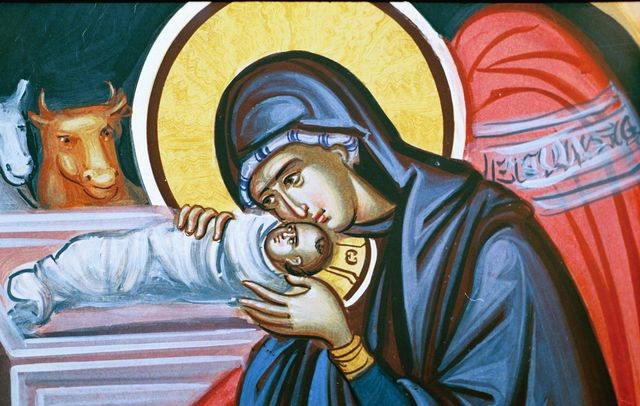
[Esaias 7:14] Therefore the Lord himself shall give you a sign; behold, a virgin shall conceive in the womb, and shall bring forth a son, and thou shalt call his name Emmanuel.
ITS FULFILLMENT
[Luke 1:26] And in the sixth month the angel Gabriel was sent from God unto a city of Galilee, named Nazareth,
[Luke 1: 27] To a virgin espoused to a man whose name was Joseph, of the house of David; and the virgin’s name was Mary.
[Luke 1:30] And the angel said unto her, “Fear not, Mary: for thou hast found favour with God.”
[Luke 1:31] “And, behold, thou shalt conceive in thy womb, and bring forth a son, and shalt call his name JESUS.
11. HEROD’S MASSACRE OF THE INOCENT
THE OT. PROPHECY
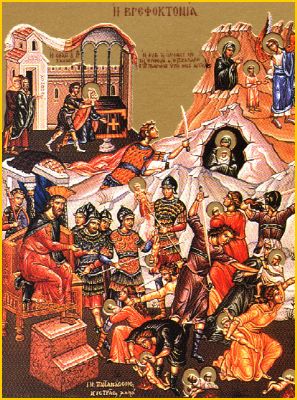
[Jeremias 31:15] Moab is ruined, even his city, and his choice young men have gone down to slaughter.
THE NT. FULFILLMENT
[Matthew 2:16] Then Herod, when he saw that he was mocked of the wise men, was exceeding wroth, and sent forth, and slew all the children that were in Bethlehem, and in all the coasts thereof, from two years old and under, according to the time which he had diligently enquired of the wise men.
[Matthew 2:17] Then was fulfilled that which was spoken by Jeremy the prophet, saying,
[Matthew 2:18] “In Rama was there a voice heard, lamentation, and weeping, and great mourning, Rachel weeping for her children, and would not be comforted, because they are not.”
12. THE FLIGHT TO EGYPT
THE OT. PROPHECY
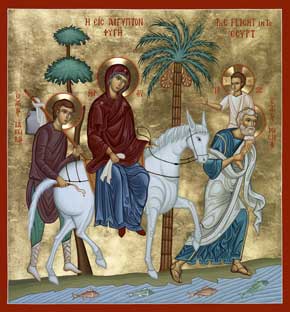
[Osee 11:1] Early in the morning were they cast off, the king of Israel has been cast off: for Israel is a Child, and I loved him, and out of Egypt have I called Him.
THE NT. FULFILLMENT
[Matthew 2:13] And when they were departed, behold, the angel of the Lord appeareth to Joseph in a dream, saying, Arise, and take the young child and his mother, and flee into Egypt, and be thou there until I bring thee word: for Herod will seek the young child to destroy him.
[Matthew 2:14] When he arose, he took the young child and his mother by night, and departed into Egypt
[Matthew 2:15] And was there until the death of Herod: that it might be fulfilled which was spoken of the Lord by the prophet, saying, “Out of Egypt have I called my Son.”
13. GOD PREPARED HIS WAY
THE OT. PROPHECIES
[Esaias 40:3] The voice of one crying in the wilderness, Prepare ye the way of the Lord, make straight the paths of our God.
[Esaias 40:4] Every valley shall be filled, and every mountain and hill shall be brought low: and all the crooked ways shall become straight, and the rough places plains.
[Esaias 40:5] And the glory of the Lord shall appear, and all flesh shall see the salvation of God: for the Lord has spoken it.
THE NT. FULFILLMENT
[Luke 3:3] And he came into all the country about Jordan, preaching the baptism of repentance for the remission of sins;
[Luke 3:4] As it is written in the book of the words of Esaias the prophet, saying, The voice of one crying in the wilderness, “Prepare ye the way of the Lord, make his paths straight
[Luke 3:5] Every valley shall be filled, and every mountain and hill shall be brought low; and the crooked shall be made straight, and the rough ways shall be made smooth;
[Luke 3:6] And all flesh shall see the salvation of God.”
14. THE FORERUNNER (JOHN THE BAPTIST)
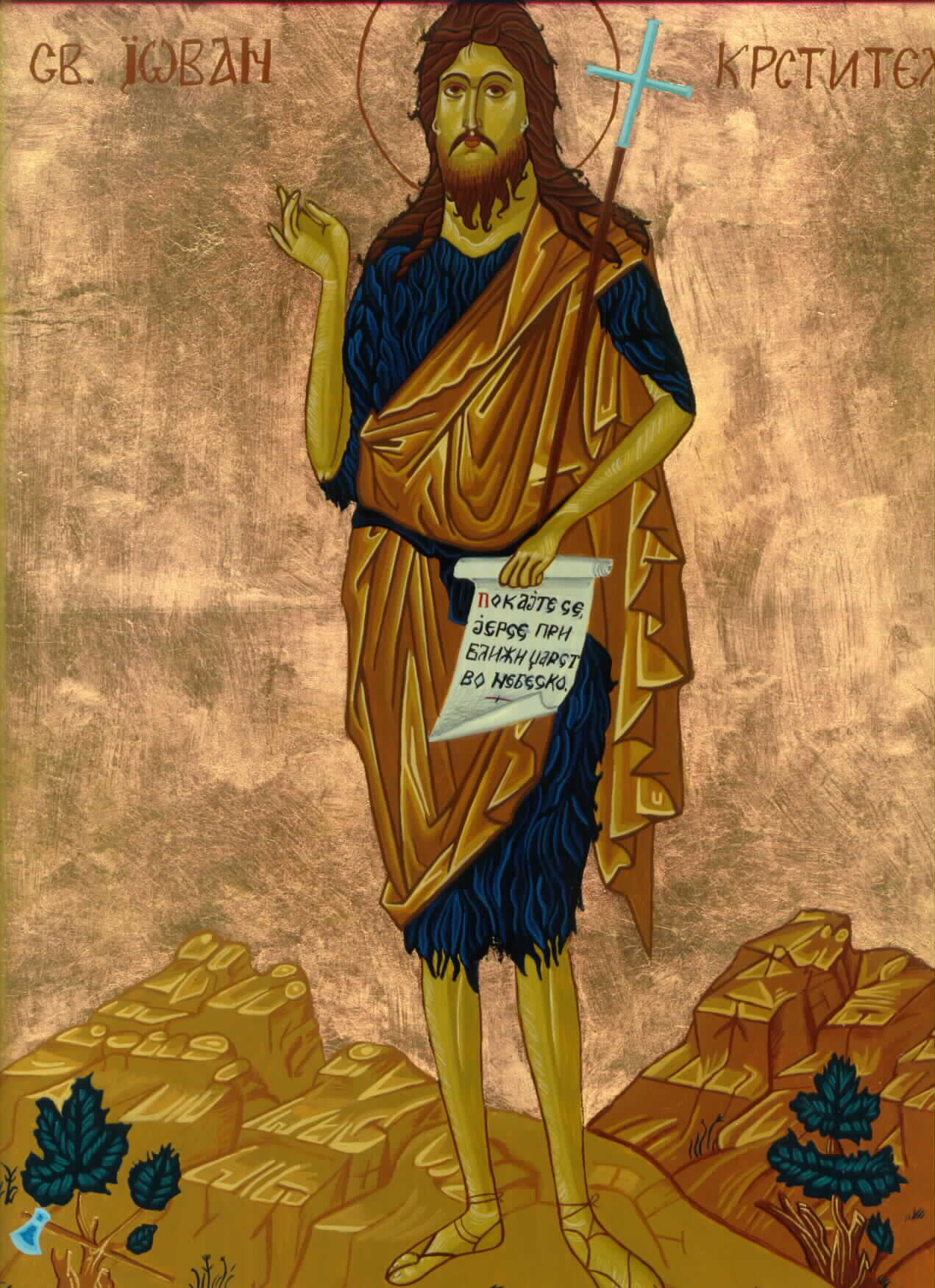
THE OT. PROPHECY
[Malachias 3:1] Behold, I send forth my messenger, and he shall survey the way before me: and the Lord, whom ye seek, shall suddenly come into his temple, even the angel of the covenant, whom ye take pleasure in: behold, he is coming, saith the Lord Almighty.
THE NT. FULFILLMENT
[Luke7:24] And when the messengers of John were departed, he began to speak unto the people concerning John, What went ye out into the wilderness for to see? A reed shaken with the wind?
[Luke7:25] But what went ye out for to see? A man clothed in soft raiment? Behold, they which are gorgeously apparelled, and live delicately, are in kings courts.
[Luke7:26] But what went ye out for to see? A prophet? Yea, I say unto you, and much more than a prophet.
[Luke7:27] This is he, of whom it is written, “Behold, I send my messenger before thy face, which shall prepare Thy way before Thee”.
15. PRECEEDED BY ELIAS
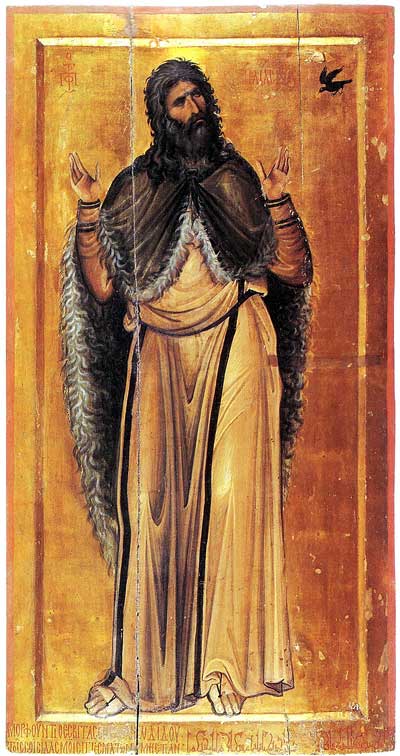
THE OT. PROPHECY
[Malachias 3:23] And, behold, I will send to you Elias the Thesbite, before the great and glorious day of the Lord comes…
THE NT. FULFILLMENT
[Matthew 11:13] For all the prophets and the law prophesied until John.
[Matthew 11:14] And if ye will receive it, this is Elias, which was for to come.
16. NAMED THE “SON OF GOD”
THE OT. PROPHECIES
[Esaias 9: 5) For a child is born to us, and a son is given to us, whose government is upon his shoulder: and his name is called the Messenger of great counsel: for I will bring peace upon the princes, and health to him.
[Psalm 2:7] …the Lord said, Thou art my Son, today have I begotten thee.
THE NT. FULFILLMENT
[Matthew 3:17] And lo a voice from heaven, saying, “This is my beloved Son, in whom I am well pleased.“
17. SERVING IN GALILEE
THE OT. PROPHECIES
[Esaias 9: 1] Drink this first. Act quickly, O land of Zabulon, land of Nephthalim, and the rest inhabiting the sea-coast, and the land beyond Jordan, Galilee of the Gentiles.
[Esaias 9:2] O people walking in darkness, behold a great light: ye that dwell in the region and shadow of death, a light shall shine upon you.
THE NT. FULFILLMENT
[Matthew 4:12] Now when Jesus had heard that John was cast into prison, he departed into Galilee;
[Matthew 4:13] And leaving Nazareth, he came and dwelt in Capernaum, which is upon the sea coast, in the borders of Zabulon and Nephthalim:
[Matthew 4:14] That it might be fulfilled which was spoken by Esaias the prophet, saying:
[Matthew 4:15] “The land of Zabulon, and the land of Nephthalim, by the way of the sea, beyond Jordan, Galilee of the Gentiles;
[Matthew 4:16] The people which sat in darkness saw great light; and to them which sat in the region and shadow of death light is sprung up.”
18. ZEAL FOR THE HOUSE OF GOD

THE OT. PROPHECY
[Psalm 68:11] For the zeal of Thy house hath eaten me up, and the reproaches of them that reproach Thee are fallen on me.
THE NT. FULFILLMENT
[John 2:14] And found in the temple those that sold oxen and sheep and doves, and the changers of money sitting:
[John 2:15] And when he had made a scourge of small cords, he drove them all out of the temple, and the sheep, and the oxen; and poured out the changers’ money, and overthrew the tables;
[John 2:16] And said unto them that sold doves, Take these things hence; make not my Father’s house an house of merchandise.
[John 2:17] And his disciples remembered that it was written, “The zeal of thine house hath eaten me up.”
19. HE SPOKE IN PARABLES
THE OT. PROPHECIES
[Psalm 77:2] I will open my mouth in parables, I will utter dark sayings which have been from the beginning…
[Esaias 6:9] And he said, “Go, and say to this people,Ye shall hear indeed, but ye shall not understand; and ye shall see indeed, but ye shall not perceive”.
[Esaias 6:10] For the heart of this people has become gross, and their ears are dull of hearing, and their eyes have they closed; lest they should see with their eyes, and hear with their ears, and understand with their heart, and be converted, and I should heal them.
THE NT. FULFILLMENT
[Matthew 13:13] Therefore speak I to them in parables: because they seeing see not; and hearing they hear not, neither do they understand.
[Matthew 13:14] And in them is fulfilled the prophecy of Esaias, which saith, “By hearing ye shall hear, and shall not understand; and seeing ye shall see, and shall not perceive”.
[Matthew 13:15] For this people’s heart is waxed gross, and their ears are dull of hearing, and their eyes they have closed; lest at any time they should see with their eyes, and hear with their ears, and should understand with their heart, and should be converted, and I should heal them.
[Matthew 13:34] All these things spake Jesus unto the multitude in parables; and without a parable spake he not unto them:
[Matthew 13:35] That it might be fulfilled which was spoken by the prophet, saying, “I will open my mouth in parables; I will utter things which have been kept secret from the foundation of the world.”
20. HE CAME TO HEAL THE BROKEN HEARTS

THE OT. PROPHECIES
[Esaias 61:1] The Spirit of the Lord is upon me, because he has anointed me; he has sent me to preach glad tidings to the poor, to heal the broken in heart, to proclaim liberty to the captives, and recovery of sight to the blind;
[Esaias 61:2] to declare the acceptable year of the Lord, and the day of recompence; to comfort all that mourn;
[Esaias 61:3] that there should be given to them that mourn in Sion glory instead of ashes, the oil of joy to the mourners, the garment of glory for the spirit of heaviness: and they shall be called generations of righteousness, the planting of the Lord for glory.
THE NT. FULFILLMENT
[Luke 4:18] “The Spirit of the Lord is upon me, because he hath anointed me to preach the gospel to the poor; he hath sent me to heal the brokenhearted, to preach deliverance to the captives, and recovering of sight to the blind, to set at liberty them that are bruised,
[Luke 4:19] To preach the acceptable year of the Lord.”
[Luke 4:21] And he began to say unto them, “This day is this scripture fulfilled in your ears.”
21. REJECTED BY HIS PEOPLE
THE OT. PROPHECY
[Esaias 53:3] But his form was ignoble, and inferior to that of the children of men; he was a man in suffering, and acquainted with the bearing of sickness, for his face is turned from us: he was dishonoured, and not esteemed.
THE NT. FULFILLMENT
[John 1:11] He came unto his own, and his own received him not.
[Luke 23:18] And they cried out all at once, saying, Away with this man, and release unto us Barabbas
22. HIM “THE PROPHET”
THE OT. PROPHECY
[Deuteronomy 18:15] The Lord thy God shall raise up to thee a prophet of thy brethren, like me; him shall ye hear…
[Deuteronomy 18:18] I will raise up to them a prophet of their brethren, like thee; and I will put my words in his mouth, and he shall speak to them as I shall command him.
THE NT. FULFILLMENT
[John 6:14] Then those men, when they had seen the miracle that Jesus did, said, This is of a truth that prophet that should come into the world.
[John 7:40] Many of the people therefore, when they heard this saying, said, Of a truth this is the Prophet.
[Luke 24:19] And he said unto them, What things? And they said unto him, Concerning Jesus of Nazareth, which was a prophet mighty in deed and word before God and all the people…
[Acts 3:20] when the times of refreshing shall come from the presence of the Lord ; and he shall send Jesus Christ, which before was preached unto you.
[Acts 3:21] Whom the heaven must receive until the times of restitution of all things, which God hath spoken by the mouth of all his holy prophets since the world began.
(Translated by EC, to be continued)
Testimonies on the Icon of Nativity
A study by Archimandrite Michael (Mikhail) Stanciu
(Please do not copy without referencing the original post!)

Our Lord’ Nativity
A Feast of Lights – the Day of Recreation of the World
Originally celebrated with Epiphany (Theophany) on January 6, the Feast of the Nativity of our Lord and Savior Jesus Christ was established by the early Christian church (in 354) for December 25th. According to St. Gregory of Nazianzus, “the Feast of the Nativity is the re-creation of the world” and the restoration of the human nature fallen in sin.
The Iconographic representation of the Nativity has its scriptural basis in the testimonies of the Holy Gospels of Matthew and Luke: see Mathew 1, 18-25; 2, 1-12 and Luke 2, 4-20.
Icon’ s Composition
In the icon of the Nativity, the focus is placed on three dogmatic aspects of the Incarnation and Nativity of the Son of God:
1st – God in descending motion (kenosis);
2nd – The Miracle of virginal birth (the creature gives birth to her Creator);
3rd– Human Deification.
The scenes from the iconographic image are divided into three parts:
I. The top portion of the icon – the prophetic and theophanic aspect
|
To the Left |
In the Center | To the Right |
| ◦ the angels praising God | ◦ the radius (the star)
◦ the mountains (the rocks) |
◦ the angel proclaiming the Nativity to the shepherds on the field |
II. The central part – the mysterious appearance
|
To the Left |
In the Center | To the Right |
| ◦ the Magi bringing gifts |
◦ Christ the Child ◦ the Virgin ◦ the cave (the manger) ◦ the ox and the ass |
◦ the shepherds |
III. The bottom portion – the human aspect
|
To the Left |
In the Center | To the Right |
| ◦ The Right Joseph sitting/meditating on a rock | ◦ the devil disguised as a shepherd (Thyrros) |
◦ the midwives Salome and Zelemi caring for the child
|
People, edifying symbols and meanings in the icon of the Nativity
I. 1. The Ray of Light – a Revelation of the Holy Trinity

The ray descending from the single radius-circle at the top of the icon signifies The One and Unique Nature of God, the light and coming from the star is divided into three elements to describe the participation of the Three DIVINE PERSONS in the fellowship/ iconomy of our salvation. The iconographic representation of the star suggests that this is beyond just a cosmic phenomenon, the star is being sent by God to preach to the Magi the supernatural birth of the Heavenly King and also to guide them to the place where the miracle took place.
I. 2. The Mountain: an austere mountain suggests an inhospitable world, hostile, a world after the fall of our first parents Adam and Eve and their descendants.
The sharp rocks, also illustrated as steps seem to be united with the sky, indicating the descent of God to man but also the ascent of man to God, both becoming possible with the Incarnation of the Second Person of the Holy Trinity. And the whole earth rejoices.
“Wholly present among those below, yet in no way absent from those above, was the Word that cannot be encircled by words; for thus did God condescend, and not merely descend to a different place. He was born from a God-receiving Virgin…” (the Akathist of the Annunciation – Oikos 8)
“Today, Heaven and earth joined together, today Christ is born, today God descended on earth and man rose up to heaven.” (From the Vespers of the Nativity Feast)
“Every order of angels was amazed at your mighty work when you assumed human nature; for they saw the one who is unapproachable as God become approachable to all as man, dwelling among us and hearing from all…” (The Akathist of the Annunciation; Kontakion 9)
I. 3. The Angels are represented in their dual work: doxology and proclamation (of the good news).
Some angels (the group from the left) are moving towards the Source of Light, unceasingly praising God.

The angel from the right side leans towards the shepherds, proclaiming them the Nativity of the King of Israel. The angelic presence testifies the deity of the Child.
II. 1. The Christ child is either asleep or awake, looking towards His Mother. His changing nappies are shaped like narrow strips similar to the burial shrouds, his arms are crossed over his chest in the sign of the Cross, and the crib where the child is seated resembles a shrine – the later tomb.
All these representations foreshadow Christ’s death and descent into hell. But “The Light shines into the darkness and the darkness comprehended it not.” (John 1, 5) For Christ will rise from the dead as God Almighty.
II. 2. The Virgin is pictured sitting next to the child in the manger, half resting on a bed of the kind carried by the Hebrew in their travels. Its color is red, signifying a royal bed and the honor the Mother of God deserves.
This iconographic depiction of the Mother of God affirms the truth of the supernatural Birth (of a Virgin, barring no pain) of our Savior Jesus Christ, fact that also emphasizes the deity of the Child. (1-see Fr. D. Staniloae)

The three stars from the head and the shoulders of Mary, symbolize her perpetual virginity before, during and after the birth of Christ (the Ever-Virgin Mary).
Her facial expression is one in meditation in anticipation of the suffering she will endure as a Mother of Him Who was to suffer death on the Cross for the salvation of the world. “And Mary kept all these things in her heart.” (Luke 2, 19)
Our most pure Lady was the highest gift that mankind was ever able to bring to Him, the Creator.
“What shall we offer Thee, O Christ? for Thou hast appeared on earth as man for our sakes. Of all the creatures made by Thee, each offereth Thee thanksgiving. The Angels offer Thee the hymn; the Heavens, the star; the Magi, their gifts; the shepherds, their wonder, the earth, her cave; the wilderness, the manger; and we offer Thee a Virgin Mother, O God, Who wast before the ages, have mercy on us” (Menaion for December, Stichera D, Verse #7)
II. 3. The Cave (the Manger)
The place of birth of the Son of God was not an inn, but a place with stalls where animals are kept.
The Gospels do not mention the cave, but the iconographic representation finds its grounds in the Tradition of the church and in its liturgical texts. The opening of the dark cave in the middle of sharp rocks symbolizes the fallen cosmos, the world overwhelmed by sin through the fall of man, the depths of darkness (the inferno/hell), which only Him, the Sun of Righteousness, scattered by His birth. The cave and the manger are an evidence of the profound humility of our Lord Jesus Christ.
II. 4. The ox and the ass are also mentioned in the Gospel, their presence along with Christ Child (inspired by the apocryphal Gospel of Matthew, chapter XIV) suggests the fulfilling of a prophecy (the prophet Isaiah): “The ox knows his master and of the donkey his Lord’s crib, but Israel does not know me, my people, knows me not. “ (Isaiah 1, 3)
The animals presence, appears as a symbolism of the sacrificial bull and of the donkey the the King will ride when entering Jerusalem (see Psalm Sunday). In some Russian icons, a horse is depicted instead of a donkey.

II. 5. The Shepherds are portrayed listening to the message of the angels. Often, one of them adds his (human) art of singing in the choir of angels.
In the middle of everyday activities, they are the first to receive the wondrous news of the birth of Christ, being paradoxically, through their simplicity, closer to the heavenly world.
The shepherds represent the first sons of Israel (God’s chosen people), who worship the Child; they symbolize the beginning of the Church among the Jews, while the magi represent the Church of the Gentiles.
II. 6. The Magi are represented either on horses riding towards the place indicated by the star, or by bringing the Child: threefold – gold, incense and myrrh – foreshadowing the myrrh bearing women, who came to our Lord’ tomb on Easter morning:
◦ Gold – for the King of all ages;
◦ Incense – as to the One who is the God of the Universe;
◦ Myrrh – to the One who died on the cross.
“By the mirth, they pre imagine Thy mortal state, by royal gold Thy majesty and by the incense, Thy Divine nature.” (Nativity Matins, the fifth song, voice, VI)
The Magi are portrayed as three men of different ages, proving that this revelation is given to man regardless of their physical age, but according to their spiritual level and their comprehension of the mysteries of God. The Magi represent the pagan nations that are outside the chosen people. Although they are learned men, however, they have to come a long way towards knowing the true God.
Their presence reveals that the Church receives and sanctifies human knowledge when it leads to the truth of the faith towards the knowledge of God.

III. 1. The Righteous Joseph is depicted in the corner (either left or right, to the bottom part of the icon) sitting away from the Blessed Virgin Mary; this iconographic detail is designed to highlight the truth that the Scriptures and the Church teach that Christ was born of the Virgin Mary, and Joseph was not the father of the Heavenly Child.

His appearance should suggest a man advanced in years (the Holy Tradition holds that he was 84 years old). He is surrounded by a halo to represent his place among the righteous of God (cf. Matthew 1, 19).
Joseph has a meditative expression, somewhat worried, a state of turmoil caused by the virginal birth of Jesus. Joseph illustrates every man weak in faith, whose mind can not exceed the boundaries of this reality, and the difficulty in accepting the supernatural reality of God’s mysteries.
In the person of Joseph, the icon reveals not only his personal drama, but the drama of all mankind, comprehending the mystery not through the eyes of faith, but by the limited mind/rationality.
“ A storm of doubtful thoughts roiled within the prudent Joseph, for he looked on you unwedded and he feared a stolen union, O Blameless One; but on learning that your child-bearing was of the Holy Spirit, he said: Alleluia!”(Akathist Hymn of the Annunciation; Kontakion 4)
He appeared to be listening to a figure representing the voice of the darkened mind.

III. 2. the Strange old man, clad in a letter jacket, leaning before Joseph, represents the deceiver: Satan disguised as a shepherd, and harassing Joseph, the Virgin fiancé, with treacherous questions.
The scene is inspired by the apocryphal Gospel of James which says that the wicked speaks through the Shepherd Thyrros: “As the rod [that is bent or broken= the symbol of his former powers] will not be able to give offspring, so an old man like you just can not conceive a baby and a virgin cannot bare a child “ [but the rod blossomed soon].
III. 4. The Infant bathing scene is based on passages from the apocryphal gospels of Jacob and Matthew (which speak about the presence of two women: Salome and Zelemi, called by Joseph to attend the Virgin birth).
The Infant bathing scene has sparked much controversy and discussion based on the following reasons:
– the bathing does not belong to the canonical gospels;
– the Child was totally clean and did not need washing;
– Our Lady had a supernatural birth (with no pain), and the presence of midwives is unnecessary.

The arguments favoring the representation of a bathing scene were: – that the scene is not mentioned in the canonical Gospels is not a reason to exclude it (the entry into the temple of God of the Virgin Mary is also not mentioned in the New Testament, but the Church did not rejected). Our Lord Christ, through the custom of bathing, had voluntarily agreed to follow a human custom as He will later undergo the practice of circumcision and baptism (which He did not need);
– none of the Holy Ecumenical Councils had opposed the scene;
– during the iconoclasts period when they called into question many iconographic scenes, the bathing scene did not pose an issue;
– even after iconoclasm, when the iconographic representations became a mean to express the dogma, no objections existed to the representation of this scene.
The bathing scene suggests that the Most High God is subject to human habits and customs, this been also a true testimony to the Incarnation of the Lord, Who has become willingly “just as one of his people” (Matins of the Nativity feast, Canon of St. John of Damascus, the fourth song). The scene foreshadows that of His baptism in the Jordan River.
Western innovations in representing the Nativity


Compared to Orthodox iconographic canonical representation, in the Western religious painting several innovations were introduced distorting historical and dogmatic truth and leading to heresy:
– The star is represented as a natural phenomenon, and does not clearly indicate the Child. (St. John Chrysostom interprets that the star guiding the wise men did not remain high –up in the sky, but came down, over the head of the Child);
– The cave is replaced by a man-made construction, the popular image of the crib, giving a more picturesque and naturalist representation;
– The donkey and the ox, and the bathing scene are often removed from the composition;
– A lots of compositional elements and insignificant details: horses, camels, dogs, lots of people etc are introduced, which detract from the real center of interest: Christ the Child.
– The Child is shown naked (in the Orthodox icons, the clothes suggest the mystery that surrounds the deity of Christ);
– Joseph is depicted standing next to the Virgin Mary, kneeling with her before the Child;
– In the physiognomic details, of the western paintings, Joseph appears as a handsome young man, of an age close to the Virgin Mary, detail that brings a lot of confusion regarding the actual relationship full of purity that existed between the old Joseph as the guardian of Mary, and the young Virgin;
– The representation the Holy Family in the western iconography “greatly distorts the truth of the Gospel” (as the Creed: the symbol of our faith confesses) that the word of God came down from heaven and was incarnate by the Holy Spirit and of the Virgin Mary and became man;
– The scene takes on a fantasy look through the sweet atmosphere of a fairy Bethlehem bathed by the light of a sky full of stars…, insisting more on the human aspect rather than on the mystery of the Incarnation (the man-God rather than God-Man).
In the West, the representation of the Nativity, has no edifying symbols for the soul (so consistently depicted in the Orthodox iconography), and it mostly calling upon the natural human feelings, thus remaining at the level of a superficial understanding and far from the true meaning of the Incarnation of the Son of God and His work for the salvation of the world.
It should be noted that the process of de-sanctification of the Catholic theology after the Great Schism of 1054 had gradually led to the distortion in representating God and the Saints. The revival of paganism, which began in the fourteenth century, had lead to the replacing of icons by so called religious paintings where the aura of holiness disappears under the camouflage of the sensuous realism of the fallen human nature. In the Western Europe, the devaluation of the sacred images was synchronous with the deformation concept about God, man and the world, the contemporary Western society been long poisoned by atheism and materialism.
The removal of icons and of the sacraments had depleted the Catholic and the (neo) Protestant world, of a proper understanding of the words of Christ, sinking further into interpretations subjective to human passions, slanders and evil blasphemies.
The Orthodox iconography, through the development and maintenance of certain canons (rules) in representing/revealing the holy images in accordance with the early church tradition, it maintains the true theological knowledge of the spiritual life and it avoids the promotion of artistic means of expression that emphasize emotions or other subjective and shallow interpretations.
The Nativity Icon reveals therefore, in its content two fundamental Christian doctrines:
– the essence of the event, as a visible testimony to the fundamental dogma of the Christian faith: the Incarnation of the Son of God;
– the effect of this event on all creation that had acquired a new meaning – the transfiguration through the Holy Spirit, as the final aim of her existence.
All Orthodox traditions mark the joy of Christ’s coming among us and within us by carols, hymns… and good merriment brought by God’s blessing. These are the real beauties that adorn our soul at Christmas! Amen.
Selective Bibliography:
Father Dumitru Staniloae, Theology of the icon;
Paul Evdokimov, The Art of the icon. A theology of beauty;
Egon Sendler, The Icon, image of the invisible,
Leonid Uspensky, Vladimir Lossky, Lead by the world of icons,
Dionysius of furnaces, The origins of the Byzantine paintings,
Cavarnos Constantine, A Guide to the Byzantine iconography,
Quenot Michel, The icon challenge,
Michel Quenot, From the icon to the nuptial banquet.
(Translation by EC)
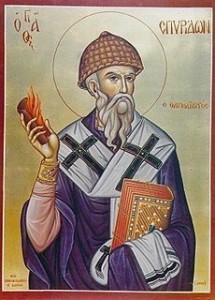
Miracles constitute irrefutable testimony of the sanctity of the person who works them. What follows will show what zeal for the faith the Saint had. When Constantine the Great was the emperor of Rome, and the first Christian emperor, and Plaulinus and Julian were consuls, in 325 in Nicaea the famous synod of the Holy Fathers took place. This council aimed to depose Arius, who with impiety, called the Son of God a creature, and to proclaim that the Son was of the same essence (homoousios) as the Father.
The first and the most well known supporters of this blasphemy were Eusebius of Nicomedia, Maris, bishop of Calcedon and Theognis, bishop of Nicaea. With the fanatic Arius at their head, these perverted creatures proclaimed the dogma that the Son of God is a creature. Those who fought in defence of the Orthodox faith, those who came into prominence by their speeches and their life were the holy Alexander, a simple priest, but a representative of blessed Patriarch Mitrofan, who was absent because of illness and the famous Athanassius, deacon of the Church of Alexandria, who would later become the ornament of the Episcopal throne. They were also strongly envied, because they did not distinguish themselves from the others by their ecclesiastic rank, but they were more powerful than them in the word of faith. Among them was equally found the Great Spyridon, whose life and the divine Grace that rested on him convinced more than the rhetorical skill, the powerful reasoning and the eloquence of the others. According to the will of the emperor, the philosophers were to assist in the council and they displayed their knowledge with arrogance. They were well educated in the art of Sophist rhetoric. One of them, a famous speaker, possessed an irresistible force of persuasion. He conversed with the bishops and supported Arius strongly. He pleaded insistently on his behalf, so that many, wishing to see which of the opposing parties would win, were urged to listen to him. There was no objection so difficult that his rhetorical ability could not remove with ease! Moreover, if his plea led him into an impasse, he would slip out like an eel by means of specious arguments and language tricks. There was therefore a competition between truth and rhetorical art.
Those who defended the truth with loyal arguments attacked the Sophist, but he made use of the ambiguities of language, insidious arguments and misleading tricks like weapons, and he believed that like this he would win. However, so that words would not be those that would finally win, but Christ and Truth, the victory «passed over» the learned men and «stopped» upon the simple Spyridon. As soon as the Saint, who did not know anything save «Christ, and him crucified» (1Cor.2,2), as the Apostle Paul says, saw the philosopher become heated with his sophisms, speak about Christ using offensive language and trying to denigrate the Orthodox dogmas, he drew near and asked to speak to him. Nevertheless, the pious Orthodox, who knew the simple ways of the Saint and that he was ignorant of the Greek culture, prevented him from going to oppose the Sophist. Saint Spyridon, however, did not let them stop him, because he knew that the Wisdom from on high is superior to the human and ephemeral wisdom; he approached the Sophist, then, and said to him: «In the Name of Jesus Christ, note my words, philosopher, and listen to what I want to tell you!». The Sophist replied to him: «Speak and I will listen to you! ». Spyridon then said: «There is only one God, Creator of heaven and earth. He created the heavenly Powers, made man from clay and created simultaneously all things visible and invisible. It was by His Word and His Spirit that heaven and earth were created, the sea flew out, the firmament stretched out, the animals were born, man was created, the most beautiful of His creatures. All the stars were created, the sun and the moon, night, day and all the rest. We know, then, that the Word is the Son of God and God Himself. We believe that, for us, He was born of the Virgin, was crucified and buried. Then he rose and raised us with Him, granting us incorruptible and immortal life. We assert that He will come a second time to judge all people and examine our own works, words and thoughts. He is of the same essence (homoousios) as the Father, equal in dignity, and reigns with Him. Don’t you agree philosopher? », he asked him.
We must relate here the famous miracle of the tile. After these words, the Saint took a tile in his left hand and held it tight. Moreover, for a wonder! Fire rose up immediately in the air, water poured out on the earth and the argyle of the clay remained in the hands of the Saint, symbolising in this way the life giving and indivisible Trinity. Everybody was amazed. The philosopher did not seem to be the same person any more, to possess neither the same mind nor the same language, he that knew so well to oppose and to quarrel. He remained stunned, his soul was filled with surprise and his voice faded away. After some time of silence, he could not say anything else but: «I share the same view! ». Then the Saint said to him: «Then go on, if you agree with me, don’t be in disagreement by your works! Since you know who is the God who created all things, get up and go to church to confess the Orthodox Creed».
At these words, the philosopher returned to the true faith and addressing himself to his disciples and to the other listeners, he said: «Until now, we fought in words and I won by means of my rhetorical skill. However, since a divine force which opposed me has manifested an ineffable and mystical power through the simple words of bishop Spyridon, I do not feel ashamed to admit that I have been defeated. I would joyfully advise then, myself as well as the others: if they are not so perverted so as to wish to change the Truth, to believe in Christ and to follow this saintly Venerable Father, whose human words are nothing else than the Words of God. »
Imagine the disgrace of the Arians at those words and the joy of the Orthodox mixed with pride! The victory of the Orthodox was so brilliant and the defeat of the heretics so bitter that almost all embraced the Orthodox faith. Only six bishops remained by the side of Arius in order to become the party of the devil, the father of lies, who is from the beginning the implacable enemy of truth.
After this manifest condemnation of the heretics, the bishops returned, filled with joy for the victory and full of admiration before the miracle, giving thanks to God for the miraculous things they had seen and for the defeat of Arius. Struck by the miracle, the emperor himself honoured the Saint greatly and saw him off, asking him to pray for him.
(Taken from “St Spyridon the Wonderworker” Monastery of Pantokrator St Athanasios Ed., Corfu, Greece)
Apolytikion in the First Tone
O Father, God-bearer, Spyridon, you were proven a champion and
Wonder Worker of the First Ecumenical Council. You spoke to the girl in
the grave and turned the serpent to gold. And, when chanting your
prayers, most sacred One, angels ministered with you. Glory to Him who
glorified you; glory to Him who crowned you; glory to Him who, through you, works healing for all.
Kontakion in the Second Tone
Wounded by your love for Christ, O holy One, your mind given wings by the
radiance of the Spirit, you put the practice of theory into deeds,
becoming a sacred altar, O Chosen by God, and praying for the divine
illumination of all.
Taken from HOMILY SIX – TO ENCOURAGE FASTING
by Saint Gregory Palamas
(INCLUDING A BRIEF WORD ON THE ORIGIN OF THE WORLD)
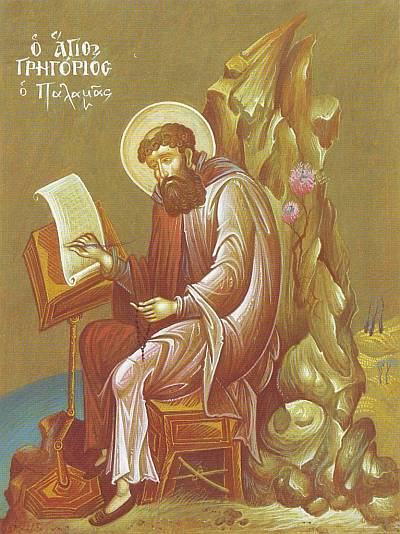
THE INVISIBLE SERPENT, the originator of evil, is inventive, versatile and extremely skillful in contriving wickedness. He has means to hinder our good purposes and actions as soon as they begin. But if he fails to prevent them initially, he sets up other devices by which he can render them useless once they are underway. If he is unable to make them worthless when they are half way to completion, he knows other tricks and ways to invalidate them even once they are finished, and makes them a source not of reward but of harm to all but the most careful. First of all he points out how laborious and difficult to accomplish virtue is. In this way he fills us with laziness and despair, as though we were attempting difficult and impossible things and were therefore incapable of putting our intentions into action. Then he engenders disbelief in the rewards which God has promised to those who struggle.
2. But we, brethren, should rise above this trap by our soul’s courage, eagerness and faith. We should bear in mind the fact that just as the earth cannot yield worthwhile fruit without labor, so the soul cannot acquire anything which pleases God or leads to salvation without spiritual struggles. But while it is possible to find earth which is unsuitable for cultivation, every human soul is naturally suited to virtue. As we are all unavoidably condemned, however, by the judgment given against our forefather, to live by labor and toil, let us turn necessity into an honor and willingly offer to God what is ours not by our own will. Let us give up transitory things in exchange for things that endure, and receive what is beneficial in exchange for what is harmful, transforming short-lived toil into a means to gain eternal ease. If we labor here for the sake of virtue we shall certainly attain to the rest promised in the age to come. He who promised is trustworthy and is at hand to help all who readily take on the struggle for virtue. If He who can do all things gives us His help, is anything impossible to achieve?
3. When we remember this and eagerly apply ourselves to virtuous actions, the evil one, knowing that nothing can be good unless it is done in a good way, strives to persuade us not to accomplish any good work with the object of pleasing God or of winning His approval, but to look for other people’s approval. By this means he can deprive us of our reward from God and of all spiritual and heavenly honors. Let us frustrate these efforts of his by considering the great recompense stored up for those who live as God pleases, and how insignificant other people’s approval is. Not only is it not worth mentioning in comparison with the great and holy glory to come, but it is also insufficient reason to neglect and waste our flesh.
4. Even after suffering this defeat, the originator of evil undermined us with pride, the last and worst abyss. He suggests conceited thoughts and persuades us to boast as though we had managed to be virtuous through our own ability and intelligence. But let us remember that the Truth says, “Without me ye can do nothing” (John 15:5), and fend off all the evil one’s schemes. Let us do good works in a good way, with appropriate humility. If someone has a jar of precious perfume, whether he pours it out on to dung, or pours dung into the jar, he ruins and destroys the perfume. Be aware that, in the same way, whether someone rejects and discards virtue by his inaction, or mixes evil with his virtuous actions, he equally ruins and destroys virtue.
5. I am speaking to your charity on this subject in this present season of fasting, so that we may observe it together for our own sake unalloyed with anything evil. Fasting was of no benefit to that Pharisee in the Gospel, even though he always fasted two days a Week, because he had adulterated it with pride and condemnation of his neighbor (Luke 18:11-12). Not that this means fasting is unprofitable. Moses, Elijah and the Lord Himself showed how beneficial it is for those who fast properly in a way pleasing to God.

6. Moses fasted for many days. Awaken your minds, I entreat You, and lift them up at this opportune time, in company with Moses when he went up the mountain towards God. In this way may you start off afresh on your ascent, and be lifted up together with Christ, who did not merely go up a mountain but up to heaven, taking us with Him. Moses fasted for forty days on the mountain and according to the Scriptures he saw God, not darkly but face to face (Exod. 24:18). He talked to Him as someone would speak to his friend (Exod. 33:11, Deut. 34:10). He learnt from God and taught everyone about Him: that He is He Who eternally Is (Exod. 3:14) and will never cease to be, that He summoned what did not exist into existence, brought all things out of non-being and will not let them fall back into non-existence. In the beginning He brought the whole visible creation out of nothing all at once, just by a nod and His will. “In the beginning”, it says, “God created the heaven and the earth” (Gen. i:i), not empty of course, nor without all that lies between them. The earth was interspersed with water, and both were full of air, animals and plants of various kinds, whereas the heavens were full of the various lights and fires, from which the universe is formed.
7. So then, “in the beginning God made heaven and earth”, as matter able to endure anything and strong enough to bear everything, rightly thereby dealing a blow from a distance to those who falsely hold that matter existed independently beforehand. Then He developed the world and embellished it. In six days He assigned to each of His creatures which made up His world its own due order. By His command alone He made the distinction between things, as if He were drawing out different kinds of treasure stored up in secret. He disposed and composed all things in complete natural harmony between themselves, each in relation to all, and all in relation to each. He surrounded the motionless earth, as a central point, with the higher circle of the perpetually moving heavens, holding them it, place by means of what lies between, all according to His wisdom, that the universe might stay stable while in motion. When the heavenly bodies all around were moving unceasingly and at great speed, the motionless earth had of necessity to take its place at the centre, its stability counterbalancing the motion, test the sphere of the universe roll off its course.
8. When the great Craftsman had assigned to each of the two boundaries of the universe its place, He made fast and set in motion this whole orderly world. He allotted to everything between heaven and earth its own properties. Some of His works He placed aloft and ordered them to move along a high course, going round at the same time as the upper boundary of the universe with beautiful regularity for ever. Such heavenly bodies are light, highly active and can be turned to the advantage of what lies below. They are wisely set very high above the central point so that, turning all around, they can sufficiently disperse the earth’s excessive coldness, while their own extreme heat is contained in its place. In a way they can also restrain the excessive speed of the upper heavenly limits by themselves moving in the other direction, and they keep these limits in place by their counterbalancing orbit. They provide us with the great benefits of distinct annual seasons, a means of measuring periods of time and, to those who are able to understand, knowledge of God who created, arranged and ordered them.
9. So some of His works He set spinning and dancing round in mid-air in the upper regions, both for the sake of the world’s beauty and to bestow a variety of benefits. Others, those which are heavy and have a passible nature, he put low down round the center. By their nature they come into being and pass away, are distinguishable from, yet comparable with, one another. When they suffer change they become more serviceable. He laid down an order for those creatures and how they relate to each other, that the whole might truly be called a world of perfect order.
10. At the creation first one thing was brought into existence, then another, then another and so on in turn. Last of all came man (Gen. 1:26), who was worthy of God’s greater honor and consideration both before and after his creation. All the visible world was made before him for his sake. Immediately after the foundation of the world, before he existed, the kingdom of heaven was made ready for him. A divine Counsel concerning him preceded him, and he was created by God’s hand and in His image. He did not take his whole being from matter or the visible world, like the other living creatures did, but only his body. His soul he took from the heavenly realms, from God Himself when He breathed fife into him in a way that defies description (Gen. 2:7). Man was a great wonder surpassing all else, towering above everything, superior to all. Man was capable of knowing God, as well as receiving Him and declaring Iiim, and was most certainly the highest achievement of the Creator’s sublime majesty. He had paradise for his home, specially planted by God (Gen. 2:8ff). There it was his lot to have sight of God, speak to Him face to face and receive a counsel and commandment from Him concerning the fasting appropriate to that place (Gen. 2:16-17). If he kept and observed this, he would remain free from death, toil and pain for ever.

11. Alas, he chose the treason of the serpent, the originator of evil, in preference to this commandment and counsel, and broke the decreed fast. Instead of eternal life he received death and instead of the place of unsullied joy he received this sinful place full of passions and misfortunes, or rather, he was sentenced to Hades and nether darkness. Our nature would have stayed in the infernal regions below the lurking places of the serpent who initially beguiled it, had not Christ come. He started off by fasting (Matt. 4:2, Luke 4:2, cf. Mark 1: 13) and in the end abolished the serpent’s tyranny, set us free and brought us back to life, as Moses foretold (Deut. 18:15, 18-19, Acts 3:22; 7:37). After fasting on the mountain Moses received tablets, the work of God (Exod. 31:18), and later received again, on a second set of tablets, the law written by the finger of God (Exod. 34:1-4). He instructed the holy nation in the law and by his work he hinted at, and showed a glimpse of, Christ’s future ministry. As Moses appeared as the liberator and savior of Abraham’s race, so later Christ did the same for the whole human race.
12. Elijah, when he too had fasted forty days (I Kgs. 19:8), saw the Lord on the mountain, not in fire, as the elders of Israel had earlier (Exod. 24:9-10, Deut. 5:23), but passing beyond the fiery vision by his God-pleasing fast, he saw the Lord in the sound of a light passing breeze (I Kgs. 19:12 LXX). He had approached more closely to our Lord’s words, “God is a Spirit: and they that worship him must worship him in spirit and in truth” (John 4:24). For the sound prefigured the Truth and the preaching of Him who is Truth Itself, which rang out round all the ends of the earth, and the passing breeze prefigured the Spirit and grace.
13. From this vision while fasting Elijah also received power to anoint a prophet in his stead and bestow upon him a double portion of the grace he possessed, and to mount up above the earth in mid-air (2 Kgs. 2:9-11). This pointed clearly towards Christ’s ascension from earth to heaven which was to happen later (Acts 1:9-11). While Christ Himself was fasting in the wilderness, He defeated our tempter by force and took away his power against mankind (Matt. 4:1-11, Mark 1:13, cf. Luke 4:1-13). Having at last put down his tyranny, he set our nature free and handed him over for sport to all those willing to live according to His Gospel. In this way He fulfilled the words of the prophets and by His works inscribed grace and truth upon the symbolic events which took place in ancient times.
14. You see the benefits of fasting, and how it has made us worthy of so many great gifts? Even from its opposite, unlimited eating and self-indulgence, it is possible to see the advantage of fasting. For the last two weeks our city was given over to gluttony and lack of self-restraint, and straight away we had troubles, shouting, fights, disturbances, shameless songs and obscene laughter. But this week when the fast came it made everything more honorable. It took us away from frivolity’s expensive cares, stopped us tolling for the sake of our useless stomachs, set us instead to works of repentance and persuaded us not to labor for the food which perishes but for the food which endures to eternal life.
15. Where now are the slaughter of animals, the aroma of roasting meat, the variety of sauces and the cooks’ best endeavors? Where are the men who run around the streets and pollute the air with their impure voices? Where are those who beat the drum and make music around houses and tables, and their devotees who join in with applause and eat their fill of the food set before them to the accompaniment of kettledrums and flutes? Where are those who spend their days and nights at parties, who are always looking for places to drink, who keep each other company in drunkenness and the shameful acts that result from it? Once the fast was proclaimed all these evils went away and all things good took their place. Instead of disgusting songs, mouths now sing holy psalms. Instead of obscene laughter, there is salutary sorrow and tears. Instead of undisciplined outings and wanderings, everyone takes one and the same way to Christ’s Holy Church. If unlimited eating produces a dense swarm of sins, fasting is the root of all virtues and the foundation of God’s commandments.

16. Lack of self-control is actually an evil both ancient and modern, though it did not precede its antidote, fasting. By means of our forefathers’ self-indulgence in paradise and their contempt for the fast already in existence there, death entered the world. Sin reigned and brought in the condemnation of our nature from Adam until Christ.
The flood covered the whole earth because of the self-indulgence of Adam’s descendants in this world of ours and their disdain for the chastity which came before. In those days God said to Noah, “My Spirit shall not abide in these men, for they are flesh” (cf. Gen. 6:3 LXX). The deeds of those who are flesh are none other than unlimited eating, drunkenness, sensual pleasure and the evils that spring from them. Because of the abominable depravity and self-indulgence among the men of Sodom, fire fell on them from heaven (Gen. 19:24). “Behold”, says the prophet Ezekiel, “this was the iniquity of the men of Sodom, in fulness of bread they committed abomination” (cf. Ezek. 16:49-50). By means of this abomination, ignoring human nature they fell into unnatural unions. What deprived Esau, Isaac’s firstborn, of his birthright and his father’s blessing? Of course it was lasciviousness and an unreasonable demand for food (Gen. 25:25-34; 26:34-35, Heb. 12:16). Why were Eli’s sons condemned to death, and why did he meet a violent death at the news of the death of his children, whom he had not disciplined with proper care? Surely it was because they took the meat from the cauldrons before the time and used it (1 Sam. 2:12-17; 4:11, 17-18). Also, the whole Hebrew nation, while Moses was fasting on the mountain for their sake, were indulging themselves to their own detriment. They ate and drank and rose up to play, as the Scripture says (Exod. 32:6), and their sport was worshipping an idol, for it was then that the incidents surrounding the fashioning of the calf took place among them.
17. Sensual pleasure causes ungodliness as well as sin, but fasting and self-control result in the fear of God as well as virtue. Fasting must be accompanied by self-control. Why? Because eating our fill, even of humble foods, is a hindrance to the purifying mourning, godly sorrow and contrition in our souls, which bring about unswerving repentance leading to salvation. For without a contrite heart we cannot really lay hold of repentance. It is the restriction of self-indulgence, sleep and the senses according to God’s will that crushes our hearts and makes us mourn for our sins.
18. When that rich man in the Gospel said to himself, “Eat, drink and be merry” (Luke 12:19), the wretch made himself fit for the eternal flames and unfit for this present life. Let us, on the contrary, brethren, tell ourselves to be temperate, to fast, to keep watch, to be restrained, to be humble and to suffer hardship for our salvation. Then we shall finish this present life in a good way pleasing to God and inherit the blessed life without end.
19. May we all attain to this by the grace and love towards mankind of our Lord Jesus Christ, to whom belong glory, might, honor and worship, together with I lis Father without beginning and the life-giving Spirit, now and for ever and unto the ages of ages. Amen.

(From: Saint Gregory Palamas: The Homilies, trans. Christopher Veniamin, Mount Thabor Publishing, Waymart PA, 2009, pp 42-48)
Source and more on Orthodox Fasting
Holy Great Martyr Demetrius (Dimitri) of Thessalonica
Commemorated October 26 (Nov. 8th by civil calendar)
(Life taken from the Prologue of Ohrid)

This glorious and wonderworking saint was born in Thessalonica of noble and devout parents. Implored of God by childless parents, Demetrius was their only son, and so was raised and educated with great care. Demetrius’s father was a commander in Thessalonica. When his father died, Emperor Maximian appointed Demetrius as commander in his place. As he appointed him, Maximian, an opponent of Christ, particularly recommended that he persecute and exterminate the Christians in Thessalonica. Demetrius not only disobeyed the emperor but openly confessed and preached the Lord Jesus Christ in the city of Thessalonica. When the emperor heard of this he became furious with Demetrius. Then, when he was returning from battle against the Sarmatians, Maximian stopped at Thessalonica to investigate the matter. The emperor summoned Demetrius and questioned him about his faith. Demetrius openly acknowledged his Christian Faith to the emperor and also denounced the emperor’s idolatry. Maximian cast Demetrius into prison. Knowing what was awaiting him, Demetrius gave all his goods to his faithful servant Lupus to distribute to the poor, and joyfully awaited his imminent suffering for Christ the Lord. An angel of God appeared to him in prison, saying: “Peace be to you, O sufferer of Christ; be brave and be strong!” After several days, the emperor sent soldiers to the prison to kill Demetrius. The soldiers found the saint of God at prayer and ran him through with lances [in 306 A.D.]. Christians secretly took his body and honorably buried it. Healing myrrh flowed from the body of the martyr of Christ, curing many of the sick. Soon, a small church was built over his relics.
An Illyrian nobleman, Leontius, was afflicted with an incurable illness. He hastened, with prayer, to the relics of St. Demetrius and was completely healed. In thanksgiving, Leontius erected a much larger church on the site of the old church. The saint appeared to him on two occasions. When Emperor Justinian wanted to translate the relics of the saint from Thessalonica to Constantinople, flaming sparks sprang from the tomb and a voice was heard: “Stop, and do not touch!” And thus, the relics of St. Demetrius have remained for all time in Thessalonica. As the protector of Thessalonica, St. Demetrius has appeared many times, and on many occasions has saved Thessalonica from great calamity. His miracles are without number. The Russians considered St. Demetrius to be the protector of Siberia, which was conquered and annexed to Russia on October 26, 1581.
The Church of St. Demetrios the Great Martyr from Thessalonica
The Church of St. Demetrius the Great Martyr, also known as “the Mirth streaming ‘, is an Orthodox church in Thessalonica, Greece. The Church dedicated to the patron saint of the city: St. Demetrius, dates from the period when Thessalonica was the second largest city of the Byzantine Empire.

The city of Thessalonica, the second largest city in Greece and the principal city of ancient region of Macedonia, was the capital of one of the four Roman districts of Macedonia. The name of this city comes from the wife of Cassander and sister of Alexander the Great – the one who founded the city.

The Christian Community of Thessalonica was founded by St. Paul during his second missionary journey, when he preached in the jewish synagogue of this city.
The everyday life of these Christian communities, as presented by the Apostle Paul in his second epistle to the Thessalonians, can be considered a model, because the life and ministry of the citizens of Thessalonica determined St. Paul’s to always give thanks to God our Lord for them. “We always praise/thank God for all of you, as we remember you in our prayers.” (Thessalonians 1, 2)

St. Demetrios Church is one of the main attractions of the city of Thessalonica, many pilgrims come here to venerate the mirth-streaming relics of St. Demetrios the Great Martyr. The church also belongs to the paleo-Christian and Byzantine Monuments of Thessalonica, being part of UNESCO World Heritage since 1988.

The first church was built on this site in the early fourth century, shortly after the year 313, replacing an existing Roman bath in that area. A century later, a prefect called Leontios, replaced the small church with a much larger one, a basilica with three apses.
The initial Church was destroyed by fire in several occasions and was restored later, (between 629 and 634) into a basilica with five apses. This church, almost identical to that which we see today will quickly become the most important place of worship in the city.

Inside the church , a structure called “ciborium” holds the holy relics of St Demetrios.

The Basilica of St. Demetrius the Great Martyr is famous for its Byzantine art/mosaics and iconography, dating from the last rebuilding of the church to the iconoclastic period of 730.

A mural mosaic depicting St. Demetrius, with those involved in the restoration of the church, is a rare one preserved in the period that followed the sad memory of the death of the Byzantine Emperor Justinian. One of the inscriptions found in the mosaics, gives glory to God for the deliverance from the attacks by the pagan, in the year 612.

The rest of the mosaics that adorn the interior of the church have disappeared during the four centuries when the building functioned as a mosque (1493-1912), or during the great fire of 1917, which, along with roof and upper walls, destroyed a large part of the building. There are a number of black and white photographs that show the value of this priceless Byzantine monument that was destroyed after the great fire.

The full restoration of the church was completed only in 1949. The Church retains an underground crypt, where according to the tradition, the martyrdom of St Demetrios took place.

The excavations have also revealed the ruins of a Roman bath, where it is believed that the Holy Great Martyr Demetrios was imprisoned and, later, executed by the Roman soldiers, and an ancient fountain where, it is believed that the soldiers discarded the body of martyr Demetrius.

The tomb of St. Demetrios is considered an archaeological site since 1918, when it was discovered. Between 1985-1988, a series of excavations took place in the northern part, thus restoring one other part of the tomb.

The Holy Great Martyr Demetrios (the Myrrh Streaming) is commemorated on the 26 of October.
Through the prayers of the Holy Great Martyr Demetrios, Lord Jesus Christ have mercy on us. Amen!
Roman Catholic and Orthodox theologians reported promising progress on Friday in talks on overcoming their Great Schism of 1054 and bringing the two largest denominations in Christianity back to full communion. More…
And the true voice of the faithful….
“It is impossible to recall peace without dissolving the cause of the schism—the primacy of the Pope exalting himself equal to God”
“The Symbol of the Faith must be preserved inviolate, as at its origin. Since all the holy doctors of the Church, all the Councils and all the Scriptures put us on our guard against heterodoxy, how dare I, in spite of these authorities, follow those who urge us to unity in a deceitful semblance of union—those who have corrupted the holy and divine Symbol of Faith and brought in the Son as second cause of the Holy Spirit” (s.v. Jan 19th in The Synaxarion, ed. Hieromonk Makarios of Simonas Petra, and trans. Christopher Hookway; Ormylia: Holy Convent of The Annunciation of Our Lady, 2001).
“The Latins are not only schismatics but heretics… we did not separate from them for any other reason other than the fact that they are heretics. This is precisely why we must not unite with them unless they dismiss the addition from the Creed filioque and confess the Creed as we do.“
Other Links:
The differences of Orthodoxy from Papism and the Falsehoods of Papism
A Study on the PAPAL PRIMACY – A Hideous Ecclesiological Heresy
The Teaching of the Orthodox Catholic Church Concerning Heterodox Christians and Confessions
Its image is gentle but its intent, perfidious: Fr. George Calciu – A Word on Ecumenism
St Mark of Ephesus: A True Ecumenist

 Christian Dogma
 Christian Martyrs
 Christian Orthodox Churches and Monasteries
 Christian Sermons and News
 Church's Teachings on Fasting
 Ecumenism – a Great Heresy
 Father George Calciu
 Life_a Sacred Gift form God
 Orthodox Saints and Church Fathers
 Spiritual Elders
 Daily Bible Readings
 Journey to Orthodoxy
 Listen to Ancient Faith Radio
 Orthodox Calendar of Feasts and Saints
 Orthodox Christian Mission Center
 Orthodox Institute
 OrthodoxChristianNetwork TV


Recent Comments