
You are currently browsing the category archive for the ‘Christian Dogma’ category.
“The end times will not arrive with fire from heaven, but rather with a numbness of conscience. People will not fall because they are struck down, but because they no longer remain vigilant. There will be much discussion about man rights and very little about sins; talks about peace without Christ and love devoid of Truth. In such times, know that the measure has been lost.”
“Persecution will not be the greatest challenge; but rather the denial from within. When Christians begin to feel ashamed of the cross, when they stay silent out of fear of the world and compromise the Truth for the sake of peace, then the wound will run deep. The devil no longer approaches with horns, but with persuasive arguments.”
“Cling to the Church, to confession, to prayer, and to Christ, even if you are few in number. It is better to be few who uphold the truth than many who are without God. The times ahead do not demand heroes of rhetoric, but people of patience and faith until the end.”
Elder Justin of Petru-Voda Monastery: Who fears the prison saints?
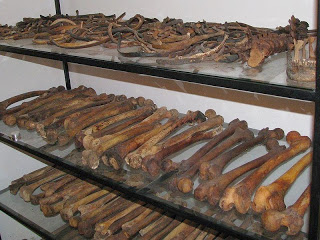
Motto: “It is hard for you to kick against the goads!” (Acts 9:5)
This is betrayal!
Father, how should we respond when the saints of the prisons are slandered?
How should one react? When you hear such statements, you cry out: “Enough! Stop right there, because my father died in Aiud prison, and there I also gave up my entire youth and childhood. I spent 12 to 14 years in prison. How can you speak like that against such sacrifice?” Then you notice that others step forward as well, reacting in the same way, encouraging one another and forming a core of resistance. If someone tells a person who wants to speak, “Keep quiet!”, you cannot accept it. Can something like this be tolerated? This is betrayal! From the very beginning, it is an act of renunciation, because if you do not speak up, who will? Here, in our country today, more and more of those who are still able to pass something on are disappearing, one by one. A few remain here and there, but they are very few.
Aiud is the greatest spiritual force of our time. Yes, but they ensure that it is increasingly erased, kept from coming to light. Father Augustin from Aiud (now Father Abbot Gavriil) told me that during the recent rains he discovered, in the ruins of the Yellow Ravie [Râpa Galbenă,] a grave containing a body with the skull split in two. Yes, they would even remove the brain when the victim was alive. Beside this body, he found two women, with their feet bound together with wire.
The horrors of the communist prisons
You see, these matters are extremely important to us, yet they are spoken about very little. They are often ignored. Only now, after years or even decades, do people come to uncover, verify, and study what happened there.
The greatest state secret is the very period we lived through. Imagine this: in this cell there were two or three people, while next door they were killing others – and you knew nothing. For instance, they walked in boots padded with felt so they could not be heard. Through the peepholes, they knew everything that was happening in every cell – how someone lay in bed, how the sick person lay, how a dead man lay. They knew it all. They knew how a prisoner was taken out of the cell, dragged down the stairs from the upper floor, and how his brains were splattered on the floor. And the Romanian language remains painfully faithful to these testimonies. Indeed, that is exactly how things were described.
The grace of the martyrs from the prisons
Even though many years have passed, they are still fearful of our dead – of those who, revived through the power of Christ, overturn their demonic works. Their grace burns them, just as Lucifer could not endure the light of the Archangel Michael. Their fear of honoring the martyrs of the prisons reveals their weakness and lack of power. To this day, they fear that these martyrs might rise again. “Do you have stone? Do you have rocks? Place them on their graves and guard them with strong sentinels, so their existence will never be spoken of again.”
Yet despite all their attempts to oppose the blood of the martyrs, they remain powerless before the truth. The injustices committed against our nation will return upon them and their families. The atrocities carried out by these agents of atheism, of Satan, weigh heavily on their consciences and on those of their families, to the point that they can be seen as morally tormented people.
Through the martyrs of the Church, however, Orthodoxy lives and will continue to live. The more they are slandered and condemned even after death, the more alive they will remain in the conscience of our people. They – the saints of the prisons – are canonized not only through the devotion of the Romanian people, but also through the veneration of other Orthodox.
The Saint and the Hero
The saint or the martyr is the true hero of a nation. His political affiliation does not matter to us. He is not a figure confined to Romania, Spain, or France; rather, he is a person who rises above all boundaries of values.
In prison, there was a devastating process of destruction – both spiritual and physical. Most of those arrested with short sentences died quickly, the poor souls. They passed away one after another. Meanwhile, others clung to life at any cost, struggling simply to remain alive. Solitude was the most powerful and cruel weapon of this destruction. Yet within this solitude, the Spirit of God began to work in the human soul. It descended ever deeper, giving birth to prayer, which became the salvation of all. It was like the continuous reading of the Psalter in a monastery, hour after hour. In the corner of the cell, Akathist Hymns and prayers of supplication were recited from memory, without books.
(Excerpt taken from the volumes “Father Justin Speaks to Us”)
Source: https://atitudini.com/magazin/ne-vorbeste-parintele-justin-vol-v/
A short documentary about his life on the occasion of 100 anniversary from birth
“Christ never calls us to a faith of ease, comfort, or safety. Real faith truly begins at the moment when everything is stripped away from you and God is all that remains.
During my time in prison, I learned that the person who holds fast to Christ finds freedom even when the walls seem to close around him, while the man who abandons Him becomes a captive even if he walks freely in the world. It is not suffering itself that brings salvation, but the manner in which we endure it. If we face it with rebellion, it destroys us; if we bear it with hope, it becomes a ladder to heaven. When they beat me and claimed I had no one left to rely on, I answered silently: “I do have someone — I have Christ.” And in that moment, fear faded away and my heart opened wide.
A Christian must never give in to hatred, not even toward the one who strikes him.
Hatred is a fire that consumes the one who holds it first. Forgiveness is not a sign of weakness, but of triumph. Let us guard the peace within our hearts and strengthen ourselves through prayer, for without Christ man is nothing, but with Him man stands stronger than death.”
Father George Calciu – a Confessor for Christ in Times of Great Persecution of the Faith
(23 November 1925 – †21 November 2006)
For it has been given to you not only to believe in Him, but also to suffer for Him.(cf. Philippians 1, 29)
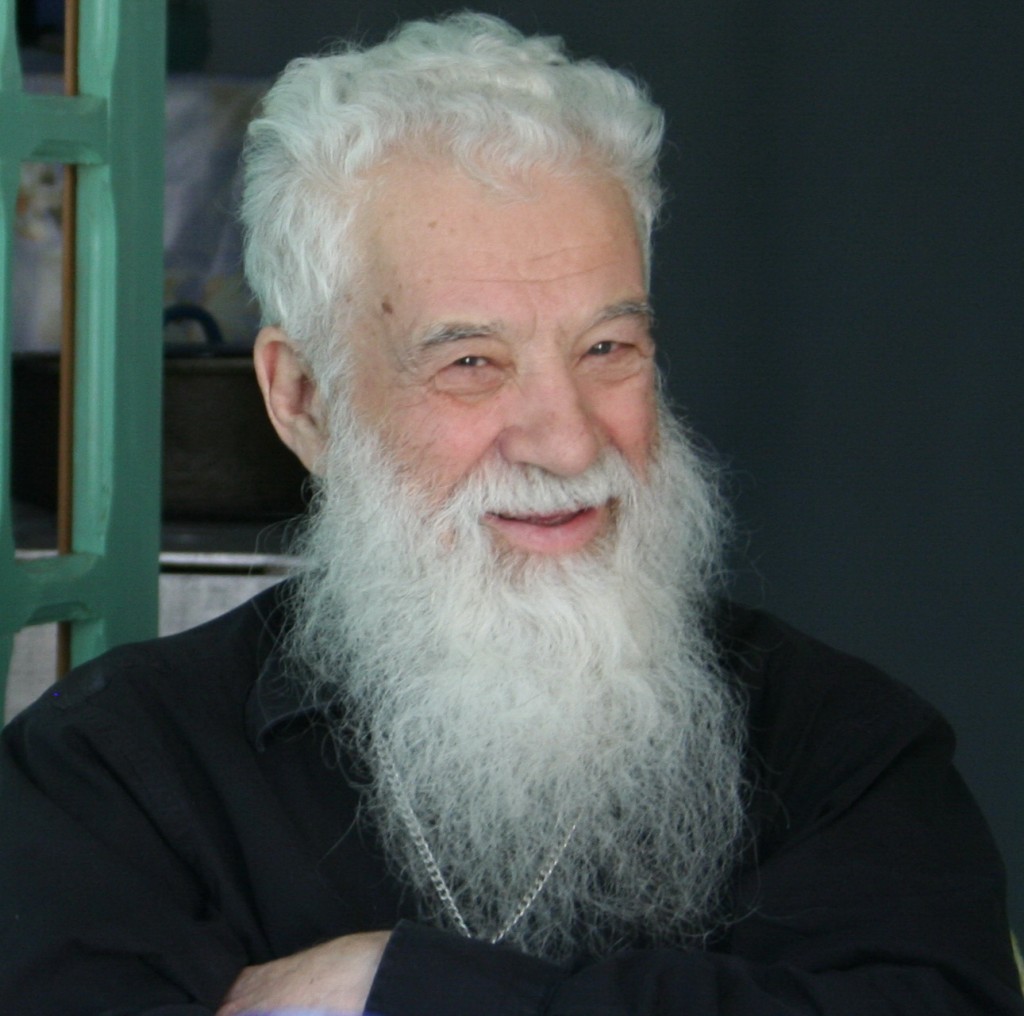
Motto: “Father Calciu Dumitreasa is a name that carries significant weight. It represents the profound responsibility of confessing Christ during times when some may have denied Him, while others have fervently proclaimed their faith. Meanwhile, there are those who have chosen to remain quietly in comfort, due to fear of the totalitarian system.” (Bishop Ignatie of Hus, Romania)
Father George Calciu was born on November 23, 1925, in Mahmudia-Tulcea, a small village situated in the heart of the Danube Delta. He was the eleventh child of a humble and devout peasant family, having spent his early years amid Romania’s post-war transformation and the consolidation of the communist regime. At the age of twenty-two, while studying medicine in his second year at the University of Bucharest, he was arrested during the mass detentions of May 15, 1948 – the largest in Romania’s history. Targeted for his anti-communist beliefs, he was imprisoned alongside thousands of students, professors, and intellectuals.
His detention lasted sixteen years, marked by extreme hardship and suffering. He endured the violent “re-education” experiments at Pitești, the brutal conditions of Jilava, and the ideological pressures of Aiud. Despite these ordeals, one moment of profound humanity defined his imprisonment: he voluntarily cut his own veins to donate blood plasma to a dying fellow inmate, an act remembered as a symbol of Christian love and self-sacrifice. Upon his release, he pursued higher education, graduating from both the Faculty of Philology and the Faculty of Theology. With the blessing of Patriarch Iustinian Marina, he was ordained as a priest and later appointed professor at the Theological Seminary in Bucharest.
In 1978, he gained national attention after delivering the famous sermons “Seven Words to the Youth,” in which he publicly protested the demolition of the Church of Enea by communist authorities. The following year, in 1979, he was arrested once again, separated from his wife and twelve-year-old child, and sentenced to ten years in prison. Due to international advocacy, including appeals from prominent figures such as Ronald Reagan, Margaret Thatcher, and Pope John Paul II, he was released after serving five years.
After his release in 1985, he was exiled to the United States, where he served as the parish priest of the Holy Cross Romanian Orthodox Church near Washington, D.C. There, he continued his pastoral mission, preaching about Christ’s love, repentance, and divine mercy with unwavering dedication.
On November 21, 2006, at the age of eighty-one – twenty-one of those years spent in communist prisons – he passed from the Church militant to the Church triumphant. He is remembered as a devoted servant of faith who transformed suffering into testimony, believing that his greatest treasure was his love and sacrifice for Christ and his neighbor.
Father George Calciu was the Romanian who endured the longest and most harrowing period of detention among all Romanians. It has been said and written about him, “Here is the man who was in hell!” – and this was not just anyone’s assertion, but that of Metropolitan Bartolomeu Anania, himself, another individual who lived through the horrors of imprisonment. (From the Preface of the book “The Life of Father Gheorghe Calciu,” Ed. Christiana, Bucharest, 2007).
Ioan Ianolide, in his book “Return to Christ – a Document for a New World,” dedicates an entire chapter to Father Calciu, written in the early 1980s, titled “Priest George Calciu or the Madness for Christ.” Ianolide, himself a martyr, cellmate, and friend of Valeriu Gafencu – “The Saint of the Prisons” – wrote, among other things, about Father Calciu: “Inner struggles that the ordinary man cannot grasp – and which are not described in the literature of the world, perhaps only in the apocalyptic depictions of hell – make those who have known ‘reeducation’ in Pitesti prison, tremble at the spiritual strength of the man who dared to confront once more the beast that had enslaved him. He emerged from hell and had the courage to face hell again” (note: Father Calciu’s first period of detention lasted from 1948 to 1964, totaling 16 years; the second period, during Nicolae Ceaușescu’s regime, was from 1979 to 1984, amounting to another 5 years, 5 months, and 20 days).
Father Calciu served over 21 years of detention, the longest among all political prisoners in Romania. He knew that torment awaited him, but he placed his hope in Christ (note: the detention from 1979-1984 was due to the proclamation of the seven ‘Words to the Youth’ during Lent in 1978, openly and fearlessly confessing Christ and His Gospel at a time when others returning from communist prisons no longer had the strength to do so).He received the living, divine, powerful Christ – and thus he was able to conquer the terror imprinted on his being and soul. The torment, pain, and horror penetrated his bones, mind, and soul through re-education, yet Priest Gheorghe Calciu tore them from himself, fully aware of the prospect of facing them again. While a man typically avoids repeating even minor suffering, he confronted the endless terror of hell once more, for in prison, terror takes on an endless expanse and abyssal depth. Christ had been martyred, and he had to confess Him.
May his memory be eternal.
Words of Wisdom
God came into the world to fill the human suffering with His presence.
Christ has so completely taken on all our weaknesses and afflictions that whoever suffers, Christ suffers with them; and whoever is afflicted with illness, Christ shares in that affliction.
There are various ways in which sin can infiltrate our souls. Our only protection against sin is to cry out: “Lord Jesus Christ, be merciful to me, a sinner!”
The role of the Church in future Romania, immersed in the apocalyptic whirlpool of technification, is to save souls from perdition, to teach people humility and love for God and their neighbors, to promote virtue and abstinence, to rediscover the original beauty of God’s creation behind the false beauty of the modern world, and to rise man from falsehood
You are in Christ’s Church – when you smile at a man in sorrow, when you help an elderly person walk with ease, when you give alms to the poor, visit the sick, when you say, “Lord, help me!”
You are in Christ’s Church – when you show kindness and forgiveness, when you refuse to be angry with your brother – even if he has wounded you or hurt your feelings – and when you say, “Lord, forgive him!”
You are in Christ’s Church – when you labor faithfully in your place and return home at day’s end weary yet smiling, carrying to your loved ones a gentle light filled with warmth and humanity; when you overcome evil with love.
The greatest miracle, surpassing eclipses and earthquakes – let’s say, as a punishment from God – is the transformation that occurs within the heart. Greater than any miracle is this act of conversion in the heart of sinner. Therefore, I urge you to engage in sincere prayer.
This represents the deepest and most profound introspection we undertake in our hearts: discovering God within us. Once we find Him dwelling inside us and turn toward Him with our whole heart and mind, we naturally reach a state of prayer – both for ourselves and for others..
To deepen one’s prayer life, one must begin by admitting their own sinfulness. It is crucial to examine one’s behavior and thoughts, becoming aware of how frequently they fall into sin every day and every hour.
The most sorrowful state of contemporary man is loneliness, a profound sense of isolation. Saint Cyprian says that: “Each individual falls in isolation.” Yet, we find salvation within community, in the fellowship of the Church! We support one another’s frailties and, and in doing so, we progress toward salvation. No one achieves salvation by oneself, neither the faithful, nor the clergyman, nor the monk.
We are all being saved in community, within the Church of Christ, and each one of us is responsible for one another. If someone is struggling, take on their burden and carry it for them! If you are struggling, don’t hesitate to ask someone to help carry your burden! In this way, united in prayer and good deeds, we will attain the glorious Resurrection of our Savior, to be with Him and witness the heavenly light.
As long as there exists an elderly woman in the Carpathian Mountains who kneels and touches the earth with her hand in prayer, signifying that I am dust and to dust I shall return, our nation will remain steadfast before God.
Understand that the tears shed for someone else’s pain are blessed tears. They cleanse your heart and soul. Never be ashamed of your tears! Weep for your own struggles, but refrain from shedding tears of anger, wrath, or curses. Shed tears of sorrow and love, for they purify your soul and draw you closer to Christ.
The Gospel revealed to us the Pharisee, who lacked a place of genuine confession and heartfelt connection, believing that he had led a good life. In reality, he did not have a true relationship with God. His heart was not moved but it functioned like a mechanism, instructing him: “Now do good! Now give alms! Now go to the temple! Now give tithes!”… He operated through a mechanism, rather than a living heart. In contrast, the tax collector had a living heart that at least wept! A heart that sheds tears is a heart that God cherishes.
I wish for you to keep praying without ceasing. I want you to realize that if there exists a protection that encompasses all of humanity or our nation, it is the power of prayer.
If you lack love, you cannot truly communicate. Without love, you are like a radio station, broadcasting for twenty hours a day, yet you fail to express your true self! Thus, you become a mere talking machine. Often, we act as talking machines. We do not truly communicate. However, when you have love, even if you only say three words, you have conveyed something meaningful to the other person.
Know that the intellect alone does not lead you to God. While reason serves as a useful support, guiding you to a certain point but once you reach that point, its support becomes ineffective. At that juncture, you must set aside reason and ascend with your soul towards God. From this point on, the intellect ceases to function, reason loses its relevance, and even religious practices – such as prostrations – become insufficient. From here on, you must transcend all these stages and approach God with an open heart and an enlightened mind.
The soul can blossom. Just as a young shoo grows from a tree or a branch you have broken, so does the soul.
I believe that the result of the Holy Spirit’s descent, or the act of speaking in tongues, in our present time, after Pentecost, is love.

Thursday, July 02, 2015
The Assembly of Canonical Orthodox Bishops of the United States of America strongly disagrees with the United States Supreme Court decision of June 26, Obergefell v. Hodges, in which the Court invents a constitutional right for two members of the same sex to marry, and imposes upon all States the responsibility to license and recognize such “marriages.”
The Supreme Court, in the narrowest majority possible, has overstepped its purview by essentially re-defining marriage itself. It has attempted to settle a polarizing social and moral question through legislative fiat. It is immoral and unjust for our government to establish in law a “right” for two members of the same sex to wed. Such legislation harms society and especially threatens children who, where possible, deserve the loving care of both a father and a mother.
As Orthodox Christian bishops, charged by our Savior Jesus Christ to shepherd His flock, we will continue to uphold and proclaim the teaching of our Lord that marriage, from its inception, is the lifelong sacramental union of a man and a woman. We call upon all Orthodox Christians in our nation to remain firm in their Orthodox faith, and to renew their deep reverence for and commitment to marriage as taught by the Church. We also call upon our nation’s civic leaders to respect the law of Almighty God and uphold the deeply-rooted beliefs of millions of Americans.
Source: http://assemblyofbishops.org/news/2015/response-of-assembly-of-bishops-to-obergefell-v.-hodges
The position in support homosexuality shared by some Orthodox representatives present at Chambery created deep anxiety among the hierarchs as some Church leaders are striving to change the Scripture, the Holy Canons of the Orthodox Church and the teaching of the Holy Fathers.
Such debates prove indisputably our current society pressure to weaken the supporting pillars of Orthodoxy.

The Preparation of THE INTER-ORTHODOX Commission
The Special Commission for the preparation of 2016 Great Pan-Orthodox Synod/ Council of the Orthodox Church met on February 16 – 20, at the Orthodox Center of the Ecumenical Patriarchate at Chambery – Geneva, under the chairmanship of Metropolitan of Pergamum, Ioannis Ziziulas, a respectable scholar and academician.
For more than 50 years, the Orthodox await this Synod and yet the preparations are not completed. When the Primates of the Orthodox Churches met at the Fanar at the invitation of the Ecumenical Patriarch Bartholomew, in March last year, it was decided that the Pan-Orthodox Synod will take place in the summer of 2016 in Constantinople.
The NEED to UPDATE the patristic TEXTS?
It appears that many texts prepared to be reviewed at this meeting by the Orthodox bishops are no longer current, due to past eras of the Cold War and especially the communist regimes of Eastern Europe. Therefore, in order to revise the outdated texts, the patriarchs and the archbishops had formed a new Commission consisting of representatives of all the 14 autocephalous Orthodox Churches.
The purpose of this Commission was to update these texts in order to be accepted by the bishops who will attend the Synod next year, and all the decrees of the Council, as agreed last March by the primates, should be taken jointly.
It is difficult to determine how long it will tale the hierarchs to fulfill this purpose, since their predecessors had decades to prepare texts which now will be subject to review.
In any case, if we consider the contents of this February meeting in Chambery, it is better not to rush to decisions, and better if this Synod will not meet at all, since some who will participate in it, are ready to amend not only the works of past century theologians, but the very Scripture, the Holy Canons of the Church and the writings of the Holy Fathers.
This time the primates that gathered in Switzerland discussed a text that was drafted at the third Pan-Orthodox Pre-Synodic meeting from 1986 with the resounding title: “The contribution of the Orthodox Church in promoting peace, justice, freedom, brotherhood and love between people for the elimination of racial or other forms of discrimination”.
The hierarchs of the Eastern bloc were the ones who put this text on the Synod agenda, as not long ago they had to report to their communist rulers that their “professional journeys” abroad were not in vain reassuring their rulers that they are laboring for “peace” as peace could be defined in the Eastern bloc.
Meanwhile many things have changed at the political level and although we are still very far from brotherhood and love among nations, the battle against racial discrimination is not as acute. Indeed, the apartheid in South Africa is a file of the past, while black colonial countries have managed to gain their independence, and a representative of the formerly oppressed race lives in the White House leading the most powerful nation of the contemporary world.
Backstage SHAMEFUL DISPUTES

No one would have expected this text to cause such heated discussions among the participants.
As it turned out, the acute divergences were on the subject regarding the rights of sexual minorities. The Metropolitan of Pergamum euphemistically called them “other minorities” which, in his opinion, should be protected from any kind of discrimination and injustice.
“We have no right to humble and victimize the image of God,” said – according to reliable sources – the 84 years old theology professor, while addressing his “heartless” colleagues. “Let us ask ourselves if we need to consider homosexuals scapegoats who deserve to suffer persecution. And if we don’t want to establish that these people must be protected, it means that we want to be punish and imprison them.”
Thus the Metropolitan by trying to assume the creed of those who support anti-racism, in fact he supported the anti-Orthodox bill passed by the Greek parliament under pressure of the European Union.
We remember that this bill was the subject of criticism from His Eminence Metropolitan Seraphim of Piraeus and from several other church leaders worthy of respect and with great spiritual authority, that represent the healthy part of Greek society.
But the endeavors to incorporate in the text of the Holy Synod the claim for respect of “minorities of other nature” and the guarantee to “express freely according to their principles”, has not been supported by the majority.
Then another “theology” professor, dean of the Orthodox Theological Institute in Chambery, Vlaslios Feidas, in aim to help the Metropolitan Ioannis, stressed:
“There are sexual minorities, but they are just as we, members of the Orthodox Church. They also participate in the church life. They are sinners, but we are all sinners. The state recognizes them, as respectable members of society, therefore we, in turn, must not ignore them. Sexual sins are under no circumstance the grievous, so we must face the GL community not by conviction, but with love and respect.”
Among the participants there were very few at first to share this position. Conversely, the representative of the Russian Orthodox Church, lead by Metropolitan Hilarion Alfeyev, absolutely disagreed. This position of respect for homosexual communities and their protection against persecution, would neither be endorsed by the Patriarchate of Antioch, nor by Metropolitan Basil in Syria, where Christians suffer severe persecution because of their faith, nor by Metropolitan of Montenegro Amfilohios, who courageously resisted the “Gay Pride Festival” in the capital city of his country, nor by the other hierarchs.
The 7 hours intense psychological coercion practiced by the Chairman of the Committee on the participants who did not let go the subject, resulted in a compromise amendment that “sexual minorities should not be discriminated against, and this will not imply that others share their opinions and principles.”
All Greek hierarchies including Metropolitan Ignatius of Demetriates voted this amendment, to our great sorrow and shame. Bishop Ignatius alleged that in Greece “the supporters of Nazi ideology” is attacking the sexual minorities.
The amendment was also voted by the Metropolitan Chrysostomos of Messina, Bishop George of Paphos (Cyprus), Archbishop Aristarchus of Constantia (Patriarchate of Jerusalem) and the Metropolitan Sergei of Good Hope (the Patriarchate of Alexandria).
The compromise of shame was strongly opposed by Metropolitans Hilarion, Basil and Amfilohios (mentioned above), but also by the hierarchs representing Serbian, Bulgarian, Georgian and Romanian Orthodox Churches.
All these hierarchs, to their honor, have not changed their position and because of them, the awaited revision of Orthodox theology to protect homosexuals has not been accomplished. Thanks to their firm opposition, the revised text will not be submitted to Great Synod next year.
Thus the Holy Orthodox Church will continue to call any sin as evil and the good deeds as good; will not remove from the Holy Scripture the chapter on Sodom and Gomorrah, or the words of the Apostle Paul who says “no homosexuals will inherit the kingdom of God.” (I Cor. 6:9-10)
But the fact that such discussions took place between those whom God had appointed to shepherd His flock and to guard of the Orthodox Faith inflicts deep anxiety on the faithful. And the behavior of certain bishops, who in the name of political correctness fear this world more than the Lord, betraying the teachings of the Holy Fathers, inflicts our hearts with deep sorrow.
Originally published by
http://www.agioritikovima.gr/
a Greek news paper at: http://www.dimokratianews.gr/content/34956/i-omofylofilia-milon-tis-eridos-gia-toys-orthodoxoys-ierarhes-sti-geneyi translated by blog author
See below a replica of Professor Theodore Yiangou
Chairman of the Department of Pastoral Theology AUTH
It is known that last February (from 16th to the 20th of the month), the Patriarchal Center of Chambesy met for the second time (the first meeting was held from September 29 to October 3, 2014). The Inter-Orthodox Special Committee, was established to update and correct Prosynodikon Texts to be referred to the Holy and Great Council of the Orthodox Church, which, according to the announcement of the Synaxis of the Primates (March 2014), will convene in Istanbul in 2016.
Source: http://fanarion.blogspot.gr/
The purpose of the Special Commission’ work this time was to update the text entitled: “The contribution of the Orthodox Church in the prevalence of peace, justice, freedom, brotherhood and love among peoples and the elimination of racial and other discrimination.” This text was written in the climate of the time, when the Cold War dominated. Today, however, the situation changed, new threats has proliferated and other pressing problems appeared. So the Church is called not to offer “new wine in old wineskins.” The Commission worked with pride and above all with the deepest sense of respect for the ecclesiastical tradition and in service of the Holy Fathers theological truth. […] Indeed, if we consider the Holy and Great Council preparedness for decades and the increased expectations of the church […], this responsibility is therefore task.
The representatives of all the Patriarchates and Autocephalous Churches worked as a body, engaging in a creative theological dialogue, always targeting the promotion of Church’s teaching. Nobody acted fragmentary or individually or intentionally to break the ecclesiastical unity. Thus the exchange of views and proposals helped as much as possible, to improve the documents.
This was the spirit and the work of the Commission. Unfortunately a few days ago on the web a text entitled: “Homosexuality, the bone of contention between the Orthodox hierarchs in Chambesy Geneva”, was published which completely distorts reality. From the initial site the same text was republished by others, who are accustomed to transforming the champions of Orthodoxy in mudslinging, a sample of their spiritual poverty.
The erroneous positions and information of the publication shall include:
Refers to this that some hierarchs supported homosexuality “and almost become the cause for the chapter of Sodom and Gomorrah to be deleted from the Bible'” The attitude and effort of the Bishops, according to this text, for modification of the Bible and the Holy Canons and of the Patristic teaching raises concern within the Church.
That “the conflicts … took stormy dimensions, according to exclusive information. It was also so heated and loud, to reach the hallway and the ears of both the technical staff of the Orthodox Center, and to the students studying orthodox theology there. ”
That amendment “of the great sorrow and shame … was voted by all Greek Hierarchs Greek” (“the Messenia Chrysostomos, Paphos George, Constantine Aristarchus and Good Hope Sergius ‘),’ including the Metropolitan of Demetrias, Ignatius.” In contrast the Slavs – rejected “the compromise of shame.”
The anonymous report claims that some (ie the Slavs-) have “not changed their minds until the end. Thanks to them the treacherous revision of Orthodox theology did not take place, so the position to protect homosexuals will not be incorporated into the text written for the Holy and Great Synod”
What is the target of the publication?
Aims: – to present the Orthodox Church divided, with the Greek-speaking Prelates offending the ecclesiastic tradition and Slavic-speaking champions;
– to undermine the validity of the Synod in ecclesiastical team, giving the impression of traitors.
– to eventually canceled the meeting of the Holy Synod. As stated verbatim in anonymous text: “And yet it would be better not to convene this Meeting at all, if those who are to take part in its activities, are ready to revise … the teaching of the Holy Fathers” ; a flimsy argument against convening the Meeting.
What is reality?
In the text agreed and signed by all the representatives of the Orthodox Churches, there is not one hint, not a single word, conveying the issue of homosexuality. Furthermore, this subject was not on the agenda. Therefore, in the agreed text there is no reference to homosexuality or worse in support of it.
This question arose purely by chance, during the debates, and no Hierarch advocated homosexuality.
Was even supported by declaratory, that the Church does not condemn people or God’ creation, but sin.
This is an fundamental and obvious principle of Christian anthropology. Even the penances imposed for repentant sinners, are not for punishment, but as pedagogy (Reg. 2 and 102 Quinisext). The saints of the Church prayed even for the salvation of the devil, and Christ taught the perfect love for all people.
It is worth mentioning the position of St. Theodore the Studite, that at Christ Second Coming only evil will be consumed by fire, and not God’s creation, namely the logical beings and the spirits. (c.f. PG 99, 1501AB).
The dialogue at Chambesy reflects the biblical and patristic theology. I repeat that no one argued otherwise. Moreover, the Church has a clear position that homosexuality is a passion.
The unsigned text can produce disinformation. It is sloppy journalism, which unfortunately shares responsibility for the spiritual decline of our country. Such texts increase our anxiety about the future of the ecclesiastical and theological discourse. […]
Whatever someone may claim as an excuse, it does not negate the truth of the facts that took place at the last meeting of the Special Committee in Chambesy. Furthermore it will be seen from the publication of the agreed text.
Because the Holy and Great Synod has vision, so we should all assist in its work.
Professor Theodore Yiangou
Chairman of the Department of Pastoral Theology AUTH
Translator disclaimer: I’m neither Greek nor Slave, I do not sympathize with any ethnic group as says the Scripture: “In Christ divided? … there is neither Greek nor Jew”
One cannot claim sympathy for the Slavs, when the “scandalous” article appeared in the Greek and not the Slavic press. As I agree in part with what Professor Theodore Yiangou said that some statements in the “scandalous “ article aim to create division within the CHURCH, lets not forget the past and recent century aggressive ecumenism of the Fanar and of some Hyerarchs who against the Church teachings participate in common prayers with the heretics and in the World Council of churches. It this kind of “dialogue” not aimed to create greater division among the orthodox faithful? A painful reality of our state today that shall no be hidden.
May God illumine us all.
Please pray for me a sinner!
Where does one’ weakliness begin?
In the imagination of the haughty mind!

Thus the mind thinks that it is better not to guide itself after the commandments of God, but by its own wisdom or better said by its passions. But sin leads man right to its consequences, just as you wound draw yourself knowingly into a bar fence.
A weak mind is also revealed in those who do not wish to come to the confession and repentance of their sins; how then, can they expect healing from their illness… The doctors can help, but the mind can only be healed by God.
If man would suit his actions after the commandments of God, which are also the commandments of nature, and will not confuse evil for good, then man would prevent all nuisance and trouble, but on the contrary, he crushes his head in them and then he walks away mournfully.
My brother, let yourself be guided by the godly counsel, because a naughty mind will one day crush… and may not be anyone to help tie it.

(Father Arsenie Boca, Living Words)
July 14th, blessed memory
Excerpt taken from the “Unseen Warfare”
On the many desires and tendencies existing in man and
on their struggle with one another
Know, that in this unseen warfare, two wills existing in us fight against one another: one belongs to the intelligent part of our soul and is therefore called the intelligent will, which is the higher; the other belongs to the sensory part and is therefore called the sensory will, which is the lower. The latter is more frequently called the dumb, carnal, passionate will. The higher will is always desiring nothing but good, the lower—nothing but evil. Each equally happens by itself, so that neither is a good desire in itself reckoned as good, nor an evil desire as evil. The reckoning depends upon the inclination of our own free will. Therefore, when our will inclines towards a good desire, it is reckoned in our favour; but when we incline towards an evil desire, it is reckoned against us.
These desires follow one upon another: when a good desire comes, an evil desire immediately opposes it; and when an evil desire comes, a good desire at once rises against it.. Our will is free to follow the one and the other, and whatever desire our will inclines towards, it becomes victorious on this particular occasion. It is in this that all our unseen spiritual warfare consists. Its aim should be never to let our free will incline towards the desire of the lower, carnal and passionate will, but always to follow only the intelligent, higher will. For it is the will of God, to follow which is the basic law of our being: ‘ Fear God, and keep his commandments: for this is the whole duty of man “ says the Preacher (Ecclesiastes xii. 13). Each of these desires draws our will towards itself and wishes to subjugate it. Stifle the lower desire and incline towards the higher—and victory is yours; but disregard the higher and choose the lower, and you will find yourself vanquished.St. Paulwrites of this: “I find then a law, that, when I would do good, evil is present with me. For I delight in the law of God after the inward man: but I see another law in my members, warring against the law of my mind, and bringing me into captivity to the law of sin which is in my members’ (Rom. vii. 21-53). And he gives to all the rule: ‘Walk in the Spirit, and ye shall not fulfil the lust. of the flesh’ (Gal. v. 16). And this cannot be accomplished without struggling with the flesh.
A particularly great effort and laborious toil must be experienced to start with by those who, before deciding to change their worldly and carnal life to a righteous one and to give themselves up to the practices of love and sincere service of God, had enmeshed themselves in evil habits through frequent satisfaction of the desires of their carnal and passionate will. Although the demands of their intelligent will, which they wish to follow, stand on one side of their free will and arc made active by God, yet on the other side there stand the desires of the carnal and passionate will, towards which they still feel a certain sympathy. Opposing the former, these desires pull it towards their side with the same force as a beast of burden is pulled by its halter; and only the grace of God gives them strength to remain firm in the decision they have taken. .Long-drawn resistance and not yielding them victory saps, the strength of carnal desires; yet this does not end the struggle.
So let no one dream of acquiring a true Christian disposition and Christian virtue, and of working for God as he should, if he does not want to compel himself to renounce and overcome all the passionate impulses of the will of the flesh, whether great or small, which he was formerly accustomed to satisfy, willingly and fondly. The chief reason why so few people attain to full Christian perfection is exactly their reluctance, through self-pity, to force themselves to deny themselves absolutely everything. But if, having overcome great passionate tendencies, they do not wish, thereafter, to compel themselves to overcome small ones, which seem unimportant, then, since these small tendencies are the outcome and expression of the great, by indulging in them they inevitably feed the latter, and so make them continue to live and act in the heart, in spite of the fact that they no longer manifest themselves on a large scale. And so the heart remains passionate and impure, and, above all, in no whit freed from self-indulgence and self-pity, which always make any practice to please God of doubtful value.
For example, there are men who refrain from appropriating other people’s possessions, but are excessively attached to their own, and who, on the one hand, lay too much trust in what they have, and on the other, arc slow to bestow alms. Others do not seek honours by evil means, yet do not count them as nothing, and often even welcome them, if those honours can be made to appear to come against their will. Others again keep long fasts according to the statutes, yet do not refrain from satisfying their desire to eat their fill, and to eat well, which deprives the fast of all value. Others lead a chaste life, yet continue their connections and acquaintanceship with people they like, and enjoy it, not wishing to understand that, through this, they build a great obstacle to perfection in spiritual life and union with God.
I shall add to this the fact that some people disregard the natural defects of their character, which, although not dependent on selfwill, nevertheless make a man guilty if, seeing how much they interfere with spiritual life, he does not trouble not only to destroy them completely, but even to try and keep them within harmless bounds, although this could be achieved with the help of God’s grace, due attention to oneself and zeal. Such defects are for example: aloofness, hot temper, and excessive sensibility, with the consequent thoughtless hastiness in words, movements and actions, harshness and querulousness, obstinacy and argumentativeness, and so on. All these natural imperfections and faults should be corrected, in some by reducing excess, in others by adding what is lacking, and by translating both one and another into corresponding good qualities. For no natural feature, no matter how savage and stubborn it is, can stand up against the will if, armed with the grace of God, it resists it with all attention and diligence.
And so it happens that some perform good deeds, but these deeds remain imperfect, lame, mixed with the lusts, which reign in the world (John ii. 16). And so such people make no progress on tile path to salvation, but turn round and round on one spot, and often even turn back and fall again into their former sins. This shows that even from the first their love for true life in Christ was not wholehearted, that they were not sufficiently filled with the feeling of gratitude to God, Who had delivered them from the power of the devil, and not perfect in their decision to work only for Him and to please Him. As a result such people remain forever untrained in good, are blind and fail to see the danger in which they stand, thinking that their position is secure and that no harm threatens them. Owing to all this, my beloved brother in Christ, I beseech you to love the hard toil and heavy burdens which inevitably accompany our unseen warfare, if you do not wish always to be overcome. The wise Sirach counsels the same: ’Hate not laborious work’ (Ecclesiasticus vii. 15). For this is the very foundation of the whole of inner warfare. The more you love this hard toil, or this pitiless driving of yourself, the more quick and complete will be your victory over yourself and over that in yourself, which resists the higher good. And through this you will be filled with every virtue and good disposition, and God’s peace will come to dwell in you.
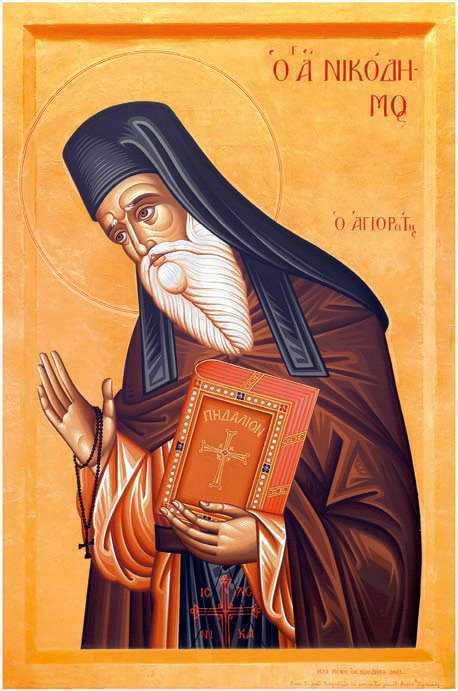
On how to fight against the dumb sensory will, and on the training necessary for the will to acquire experience in virtues
Every time your free will is acted upon and pulled on the one hand by the dumb sensory will and on the other by the will of God, voiced through conscience, each of them seeking to conquer it, you must, if you are sincerely to strive for good, use suitable methods on your part to assist God’s will in gaining victory. For this purpose, then:
(a) As soon as you feel impulses of the lower, sensory and passionate will, you must immediately use every effort to resist them and not allow your own will to incline towards them, however slightly. Crush them, cut them off, drive them away from yourself by an intense effort of will
(b) To achieve this more successfully and with a better result, hasten to kindle in yourself a wholehearted aversion to such impulses, as to your enemies, who seek to steal and destroy your soul— be angered with them.
(c) At the same time do not forget to appeal to our Lord Jesus Christ, our Helper in all endeavour, asking for His assistance and protection, and for the strengthening of your better will; for without Him we can succeed in nothing.
(d) If these three inner actions are sincerely practised in your soul, they will never fail to give you victory over evil impulses. But this would mean only driving the enemies away.
If you wish to strike at their very heart, then, if it is feasible, at once do something opposed to the suggestion of the passionate impulse and, if possible, resolve to do so always. This latter practice will finally free you completely from the renewal of the attacks you experience. I shall illustrate this by an example. Supposing someone has offended you in something whether great or small, and has aroused in you a movement of displeasure and irritation, accompanied by a suggestion of retaliation. Pay attention to yourself and hasten to realise that these movements are bent on enticing you towards evil.
Therefore take up the attitude of a warrior on the defensive:
(a) Stop these movements, do not let them penetrate any deeper and on no account allow your will to take their part as though they were right. This will mean resisting them.
(b) But they still remain in sight, ready for a renewed attack. So rouse aversion against them, as against your enemies, and be angry with them for self protection, until you are able to say sincerely: ‘ I hate and abhor lying” (Ps. cxix. 169), or: ‘I hate them with perfect hatred: I count them mine enemies” (Ps. cxxxix. 22). This will be a great blow for them, and they will retreat, but not vanish. Then:
(c) Call to the Lord: “Make haste, 0 God, to deliver me; make haste to help me, 0 Lord” (Ps. lxx. 1). And do not cease calling thus, until not a trace of the hostile movements remains and peace is restored in your soul.
(d) Having thus regained peace, do to your offender something which would show your kind and conciliatory disposition towards him, such as a friendly word, some timely favour, and so on. This would mean following the advice of David: ‘Depart from evil, and do good” (Ps. xxxiv. 14).
Such .actions lead straight to acquiring the habit of the virtue opposed to the passionate movements which had troubled you; and this habit strikes them to the heart and kills them. Try to forestall, or accompany, or conclude these actions with an inner resolve, which would make such passionate impulses for ever impossible in the future. For instance, in the foregoing example, consider yourself worthy, of every insult and bring yourself to welcome every kind. of insult and calumny: welcome them and be ready to receive and accept them with joy as the most salutary remedies. In other cases, try to incite and establish in yourself other corresponding feelings and dispositions. This would mean driving the passion out of your heart and replacing it by the virtue opposed to it, which is the aim of the unseen warfare. I will give you a general indication, suitable for all occasions, in accordance with the guidance of the holy fathers. Our soul has three parts or powers—the thinking, the desiring and the excitable. Owing to their corruption, these three powers give birth to three corresponding kinds of wrong thoughts and movements. The thinking power gives birth to thoughts of ingratitude to God and complaints, forgetfulness of God, ignorance of divine things, ill-judgment and all kinds of blasphemous thoughts. The desiring power gives birth to pleasure-loving thoughts, thoughts of vainglory, love of money and all their numerous ramifications, belonging to the domain of self-indulgence. The excitable power gives birth to thoughts of anger, hatred, envy, revenge, gloating, ill-will, and generally to all evil thoughts. You should overcome all such thoughts and impulses by the methods indicated above, trying on every occasion to arouse and establish in your heart good feelings and dispositions opposed to them: in place of unbelief – undoubting faith in God; in place of complaints—a sincere gratitude to God for everything; in place of forgetfulness of God—a constant deep remembrance of the ever-present and all-powerful God; in place of ignorance—a clear contemplation or mental examination of all the soul-saving Christian truths; in place of ill-judgment – faculties trained to discriminate between good and evil; in place of all blasphemous thoughts—praise and glorification of God. In the same way, in place of love of pleasure – every kind of abstinence, fasting and self-mortification; in place of vainglory – humility and desire of obscurity; in place of love of money—contentment with little and love of poverty. Again, in place of anger—meekness; in place of hatred—love; in place of envy—rejoicing with others; in place of revenge—forgiveness and a peaceful disposition; in place of gloating—compassion; in place of ill-will—well wishing. In short, with St. Maximus, I shall condense all this in the following propositions: adorn your thinking power with a constant attention to God in prayer and knowledge of divine truths; the desiring power—with total self-denial and renunciation of all self -indulgence; the excitable power—with love. If you do this, then, I assure you, the light of your mind will never be dimmed and wrong thoughts will never find place in you. If you arc active in setting up such good thoughts and dispositions in yourself morning, evening and at all other hours of the day, invisible foes will never come near you. For then you will be like a general, who constantly reviews his troops and disposes them in battle order; and enemies know that to attack such a general is impracticable.
Pay most attention to the last point, namely, to actions opposed to those dictated by passionate thoughts and to setting up feelings and dispositions contrary to passions. Only by this means can you uproot passions in yourself and achieve a safer position. For so long as the roots of passions remain in you, they will always bring forth their offspring and thus cloud over the face of virtues, and at times completely cover and banish them. In such cases we are in danger of falling once more into our former sins and destroying all the fruits of our labours.
Therefore know that this last means should be practised nut merely once, but often, many times, constantly, until you smash, disorganise and destroy the passionate habit against which you tight. Since this habit has acquired power over your heart through frequent repetition of certain actions, which satisfy the passion dwelling in the heart, opposing it in the heart is not enough to weaken and destroy this power; you must use actions which are contrary to your former ones, actions opposed to the passion, smashing and destroying it. Their frequent use will banish the passionate habit, kill the passion which stimulates it and plant in the heart the virtue opposed to it and a habit of corresponding actions.
Moreover—and I shall not waste many words on this, , since it is self-evident – to acquire good habits it is necessary to perform a greater number of right deeds, than the number of evil deeds required to establish bad habits; for bad habits take root more easily, since they are aided and abetted by the sin living in us, that is, by self-indulgence. Therefore, however hard, however difficult it may seem to you, to perform such actions, opposed to your passions, because your will for good is still weak, and because of the resistance of your passionate self-indulgent will, you must never abandon them, but must compel yourself in every way to practise them always. However imperfect they may be at first, they will still support your steadfastness and courage in battle, and pave the way to victory.
I shall add another thing: stand wakeful and, collecting your attention within yourself, fight with courage. And fight not only the great and strong, but also the small and weak stirrings of’ your passions. For the small open the way to the great, especially when they have become a .habit. Experience has many tunes confirmed the fact that when a man pays little attention and care to repulsing small passionate desires from the heart, after he has overcome the great, he is subjected to sudden and unexpected attacks of the enemy, so impetuous that he is unable to hold his ground in battle and his downfall is more grievous than those of old.
Moreover I remind you of the fact that you should cut off and kill every passionate attachment to things which, although permissible, are not indispensable, as soon as you notice that they weaken the intensity of your will for good, distract attention away from yourself and disorganise the good order you have established in your life. Such are, for instance, taking walks, evening parties, conversations, new acquaintances, meals, sleep and other such things. You will gain much profit from this, by thus training yourself to self-mastery in all other things as well; you will become stronger and more expert in struggling against temptations and will avoid a great many snares of the devil, who knows how to spread his nets on these inoffensive paths, and, I assure you, your actions will win God’s favour.
So, beloved, if you follow my advice and undertake such holy tasks with alertness, be assured that in a short time you will achieve success and will become spiritual in truth and actual deed, instead of deceitfully and only in name. But know that to oppose yourself and to compel your self is here an immutable law, which excludes all pleasing of yourself even in the spiritual order of life. If you introduce into it, or choose exclusively deeds which please you, even if they belong to the spiritual order of things, you will ruin your work. You will labour, but in place of real fruit, you will get a sterile flower, and you will not be firmly established in anything spiritual. You will seem to have something spiritual, but in actual fact it will not be so. For all truly spiritual things are produced by the grace of the Holy Spirit; and this grace descends only on those, who have crucified themselves in sufferings and voluntary privations, without any self-pity, and have thus become united with our Lord and Saviour, crucified for their sakes.

What to do when the higher, intelligent will seems to be entirely overcome by the lower will and by the enemies
If you feel sometimes such a strong upsurging of sin that resistance to it will seem impossible and the very zeal to oppose it will appear exhausted, take care, brother, not to give up the struggle, but rouse yourself and stand firm. It is a subterfuge of the enemy, who, with the thought that resistance is hopeless, strives to undermine your firm stand and by making you lay down all your arms to force you to surrender to him. Make your mind see this subterfuge of the enemy more clearly and do not give ground. For so long as your will does not incline towards this passionate urge you are still among the victors, the fighters and slayers of the enemy, even if your sympathy is already ranged on the side of the passion. Nothing and nobody can force your will or steal victory from your hands and overthrow you against your will, no matter how obdurate and bitter the war waged in you by the enemies of your salvation. God endowed our free will with such power, that even if all a man’s faculties, the whole world and all the demons rose up in arms against him and attacked him, they could not compel it. It is always left free to desire what they offer or demand, if it so wishes, or not to desire it, if it does not wish. On the other hand, for this very reason his will bears the responsibility for everything and is subject to judgment. Remember this well: no matter how weak and exhausted you may feel, you cannot find excuses for inclining towards a passionate suggestion. Your conscience will tell you the same. So the stronger the attacks the stronger the resistance you must prepare, and never abandon this resolve, repeating on all such occasions the words of command of one of our war leaders: “”Watch ye, stand fast, quit you like men, be strong” (I Cor. xvi. 13).
Thus keeping your will inflexible against the uprising of sin and ranged on the side of the demands of the higher will, bring into action your spiritual weapons, one after another. The chief among them is prayer. Make it your inspiration, saying: ‘ The Lord is my light and my salvation; whom shall I fear the Lord is the strength of my life; of whom shall I be afraid? Though an host should encamp against me, my heart shall not fear: though war should rise against me, in this will I be confident’ (Ps. xxvii. 1, 3). ‘I will not trust in my bow, neither shall my sword save me. In God we boast all the day long, and praise thy name forever” (Ps. xliv. 6, 8). ‘
Neither fear ye their fear, nor be afraid. Sanctify the Lord of hosts himself; and let him be your fear, and let him be your dread. And he shall be for a sanctuary.Gird yourselves, and ye shall be broken in pieces. Take counsel together, and it shall come to naught; speak the word, and it shall not stand: for God is with us’ (Isaiah viii. 12-14, 9, 10).
Thus inspired, do what a warrior in physical warfare does sometimes when he is hard pressed by the enemy; he steps back a little, to find a better point of vantage and see more clearly how best to speed his arrow at the heart of the foe. So you too, collect your thoughts within, and, re-establishing the consciousness and feeling of your nothingness and of your impotence to achieve by yourself what this moment demands, appeal to God to Whom all is possible, calling for His help against the attack of passion with warmth of trust and tears, saying: ‘Arise for our help, and redeem us for thy mercies’ sake’ (Ps. xliv. 26). ‘Fight’ (my Jesus) ‘against them that fight against me. Take hold of shield and buckler, and stand up for mine help. . . . Let them be confounded and put to
Unseen Warfare shame that seek after my soul: let them be turned back V and brought to confusion that devise my hurt’ (Ps. xxxv. 1, 2, 4). ‘Holy Virgin, do not let me yield to the enemies and be vanquished by them. 0 my guardian Angel, cover me with your wings against enemy arrows, and with your sword strike them down and cut them off from me.’
Persevere in these appeals and help will soon come. At the same time, keep acute attention on yourself. The foe knows the power of such appeals to God and hastens to forestall them, or spoil them by inciting senseless complaints against God for having allowed such enemy attacks and such danger of downfall to assail you. In this way the enemy strives to prevent or stop your appeals to God and make you unworthy of God’s help. As soon as you notice such an ungodly impulse, hasten to re-establish the true and sincere conviction that ‘ God cannot be tempted with evil, neither tempteth he any man: but every man is tempted, when he is drawn away of his own lust, and enticed’ (James i. 13, 14). Then, examine carefully your preceding deeds, feelings and thoughts, and you will find that it is they that gave birth to the inner storm, which put you in this dangerous position. The enemy defamed God, and covered up your own shortcomings. By faith you must justify God in yourself and, by reasoning, cast off the flattering veil, with which the enemy has covered you. You must shed the load of inattention and self-indulgence, repent and confess your inner sin to God and return to the appeals we have indicated, which will bring back God’s help, since He is ever ready to come to your assistance, especially on such occasions.
After this, when the inner storm has died down, the struggle should proceed in accordance with the general rules of unseen warfare, which have been mentioned in part already. […]
On control of the tongue
The greatest necessity of all is to control and curb our tongue. The mover of the tongue is the heart: what fills the heart is poured out through the tongue. And conversely, when feeling is poured out of the heart by the tongue, it becomes strengthened and firmly rooted in the heart. Therefore the tongue is one of the chief factors in building up our inner disposition.
Good feelings are silent. The feelings which seek expression in words are mostly egotistical, since they seek to express what flatters our self-love and can show us, as we imagine, in the best light. Loquacity mostly comes from a certain vainglory, which makes us think that we know a great deal and imagine our opinion on the subject of conversation to be the most satisfactory of all. So we experience an irresistible urge to speak out and in a stream of words, with many repetitions, to impress the same opinion in the hearts of others, thus foisting ourselves upon them as unbidden teachers and sometimes even dreaming of making pupils of men, who understand the subject much better than the teacher. ‘ This refers, however, to cases when the subjects of conversation are more or less worthy of attention. But in most cases loquacity is a synonym of empty talk, and then there are no words to express the many evils, which arise from this ugly habit. In general, loquacity opens the doors of the soul, and the devout warmth of the heart at once escapes. Empty talk does the same, but even more so. Loquacity distracts one’s attention out of oneself, leaving the heart unprotected. Then the usual passionate interests and desires begin to steal into it, at .times with such success that at the end of such empty talk the heart has not only consented, but has decided to commit passionate deeds. Empty talk is the door to criticism and slander, the spreader of false rumours and , opinions, the sower of discord and strife. It stifles the taste for . mental work and practically always serves as a cover for the absence of sound knowledge. When wordy talk is over, and the fog of self-complacency lifts, it always leaves behind a sense of frustration and indolence. Is it not proof of the fact that, even involuntarily, the soul feels itself robbed’?
Wishing to show how difficult it is for a loquacious man to refrain from saying something harmful, sinful and wrong, the Apostle James said that keeping the tongue within its rightful bounds is the property only of the perfect: “If any man offend not in word, the same is a perfect man, and able also to bridle the whole body’ (James iii. 2). As soon as the tongue begins to speak for its own pleasure, it runs on in speech like an unbridled horse, and blurts out not only the good and seemly, but also the bad and harmful.
This is why the Apostle calls it ‘an unruly evil, full of deadly poison” (James iii. 8). Long before him Solomon too said: ‘In the multitude of words there wanteth not sin’ (Prov. x. 19). In general, let us say, like Ecclesiastes, that a loquacious man shows his folly, for as a rule only ‘a fool . . . is full of words’ , (Ecclesiastes x. 14).
Do not prolong your conversation with a man, who is not listening to you with a good heart, lest you weary him and make your-self abhorrent, as is written: ‘He that useth many words shall be abhorred” (Ecclesiasticus xx. 8). Beware of speaking in a severe or superior manner; for both are highly disagreeable and make people suspect you of great vanity and a high opinion of your self. Never speak about yourself, about your affairs or your relatives, except when it is necessary, and even then be brief and say as little as possible. When you see that others speak too much of themselves, force yourself not to imitate them, even if their words appear humble and self-reproachful. As regards your neighbour and his affairs, do not refuse to discuss them, but always be as brief as you can, even when you have to speak of such things for his good.
While conversing, remember and try to follow the precept of St. Thalassius who says: ‘Of the five attitudes in conversation with others, use three with discrimination and without fear; use the fourth infrequently and refrain from using the fifth altogether”
(Philokalia, the first century, 69). One writer understands the first three as follows: ‘yes”, ‘no”, ‘ of course” or ‘this is clearly so”; by the fourth, he understands doubtful things and by the fifth, things totally unknown. In other words, about things you know for certain to be true or false, or self-evident, speak with conviction, saying that they are true, or false, or evident. About doubtful things better say nothing, but when necessary, say that they are doubtful and reserve your judgment. Of what you know nothing, say nothing. Someone else says: we have five forms’ Or modes of speech: the vocative, when we invoke someone; the interrogative, when we ask a question; the desiring or soliciting form, when we express a desire or request; the defining, when we express a decisive opinion on something; the commanding, when masterfully and authoritatively we express a command. Of these five, use the first three freely; the fourth, as rarely as possible; the fifth, not at all.
Speak of God with all homage, especially of His love and goodness; at the same time be fearful lest you commit a sin by speaking wrongly, confusing the simple hearts of the listeners. Therefore, listen rather to others on this subject, collecting their words in the inner treasure-house of your heart.
When the conversation is of other things, let only the sound of the voice enter into your ear, but not the thought into your mind, which must remain unwaveringly directed towards God. Even when it is necessary to listen to the speaker, in order to understand what he speaks of and to give a suitable answer, do not forget, in the midst of listening and speaking, to raise the eye of your mind on high where your God is, thinking of His greatness and remembering that He never loses sight of you and looks at you either with approval or disapproval, according to what is in the thoughts of your heart, in your words, movements and actions. When you have to speak, before expressing what has entered your heart and letting it pass to your tongue, examine it carefully; and you will find many things that are better not let past your lips. Know moreover that many things, which it seems to you good to express, are much better left buried in the tomb of silence. Sometimes you will yourself realise this, immediately the conversation is over.
Silence is a great power in our unseen warfare and a sure hope ‘of gaining victory. Silence is much beloved of him, who docs not rely on himself but trusts in God alone. It is the guardian of holy prayer and a miraculous helper in the practice of virtues; it is also a sign of spiritual wisdom. .St. Isaac says: ‘ Guarding your tongue not only makes your mind rise to God, but also gives great hidden power to perform visible actions, done by the body. If silence is practised with knowledge, it also brings enlightenment in hidden doing” (ch. 31 in Russian edition). In another place he praises it thus: ‘ If you pile up on one side of the scales all the works demanded by ascetic life, and on the other side—silence, you will find that the latter outweighs the former. Many good counsels have been given us, but if a man embraces silence, to follow them will become superfluous” (ch. 41). In yet another place he calls silence ‘the mystery of the life to come; whereas words are the instruments of this world” (ch. 42). St. Barsanuphius places it above preaching the word of God, saying: ‘•’If you are just on the very point of preaching, know that silence is more worthy of wonder and glory.” Thus, although one man ‘holdeth his tongue because he hath not to answer”, another ‘keepeth silence, knowing his time” (Ecclesiaaticus xx. 6), yet another for some other reasons, ‘for the sake of human glory, or out of zeal for this virtue of silence, or because he secretly communes with God in his heart and does not want the attention of his mind to be distracted from if (St. Isaac, ch. 76). It can be said in general that a man, who keepeth silence, is found wise and of good sense (Ecclesiasticus xx. 5).
I shall indicate to you the most direct and simple method to acquire the habit of silence: undertake this practice, and the practice itself will teach you how to do it, and help you. To keep up your zeal in this work, reflect as often as you can on the pernicious results of indiscriminate babbling and on the salutary results of wise silence. When you come to taste the good fruit, of silence, you will no longer need lessons about it. […]

Our severe judgment of others comes from a high opinion of ourselves and the instigation of the devil. How to overcome this tendency
Self-love and high opinion of ourselves give birth in us to yet another evil which does us grievous harm; namely, severe judgment and condemnation of our neighbours, when we regard them as nothing, despise them and, if an occasion offers) humiliate them.
This evil habit or vice, being born of pride, feeds and grows on pride; and in turn feeds pride and makes it grow. For every time we pass judgment our pride takes a step forward, through the accompanying effect of self-importance and self-gratification.
Since we value and think of ourselves so highly, we naturally look at others from on high, judge and despise them, for we seem to ourselves far removed from such faults as we think others possess. And here, seeing our evil disposition, our ever-wicked enemy stands by watchfully and, opening our eyes, teaches us to keep a sharp watch for what others say and do. From these observations he makes us draw conclusions as to their thoughts and feelings; and, on these suppositions, form an opinion of them, generally not good, exaggerating this supposed defect into a deep-rooted feature. These judges do not see and realise that the very origin of their judgment, the suspicion of wrong in others, is impressed on the mind by the action of the enemy, and then fanned by him into a conviction that they are actually such, although it is not so at all.
So, brother, since the enemy watches you constantly, waiting for an opportunity to sow evil in you, be doubly watchful over yourself, lest you fall into the nets spread for you. As soon as he shows you some fault in your neighbour, hasten to repel this thought, lest it take root in you and grow. Cast it out, so that no trace is left in you, and replace it by the thought of the good qualities you know your neighbour to possess, or of those people generally should have. If you still feel the impulse to pass judgment, add to this the truth, that you are given no authority for this and that the moment you assume this authority you thereby make yourself worthy of judgment and condemnation, not before powerless men, but before God, the all-powerful Judge of all.
This reversal of thoughts is the strongest means, not only for repelling accidental critical thoughts, but also for completely freeing yourself of this vice. The second method, equally very strong, is never to let go from your mind the memory of your own wickedness, your unclean and evil passions and actions, and correspondingly to hold on to the constant realisation of your own unworthiness. You will certainly find in yourself no small number of such passions and passionate actions. If you have not given up and shrugged your shoulders, saying: ‘Come what may”, you cannot help caring about finding a cure for these ills, which are killing you. But if you act sincerely in this, you should have no time free to concern yourself in the affairs of others and to pass sentence on them. For then, if you let yourself do this, the sayings will keep ringing in your ears: “Physician, heal thyself” (Luke iv. 23). “First cast out the beam out of thine own eye” (Matt. vii. 5).
Moreover, when you judge severely some wrong action of your neighbour, you must know that a small root of the same wickedness is also in your own heart, which, by its passionate nature, teaches you to make suppositions about others and to judge them. “An evil man out of the evil treasure” (of the heart) “bringeth forth evil things ‘ (Matt. xii. 35).
But an eye, that is pure and without passion, looks too without passion on the actions of others, and not with evil. “Thou art of purer eyes than to behold evil” (Habakkuk i. 13). Therefore when the thought comes to condemn another man for some fault, be indignant with yourself as a perpetrator of the same actions and guilty of the same fault; and say in your heart: ‘ Unworthy as I am, how can I raise my head to see the faults of others and accuse them, when I am submerged in the same sin and my trespasses are even greater?’ By doing this you will turn against yourself the weapon, which evil thought urges you to use against another; and instead of wounding your brother you will put plasters on your own wounds.
If the sin of your brother is not hidden but obvious to everyone, try to see its cause, not in what the wicked passion for judging suggests, but in what a brotherly feeling towards him may indicate, and say to yourself: since this brother has many hidden virtues, so, to protect them from being harmed by vainglory, God has allowed him to fall into the present sin, or to stay a short time in this unbecoming guise, so that he should appear unworthy in his own eyes and, being despised for it by others, should gather the fruits of humility and become even more pleasing to God; in this way the present instance will do him more good than harm. Even if a person’s sin is not only obvious, but very grievous and comes from a hardened and unrepentant heart, do not condemn him, but raise your eyes to the wondrous and incomprehensible judgments of God; then you will see that many people, formerly full of iniquity, later repented and reached a high degree of sanctity, and that, on the other hand, others, who were on a high level of perfection, fell into a deep abyss. Take care, lest you also suffer this calamity through judging others.
So stand always on guard in fear and trembling, fearing more for yourself than for others. And be assured that every good word you may utter for your neighbour, and every rejoicing for his sake is the action and fruit of the Holy Spirit in you, whereas every bad word and scornful condemnation comes from your evil nature and suggestions of the devil. Therefore, when you are tempted by some wrong action of your brother, do not let your eyes sleep until you have driven this temptation from your heart and wholly made peace with your brother.
Lecture given May 2011 at Saint Tikhon Monastery
 Christian Dogma
 Christian Martyrs
 Christian Orthodox Churches and Monasteries
 Christian Sermons and News
 Church's Teachings on Fasting
 Ecumenism – a Great Heresy
 Father George Calciu
 Life_a Sacred Gift form God
 Orthodox Saints and Church Fathers
 Spiritual Elders
 Daily Bible Readings
 Journey to Orthodoxy
 Listen to Ancient Faith Radio
 Orthodox Calendar of Feasts and Saints
 Orthodox Christian Mission Center
 Orthodox Institute
 OrthodoxChristianNetwork TV


More about Metropolitan John of Pergamon who had also presided the last pan-Orthodox meeting, held in Geneva, few years back. Are the Orthodox faithful aware of some of Mitr. John Zizioulas ideas?
He’s the author of a famous statement: “The Papal primacy is the most important issue of ecumenism”. So according to his idea, not Christian dogmas or Christian truth takes priority, not even the return of heterodox to the Orthodox Church, but … the problem of primacy, the role of the Pope, justified by Zizioulas as sole leader of the Church. No wonder, that Mitr. John was one of the proponents (and probably one of the creators) of the Agreement in Ravenna, which recognizes the Papal primacy as legitimate.
Other dubious ideas were also expressed by John Zizioulas with regards to the Uniates and Monophysites.
Another example of gravely twisting the teachings of the Holy Fathers is Zizioulas’s view on homosexuality, quoted by an Anglican publication (the Tablet): “When I raise the question of homosexuality he claims that the Greek Church is traditionally flexible and non-Judgement on such issues (!!!), but is now becoming more puritanical – due to Western Influence”. So, after Zizioulas, the Orthodox tradition does not condemn homosexuality, but the condemnation of this sin would be a Protestant influence!
What would the Ap. Paul, St. John Chrysostom and all the saints of the Orthodox Church would say about these serious and blasphemous statements? Here you have the “great theologians” preparing the Pan-Orthodox Council …