
You are currently browsing the tag archive for the ‘bible’ tag.
“The end times will not arrive with fire from heaven, but rather with a numbness of conscience. People will not fall because they are struck down, but because they no longer remain vigilant. There will be much discussion about man rights and very little about sins; talks about peace without Christ and love devoid of Truth. In such times, know that the measure has been lost.”
“Persecution will not be the greatest challenge; but rather the denial from within. When Christians begin to feel ashamed of the cross, when they stay silent out of fear of the world and compromise the Truth for the sake of peace, then the wound will run deep. The devil no longer approaches with horns, but with persuasive arguments.”
“Cling to the Church, to confession, to prayer, and to Christ, even if you are few in number. It is better to be few who uphold the truth than many who are without God. The times ahead do not demand heroes of rhetoric, but people of patience and faith until the end.”
Elder Justin of Petru-Voda Monastery: Who fears the prison saints?
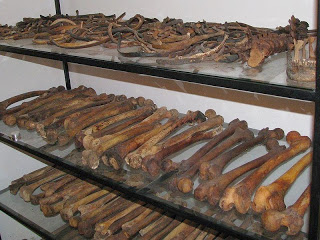
Motto: “It is hard for you to kick against the goads!” (Acts 9:5)
This is betrayal!
Father, how should we respond when the saints of the prisons are slandered?
How should one react? When you hear such statements, you cry out: “Enough! Stop right there, because my father died in Aiud prison, and there I also gave up my entire youth and childhood. I spent 12 to 14 years in prison. How can you speak like that against such sacrifice?” Then you notice that others step forward as well, reacting in the same way, encouraging one another and forming a core of resistance. If someone tells a person who wants to speak, “Keep quiet!”, you cannot accept it. Can something like this be tolerated? This is betrayal! From the very beginning, it is an act of renunciation, because if you do not speak up, who will? Here, in our country today, more and more of those who are still able to pass something on are disappearing, one by one. A few remain here and there, but they are very few.
Aiud is the greatest spiritual force of our time. Yes, but they ensure that it is increasingly erased, kept from coming to light. Father Augustin from Aiud (now Father Abbot Gavriil) told me that during the recent rains he discovered, in the ruins of the Yellow Ravie [Râpa Galbenă,] a grave containing a body with the skull split in two. Yes, they would even remove the brain when the victim was alive. Beside this body, he found two women, with their feet bound together with wire.
The horrors of the communist prisons
You see, these matters are extremely important to us, yet they are spoken about very little. They are often ignored. Only now, after years or even decades, do people come to uncover, verify, and study what happened there.
The greatest state secret is the very period we lived through. Imagine this: in this cell there were two or three people, while next door they were killing others – and you knew nothing. For instance, they walked in boots padded with felt so they could not be heard. Through the peepholes, they knew everything that was happening in every cell – how someone lay in bed, how the sick person lay, how a dead man lay. They knew it all. They knew how a prisoner was taken out of the cell, dragged down the stairs from the upper floor, and how his brains were splattered on the floor. And the Romanian language remains painfully faithful to these testimonies. Indeed, that is exactly how things were described.
The grace of the martyrs from the prisons
Even though many years have passed, they are still fearful of our dead – of those who, revived through the power of Christ, overturn their demonic works. Their grace burns them, just as Lucifer could not endure the light of the Archangel Michael. Their fear of honoring the martyrs of the prisons reveals their weakness and lack of power. To this day, they fear that these martyrs might rise again. “Do you have stone? Do you have rocks? Place them on their graves and guard them with strong sentinels, so their existence will never be spoken of again.”
Yet despite all their attempts to oppose the blood of the martyrs, they remain powerless before the truth. The injustices committed against our nation will return upon them and their families. The atrocities carried out by these agents of atheism, of Satan, weigh heavily on their consciences and on those of their families, to the point that they can be seen as morally tormented people.
Through the martyrs of the Church, however, Orthodoxy lives and will continue to live. The more they are slandered and condemned even after death, the more alive they will remain in the conscience of our people. They – the saints of the prisons – are canonized not only through the devotion of the Romanian people, but also through the veneration of other Orthodox.
The Saint and the Hero
The saint or the martyr is the true hero of a nation. His political affiliation does not matter to us. He is not a figure confined to Romania, Spain, or France; rather, he is a person who rises above all boundaries of values.
In prison, there was a devastating process of destruction – both spiritual and physical. Most of those arrested with short sentences died quickly, the poor souls. They passed away one after another. Meanwhile, others clung to life at any cost, struggling simply to remain alive. Solitude was the most powerful and cruel weapon of this destruction. Yet within this solitude, the Spirit of God began to work in the human soul. It descended ever deeper, giving birth to prayer, which became the salvation of all. It was like the continuous reading of the Psalter in a monastery, hour after hour. In the corner of the cell, Akathist Hymns and prayers of supplication were recited from memory, without books.
(Excerpt taken from the volumes “Father Justin Speaks to Us”)
Source: https://atitudini.com/magazin/ne-vorbeste-parintele-justin-vol-v/
Father George Calciu – a Confessor for Christ in Times of Great Persecution of the Faith
(23 November 1925 – †21 November 2006)
For it has been given to you not only to believe in Him, but also to suffer for Him.(cf. Philippians 1, 29)
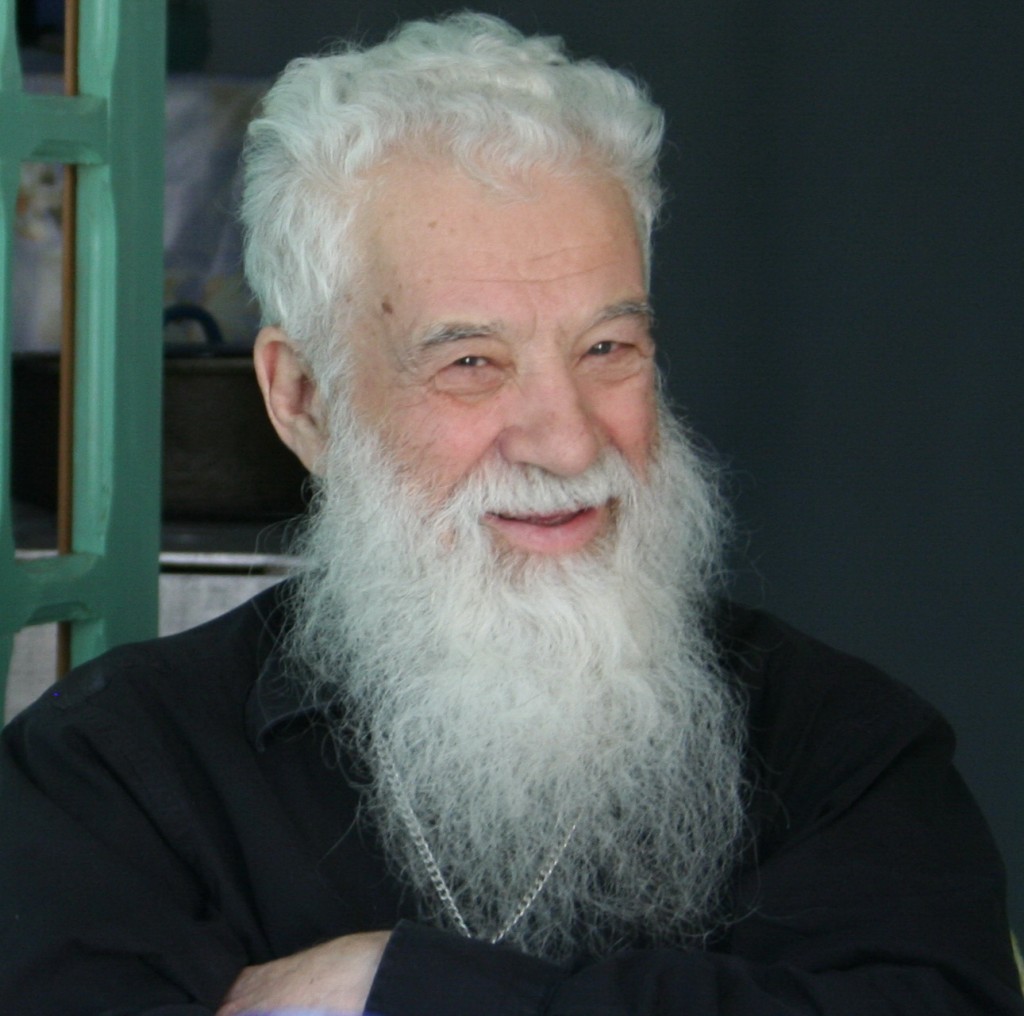
Motto: “Father Calciu Dumitreasa is a name that carries significant weight. It represents the profound responsibility of confessing Christ during times when some may have denied Him, while others have fervently proclaimed their faith. Meanwhile, there are those who have chosen to remain quietly in comfort, due to fear of the totalitarian system.” (Bishop Ignatie of Hus, Romania)
Father George Calciu was born on November 23, 1925, in Mahmudia-Tulcea, a small village situated in the heart of the Danube Delta. He was the eleventh child of a humble and devout peasant family, having spent his early years amid Romania’s post-war transformation and the consolidation of the communist regime. At the age of twenty-two, while studying medicine in his second year at the University of Bucharest, he was arrested during the mass detentions of May 15, 1948 – the largest in Romania’s history. Targeted for his anti-communist beliefs, he was imprisoned alongside thousands of students, professors, and intellectuals.
His detention lasted sixteen years, marked by extreme hardship and suffering. He endured the violent “re-education” experiments at Pitești, the brutal conditions of Jilava, and the ideological pressures of Aiud. Despite these ordeals, one moment of profound humanity defined his imprisonment: he voluntarily cut his own veins to donate blood plasma to a dying fellow inmate, an act remembered as a symbol of Christian love and self-sacrifice. Upon his release, he pursued higher education, graduating from both the Faculty of Philology and the Faculty of Theology. With the blessing of Patriarch Iustinian Marina, he was ordained as a priest and later appointed professor at the Theological Seminary in Bucharest.
In 1978, he gained national attention after delivering the famous sermons “Seven Words to the Youth,” in which he publicly protested the demolition of the Church of Enea by communist authorities. The following year, in 1979, he was arrested once again, separated from his wife and twelve-year-old child, and sentenced to ten years in prison. Due to international advocacy, including appeals from prominent figures such as Ronald Reagan, Margaret Thatcher, and Pope John Paul II, he was released after serving five years.
After his release in 1985, he was exiled to the United States, where he served as the parish priest of the Holy Cross Romanian Orthodox Church near Washington, D.C. There, he continued his pastoral mission, preaching about Christ’s love, repentance, and divine mercy with unwavering dedication.
On November 21, 2006, at the age of eighty-one – twenty-one of those years spent in communist prisons – he passed from the Church militant to the Church triumphant. He is remembered as a devoted servant of faith who transformed suffering into testimony, believing that his greatest treasure was his love and sacrifice for Christ and his neighbor.
Father George Calciu was the Romanian who endured the longest and most harrowing period of detention among all Romanians. It has been said and written about him, “Here is the man who was in hell!” – and this was not just anyone’s assertion, but that of Metropolitan Bartolomeu Anania, himself, another individual who lived through the horrors of imprisonment. (From the Preface of the book “The Life of Father Gheorghe Calciu,” Ed. Christiana, Bucharest, 2007).
Ioan Ianolide, in his book “Return to Christ – a Document for a New World,” dedicates an entire chapter to Father Calciu, written in the early 1980s, titled “Priest George Calciu or the Madness for Christ.” Ianolide, himself a martyr, cellmate, and friend of Valeriu Gafencu – “The Saint of the Prisons” – wrote, among other things, about Father Calciu: “Inner struggles that the ordinary man cannot grasp – and which are not described in the literature of the world, perhaps only in the apocalyptic depictions of hell – make those who have known ‘reeducation’ in Pitesti prison, tremble at the spiritual strength of the man who dared to confront once more the beast that had enslaved him. He emerged from hell and had the courage to face hell again” (note: Father Calciu’s first period of detention lasted from 1948 to 1964, totaling 16 years; the second period, during Nicolae Ceaușescu’s regime, was from 1979 to 1984, amounting to another 5 years, 5 months, and 20 days).
Father Calciu served over 21 years of detention, the longest among all political prisoners in Romania. He knew that torment awaited him, but he placed his hope in Christ (note: the detention from 1979-1984 was due to the proclamation of the seven ‘Words to the Youth’ during Lent in 1978, openly and fearlessly confessing Christ and His Gospel at a time when others returning from communist prisons no longer had the strength to do so).He received the living, divine, powerful Christ – and thus he was able to conquer the terror imprinted on his being and soul. The torment, pain, and horror penetrated his bones, mind, and soul through re-education, yet Priest Gheorghe Calciu tore them from himself, fully aware of the prospect of facing them again. While a man typically avoids repeating even minor suffering, he confronted the endless terror of hell once more, for in prison, terror takes on an endless expanse and abyssal depth. Christ had been martyred, and he had to confess Him.
May his memory be eternal.
Words of Wisdom
God came into the world to fill the human suffering with His presence.
Christ has so completely taken on all our weaknesses and afflictions that whoever suffers, Christ suffers with them; and whoever is afflicted with illness, Christ shares in that affliction.
There are various ways in which sin can infiltrate our souls. Our only protection against sin is to cry out: “Lord Jesus Christ, be merciful to me, a sinner!”
The role of the Church in future Romania, immersed in the apocalyptic whirlpool of technification, is to save souls from perdition, to teach people humility and love for God and their neighbors, to promote virtue and abstinence, to rediscover the original beauty of God’s creation behind the false beauty of the modern world, and to rise man from falsehood
You are in Christ’s Church – when you smile at a man in sorrow, when you help an elderly person walk with ease, when you give alms to the poor, visit the sick, when you say, “Lord, help me!”
You are in Christ’s Church – when you show kindness and forgiveness, when you refuse to be angry with your brother – even if he has wounded you or hurt your feelings – and when you say, “Lord, forgive him!”
You are in Christ’s Church – when you labor faithfully in your place and return home at day’s end weary yet smiling, carrying to your loved ones a gentle light filled with warmth and humanity; when you overcome evil with love.
The greatest miracle, surpassing eclipses and earthquakes – let’s say, as a punishment from God – is the transformation that occurs within the heart. Greater than any miracle is this act of conversion in the heart of sinner. Therefore, I urge you to engage in sincere prayer.
This represents the deepest and most profound introspection we undertake in our hearts: discovering God within us. Once we find Him dwelling inside us and turn toward Him with our whole heart and mind, we naturally reach a state of prayer – both for ourselves and for others..
To deepen one’s prayer life, one must begin by admitting their own sinfulness. It is crucial to examine one’s behavior and thoughts, becoming aware of how frequently they fall into sin every day and every hour.
The most sorrowful state of contemporary man is loneliness, a profound sense of isolation. Saint Cyprian says that: “Each individual falls in isolation.” Yet, we find salvation within community, in the fellowship of the Church! We support one another’s frailties and, and in doing so, we progress toward salvation. No one achieves salvation by oneself, neither the faithful, nor the clergyman, nor the monk.
We are all being saved in community, within the Church of Christ, and each one of us is responsible for one another. If someone is struggling, take on their burden and carry it for them! If you are struggling, don’t hesitate to ask someone to help carry your burden! In this way, united in prayer and good deeds, we will attain the glorious Resurrection of our Savior, to be with Him and witness the heavenly light.
As long as there exists an elderly woman in the Carpathian Mountains who kneels and touches the earth with her hand in prayer, signifying that I am dust and to dust I shall return, our nation will remain steadfast before God.
Understand that the tears shed for someone else’s pain are blessed tears. They cleanse your heart and soul. Never be ashamed of your tears! Weep for your own struggles, but refrain from shedding tears of anger, wrath, or curses. Shed tears of sorrow and love, for they purify your soul and draw you closer to Christ.
The Gospel revealed to us the Pharisee, who lacked a place of genuine confession and heartfelt connection, believing that he had led a good life. In reality, he did not have a true relationship with God. His heart was not moved but it functioned like a mechanism, instructing him: “Now do good! Now give alms! Now go to the temple! Now give tithes!”… He operated through a mechanism, rather than a living heart. In contrast, the tax collector had a living heart that at least wept! A heart that sheds tears is a heart that God cherishes.
I wish for you to keep praying without ceasing. I want you to realize that if there exists a protection that encompasses all of humanity or our nation, it is the power of prayer.
If you lack love, you cannot truly communicate. Without love, you are like a radio station, broadcasting for twenty hours a day, yet you fail to express your true self! Thus, you become a mere talking machine. Often, we act as talking machines. We do not truly communicate. However, when you have love, even if you only say three words, you have conveyed something meaningful to the other person.
Know that the intellect alone does not lead you to God. While reason serves as a useful support, guiding you to a certain point but once you reach that point, its support becomes ineffective. At that juncture, you must set aside reason and ascend with your soul towards God. From this point on, the intellect ceases to function, reason loses its relevance, and even religious practices – such as prostrations – become insufficient. From here on, you must transcend all these stages and approach God with an open heart and an enlightened mind.
The soul can blossom. Just as a young shoo grows from a tree or a branch you have broken, so does the soul.
I believe that the result of the Holy Spirit’s descent, or the act of speaking in tongues, in our present time, after Pentecost, is love.
 Christian Dogma
 Christian Martyrs
 Christian Orthodox Churches and Monasteries
 Christian Sermons and News
 Church's Teachings on Fasting
 Ecumenism – a Great Heresy
 Father George Calciu
 Life_a Sacred Gift form God
 Orthodox Saints and Church Fathers
 Spiritual Elders
 Daily Bible Readings
 Journey to Orthodoxy
 Listen to Ancient Faith Radio
 Orthodox Calendar of Feasts and Saints
 Orthodox Christian Mission Center
 Orthodox Institute
 OrthodoxChristianNetwork TV


Recent Comments