
You are currently browsing the category archive for the ‘Christian Orthodox Churches and Monasteries’ category.
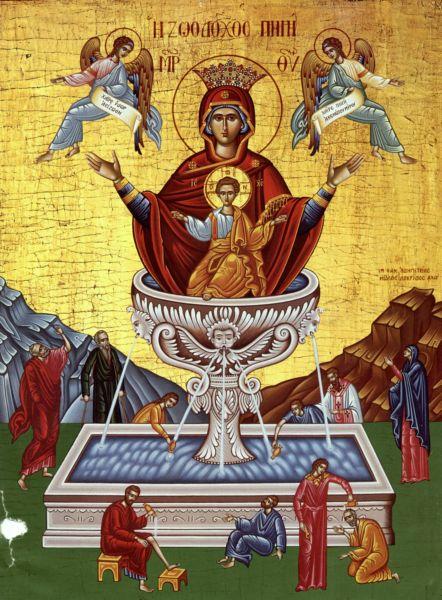
The Church of Our Most Pure Mother Theotokos from Blachernae is located in the city of Constantinople (today Istanbul capital of Turkey). This is the most famous and important church dedicated to Virgin Mary in the capital of Byzantium, after the Cathedral of Saint Sophia. Although today only few ruins are preserved from the initial church, the church from Blachernae remained alive in the consciousness of the Christian faithful that are always under the care of our most pure Mother.

The history of the Church of Blachernae, which had spread throughout the Christian world during the entire existence of the Byzantine Empire, shows us a very close connection between this church and the city of Blachernae.
The initial ancient church was built on the site of the Holy Spring fountain of the Virgin and later decorated by Empress Augusta Poulcheria between 450-453 and by her husband, Emperor Marcian (450-457). Because of Empress Augusta’ death, the church was left unfinished, but it was continued by her successors.

The church was completed by Emperor Leo the I (457-474), which added “Hagiasma ” (the fountain of Holy Water) and “Hagion Lousma” (the holy bath for the priests). Leo the I also built the chapel “Hagia Soros”, a special relicvar designed to keep inside “The Veil of the Mother of God” that was brought to Constantinople from Palestine, in the year 473.
Over the years, the Byzantine emperors showed their interest and devotion towards the church, making numerous donations in cash and ornaments.

Procopius writes that Emperor Justinian, during the reign of his uncle, Justin the I (518-527), expanded the initial building. Procopius’s description suggests a dome was added, supported by several columns shaped in semicircle. This renovation is mentioned also in two epigrams of the Palatinian Anthology.

Justin the II (565-578) added two lateral apses, thus reshaping the initial plan of the church. Several centuries later, Argyrus Romanus the III (1028-1034) decorated the apse with gold and silver.
Emperor Heraclius in one of his chronicle, mentioned that the church was served by 74 clergymen: 12 priests, 18 deacons, 6 diaconates, 8 sub-deacons, 20 reader, 4 singers and 6 goalies.

One of the most important event in the history of this church took place in 626, when the city of Constantinople was besieged by Avars while the Emperor Heraclius and his troops were gone to fight the Persians in Asia Minor. The Icon of the Theotokos = Blachernitissa was taken up in procession on the battlefield by the Emperor’s son and the Patriarch Sergius (610-638). The Avars stopped the battle, and this victory is placed all to the account and protection of the Holy Virgin Mary. The entire population of the town gathered at the Church of Blachernae, spending all night in vigil and singing praises to the Mother of God.
Similar to the great Cathedral of Saint Sophia, this church was the center of Orthodoxy in Constantinople and, every Friday an all-night vigil was observed here, in honor of the miracle-working icon of the Mother of God.
During the iconoclastic period and especially during the reign of Emperor Constantine the fifth, the church of Blachernae called also Panagia of Blachernae had its entire iconography – that conferred the church a lot of beauty – destroyed.

In a work (written in 808) about the life of St. Stephen the Young, it is recorded that the iconoclasts had replaced the icons of our Saviour, of the Virgin Mary and of the saints, with pagan representations of trees, birds and animals.
In 834, when the iconoclasts were put to shame, the “Sunday of Orthodoxy” was celebrated for the first time – also called by the Holy Father – the Sunday of Restoration of the cult of the Holy Icons. Thus, it’s very first celebration was held in the Church of Blachernae.
The Holy Tradition also notes that, in the year 944, the Image of Christ known as “Holy Veil”, and a letter of King Abgar, were brought from Edessa and placed with great reverence in the church chapel.

Many testimonies preserved until today about the Church of Blachernae, also mention that many Emperors of the Byzantine Empire would take with them during their campaign battles, a relic of the icon of the Mother of God. Also, many imperial seals bore the sign of this church – Blachernitissa.

Staring with 1204, the church was taken up by the Latins (Romans), until the time of the Emperor John the III – Doukas Vatatzes (1222-1254) of the Empire of Nicaea, when he recovered the church, along with many other monasteries of Constantinople. In 1347, Emperor John the VI (Cantacuzinos) was crowned in the Church of Blachernae, instead of being crowned in the Cathedral of Aghia Sophia, as it was customary.
After a fire (in 1070) had destroyed the church, it was rebuilt by the Emperors Romanus IV Diogenes (1067-1071) and Michael VII Doukas (1071-1078).
However, in 1348, the Genoese pirates invasion had caused even more damage to the church


After the conquering and the Fall of Constantinople, the beautiful church of Blachernae was totally destroyed and only the Holy Spring of the Virgin was left. This place remained in the possession of the Turks until 1867, when it was given to the Greeks, who built a little church – Hagiasma in the place of the ancient church. The Ecumenical Patriarchate undertook great efforts to reconstruct the initial church and make it look as we know it today. In this little church, the four scenes painted by Eirenarchos Covas in 1964 on the wall above the fountain, remember us the great battles the Church of Blachernae undergone throughout history.

The icon of the Virgin Mary: “The Intercessor “
The disappearance of the old Icon of Our Lady painted on wood and covered with gold and silver, is believed that it took place during the iconoclastic period. According to the tradition, the icon was found later hidden behind a wall, in the year 1030, when Emperor Romanus the III: Argyrus renovated the church.


This icon stands in close connection with the miracle of the Mother of God committed when often taken out in procession, as shown in the writings of Anna Komnene.
In the year 911, Constantinople was surrounded by enemies and the people gathered in the Church of Blachernae asking our blessed Mother for help. The church was decorated for its usual Friday night vigil. Saint Andrew the “Fool for Christ” was there, along with his disciple, Epiphany.
Around 4.00 AM that morning, St. Andrew and Epiphanus saw a vision of the Blessed Virgin Mary, who passed through the doors of the church, accompanied by St. John the Baptist, Saint John the Theologian, and many angelic hosts.
The Holy Virgin stopped in the middle of the church under the central chandelier, knelt and began to pray with tears to Her Son. Then she entered the Holy Shrine and prayed again. Then she uncovered her head and placed her precious veil over the whole Church of Blachernae, while she was raising up high (into Heaven). This event is honored by the Orthodox church on October 1.
Through the prayers of our most pure Mother Theotokos, Lord Jesus Christ have mercy on us. Amen!
Reading from the Synaxarion (July 2nd):
During the reign of Leo the Great (457-474) two patricians and brethren on a pilgrimage to the Holy Land lodged with an old widow, a Christian of Jewish descent. Seeing the many miracles wrought at a small shrine in her house, they pressed her until she revealed to them that she had raiment of the most holy Theotokos kept in a small coffer. Our Lady had had two virgins in her lifetime who attended upon her; before her holy dormition, she gave each of them one of her divine garments as a blessing. This old widow was of the family of one of those two virgins, and it had come through the generations into her hands.
With the permission of God, that this holy relic might be had for the profit of many, the two men took the garment by stealth and brought it to Blachernae near Constantinople, and building a church in honor of the Apostles Peter and Mark, they secretly enshrined the garment therein. But here again, because of the multitude of miracles that were worked, it became known to the Emperor Leo, and a magnificent church was built, as some say, by that same Leo, but according to others, by his predecessors Marcian and Pulcheria, and enlarged by Leo when the holy raiment was found. The Emperor Justin the Younger completed the church, which the Emperor Romanus IV Diogenes raised up immediately again after it had burned in 1070. It burned again in 1434, and from that time it remained a small house of prayer together with the renowned holy spring.
After the seventh century, the name Blachernae was given to other churches and monasteries by their pious founders out of reverence for this famous church in Constantinople. In this church John Catacuzene was crowned in 1345; also, the Council against Acindynus, the follower of Barlaam, was convoked here (see the Second Sunday of the Great Fast).
The Church of the Holy Sepulchre – the Church of the Resurrection

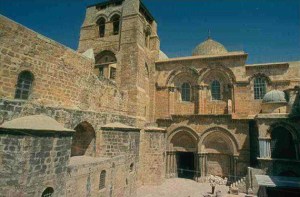
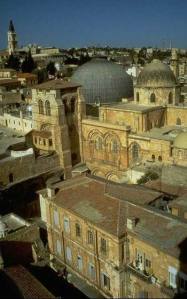
The church of the Holy Sepulchre is also called by the Orthodox Christians, the Church of the Resurrection, because not death but resurrection is the foundation of Christian victory. The Holy Sepulcher Church is a settlement that the Crusaders had built in the eleventh century in place of the ancient churche built by Empress and Saint Helena in the fourth century in Jerusalem. The church bares the most precious vestiges for Christians: Mount Calvary and the Tomb of our Lord and Saviour Jesus Christ. Here, it is also found the cave where the Holy Cross – that our Lord was crucified on – was discovered by Empress Helena (the mother of St Constantine the Great).
The church of the Holy Sepulcher was built on the spot where Jesus Christ was crucified and buried in a tomb carved in stone as the Holy Scripture testifies. It is also called the church of the Resurrection for here our Lord has Risen. ..

Holy Sepulchre Church – brief history
Immediately after the crucifixion and resurrection of our Savior, the places of Golgotha and of the Holy Sepulchre (the Holy Tomb) were not only revered as sacred by the Apostles but also by all Christians. After defeating the last Jewish revolt, the Roman Emperor Adrian, who did neither tolerated the Jews nor the Christians, commended that all Christian and Jewish buildings be desecrated and turned into pagan edifices. In the place of Golgotha, a pagan temple was built insead.
In the early fourth century, the pagan temple was destroyed and in its place a vast complex of buildings was built in memory of the last moments of Jesus earthly life.

After the First Ecumenical Council of Nicaea (in 325), the Emperor Constantine the Great commanded Bishop Macarius of Jerusalem to destroy the pagan temple dedicated to pagan godess Venus and Jupiter, and to build the most beautiful basilica in the world using marble and other fine materials.
The architects that designed this basilica were Zenobiu and Eustatiu. In 335, assembled in the local Synod of Tyre, the bishops consecrated the new basilica, which will bear the name of the Church of the Holy Sepulchre. Starting with the fourth and until the seventh century, the Holy Sepulchre church knows its time of glory becoming a place of pilgrimage for many Christians. However, its dark period begins with the seventh century.

In the year 614, during the Persian invasion of Jerusalem, the Holy Sepulchre church was burned and the Holy Cross of our Saviour stolen. The Emperor Heraclius recovered it, and the patriarch of Jerusalem has rebuilt its damaged parts. But the dark age continued as many other invaders repeatedly brought not only damage to the churchbut also to Christians, many faithful been killed by the most dreadful tortures.
The Arab conquest in 632 ended the Byzantine influence in this region. However the Caliph Omar had instituted tolerance and the church was preserved. Later, in the ninth century Caliph Hakim had ordered the destruction of the church from its foundation. In a chronicle of John the Antioch, it is mentioned how the entire church was destroyed, except for those parts that were more difficult to move, such as of Anastasis rotunda, which exist up to today.
In the early eleventh century the Christian complex existant here is completely destroyed by the order of an egyptian caliph, but the Byzantine emperors had rebuilt it shortly thereafter. In those days of the Christian Crusades, other chapels and churches united under the same roof had been added to the initial building. The Crusaders started to renovate the church and added a bell. These renovations are completed during the reign of Queen Melisende in the year 1149. This building was the inspiration for many Christian churches in Europe.

The Holy Sepulchre is shared by the Orthodox, Coptic and Catholic churches. It is an edifice of red granite having a large number of candlesticks.
To avoid religions discussions, a functioning status was carried out to define the rights of each Christian denomination in the Holy Land. The Orthodox have the area in front of the tomb of our Lord, that is surrounded by walls and constitutes the place of their worship. Here the Orthodox Patriarch officiates the liturgy on Holy and Great Saturday when the miracle of the Holy Fire occurs.

The white marble columns (see photo above) of the left entrance are cracked at the bottom. The Holy tradition tells us that one year, the Orthodox Christians not having money to pay the taxes imposed by the Turks in order to enter the Holy Sepulchre, remained outside of the church. Then, miraculously, the Divine (Holy) Fire that came each year on Holy and Great Saturday at the tomb of our Lord during Orthodox Liturgy, hit the outside columns instead where Orthodox Christians were waiting, and the miracle took place outside of the church. These visible signs remained until today as a testimony of this great miracle of Orthodox Christianity.

The Holy Sepulcher church preserves more than few precious places of worship; one of which is the stone called „the Holy Unction” – a slab of red stone that protects the place where Joseph of Arimathea and Nicodemus, had placed our Lord’s body after taking it down from the cross – as the Evangelist Matthew relates (cf. Mt. 28, 57-60). A mosaic in front of it portrays this frightening event.
Around this marble, covered with ointment and rose petals, the Orthodox faithful chant the vespers of lamentation for our Lord’s burial on Great and Holy Friday.

A chapel with two altars is found near this place, to the east side of the church. The chapel is built on the rock of Mount Calvary, the place where Jesus Christ was crucified. On the right side of the first altar, a cross marks the spot where Jesus was stripped of his clothes and nailed to the cross. In the middle of the main altar, called the “Holy Golgotha” was the place of the crucifixion of our Lord. Nearby there is an icon of the Blessed Virgin Mary, whose heart was pierced like a sword seeing her beloved Son crucified among thieves (cf. Lamentations for Great and Holy Friday).

Nearby, another chapel was built in the place where – according to the tradition – our Saviour appeared the Holy Virgin Mary after His resurrection. This chapel is thought to be built over the place in the pretorium when the Roman soldiers beat and abused Jesus. Here the tradition tells us that the Patriarch of Jerusalem of the time and the Holy Empress Helena had touched a dead man by the precious and life-giving Cross of our Lord, and the dead rose to life.
The following chapel is the chapel of the “Crown of thorns” found close to the crucifixion site. Here is where our Lord was crowned with thorns by the Roman soldiers. The remains of the pillar – believed to be part of the column where Jesus sat while crowned with thorns in the pretorium – is paced in a marble surrounded by glass. On the Holy and Great Friday before Easter, many believers place their ears on this holy piece of marble, and can hear sounds of Jesus suffering, when His hands and feet was beat with hammer and nailed to the cross.


During the time of Constantine the Great, the Holy Empress Helena (his mother) came to Jerusalem and been informed by locals where to dig up, had found three crosses. The Holy tradition tells us that no one knew which of the three crosses was the one our Lord was crucified on, so they took all three crosses and went to the Holy Sepulchre. A convoy carrying a dead person was passing by. The Patriarch and Empress Helena ordered that the dead may be touched with all three crosses they found. When the dead was touched by the cross on which Jesus was crucified, he rose from death.

The Holy Tomb of our Lord is found on the west side of the Holy Sepulcher, in the middle of the church, in a circular place sustained by tall arches.

The Angel Chapel is the first room of the Holy Tomb.

On entering the Holy Tomb, an icon of the resurrection of our Lord carries the inscription: “Seeing the resurrection of Christ, worship HIM all you people! All faithful to worship you the life giving tomb – as you buried Christ God and in you He was resurrected “…” Those of you who deny the resurrection of the bodies, by entering the tomb of Christ, know that He died and rose again, to entrust us of our resurrection at The End.”

Near the Holy Tomb, another church was built – called the Church of the Resurrection. This church is located in the center of the entire complex and belongs exclusively to the Orthodox Church. This is the cathedral of the Holy Sepulchre. Here the Orthodox faithful officiate daily Liturgy with the participation of a great assembly of priests and bishops.

Under the same rotunda of the Holy Sepulchre other Christian shrines are also found.
The altar of “Sharing of Thy garments” is found near the “Golgotha. In this place the Roman soldiers threw dices for Jesus’ clothes: (cf. John 19, 23-24)


The Church of the Resurrection of our Lord Jesus Christ is the holiest place on earth. The greatest wonders of Christianity occurred here and they continue today. This Holy Place deepens the faith of many Christians and converts others that perhaps came here as simple tourists and returned home no longer ordinary men but authentic Christians.
Please also see a 3D view at: http://www.360tr.com/kudus/kiyamet_eng/index.html
„Whoever desires to come after Me, let him deny himself, and takeup his cross, and follow me” (Mark 8.34)
Fr. Evans (audio): feasts-of-the-savior-exaltation-of-the-cross_2008-09-27
Other sermon on the Feast of the Elevation of the Holy Cross:
http://ancientfaith.com/podcasts/thearena/holy_cross_sept2010
The Holy Cross is recognized as one of the most important symbols of Christianity. In the past, Latins used to define the cross by the word “crux” and Greeks by the word “Stavros”, designating first the vertical pole – then the horizontal – on which those sentenced to death were crucified. This instrument of torture was consecrated by the precious blood of our Lord and Savior Jesus Christ when He was crucified, thus becoming for the Christian man a holy and life-giving object. For the Orthodox Christian, the Holy Cross is both a symbol of human redemption and an object of worship. By this, we see and honor at once: the sacrifice of the Son of God and the wooden cross that our Lord was crucified on – as the Altar of His sacrifice. The sign of the cross is thus the sign of the “Son of Man” and of the Christian man. In making the sign of the cross over our body as a seal, we show our participation in Christ’s sanctifying sacrifice.

The Cross and its ancient origin
The sign of the cross was used as a sacred symbol in one form or another by many pagan peoples, long before the emergence of Christianity. In Paganism this symbol had mythical significance. According to the researchers, the cross had originated among the ancient Babylonians of Chaldea, and was used as a symbol of the pagan god Tammuz. Since the Bronze Era, the sign of the cross was used by many tribes in Europe as a symbol of consecration for the newborns. Also, the symbol of the cross was used among Aryan civilization as a representation of mystical light of the pagan gods or sacred fire and even the sun. The ancient scientists believed that the middle of the universe was where the earth meets the sky, and the four arms of the cross indicated the four cardinal points.
The Cross in the Old and the New Testament
The Holy Scripture and Holy Tradition give us evidence about the meaning of the Holy Cross, before and after the crucifixion of our Lord, the sign of the Holy Cross becoming a bookmark for the believing Christian.
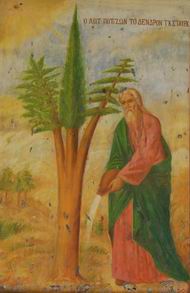
The Holy Cross is represented in the Old Testament as the “tree of life” rising from the earth, the commandment of God in the midst of earthly paradise, together with the “tree of knowledge for good and evil” (cf. Genesis 2, 9) . “The Tree of Life” is the metaphorical name of the Holy Cross, a name that appears starting even with the first pages of the Holy Scripture. The cross is also portrayed in books of divine services, as well as in paintings.
Moses passed through the Red Sea the people of Israel by the power of the divine cross, freeing them from the Egyptian slavery. He raised the rod, and stretched out his hand across the sea, than the sea split in two as the Jews passed to the dry land. When the Egyptians entered the sea, Moses, by God’s commandment, stretched his hand with the rod again, and made the sign the opposite way. The waters closed together, and the Egyptians were drowned at sea (see Exodus 14, 21-27).

Moreover, the patriarchal blessing, that Jacob gave with his hands to the two sons of Joseph, Ephraim and Manasseh, was a blessing with his hands crossed, prefiguring the Holy Cross – 1,500 years before Christ.
The New Testament shows, more explicitly than the Old Testament, the divine teachings about the importance of the Holy Cross.
The Holy Cross is the real and historical divine altar of Christianity; the altar on which Christ was “once sacrificed to raise many sins” (Hebrew 9, 28). The Cross is “the power of God” (I Cor. 1, 18) for those who desire to be saved, that is for those who believe. In the divine power of the Cross, the Apostle Paul rejoiced despite his human sorrows and distress (cf. Gal. 6, 14). The Cross is “the divine seal” on the forehead of the faithful, seal by which they escape visible and invisible enemies and plagues.

In the New Testament, the Cross is also the sign of the Son of Man at His second coming. Christ himself told his disciples – wanting to know when the second coming and End of the world will be (cf. Matthew 24, 3) – that, among many signs that will appear in the sky, there will be one “sign of the Son of Man” (Matthew 23, 30), – the Holy Cross.

The Cross in the Christian worship
Archaeological discoveries from Palestine have shown that the sign of the Cross has been used by the very first Christian community in Jerusalem. Among the first works – where the cross appears as a Christian symbol with mystical meanings related to human salvation brought by Christ’s crucifixion – is that of Minucius Felix: „Octavius”, written at the end of the second century.

Then the cross appears as a Christian symbol in the writings of St. Clement of Alexandria, when he speaks of the “sign of God”, which was foreshadowed by the letter number 318 from Genesis 14:14, as explained in the Epistle of Barnabas. For the number 300, the letter “T” has been used in the Hebrew alphabet, the similarity with the sign of the cross been obvious. For the letter “18” – the first two letters of the name “Jesus Christ” were used which shows the connection between Christ and the Cross.

Starting with the IV-th century AD, the veneration of the Holy Cross was generalized, manifesting itself publicly and officially entering the divine worship of the Church. To this have contributed the apparition in the sky of the „wonder sign of the cross”, by which Constantine the Great was encouraged in the battle with Maxentiu. After his victory, Constantin the Great had placed it as an emblem on flags and other official documents and coins; and forbidden nailing to the cross those condemned to death.

Another miracle was the discovery the Cross of our Savior (in the year 326) in the place of His crucifixion.
St. Helena, the mother of Emperor Constantine the Great, built a large church on the site of our Lord’ tomb (the Holy Sepulcher church) and another church at the site of His crucifixion (Basilica of the Holy Cross) – consecrated on September 13, 335 – when the veneration of the Holy Cross entered the Christian worship.
Starting with 431 AD, the crosses have been placed in churches and plants, but the use of the crosses on domes did not appear until the year 586.
The Church’s teaching on the veneration of Holy Cross was formulated by the VII Ecumenical council of Nicea (787) and completed by the local council of Constantinople (869), when it was proclaimed that the Holy icons, the Holy Gospel and the Holy Cross should be equally venerated.
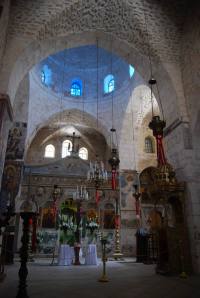
In the Orthodox Church, the cult of the Holy Cross is manifested in celebrations dedicated to her. Of these we mention: the Elevation of the Holy Cross (the Day of the Cross or Carstov) on September 14, Sunday of the Cross (Third Sunday of the Great Lent), Procession with the Holy Cross (August 1) and the Apparition of the sign of the Holy Cross to Emperor Constantine the Great (May 7)
The Eastern tradition celebrates the Holy Cross in many prayers and hymns made in her honor and praise, being a divine sign, inexhaustible in its meaning and a source of vital power.
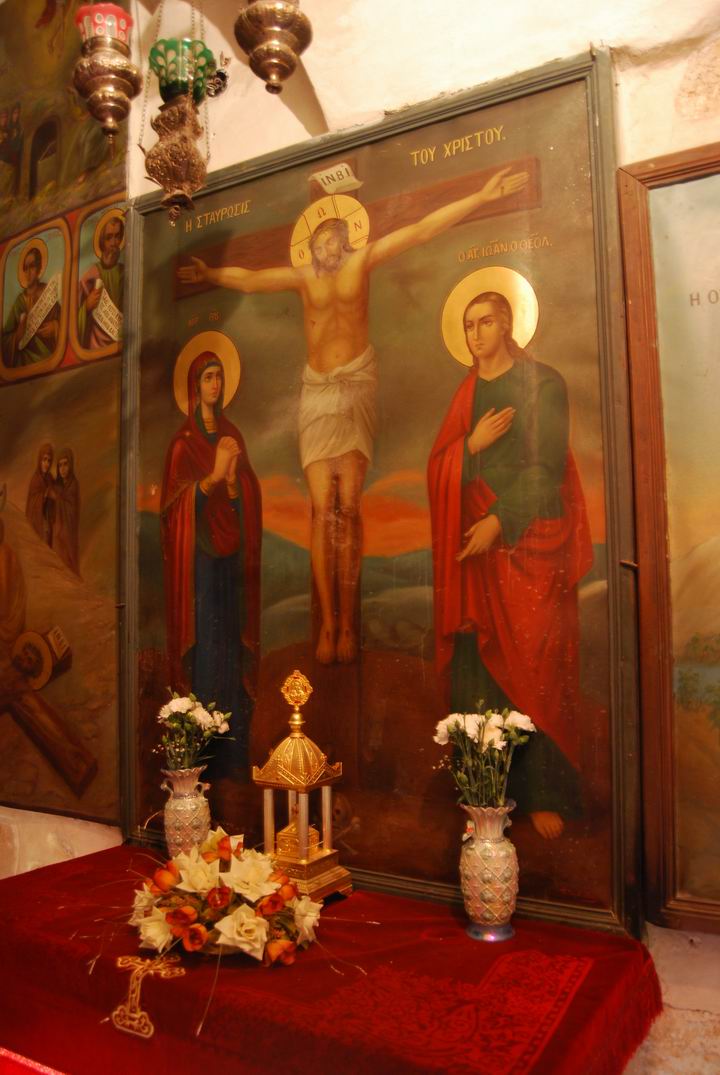
Please also see an older post with Metropolitan Kallistos: “Salvation in Christ, The Meaning of the Cross”
Motto: “The line of demarcation separating good and evil runs through the middle of every human heart”
(Alexander Solzenitsyn in The Gulag Archipelago)
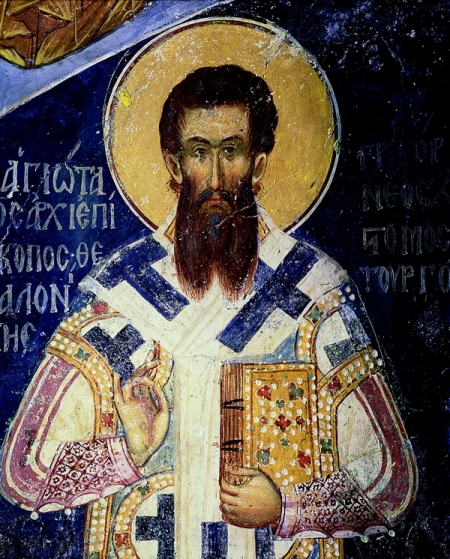
Saint Gregory Palamas, Archbishop of Thessalonica
A link with:
The life of St. Gregory (video) of the Monastery of Pantokrator website
This divine Father, who was from Asia Minor, was from childhood reared in the royal court of Constantinople, where he was instructed in both religious and secular wisdom. Later, while still a youth, he left the imperial court and struggled in asceticism on Mount Athos, and in the Skete at Beroea. He spent some time in Thessalonica being treated for an illness that came from his harsh manner of life. He was present in Constantinople at the Council that was con¬vened in 1341 against Barlaam of Calabria, and at the Council of 1347 against Acindynus, who was of like mind with Barlaam; Barlaam and Acindynus claimed that the grace of God is created. At both these Councils, the Saint contended courageously for the true dogmas of the Church of Christ, teaching in particular that divine grace is not created, but is the uncreated energies of God which are poured forth throughout creation: otherwise it would be impossi¬ble, if grace were created, for man to have genuine communion with the uncreated God. In 1347 he was appointed Metropolitan of Thessalonica. He tended his flock in an apostolic man¬ner for some twelve years, and wrote many books and treatises on the most exalted doctrines of our Faith; and having lived for a total of sixty-three years, he reposed in the Lord in 1359. His holy relics are kept in the Cathedral of Thessalonica. A full service was composed for his feast day by the Patriarch Philotheus in 1368, when it was, established that his feast be cele¬brated on this day. Since works without right faith avail nothing, we set Orthodoxy of faith as the foundation of all that we accomplish during the Fast, by celebrating the Triumph of Ortho¬doxy the Sunday before, and the great defender of the teachings of the holy Fathers today. His Feast day is celebrated November 27 / 14 and on the Second Sunday of Great Lent.
Excerpt from the book: “Lives of the Three Pillars of Orthodoxy: Saint Gregory Palamas, Archbishop of Thessalonica; Saint Photius the Great, Patriarch of Constantinople and Saint Mark Eugenicus, Metropolitan of Ephesus”

Troparia for Saint Gregory Palamas:
O light of Orthodoxy, pillar and teacher of the Church,
ideal of monastics and invincible champion theologian,
O wonder-working Gregory, boast of Thessalonica and herald of grace,
Forever pray to the Lord that our souls be saved.
Please also see: A Sermon on the Sunday of St. Gregory Palamas By Archbishop Chrysostomos of Etna
Fr. Bassam A. Nassif: St. Gregory – a Light to the World
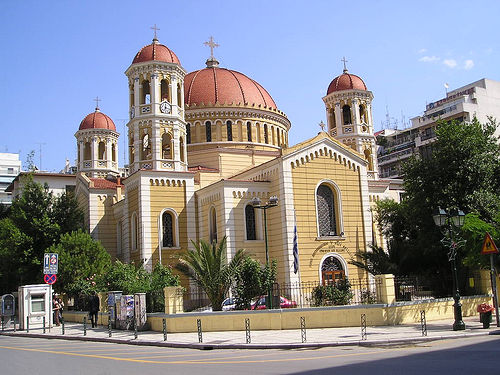
On the second Sunday of Great Lent, there is a great feast in the blessed city of Thessalonika, Greece. It is the feast of St. Gregory Palamas. On this day, the holy relics of the saint are taken from the Church of St. Gregory in a procession throughout the city, escorted by bishops, priests, sailors, policemen, and thousands of faithful. One wonders why his earthly remains are still held in such great veneration. How could his bones remain incorruptible more than six hundred years after his death? Indeed, St. Gregory’s life clearly explains these wondrous facts. It illustrates the inspired words of the apostles that our bodies are temples of the Holy Spirit (see 1 Corinthians 6:19) and that we are “partakers of the divine nature” (2 Peter 1:4).
A Childhood Passion for the Eternal
St. Gregory Palamas was born in the year 1296. He grew up in Constantinople (now Istanbul, Turkey) in a critical time of political and religious unrest. Constantinople was slowly recovering from the devastating invasion of the Crusades. It was a city under attack from all sides. From the west, it was infiltrated by Western philosophies of rationalism and scholasticism and by many attempts at Latinization. From the east, it was threatened by Muslim Turkish military invaders. The peace and faith of its citizens were at stake.
Gregory’s family was wealthy. His father was a member of the senate. Upon his father’s sudden death, Byzantine Emperor Andronikos II Paleologos (1282–1328), who was a close friend of the family, gave it his full financial support. He especially admired Gregory for his fine abilities and talents, hoping that the brilliant young man would one day become a fine assistant. However, instead of accepting a high office in the secular world, Gregory sought “that good part, which will not be taken away” from him (Luke 10:42).
Upon finishing his studies in Greek philosophy, rhetoric, poetry, and grammar, Gregory, at only twenty or twenty-two years of age, followed a burning passion in his heart. Like a lover who strives to stay alone forever with his loved one, Gregory was thirsty for this living water (see Revelation 22:17). Therefore, no created thing could separate him from the love of God (see Romans 8:39). He simply withdrew to Mount Athos, an already established community of monasticism. He first stayed at the Vatopedi Monastery, and then moved to the Great Lavra.
Gregory’s departure was not a surprise to the rest of his family. Many priests and monks, friends of the family, frequently visited the family home. The parents were careful to pass on to their children the “pearl of great price” (Matthew 13:46). Great wealth and high education were not a hindrance, but an excellent tool in their pursuit of salvation. As a result of their way of life and belief, Gregory’s mother, two brothers, and two sisters soon distributed all their earthly possessions to the poor and entered different monasteries.
On St Gregory Palamas and the Divine Energies
Living the Spiritual Experience of the Church
In Athos, the novice Gregory took as his spiritual guide St. Nicodemos of Vatopedi Monastery. This holy man of prayer guided Gregory on the path of ascetic labor: prayers, vigils, fasting, continuous repentance, and monastic obedience. The young novice Gregory was especially attached to the prayer of the heart, also known as the Jesus Prayer: “Lord Jesus Christ, Son of God, have mercy on me, a sinner” (see Luke 18:38).
The experienced practice of the Jesus Prayer, requiring solitude and silence combined with physical exercises and breathing methods, is called “hesychasm” (from the Greek hesychos, meaning inner stillness, peace, or silence). Those practicing it are called “hesychasts.” Inner silence of this kind makes us capable of listening to the whispers of the divine within us. “The kingdom of God is within you” (Luke 17:21). Therefore, the Jesus Prayer is the prayer of the whole person, involving the human body, mind, soul, and heart.
The hesychasts spoke and wrote about their unique experience. They taught people to pray without ceasing, as the Apostle Paul commands all Christians to do (1 Thessalonians 5:17). They explained that in prayer, man is filled from within with the eternal glory, with the divine light beheld at the Transfiguration of Christ on Mount Tabor. The hesychast Gregory explains:
For, on the day of the Transfiguration, that Body, source of the light of grace, was not yet united with our bodies; it illuminated from outside those who worthily approached it, and sent the illumination into the soul by the intermediary of the physical eyes; but now, since it is mingled with us and exists in us, it illuminates the soul from within. (Triads I. 3.38)
The Jesus Prayer is not a mantra, as in Eastern religions, and it cannot be taken as such. The prayer’s call for “mercy” involves inner repentance and change. It is also a prayer practiced within the sacramental life of the Church, a prayer combined with Holy Communion, confession, reading the Word of God, fasting, loving one’s neighbor, and so forth. Finally, it is not a prayer using “vain repetitions” or babble, but a prayer recited again and again, in persistence (Luke 18:1), from the inner heart of man reaching the divine heights of glory, confessing Christ as the Lord and Savior, in sincerity, humility, and faith.
For that prayer (the Jesus Prayer) is true and perfect. It fills the soul with Divine grace and spiritual gifts. As chrism perfumes the jar the more strongly the tighter it is closed, so prayer, the more fast it is imprisoned in the heart, abounds the more in Divine grace. . . . By this prayer the dew of the Holy Spirit is brought down upon the heart, as Elijah brought down rain on Mount Carmel. This mental prayer reaches to the very throne of God and is preserved in golden vials. . . . This mental prayer is the light which illumines man’s soul and inflames his heart with the fire of love of God. It is the chain linking God with man and man with God. (Palamas, “Homily on how all Christians in general must pray without ceasing,” in E. Kadloubovsky and G. E. H. Palmer, Early Fathers of the Philokalia, London: Faber and Faber, 1981, pp. 412–415)
See also: Knowledge of God according to St. Gregory Palamas
Such prayer was practiced from the early Christian period. The hesychasts were drawn by God’s unconditional graceful love (Romans 5:15) to fill a certain human need around them. Many hesychasts abandoned their solitude to serve their brothers, “since he who loves God must love his brother also” (1 John 4:21). Some cared for the sick in hospitals, like St. Basil the Great in Caesarea; others helped the poor, like St. John the Almsgiver in Alexandria; and yet others welcomed the faithful for confession. Nevertheless, they did not abandon the Jesus Prayer and their inner silence. In this sense, all Christians are called to follow this hesychast way leading to salvation.
Let no one think, my brother Christians, that it is the duty only of priests and monks to pray without ceasing, and not of laymen. No, no; it is the duty of all of us Christians to remain always in prayer . . . every Christian in general should strive to pray always, and to pray without ceasing . . . this very name of our Lord Jesus Christ, constantly invoked by you, will help you to overcome all difficulties, and in the course of time you will become used to this practice and will taste how sweet is the name of the Lord. . . . For when we sit down to work with our hands, when we walk, when we eat, when we drink we can always pray mentally and practice this mental prayer—the true prayer pleasing to God. (“Homily on how all Christians in general must pray without ceasing”)
In addition to his spiritual practice and daily scriptural readings, St. Gregory studied the works of the great Fathers, theologians, and ascetics of the Church. Just as a scientist builds on the evidence and data provided to him by his predecessors, Gregory made a fascinating synthesis of the scriptural and patristic teaching on the prayer of the heart, combined with his personal experience.
Although the monk Gregory in his youth had diligently studied Greek philosophy, he was not influenced by its views on matter. Ancient Greek philosophy believes that the body imprisons the soul, and thus it detests matter. Christians respect the body, since Christ made the flesh a source of sanctification, and matter (water, oil, etc.) a channel of divine grace. In his writings, St. Gregory affirmed that man, united in body and soul, is sanctified by Jesus Christ, who took a human body at the Incarnation. “When God is said to have made man according to His image,” wrote St. Gregory, “the word man means neither the soul by itself nor the body by itself, but the two together.” In another place, he added:
Also see: Two brilliant and lengthy articles on the “Palamite Controversy” and the big differences between the Orthodox and Latin understanding of the spiritual life
Thus the Word of God took up His dwelling in the Theotokos in an inexpressible manner and proceeded from her, bearing flesh. He appeared upon the earth and lived among men, deifying our nature and granting us, after the words of the divine Apostle, “things which angels desire to look into” (1 Peter 1:12). (A Homily on the Dormition of the Theotokos and Ever-Virgin Mary)
Father Gregory, Teacher
His unquenched thirst for God’s sweetness experienced in prayer moved the righteous Gregory to live as a hermit in a cell outside the monastery. In the year 1326, the threat of Turkish invasions forced him, along with his Athonite brothers, to retreat to Thessalonika. There he was ordained to the holy priesthood.
As a priest, Gregory did not abandon his spiritual labor and hesychasm. He spent most of the week alone in prayer. On the weekends, he celebrated divine services and preached sermons. He cared for the youth, calling them to discuss religious issues with him. Father Gregory was not concerned about abstract problems of philosophy, but about Christian faith experienced in prayer. He wanted to preach solely about problems of Christian existence, which are more attractive and meaningful to the young.
Soon, many of his spiritual sons expressed their desire to live in a monastic setting. So in the serene area of Vereia, near Thessalonika, he established a small community of monks, which he guided for five years. In 1331 the saint withdrew to Mt. Athos and lived in solitude at the Skete of St. Sabbas. In 1333 he was appointed abbot of the Esphigmenou Monastery in the northern part of the Holy Mountain. In 1336 he returned to the Skete of St. Sabbas, where he devoted himself to theological writing, continuing with this work until the end of his life.
But amidst all this, in the 1330s events took place in the life of the Eastern Church that placed St. Gregory among the most prominent teachers of Orthodox spirituality.
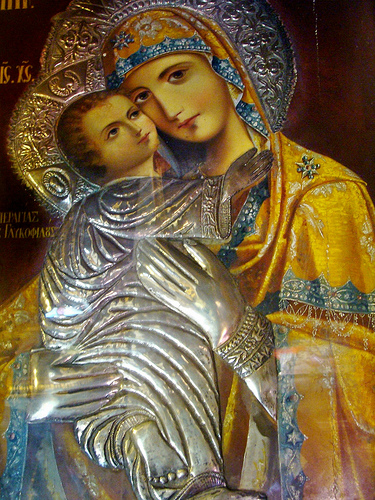
The Challenge of Rationalism
Around the year 1330, a certain monk Barlaam arrived in Constantinople from Calabria, Italy. He was a famous scholar, a skilled orator, and an acclaimed Christian teacher. Barlaam visited Mt. Athos and became acquainted with hesychasm.
Barlaam valued education and learning much more than contemplative prayer. Therefore, he believed the monks on Mount Athos were wasting their time in contemplative prayer when they should be studying. He ridiculed the ascetic labor and life of the monks, their methods of prayer, and their teachings about the uncreated light experienced by the hesychasts. Countering the traditional stance of the Church that “the theologian is the one who prays,” Barlaam asked: “How can an intimate communion of man with the Divine be achievable through prayer, since the Divine is transcendent and ‘dwelling in unapproachable light’ (1 Timothy 5:16)? No one can apprehend the essential being of God!” Barlaam was convinced that God can be reached only through philosophical, mental knowledge—in other words, through rationalism.
The words of Barlaam were not merely a challenge to a few monks. They defied the experience of the Church as a whole. The West, with its rationalistic tendencies, has associated the image of God with man’s intellect. Barlaam’s mind was full of rational arguments, but his heart was cold. Certainly, life with God is not just information, but also experience. Our living God cannot be conceived and described only by study, but must be spoken about from experience. “Did not our heart burn within us while He talked with us on the road, and while He opened the Scriptures to us?” (Luke 24:32).
Journeying from Mt. Athos to Thessalonika and Constantinople, Barlaam clashed with the monks, refusing to test their way of vigils, prayer, and fasting, or to accept their spiritual experience. Unfortunately, many monks were swayed by his arguments and stood by his side. Deceived by considering the living faith as mere rational knowledge, Barlaam waged a war against the ascetics.
At the request of the Athonite monks, St. Gregory countered at first with verbal admonitions. But seeing the futility of such efforts, he put his theological arguments in writing. Thus appeared the Triads in Defense of the Holy Hesychasts in the year 1338.
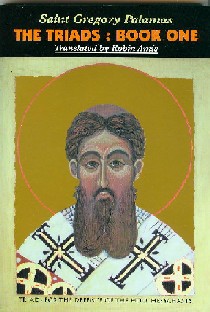
The Presence of God in Prayer
In his Triads, Palamas interpreted the experience of the Church by presenting logical arguments, based on the Scripture and the writings of the Fathers. Addressing the question of how it is possible for humans to have knowledge of a transcendent and unknowable God, he drew a distinction between knowing God in His essence, or nature, and knowing God in His energies, actions, or the means by which He acts.
To elaborate more, he made a comparison between God and the sun. The sun has its rays, God has His energies (among them, grace and light). By His energies, God creates, sustains, and governs the universe. By His energies, He transforms creation and deifies it, that is, He fills the new creation with His energies as water fills a sponge. These actions or energies of God are the true revelation of God Himself to humanity. So God is incomprehensible and unknowable in His nature or essence, but knowable in His energies. It is through His actions out of His love to the whole creation that God enters into a direct and immediate relationship with mankind, a personal confrontation between creature and Creator.
Towards the year 1340 the Athonite ascetics, with St. Gregory’s assistance, compiled a general reply to the attacks of Barlaam, the so-called Hagiorite Tome. Since the heated arguments flared everywhere in the churches, a general council was held at Constantinople in the year 1341. In front of hundreds of bishops and monastics, St. Gregory Palamas held an open debate with Barlaam in the halls of the Great Church of Hagia Sophia. On May 27, 1341, the council accepted the position of St. Gregory Palamas that God, unapproachable in His essence, reveals Himself through His energies, which are directed towards the world and are able to be perceived, like the light of Tabor, but which are neither material nor created. The teachings of Barlaam were condemned as heresy, and he himself was anathematized and returned to Calabria.
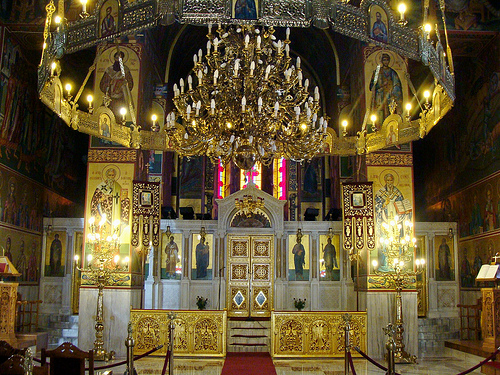
Second Triumph of Orthodoxy
But the dispute between the Palamites and the Barlaamites was far from finished. Politics came into play, and the politicians used the disputed religious issue as a threatening tool against those who supported Palamas. The great turmoil led to five consecutive church councils. One of the many scholars who advocated Barlaam’s position was the Bulgarian monk Akyndinos, who wrote a series of tracts against St. Gregory. Emperor Andronikos III Paleologos (1328–1341) was Akyndinos’s friend. Fearing the emperor, Patriarch John XIV Kalekos (1341–1347) backed Akyndinos, calling St. Gregory the cause of all disorders and disturbances in the Church (1344). He had St. Gregory locked up in prison for four years. In 1347, John XIV was replaced on the patriarchal throne by Isidore (1347–1349), a friend of St. Gregory. He set St. Gregory free and ordained him archbishop of Thessalonika.
In 1351, a sixth and final council was held to settle the heated controversial issues in the church. The Council of Blachernae solemnly upheld the orthodoxy of Palamas’ teachings and anathematized and excommunicated those who refused them. The anathemas of the council of 1351 were included in the rite for the Sunday of Orthodoxy in the Triodion. This council was considered the second triumph of Orthodoxy (the first being the restoration of icons). Later on, the memory of St. Gregory Palamas came to be celebrated in the Church on the second Sunday of Great Lent.
Imprisoned by Muslims
Gregory’s suffering for Christ did not end here. Again, because of the political influence of the West in Thessalonika, its citizens were divided upon the issue proclaimed by the councils. They did not immediately accept St. Gregory as archbishop, so that he was compelled to live in various places. On one of his travels to Constantinople, the Byzantine ship on which he was sailing fell into the hands of the Turkish Muslims. They took Archbishop Gregory as a prisoner, but displayed tolerance toward him. Even in captivity, St. Gregory preached to Christian prisoners and even held many debates with his Moslem captors. His love and respect for all men made his captors admire him and treat him with reverence. A year later, St. Gregory was ransomed and returned to Thessalonika.
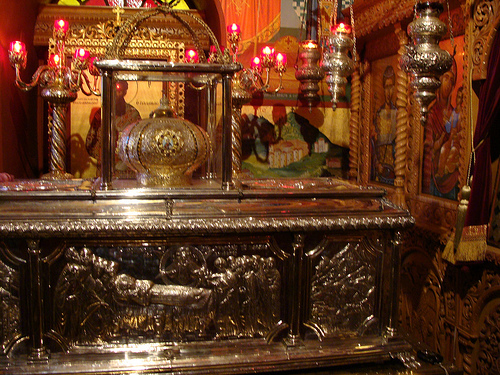
The Proclamation of His Sainthood
St. Gregory was a living Gospel. God gave him the gift of healing, especially in the last three years before his death. On the eve of his repose, St. John Chrysostom appeared to him in a vision. St. Gregory Palamas fell asleep in the Lord on November 14, 1359. The Virgin Mary, the Apostle John, St. Dimitrios, St. Antony the Great, St. John Chrysostom, and angels of God all appeared to him at different times. Nine years after his repose, a council in Constantinople headed by Patriarch Philotheos (1354–1355, 1362–1376) proclaimed the sainthood of Gregory Palamas. Patriarch Philotheos himself compiled the life and services for the saint.
When we hear in the Lenten Liturgy of the Presanctified Gifts, “The Light of Christ illumines all,” may we remember the call of the illumined Gregory for unceasing prayer and ascetic labor, that we be truly illumined by the light of the Resurrection.
This article originally appeared in AGAIN Vol. 27 No. 1.
Bishop Kallistos Ware speaks about St Gregory to a non-orthodox audience
A beautiful piece to watch (re-watch) this Great Lent
Somewhere in Northern Russia in a small Russian Orthodox monastery lives an unusual man whose bizarre conduct confuses his fellow monks, while others who visit the island believe that the man has the power to heal, exorcise demons and foretell the future.
Awards:
2006 — best film at the Moscow Premiere festival.
2007 — Six awards at the fifth national Golden Eagle Awards – “Best film”, “Best male support role” (Viktor Suhorukov), “Best male role” (Petr Mamonov), “Best director” (Pavel Lungin), “Best scenario” (Dmitry Sobolev), “Best operator work” (Andrei Zhegalov).
2007 – Nika Awards for Best Picture, Best Director, Best Actor, Best Supporting Actor, etc.
(© Pavel Lungin Studio, 2006).
Copyright Disclaimer Under Section 107 of the Copyright Act 1976, allowance is made for “fair use” for purposes such as criticism, comment, news reporting, teaching, scholarship, and research. Fair use is a use permitted by copyright statute that might otherwise be infringing. Non-profit, educational or personal use tips the balance in favor of fair use.
Saint John (Ioan) Cassian – the Roman
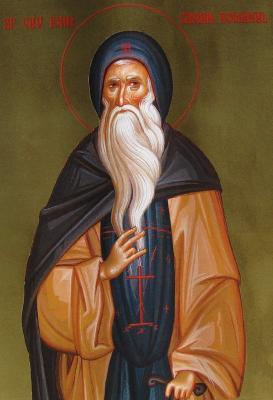
His Life: The West gave very few Church fathers. St John Cassian was only technically one of them. He was born in the south of Romania, in a region that had been visited by the Apostle Andrew, in about 360 AD. As a son of a wealthy family, St John was given a very good education. While he was still in his teens, however, he and his friend Germain heard of the monks in the deserts who gave their lives to Christ our Saviour. These two friends love the Lord and His Holy Church and they longed t go to a monastery and give their lives to Christ also. The two youths set out for the Holy Land. After a long and difficult journey by sea and by land, they came at last to Bethlehem. Here the two entered a monastery and began to struggle for their salvation. Saint John and Germain spent several years in the monastery of Bethlehem and they heard many stories about the wondrous monks of Egypt. The monks in Egypt were the most spiritual and wisest of all monks, and the two young men desired to visit them and learn from them. The abbot of their monastery gave them a blessing and they set out. After a long boat trip from the city of Joppa, the friends arrived in the town of Thennesus, on the Nile River. From there, they began to visit all the famous monasteries of Egypt. Most important, Saint John Cassian wrote down whatever the great elders and fathers of Egypt told him. These teachings he later put into a book which he called “Conferences” and this book is one of those works we call “Patristic Writings”.
Saint John and his friend Germain spent seven years in Egypt, not only learning from the monks, but also living their life with them. The two learn the true monastic life and loved the desert, but at the end of seven years, they had to return to their monastery in Bethlehem. They stayed in Bethlehem for only two more years and then, with the blessing of their abbot, they returned to Egypt for two more years. After this, the two monks went to Constantinople, where the great saint and father of the church John Chrysostom, was patriarch
Saint John Cassian and Germain stayed in Constantinople for about 5 years.
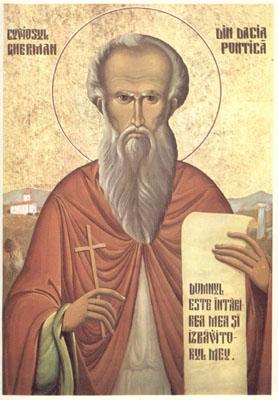
Saint Germain (Gherman the Romanian)
Saint John Chrysostom ordained them both – he made Germain a presbyter and Saint John Cassian a deacon, and he appointed both of them to the duties of his cathedral. The two learn much from our holy father John Chrysostom.
When Saint John Chrysostom was slandered and driven into exile in 405, Saint John Cassian and Germain went to Rome to try to get support from Chrysostom. Here, Saint John Cassian was ordained a presbyter. The saint then returned to France (Gaul) and built a monastery in the forest near the town of Marseille. His monastery was very much like those in Egypt and the Holy Land and soon monks came to him. Other monasteries began to grow up in the West, and most of them followed the example of Saint John Cassian’s monastery.
Those were the days when the West was still Orthodox and Saint John Cassian was a great Orthodox father who helped to defend the Orthodox Faith against false teachings. In his time, the two great falls teachings of the West were those of Pelagius of Britain and Augustine of Hippo. In addition to these, the heresy of Nestorius was harming the faithful and Saint John wrote a very important work against the teachings of this heretic. Saint John Cassian’s other famous work is called “The Institutes” and it gave the rules and teachings for the monasteries.
Our holy father John Cassian was the true founder of Orthodox monasticism in the West. He was a great teacher and defender of our Saviour’s Holy Orthodox Faith. This Holy Father reposed in the Lord at the age of 75, in the year 435. His sacred relics were buried in his own Monastery of Saint Victor. John Cassian’s relics are kept in an underground chapel in the Monastery of St Victor in Marseilles. His head and right hand are in the main church there.
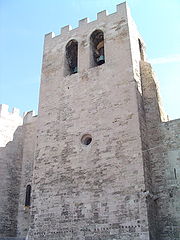
(Life Taken from the book “Great Fathers of the Church” by Archbishop Lazar Puhalo)
Saint John Cassian: On The EIGHT PRINCIPAL VICES (Philokalia)
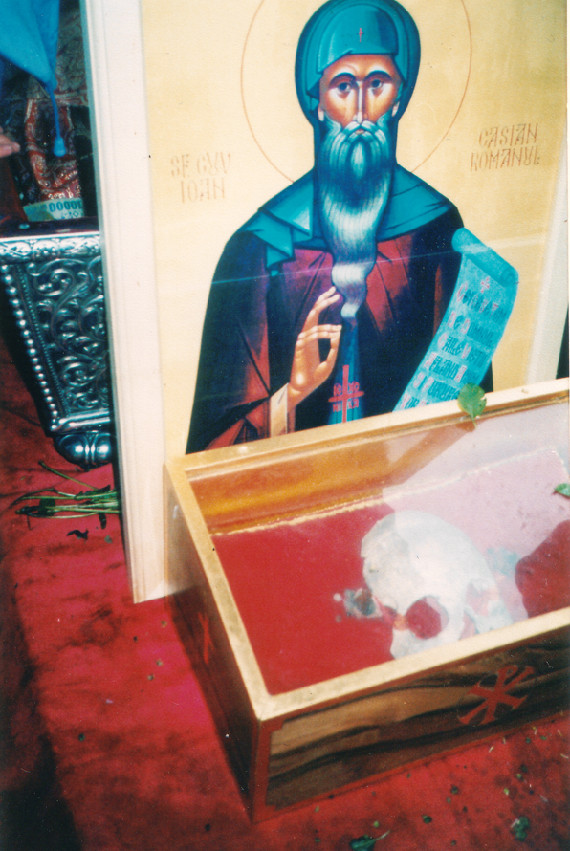
(Precious Head of St John)
The Cave of St. John Cassian and the Monastery dedicated to the Saint in Southern Romania
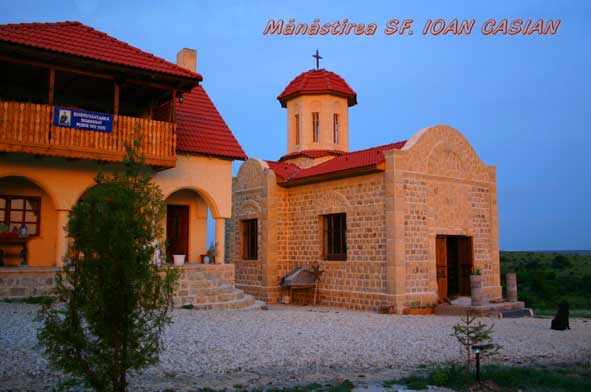
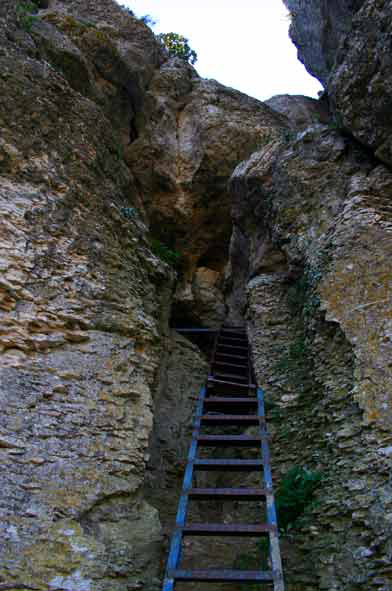
Hidden from sight, through the rough forms of the Hill of St. John Cassian, the cave opens into a rocky wall, above the valley of Casimcea. A narrow path, with steps carved in limestone, arranged recently, is leading to the entrance of the cave. The cave is spacious and without the usual moisture.
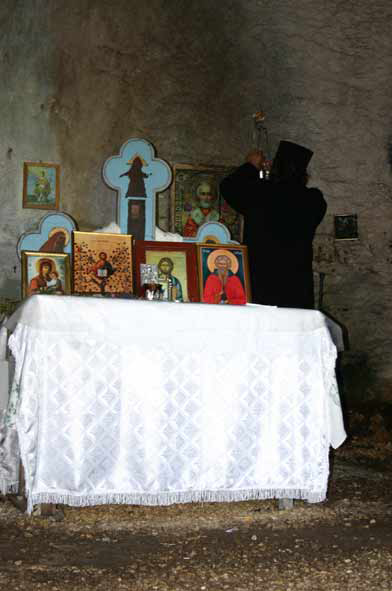
The central space of the cave continues laterally with narrow and long galleries. From the left side of the cave one can get to a room not to big known among locals for centuries, as the Holy Cell of Saint John Cassian.
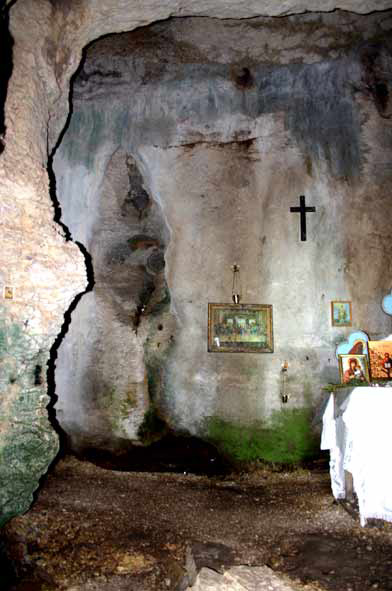
The ancient monks used the cave as a dwelling place but also for liturgical services, the inner part of the cave resembles much with a church. On the cave walls, incised in limestone, one can distinguish signs of crosses, traces of inscriptions, scattered Cyrillic letters and the word “Aghios “= Holy (Greek).
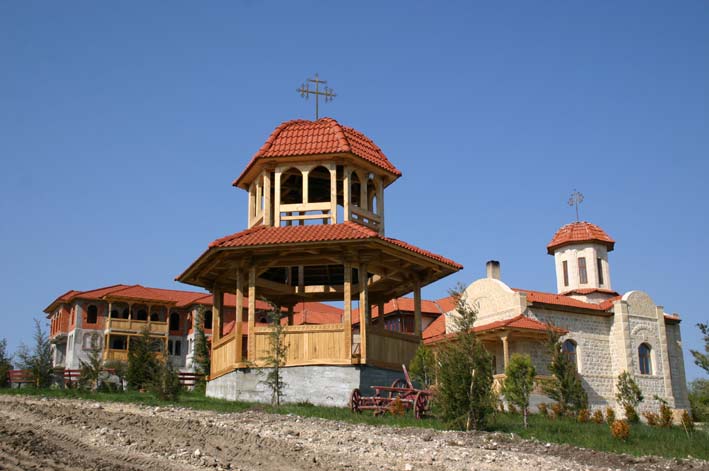
Monastery dedicated to St John from Romania
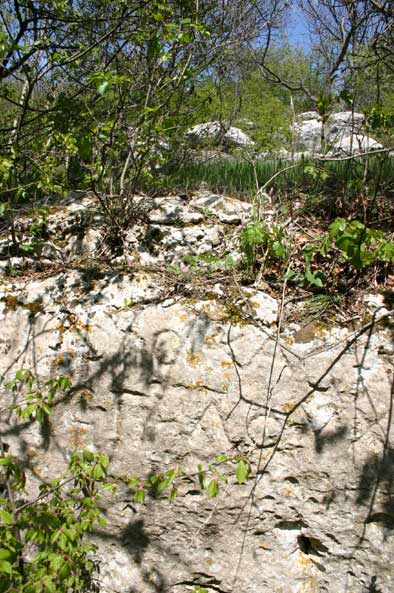
(Old inscriptions in stones, the cave of St John Cassian)
Fr. Peter Gilquist at St. Elijah
“Why Protestant Clergy are coming to the Orthodox Church.”
On the Infallibility of the Pope
For Roman Catholics
VENERABLE EPHREM THE SYRIAN
Ephrem was born in Syria of poor parents during the reign of Emperor Constantine the Great. He spent his young life rather tempestuously; but all at once a change took place in his soul and he began to burn with love for the Lord Jesus. Ephrem was a disciple of St. James Nisibis (January 13). From the enormous Grace of God, wisdom flowed from his tongue as a brook of honey and ceaseless tears flowed from his eyes. Industrious as a bee, Ephrem continually either wrote books or orally taught the monks in the monastery and the people in the town of Edessa or he dedicated himself to prayer and contemplation. Numerous are his books and beautiful are his prayers. The most famous is his prayer recited during the Honorable Fast Season which reads:
Lenten Prayer of St. Ephrem The Syrian
O Lord and Master of my life!
Take from me the spirit of sloth, faint-heartedness, lust of power, and idle talk.
But give rather the spirit of chastity, humility, patience, and love to Thy servant.
Yea, Lord and King! Grant me to see my own errors and not to judge my brother,
For Thou art blessed unto ages of ages. Amen.
(from the Prologue from Ohrid by Bishop Nikolai Velimirovich)
SAINT EPHREM THE SYRIAN ASCETICAL AND OTHER WRITINGS (from Greek): http://www.anastasis.org.uk/ephrem.htm
Selected prophecies of St. Ephraim the Syrian on the Last Days at: http://full-of-grace-and-truth.blogspot.com/2010/01/selected-prophecies-of-st-ephraim.html
Apolytikion in the Fourth Tone
With the rivers of your tears, you have made the barren desert fertile. Through sighs of sorrow from deep within you, your labors have borne fruit a hundred-fold. By your miracles you have become a light, shining upon the world. O Ephraim, our Holy Father, pray to Christ our God, to save our souls.
Through the prayers of our Holy Fathers, Lord Jesus Christ our God, have mercy on us and save us! Amen!
The Monastery of St Ehraim the Syrian in Greece
Monastery of St Ephraim from Greece
Troparion (Tone 2)
Thou didst follow the ways of zealous Elijah, and the straight path of the Baptist, O Father Anthony. Thou didst become a desert dweller and support the world by thy prayers. Intercede with Christ our God that our souls may be saved.

Saint Anthony was the first Christian to live a life of consecrated solitude. As a hermit in the desert he lived a long and saintly life that influenced countless people both in his time and for generations thereafter, even to this day.
His life had a tremendous impact on the history of early Christianity, which is the basic history of all Christian churches all over the world.
The story of his life was written by one of Christianity’s most renowned leaders, Saint Athanasius the Apostolic who was his disciple and had a very close relationship with him.
Saint Anthony is generally considered to be the father of the monastic family. He was born about 251 A.D. of a wealthy family in Coma (Kemn-el-Arouse) in the middle of Egypt. When he was eighteen years old, his parents died, leaving him guardian of his younger and only sister, Dious. Six months later Anthony entered the church to hear the Gospel, in which our Lord speaks to the rich young man, “If you would be perfect, go sell all you have, give to the poor and come follow me.” (Matthew 19:21)
He took this advice as a personal invitation addressed to him by God. He sold about 300 acres of fertile land, gave most of the money to the poor keeping only a little for his sister.
Then he placed his sister in the charge of a community of virgins.
He was now free to devote his life to asceticism under the guidance of a holy man living near Coma. This was the custom of young ascetics to stay under a master in order to
learn the principles of spirituality, praying and fasting.After a while, Saint Anthony went to a small village called Maymoun. He took shelter in an abandoned tomb carved in the side of a mountain. A good friend used to bring him bread and water from time to time.
In his solitude he was fighting off the temptations of the flesh and attacks of demons.
He was about thirty-five years old when he left his retreat to move to the Eastern desert to the “Outer Mountain” at Pispir (Vista) where he lived in complete solitude. After twenty years, his reputation attracted many followers who settled near him, and wished to copy his holy life. Saint Anthony became their spiritual leader, teaching them constantly by word and by example the ascetic life. Five years later, he again retired into solitude in the “Inner Mountain” (Mount Qolozum).
As Saint Anthony lived in solitude, he was tempted by boredom and discouragement.
His soul fell into such weariness and confusion of thought that he began saying, “Lord, I want to be saved but these bad thoughts do not leave me alone; what shall I do? How can I be saved?” After a little while, he began to walk in the open and saw someone as if it was himself, sitting and working – making mats of palm leaves – and then rising to pray.
This was an angel sent by the Lord to teach Anthony how to live in the desert.
The angel repeated what he was doing several times until Anthony understood that he had to combine manual work and prayer in order to overcome boredom.
Living in solitude (anchoritic life) made Saint Anthony a spiritual father beyond all others. He escaped from cares of the world but not from the love for his brothers.
Thus he was obliged to visit Alexandria during the persecution against the Christians,
engineered by Maximin Daja in 316. He spent his time ministering to the oppressed and afflicted in prisons. When the persecution ended, he returned to his cell to be a daily martyr of his conscience, fighting always the battles of the faith. Once again, he visited Alexandria to support Pope Athanasius against the heresy of Arius in 352. Pagans and Christians alike rushed out to greet the holy old man, but he soon returned to the desert, for he felt like a fish out of the water.Saint Anthony’s rule consisted simply of prayers and manual work. He told his disciples that just as Christ was a carpenter and Paul was a tent maker, they also had to keep their hands busy to escape temptations.
He also assigned a uniform to the monks. This was a garb of white linen reaching below the knees.A wide thick belt of leather helped the monk to keep erect. This pattern is seen today in many monastic orders all over the world.
From every part of the world, people came to him, even to the innermost part of the desert, seeking cures of the body, mind, and soul; and as they did at Pispir, monks came to him for his sympathy and practical advice. Once Saint Athanasius had invited Anthony to Alexandria and they were joined by Didymus, who was of great learning and had lost his eyesight. The conversation turned to the Holy Scriptures, and Anthony could not help admiring the blind man’s ability and praised his insight. The he said,
“You do not regret the loss of your eyes, do you?” At first Didymus was reluctant to answer, but when the question was repeated, he frankly admitted that his blindness was a great grief to him. Whereupon, Anthony said, “I am surprised that a wise man as you should grief at the loss of a physical organ which he shares with everyone, and not rejoice rather in having the gift which only saints and apostles have been thought worthy.”
In 356 A.D., Saint Anthony died at the age of one hundred and five, but his place of burial was never revealed by the two monks,Marcarius and Amatas, who buried him.
His monastery produced many great saints including Saint Hilarion of Gaza, Saint Macarius of Scete,Saint Amoun of Nitria and Saint Paul the Simple. Intimacy with God made Saint Anthony as tenderhearted as the Master he served. Consequently, his influence extended beyond his lifetime, and the Universal Church still reveres him as one of the great saints.
His life was written by Saint Athanasius while he was in Rome, and it was very influential in spreading the ideas of monasticism throughout the Christian world.
According to Saint Athanasius, Saint Anthony was a man of “divine wisdom” and of grace, although he never learned to read or write.
Today, a monastery bearing the name of Saint Anthony stands in the Eastern desert. The cave, in which the saint spent most of his life, is located beside it on the top of the mountain. Many monks live there, and many people from all walks of life visit it every day.May the prayers and supplications of this great Saint Anthony, the Father of the Monks, be with us. Amen.


St. Antony’s Cave (magharah), where he lived as a hermit, is a 2 km hike from the monastery and 680 m. above the Red Sea. It offers stunning views of the mountains and the sea, and the chance to see a wide range of bird life.
Sayings Of Anthony of Egypt
1. When the holy Abba Anthony lived in the desert he was beset by ‘accidie’ – lethargy – , and attacked by many sinful thoughts. He said to God, ‘Lord, I want to be saved, but these thoughts will not leave me alone. What shall I do in my affliction? How can I be saved?’ A short while afterwards, when he got up to go out, Anthony saw a man like himself sitting at his work, getting up from his work to pray, then sitting down and plaiting a rope, then getting up again to pray. It was an angel of the Lord sent to correct and reassure him. He heard the angel saying to him, “Do this and you will be saved.” At these words, Anthony was filled with joy and courage. He did this, and he was saved.
2. When the same Abba Anthony thought about the depth of the judgments of God, he asked, “Lord, how is it that some die when they are young, while others drag on to extreme old age? Why are there those who are poor and those who are rich? Why do wicked men prosper and why are the just in need?” He heard a voice answering him, “Anthony, keep your attention on yourself; these things are according to the judgment of God, and it is not to your advantage to know anything about them.’
3. Someone asked Abba Anthony, “What must one do in order to please God?” The old man replied, “Pay attention to what I tell you: whoever you may be, always have God before your eyes, whatever you do, do it according to the testimony of the Holy Scriptures; in whatever place you live do not easily leave it. Keep these three precepts and you will be saved.”
4. Abba Anthony said to Abbe Poemen, “This is the Great Work of a man: always to take the blame for his own sins before God and to expect temptation to his last breath.”
5. He also said, “Whoever has not experienced temptation cannot enter into the Kingdom of Heaven.” He even added, “Without temptation, no one can be saved.”
6. Abbe Pambo asked Abba Anthony, “What ought I to do?” and the old man said to him, “Do not trust in your own righteousness, do not worry about the past, but control your tongue and your stomach.”
7. Abba Anthony said, “I saw the snares that the enemy spreads out over the world and I said groaning, ‘What can get through from such snares?” Then I heard a voice saying to me, “Humility.'”
8. He also said, “Some have afflicted their bodies by asceticism, but they lack discernment, and so they are far from God.”
9. He also said, “Our life and our death is with our neighbor. If we gain our brother, we have gained God, but if we scandalize our brother, we have sinned against Christ.”
10. He said also, “Just as fish die if they stay too long out of water, so the monks who loiter outside their cells or pass their time with men of the world lose the intensity of inner peace. So like a fish going towards the sea, we must hurry to reach our cell, for fear that if we delay outside we will lose our interior watchfulness.”
11. He also said, “He who wishes to live in solitude in the desert is delivered from three conflicts: hearing, speech and sight; there is only one conflict for him and that is with fornication.”
12. Some brothers came to find Abba Anthony to tell him about the visions they were having, and to find out from him if they were true or if they came from the demons. They had a donkey which died on the way. When they reached the place where the old man was, he said to them before they could ask him anything, “How was it that the little donkey died on the way here?” They said, “How do you know about that, Father?” And he told them, “the demons showed me what happened.” So they said, “That was what we came to question you about, for fear we were being deceived, for we have visions which often turn out to be true.” Thus the old man convinced them, by the example of the donkey, that their visions came from the demons.
13. A hunter in the desert saw Abba Anthony enjoying himself with the brethren and he was shocked. Wanting to show him that it was necessary sometimes to meet the needs of the brethren, the old man said to him, “Put an arrow in your bow and shoot it.” So, he did. The old man said, “Shoot another,” and he did so. Then the old man said, “Shoot yet again,” and the hunter replied “If I bend my bow so much I will break it.” Then the old man said to him, “It is the same with the work of God. If we stretch the brethren beyond measure they will soon break. Sometimes it is necessary to come down to meet their needs.” When he heard these words the hunter was pierced by compunction and, greatly edified by the old man, he went away. As for the brethren, they went home strengthened.
14. Abba Anthony heard of a very young monk who had performed a miracle on the road. Seeing the old men walking with difficulty along the road, he ordered the wild asses to come and carry them until they reached Abba Anthony. Those whom they had carried told Abba Anthony about it. He said to them, “This monk seems to me to be a ship loaded with goods, but I do not know if he will reach harbor.” After a while Anthony suddenly began to weep, to tear his hair and lament. His disciples said to him, “Why are you weeping, Father?’ And the hold man replied, “A great pillar of the Church has just fallen but go to him and see what has happened.” So the disciples went and found the monk weeping for the sin he had committed. Seeing the disciples of the old man he said, “Tell the old man to pray that God will give me just ten days and I hope I will have made satisfaction.” But in the space of five days he died.
15. The brothers praised a monk before Abba Anthony. When the monk came to see him, Anthony wanted to know how he would bear insults, and seeing that he could not bear them at all, he said to him, “You are like a village magnificently decorated on the outside, but destroyed from within by robbers.”
16. A brother said to Abba Anthony, “Pray for me.” The old man said to him, “I will have no mercy on you, nor will God have any, if you yourself do not make an effort and if you do not pray to God.”
17. One day some old men came to see Abba Anthony. In the midst of them was Abba Joseph. Wanting to test them, the old man suggested a text from the Scriptures, and, beginning with the youngest, he asked them what it meant. Each gave his opinion as he was able. But to each one the old man said, “You have not understood it.” Last of all he said to Abba Joseph, “How would you explain this saying?” And he replied, “I do not know.” Then Abba Anthony said, “Indeed, Abba Joseph has found the way, for he has said: ‘I do not know.”
18. Some brothers were coming from Scetis to see Abba Anthony. When they were getting into a boat to go there, they found an old man who also wanted to go there. The brothers did not know him. They sat in the boat, occupied by turns with the words of the Fathers, Scripture and their manual work. As for the old man, he remained silent. When they arrived on shore they found that the old man was going to the cell of Abba Anthony, too. When they reached the place, Anthony said to them, “You found this old man a good companion for the journey?” Then he said to the old man, “You have brought many good brethren with you, father.” The old man said, “No doubt they are good, but they do not have a door to their house and anyone who wishes can enter the stable and loose the ass.” He meant that the brethren said whatever came into their mouths.
19. The brethren came to Abba Anthony and said to him, “Speak a word: how are we to be saved?” The old man said to them, “You have read the Scriptures. That should teach you how.” But they said, “We want to hear from you too, Father.” Then the old man said to them, “The Gospel says, ‘if anyone strikes you on one cheek, turn to him the other also.'” (Mt 5:30) They said, “We cannot do that.” The old man said, “If you cannot offer the other cheek, at least allow one cheek to be struck.” “We cannot do that, either,” they said. So he said, “If you are not able to do that, do not return evil for evil,” and they said, “We cannot do that, either.” Then the old man said to his disciple, “prepare a little brew of corn for these invalids. If you cannot do this, or that, what can I do for you? What you need is prayers.”
20. A brother renounced the world and gave his goods to the poor, but he kept back a little for his personal expenses. He went to see Abba Anthony. When he told him this, the old man said to him, “If you want to be a monk, go into the village, buy some meat, cover your naked body with it and come here like that.” The brother did so, and the dogs and birds tore at his flesh. When he came back the old man asked him whether he had followed his advice. He showed him his wounded body, and Abba Anthony said, “Those who renounce the world but want to keep something for themselves are torn in this way by the demons who make war on them.”
21. It happened one day that one of the brethren in the monastery of Abba Elias was tempted. Cast out of the monastery, he went over the mountain to Abba Anthony. The brother lived near him for a while and then Anthony sent him back to the monastery from which he had been expelled. When the brothers saw him they cast him out yet again, and he went back to Abba Anthony saying, “My Father, they will not receive me.” Then the old men sent them a message saying, “A boat was shipwrecked at sea and lost its cargo; with great difficulty it reached the shore; but you want to throw into the sea that which has found a safe harbor on the shore.” When the brothers understood that it was Abba Anthony who had sent them this monk, they received him at once.
22. Abba Anthony said, “I believe that the body possesses a natural movement, to which it is adapted, but which it cannot follow without the consent of the soul; it only signifies in the body a movement without passion . There is another , which comes from nourishment and warming of the body by eating and drinking, and this causes the heat of the blood to stir up the body to work. That is why the apostle said, “Do not get drunk with wine, for that is debauchery.” (Ep 5:18) And in the Gospel, the Lord also recommends this to His disciples: “Take heed to yourselves, lest your hearts be weighed down with dissipation and drunkenness.” (Lk 21:34) But there is yet another movement which afflicts those who fight, and that comes from the wiles and jealousy of the demons. You must understand what these three bodily movements are: one is natural, one comes from too much to eat, the third is caused by the demons.’
23. He also said, “God does not allow the same warfare and temptations to this generation as he did formerly, for men are weaker now and cannot bear so much.”
24. It was revealed to Abba Anthony in his desert that there was one who was his equal in the city. He was a doctor by profession and whatever he had beyond his needs he gave to the poor, and every day he sang the Sanctus with the angels.
25. Abba Anthony said, “A time is coming when men will go mad, and when they see someone who is not mad, they will attack him saying, “You are mad, you are not like us.”
26. The brethren came to Abba Anthony and laid before him a passage from Leviticus. The old man went out into the desert, secretly followed by Abba Ammonas, who knew that this was his custom. Abba Anthony went a long way off and stood there praying, crying in a loud voice, ‘God, send Moses, to make me understand this saying.’ Then there came a voice speaking with him. Abba Ammonas said that although he heard the voice speaking with him, he could not understand what it said.
27. Three Fathers used to go and visit Blessed Anthony every year and two of them used to discuss their thoughts and the salvation of their souls with him, but the third always remained silent and did not ask him anything. After a long time, Abba Anthony said to him, ‘You often come here to see me, but you never ask me anything,’ and the other replied, ‘It is enough for me to see you, Father.’
28. They said that a certain old man asked God to let him see the Fathers and he saw them all except Abba Anthony. So he asked his guide, ‘Where is Abba Anthony?’ He told him in reply that in the place where God is, there Anthony would be.
29. A brother in a monastery was falsely accused of fornication and he arose and went to Abba Anthony. The brethren also came from the monastery to correct him and bring him back. They set about proving that he had done this thing, but he defended himself and denied he had done anything of the kind. Now Abba Paphnutius, who is called Cephalus, happened to be there, and he told them this parable: “I have seen a man on the bank of the river buried up to his knees in mud and some men came to give him a hand to help him out, but they pushed him further in, up to his neck.’ Then Abba Anthony said this about Abba Paphnutius: ‘Here is a real man, who can care for souls and save them.’ All those present were pierced to the heart by the words of the old man and they asked forgiveness of the brother. So, admonished by the Fathers, they took the brother back to the monastery.
30. Some say of Saint Anthony that he was “Spirit-borne”, that is, carried along by the Holy Spirit, but he would never speak of this to men. Such men see what is happening in the world, as well as knowing what is going to happen.

31. One day Abba Anthony received a letter from the Emperor Constantius, asking him to come to Constantinople, and he was wondering if he ought to go. So he said to Abba Paul, his disciple, “Ought I to go?” He replied, “If you go, you will be called Anthony, but if you stay here, you will be called Abba Anthony.”
32. Abba Anthony said, “I no longer fear God, but I love Him. For love casts out fear.” (Jn 4:18)
33. He also said, “Always have the fear of God before your eyes. Remember Him Who gives death and life. Hate the world and all that is in it. Hate all peace that comes from the flesh. Renounce this life, so that you may be alive to God. Remember what you have promised God, for it will be required of you on the Day of Judgment. Suffer hunger, thirst, nakedness, be watchful and sorrowful; weep, groan in your heart; test yourselves, to see if you are worthy of God; despise the flesh, so that you may preserve your souls.”
34. Abba Anthony once went to visit Abba Amoun in Mount Nitria and when they met, Abba Amoun said, “By your prayers, the number of the brethren increases, and some of them want to build more cells where they may live in peace. How far away from here do you think we should build the cells?” Abba Anthony said, “Let us eat at the ninth hour and then go out for a walk in the desert and explore the country.” So they went out into the desert and they walked until sunset and then Abba Anthony said, “Let us pray and plant the cross here, so that those who wish to do so may build here. Then when those who remain here want to visit those who have come here, they can take a little food at the ninth hour and then come. If they do this, they will be able to keep in touch with each other without distraction of mind.” The distance is twelve miles.
35. Abba Anthony said, “Whoever hammers a lump of iron, first decides what he is going to make of it, a scythe, a sword, or an axe. Even so we ought to make up our minds what kind of virtue we want to forge, or else we labor in vain.”
36. He also said, “Obedience with abstinence gives men power over wild beasts.”
37. He also said, “Nine monks fell away after many labors and were obsessed with spiritual pride, for they put their trust in their own works and being deceived they did not give due heed to the commandment that says, ‘Ask your father and he will tell you.'”
38. And he said this, ‘If he is able to, a monk ought to tell his elders confidently how many steps he takes and how many drops of water he drinks in his cell, in case he is in error about it.”
The cave of St. John the Baptist is a relatively new place of pilgrimage in the Holy Land – Israel. Many archaeologists have researched the place and its data, then the its authenticity. Archaeologist Shimon Gibson is the one who discovered the place and also the one supporting its authenticity.
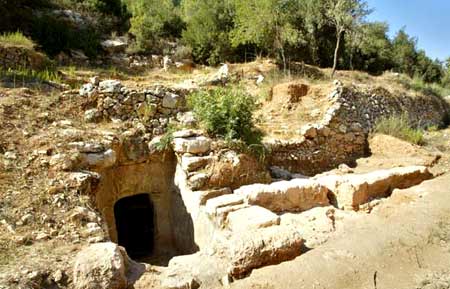
Shimon Gibson discovered the place in 1999, through an extensive archaeological research. To get here, pilgrims can take the bus from Jerusalem to Ein Karem and the holy cave is but about four kilometers from Ein Karem..

St. John the Baptist – The last prophet of the Old Testament – had a divine mission hard to imagine: he, the servant of God, had to baptize his Master, Jesus Christ.
But until the time of Baptism of our Lord, St. John had lived an unspeakable ascetic struggle into the wilderness.

Even from the time of his birth, Saint John was seen as a work of God and a great mystery. Many words of wonder were said about John: “What will this child be? For the hand of God was with him.” (ad. from Lk). No one knew what would happen with this child, even though his father – priest Zechariah was filled with the Holy Spirit and prophesied saying:
Blessed be the Lord, the God of Israel,
for he has visited and worked redemption for his people;
and has raised up a horn of salvation for us
in the house of his servant David
(as he spoke by the mouth of his holy prophets who have been from of old),
salvation from our enemies and from the hand of all who hate us;
to show mercy towards our fathers,
to remember his holy covenant,
the oath which he spoke to Abraham, our father,
to grant us 74that being delivered out of the hand of our enemies,
we should offer him divine services without fear,
in holiness and righteousness before him,
all the days of our life.
And you, child, [you] will be called a prophet of the Most High,
for you will go before the face of the Lord to prepare his ways,
to give knowledge of salvation to his people by the remission of their sins,
because of the tender mercy of our God,
by which the dawn from on high will visit us,
to shine on those who sit in darkness and the shadow of death;
to guide our feet into the way of peace. (Lk. 1, 68-79)
The Gospel would not tell us much about the life of Saint John. St John lived in the time of our Savior Christ, and so more focus is placed on Him. The Scripture of Luke, however, referring to St John it ends saying: “The child was growing up and became strong in spirit, and he was in the desert until the day of his public appearance to Israel.” (Luke 1, 80)
(see Eastern Orthodox New Testament translation at: http://www.orthodox-church.info/eob/download/nt6x9.pdf for the biblical passages)

It is believed that the cave of St. John the Baptist is a place in the “wilderness” where the saint lived up to the time of his preaching and baptism of our Lord. The rocky place that still preserves today the ancient cave, is on the land of Tzuba, which is the nearest settlement to the famous Ein Karem (the place where St. John the Baptist was born), slightly west of Jerusalem.
In a legend about this place, it is said that Elisabeth had fled with baby John, the night when crazy king Herod ordered the killing of all infants from his land, two years and younger… (Matthew 2, 16). A cave similar to this, it was portrayed as a souvenir from the Byzantine era – found in the Holy Land and brought later to Italy. It is a disc engraved with a picture and the words: “God’s blessings for the refuge of St. Elizabeth.”
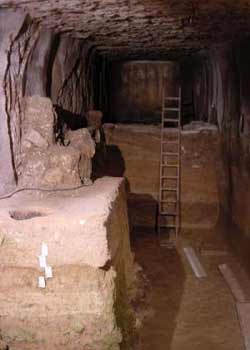
In mid IV-V centuries, the Byzantine monks blessed the cave and used it as a holy place, dedicated St. John the Baptist. On the interior walls of the cave are found some of the oldest Christian mosaics (scenes from the life of the saint, the saint body, a disembodied head, crosses and other Christian symbols).
The man is portrayed standing, with one arm raised and a pastor rod in another hand, waering some very poor clothes. The aghiografice drawings still preserved today on the rocky walls of the cave, indicate that a great Christian preacher lived there, which is believed to be St. John the Baptist. .

In 800’s, the cave was first used as a water storage tank. It was found as late as the first century, that the cave was used as a place of ritual bathing and cleaning. This is one of the largest of its kind in the entire Israel.
The Church of the Birth of St. John the Baptist from Ain Karem
Ain Karem is a town in Israel, located within walking distance of Jerusalem. This is particularly important for Christians because, according to tradition, it is the homeland of Zechariah and Elizabeth, parents of St. John the Baptist. Here St. John the Baptist was born. Ain Karem village lies at a distance of approximately 8-10 km to the west of Jerusalem and about 150 km distance from Nazareth.

Inhabited since the Bronze Age, Hebrew leader Joshua assigned Karem to the tribe of Judah, as we read in Holy Scripture (OT): “This is the heritage of the sons of Judah after their families (…) Maarit, Bet-Anote and Eltecon: six fortresses with their villages. Teco, Ephratah or Bethlehem, Peoria, Etam, Culon, Tatami, Sores, Carema (Karem), Galem, Betir and Manah: eleven fortresses with their villages.” (Joshua 15, 20 and 59)
With the emergence of Christianity, in this Jewish town of Ain Karem a strong Christian community dweled. This community was mostly dealing with carpentry and guidance of pilgrims. Today, with the exception of some small Christian community, the entire population of Ain Karem consists of Hebrew.

The city of Ain Karem still preserves seven Christian worship places. Among them are: the Franciscan Monastery, built on the place where St. John the Baptist was born, the Church of Visitation of the Virgin Maryby Elizabeth; the Monastery of Saint Zechariah; the Church of the Lady of Sahyun, together with a number of graves.
(Translated and adapted by blog’ author)
 Christian Dogma
 Christian Martyrs
 Christian Orthodox Churches and Monasteries
 Christian Sermons and News
 Church's Teachings on Fasting
 Ecumenism – a Great Heresy
 Father George Calciu
 Life_a Sacred Gift form God
 Orthodox Saints and Church Fathers
 Spiritual Elders
 Daily Bible Readings
 Journey to Orthodoxy
 Listen to Ancient Faith Radio
 Orthodox Calendar of Feasts and Saints
 Orthodox Christian Mission Center
 Orthodox Institute
 OrthodoxChristianNetwork TV


Recent Comments