
You are currently browsing the category archive for the ‘Ecumenism – a Great Heresy’ category.
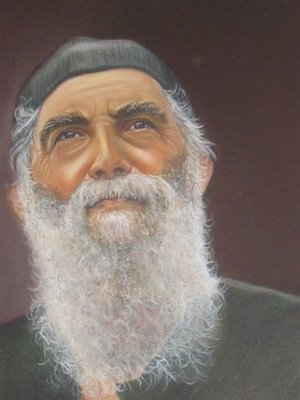
Elder Paisios of the Holy Mountain on “Common prayers”

Today unfortunately, the European courtesy has come in and they try to show themselves as being nice. They wish to show superiority and finally they end up worshipping the two horned devil. “One religion, they tell you, should exist” and they level out everything. Some also come to me and tell me “All of us who believe in Christ should create one religion”. “Now it is as if you are telling me, I told them, about gold and copper, so many carats gold and that much copper, that was separated, to gather them and make them one again. Is it correct to mix them again? Ask a jeweler. Is it proper to mix trash with gold? So much struggle was waged to distil the dogma”. The Holy Fathers must have known something for prohibiting the relationships with the heretics. Today they say: “we should pray together not only with a heretics but also with the Buddhist and with the fire worshipper and the demon worshipper.
Indeed see: ” The World \”Council\” of Churches “
The Orthodox must also be present in common prayers and in their conferences. It is a presence”. What presence? They resolve everything with logic and justify the unjustifiable. The European mind believes that also the spiritual matters can also come into the Common Market. Some of the Orthodox who are shallow and wish to make a promotion, “a mission”, they arrange conferences with the heterodox to cause a sensation, believing this way that they promote Orthodoxy, by becoming so to speak “Hungarian goulash” with the false believers. Then the super-zealots take hold of the other end; they also blaspheme against the Mysteries of the New-Calendarists etc and deeply scandalize the souls who have piety and Orthodox sensitivity. On the other hand, the heterodox come to conferences, act like teachers, take whatever good spiritual thing they find from the Orthodox, they process it, they give it their own colour and mark and they present it as a prototype. And the strange contemporary world becomes touched by such strange things and is spiritually destroyed. The Lord though at the appropriate time will present the Marks, the Eugenikos and the Gregorys Palamas who will assemble all our deeply scandalized brothers, to confess the Orthodox faith and strengthen the traditions of the Church and give great joy to our Mother, the Church”.
(Elder Paisios in: “With anguish and love for the contemporary man”)
Groundless and dangerous are the theological dialogues
Letter by: Mr. Paul Savvidis, Theologian
To the obvious and unrepentant ones, apart from the unnecessary and foolish continuous theological and ecclesiastic dialogues, a clear argument is made of the Papist and Orthodox views below and in fact manifested, the bare faced effort to impose the papist falsehoods.
I believe that the whole process starts not from one simple false theological ecclesiastic basis but from a groundless rationale of an ecclesiastic nature. It is an undeniable truth that the papist theologians never begin the theological dealings with sincere intentions for a complete agreement of compliance on the pure, indissoluble, inseparable and non negotiable positions of the mutual faith of the first eight centuries, of the seven ecumenical Synods until the unlucky day of the 20th July 1054.
All the subsequent convulsive actions of the papists aim at the creation or rather the duel to impress that they wish and are interested in the “union” which they themselves infringed upon and did everything towards the non-union since the omnipotence of a worldly and sole leader ensured fully the essentials for life to the obedient- ‘ferro iniqe” always to the disadvantage of the Orthodox people. The unpleasant historical reference to early and contemporary events cry aloud about the word of truth.

We now come to the essence of our topic. Our holy bishops, the presbyters, theologians and all those who take part- to whom were sent reasonable questions on past roaring improprieties- they know very well, or even faintly, that the Church comes together and is present during the Mystery of the Divine Eucharist. And in return, the Divine Eucharist accordingly unites her members to her Lifegiving Head, Lord Jesus Christ in such a way that to each of us the mystery of the Church is realized, that which Saint Chrysostom so characteristically notes, “We and Christ are one”. Heading this Eucharistic Congregation “of the immortals”, of the people of God, the head of the local Church, is the Bishop (where there is a Bishop, there is the Church) according to the Godbearing and apostolic Father Ignatios, but in his place also the Presbyter, namely the Priest.
The question that is directed to all those involved in the theological dialogue, who willingly or unwillingly missed the mark but who also co-traded with improper papist positions (Balamand agreement, Ravenna etc) can they assure us in an Orthodox and patristic way that the same Mystery of the Divine Eucharist exists and is officiated in Papism and is wholly valid? Even if we accept with impunity the answer YES, then naively and a lot more fruitlessly we “run and fail” to convince the Orthodox and the heterodox to unite since we are exactly of the same Holy Chalice which is also the sign of Union. To what purpose all this continuous theological and ecclesiastic upheaval of so many centuries? It is finally time to hasten with “jubilant feet and burning heart” to exchange the most desired embrace of love! Proper their priesthood, therefore proper also their mysteries…..
Here however we arrived at the Lydian rock of the problem and of our intense Orthodox puzzlement. We the Orthodox, clerics and lay people, believe, confess and declare in all directions “Urbi et Orbi” the ageless words of Saint Cyprianos “outside the Church, there is no salvation”! For in the Church belong the mysteries, the action of the divine Grace, the asceticism and theosis.
But oh nave papists since you do not have a church; you do not have priesthood or valid mysteries (since for you the divine Eucharist is a carrier ……. of germs and you do not offer it to your faithful!) towards what purpose all your eagerness for conferences, dialogues and sensational battles? Is it not enough that you have the visible representative (Vicar) of Christ, in the monstrosity – the Nation of the Vatican?!

Is it not a least indication of lack of fear of God and impudence to maintain that you are a “Church” and at the same time refer to us, the Orthodox, as “deceived brothers” when you cannot show us one saint, martyr or miracle worker, after your unilateral and deliberate departure from the fold of the One, Holy, Catholic and Apostolic Church? You who did not hesitate to downgrade to the point of degrading our magnificent and mutual saints such as Saint George, Saint Barbara and so many other just because they were easterners? I do not wish to be swept away to your slippery slope….
Do you have any blessed Elders with foresight and clear sighted you could point to us, such as the Paisioses, Jameses, Porphyrioses or other speculative souls hidden in the mountains and caves and “cavities of the earth” who have become poles of attraction and admired by so many deteriorated, aching and wounded souls?
Oh papists and all you Orthodox who take part in the conferences, you all well know that we have an amazing inter communion of only Orthodox holy churches in many same faith lands? Thus, Saint Nektarios of Egina travels to Russia and performs the mysteries (!), while Saint Seraphim of Sarov brings together thousands of faithful in Attica, Saint Luke the Physician, Archbishop of Crimea, performs moving miracles in our Country! Truly does the proud Rome, the nation of the Vatican, have to day something corresponding to offer us? Where and who are your saints “corrupted” or not who are miracle workers that the Orthodox may venerate them? Or perhaps is it without reason the three full bodied saints of the Ionion and the Lady Faneromeni are present there, as guarding sentries and protectors from the “western crest” and from the papist absolutism? Could you call your “priest” to make the holy water without salt- and remain unaffected from the corruption of time, or to cite exorcisms on a demoniac and him asking for an Orthodox priest because only he has the Grace of the mystery of Priesthood? The questions must seem to you overly na¨ve but they nevertheless remain unanswered? And about the Holy Light what is your position? And why does it only happens with the Orthodox?

Is the truth not crystal clear that you use an ambiguous language at the theological dialogues that reminds more of tough negotiations for the achievement of more diplomatic objectives and positions? How could you convince us of your sincere and untainted love when on the occasion of the illumined Elder Paisios was asked about the visit of the blessed Patriarch Demetrios to the Vatican with the familiar compliments and common prayers, replied “He was deceived”! How many more testimonies do we need? This is how you acted and will always continue to act.
One other question is directed to those responsible for the selection of the persons for the Orthodox representation. We believe that many occasions not only they do not uphold the word of truth but also sign articles which cry aloud that they contravene pure Orthodox patristic positions. They are neither better nor more qualified. A manifested ecumenical intention, an unprocurable Christianity, an unstable tendency at balancing of the truth and one similar division of the truth in all its twists and turns and selected parts. And at the end of all the deliberations naturally the “god pouring grace did not breathe” but they agreed “to an agreement badly agreed upon”!
On the lips of the pious people of God, the defender of the Orthodox dogma that under no occasion they can be – according to the ever memorable and champion struggler of Orthodoxy professor Mouratodis- “one irresolute, pathetic and externally propelled mass” exists the bitter and often the most bitter complaint, why at those conferences that are called, no matter how they are called, there do not take part people of theological, patristic and of fighting stature from the venerable Hierarchy of Greece? The mention of certain names will clash with their mediocrity. In the garden of our Most Holy Mary could it be possible that there do not exist holy and illumined personalities whose account and testimony of the theological truth is a fruit of purely painful and intense prayers and repentance? Could it be possible that our schools are lacking personalities of Teachers in action and worth who teach and transfuse the pure patristic spirit and the deposition of the greatly honourable Truth, which is the guarantee of the unchanging orthodox teaching? And finally the Orthodox Hierapostolic Brotherhoods do they not have eminent theological personalities whose both oral and especially written word is the guarantee of Orthodoxy and together the heavy artillery of our Church against all sorts of heretical teachings?

Unfortunately most of those who participate are called “Legionaires” namely those who are resident abroad, who are deeply indoctrinated or better grafted by the intense worldly spirit of the West and that is why their theological armor is nowhere to be found, with no backbone and mostly “graceless” and not seldom with negotiated heretical solutions- positions. The testimony and the submission of their written articles, cry for the word of truth! Not few times in their worldly circles what counts for them is not the ascetic spirituality of Orthodoxy, but the “appearance” or rather their civil image, the exterior picture which is backed by titles and civil and philanthropic works!
They are masters of dialogue, inexcusable luxury and much more wasted time for us to try through this type of meetings to convince the inconvincible papists about the treasures of our Church and the correctness of our dogmas. The Union, may I immediately correct, namely the return of the heretics to the Orthodox Church, can happen through contrition, with sincere tears of repentance and confession and above all by the traditional, pure and as such valid Baptism. Everything else is from the evil one…..
The last and most compassionate word is directed with great respect as much to the venerable head as to the Hierarchy of our Most Holy and Martyric Cyprus. Why, honourable fathers so much preparation, so much zeal for one more ecumenical conference- dialogue on your sanctified island? Could it be that the present Attila did not have as ancestor the other “civilized” Frankish Attila that not only did he oppress your island but unblushingly devasted and “sacrificed” with his inhuman bestialities – ferociously and with unabated appetite? Perhaps you should be reminded of the truth when the thirteen holy martyrs of Kantara of Nicosia (Lefkosia) rise from their tombs?
Truly you know of the many steps of the papists towards all of the international organizations with intense protests and balloting resolutions for the invasion of Attila, and what about their results? When did the “Christian” west exert influence on the old and sinful Albion to avert the hangings of the fighters of EOKA? I fear that perhaps like the pope who had sent a disgusting congratulatory telegraph to Kemal Ataturk on the slaughter of the Orthodox population of Smyrna, perhaps again their guilty silence secretly or openly, God knows, contributes to the freeze of the presently existing situation?
And the final word. The Dialogues are rather cosmetic and social meetings- according to the lay expression in other words “to love each other” with the corresponding excessive compliments, the competing bids for the most expensive gifts and the luxurious dinners, the hotel comforts. Truly, perhaps the hospitality of an austere Monastery at least for the Orthodox representatives with some “frugal abundance” would have been the prudent place? And in the present economic crisis how many open wounds could have been patched up if this fruitless and provocative extravagance was invested on families that live at the limits of morbid starvation?
To be sincere and honest with ourselves, the great losers will be the Orthodox who in knowledge or ignorance bargain or compromise positions-eternal truths and imperishable. Having won,the papists who with their known time wasting evasions and tricks, try to convince and pass their obvious anti-ecclesiasticism for “ecclesiology”.
In this chaotic impasse and religious syncretism which is the consequence but also the continuation of an immoral morality which completely nibbles all the spiritual vitality of the land and creates an atrocious hell, sometime sooner or later, like charmingly Elder Paisios used to repeat “The Spiritual Laws shall also work”. Namely, all the entangled parts and the interlaced self interests “will pay the price” painfully on a personal or even social level for all those mostly provocative, ecumenistic fiestas.
Nothing has been lost yet. Glory be to God, there is still adequate time to reverse things through repentance. The Orthodox Church always lived and lives the miracle of the return of the “deceived” and their re-gathering into her Fold.
But all our own who participate in the theological conferences let them know “full well” that the “last word” of all the decisions of a theological mixing of Orthodox and papist “belongs to the people of God” which is again ready but also mature to respond with the timeless word of Joseph Bryenios, “we shall not deny you our friend Orthodoxy”.
Let the papists also hear these.
The present article is also part of the signing of the
A Confession of Faith Against Ecumenism
Paul Savvidis
Teacher of Theology, 5th Gymnasium of Veria
Please also see: Lessons from the Fathers on Fasting

Fast and freedom
What can be more absurd than the fast, in a religion which boasts of having given the man the freedom? How can you name yourself free, when you have to refrain from the things you like, when you must do what you don’t want! The fast is the abstinence not only from the food, but also from the bodily pleasures. How not to see in this an outrage to the noblest instinct that the man has – the freedom?
If the fast is an obligation, than the Gospel is a masterpiece of the absurd’s literature. Understanding this, the Protestants decided to renounce the fast. However, despite the number of quotations brought from the apostle Paul or from the words of the Saviour Himself, the spur to fasting is like a thorn in the flesh of that who at least scarcely knows the Holy Scriptures.
All righteous before Christ fastened. The fast was precursory to the meeting with God or to a revelation. Moses climbed up the mountain after forty days of non-eating and thus spoke with God. The New Testament is not at all different, it begins with a fastener – John the Baptist. Christ Himself had fastened before having begun to preach. Thus, we cannot leave away the fast, departing from some biblical verses, when even those who pronounced them were great fasteners; it seems to me it is more decent to doubt our understanding ability of those verses.
Christ was once asked why his disciples don’t fast (Matthew 9, 14). From this many have understood that the disciples and the Saviour Himself were gluttons (Matthew 11, 19). But this event, actually, discloses us the fact that the disciples and the Saviour were all the time starving. This can be also seen very well from the conflict that they had with the Jews, because the disciples ate some ears on Saturday. The disciples were so busy with the preaching that they used to forget to eat and the fact that they picked ears, shows how hungry they were and that they were wont to eat here and there. The Saviour however did not eat with them, the reproach being only for the disciples; He was the model of fasting.
The fact that the disciples used to eat little, is emerging from the scene of multiplying the bread, where we find out that they had only five loaves of bread and two fish. Although they were far away from the locality, in an impossibility to buy food, they are ready to give this little to the crowd (without knowing that it will be multiplied), which reveal us that they were accustomed with the hunger more than the ordinary men. Hence, the Saviour and the disciples fastened, but they did not count the days as the Pharisees did. To their question though, Christ, tell them “Can you make the guests of the bridegroom fast while he is with them? But the time will come when the bridegroom will be taken from them; in those days they will fast” (Luke 5, 34-35). “Those” days when the bridegroom was taken away, are Wednesday, the day of betrayal and Friday, the day of crucifixion. In the year 50, the apostles convoked a synod in Jerusalem, where they established for the believers the fast in these days.
Thus, the Protestants have understood well that the fast is not an obligation. The forced fast, has no motivation as any gratuitous and meaningless thing. This is not, however, a reason to blame the fast. The fast should be understood in all its nobility, as it is the supreme manifestation of the human freedom. In such a way the first Christians understood the fast, a meaning that is lost nowadays. “To eat – writes St. Ephrem the Syrian in the IV century– belongs to the laws of the nature, but to fast belongs to the freedom”. Who can boast that he is eating only because “he wants this”? No, you eat because you need to eat, a results from the natural instinct, not from freedom. Of course there is neither an evil in this, nor a sin, but there is also no virtue. The virtue is only the fruit of the freedom. “Any labour which is not from a perfect freedom – farther Sofronie Saharov (+ 1993) said – can not have an eternal value”. The fasting is the man’s free choice of a nobler life, which has something in it from the realities of eternal life, where there is no corruption anymore.
See also why in the Orthodox Church the two Holy Apostles Peter and Paul are equals and celebrated together at: Why I abandoned Papism
(Taken from the Holy Monastery of ImPantokratoros website)

CONCLUSIONS
of the Conference of the Holy Metropolis of Piraeus
Topic: “Primacy,” Synodicality and Unity of the Church
Peace and Friendship Stadium, 28 April 2010
“Papal ‘primacy’ has no theological foundation, no legitimacy from the Holy Spirit and no ecclesiological legitimacy. It is clearly based on a worldly understanding of authority.” This, among other things, was the conclusion of the theological conference which was organized by the Holy Metropolis of Piraeus in the Peace and Friendship Stadium (Melina Mercouri Hall) on 28 April 2010, and which was a success with many clergy and laity present.
The conference was also honored by the presence of His Beatitude Hieronymos, Archbishop of Athens and All Greece, who also started the conference off. Also present were: His Eminence Seraphim, Metropolitan of Kythira; Pavlos, Metropolitan of Glyfada; and Melito, Bishop of Marathon.
The topic “Primacy,” Synodicality and Unity of the Church was expounded upon in two sessions with seven speakers: His Eminence Seraphim, Metropolitan of Piraeus, Hieromonk Luke Grigoriatis, Prof. Aristidis Papadakis (University of Maryland), Protopresbyter George Metallinos, Protopresbyter Theodore Zisis, Protopresbyter Anastasios Gotsopoulos and Prof. Dimitrios Tselengidis.
From the presentations and the discussion that followed, it was concluded that: unity belongs to the nature of the Church as it is the body of Christ and communion in Him. The true Church is one. The unity of the Church in all its interpretations – structural or charismatic (grace-bearing) – clearly has its foundation in the Holy Spirit. It is extended mystically, but is maintained, fostered and apparent chiefly through holy communion.
According to the “Confession of Faith” of the Synod of Constantinople in 1727, “Therefore no other head whatsoever is accepted in this Eastern Church, save only our Lord Jesus Christ, from the Father given to the whole Church and its foundation.” According to Orthodox ecclesiology, “primate” is not meant generally and indefinitely without the presence of the particular synod of a region.
The concept of a rank of honor (that is the term which Orthodox ecclesiastical tradition uses opposed to the subsequent term “primacy” that the papists use) expresses and ensures the unity and the synodicality of the Orthodox Catholic Church. The pentarchy of the patriarchal thrones is the form which the Church gave to the concept of a rank of honor during the first millennium.
The authority of the “primate,” which derives from the rank of honor, is a fruit of synodicality, while the authority the bishop of Rome had already started to appropriate during the first millennium is a result of the abolition of the synodical organization of the Church.
In the Church of the first millennium there was no papal primacy “by divine right” in jurisdiction or authority over the whole Church. On the contrary, the Church had the right to make decisions about its administration without the Pope, even in spite of his strong opposition, and these decisions were universally valid.
After the schism of 1054, the increasing claim of the popes for primacy of authority over the whole Church completely subverted the structure of the mystical body of the Church inspired by the Holy Spirit. It makes synodicality (as a function of this body inspired by the Holy Spirit) relative – practically abolishing it – and introduces the worldly mindset to it. It nullifies the equality of bishops, misappropriates the complete administrative authority of the whole Church, essentially setting aside the Theanthropos (the God-Man) and making a man the visible head of the Church. In this way the ancestral sin is repeated in this institution.
True unity takes place when there is unity in faith, in worship, and administration. This is the model of unity in the ancient Church, which the universal Orthodox Church continues unchanged. Unia introduces a false unity and is based on a heretical ecclesiology, since it allows different forms of the faith and worship, and makes unity contingent on the recognition of the primacy of the pope, which is an institution of human justice, and undermines the synodical structure of the administration of the Church, which is an institution of divine justice. Multiformity is only acceptable in secondary matters of local traditions and customs.
After the First Vatican Council (1870) and especially the Second Vatican Council (1962-1964) papal primacy does not comprise a simple administrative assertion, but an essential dogma of faith absolutely necessary for the salvation of the faithful. Its denial incurs the anathema of the First Vatican Council, whose validity remains still after the Second Vatican Council.
As the host of the conference Metropolitan Seraphim of Piraeus emphasized in his introduction, “Due to the heretical and blasphemous doctrine of the primacy of the bishop of Rome and the spiritual ramifications which come from it (such as the “infallibility” of the Pope and his autocratic-monarchic despotism over the whole body of the religious community under him), Papism has developed into an autocratic-monarchic system of mystic ideology and perversion of the meaning of the Church. It has proven to be modern Roman-Frank ethnicism (paganismus) in a spiritual disguise, has taken away the mystical freedom in Christ of each of [the Church’s] members and has turned out to be the inevitable and fateful cause of the falling away from the one, holy, catholic and apostolic Church into hundreds of different heresies, and an insurmountable obstacle to their possible return.”
At the assessment of the participants of the current theological dialogue between Orthodox and Roman-Catholics, its attempt at the restoration of ecclesiastical communion must somehow – beyond the elimination of the heretical teachings of Rome (Filioque, created grace, infallibility, purgatory, etc.) – aim also at the definite elimination of papal primacy and not at some commonly acceptable interpretation of it.
Finally, the syncretistic framework of “unity in diversity” is considered unacceptable and cannot become acceptable as “a model for the restoration of full communion.”
Please also see: The talk of Abbot of the Holy Monastery of Great Meteoron
Why I abandoned Papism by a former franciscan monk Hierodeacon Paul Ballester-Convolier

Motto:
“We refuse to take on the idea that any of the Church’ canons are obsolete or subject to review …
To think otherwise, it means to place yourself above the Church and to oppose with your own limited experience, the eternal and infallible experience of the Church guided by the Holy Spirit. Never had any Holy Ecumenical Council claimed that the previous canons of the Church were obsolete!
Some are seeking to substitute the tradition of the Church to their personal experience, instead of submitting their experience to the Church’ teachings, thus placing themselves outside it, they ceased to participate in the life of the Church.”
by Blessed Titus Smedrea
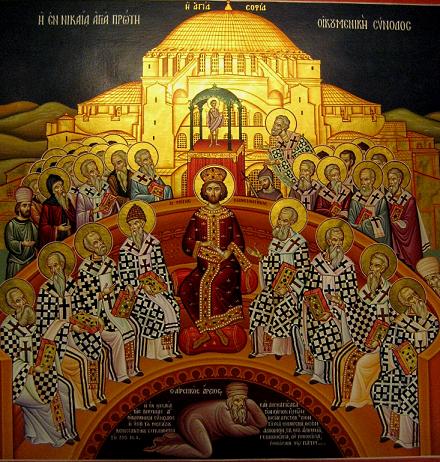
The First Ecumenical Council of Nicaea (325)
On the divinity of our Lord and Saviour Jesus Christ
Against Aryan heresy!
(The First Ecumenical Council was held in 325 A. D. in the city of Nicaea. This Council condemned the heresy of Arius, who denied the divinity of Jesus Christ and was teaching that our Lord was a God’s creature. This heresy provoked much unrest in the Church. Besides proclaiming true teaching concerning God Father and God Son, Jesus Christ, as it is presented in the first seven articles of the Creed, the Council made some canons, regulating the life of the Church).
„We believe in one God, the Father Almighty (all powerful), Maker of all things visible and invisible. And in one Lord Jesus Christ, the Son of God, the only-begotten begotten from the Father, that is from the substance [Gr. ousias, Lat. substantia] of the Father, God from God, light from light, true God from true God, begotten [Gr. gennethenta, Lat. natum] not made [Gr. poethenta, Lat. factum], CONSUBSTANTIAL [Gr. homoousion, Lat. unius substantiae (quod Graeci dicunt homousion)] with the Father, through Whom all things came to be, both those in heaven and those in earth; for us humans and for our salvation he came down and became incarnate, became man, suffered and rose up on the third day, went up (ascended) into the heavens, is coming to judge the living and the dead. And in the Holy Spirit.
And those who say that: “there once was (a time) when He was not”, and “before He was begotten He was not”, and that: He came to be from things that were not, or from another hypostasis [Gr. hypostaseos] or substance [Gr. ousias, Lat. substantia], affirming that the Son of God is subject to change or alteration; these the Catholic and Apostolic church anathematises”.
*
For a more in-depth description of this Holy Council, please also see: Sunday of the Fathers of the First Ecumenical Council
For all the Seven Ecumenical Councils of the One Catholic (Universal and Unchanged in Dogma!) and Apostolic Church, please see:
The Seven Ecumenical Councils of the Orthodox Church
Holy Fathers of the First Ecumenical Council of Nicaea (325)
During the time of the Ecumenical Councils many pious Bishops were recognized as great teachers and defenders of the faith and were glorified by the Church as saints.
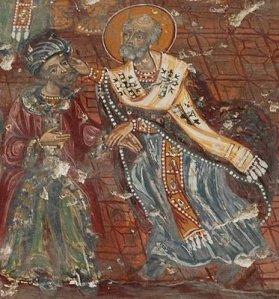
St. Nicholas, Archbishop of Myra in Licea, was known for his zeal, wisdom, humbleness and charity. He assisted the poor, quickly protected unjustly condemned or any one suffering from abuses of the rulers of those days. His noblest act, the conviction of Arius at the first Ecumenical Council, brought him an eternal glory and was marked by special acknowledgement of the fathers of the Council. He died December 6, 343 A. D. When the Saratzins were threatening the city of Myra, his relics were removed to Italy, where they repose to the present time in the city of Bahr.
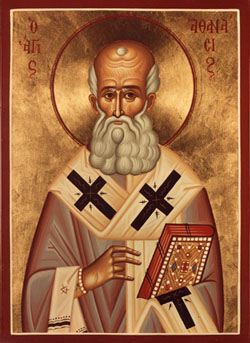
St. Athanasius the Great, of Alexandria, belongs to the school of the Apologets of the Church. When a deacon on the First Ecumenical Council, St. Athanasius was superior in his defence of the true faith against Arius’ heresy and as Archbishop of Alexandria during 46 years, proved to be steadfast pillar of the Church. He was accused by the heretics then in all kinds of crimes, including a treason, was exiled five times from Alexandria and only the last six years of his life he spent in the Cathedral city, arduously working for the peace and glory of the Church. He wrote many apologetics on behalf of the Church and died peacefully in 373 A. D., being 75 years old, and was given by the Church the title of “The Great.”
In the fourth century a most trying time for the Church, lived and worked the other three Ecumenical hierarchs and teachers – Basil the Great, Gregory the Theologian, and John Chrysostom.

St. Basil the Great, Archbishop of Cesaria of Capadocia (330-379 A. D.) was a native of that city. He was brought up in a very pious Christian family, his mother, grandmother; sisters and brother are among the saints of the Church. His father was a very prominent attorney and teacher of rhetoric. He received the best education of his time, finishing it in Athens. He was high in theology, philosophy and history, but highest in the faith and charity. As Church orator he gave to the Church the glorious “homilies on six days” of the creation where he appears to be a great scientist also. St. Basil is almost glorified for his defence of the Church against Arians. Heavy labor and religious disturbances of the time, many deprivations and ascetic life broke his health and he died in the fiftieth year of his life. He wrote Divine Liturgy that bears his name.
St. Gregory the Theologian, (326-389 A. D.) is known by this name in the Church as the greatest interpreter of the Holy Scriptures, especially on the personality of God, and his five sermons on God the Word, brought him this glorious title. He received his instructions from his mother, St. Nonna, and considered her instructions as the most valuable he had for his future.

St. Gregory was a friend of St. Basil; was in schools together with him, after in the monastery, and was consecrated as Bishop by his friend. He was elected archbishop of Constantinople when practically all Churches were taken there by the Arians, but he accepted the call and started the services in a little room and succeeded so much that the Arians were expelled from all the churches and the Orthodox Christians were admitted to the use of them. He took very prominent part at the Second Ecumenical Council against the heresy of Macedonius. After accomplishing this work St. Gregory retired to his native city of Nazians, where he spent his last years in ascetic life.
St. John Chrysostom (the Golden Mouth) is the most eloquent teacher of the Christian Church and at the same time most ardent defender of the rights and privileges of the Church. He lost his father when a child and was brought up by his pious mother Anfusa. He was a brilliant student and when his teacher, philosopher Licineus, was asked as to whom he would like to succeed him, he answered “of course John, if the Christians will not steal him from us.” About Anfusa, St. John’s mother, Licineus said: “What dignified women there are among the Christians.” After his mother’s death, St. John spent six years in seclusion and then came to the city of Antioch where he served for twelve years as a priest. Against his wish and under some pretense he was taken from Antioch and was consecrated as the Archbishop of Constantinople. First year of the service there was of much success and benefit to the Church. Nevertheless, his zeal and endeavors to correct the evils of the life among high officials and in the palace brought upon St. John displeasure and wrath of the Empress Evdoksia, and his enemies from the clergy succeeded in depriving him of his See and he was exiled.
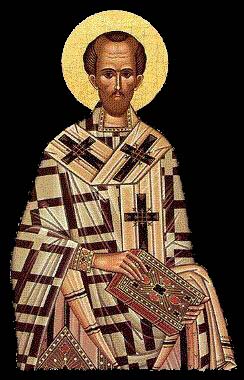
When he left the capital city, the earthquake of that night made the Empress to repent and to ask St. John to return, but her repentance were not sincere; in about two months St. John was exiled again for preaching to correct morals.
“The Church of Christ did not begin with me and will not end without me,” said the great teacher before going to his exile, which was a very severe one. On his way from Armenian city of Kukuza to Abkhazian city of Pitziunt on the north-eastern shores of the Black Sea, St. John stopped in a little village of Komani, being very weak and sick. Here in a dream appeared to him St. Vasilisk, whose relics were in this place reposing, and told him “Do not be discouraged, Brother John, tomorrow we will be together.” St. John in the morning took Holy Communion and peacefully died with the words as his last: “Glory be to God for everything.” St. John wrote Divine Liturgy that retains his name, and was anxious to bring to Christianity the people who lived then in Skiphia or present Southern Russia. He lived from 347 to 407 A.D. and is always looked upon as one of the famous fathers of our Orthodox Church_ His writings have even now a high value to the Church and serve to prove its dogmatical and historical truth.
We should be mindful of many equally saintly fathers, who rendered most useful service to the defence and expansion of the Church like Irineus of Lyon, Cyprian of Carthage, Blessed Augustin, Ambrose of Mediolan, Heronimus, Cyril of Alexandria, Cyril of Jerusalem, Gregory of Nissa, Gregory of Neocesaria and others, whose names even if we wished only to list would take many chapters of this brief historical account. But their lives, their work, their writings are most helpful for Christians to form their conceptions on different subjects related to the faith and teaching of the Church and we wish we could present them to our readers more fully but as it is, we desire very much that they study “the Fathers of the Church” with every possible opportunity.
Source: http://www.sthermansoca.org/page/christian-persecution
In the absence of other worries … this is what the „papal servants” are preocupied with!
… News from Versailles…
70 Catholic priests will take part in the championship race-karts “Padre Cup” in Trappes (Yvelines), this been the 3rd edition of the championship of karting for priests, a charity race that will involve 70 Catholic priests from 19 dioceses in France, “thus sanctifying those mechanical vehicles”, organizers say.
“We wanted to provide a ‘more de-complexed’ image of the priests, during a practical reality that tries to destroy them,” told AFP news, Rev. Pierre Amar – one of the organizers of the race. “Priests are down to earth, able to relax and remain people,” he added.
“We like the meetings between priests around a movie poster, in organizing marches, or in this case, a race, but we never talk about it because it seems something trivial,” continued Rev. Amar.
During the race, each lap of the circuit will provide the opportunity to winning some prizes in euros, for „charitable actions”. (However, it is not known whether donations will cover costs, repairs, transportation of participants…)
Evangelism or secularization?
An Orthodox Response
By Fr. Mihail (Michael) – Abbot of Antim Monastery
The presence of a priest, even without preaching anything, is a testimony of God’s presence. But God-the most pure One, can not be dragged into any place of temptation or any activity where human passions and idolatry are glorified!
And no priest can go on and assure that through his presence, all things are pleasing to God. This is because, instead of evangelizing the world, unfortunately the priest, without discernment, by letting himself „ordained” in such “human activities”, will start to work in the devil’ favor and towards his own desacramentalization (secularization) as well as of the world. From a shepherd gathering his sheep, he turns into a ravaged wolf…
For more than a thousand years now and far from being over – the fall of the Christian West (see 1054) in almost any heresy, has been officially accelerated by so-called „aggiornamento-area” – a continuous and progressive adaptation to the spirit and the fashion of the world.
Already formed and integrated (or more precisely re-educated) from childhood in this atheistic or anti-Thy mentality, man – in this pitiful state, no longer distinguishes the natural good from the unnatural evil so he may avoid the death of his soul; he works evil believing that is what’s “good”, “natural”, „right,” all for the sake of Satan. It is the acme of decadence and demonism….
We notice with sorrow, how this phenomenon of de-sacramentalization (of secularization) invades the whole world as a pandemic, the worst pandemic ever, with countless victims across the globe; from bishops to laymen, from the old to the young, from business to hobbies, turning us – submissive victims into pathogens …
In other words, if we do not stimulate our spiritual „immunity” in the “right faith” through sacraments and holy virtues, fasting and prayer, we risk to become our own criminals; and, our communities and families, rather than becoming resurrection „cores” transfigurated by love, will soon become death scaffolds of sin and disfigurement; with us the executioners but also the convicted. (…)
Let us pray to our Lord and Saviour Jesus Christ with a contrite heart, that He may grant us wisdom and strength, humility and love, so we may remain through His grace, alive and fruitful in the faith, enlighten and stilled in the good deeds, fighting the goog fight to raise our ecclesial consciousness and our communion in the Holy Spirit; to fulfill the call of the Apostle Peter: ‘you also be holy in all your conduct, as He who called you is holy, because it is written „Be holy for I am holy. “ (1 Peter 1, 15). Amen!
* * *

According to a recent article from the New York Times: the Vatican‘s chief astronomer says there is no conflict between believing in God and in the possibility of extraterrestrial “brothers” perhaps more evolved than humans.
“In my opinion this possibility exists,” said the Reverend José Gabriel Funes, head of the Vatican Observatory and a scientific adviser to Pope Benedict XVI, referring to life on other planets.
“How can we exclude that life has developed elsewhere,” he said in an interview with the Vatican newspaper L’Osservatore Romano, published in its Tuesday-Wednesday edition. The large number of galaxies with their own planets makes this possible, he noted… More at: http://www.nytimes.com/2008/05/14/world/europe/14iht-vat.4.12885393.html?_r=2
CHRISTIAN’ INTEREST IN UFOS
by Blessed Hieromonk Seraphim Rose
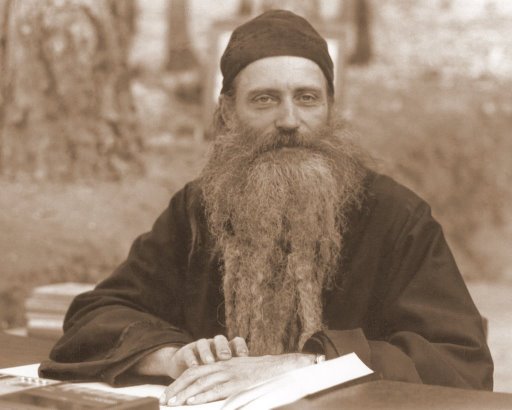
A second example of a new phenomenon, which at first sight one doesn’t know what to make of, is the now very common phenomenon of UFOs, flying saucers.
There is a particular Protestant evangelist, the above-mentioned Carl McIntire, who is extremely strict and righteous and very Bible-believing. He has a radio program, the Twentieth-Century Reformation, and a newspaper. He is absolutely upright—you have to separate from all people who are in apostasy—and his ideas are very nice. He’s anti-communist. He calls Billy Graham an apostate, together with everyone who deviates from the strict line of what he thinks is right. From this point of view he’s very strict, and yet you see the strangest things in his philosophy. For example, he’s building himself the Temple of Jerusalem, in Florida. He has a model of the Temple, and he wants to build it so as to make it compete with Disneyworld. People will come and pay to see the great Temple which is soon going to be built for Christ to come to earth. This is supposed to provide a good opportunity to witness Christianity.
He goes in for the flying saucers, also. In every issue of his newspaper there’s a little column called “UFO Column,” and there they talk, to one’s great astonishment, about all the wonderful, positive things which these flying saucers are doing. The give conferences and make movies about them.
Just recently there have been several Protestant books about UFOs, showing quite clearly that they’re demons. The person who writes the column in this newspaper got upset about this, and said that some people say that these beings are demons, but we can prove they aren’t. He says that maybe a couple of them are demons, but most of them aren’t. He cites a recent case in which some family in the Midwest saw a flying saucer. The flying saucer came down, landed, and the family saw inside little men—they’re usually four and half feet tall or so—and they sang “Hallelujah.” They stopped and looked and then they flew away; I guess they didn’t talk to them any more. And that set the family to thinking; they began to think “Hallelujah”; they began to think about Christianity; they looked in their Bibles, and they finally ended up going to a Fundamentalist church and being converted to Christianity. Therefore, he says, these beings must be some kind of people who are helping God’s plan to make the world Christian because they said “Hallelujah.”
Of course, if you read Bishop Ignatius Brianchaninov, you will know about all the deceptions which the demons perpetrate: the demons “pray” for you, the demons make miracles, they produce the most wonderful phenomena, they bring people to church, they do anything you want, as long as they keep you in this deception. And when the time comes, they will suddenly pull their tricks on you. So these people, who have been converted to some kind of Christianity by these so-called outer-space beings, are waiting for the next time they will come; and the next time their message may have to do with Christ coming to earth again soon, or something of the sort. It’s obvious that this is all the work of demons. That is, where it’s real. Sometimes it’s just imagination, but when it’s real this kind of thing obviously comes form demons.
This is very elementary. If you read any text of the early Fathers, any of the early Lives of Saints or the Lausiac History, you find many cases where beings suddenly appear. Nowadays they appear in spaceships because that’s how the demons have adapted themselves to the people of the times; but if you understand how spiritual deception works and what kind of wiles the devil has, then you have no problems in understanding what’s going on with these flying saucers. And yet this person who writes the UFO column is an absolutely strict Fundamentalist Christian. He is looking, actually for new revelations to come from beings from outer space.
The Spirit of the Last Times
A “Pentecost without Christ”
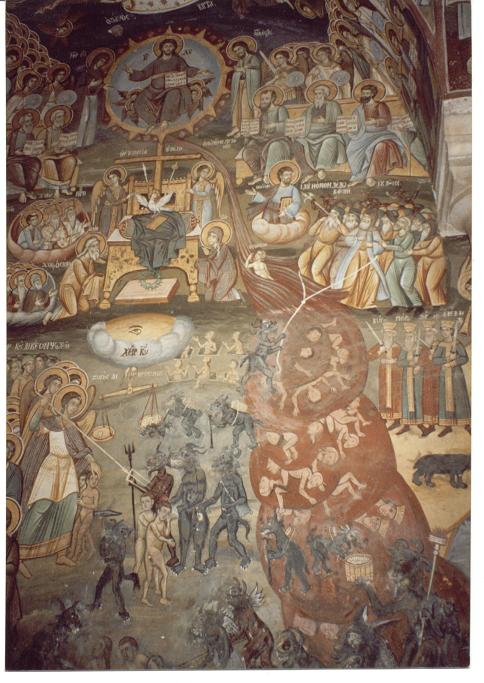
THE HOLY SCRIPTURES and Orthodox Fathers clearly tell us that the character of the last times will not at all be one of a great spiritual “revival,” of an “outpouring of the Holy Spirit,” but rather one of almost universal apostasy, of spiritual deception so subtle that the very elect, if that were possible, will be deceived, of the virtual disappearance of Christianity from the face of the earth. “When the Son of man cometh, shall He find faith on the earth?” (Luke 18:8) It is precisely in the last times that Satan is to be loosed (Apoc. 20:3) in order to produce the final and greatest outpouring of evil upon the earth.
The “charismatic revival,” the product of a world without sacraments, without grace, a world thirsting for spiritual “signs” without being able to discern the spirits that give the signs, is itself a “sign” of these apostate times. The ecumenical movement itself remains always a movement of “good intentions” and feeble humanitarian “good deeds”; but when it is joined by a movement with “power,” indeed “with all power and signs and lying wonders” (2 Thess. 2:9), then who will be able to stop it? The “charismatic revival” comes to the rescue of a floundering ecumenism, and pushes it on to its goal. And this goal, as we have seen, is not merely “Christian” in nature – the “refounding of the Church of Christ,” to use the blasphemous utterance of Patriarch Athenagoras of Constantinople – that is only the first step to a larger goal which lies entirely outside of Christianity: the establishment of the “spiritual unity” of all religions, of all mankind.
However, the followers of the “charismatic revival” believe their experience is “Christian”; they will have nothing to do with occultism and Eastern religions; and they doubtless reject outright the whole comparison in the preceding pages of the “charismatic revival” with spiritism. Now it is quite true that religiously the “charismatic revival” is on a higher level than spiritism, which is a product of quite gross credulity and superstition; that its techniques are more refined and its phenomena more plentiful and more easily obtained; and that its whole ideology gives the appearance of being “Christian” – not Orthodox, but something that is not far from Protestant fundamentalism with an added “ecumenical” coloring.
Those who bring Christian ideas to the experience assume that the “Baptism in the Holy Spirit” is a Christian experience. But if it can be given to those who merely seek a cheap, easy status experience – then there is no necessary connection whatever between this experience and Christ. The very possibility of an experience of a “Pentecost without Christ” means that the experience in itself is not Christian at all; “Christians,” often sincere and well-meaning, are reading into the experience a Christian content which in itself it does not have.
Do we not have here the common denominator of “spiritual experience” which is needed for a new world religion? Is this not perhaps the key to the “spiritual unity” of mankind which the ecumenical movement has sought in vain?
The “New Christianity”
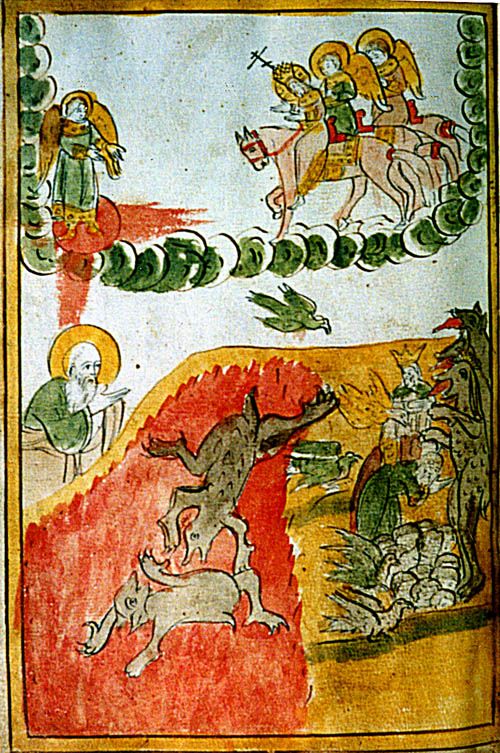
THERE MAY BE THOSE who will doubt that the “charismatic revival” is a form of mediumism; that is only a secondary question of the means or technique by which the “spirit” of the “charismatic revival” is communicated. But that this “spirit” has nothing to do with Orthodox Christianity is abundantly clear. And in fact this “spirit” follows almost to the letter the “prophecies” of Nicholas Berdyaev concerning a “New Christianity.” It completely leaves behind the “monastic ascetic spirit of historical Orthodoxy,” which most effectively exposes its falsity. It is not satisfied with the “conservative Christianity which directs the spiritual forces of man only towards contrition and salvation,” but rather, apparently believing like Berdyaev that such a Christianity is still “incomplete,” adds a second level of “spiritual” phenomena, not one of which is specifically Christian in character (although one is free to interpret them as “Christian”), which are open to people of every denomination with or without repentance, and which are completely unrelated to salvation. It looks to “a new era in Christianity, a new and deep spirituality, which means a new outpouring of the Holy Spirit” – in complete contradiction of Orthodox tradition and prophecy.
This is truly a “New Christianity” – but the specifically “new” ingredient in this “Christianity” is nothing original or “advanced,” but merely a modern form of the devil’s age – old religion of shamanistic paganism. The Orthodox “charismatic” periodical The Logos recommends Nicholas Berdyaev as a “prophet” precisely because he was “the greatest theologian of spiritual creativeness” (Logos, March, 1972, p. 8). And indeed, it is precisely the shamans of every primitive tribe who know how to get in contact with and utilize the primordial “creative” powers of the universe – those “spirits of earth and sky and sea” which the Church of Christ recognizes as demons, and in serving which it is indeed possible to attain to a “creative” ecstasy and joy (the “Nietzschean enthusiasm and ecstasy” to which Berdyaev felt so close) which are unknown to the weary and half-hearted “Christians” who fall for the “charismatic” deception. But there is no Christ here. God has forbidden contact with this “creative,” occult realm into which “Christians” have stumbled through ignorance and self-deception. The “charismatic revival” will have no need to enter a “dialogue with non-Christian religions,” because, under the name of “Christianity,” it is already embracing non-Christian religion and is itself becoming the new religion which Berdyaev foresaw, strangely combining “Christianity” and paganism.
The strange “Christian” spirit of the “charismatic revival” is clearly identified in the Holy Scriptures and the Orthodox patristic tradition. According to these sources, world history will culminate in an almost superhuman “Christian” figure, the false messiah or antichrist. He will be “Christian” in the sense that his whole function and his very being will center on Christ, Whom he will imitate in every respect possible, and he will be not merely the greatest enemy of Christ, but in order to deceive Christians will appear to be Christ, come to earth for a second time and ruling from the restored Temple in Jerusalem.
Let no one deceive you by any means, for that day shall not come except there come a falling away (apostasy) first, and that man of sin be revealed, the son of perdition, who opposeth and exalteth himself above all that is called God, or that is worshipped; so that he as God sitteth in the temple of God, showing himself that he is God… even him whose coming is after the working of Satan with all lying wonders, and with all deceivableness in them that perish; because they received not the love of the truth, that they might be saved. And for this cause God shall send them strong delusion, that they should believe a lie: that they all might be damned who believed not the truth, but had pleasure in unrighteousness (2 Thess. 2:3-4, 9-12).
The Orthodox teaching concerning antichrist is a large subject in itself and cannot be presented here. But if, as the followers of the “charismatic revival” believe, the last days are indeed at hand, it is of crucial importance for the Orthodox Christian to be informed of this teaching concerning one who, as the Saviour Himself has told us, together with the “false prophets” of that time, shall show great signs and wonders, insomuch that, if it were possible, they shall deceive the very elect (Matt. 24:24). And the “elect” are certainly not those multitudes of people who are coming to accept the gross and most unscriptural delusion that “the world is on the threshold of a great spiritual awakening,” but rather the “little flock” to which alone our Saviour has promised: It is your Father’s good pleasure to give you the Kingdom (Luke 12:32). Even the true “elect” will be sorely tempted by the “great signs and wonders” of antichrist; but most “Christians” will accept him without any question, for his “New Christianity” is precisely what they seek.
“Little Children, It is the Last Hour” (1 John 2:18)
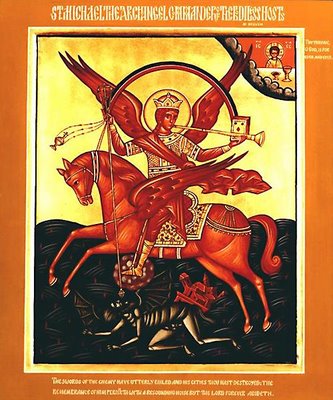
Outside of genuine Orthodoxy the darkness… grows. Judging from the latest “religious” news, the “charismatic revival” may well be only the faint beginning of a whole “age of miracles.” Many Protestants who have discerned the fraud of the “charismatic revival” now accept as “the real thing” the spectacular “revival” in Indonesia where, we are told, there are really occurring “the self same things that one finds reported in the Acts of the Apostles.” In the space of three years 200,000 pagans have been converted to Protestantism under constantly miraculous conditions: No one does anything except in absolute obedience to “voices” and “angels” who are constantly appearing, usually quoting Scripture by number and verse; water is turned into wine every time the Protestant communion service comes around; detached hands appear from nowhere to distribute miraculous food to the hungry; a whole band of demons is seen to abandon a pagan village because a “more powerful” one (“Jesus”) has come to take their place; “Christians” have a “countdown” for an unrepentant sinner, and when they come to “zero” he dies; children are taught new Protestant hymns by voices that come from nowhere (and repeat the song twenty times so the children will remember); “God’s tape-recorder” records the song of a children¹s choir and plays it back in the air for the astonished children; fire comes down from the sky to consume Catholic religious images (“the Lord” in Indonesia is very anti-Catholic); 30,000 have been healed; “Christ” appears in the sky and “falls” on people in order to heal them; people are miraculously transported from place to place and walk on water; lights accompany evangelists and guide them at night, and clouds follow them and give them shelter during the day: the dead are raised [19].
Interestingly, in some parts of the Indonesian “revival” the element of “speaking in tongues” is almost totally absent and is even forbidden (although it is present in many places), and the element of mediumism seems sometimes to be replaced by a direct intervention of fallen spirits. It may well be that this new “revival,” more powerful than Pentecostalism, is a more developed stage of the same “spiritual” phenomenon (just as Pentecostalism itself is more advanced than spiritism) and heralds the imminence of the dreadful day when, as the “voices” and “angels” in Indonesia also proclaim, “the Lord” is to come – for we know that antichrist will prove to the world that he is “Christ” by just such “miracles.”
In an age of almost universal darkness and deception, when for most “Christians” Christ has become precisely what Orthodox teaching means by antichrist, the Orthodox Church of Christ alone possesses and communicates the grace of God. This is a priceless treasure the very existence of which is not so much as suspected even by the “Christian” world. The “Christian” world, indeed, joins hands with the forces of darkness in order to seduce the faithful of the Church of Christ, blindly trusting that the “name of Jesus” will save them even in their apostasy and blasphemy, mindless of the fearful warning of the Lord: “Many will say to Me in that day, Lord, Lord, have we not prophesied in Thy name? and in Thy name have cast out devils? and in Thy name done many wonderful works? And then will I profess unto them, I never knew you: depart from Me, ye that work iniquity” (Matt. 7:22-23).
St. Paul continues his warning about the coming of antichrist with this command: “Therefore, brethren, stand fast, and hold the traditions which ye have been taught, whether by word, or our epistle” (2 Thess. 2:15). “There be some that trouble you, and would pervert the Gospel of Christ. But though we, or an angel from heaven, preach any other gospel unto you than that which we have preached unto you, let him be anathema. As we said before, so say I now again: If any preach any other gospel unto you than that ye have received, let him be anathema” (Gal. 1:8-9).
The Orthodox answer to every new “revival,” and even to the final terrible “revival” of antichrist, is this Gospel of Christ, which the Orthodox Church alone has preserved unchanged in an unbroken line from Christ and His Apostles, and the grace of the Holy Spirit which the Orthodox Church alone communicates, and only to her faithful children, who have received in Chrismation, and kept, the true seal of the gift of the Holy Spirit. Amen.
The Religion of the Future
IT IS DEEPLY INDICATIVE of the spiritual state of contemporary mankind that the “charismatic” and “meditation” experiences are taking root among “Christians.” An Eastern religious influence is undeniably at work in such “Christians,” but it is only as a result of something much more fundamental: the loss of the very feeling and savor of Christianity, due to which something so alien to Christianity as Eastern “meditation” can take hold of “Christian” souls.
The life of self-centeredness and self-satisfaction lived by most of today’s “Christians” is so all-pervading that it effectively seals them off from any understanding at all of spiritual life; and when such people do undertake “spiritual life,” it is only as another form of self-satisfaction. This can be seen quite clearly in the totally false religious ideal both of the “charismatic” movement and the various forms of “Christian meditation”: all of them promise (and give very quickly) an experience of “contentment” and “peace.” But this is not the Christian ideal at all, which if anything may be summed up as a fierce battle and struggle. The “contentment” and “peace” described in these contemporary “spiritual” movements are quite manifestly the product of spiritual deception, of spiritual self-satisfaction – which is the absolute death of the God-oriented spiritual life. All these forms of “Christian meditation” operate solely on the psychic level and have nothing whatever in common with Christian spirituality. Christian spirituality is formed in the arduous struggle to acquire the eternal Kingdom of Heaven, which fully begins only with the dissolution of this temporal world, and the true Christian struggler never finds repose even in the foretastes of eternal blessedness which might be vouchsafed to him in this life; but the Eastern religions, to which the Kingdom of Heaven has not been revealed, strive only to acquire psychic states which begin and end in this life.
In our age of apostasy preceding the manifestation of antichrist, the devil has been loosed for a time (Apoc. 20:7) to work the false miracles which he could not work during the “thousand years” of Grace in the Church of Christ (Apoc. 20:3), and to gather in his hellish harvest of those souls who “received not the love of the truth” (2 Thess. 2:10). We can tell that the time of antichrist is truly near by the very fact that this satanic harvest is now being reaped not merely among the pagan peoples, who have not heard of Christ, but even more among “Christians” who have lost the savor of Christianity. It is of the very nature of antichrist to present the kingdom of the devil as if it were of Christ. The present-day “charismatic” movement and “Christian meditation,” and the “new religious consciousness” of which they are part, are forerunners of the religion of the future, the religion of the last humanity, the religion of antichrist, and their chief “spiritual” function is to make available to Christians the demonic initiation hitherto restricted to the pagan world. Let it be that these “religious experiments” are still often of a tentative and groping nature, that there is in them at least as much psychic self-deception as there is a genuinely demonic initiation rite; doubtless not everyone who has successfully “meditated” or thinks he has received the “Baptism of the Spirit” has actually received initiation into the kingdom of satan. But this is the aim of these “experiments,” and doubtless the techniques of initiation will become ever more efficient as mankind becomes prepared for them by the attitudes or passivity and openness to new “religious experiences” which are inculcated by these movements.
What has brought humanity – and indeed “Christendom” – to this desperate state? Certainly it is not any overt worship of the devil, which is limited always to a few people; rather, it is something much more subtle, and something fearful for a conscious Orthodox Christian to reflect on: it is the loss of the grace of God, which follows on the loss of the savor of Christianity.
Roman Catholics and Protestants today have not fully tasted of God’s grace, and so it is not surprising that they should be unable to discern its demonic counterfeit. But alas! The success of counterfeit spirituality even among Orthodox Christians today reveals how much they also have lost the savor of Christianity and so can no longer distinguish between true Christianity and pseudo-Christianity. For too long have Orthodox Christians taken for granted the precious treasure of their Faith and neglected to put into use the pure gold of its teachings. How many Orthodox Christians even know of the existence of the basic texts of Orthodox spiritual life, which teach precisely how to distinguish between genuine and counterfeit spirituality, texts which give the life and teaching of holy men and women who attained an abundant measure of God’s grace in this life? How many have made their own the teaching of the Lausiac History, the Ladder of St. John, the Homilies of St. Macarius, the Lives of the God-bearing Fathers of the desert, Unseen Warfare, St. John of Kronstadt’s My Life in Christ?
In the Life of the great Father of the Egyptian desert, St. Paisius the Great (June 19), we may see a shocking example of how easy it is to lose the grace of God. Once a disciple of his was walking to a city in Egypt to sell his handiwork. On the way he met a Jew who, seeing his simplicity, began to deceive him, saying: “O beloved, why do you believe in a simple, crucified Man, when He was not at all the awaited Messiah? Another is to come, but not He.” The disciple, being weak in mind and simple in heart, began to listen to these words and allowed himself to say: “Perhaps what you say is correct.” When he returned to the desert, St. Paisius turned away from him and would not speak a single word to him. Finally, after the disciple¹s long entreaty, the Saint said to him: “Who are you? I do not know you. This disciple of mine was a Christian and had upon him the grace of Baptism, but you are not such a one; if you are actually my disciple, then the grace of Baptism has left you and the image of a Christian has been removed.” The disciple with tears related his conversation with the Jew, to which the Saint replied: “O wretched one! What could be worse and more foul than such words, by which you renounced Christ and His divine Baptism? Now go and weep over yourself as you wish, for you have no place with me; your name is written with those who have renounced Christ, and together with them you will receive judgment and torments.” On hearing this judgment the disciple was filled with repentance, and at his entreaty the Saint shut himself up and prayed to the Lord to forgive his disciple this sin. The Lord heard the Saint¹s prayer and granted him to behold a sign of His forgiveness of the disciple. The Saint then warned the disciple: “O child, give glory and thanksgiving to Christ God together with me, for the unclean, blasphemous spirit has departed from you, and in his place the Holy Spirit has descended upon you, restoring to you the grace of Baptism. And so, guard yourself now, lest out of sloth and carelessness the nets of the enemy should fall upon you again and, having sinned, you should inherit the fire of gehenna.”
Significantly, it is among “ecumenical Christians” that the “charismatic” and “meditation” movements have taken root. The characteristic belief of the heresy of ecumenism is this: that the Orthodox Church is not the one true Church of Christ; that the grace of God is present also in other “Christian” denominations, and even in non-Christian religions; that the narrow path of salvation according to the teaching of the Holy Fathers of the Orthodox Church is only “one path among many” to salvation; and that the details of one’s belief in Christ are of little importance, as is one’s membership in any particular church. Not all the Orthodox participants in the ecumenical movement believe this entirely (although Protestants and Roman Catholics most certainly do); but by their very participation in this movement, including invariably common prayer with those who believe wrongly about Christ and His Church, they tell the heretics who behold them: “Perhaps what you say is correct,” even as the wretched disciple of St. Paisius did. No more than this is required for an Orthodox Christian to lose the grace of God; and what labor it will cost for him to gain it back!
How much, then, must Orthodox Christians walk in the fear of God, trembling lest they lose His grace, which by no means is given to everyone, but only to those who hold the true Faith, lead a life of Christian struggle, and treasure the grace of God which leads them heavenward. And how much more cautiously must Orthodox Christians walk today above all, when they are surrounded by a counterfeit Christianity that gives its own experiences of “grace” and the “Holy Spirit” and can abundantly quote the Scriptures and the Holy Fathers to “prove” it! Surely the last times are near, when there will come spiritual deception so persuasive as to “deceive, if it were possible, even the very elect” (Matt. 24:24).
Orthodox Christians! Hold fast to the grace which you have; never let it become a matter of habit; never measure it by merely human standards or expect it to be logical or comprehensible to those who understand nothing higher than what is human or who think to obtain the grace of the Holy Spirit in some other way than that which the one Church of Christ has handed down to us. True Orthodoxy by its very nature must seem totally out of place in these demonic times, a dwindling minority of the despised and “foolish,” in the midst of a religious “revival” inspired by another kind of spirit. But let us take comfort from the certain words of our Lord Jesus Christ: “Fear not, little flock, for it is your Fathers good pleasure to give you the Kingdom” (Luke 12:32).
Let all true Orthodox Christians strengthen themselves for the battle ahead, never forgetting that in Christ the victory is already ours. He has promised that the gates of hell will not prevail against His Church (Matt. 16:18), and that for the sake of the elect He will cut short the days of the last great tribulation (Matt. 24:22). And in truth, “If God be for us, who can be against us?” (Rom. 8:31). Even in the midst of the cruelest temptations, we are commanded to be of good cheer; I have overcome the world (John 16:33). Let us live, even as true Christians of all times have lived, in expectation of the end of all things and the coming of our dear Saviour; for “He that giveth testimony of these things saith: Surely I come quickly. Amen. Come, Lord Jesus” (Apoc. 22:20).
______________________________________________
Excerpts from “Orthodoxy and the Religion of the Future” by blessed Father Seraphim Rose @ St. Herman of Alaska Brotherhood, Platina, California, 2004.
On Holy Tradition
(Taken from “The Truth of Our Faith”: A Discourse from Holy Scripture on the Teachings of True Christianity)
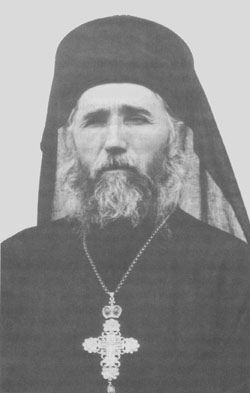
By Elder Cleopa of Romania
Inquirer: What is the Holy Tradition that the Orthodox consider to be the second source of Holy Revelation and coequal with Holy Scripture?
Elder Cleopa: Holy Tradition is the teaching of the Church, God-given with a living voice, from which a portion was later written down. As with Holy Scripture, so, too, Holy Tradition contains Holy Revelation, and is, therefore, fundamental for our salvation. Holy Tradition is the life of the Church in the Holy Spirit and, consonant with the enduring life of the Church, is thus a wellspring of Holy Revelation, such that, consequently, it possesses the same authority as Holy Scripture.
From the time of Adam until that of Abraham, according to the old chronologies, 3,678 years passed, and if we add 430 years when the Israelites remained in Egypt, we have 4,108 years. Throughout this period of time Holy Scripture neither existed nor was the Sabbath considered as a feast among the people. During this period of many thousands of years the faithful and chosen people were guided to the path of salvation only by Holy Tradition, namely, from the teachings about God which they received from a living voice. Only for the duration of 1400 years – from the time of Moses until the advent of Christ – were they guided by the Holy Scriptures of the Old Testament.
Just as before the books of the Old Testament were written the people were guided in the knowledge of God and on the path of salvation only by Holy Tradition (Tradition with a living voice, orally), so too were they precisely before the writing of the books of the New Testament. The Holy Tradition was the guide by which the first Christians were directed to the path of salvation. The first to impart the teachings of the New Testament with a living voice to the ears of the people was our Saviour Jesus Christ Himself, who for three and a half years continually taught the people, distributing His Gospel without, however, writing anything. Inasmuch as He was carrying out obedience to His Father, He didn’t send His Apostles to write but to preach the Gospel to the whole world, saying to them: “Go ye therefore, and teach all nations, baptizing them in the name of the Father, and of the Son, and of the Holy Spirit: Teaching them to observe all things whatsoever I have commanded you: and lo, I am with you always, even unto the end of the world. Amen” (Mat. 28:19-20). From the day of its establishment (33 AD) until the year 44 AD, when the the Holy Apostle Matthew wrote the first Gospel [1], the Church was governed without the Scriptures of the New Testament, but only with the Holy Tradition of which only a part was later recorded. Although there were many other writers for whom it was claimed that they were inspired and faithful scribes of the Apostles, the Church is She who did or did not recognise them, for She is unerring. The Church lived the truth of the Gospel even before anything was committed to writing, having lived with the Holy Tradition from the outset.
So then, this is the Holy Tradition: The source and the root of the two Testaments – the Old and the New – and thus the reason why we call it a source of Holy Revelation, since it carries the same weight as Holy Scripture.
Inq.: Yes, but it is said that Holy Scripture as God’s word is not permitted to be substituted or exchanged with Tradition, which is man’s word, as is written in the Gospel: “Why do you also transgress the commandment of God by your tradition? . . . ye made the commandment of God of none effect by your tradition. Ye hypocrites, well did Isaiah prophesy of you, saying: ‘This people . . . in vain do they worship me, teaching for doctrine the commandments of men” (Mat. 15:3, 6-9; Mk. 7:13). Thus, it is not necessary for us to replace or add the tradition of men to the law of God, which is contained in Holy Scripture.
Elder Cleopa: What your friends have told you is not at all true, since the law of God is not only contained in Holy Scripture. Listen to what the divine Evangelist John says: “And there are also many other things which Jesus did, the which, if they should be written every one, I suppose that even the world itself could not contain the books that should be written. Amen” (Jn. 21:25). Again the same Evangelist declares in one of his epistles: “Having many things to write unto you, I would not write with paper and ink: but I trust to come unto you, and speak face to face, that our joy may be full” (2 Jn. 1:12). So, you see that the holy evangelist, when he had the ability, taught his disciples more with the living voice of Tradition than by sending them epistles. While your friends keep at all costs only so much as is written, they don’t take into account that both the Saviour and the majority of His Apostles did not leave anything written, but rather taught orally, with the living voice of Tradition.
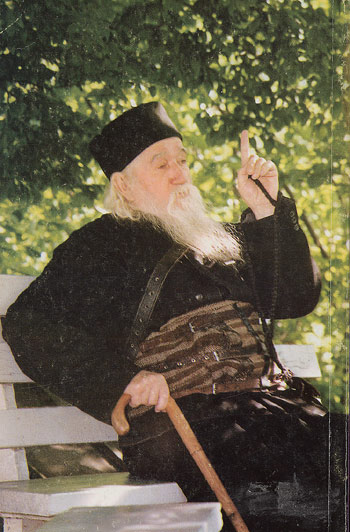
Inq.: In that case, I don’t know how Christians are to understand the statement that we must not be seduced by the false teachings of men, especially those which are religious and rely on Scripture. After all, the Apostle counsels us: “Beware lest any man spoil you through philosophy and vain deceit, after the tradition of men, after the rudiments of the world, and not after Christ” (Col. 2:8). It is our responsibility, then, to preserve ourselves from the false traditions of men.
Elder Cleopa: Dearest to Christ, you do not discern the difference between the teachings of human traditions and those that proceed from the apostolic and evangelical tradition. You brought here an excerpt from Holy Scripture that refers to the tradition of human teachings and pseudo philosophy that has no relationship whatsoever to the evangelical and apostolic Tradition of the Church of Jesus Christ. Holy Tradition is neither a tradition of men, nor a philosophy, nor some kind of trickery, but is the word of God that He delivered to us personally. The great Apostle Paul teaches and exhorts us to keep with vigour the traditions, saying; “Therefore, brethren, stand fast, and hold the traditions which ye have been taught, whether by word, or our epistle” (2 Thess. 2:15). On the contrary, some counsel weaker Christians to slander and abandon the apostolic and evangelical traditions, without understanding that Holy Scripture itself is a fruit of the Holy Spirit that grew out of the roots and tree of Holy Tradition.
Inq.: Why isn’t Holy Scripture sufficient for faith and salvation, without having any need whatsoever of Tradition? This appears to be the case from the words of the Apostle Paul to Timothy: “And that from a child thou hast known the holy Scriptures, which are able to make thee wise unto salvation through faith which is in Christ Jesus. All Scripture is given by inspiration of God, and is profitable for doctrine, for reproof, for correction, for instruction in righteousness” (2 Tim. 3:15-16). These words are clear. Any addition to Holy Scripture is unnecessary.
Elder Cleopa: Here he is speaking only about the Scripture of the Old Testament, for the New Testament had not yet been written. Paul wrote to Timothy that a good teacher could use the Old Testament for the support of his faith in Christ and his instruction in Christianity. According to the notion that you mistakenly asserted, it follows that not one book of the New Testament – from those that were written in the period that followed these epistles of the Apostle Paul to Timothy – should be accepted. Rather, it is enough for us to recognize the Old Testament books mentioned here in the passage to which you refer.
Inq.: Some people don’t acknowledge the Tradition because they say that with the passing of time it yielded to many illegitimate elements, so that, especially today, we are no longer able to discern the true apostolic Tradition from the false.
Elder Cleopa: The Church of Christ determined the truths of the faith, according to the long course of Tradition, through the teachings and canons of the holy Oecumenical Councils, decrees and the Symbol of Faith [The Creed], and with confessions [of Faith] by holy and wonderworking hierarchs such as were made at the many local synods which have been held continuously since the days of old. At these synods the authenticity and genuineness of the holy Orthodox Faith was firmly established, primarily therein where it was attacked by the existing heresies of the time. From the totality of such synods appears the irrevocable and inalterable content of Holy Tradition. This is understood when you examine closely the essence of the following conditions:
– Do not sanction conceptions that contain inconsistencies amongst themselves or contradictions with the apostolic Tradition and Holy Scripture. (A teaching is to be considered worthy of “Tradition” when it stems from the Saviour or the Holy Apostles and is directly under the influence of the Holy Spirit.)
– The Tradition is that which has been safeguarded from the Apostolic Church and has an uninterrupted continuity until today.
– The Tradition is that which is confessed and practiced by the entire universal Orthodox Church.
– The Tradition is that which is in harmony with the greatest portion of the fathers and ecclesiastical writers.
When a tradition does not fulfil these stipulations, it cannot be considered true and holy, and consequently cannot be considered admissible or fit to be observed.
Inq.: Notwithstanding all the efforts which you say the Orthodox Church has made and makes relative to the truth of Tradition, some believe only the teachings which are contained in Holy Scripture. For the first Christians – they say – accepted only such writings as were contained in Holy Scripture, as it is written: “These were more noble than those in Thessalonica, in that they received the word with all readiness of mind and searched the Scriptures daily, whether those things were so” (Acts 17:11). From this it follows that we should keep those teachings find written in Holy Scripture.
Elder Cleopa: However, the great Apostle Paul commends the Christians of Corinth not because they kept the written teachings, but because they obeyed him and observed with diligence the oral teachings that they had received from him. Listen to what he writes; “Now I praise you, brethren, that ye remember me in all things, and even as I delivered to you, ye are holding fast the traditions” (1 Cor. 11:2). I wonder, what is better to do: for us to keep only the written teachings or to follow the great Apostle Paul who extols those who keep the unwritten tradition as well? Furthermore, we’ve established that the Holy Apostles and Evangelists believed and preach-ed abundantly from Holy Tradition, which they inherited from of old and is not written anywhere in Holy Scripture.
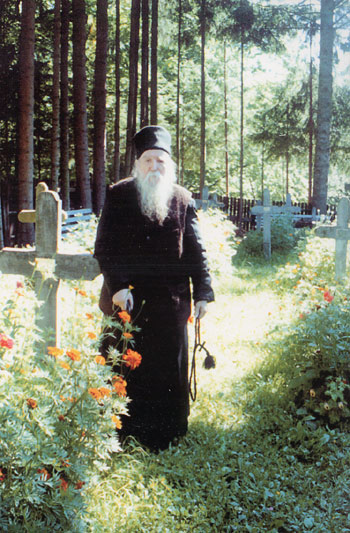
Inq.: Where specifically does it appear that the Holy Apostles taught other teachings aside from those which are written in Holy Scripture?
Elder Cleopa: Here are two testimonies: The Holy Apostle Jude in his catholic epistle, verse nine, among others, says: “But when the archangel Michael, contending with the devil, disputed about the body of Moses, he did not presume to pronounce a reviling judgement upon him, but said, The Lord rebuke thee” (Jude 9). Dearest to Christ, search all of Holy Scripture and see if you will find written this utterance. Still further down in the same epistle the Apostle refers to the prophecy of Enoch, saying: “And Enoch also, the seventh from Adam, prophesied of these, saying, Behold, the Lord cometh with ten thousand of his saints, to execute judgement upon all, and to convince all that are ungodly among them of all their ungodly deeds which they have committed in such an ungodly way, and of all their hard speeches which ungodly sinners have spoken against him” (Jude 14-20). Yet, the Apostle Jude is not alone in speaking from Tradition. Listen to what the illustrious Paul says in his second epistle to Timothy; “Now as Jannes and Jambres withstood Moses, so do these also resist the truth: men of corrupt minds, reprobate concerning the faith” (2 Tim. 3:8). And again the renowned Apostle Paul, guiding the priests of Ephesus, says: “Remember the words of the Lord Jesus, how he said, it is more blessed to give than to receive” (Acts 20:35). Now, I ask you, who insist on putting faith only in the written word, from where did the two Apostles – Jude and Paul – take the foregoing words, for you will not find them written anywhere in Holy Scripture?
Inq.: Still, I question if it is possible for Holy Tradition to be preserved until today unadulterated and genuine in all respects as in the beginning? Shouldn’t we possess more assurances from the written teachings of Holy Scripture?
Elder Cleopa: You saw above that the famed Paul commends the Christians of Corinth for keeping, with care and mindfulness, the unwritten traditions, such as they had received from his very lips. Moreover, you heard that the Apostles Paul and Jude employed in their preaching words taken directly from Holy Tradition, such as those that referred to the prophecy of Enoch, and others. Further, I also pointed out to you by what means Holy Tradition was preserved throughout the ages. Furthermore, the same Apostle Paul exhorts and directs the Christians of Thessalonica to be very attentive and vigilant to keep the Holy Tradition: “Therefore, brethren, stand fast, and hold the traditions which ye have been taught, whether by word, or our epistle” (2 Thess. 2:15). And in another place he says: “But though we, or an angel from heaven, preach any other gospel unto you than that which we have preached unto you, let him be accursed” (Gal. 1:8). In other words, he is speaking of the Gospel that he handed down to them with a living voice and not only by written word.
Inq.: How was this Canon of Holy Tradition in the Church preserved over the span of thousands of years? In our age some allege that from day to day the clergy and ecclesiastical writers alter the truth of Holy Scripture and the Apostolic Tradition, which in the beginning was authentic and genuine? They say that if you have in your hand a book that was published 50 years ago and you put it next to one published recently, they would have nothing in common. It follows, then, that if the hierarchs and priests have done this with the sacred books, they would do the same with the Holy Tradition of which the Orthodox boast as having preserved unscathed from the Holy Apostles.
Elder Cleopa: That which your companions have accepted is not at all correct. The teachings of the Church of Christ are safeguarded by the Holy Spirit and cannot err (Mat. 10:17-20, John 4: 16-26, 1 Tim. 3:15). Its very founder, Jesus Christ governs it in an unseen way, until the end of the ages (Mat. 28:20). If some ecclesiastical writers, hierarchs, priests or laity translated the Bible from another language or amended some passage of which an expression does not correspond to the present-day speech of our people, this would be an adjustment and modification of expression and not a serious alteration of the substance of the Biblical text. If today a Romanian from the time of the Elder Mirtsea or Stephan the Great (1504) were resurrected and you wanted to speak with him, you would understand him with difficulty, the language having developed, no longer being exactly that which was spoken then. That’s exactly what happened regarding the books. With the passage of time the writers’ words or expressions were amended with suitable present-day language, without however, changing the meaning of the profound and sacred writings. Previously, I referred you to the foundation upon which Holy Tradition rests and by what means the preservation of its authentic original image is ensured and is conveyed through the ages. This refers to, namely, the ancient Symbol of Faith (The Creed), the apostolic canons and the dogmatic decisions of the seven [2] Oecumenical Councils. To these can also be added the following monumental and meaningful testaments – assurances of the unimpaired preservation of the Holy Tradition:
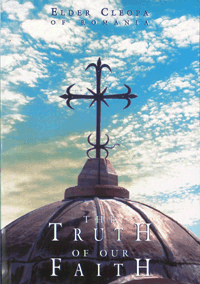
– The acts of the early Church, the witnesses of the company of the apostles, amongst whom are Saint Ignatius the God-bearer (+104 AD), a disciple of the Apostles and Saint Polycarp of Smyrna (+106 AD). These Fathers admonished the faithful of their day to safeguard themselves from the teachings of heretics and to maintain in the full only the Apostolic Tradition (Eusebius of Caesarea, Ecclesiastical History, Bk 2:36).
– Hegessipus, Eusebius tells us5, attempted to collect the whole of the apostolic traditions and nearly managed it, gathering more than five books worth of material that Eusebius studied. Unfortunately, with the passage of time, these books were eventually lost (Eusebius of Caesarea, Ecclesiastical History, Bk 4:8).
– Saint Irenaeus (+202 AD) and Clement of Alexandria (+215 AD) inform us: “Those who explain Scripture without the help of the Church’s Tradition cut asunder the significance of truth” (Stromatis, pg 7).
Behold, further, those brilliant witnesses representing the faith of apostolic times and the period immediately following it up until the fourth century. The acts of the ancient Church are an important testimony to the value of the Holy Tradition and honour shown it from those times until today.
– Origin (+250 AD) says: “Preserve the Holy Tradition in the Church.”
– St. Epiphanios (+403 AD) writes: “It is necessary to hold to the Tradition because it is not possible for everything to be found in Holy Scripture. The Holy Apostles handed down some things via the written word, while others via the spoken.”
– Saint John Chrysostom (+407 AD) says: “Hence it is clear that the Holy Apostles did not deliver everything by epistle; rather many things they handed down via the spoken word which is also trustworthy. If there is the Tradition, then don’t ask for anything more” (4th Homily on 2 Thess. See verse 2:45)

– Saint Gregory of Nyssa (+394 AD) writes: “We have the Tradition set out for us from the Fathers like an inheritance by apostolic succession and transmitted via the saints” (Against Eunomius, Book 40).

– Saint Basil the Great (+379 AD) in his writings provides similar testimony. Here is how he expresses it: “Among the dogmas and kerygma (evangelical truths) that are safeguarded in the Church, some we have from the written teachings while others we’ve received orally from the Tradition of the Apostles by a concealed succession. The later hold the same legitimacy and force as the written texts” (On the Holy Spirit)
We must uphold with great reverence and godliness Holy Tradition since all that is needful to effect our salvation is not found within Holy Scripture. Holy Scripture instructs us to do many things; however, it does not make manifest to us the light. For example, it instructs us to be baptized, but it doesn’t explain to us the method. Likewise, it guides us to confess our sins, receive communion, be crowned (married) – but nowhere does it specify the rite of carrying-out these mysterion (sacraments). Furthermore, it instructs us to pray, but doesn’t tell us how, where and when. It tells us to make the sign of the Holy Cross in front of our chest according to the psalmist “Lord, lift Thou up the light of Thy countenance upon us,” but it doesn’t show us how. Who teaches us in writing to worship facing east? Where in Scripture are we told the words of the epiclesis (invocation) of the Holy Spirit for the sanctification of the all-holy Mysteries? Which teaching from Holy Scripture instructs us to bless the water of Baptism and the holy Unction of Holy Chrismation? Which passage in Scripture teaches us about the threefold denunciation and the renunciations of Satan before Holy Baptism? The prayer of glorification toward the Holy Trinity – “Glory to the Father and to the Son and to the Holy Spirit” – from which passage did it come to us?
Posing these questions to the slanderer of Tradition, Saint Basil the Great says: “If we consent to abandon the unwritten traditions on the pretext that they don’t have great worth, we err in great and elevated matters, rejecting the Gospel.”
The ordering, therefore, by which the Church upholds the unwritten is: whatever is of apostolic descent and is practiced by the Fathers receives the validity of tradition and has the power of law in the Church of Christ (The Rudder, Neamts Monastery, 1844, Canons 87, 91). Accordingly therefore, it must safeguarded since its importance and benefit springs from the relationship that exists between it and Holy Scripture. It is true that both have remained within a reciprocal unity and intimate relationship – a relationship based on the fact that both comprise the holy revelation of God and for us are the fount and source of Revelation. Hence, it is not possible for there to exist an inner contradiction between the two or for us to exclude one from the other. Holy Scripture possesses its unique witness of the scriptural canon and its dogmatic character (its divine inspiration) only in and with Holy Tradition, while Holy Tradition is able to prove the authenticity of its truth only together with Holy Scripture.
Endnotes
1 There are scholars who believe that, in fact, “the writing of the three first Gospels is placed. . . around the year 70 AD.” (J. Karabidopoulos, Introduction to the New Testament, p. 104 (In Greek))
2 The Elder here is referring to the well-known seven Oecumenical Councils, however, in essence the Church also accepts an eighth (879), which confirmed the rejection of the “filioque” clause in the presence and with the support of the Church of Rome, and a ninth (1341), which rejected the humanistic-scholastic theology of Barlaam in support of the Hesychasts and St. Gregory Palamas. The truths expounded by these two councils have helped to uphold the Church against the theological distortions which have been brought to bear over the past 650 years, first in the West, and soon thereafter in the East.
On the Presuppositions of our Personal Salvation
Inquirer: Father, earlier you spoke about our “personal salvation.” Can you tell me more about this?
Elder Cleopa: Some religious confessions teach that personal salvation presupposes the action of Divine Grace alone, according to Calvin, or the grace of faith, i.e. of trust in God, according to Luther, by which the “merits” or virtues of our Lord Jesus Christ are conferred upon man. Therefore, to give a general outline, there are Protestant Christians who believe that salvation stems only from faith and that on the part of man himself there is placed no condition or requirement for his salvation.
Our Church, however, teaches that our personal salvation is neither a gift, nor a simple work, but rather a process and an undertaking that matures or develops gradually and is realized in the co-operation of two persons: God and man. On the part of God, Divine Grace (His uncreated Divine Energy) is offered to us, while for man’s part, faith and righteous deeds are necessary. Consequently, the prerequisites for our personal salvation are the following: the Divine Grace or uncreated Divine Energy of God and the faith and virtuous deeds of man.
Our objective salvation is realized only in the sacrifice of Jesus Christ, whereas our personal or subjective salvation, which in the language of the New Testament is called “righteousness,” “holiness,” or “salvation” (in the narrow sense), is realized as a continuance of this objective salvation, with our personal energy or activity acting in co-operation with Divine Energy or Grace.
On the part of God, Divine Grace is absolutely necessary, for we have all sinned and fallen short of the glory of God, and we are justified by His grace, redeemed in Christ Jesus (Rom. 3:23-24). “For it is God who worketh in you, both to will and to do of His good pleasure” (Philp. 2:13). “For by grace are ye saved through faith, and not that of yourselves: it is the gift of God – not by works, lest any man should boast. For we are His workmanship, created in Christ Jesus unto good works, which God hath beforehand ordained, that we should walk in them” (Eph. 2: 8-10).
From this it is clear that divine Grace is necessary for our personal salvation. This truth is also evident in the words of the Lord: “I am the vine, ye are the branches: He that abideth in me, and I in him, the same bringeth forth much fruit: for without me ye can do nothing. If a man abide not in me, he is cast forth as a branch, and is withered; and men gather them, and cast them into the fire, and they are burned. If ye abide in me, and my words abide in you, ye shall ask what ye will, and it shall be done unto you” (Jn. 15: 5-7).
Hence, the Grace of God is for us the fluid that runs from vine to the vine branch. On the part of man, saving and actualized faith is necessary, i.e. “faith which worketh by love” (Gal. 5:6). Without this contribution of man’s, salvation is not held out for any man. Conscious faith in God, without good deeds, the demons, too, possess, for they also “believe and tremble” (Jas. 2:19). Holy Scripture itself makes clear that good works are necessary for salvation. Holy Scripture is filled with passages which refer to good deeds as a necessary prerequisite of our salvation (Mat. 25:34, Jn. 5:29, Rom. 2:6-13, 2 Cor. 5:10, Jas. 2:14-26, Rev. 20:12, and others).
Inq.: I have gathered from different discussions I have had with representatives of various confessions that they are of the opinion that divine Grace operates by force and irresistibly. For them, it is not possible to speak at all of freedom, nor of a certain worthiness of man in whatever pertains to his salvation. It is said that this is apparent from the parable of the Lord: “And the Lord said unto the servant, go out into the highways and hedges, and compel them to come in, that my house may be filled” (Lk. 14:23). Elsewhere the Lord also said: “No man can come to me, except the Father which hath sent me draw him: and I will raise him up at the last day” (Jn. 6:44). It is claimed that with this meaning in mind the Apostle Paul says the following: “For it is God which worketh in you both to will and to do of his good pleasure” (Phil. 2:13). It would seem clear from all of these citations that there does not, in fact, exist freedom of will and that God alone, independent of our disposition, grants salvation.
Elder Cleopa: Holy Scripture teaches us clearly that man is created by God free and self-governing, that is, with freedom of will, as the Holy Spirit tells us: “O Lord as with a shield of Thy good pleasure hast thou crowned us” (Ps. 5:13). Elsewhere it says, “He Himself made man from the beginning, and left him in the hand of his counsel,” (Eclus. 15:14) and again, “He hath set fire and water before thee: stretch forth thy hand unto whichever thou wilt” (Eclus. 15:16). Furthermore, in another place in Holy Scripture it is said: “Behold, I set before you this day a blessing and a curse; a blessing if ye obey the commandments of the LORD your God” (Dt. 11: 26-27). And further on it is said: “See, I have set before thee this day life and death, good and evil . . . I call heaven and earth to record this day against you, that I have set before you life and death, blessing and cursing: therefore choose life, that both thou and thy seed may live” (Dt. 30: 15, 19).
The freedom of the will of man, as well as the dependence of salvation upon his freedom, appears more clearly from the words of the Saviour Himself. “O Jerusalem, Jerusalem, thou that killest the prophets, and stonest them which are sent unto thee, how often would I have gathered thy children together, even as a hen gathereth her chickens under her wings, and ye would not!” (Mat. 23:37, Lk. 11:20) Whereas to the rich young man He said, “If thou wilt enter into Life, keep the commandments” (Mat. 19:17, Heb. 4:11, Rom. 2:4).
Through the mouth of His prophet Isaiah, God says the following: “If ye be willing and obedient, ye shall eat the good of the land. But if ye refuse and rebel, ye shall be devoured with the sword” (Isa. 1: 19-20). And again to the rich young man He says, “If thou wilt be perfect, go and sell that thou hast, and give to the poor, and thou shalt have treasure in heaven: and come and follow me” (Mat. 19:21).
In all of these passages it is positively obvious that God fashioned man with freedom of will and does not compel the will of anyone to draw nigh to salvation. For if the will of man is coerced into accepting salvation then any compensation in the future life would be meaningless. Likewise, God would cease to be the just judge the Holy Scriptures customarily refer to Him as being. If our salvation is accomplished without our personal will then that which the great Apostle Paul says would be incomprehensible to us: “For we must all appear before the judgement seat of Christ; that every one may receive the things done in his body, according to that he hath done, whether it be good or bad” (2 Cor. 5:10). And likewise, “Now he that planteth and he that watereth are one: and every man shall receive his own reward according to his own labour” (1 Cor. 3:8).
Inq.: Fair enough, but I still have serious doubts. Isn’t it possible that God, from before the ages, determined the fate of each one of us? In other words, some are to be saved and some to be punished, analogous with the decisions rendered from time immemorial, out of His sovereign pre-ordination for each one of us? The following words of the Apostle Paul appear to support this opinion.
“For the children being not yet born, neither having done any good or evil, that the purpose of God according to election might stand, not of works, but of him that calleth; It was said unto her, The elder shall serve the younger. As it is written, Jacob have I loved, but Esau have I hated. What shall we say then? Is there unrighteousness with God? God forbid. For he saith to Moses, I will have mercy on whom I will have mercy, and I will have compassion on whom I will have compassion. So then it is not of him that willeth, nor of him that runneth, but of God that sheweth mercy. For the scripture saith unto Pharaoh, Even for this same purpose have I raised thee up, that I might shew my power in thee, and that my name might be declared throughout all the earth. Therefore hath he mercy on whom he will have mercy, and whom he will he hardeneth. Thou wilt say then unto me, Why doth he yet find fault? For who hath resisted his will? Nay but, O man, who art thou that repliest against God? Shall the thing formed say to him that formed it, Why hast thou made me thus? Hath not the potter power over the clay, of the same lump to make one vessel unto honour, and another unto dishonour?” (Rom. 9: 11-21).
The same Apostle says elsewhere,
“Blessed be the God and Father of our Lord Jesus Christ, who hath blessed us with all spiritual blessings in heavenly places in Christ: According as he hath chosen us in him before the foundation of the world, that we should be holy and without blame before him in love: Having predestined us unto the adoption of children by Jesus Christ to himself, according to the good pleasure of his will.” (Eph. 1: 3-4).
From this it seems evident that salvation is offered according to the decision of God from before the ages. For the Apostle says likewise elsewhere: “But we are bound to give thanks always to God for you, brethren beloved of the Lord, because God hath from the beginning chosen you to salvation through sanctification of the Spirit and belief of the truth: Whereunto he called you by our gospel, to the obtaining of the glory of our Lord Jesus Christ” (2 Thess. 2:13-14). Furthermore, the following is written in another passage: “But we speak the wisdom of God in a mystery, even the hidden wisdom, which God ordained before the world unto our glory” (1 Cor. 2:7). And elsewhere it is said: “what hast thou that thou didst not receive? Now if thou didst receive it, why dost thou glory, as if thou hadst not received it?” (1 Cor. 4:7). “For it is God which worketh in you both to will and to do of his good pleasure” (Phil. 2:13). Hence, consequently the problem is posited as follows: No one is saved except those who were pre-elected and predestined by God from before the ages. Man in this life follows the lot proscribed for him by God without the possibility of changing or replacing it.
Elder Cleopa: Holy Scripture contains within it unanswerable passages or, as Saint Gregory of Nyssa puts it, “strong bones.” Some would like to break these bones of Scripture with their wisdom teeth as of yet still only suitable for sucking milk. However, such a thing they would never be able to manage. All who have desired to plunge into the depths of Scripture have drowned in the fathomless ocean that is the wisdom of God. Such was the portion shared by Origen, Arius, Macedonius, Nestorius, Sabellius, Dioscorus, Eutyches and all the other chiefs of the ancient heresies who have been swallowed up in the unfathomable sea of Holy Scripture. The profundity and depth of Scripture was not the cause of their fall and drowning, but rather they themselves were the cause, due to their own insufficiencies, of being drowned in the depths of the mysteries of the Scriptures.
Holy Scripture is like a fountain or an endless spring, of the wisdom of God in which we must be steeped and partake in accordance with our level of wisdom and spiritual maturity. Just as we take water from the well with a bucket, empty it into our pitcher and then into our glass in order to quench our body’s thirst, so must we also do with our spiritual thirst when we are urged to drink of the deepest ocean of wisdom, the Holy Scriptures. Thus, spiritually speaking, if we draw more water from the well of Scripture than is drinkable (out of desire for the purity of our intellect (νούς) and heart), due to our pride and inquisitiveness we will be destroyed in our attempt to grasp the incomprehensible with our limited human faculties. If, for example, we were to see a child from the first grade trying to learn and to teach others that which is taught at the university, how much laughter and amusement would it provoke in us! The same and worse happens to those who desire to scrutinize and unravel the incomprehensible mysteries of the Scriptures with an intellect inexperienced and unenlightened by the Holy Spirit.
The divine Prophets and Apostles, as well as the holy Fathers of the Church, while by the purity of their lives attaining to the simplicity and innocence of infants, at the same time also, on account of their wisdom, became as “perfect spiritual men” (Eph. 4:13). Nevertheless, they were never so bold as to delve into the impenetrable mysteries of the wisdom of God. Before these elevated notions and expressions they remained as if enraptured saying, “How great are Thy works, O Lord, exceeding deep are Thy thoughts,” (Ps. 91:6) and “Great is our Lord, and great is His strength, and of His understanding there is no measure” (Ps. 146:5). Still further, in another place, it is said: “Hast thou not known? Hast thou not heard, that the everlasting God, the Lord, the Creator of the ends of the earth, fainteth not, neither is weary? There is no searching of his understanding” (Is. 40:28). Listen also to the vessel of election, the Apostle Paul, as he says with wonderment; “O the depth of the riches both of the wisdom and knowledge of God! How unsearchable are his judgements, and his ways past finding out! For who hath known the mind of the Lord? Or who hath been his counsellor?” (Rom. 11: 33-34).
You understand, therefore, my friend, that this fathomless depth of the wisdom of God cannot be approached by any intellect among His creatures, neither those found in the heavens, nor those on earth. Much more difficult is it for those who, without purifying their intellect (νούς) and heart from the passions, and being bereft also of divine enlightenment, presume on their own to penetrate the unbounded abyss of the Scriptures.
My dearest to Christ, earlier you referred me to certain passages that appeared to you to underscore a type of absolute predestination for man, however, the truth of things is entirely otherwise.
The first passage refers to the call of man toward the grace and righteousness which is in Christ Jesus (Rom. 9: 11-21). The Apostle desires with this example to illustrate that the call and righteousness of men do not depend on the “works of the law” but on the goodness of God Who calls by His Grace all men to salvation, both Jews and Gentiles (see above: Rom. 9: 22-24). Without the grace of God, men are powerless to accomplish anything with regards to their salvation. Here the Apostles is underscoring the importance of the presupposition of our objective salvation or sanctification (i.e. the salvation of the race of man collectively), without repeating again the personal presupposition: the freedom of man in co-operation with the grace of God, with faith and good works.
Furthermore, in no sense is it maintained that the foreknowledge of God exists as a basis for the predetermination of the soul or the predestination of each one of us. This is unstated yet implicit when the Apostle says that there are those whom God chastens and hardens since they had become “instruments of wrath,” God tolerating them with forbearance. God perceives everything in advance and is not dependent upon the passing of time to know that between the two sons of Isaac one would be the conveyor of His messianic promise. Thus, it is nothing to marvel at when He says: “Jacob I have loved, but Esau I have hated.”
If it is said that God has mercy on whomever He wishes and punishes whomsoever He wishes, then we must ask: Upon whom does God want to show mercy and upon whom does He desire to inflict punishment? If He loves him that He has predetermined for salvation, who in this life would be evil? Likewise, if He punishes those who reject Him, who in this life would be good? Or does God want certain among the good to become evil and certain among the evil to become good, without any righteous judgement or requital? Yet, in this case, where is righteousness? Where is equity or impartiality? Where is wisdom and all of the other attributes of God? Not even among men is it possible for such things to occur, and yet even when men are given over to arbitrariness it is a tragedy and setback.
As for the other passages you cited, they do not refer to some type of categorical predestination of the eternal life of the soul, but rather to the election or call of the soul to the Christ-sent grace. The call or election of the soul is not based on its worth or virtue but rather solely on the goodness of God. This invitation is not expressed and offered to a few, as is maintained by the followers of unqualified predestination, but rather to every human being, since the Apostle is speaking only in the plural and thereby showing that it is not that some are preferred and especially invited in the sense of predestination.
It is with this understanding that the Apostle Paul says: “For this is good and acceptable in the sight of God our Saviour, Who will have all men to be saved, and to come unto the knowledge of the truth. For there is one God, and one mediator between God and men, the man Christ Jesus; Who gave himself as a ransom for all, to be testified in due time” (1 Tim. 2: 3-6). If from this text we wanted to expound an unconditional predestination for the heavenly majesty, a predestination of this sort would have to be understood according to the letter and spirit of the text, i.e. as unrestricted and unbounded. However, this would mean that salvation comes automatically to everyone, and it is well known that it does not. Furthermore, the very followers of predestination themselves maintain that the number of the predestined for salvation is restricted.
The truth is that Christ has brought salvation to everyone, something theologians have labelled general (or objective) salvation. And yet, everyone does not actualize this objective salvation, only those who seek and pursue it. While objective salvation is granted to every human being, subjective or personal salvation depends on the intent of man. Those who desire to be saved and work toward that goal receive divine Grace as their aide and guide. This Grace does not work in us violently; rather it abides with us peren- nially as a specific offering for the work of our salvation. Subsequently, it is not possible for us to speak of an unconditional predestination and its inadequate presuppositions for salvation. The truth concerning the predestination, fate and life of man can be summed up as follows.
A. Holy Scripture speaks often of a kind of predestination that carries with it the meaning of pre-knowledge. At times it is spoken of directly, being referred to variously as “foreknowledge” and “predestination,” (Acts 2:23 Rom. 8:29) “the counsel of His will,” (Eph. 1:11) “the mystery which hath been hid from the ages,” and the “book of life” (Col. 1:26, Eph. 3:9, Rev. 20:15, Lk. 10:20)
This predetermination is based on the life and works of man, which are plainly evident to our All-knowing God. Indeed, Holy Scripture speaks precisely: “And we know that all things work together for good to them that love God, to them who are called according to his purpose. For those whom he foreknew, he also predestined to be conformed to the image of his Son, that he might be the first-born among many brethren. Moreover those whom he predestined, them he also called: and whom he called, them he also justified: and whom he justified, them he also glorified” (Rom. 8:28-30).
We know also that at the future judgement there will be specific criteria upon which all will be judged. No one will be judged arbitrarily for that judgement will be righteous and unprejudiced. The Apostle says, “For we must all appear before the judgement seat of Christ; that everyone may receive the things done in his body, according to what he hath done, whether it be good or bad” (2 Cor. 5: 10, 1 Cor. 3:8). “But this I say, he which soweth sparingly shall reap also sparingly; and he which soweth bountifully shall reap also bountifully” (2 Cor. 9:6).
Furthermore, Holy Scripture sets forth this teaching with more clarity in other ways. It is often repeated that God does not want the death of any sinner, that He is “not willing that any should perish,” (2 Pet. 3:9, Eph. 4:6, Rom. 3:29) that all are called to salvation, and that God gave His grace to overflowing (Mat. 28:19, Rom. 10:18), precisely there where sin abounded, in order to provide all men with the possibility of salvation. All of this would be made a lie if the number of the chosen were in fact limited.
B. History certifies with all of the Church Fathers and theologians of great authority, together with the entirety of Holy Tradition and its incontestable substantiating elements, that the teaching on divine foreknowledge has always existed within the Church.
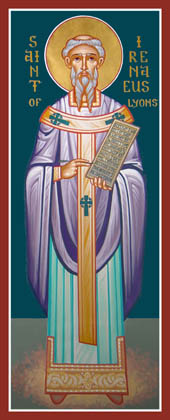
– Saint Irenaeus (+202 AD) says: “God who knows everything has made ready the proper dwelling: for to those who seek after and yearn for the unapproachable light God in His goodness grants them that light.”
– Saint John Chrysostom (+407 AD) says: “God has not foreordained us for salvation only out of love, but also on account of our good deeds, because if this (salvation) were dependent only upon our good works then the coming of Christ and everything which He has effected for our salvation would be as though unnecessary.”
– Saint Hilary (+367 AD) writes similarly: “That which God foresaw, He also foreordained.”
– Blessed Jerome (+420 AD) writes: “For that which God knew would happen in the life of His Son, that He also permitted (preordained) for His Son.”
– Saint Ambrose (+397 AD) says: “God did not predetermine without seeing first that which He foreknew. Likewise, in those whom He foresaw worthiness, to those He also preordained a spiritual reward.”
Inq.: If grace is always necessary for salvation, whatever the case, and if salvation is a gift of God given with grace, do we have a part in the working out of our salvation?
Elder Cleopa: Yes, we certainly do have a part to play but grace is also necessary for our salvation, for man cannot be saved on his own. We are not like logs or stones with which God does whatever He likes.
If grace were to work on its own – indifferent to us – it would mean that we would walk to our salvation without our will. In this case if some are lost to perdition they would not be to blame, but rather grace would be responsible since it did not compel them to be saved. This teaching, as we have said previously, is not a teaching of the Christ’s Church but of the Calvinists who have themselves termed it unconditional election or predestination. According to this teaching, God decided from before the ages to save certain men and destroy others. This He does in accord with His liking, not according to the way man would work but through His grace – grace that He decided to give in order to save some. To a few Grace is given – grace that compels them to work according to His will – while to others grace is withheld. Such is the teaching of the Calvinists.
Inq.: And the teaching of the Orthodox Church is different from that?
Elder Cleopa: Previously, I showed you the Church’s teaching clearly enough and at quite some length, and yet I will add for you also the following: “God our Saviour will have all men to be saved, and to come unto the knowledge of the truth” (1 Tim. 2:4). Grace does not compel anyone. Men have the God-given freedom to accept it and to work with it or to reject it. Those who embrace it are saved and those who withdraw from it are lost. Guard well, my son, that which you have heard that you may be illumined by it and believe as a true Orthodox Christian.
(An excerpt for the book “The Agony of the Church” written while been a profesor at ST SAVVA’S COLLEGE, BELGRADE, 1917)

If the official churches have had no other merit but that they have preserved Christ as the treasury of the world, yet they are justified thereby. Even if they have solely repeated through all the past centuries “Lord! Lord!” still they stand above the secular world. For they know at least who the Lord is, whereas the world does not know. Churches may disappear, but The Church never will. For not churches are the work of Christ, but the Church. Moreover, if the Church disappears, as an institution, the essence of the Church cannot disappear. It is like rivers, sea and water: when rivers disappear into the sea, the sea remains, and if the sea disappears into steam, water still remains. If Christ ever meant to form the Church as an institution He meant to form it not as the end but as the means, like a boat to bring its inmates safely over the stormy ocean of life into the quiet harbour of His Kingdom. Like the body in a bath, so the soul disrobes in the Church to wash. But as soon as we get out, we clothe our soul in order to conceal it from the curious eye. Is it not illogical that we dare to show our imperfections to the Most Perfect, while we are ashamed to show them to those who are just as imperfect, ugly and unclean as ourselves? The Church, like a bath, reveals most uncleanness.
The initial and most obvious idea of the Church is collectiveness of sin and salvation. To pray alone and for one’s self is like eating alone without regard to other people’s hunger.
When the sun sees a man of science, wealth or politics, kneeling at prayer with the poor and humble, it goes smiling to its rest. Full of beauty and wonders are all the Christian churches, but not because of their pretended perfections: they are beautiful and wonderful because of Him whose shadow they are. You are a Christian? Then do not be afraid to enter any Christian church with prayerful respect. All the Churches have sworn allegiance to the same Sovereign. How can you respect a cottage, in which once abided His Majesty King Alfred, or Charles, while you would not go into a building dedicated to His Majesty the Invisible King of kings?

The real value of any Christian community is not to be found in its own prosperity but in its care for the prosperity of other Christian communities. So, for example, the value of the Protestants is to be found in their loving care for the Roman Catholics, and vice versa.
Taking the above standard, we find that all the Christian communities are almost quite valueless as to the spirit, i.e. as to their unusual loving care. Their actual value is more physical than spiritual, being as they are limited to the care for themselves. Exceptions are as refreshing as an oasis in the desert. Church and State are like fire and water. How to connect them? For if connected, fire always dies down under water.
There are three ages in the history of the Church: the Golden Age, when the Church was opposed to political governments; the Iron Age, when she was politically directing Europe’s kingdoms; and the Stone Age, when she has been subdued to the service of political governments. What a humiliation for the present generation to live in the Stone Age of Christianity!
Trying to unite Church and State we are trying to unite what God separated from the beginning of our era. To separate the Church from the State does not mean, as many think, to separate soul from body; it means to separate two quite opposed spirits unakin and hostile to each other, like Cross and Capitol. The worm of comfort and human inertia has reconciled Christianity with secular, pagan governments, and so paralysed the most divine movement in human history. Go to the bottom of all those clever advocacies for unity of Church and State, and you will meet, as their primus motor, the worm of comfort and human inertia.
All Churches and Christian institutions of the present time, however wonderful they may be, are only a dim prophecy of the coming Christian worship in truth and spirit. Through them we look now to the future as through a glass. Christianity is neither monarchical nor republican. It does not care about institutions but about the spirit living in them. That institution is the best which is fullest of the Christian spirit. From this point of view, an autocracy may be better than a republic, and vice versa.
The true Christianity has been hidden from us as iron and coal were hidden from the men of the Stone Age. They walked over iron and coal but they used stone and wood only. So we are walking over and around Christ, still using in our daily life the pagan gods of old.
If there is to be a new geological epoch, with a new type of man, it will be the Christian epoch. All the existing types have been made by revolutions and influences of earth and water, or of air and fire. Now only the Christian revolution–I mean literally and not allegorically–can produce a higher type of the human animal. My friend, you are dissatisfied with the existing Churches, and you are anxious to form a new church, or sect, or some kind of religious organisation! How childish of you! The existing Churches are the most wonderful vessels–some in gold, others in silver or pottery–made by thousands of years and generations. I know your dissatisfaction comes because of the emptiness of those vessels and not because of their ugliness. Well then, pour the divine wine into them and they will please you just as the vessels in Cana of Galilee pleased the thirsty people around the table. No one of those people, being thirsty, ever thought of making new vessels for the wine, but to get wine as soon as possible into the vessels. To pour wine into existing vessels, that is really the needed miracle, my dear grumbler!
People say: Read the Bible! Almost would I say: Do not touch it for five years–read other literature during this period–and then read it again, and you will see its real greatness, power and sweetness.
The Christ’s wounds have wrought more blessings in the world than the health of all the Roman Caears.
The Eucharist does not mean a memory only but also a prophecy. The prophecy of it is, that the whole earth will become Christ’s body, Christ’s flesh and blood, so that whatever we eat or drink we eat and drink Him.
He ought to be our daily food. Regarding all our food through Christ it will not seem to be a prey from nature but rather nature’s sacrifice for us, reminding us of Christ’s sacrifice, and through it of our own calling to sacrifice.
You have to choose either to be proud or poor in spirit. The first will mean a noisy destruction, the second a quiet construction.
There exists no sublime and no mean thing in the whole world of which I could not find a representation in myself, and none in which I were wholly unrepresented.
The beauty, glory and greatness of a field of golden wheat consists of an association of innumerable blades of wheat, with their insignificant beauty, glory and greatness. If you have seen that, then do not repeat to me the old story of the beauty, glory and greatness of the human blade called Pythagoras, Caear or Napoleon.
The wealthiest and most powerful people, that we are wont to admire and imitate, were most pitied by Christ. To-day, as always, the most difficult Christian mission is that among the rich.
Our real value we never reveal through the using of our rights but through our capacity for service and sacrifice.
Easier is it for a man to get his own rights than to lose his pride.
Sacrifice without murmuring makes of our stormy life a calm holy day. We fill all our days with the talk of the people who are loth to sacrifice and of those who dare to sacrifice. Disgust and admiration are two baths in which our hearts bathe from sunrise to sunset. By nothing is the disgust towards a man more excited than by hearing: “He is incapable of sacrifice.”
When this sentence is directed to ourselves, we feel as if we had lost the whole battle of life.
The value of metaphysical systems is more for the scientific than for the moral progress of mankind. Upon Hegel you could build a new science, but upon St Paul only could you build a new social life and a new world politics. Did you ever think that St Paul is the greatest prophet of a new and desirable statesmanship?
All the Empires founded upon rights have perished and must perish. The future belongs to the Empire of St Paul, an Empire founded upon loving service.
It is better in humbleness to belong to the worst of the Churches than proudly to separate one’s self from the best of the Churches.
Aristocratic origin is as inscrutable as the darkness of the past night.
A mighty aristocrat of to-day may be of the meanest soul-stuff, and the beggar at his door of the noblest. But respect both of them equally, knowing that both of them are of the same royal origin. The Most High names both of them His children. For the same reason respect asses and sheep and trees and stones.
The real crucifiers of Christ in our time are those who think Christ’s Gospel could not be taken as a base for world politics. Were not His last words to the disciples: go to all nations? The last and supreme expression of Christianity will be in the relations of nation to nation, as its starting expression has been the relations of man to man.
Inter-individualism has been the elementary school of Christianity.
Inter-nationalism ought to be its university. Christian ethics, i.e. cheerful service and sacrifice, is the noblest consequence of real belief in God. Never a shorter line can bind our planet with the centre of the Universe than the line going through Christ. It is the shortest way, as a straight line is the shortest distance between two geometrical points.
Slavery means obligatory service; freedom ought to mean willing service.
Only a man or a nation educated for willing service to their neighbours is a really free man or free nation. All other theories of freedom are illusions. Freedom asking for rights and not for willing service means an endless quarrel crowning with unhappiness all its champions. Neither Pericles’ republic nor Octavian’s monarchy were the States of happiness, but St Paul‘s pan-human state, with a single Magna Charta of willing service, will be a State of Universal Happiness.

Every man is a battlefield of many unclean spirits, very bold in the absence of Christ and very shy in His Presence. O how many of these spirits that find an easy habitation in us would make even the swine to rage and run down the steep place–into the sea!
The conception that the mentality of Machiavelli and Metternich, Bismarck and Beaconsfield could be taken as a basis of politics, whereas Christ’s mentality could not, is the conception even of many theologians. Yet Christ survives all these politicians as an undying power, just because He is the fittest of all of them.
What an obscure philosophy it is which teaches that Moses and Mohamed had some thing to do with politics and Christ has not!
Carlyle and Emerson were over-anxious to recommend every great man as a leader of mankind more than Christ. It is the same as to say: men! Take candles and lamps to light your way in darkness, but be aware of the sun. How quite different are Dostoievsky and Tolstoi!
I looked at men in prayer and I thought: Behold, the fallen angels! I looked again at them in hateful quarrel and I thought: Behold, the risen demons!
Animals are cruel but not vulgar. Yet both in cruelty and vulgarity man is on record. If forced to chose one of two evils, we should prefer to look at cruelty rather than vulgarity.
All our to-days are spoiled by reminiscences about yesterday and sorrows about tomorrow. Thus we are disindividualising and emptying all our “to-days” and degrading them to a misty meeting-place of yesterday and tomorrow.
From the physical point of view the greatest thing in this life is its mystery. From the moral point of view the greatest thing in man is the optimistic interpretation of that mystery. There is no reasonable optimism outside of Christianity.
No man could be a tyrant unless he were a slave of some moral defects.
No nation could tyrannise over another nation unless it were tyrannised over itself by some illusions.
Nobody in the world is free but he who feels himself to be a prisoner of Christ. The greatest champion of freedom in human history called himself: “Paul, a prisoner of Jesus Christ.”

(Taken from a Russian translation of the original Greek)
Editor’s note: On a remote, narrow peninsula in the Aegean Sea lies the monastic republic of Mt. Athos, spiritual heart of the Orthodox Christian world. For centuries monks have lived and prayed here for the salvation of their souls and the world, and every devout Orthodox Christian male strives to make the pilgrimage to Mt. Athos at least once in his life. Elder Paissios (1924-1994) is considered by many to have been one of the Holy Mount’s greatest ascetics of the 20th Century. Over the course of his life the words of this humble Greek monk, who came to be honored by believers as an “holy elder” (geronta in Greek, starets in Russian), were recorded by the thousands who journeyed to seek his advice and prophecies. In the following quotes Paissios warns of the great cataclysms which await us in our Apocalyptic times. His counsel of spiritual preparedness and how to achieve it will be of use to all those who strive to do good while maintaining spiritual equilibrium in a world growing increasingly hostile to our salvation. Paissios seems to have foreseen everything: the ever more frequent and senseless wars and the growing totalitarianism of “Schengen Europe”, “Homeland Securitized” America and “Putinized” Russia, the downward slide of our modern, globalized world into licentiousness and madness, the approaching Last Judgement.
“There’s a war on today, a holy war…”
“If the Metropolitans are silent, then who will speak?”
that unsettles me is the reigning mood of tranquility. Something is in the works. We still haven’t understood properly either what’s going on, or the fact that we will die. I don’t know what will come of this. The situation is very complicated. The fate of the world depends on just a few people, but God is still putting on the brakes. We have to pray a lot, and with pain in our hearts, so that God will intervene: our times are very hard to understand. A lot of ash, rubbish, and indifference has accumulated, and a strong wind will be needed to blow it all away.
It’s frightening! The Tower of Babel is upon us! Divine intervention is needed: Great upheavals are happening. What a bedlam! The minds of whole nations are in confusion. But in spite of the ferment I feel a certain consolation inside, a certain confidence. God still dwells in a part of the Christians. God’s people, people of prayer, still remain, and God in his all-goodness still tolerates us and will put everything in order. Don’t be afraid! We’ve gone through many storms, and still haven’t perished. So should we be afraid of the storm which is now gathering? We’ll not perish this time either”
God loves us. In Man there’s a hidden power which comes out when necessary. The difficult years will be few. Just a lot of thunder.
Don’t get upset in the least, for God is above everything. He rules everyone and will bring all to the defendant’s bench to answer for what they’ve done, according to which each will receive his just desserts from God. Those who’ve in some way helped the cause of good will be rewarded, and those who do evil will be punished. God will put everyone in their place in the end, but each of us will answer for what they did in these difficult years, both in prayer and in deeds.
Today they’re trying to destroy faith, and for the edifice of faith to fall they quietly pull out one stone, then another. But we’re all responsible for the destruction; not just those who destroy but we who see how faith is being undermined and make no effort to strengthen it. As a result the seducers are emboldened to create even greater difficulties for us, and their rage against the Church and the monastic life increases.
Today’s situation can be resisted only spiritually, not by worldly means. The storm will continue to rage a bit, will throw all the flotsam, everything unnecessary, onto the shore, and then the situation will become clearer. Some will receive their reward, while others will have to pay their debts.
Today there are many who strive to corrupt everything: the family, the youth, the Church. In our day it’s a true witness to speak up for one’s people, for the state is waging war against divine law. It’s laws are directed against the Law of God.
But we are responsible for not letting the enemies of the Church corrupt everything. Though I’ve heard even priests say: “Don’t get involved in that. It’s none of your business!” If they had reached such a non-striving condition through prayer I would kiss their feet. But no! They’re indifferent because they want to please everyone and live in comfort.
Indifference is unacceptable even for laymen, and all the more so for the clergy. An honest, spiritual man doesn’t do anything with indifference. “Cursed be he that doeth the work of the Lord deceitfully”, says the Prophet Jeremiah (Jer. 48:10). There’s a war on today, a holy war. I must be on the front lines. There are so many Marxists, so many Masons, so many Satanists and assorted others! So many possessed, anarchists and seduced ones! I see what awaits us, and it’s painful for me. The bitter taste of human pain is in my mouth.
* * *
The spirit of lukewarmness reigns. There’s no manliness at all! We’ve been spoiled for good! How does God still tolerate us? Today’s generation is the generation of indifference. There are no warriors The majority are fit only for parades.
Godlessness and blasphemy are allowed to appear on television. And the Church is silent and doesn’t excommunicate the blasphemers. And they need to be excommunicated. What are they waiting for? Let’s not wait for someone else to pull the snake out from its hole so that we can live in peace.
They’re silent out of indifference. What’s bad is that even people who’ve got something inside have begun to grow cool, saying: “Can I really do anything to change the situation?” We have to witness our faith with boldness, because if we continue to be silent we’ll have to answer in the end. In these difficult days each must do what’s in their power. And leave what’s out of their power to the will of God. In this way our conscience will be clear.
If we don’t resist, then our ancestors will arise from their graves. They suffered so much for the Fatherland, and we? What are we doing for it?.. If Christians don’t begin to witness their faith, to resist evil, then the destroyers will become even more insolent. But today’s Christians are no warriors. If the Church keeps silent, to avoid conflict with the government, if the metropolitans are silent, if the monks hold their peace, then who will speak up?
* * *
Give thanks to God for everything. Try to be manly. Pull yourself together a bit. Do you know what Christians are suffering in other countries? There are such difficulties in Russia! But here many exhibit indifference. There’s not enough disposition to kindness, love of devotion.
You see, if we don’t begin to make war against evil, to expose those who tempt believers, then the evil will grow larger. If we throw aside fear then the faithful will be emboldened a bit. And those who wage war against the Church will have a harder time.
In the past our nation lived spiritually, so God blessed her, and the saints helped us in miraculous fashion. And we were victorious against our enemies, who always outnumbered us. Today we continue to call ourselves Orthodox Christians, but we don’t live Orthodox lives.
* * *
A lukewarm clergy lulls the people to sleep, leaves them in their former condition so they won’t be upset. “Look”, they say. “By all means don’t say that there’ll be a war, or the Second Coming, that one must prepare oneself for death. We must not make people alarmed!”
And others speak with a false kindness, saying: “We mustn’t expose heretics and their delusions, so as to show our love for them.” Today’s people are water-soluble. There’s no leaven in them.
If I avoid upsetting myself to protect my fleshly comfort then I’m indifferent to holiness! Spiritual meekness is one thing, and softness and indifference are quite another. Some say: “I’m a Christian and therefore I have to be joyful and calm.” But they’re not Christian. They’re simply indifferent. And their joy is only a worldly joy.
He in whom these worldly seeds are present is no spiritual person. A spiritual person consists of nothing but pain. In other words, he’s in pain at what’s going on, he’s in pain for people’s condition. And divine comfort is bestowed upon him for his pain.

“He Who Goes Low Goes Sure“
Our goal is to live an Orthodox life, not just to speak or write Orthodox. If the preacher has no personal experience then his sermons won’t go to the heart, won’t change people. To think like an Orthodox is easy, but to live an Orthodox life requires effort.
Today God tolerates what’s going on. Tolerates, so that evil people will be unable to justify themselves. God expects patience, prayer and struggle from us. If you anger when you yourself are offended, your anger is unclean. But if someone is offended in the service of holiness, that means the zeal of God is in him. Indignation can be righteous when it’s indignation for God’s sake. That’s the only justifiable kind of indignation in a person.
It’s unseemly to become angry in one’s own defense. Resisting evildoers is another matter, however, when it’s in defense of serious spiritual matters, when our holy faith, Orthodoxy, is concerned. Then it’s your duty. To think of others, to counter the blasphemers in order to defend one’s neighbor — this is pure, because carried out in love.
* * *
Evil lies within us. There is no love in us, so we don’t feel all people to be brothers and are tempted by [the knowledge of] their sinful ways. But it’s not right when moral failings become known to all. The injunction of the Gospels to “tell it unto the church” (Matt. 18:17) doesn’t mean that everything has to become known to everyone. By exposing the moral failings of our brother we arm the enemies of the Church, give them another pretext to escalate the war against Her. And the faith of the weak is shaken in this way too.
If you want to help the Church, then try to mend your own ways, rather than others’. In straightening yourself out you straighten out a particle of the Church. If everyone were to do that then the Church would be in perfect order. But today’s people attend to everything under the sun, only not to themselves, because it’s easy to teach others, while mending one’s own ways requires effort.
* * *
If we expose someone out of love, with pain in our hearts, then a change will occur in his heart whether he understands us or not. But to expose without love, with partiality, only enrages to object of our exposure. Our hostility strikes against his egoism, producing sparks like flint against steel.
If we tolerate our brother out of love, he will feel it. But he also feels our hostility, even if we keep it inside and don’t express it. Our hostility arouses alarm in him. We must always ask ourselves: “Why do I want to say what I’m about to say? What is motivating me? Do I really care about my neighbor or do I just want to show him how wonderful I am, to show off a bit?” If someone tries to solve ecclesiastical problems allegedly out of faith, but really thinking of his own advantage, then how can such a person win God’s blessing?
* * *
Sweet words and great truths have value when uttered by righteous lips. They take root only in people of good will and clean conscience.
Truth, when used without judgment, can commit a crime. And he who possesses sincerity without reason commits a twofold evil, first against himself, then against others. Because there’s no empathy in his sincerity. A Christian must not be a fanatic but have love in his heart for all. He who throws words around carelessly, even true words, does evil.
Veneration is a good thing, and the predisposition for good is also good, but spiritual judgment and breadth are needed to guard against fanaticism, that false companion of reverence.
* * *
Wakefulness and sobriety are needed. All that a person does he must do for the sake of God. Christ must be at the source of every movement. Much attention is required, for when we do something with the aim of pleasing others we gain no benefit.
We ascend to the heavens not through earthly striving but by humbling ourselves spiritually. He who goes low goes sure and never falls. Ours is an age of sensationalism and hullabaloo. But the spiritual life is not noisy. Divine enlightenment is required and when it’s not there the person abides in darkness. He may act out of good intentions but create many problems in his confusion, both for the Church and for society.
There was a time when the Holy Spirit enlightened us and showed us the way. A grand business! Today it finds no reason to descend to us. Difficult years are ahead. The Old Testament Tower of Babel was child’s play compared with our age.

The Seal of the Antichrist Becomes a Reality
It’s possible that you’ll live through much which is described in the Book of Revelations. Much is coming to the surface, little by little. The situation is horrible. Madness has gone beyond all bounds. Apostasy is upon us, and now the only thing left is for the ‘son of perdition’ (2 Thess. 2:3) to come.
The world has turned into a madhouse A great confusion will reign, in which each government will begin to do whatever comes into its head. We’ll see how the most unlikely, the most insane, events will happen. The only good thing is that these events will happen in very quick succession.
Ecumenism, common markets, a one-world government, a single made-to-order religion: such is the plan of these devils. The Zionists are already preparing their messiah. For them the false-messiah will be king, will rule here, on earth.
A great discord will arise. In this discord everyone will clamor for a king to save them. At that moment they’ll offer up their man, who’ll say: “I’m the Imam, I’m the fifth Buddha, I’m the Christ whom Christians are awaiting. I’m the one whom the Jehovah’s Witnesses have been waiting for. I’m the Jewish messiah.”
* * *
Difficult times are ahead. Great trials await us. Christians will suffer great persecutions. Meanwhile, it’s obvious that people don’t understand that we’re on the verge of the end times, that the seal of the Antichrist is becoming a reality. As if nothing’s happening. That’s why Holy Scripture says that even the chosen will be deceived.
The Zionists want to rule the earth. To achieve their ends they use black magic and satanism. They regard satan-worship as a means to gain the strength they need to carry out their plans. They want to rule the earth using satanic power. God is not something they take into account.
One sign that the fulfillment of prophecy is near will be the destruction of the Mosque of Omar in Jerusalem. They’ll destroy it in order to restore the Temple of Solomon which used to be on the same place. In the end the Jews will pronounce the Antichrist messiah in this rebuilt temple.
The rabbis know that the true Messiah has already come and that they crucified Him. They know this, and yet they are blinded by egoism and fanaticism.
* * *
Two thousand years ago it was written in the Book of Revelations that people will be marked with the number ‘666’. As Holy Scripture says, the ancient Hebrews laid a tax on the peoples they conquered in various wars. The yearly tax was equal to 666 talents of gold. (3 Kings 10:14, 2 Chronicles 9:13.) Today, in order to subjugate the whole world they’ll once again introduce the old tax number linked to their glorious past. That is, ‘666’ is the number of mammon.
Everything is going as planned. They put the number a long time ago on credit cards. As a result, he who is not marked with the number ‘666’ will be unable to buy, sell, get a loan, or find work.
* * *
Providence tells me that the Antichrist wants to subjugate the world using this system. It will be foisted upon people with the help of the mechanisms which control the world economy, for only those who receive the mark, an image with the number ‘666’, will be able to take part in economic life.
The mark will be an image which will first be placed on all products, and then people will be compelled to wear it on their hand or forehead. Little by little, after the introduction of ID cards with the three sixes, after the creation of a personal dossier, they’ll use cunning to introduce the mark.
In Brussels a whole palace with three sixes has been built to house a central computer. This computer can keep track of billions of people. And we Orthodox are resisting this because we don’t want the Antichrist and we don’t want dictatorship either.

“The most we can suffer is martyrdom.”
There will be three and a half hard years. Those who don’t agree with the system will have a rough time. They’ll constantly be trying to imprison them, using any pretext they can find. They won’t torture anyone, but without the mark it will simply be impossible for a person to live. “You’re suffering without the mark”, they’ll say. “And if you had just accepted it you would have had no difficulties.”
For this reason, by learning to life a simple, moderate life here and now you’ll be able to get through those years. By getting a little bit of land, raising a little wheat and some potatoes, planting some olive trees, and keeping animals of some sort, a goat or chickens, the Christian will be able to feed his family. Stockpiling is of little use: Food doesn’t keep for long before spoiling.
But these oppressions will not last for long: three, three and a half years. For the sake of the chosen the days will be hastened. God won’t leave a person without help. Tomorrow thunder will strike, and the brief dictatorship of the Antichrist-satan will come. Then Christ will intervene, will give the whole anti-Christian system a good shaking up. He’ll trample upon evil and turn everything to good use in the end.
– And if someone receives the mark unknowingly?
It’d be better to say “uncaringly”. How can one be unknowing, when everything is crystal clear? And if a person doesn’t know, then he should become interested and find out. By accepting the mark, even unknowingly, a person loses Divine Grace and gives himself up to demonic influence. When a priest immerses the infant in the baptismal font, the infant receives the Holy Spirit without knowing it, and Divine Grace begins to abide in him.
Some people say: “What’s destined by God to be will be. What business is it of ours?”
They can say whatever they want, but in reality it’s not like that! Unfortunately, some modern priests diaper their flock like infants, to keep them from getting upset. “What’s going on today isn’t important”, they say. “Don’t be alarmed. All you need is to have faith in your hearts.” Or they scold: “Don’t speak on that topic, about ID cards or the mark of the beast. It will just upset people.” If they were to say instead: “Let’s try to live more spiritually, to be nearer to Christ and not to be afraid of anything. You see, the most we can suffer is martyrdom,” then they’d at least be preparing their flock for the coming tribulations.
Knowing the truth, a person will begin to mull things over and shake himself out of his sleep. What’s going on will begin to cause him pain. He’ll begin to pray and to be on his guard, so as to not fall into that trap.
* * *
What do we see now? It’s bad enough that cunning ‘interpreters of Scripture’ are commenting prophecy after their own fashion. They’re representatives of the clergy, but they’re more cowardly than lay people. And it would behoove them to exhibit a healthy spiritual unease and help Christians by sowing beneficial concern so they’ll be strengthened in their faith and receive divine consolation.
I’m amazed: Doesn’t what’s happening give them any cause for concern? And why don’t they at least add a question mark to the interpretations they come up with? And if they help the Antichrist and the mark, lead other souls to perdition?
No, behind the “perfected credit card system”, behind “computerized security” lurks worldwide dictatorship and the yoke of the Antichrist.
“And he causeth all, both small and great, rich and poor, free and bond, to receive a mark in their right hand, or in their foreheads.
“And that no man might buy or sell, save he that had the mark, or the name of the beast, or the number of his name.
“Here is wisdom. Let him that hath understanding count the number of the beast: for it is the number of a man; and his number is Six hundred threescore and six.”
(Rev. 13:16-18)
“You must be ready for death.”

The world has lost control of itself. Honor and self-sacrifice have abandoned people. The taste of sacrificial joy is unknown to today’s people, and that’s why they’re so tortured. For only when you co-participate in the pain of another do miracles happen.
If a person doesn’t cultivate in himself the spirit of self-sacrifice then he thinks only of himself and doesn’t receive Divine Grace. The more a person forgets himself, the more God remembers him Those who die heroically don’t really die. And where there’s no heroism nothing worthwhile can be expected.
Our time is like a bubbling and steaming cauldron. One needs temperament, audacity, courage. Take care not to be caught unprepared, if something is to happen. Start getting ready now so that you’ll be able to resist difficulties. Christ Himself tells us: “Therefore be ye also ready” (Matt. 24:44), doesn’t He? Today, living in such complicated times, we have to be not merely ready, but triply ready, at the minimum!
Possibly we may meet not only with sudden death, but with other dangers. So let’s drive away the desire to arrange our lives comfortably! May love of honor and the spirit of self-sacrifice live in us.
* * *
I see that something is in the works, that something lies just around the corner, but it’s constantly being put off. Little delays all the time. Who’s creating the delays? God? Another month passes, then another couple of months! That’s how it all goes. But since we know what awaits us, let’s develop love in ourselves, to the degree that we can. That’s the main thing: for true brotherly love to exist between us. Kindness, love — that’s strength! Guard the secret as well as you can and don’t indulge in excessive frankness. If “he and I and the bell-ringer” are all in on the secret, then what will come of that?
Death in battle adds greatly to God’s mercy, for a person who dies the death of the brave sacrifices himself to defend others. Those who give up their lives out of pure love in order to defend their neighbor are imitating Christ. These people are supreme heroes. They arouse fear in our enemies. Death herself trembles before them, because they scorn her due to their great love, and attain immortality in this fashion, finding the key to eternity under the gravestone. They enter into eternal blessedness without difficulty.
That’s why I say to you: Cultivate self-sacrifice, brotherly love. May each of you attain a spiritual condition which will allow you to get out of difficult situations. Without a spiritual condition a person loses courage, because he loves himself. He can renounce Christ, betray Him.
You must be ready for death. We believe that nothing is in vain, that our sacrifice has meaning.
* * *
Remove your “I” from everything you do. The person who leaves his “I” rises above the earth, moves in another atmosphere. As long as he remains inside himself he cannot become a heavenly being.
There is no spiritual life without sacrifice. Try to remember, at least a little bit, that death exists. And since we’ll die in any case, let’s not take care of ourselves too much. Look after your health, but not to the degree where you begin to bow down before your peace and well-being. I’m not asking anyone to throw themselves headlong into dangerous adventures, but you have to have at least a bit of heroism, my brother!..
Feats are committed not by the tall in size but by the audacious, the heartfelt, and the self-sacrificing. There’s no barbarity in spiritual audacity. Such people don’t fire at the enemy, but over his head, forcing him to surrender. A kind man prefers being killed to killing. The harmonious person is prepared for accepting divine powers.
The mean, the cowardly, and the small of spirit, on the other hand, use impudence to hide their fear. They’re afraid of themselves as well as others and shoot without stopping. Courage and audacity are one thing; criminality and malice quite another. In order to succeed at anything one needs a wild streak, in the positive sense. He who lacks this wild streak can become neither a hero nor a saint. The heart must become uncalculating.
* * *
In our age audacity has become a rarity. Water, not blood, flows in people’s veins. So if a war were to break out, God forbid, many would simply die of fright while others would lose heart, because they’re used to an easy life. Fear is necessary when it helps a person turn to God. Fear from lack of faith, from lack of trust in God, on the other hand, is ruinous.
Such fear is driven out by audacity. We must remember: The more a person fears, the more he is tempted by the enemy. If a person refuses to strive to become courageous, and doesn’t strive for real love, then when a difficult situation arises he’ll become a laughingstock.
The warrior takes joy in the fact that he’s dying so that others won’t have to. If you dispose yourself this way then nothing will be frightening. Courage is born from much love, kindness and self-sacrifice. Today people don’t even want to hear about death. However, he doesn’t remember about death is living outside of reality. Those who fear death and love life’s vanities are in a state of spiritual stagnation. Bold people, who always keep death before them and think about it constantly, on the other hand, conquer vanity and begin to live in eternity and heavenly joy while still here on earth.
May he who fights in the war for Faith and Fatherland cross himself and not fear, for God is his helper! God Himself will decide whether he is to die or to live. One needs to trust God, not oneself.
The Russians will take Turkey. The Chinese will cross the Euphrates.
Providence tells me that many events will happen: The Russians will take Turkey and Turkey will disappear from the world map because a third of the Turks will become Christians, another third will die in the war and another third will leave for Mesopotamia.
The Mid-East will become a theater of a war in which the Russians will take place. Much blood will be spilled. The Chinese, with an army of 200 million, will cross the Euphrates and go all the way to Jerusalem. The sign that this event is approaching will be the destruction of the Mosque of Omar, for its destruction will mark the beginning of work by the Jews to rebuild the Temple of Solomon, which was built on the same spot.
There will be a great war between Russians and Europeans, and much blood will be spilled. Greece won’t play a leading role in that war, but they’ll give her Constantinople. Not because the Russians adore the Greeks, but because no better solution will be found. The city will be handed over to the Greek Army even before it has a chance to get there.
The Jews, inasmuch as they’ll have great power and the help of the European leadership, will become proud and insolent beyond measure and conduct themselves shamelessly. They’ll try to rule Europe.
They’ll play all sorts of tricks, but the resulting persecutions will lead Christians to unite completely. However, they won’t unite in the way desired by those who are now engaging in various machinations to create a single church united under a single religious leadership. Christians will unite because the unfolding situation will naturally separate the sheep from the goats. Then the prophecy: “one flock and one shepherd” will actually come to pass.
* * *
Don’t give in to panic. Cowards are of use to no one. God looks at a person’s situation and helps him. We have to remain cold-blooded and use our brains. No matter what happens, we must continue to pray, think and act. It’s best to always stand up to a difficult situation using spiritual means. However that spiritual boldness which is born of holiness and striving towards God is missing today, as is the natural boldness needed in order not to turn coward in the face of danger.
In order to hold back a great evil, great holiness is needed. A spiritual person can hold back evil and help others. In the spiritual life the biggest coward can attain great courage by entrusting himself to Christ and His divine help. He can go to the front lines, do battle with the enemy, and win! So therefore we will fear God alone, not people, no matter how evil they may be. The fear of God makes any coward into a hero! A person becomes fearless to the extent he unites with God.
(In light of St Gregory Palamas teachings on the Eastern Tradition, an excerpt from the amazing work of V. Lossy)
“The theology of the Eastern Church distinguishes in God the three hypostases, the nature or essence, and the energies. The Son and the Holy Spirit are, so to say, personal processions, the energies natural processions. The energies are inseparable from the nature, and the nature is inseparable from the three Persons. These distinctions are of great importance for the Eastern Church’s conception of mystical life:
1. The doctrine of the energies, ineffably distinct from the essence, is the dogmatic basis of the real character of all mystical experience. God, who is inaccessible in His essence, is present in His energies ‘as in a mirror,’ remaining invisible in that which He is; ‘in the same way we are able to see our faces, themselves invisible to us in a glass,’ according to a saying of St. Gregory Palamas. (Sermon on the Presentation of the Holy Virgin in the Temple). Wholly unknowable in His essence, God wholly reveals Himself in His energies, which yet in no way divide His nature into two parts–knowable and unknowable–but signify two different modes of the divine existence, in the essence and outside of the essence.
2. This doctrine makes it possible to understand how the Trinity can remain incommunicable in essence and at the same time come and dwell within us, according to the promise of Christ (John xiv, 23). The presence is not a causal one, such as the divine omnipresence in creation; no more is it a presence according to the very essence–which is by definition incommunicable; it is a mode according to which the Trinity dwells in us by means of that in itself which is communicable–that is to say, by the energies which are common to the three hypostases, or, in other words, by grace–for it is by this name that we know the deifying energies which the Holy Spirit communicates to us. He who has the Spirit, who confers the gift, has at the same time the Son, through whom every gift is transmitted to us; he also has the Father, from whom comes every perfect gift. In receiving the gift–the deifying energies–one receives at the same time the indwelling of the Holy Trinity–inseparable from its natural energies and present in them in a different manner but none the less truly from that in which it is present in its nature.
3. The distinction between the essences and the energies, which is fundamental for the Orthodox doctrine of grace, makes it possible to preserve the real meaning of St. Peter’s words ‘partakers of the divine nature.’ The union to which we are called is neither hypostatic–as in the case of the human nature of Christ–nor substantial, as in that of the three divine Persons: it is union with God in His energies, or union by grace making us participate in the divine nature, without our essence becoming thereby the essence of God. In deification we are by grace (that is to say, in the divine energies) all that God is by nature, save only identity of nature . . ., according to the teaching of St. Maximus (De ambiguis). We remain creatures while becoming God by grace, as Christ remained God in becoming man by the Incarnation.
These distinctions in God which are made by the theology of the Eastern Church do not in any way contradict its apophatic attitude in regard to revealed truth. On the contrary, these antinomical distinctions are dictated by a concern for safeguarding the mystery, while yet expressing the data of revelation in dogma. Thus, as we have seen in the doctrine of the Trinity, the distinction between the persons and the nature revealed a tendency to represent God as a ‘monad and triad in one’, with the consequence that the domination of the unity of the nature over the trinity of the hypostases was avoided, as was the elimination or minimizing of the primordial mystery of the identity-diversity. In the same way, the distinction between the essence and the energies is due to the antinomy between the unknowable and the knowable, the incommunicable and the communicable, with which both religious thought and the experience of divine things are ultimately faced. These real distinctions introduce no ‘composition’ into the divine being; they signify the mystery of God, who is absolutely one according to His nature, absolutely three according to His persons, sovereign and inaccessible Trinity, dwelling in the profusion of glory which is His uncreated light, His eternal Kingdom which all must enter who inherit the deified state of the age to come.”
Taken from The Mystical Theology of the Eastern Church (pdf), SVS Press, pgs. 85-87
 Christian Dogma
 Christian Martyrs
 Christian Orthodox Churches and Monasteries
 Christian Sermons and News
 Church's Teachings on Fasting
 Ecumenism – a Great Heresy
 Father George Calciu
 Life_a Sacred Gift form God
 Orthodox Saints and Church Fathers
 Spiritual Elders
 Daily Bible Readings
 Journey to Orthodoxy
 Listen to Ancient Faith Radio
 Orthodox Calendar of Feasts and Saints
 Orthodox Christian Mission Center
 Orthodox Institute
 OrthodoxChristianNetwork TV


Recent Comments