
You are currently browsing the category archive for the ‘Orthodox Saints and Church Fathers’ category.
Feast day: July 2 (June 19 on the Julian calendar)
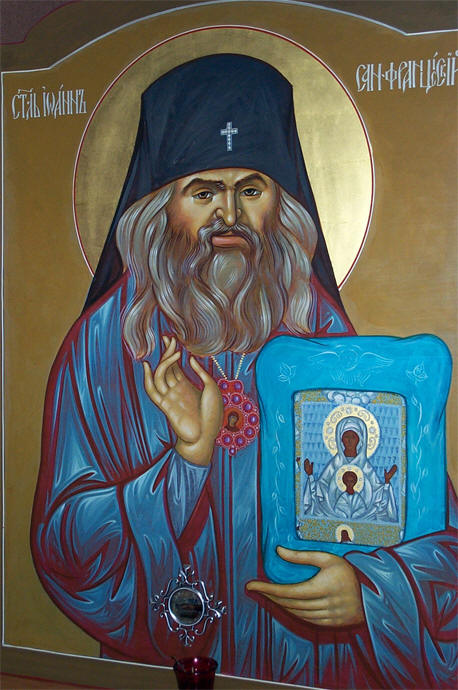
From the Sermons of Saint John at:
More about the life of St John
Pastoral Letters of Archbishop John
The Monastery of St John of San Francisco
A documentary on the life of St. John:
Copyright Disclaimer
Under Section 107 of the Copyright Act 1976, allowance is made for “fair use” for purposes such as criticism, comment, news reporting, teaching, scholarship, and research. Fair use is a use permitted by copyright statute that might otherwise be infringing. Non-profit, educational or personal use tips the balance in favor of fair use.
Saint John’ glorification, San Francisco, CA, 1994
Holy John, pray to our Lord Jesus Christ for us, Amen!
The interview and sermon were given by Fr. George Calciu in Romania (2005), 1 year before passing in the Lord.
Please also see the recent state of unrest unfolding in Greece in regards to the new “Citizen Card”, commented by Fr. Peter Heers on Ancient Faith Radio.

“The Citizen’s Card” and Orthodox Opposition in Greece: Part I
“The Citizen’s Card” and Orthodox Opposition in Greece: Part II
Father John of Santa Cruz – a novel figure of Orthodox Christianity –
martyred by the Satanists in 1985. Celebrated May 19.
(taken from the Holy Monastery of Pantokratoros website)

The Holy Martyr, Father John of Santa Cruz, was born in 1937 in the Greek village of Karastamatis from the Island of Andros. At the age of 20 years he leaves for America and later started a family. He is ordained priest and for 10 years he ministers with apostolic zeal many churches in Alaska.
In 1981, father John came to the Church of Prophet Elijah in Santa Cruz,CA which he restored and renewed. Under his ministry, this church is soon to become the center of Orthodox catechesis throughout this region where many people were alienated from God and the Church.
Father John was simple in conduct, loved his parishioners and his door was always open for everyone, even atmidnightif he was called. He preached with great fervor. Fr. John loved God and desired for everyone to love Him. He would go to parks and public streets to talk to young people who knew nothing about Christ or were Jews.
In his native village from theIslandofAndros, a miracle occurred involving the white lilies: considered to be the flowers of the Virgin Mary. When the lilies bloom, they get uprooted and are placed in the Church before the miraculous icon of the Mother of God. Later of course, the leaves and flowers wither and fall, leaving only a dry stem. The dry stalks, however, are left like this near the icon of the Virgin and during the Dormition fast, the lilies begin to sprout and flourish thus at the feast of the Dormition, the lilies are already blossomed. This phenomena is repeated each year.
Father John, when he was growing up on theislandofAndrosknew about this miracle. So he went to the Monastery of St Nicholas from the island and asked Abbot Dorotheos for few dried lilies. He took few dried stalks with him toAmericaand placed them in thechurchofSanta Cruzat the icon of the Blessed Virgin. The stalks have miraculously blossomed and flourished during the feast of Assumption. This miracle had strengthen the faith of many, to have more reverence to the Blessed Virgin.
Father John was a sensitive and beautiful soul. At the instruction of Elder Dorotheos, he wrote poems and religious hymns. He was deeply touched by the miracles of the Virgin and the lives of the saints.
As a small child, he loved to go to St. Nicholas monastery on theislandofAndros, saint whom he loved dearly. An icon of the Virgin from this monastery began to shed blood and myrrh and Father John began to talk about the miracles of Our Lady with greater divine zeal and many people of different faiths become Orthodox.
His preaching has angered some who began to threaten him by phone and letters, to cease preaching. But Father John became even more passionate about his ministry saying: “As long as my eyes have tears, I will preach Christ and Orthodoxy.”
He advised the faithful to guard themselves against the pitfalls of the Antichrist and not to take the mark. Then the telephone threats on his life become even more intense, but Father John did not worry for anything.
In the evening of May 17, 1985 he telephoned the Abbot Dorotheos and asked him about the miracles of the myrrh streaming icon of Blessed Virgin – Myrrhovlytissa, because he wanted to preach a sermon on her for the following Sunday.
The next day on May 18, Father John was at home alone with her son Photius. The presbytera (his wife) and their daughter Mary were away from home. The boy went out with his friends, and Father John left to the church to finish his sermon.
The boy returned home later that evening and seeing that his father was missing anxiously went to look for him at the Church.
There, the boy was faced with a terrible sight: his father was found on the floor slaughtered and unrecognizable… he had been hit in the head with a hammer and his whole body was butchered with knifes. As the police had later discovered, because father John didn’t die right away, the criminals took the cross he was wearing around the neck and hanged him with its chain. The blood poured from his wounds and flooded the floor of the Holy Shrine. The Satanists used his blood to write their slogans and the mark 666 on the walls of the Church. The blessed father John suffered martyrdom in the very place where he was photographed with the cross in his hand, almost prophesizing of what would follow.
Before his martyric death, three wonderful things had happened:
1. The blossoming lilies of the Virgin had wilted at once, one week before his martyrdom and they had never blossomed since.
2. The Icon of the Blessed Virgin wept, and her traces of tears can still be seen on her image.
3. On three consecutive Sundays before his martyrdom, during the Divine Liturgy, the boy while giving him warm water (to prepare the Holy Communion) saw a strange phenomenon, his father’ face was shining scattered in rays of light and darkness, but father John strictly told him not to reveal anything.

The police searched for the killers and found three people: a couple and the son of the man with another woman. They were priests and worshipers of Satan. They drank cobra venom while they were arrested and two of them died and the third: the young men lost his mind and could not testify.
Because Fr John face was disfigured, his relics could not be displayed at the funeral, his body was covered in father’ usual gold-vestments and the coffin sealed.
When Abbot Dorotheos learned about the martyrdom of Father John, wrote to his presbytera asking to send his priestly vestments when they celebrated together the feast of Saint Dorotheos at the Monastery in 1981. The time passed but he received no response from father John’s family.
On the eve July 4, at the monastery of St. Nicholas fromAndros, a athonite vigil was celebrated in honor of St. Athanasius ofMt.Athos and many pilgrims have come fromAthens. As the vigil was about to end, the monastery bells began to beat themselves as for a solemn feast. They stopped for awhile, but the bells started ringing again so harmoniously that everyone was astonished.
Seized with fear and awe, the faithful started to pray the paraclesis of St. Nicholas, waiting for a miracle to happen. That afternoon, elder Dorotheos got a call from Mary, the daughter of Father John, who had come specifically to the monastery baring the vestments of her father. She brought them into the monastery and were received with joy by all pilgrims. The bells were ringing in the monastery that morning exactly at the time when the ship entered the harbor caring the Martyr vestments.
The apparitions of blessed father John after his martyric death are many.
On the eve of the feast of St. Nicholas, in 1986, abbot Dorotheos together with several women was preparing the necessary things for the monastery patronal feast. At one point, they saw the blessed father John walking through the monastery gardens and heading towards them. They all were frightened and began to shout: “Papa Iani!” Then he disappeared from their sight. Immediately after this to their surprise, came the postman with a package fromSwitzerland containing a wooden carved image (icon) with Father John, from some Russian believers that honored him as saint. Father John had asked that his icon may be spread to all Christians so they may learn about his martyrdom and of missionary work.
In February 1987, the abbot Dorotheos went toSwitzerlandfor a surgery. While talking to the faithful there, about Fr. John and his martyrdom, he appeared to them, he blessed them, then he disappeared from their sight.
Before his martyrdom, when Fr John served inAndroswith the abbot Dorotheos, he donated to the monastery his epitrahyllum (priest stole). Elder Dorotheos when he went toSwitzerland, took it with him a piece of the stole spreading ineffable aroma to those present.
In Orthodox America and the Russian Church Abroad, Fr. John is honored/venerated as a Saint by the faithful. A booklet with a service to the saint has been published. The events and details on Fr John’ martyrdom were provided to the abbot Dorotheos, by Fr. John’ daughter: Maria.
His memory is celebrated on May 19, on the eve of the feast of the translation of Saint Nicholas holy relics, because as a child Fr. John had great devotion to St. Nicholas.
His blessing be to all of us. Amen.
Translated from: “The OSIOS FILOTHEOS OF PAROS, NO 17, May-August 2006, Thessaloniki” by the blog author.
Source of the original text: http://www.impantokratoros.gr/84A7DC93.el.aspx
See also: Man Who Killed Santa Cruz Priest Denied Parole
The life of Prophet Isaiah, taken from “Prolog of Ohrid”

This great prophet was of royal lineage. Isaiah was born in Jerusalem of Amoz his father who was the brother of Amaziah, the king of Judah. By the great grace of God that was in him, Isaiah was made worthy to see the Lord Sabaoth on the throne in heaven surrounded by six-winged Seraphims who continuously sing: “Holy, Holy, Holy, is the Lord of Hosts [Sabaoth]” (Isaiah 6:3). Isaiah prophesied many things to individual men as well as to the people. On one occasion, he walked naked around the streets of Jerusalem for three days prophesying the imminent fall of Jerusalem by the Assyrian King Sennacherib, reminding the king and the leaders of the people not to hope in assistance from the Egyptians or Ethiopians for they, also, will be subjugated by the same Sennacherib, but rather to trust in help from God the Most High. This prophesy, as well as other prophecies, were literally fulfilled. Isaiah’s most important prophecies are the ones concerning the Incarnation of God, the conception of the All- Holy Virgin, John the Forerunner and about many other events of the life of Christ. [“Therefore, the Lord Himself shall give you a sign; Behold a virgin shall conceive, and bear a son, and shall call His name Emmanuel” (Isaiah 7:14). “For unto us a child is born, unto us a son is given; and the government shall be upon his shoulder: his name shall be called Wonderful, Counselor, The Mighty God, The Everlasting Father, The Prince of Peace” (Isaiah 9:6). “The voice of him that cries in the wilderness, Prepare ye the way of the Lord and make straight in the desert a highway for our God” (Isaiah 40:3).] This discerning man, because of the purity of his heart and because of his zealousness toward God, also received the gift of working miracles. Thus, when the besieged Jerusalem suffered from drought, Isaiah prayed to God and water flowed from beneath Mount Zion. This water was called Siloam which means: “sent.” Later, the Lord directed the man, blind from birth to bathe in this water in order for him to see. During the reign of King Manasses, when Isaiah thundered against the pagan customs of the king and the leaders comparing that generation with Sodom and Gomorrah, the anger of the leaders and the people rose up against this great prophet. He was captured, led out of Jerusalem and was sawed in half. Isaiah lived and prophesied about seven-hundred years before Christ.
The Holy Prophet Isaiah and some of his prophesies on the Messiah
The Book of the Prophet Isaiah (OT)
Chapter 53
1. O Lord, who has believed our report? and to whom has the arm of the Lord been revealed?
2 We brought a report as of a child before him; he is as a root in a thirsty land: he has no form nor comeliness; and we saw him, but he had no form nor beauty.
3 But his form was ignoble, and inferior to that of the children of men; he was a man in suffering, and acquainted with the bearing of sickness, for his face is turned from us: he was dishonored, and not esteemed.
4 He bears our sins, and is pained for us: yet we accounted him to be in trouble, and in suffering, and in affliction.
5But he was wounded on account of our sins, and was bruised because of our iniquities: the chastisement of our peace was upon him; and by his bruises we were healed.
6 All we as sheep have gone astray; every one has gone astray in his way; and the Lord gave him up for our sins.
7 And he, because of his affliction, opens not his mouth: he was led as a sheep to the slaughter, and as a lamb before the shearer is dumb, so he opens not his mouth.
8 In his humiliation his judgment was taken away: who shall declare his generation? for his life is taken away from the earth: because of the iniquities of my people he was led to death.
9 And I will give the wicked for his burial, and the rich for his death; for he practiced no iniquity, nor craft with his mouth.
10 The Lord also is pleased to purge him from his stroke. If ye can give an offering for sin, your soul shall see a long-lived seed:
11 the Lord also is pleased to take away from the travail of his soul, to shew him light, and to form him with understanding; to justify the just one who serves many well; and he shall bear their sins.
12 Therefore he shall inherit many, and he shall divide the spoils of the mighty; because his soul was delivered to death: and he was numbered among the transgressors; and he bore the sins of many, and was delivered because of their iniquities.
The Gospel according to St. Matthew (NT)
Chapter 27
27:1 When the morning was come, all the chief priests and elders of the people took counsel against Jesus to put him to death:
27:2 And when they had bound him, they led him away, and delivered him to Pontius Pilate the governor.
27:3 Then Judas, which had betrayeth him, when he saw that he was condemned, repented himself, and brought again the thirty pieces of silver to the chief priests and elders,
27:4 Saying, I have sinned in that I have betrayed the innocent blood. And they said, What is that to us? see thou to that.
27:5 And he cast down the pieces of silver in the temple, and departed, and went and hanged himself.
27:6 And the chief priests took the silver pieces, and said, It is not lawful for to put them into the treasury, because it is the price of blood.
27:7 And they took counsel, and bought with them the potter’s field, to bury strangers in. 27:8 Wherefore that field was called, The field of blood, unto this day.
27:9 Then was fulfilled that which was spoken by Jeremy the prophet, saying, And they took the thirty pieces of silver, the price of him that was valued, whom they of the children of Israel did value;
27:10 And gave them for the potter’s field, as the Lord appointed me.
27:11 And Jesus stood before the governor: and the governor asked him, saying, Art thou the King of the Jews? And Jesus said unto him, Thou sayest.
27:12 And when he was accused of the chief priests and elders, he answered nothing.
27:13 Then said Pilate unto him, Hearest thou not how many things they witness against thee?
27:14 And he answered him to never a word; insomuch that the governor marveled greatly. 27:15 Now at that feast the governor was wont to release unto the people a prisoner, whom they would.
27:16 And they had then a notable prisoner, called Barabbas.
27:17 Therefore when they were gathered together, Pilate said unto them, Whom will ye that I release unto you? Barabbas, or Jesus which is called Christ?
27:18 For he knew that for envy they had delivered him.
27:19 When he was set down on the judgment seat, his wife sent unto him, saying, Have thou nothing to do with that just man: for I have suffered many things this day in a dream because of him.
27:20 But the chief priests and elders persuaded the multitude that they should ask Barabbas, and destroy Jesus.
27:21 The governor answered and said unto them, Whether of the twain will ye that I release unto you? They said, Barabbas.
27:22 Pilate saith unto them, What shall I do then with Jesus which is called Christ? They all say unto him, Let him be crucified.
27:23 And the governor said, Why, what evil hath he done? But they cried out the more, saying, Let him be crucified.
27:24 When Pilate saw that he could prevail nothing, but that rather a tumult was made, he took water, and washed his hands before the multitude, saying, I am innocent of the blood of this just person: see ye to it.
27:25 Then answered all the people, and said, His blood be on us, and on our children.
27:26 Then released he Barabbas unto them: and when he had scourged Jesus, he delivered him to be crucified.
27:27 Then the soldiers of the governor took Jesus into the common hall, and gathered unto him the whole band of soldiers.
27:28 And they stripped him, and put on him a scarlet robe.
27:29 And when they had platted a crown of thorns, they put it upon his head, and a reed in his right hand: and they bowed the knee before him, and mocked him, saying, Hail, King of the Jews!
27:30 And they spit upon him, and took the reed, and smote him on the head.
27:31 And after that they had mocked him, they took the robe off from him, and put his own raiment on him, and led him away to crucify him.
27:32 And as they came out, they found a man of Cyrene, Simon by name: him they compelled to bear his cross.
27:33 And when they were come unto a place called Golgotha, that is to say, a place of a skull,
27:34 They gave him vinegar to drink mingled with gall: and when he had tasted thereof, he would not drink.
27:35 And they crucified him, and parted his garments, casting lots: that it might be fulfilled which was spoken by the prophet, They parted my garments among them, and upon my vesture did they cast lots.
27:36 And sitting down they watched him there;
27:37 And set up over his head his accusation written, THIS IS JESUS THE KING OF THE JEWS.
27:38 Then were there two thieves crucified with him, one on the right hand, and another on the left.
27:39 And they that passed by reviled him, wagging their heads,
27:40 And saying, Thou that destroyest the temple, and buildest it in three days, save thyself. If thou be the Son of God, come down from the cross.
27:41 Likewise also the chief priests mocking him, with the scribes and elders, said,
27:42 He saved others; himself he cannot save. If he be the King of Israel, let him now come down from the cross, and we will believe him.
27:43 He trusted in God; let him deliver him now, if he will have him: for he said, I am the Son of God.
27:44 The thieves also, which were crucified with him, cast the same in his teeth.
27:45 Now from the sixth hour there was darkness over all the land unto the ninth hour. 27:46 And about the ninth hour Jesus cried with a loud voice, saying, Eli, Eli, lama sabachthani? that is to say, My God, my God, why hast thou forsaken me?
27:47 Some of them that stood there, when they heard that, said, This man calleth for Elias. 27:48 And straightway one of them ran, and took a sponge, and filled it with vinegar, and put it on a reed, and gave him to drink.
27:49 The rest said, Let be, let us see whether Elias will come to save him.
27:50 Jesus, when he had cried again with a loud voice, yielded up the ghost.
27:51 And, behold, the veil of the temple was rent in twain from the top to the bottom; and the earth did quake, and the rocks rent;
27:52 And the graves were opened; and many bodies of the saints which slept arose,
27:53 And came out of the graves after his resurrection, and went into the holy city, and appeared unto many.
27:54 Now when the centurion, and they that were with him, watching Jesus, saw the earthquake, and those things that were done, they feared greatly, saying, Truly this was the Son of God.
27:55 And many women were there beholding afar off, which followed Jesus from Galilee, ministering unto him:
27:56 Among which was Mary Magdalene, and Mary the mother of James and Joses, and the mother of Zebedee’s children.
27:57 When the even was come, there came a rich man of Arimathaea, named Joseph, who also himself was Jesus’ disciple:
27:58 He went to Pilate, and begged the body of Jesus. Then Pilate commanded the body to be delivered.
27:59 And when Joseph had taken the body, he wrapped it in a clean linen cloth,
27:60 And laid it in his own new tomb, which he had hewn out in the rock: and he rolled a great stone to the door of the sepulcher, and departed.
27:61 And there was Mary Magdalene, and the other Mary, sitting over against the sepulcher.
27:62 Now the next day, that followed the day of the preparation, the chief priests and Pharisees came together unto Pilate,
27:63 Saying, Sir, we remember that that deceiver said, while he was yet alive, After three days I will rise again.
27:64 Command therefore that the sepulcher be made sure until the third day, lest his disciples come by night, and steal him away, and say unto the people, He is risen from the dead: so the last error shall be worse than the first.
27:65 Pilate said unto them, Ye have a watch: go your way, make it as sure as ye can. 27:66 So they went, and made the sepulcher sure, sealing the stone, and setting a watch.
Please also see:
THE PROPHECIES OF THE OLD TESTAMENT on the MESSIAH – Part I
and
THE PROPHECIES OF THE OLD TESTAMENT on the MESSIAH – Part II
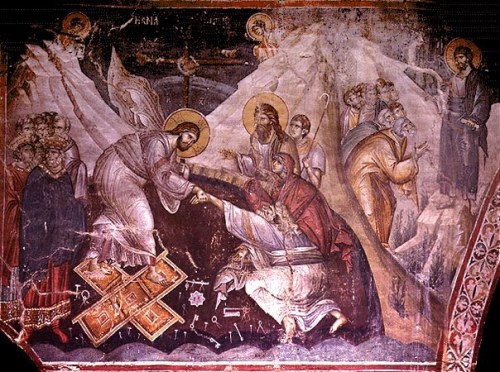
By Archiamandrite Justin Popovic
(blessed memory; commemorated April 7)
People condemned God to death; with His Resurrection He condemned them to immortality. For striking Him, God returned embraces; for insults, blessings; for death, immortality. Never did men show more hate towards God than when they crucified Him; and God never showed His love towards people more than when He was resurrected. Mankind wanted to make God dead, but God, with His Resurrection, made people alive, the crucified God resurrected on the third day and thereby killed death ! There is no more death. Immortality is surrounding man and his entire world.
With the Resurrection of the God-Man, the nature of man is irreversibly led toward the road of immortality and man’s nature becomes destructive to death itself. For until the Resurrection of Christ, death was destructive for man; from the Resurrection of Christ, man’s nature becomes destructive in death. If man lives in the faith of the Resurrected God Man, he lives above death, he is unreachable for her; death is under man’s feet. Death where is thy sting? Hell, where is thy victory? And when a man who believes in Christ dies, he only leaves his body as his clothes, in which he will be dressed again on the Day of Last Judgement.
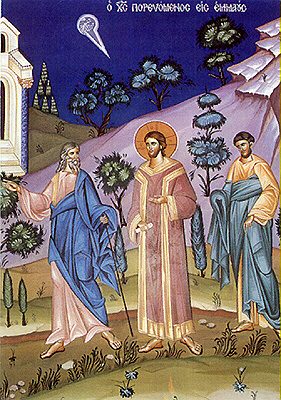
Before the Resurrection of the God-Man, death was the second nature of man; life was first and death was second. Man became accustomed to death as something natural. But after His Resurrection the Lord changed everything: and it was only natural until Christ’s Resurrection, that the people became mortal, so after Christ’s Resurrection it was natural that the people became immortal.
Through sin, man becomes mortal and temporal; with the Resurrection of the God-Man, he becomes immortal and eternal. In this lies the strength, in this lies the power, in this lies the might of Christ’s Resurrection. Without the Resurrection there is no Christianity. Among the miracles, this is the greatest one; all other miracles begin and end with it. From it sprouted the faith and the love and the hope and the prayer and the love toward God.
(Taken from “Philosophical Cliffs”)
Holy Fire Jerusalem, 2011 -the miracle of Holy Orthodoxy
Christ is Risen!
Truly, He is Risen!
Fast and freedom

What can be more absurd than the fast, in a religion which boasts of having given the man the freedom? How can you name yourself free, when you have to refrain from the things you like, when you must do what you don’t want! The fast is the abstinence not only from food, but also from the bodily pleasures. How not to see in this an outrage to the noblest instinct that the man has – the freedom?
If the fast is an obligation, than the Gospel is a masterpiece of the absurd’s literature. Understanding this, the Protestants decided to renounce the fast. However, despite the numerous quotations brought from the apostle Paul or from the words of the Saviour Himself, the spur to fasting is like a thorn in the flesh of him, who at least scarcely, knows the Holy Scriptures.
All righteous before Christ fastened. The fast was precursory to the meeting with God or to a revelation. Moses climbed up the mountain after forty days of non-eating and thus spoke with God. The New Testament is not at all different and it begins with a fastener – John the Baptist. Christ Himself had fastened before having begun to preach. Thus, we cannot leave away the fast, departing from some biblical verses, when even those who pronounced them were great fasteners; it seems to me it is more decent to doubt our understanding’ ability of those verses.
Christ was once asked why his disciples don’t fast (Matthew 9, 14). From this many have understood that the disciples and the Saviour Himself were gluttons (Matthew 11, 19). But this event, actually, discloses us the fact that the disciples and the Saviour were all the time starving. This can be also seen very well from the conflict that they had with the Jews, because the disciples ate some ears on Saturday. The disciples were so busy with the preaching that they used to forget to eat and the fact that they picked ears, shows how hungry they were and that they were up to eat here and there. The Saviour however did not eat with them, the reproach being only for the disciples; He was the model of fasting.
The fact that the disciples used to eat little, is also emerging from the scene of multiplying the bread, where we find out that they had only five loaves of bread and two fish. Although they were far away from the locality, in an impossibility to buy food, they are ready to give this little to the crowd (without knowing that it will be multiplied), which reveals us that they were accustomed with the hunger more than the ordinary men. Hence, the Saviour and the disciples fastened, but they did not count the days as the Pharisees did. To their question though, Christ answers: “Can you make the guests of the bridegroom fast while he is with them? But the time will come when the bridegroom will be taken from them; in those days they will fast” (Luke 5, 34-35). “Those” days when the bridegroom was taken away, are Wednesday, the day of betrayal and Friday, the day of crucifixion. In the year 50, the apostles convoked a synod in Jerusalem, (see Acts) where they established for the believers to fast in these days.
Thus, the Protestants have understood well that the fast is not an obligation. The forced fast, has no motivation as any gratuitous and meaningless thing. However, this is not a reason to blame the fast. The fast should be understood in all its nobility, as it is the supreme manifestation of the human freedom. In such a way the first Christians understood the fast, a meaning that is lost nowadays. “To eat – writes St. Ephrem the Syrian in the IV century– belongs to the laws of nature, but to fast belongs to freedom”.
Who can boast that he is eating only because “he wants this”? No, you eat because you need to eat, a results from the natural instinct, not from freedom. Of course there is neither an evil in this, nor a sin, but there is also no virtue. The virtue is only the fruit of the freedom. “Any labour which is not from a perfect freedom – farther Sofronie Saharov (+ 1993) said – can not have an eternal value”. The fasting is the man’s free choice of a nobler life, which has something in it from the realities of eternal life, where there is no corruption anymore.

Reading from the Synaxarion:
Saint Patrick, the Apostle of the Irish, was seized from his native Britain by Irish marauders when he was sixteen years old. Though the son of a deacon and a grandson of a priest, it was not until his captivity that he sought out the Lord with his whole heart. In his Confession, the testament he wrote towards the end of his life, he says, “After I came to Ireland – every day I had to tend sheep, and many times a day I prayed – the love of God and His fear came to me more and more, and my faith was strengthened. And my spirit was so moved that in a single day I would say as many as a hundred prayers, and almost as many at night, and this even when I was staying in the woods and on the mountain; and I would rise for prayer before daylight, through snow, through frost, through rain, and I felt no harm.” After six years of slavery in Ireland, he was guided by God to make his escape, and afterwards struggled in the monastic life at Auxerre in Gaul, under the guidance of the holy Bishop Germanus. Many years later he was ordained bishop and sent to Ireland once again, about the year 432, to convert the Irish to Christ. His arduous labours bore so much fruit that within seven years, three bishops were sent from Gaul to help him shepherd his flock, “my brethren and sons whom I have baptized in the Lord – so many thousands of people,” he says in his Confession. His apostolic work was not accomplished without much “weariness and painfulness,” long journeys through difficult country, and many perils; he says his very life was in danger twelve times. When he came to Ireland as its enlightener, it was a pagan country; when he ended his earthly life some thirty years later, about 461, the Faith of Christ was established in every corner.
Apolytikion in the Third Tone
O Holy Hierarch, equal of the Apostles, Saint Patrick, wonderworker
and enlightener of Ireland: Intercede with the merciful God that He
grant unto our souls forgiveness of offences.
Kontakion in the Fourth Tone
The Master revealed thee as a skillful fisher of men; and casting
forth nets of Gospel preaching, thou drewest up the heathen to piety.
Those who were the children of idolatrous darkness thou didst render
sons of day through holy Baptism. O Patrick, intercede for us who
honour thy memory.

Lorica of Saint Patrick
Lorica means breastplate in Latin. The story of this prayer is that Patrick and his followers used this most beautiful prayer to protect themselves from the people who wanted to kill them as they travelled across Ireland. It is also called the Deer’s Cry (Fáed Fíada) because their enemies saw, not men, but deer. It may not have been written by Patrick, but is considered to reflect his theological focus on the Trinity.
- I arise today
- through a mighty strength,
- the invocation of the Trinity,
- through belief in the Threeness,
- through confession of the Oneness of the Creator of creation.
- I arise today
- through the strength of Christ with His Baptism,
- through the strength of His Crucifixion with His Burial,
- through the strength of His Resurrection with His Ascension,
- through the strength of His descent for the Judgment of Doom.
- I arise today
- through the strength of the love of Cherubim,
- in obedience of Angels, in the service of the Archangels,
- in hope of resurrection to meet with reward,
- in prayers of Patriarchs, in predictions of Prophets,
- in preachings of Apostles, in faiths of Confessors,
- in innocence of Holy Virgins, in deeds of righteous men.
- I arise today
- through the strength of Heaven:
- light of Sun, brilliance of Moon, splendour of Fire,
- speed of Lightning, swiftness of Wind, depth of Sea,
- stability of Earth, firmness of Rock.
- I arise today
- through God’s strength to pilot me:
- God’s might to uphold me, God’s wisdom to guide me,
- God’s eye to look before me, God’s ear to hear me,
- God’s word to speak for me, God’s hand to guard me,
- God’s way to lie before me, God’s shield to protect me,
- God’s host to secure me:
- against snares of devils,
- against temptations of vices,
- against inclinations of nature,
- against everyone who shall wish me ill,
- afar and anear, alone and in a crowd.
- I summon today all these powers between me (and these evils):
- against every cruel and merciless power that may oppose my body and my soul,
- against incantations of false prophets,
- against black laws of heathenry,
- against false laws of heretics,
- against craft of idolatry,
- against spells of witches and smiths and wizards,
- against every knowledge that endangers man’s body and soul.
- Christ to protect me today
- against poison, against burning,
- against drowning, against wounding,
- so that there may come abundance of reward.
- Christ with me, Christ before me,
- Christ behind me, Christ in me,
- Christ beneath me, Christ above me,
- Christ on my right, Christ on my left,
- Christ in breadth, Christ in length, Christ in height,
- Christ in the heart of every man who thinks of me,
- Christ in the mouth of every man who speaks of me,
- Christ in every eye that sees me, Christ in every ear that hears me.
- I arise today
- through a mighty strength,
- the invocation of the Trinity,
- through belief in the Threeness,
- through confession of the Oneness of the Creator of creation.
- Salvation is of the Lord.
- Salvation is of the Lord.
- Salvation is of Christ.
- May Thy Salvation, O Lord, be ever with us.
To learn more about the REAL St. Patrick, and find alternatives to the excesses of the “holiday” please see The Real St. Patrick\’s Day!
The Ancient Church
More on the Orthodox Chruch
See also a brief introduction to Orthodoxy based on the book “The Orthodox Church” of Metropolitan Kallistos Ware (former Anglican Timothy Ware)
Part I
Part II
The last 4 parts are on Youtube…

Motto:
“In Orthodox circles, following the Holy Fathers, we make a distinction between God’s “permissive” will and His “intentional” will. As Lord of all, God permits or allows such disasters to happen. Yet He remains a God of Love, who would never, for any reason, inflict wanton destruction on entire populations. He may allow pain and suffering to visit particular individuals, including you and me. But He does so always for a purpose, often beyond our comprehension. There is no doubt that at times He does so for our good, as a burdensome yet effective pedagogical tool to correct us and lead us to repentance. Where apparently meaningless suffering afflicts the truly innocent, we can only surrender, in faith and hope, before the impenetrable divine mystery that allows no rational analysis, no figuring out of the whys or wherefores. God, then, is involved in suffering, as He is in every other aspect of created existence.”
Fr. John Breck in: Can God Suffer?
And an older podcast (MP3) of Fr. John Oliver taken from Ancient Faith Radio at:
A Reflection on Natural Disasters

Beloved brethren! We have already reached the very gates of the holy fast! They are even now about to open before us! Already, according to the typicon of the Holy Church, we hear the instruction of our Lord Jesus Christ read to us today in the Holy Gospels about the correct way to begin thepodvig of fasting.
For if ye forgive men their trespasses,says the Gospel reading for today,your heavenly Father will also forgive you: But if ye forgive not men their trespasses, neither will your Father forgive your trespasses (Mt. 6:14–15). The holy Church greets us with this announcement at the gates of the fast! This is the requirement the Church offers us on the very threshold of the spiritual chamber of repentance. We intend to prove our repentance for various sinful distractions through various deprivations and wearing out of the body. The Gospels requires mercy from us before sacrifice, so that the sacrifice would be pleasing to God.
All who wish to begin this podvig of fasting and prayer, all who wish to reap abundant fruits of your repentance! Hear the word of God, hear God’s commandment, and let go, forgive your neighbors their sins against you. For if ye forgive men their trespasses, your heavenly Father will also forgive you: But if ye forgive not men their trespasses, neither will your Father forgive your trespasses. Amen.
St. Ignatius (Brianchaninov)
Translated by Nun Cornelia (Rees)
Also see: A Sermon with Metropolitan Kallistos (video) at:
 Christian Dogma
 Christian Martyrs
 Christian Orthodox Churches and Monasteries
 Christian Sermons and News
 Church's Teachings on Fasting
 Ecumenism – a Great Heresy
 Father George Calciu
 Life_a Sacred Gift form God
 Orthodox Saints and Church Fathers
 Spiritual Elders
 Daily Bible Readings
 Journey to Orthodoxy
 Listen to Ancient Faith Radio
 Orthodox Calendar of Feasts and Saints
 Orthodox Christian Mission Center
 Orthodox Institute
 OrthodoxChristianNetwork TV


Recent Comments