
You are currently browsing the category archive for the ‘Orthodox Saints and Church Fathers’ category.
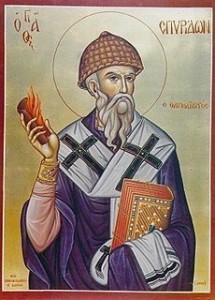
Miracles constitute irrefutable testimony of the sanctity of the person who works them. What follows will show what zeal for the faith the Saint had. When Constantine the Great was the emperor of Rome, and the first Christian emperor, and Plaulinus and Julian were consuls, in 325 in Nicaea the famous synod of the Holy Fathers took place. This council aimed to depose Arius, who with impiety, called the Son of God a creature, and to proclaim that the Son was of the same essence (homoousios) as the Father.
The first and the most well known supporters of this blasphemy were Eusebius of Nicomedia, Maris, bishop of Calcedon and Theognis, bishop of Nicaea. With the fanatic Arius at their head, these perverted creatures proclaimed the dogma that the Son of God is a creature. Those who fought in defence of the Orthodox faith, those who came into prominence by their speeches and their life were the holy Alexander, a simple priest, but a representative of blessed Patriarch Mitrofan, who was absent because of illness and the famous Athanassius, deacon of the Church of Alexandria, who would later become the ornament of the Episcopal throne. They were also strongly envied, because they did not distinguish themselves from the others by their ecclesiastic rank, but they were more powerful than them in the word of faith. Among them was equally found the Great Spyridon, whose life and the divine Grace that rested on him convinced more than the rhetorical skill, the powerful reasoning and the eloquence of the others. According to the will of the emperor, the philosophers were to assist in the council and they displayed their knowledge with arrogance. They were well educated in the art of Sophist rhetoric. One of them, a famous speaker, possessed an irresistible force of persuasion. He conversed with the bishops and supported Arius strongly. He pleaded insistently on his behalf, so that many, wishing to see which of the opposing parties would win, were urged to listen to him. There was no objection so difficult that his rhetorical ability could not remove with ease! Moreover, if his plea led him into an impasse, he would slip out like an eel by means of specious arguments and language tricks. There was therefore a competition between truth and rhetorical art.
Those who defended the truth with loyal arguments attacked the Sophist, but he made use of the ambiguities of language, insidious arguments and misleading tricks like weapons, and he believed that like this he would win. However, so that words would not be those that would finally win, but Christ and Truth, the victory «passed over» the learned men and «stopped» upon the simple Spyridon. As soon as the Saint, who did not know anything save «Christ, and him crucified» (1Cor.2,2), as the Apostle Paul says, saw the philosopher become heated with his sophisms, speak about Christ using offensive language and trying to denigrate the Orthodox dogmas, he drew near and asked to speak to him. Nevertheless, the pious Orthodox, who knew the simple ways of the Saint and that he was ignorant of the Greek culture, prevented him from going to oppose the Sophist. Saint Spyridon, however, did not let them stop him, because he knew that the Wisdom from on high is superior to the human and ephemeral wisdom; he approached the Sophist, then, and said to him: «In the Name of Jesus Christ, note my words, philosopher, and listen to what I want to tell you!». The Sophist replied to him: «Speak and I will listen to you! ». Spyridon then said: «There is only one God, Creator of heaven and earth. He created the heavenly Powers, made man from clay and created simultaneously all things visible and invisible. It was by His Word and His Spirit that heaven and earth were created, the sea flew out, the firmament stretched out, the animals were born, man was created, the most beautiful of His creatures. All the stars were created, the sun and the moon, night, day and all the rest. We know, then, that the Word is the Son of God and God Himself. We believe that, for us, He was born of the Virgin, was crucified and buried. Then he rose and raised us with Him, granting us incorruptible and immortal life. We assert that He will come a second time to judge all people and examine our own works, words and thoughts. He is of the same essence (homoousios) as the Father, equal in dignity, and reigns with Him. Don’t you agree philosopher? », he asked him.
We must relate here the famous miracle of the tile. After these words, the Saint took a tile in his left hand and held it tight. Moreover, for a wonder! Fire rose up immediately in the air, water poured out on the earth and the argyle of the clay remained in the hands of the Saint, symbolising in this way the life giving and indivisible Trinity. Everybody was amazed. The philosopher did not seem to be the same person any more, to possess neither the same mind nor the same language, he that knew so well to oppose and to quarrel. He remained stunned, his soul was filled with surprise and his voice faded away. After some time of silence, he could not say anything else but: «I share the same view! ». Then the Saint said to him: «Then go on, if you agree with me, don’t be in disagreement by your works! Since you know who is the God who created all things, get up and go to church to confess the Orthodox Creed».
At these words, the philosopher returned to the true faith and addressing himself to his disciples and to the other listeners, he said: «Until now, we fought in words and I won by means of my rhetorical skill. However, since a divine force which opposed me has manifested an ineffable and mystical power through the simple words of bishop Spyridon, I do not feel ashamed to admit that I have been defeated. I would joyfully advise then, myself as well as the others: if they are not so perverted so as to wish to change the Truth, to believe in Christ and to follow this saintly Venerable Father, whose human words are nothing else than the Words of God. »
Imagine the disgrace of the Arians at those words and the joy of the Orthodox mixed with pride! The victory of the Orthodox was so brilliant and the defeat of the heretics so bitter that almost all embraced the Orthodox faith. Only six bishops remained by the side of Arius in order to become the party of the devil, the father of lies, who is from the beginning the implacable enemy of truth.
After this manifest condemnation of the heretics, the bishops returned, filled with joy for the victory and full of admiration before the miracle, giving thanks to God for the miraculous things they had seen and for the defeat of Arius. Struck by the miracle, the emperor himself honoured the Saint greatly and saw him off, asking him to pray for him.
(Taken from “St Spyridon the Wonderworker” Monastery of Pantokrator St Athanasios Ed., Corfu, Greece)
Apolytikion in the First Tone
O Father, God-bearer, Spyridon, you were proven a champion and
Wonder Worker of the First Ecumenical Council. You spoke to the girl in
the grave and turned the serpent to gold. And, when chanting your
prayers, most sacred One, angels ministered with you. Glory to Him who
glorified you; glory to Him who crowned you; glory to Him who, through you, works healing for all.
Kontakion in the Second Tone
Wounded by your love for Christ, O holy One, your mind given wings by the
radiance of the Spirit, you put the practice of theory into deeds,
becoming a sacred altar, O Chosen by God, and praying for the divine
illumination of all.
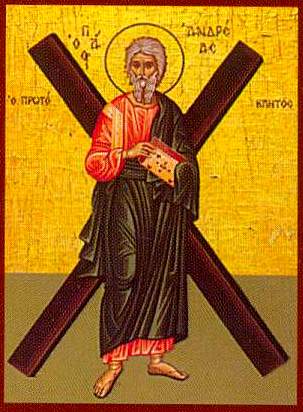
Saint Andrew the Apostle (Greek: ‘Ανδρέας, Andreas; early first century—mid to late first century AD), called in the Orthodox tradition Protokletos, or the First-called, is the brother of Peter the Apostle. The name “Andrew” (from Greek : “ανδρεία”, Andreia, manhood, or valour), like other Greek names, appears to have been common among the Jews from the second or third century BC. No Hebrew or Aramaic name is recorded for him.
For November 30th, 2008, the feast of St. Andrew the First-called Apostle, Fr. Michael Varlamos reads the life of the saint in lieu of the sermon at the Assumption Greek Orthodox Church in St. Clair Shores, MI.
The New Testament records that Andrew was the brother of Simon Peter, by which it is inferred that he was likewise a son of Jonah, or John.[Mt. 16:17] [Jn. 1:42] He was born in Bethsaida on the Sea of Galilee.[Jn. 1:44] Both he and his brother Peter were fishermen by trade, hence the tradition that Jesus called them to be his disciples by saying that He will make them “fishers of men” (Greek: ἁλιείς ἀνθρώπων, halieis anthropon). At the beginning of Jesus’ public life they occupied the same house at Capernaum.[Mk. 1:21-29]
The Gospel of John teaches that Andrew was a disciple of John the Baptist, whose testimony first led him and John the Evangelist to follow Jesus.[Jn. 1:35-40] Andrew at once recognized Jesus as the Messiah, and hastened to introduce him to his brother.[Jn. 1:41] Thenceforth, the two brothers were disciples of Christ. On a subsequent occasion, prior to the final call to the apostolate, they were called to a closer companionship, and then they left all things to follow Jesus.

The new church of St. Andrew
The new church in the city of Patras, in a Byzantine style, was founded in 1908 by King George the I, and it was consecrated in 1974 by Metropolitan – Bishop Nicodemus. The Church of St. Andrew of Patras is the largest church in the Balkans, and it can fit inside a total of 5,500 faithful.

The old church of Patras
Right on the spot where St. Andrew was martyred – the old city of Patras, a new basilica was built over the ruins of a former Byzantine basilica (erected over the ruins of an ancient Greek temple) destroyed by the Turks.

In the gospel Andrew is referred to as being present on some important occasions as one of the disciples more closely attached to Jesus.
Eusebius quotes Origen as saying Andrew preached in Asia Minor and in Scythia, along the Black Sea as far as the Volga and Kiev. Hence he became a patron saint of Ukraine, Romania and Russia. According to tradition, he founded the See of Byzantium (Constantinople) in AD 38, installing Stachys as bishop. His presence in Byzantium is also mentioned in the apocryphal Acts of Andrew written sometime during the second century. This diocese would later develop into the Patriarchate of Constantinople. Andrew is recognized as its patron saint.

Images from inside the Monastery of St Andrew, Romania

The cave of St Andrew, Romania


The Kievan hill where St. Andrew is said to have erected the cross is commemorated by the cathedral dedicated in his name
Andrew is said to have been martyred by crucifixion at Patras (Patrae) in Achaea. Though early texts, such as the Acts of Andrew known to Gregory of Tours, describe Andrew bound, not nailed, to a Latin cross of the kind on which Christ was crucified, a tradition grew up that Andrew had been crucified on a cross of the form called Crux decussata (X-shaped cross) and commonly known as “Saint Andrew’s Cross”; this was performed at his own request, as he deemed himself unworthy to be crucified on the same type of cross on which Christ was crucified.
Remaints of the cross St. Andrew was crucified on, Patras – Greece

The precious head of St. Andrew, Patras – Greece

Andrew is the patron saint of Patras. According to tradition his relics were moved from Patras to Constantinople. Local legends say that the relics were sold to the Romans. The head of Andrew, considered one of the treasures of St Peter’s Basilica, was given by the Byzantine despot Thomas Palaeologus to Pope Pius II in 1461. In recent years, by decision of Pope Paul VI in 1964, the relics that were kept in the Vatican City, were sent back home to Patras, where they belong. The relics, which consist of the small finger, part of the top of the cranium of Andrew and small parts of the cross, have since that time been kept in the Church of St Andrew at Patras in a special shrine, and are revered in a special ceremony every November 30.
Photos from inside of the Church of St Andrew, Patras – Greece


The relics of the Saint in the Church of St Andrew, Patras, Greece
One thing is truthful!
(My beloved) know that our relationship with God is not a joke; know that this whole world with all its civilization is a fad. You closed your eyes forever (when you die – transl. note) and will no longer know about civilization or the endeavors to the Moon or Mars, and so on … All are shadows/hollows; only one thing is truthful: our relationship with Christ, the immortality of our soul and what awaits us beyond death, aiming an eternal torment or the eternal life.
Father George Calciu
On the Priesthood
“What does the priesthood mean? It means to be an enduring witness to human suffering and to take it upon your own shoulders. To be the one who warms the leper at his own breast, the one who gives life to the miserable through the breath from his own mouth. To be a strong comfort to every unfortunate one, even when you yourself are overwhelmed with weakness. To be a ray of shining light to unhappy hearts when your own eyes long ago ceased to see any light. To carry mountains of others’ sufferings on your shoulders, while your own being screams out with the weight of its own suffering. Your flesh will rebel and say, ‘This heroism is absurd, impossible! Where is such a man, where is the priest you describe so that I may put my own suffering on his shoulders?’ Yes, nevertheless, he does exist! From time to time there awakens within us the priest of Christ who, like the Good Samaritan, will kneel down by the side of the man fallen among thieves and, putting him upon his own donkey, will bring him to the Church of Christ for healing. And he will forget himself and comfort you, O man of suffering!”
Father George Calciu
May His Memory Be Eternal!
Taken from HOMILY SIX – TO ENCOURAGE FASTING
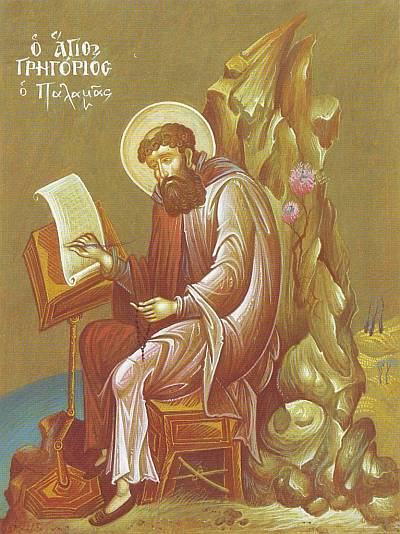
by Saint Gregory Palamas
(INCLUDING A BRIEF WORD ON THE ORIGIN OF THE WORLD)
THE INVISIBLE SERPENT, the originator of evil, is inventive, versatile and extremely skillful in contriving wickedness. He has means to hinder our good purposes and actions as soon as they begin. But if he fails to prevent them initially, he sets up other devices by which he can render them useless once they are underway. If he is unable to make them worthless when they are half way to completion, he knows other tricks and ways to invalidate them even once they are finished, and makes them a source not of reward but of harm to all but the most careful. First of all he points out how laborious and difficult to accomplish virtue is. In this way he fills us with laziness and despair, as though we were attempting difficult and impossible things and were therefore incapable of putting our intentions into action. Then he engenders disbelief in the rewards which God has promised to those who struggle.
2. But we, brethren, should rise above this trap by our soul’s courage, eagerness and faith. We should bear in mind the fact that just as the earth cannot yield worthwhile fruit without labor, so the soul cannot acquire anything which pleases God or leads to salvation without spiritual struggles. But while it is possible to find earth which is unsuitable for cultivation, every human soul is naturally suited to virtue. As we are all unavoidably condemned, however, by the judgment given against our forefather, to live by labor and toil, let us turn necessity into an honor and willingly offer to God what is ours not by our own will. Let us give up transitory things in exchange for things that endure, and receive what is beneficial in exchange for what is harmful, transforming short-lived toil into a means to gain eternal ease. If we labor here for the sake of virtue we shall certainly attain to the rest promised in the age to come. He who promised is trustworthy and is at hand to help all who readily take on the struggle for virtue. If He who can do all things gives us His help, is anything impossible to achieve?
3. When we remember this and eagerly apply ourselves to virtuous actions, the evil one, knowing that nothing can be good unless it is done in a good way, strives to persuade us not to accomplish any good work with the object of pleasing God or of winning His approval, but to look for other people’s approval. By this means he can deprive us of our reward from God and of all spiritual and heavenly honors. Let us frustrate these efforts of his by considering the great recompense stored up for those who live as God pleases, and how insignificant other people’s approval is. Not only is it not worth mentioning in comparison with the great and holy glory to come, but it is also insufficient reason to neglect and waste our flesh.
4. Even after suffering this defeat, the originator of evil undermined us with pride, the last and worst abyss. He suggests conceited thoughts and persuades us to boast as though we had managed to be virtuous through our own ability and intelligence. But let us remember that the Truth says, “Without me ye can do nothing” (John 15:5), and fend off all the evil one’s schemes. Let us do good works in a good way, with appropriate humility. If someone has a jar of precious perfume, whether he pours it out on to dung, or pours dung into the jar, he ruins and destroys the perfume. Be aware that, in the same way, whether someone rejects and discards virtue by his inaction, or mixes evil with his virtuous actions, he equally ruins and destroys virtue.
5. I am speaking to your charity on this subject in this present season of fasting, so that we may observe it together for our own sake unalloyed with anything evil. Fasting was of no benefit to that Pharisee in the Gospel, even though he always fasted two days a Week, because he had adulterated it with pride and condemnation of his neighbor (Luke 18:11-12). Not that this means fasting is unprofitable. Moses, Elijah and the Lord Himself showed how beneficial it is for those who fast properly in a way pleasing to God.

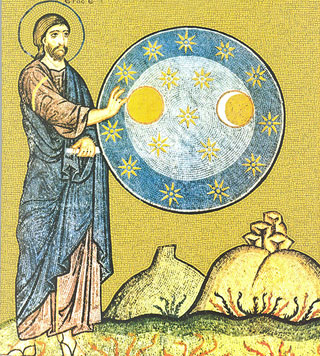
6. Moses fasted for many days. Awaken your minds, I entreat You, and lift them up at this opportune time, in company with Moses when he went up the mountain towards God. In this way may you start off afresh on your ascent, and be lifted up together with Christ, who did not merely go up a mountain but up to heaven, taking us with Him. Moses fasted for forty days on the mountain and according to the Scriptures he saw God, not darkly but face to face (Exod. 24:18). He talked to Him as someone would speak to his friend (Exod. 33:11, Deut. 34:10). He learnt from God and taught everyone about Him: that He is He Who eternally Is (Exod. 3:14) and will never cease to be, that He summoned what did not exist into existence, brought all things out of non-being and will not let them fall back into non-existence. In the beginning He brought the whole visible creation out of nothing all at once, just by a nod and His will. “In the beginning”, it says, “God created the heaven and the earth” (Gen. i:i), not empty of course, nor without all that lies between them. The earth was interspersed with water, and both were full of air, animals and plants of various kinds, whereas the heavens were full of the various lights and fires, from which the universe is formed.
7. So then, “in the beginning God made heaven and earth”, as matter able to endure anything and strong enough to bear everything, rightly thereby dealing a blow from a distance to those who falsely hold that matter existed independently beforehand. Then He developed the world and embellished it. In six days He assigned to each of His creatures which made up His world its own due order. By His command alone He made the distinction between things, as if He were drawing out different kinds of treasure stored up in secret. He disposed and composed all things in complete natural harmony between themselves, each in relation to all, and all in relation to each. He surrounded the motionless earth, as a central point, with the higher circle of the perpetually moving heavens, holding them it, place by means of what lies between, all according to His wisdom, that the universe might stay stable while in motion. When the heavenly bodies all around were moving unceasingly and at great speed, the motionless earth had of necessity to take its place at the centre, its stability counterbalancing the motion, test the sphere of the universe roll off its course.
8. When the great Craftsman had assigned to each of the two boundaries of the universe its place, He made fast and set in motion this whole orderly world. He allotted to everything between heaven and earth its own properties. Some of His works He placed aloft and ordered them to move along a high course, going round at the same time as the upper boundary of the universe with beautiful regularity for ever. Such heavenly bodies are light, highly active and can be turned to the advantage of what lies below. They are wisely set very high above the central point so that, turning all around, they can sufficiently disperse the earth’s excessive coldness, while their own extreme heat is contained in its place. In a way they can also restrain the excessive speed of the upper heavenly limits by themselves moving in the other direction, and they keep these limits in place by their counterbalancing orbit. They provide us with the great benefits of distinct annual seasons, a means of measuring periods of time and, to those who are able to understand, knowledge of God who created, arranged and ordered them.
9. So some of His works He set spinning and dancing round in mid-air in the upper regions, both for the sake of the world’s beauty and to bestow a variety of benefits. Others, those which are heavy and have a passible nature, he put low down round the center. By their nature they come into being and pass away, are distinguishable from, yet comparable with, one another. When they suffer change they become more serviceable. He laid down an order for those creatures and how they relate to each other, that the whole might truly be called a world of perfect order.
10. At the creation first one thing was brought into existence, then another, then another and so on in turn. Last of all came man (Gen. 1:26), who was worthy of God’s greater honor and consideration both before and after his creation. All the visible world was made before him for his sake. Immediately after the foundation of the world, before he existed, the kingdom of heaven was made ready for him. A divine Counsel concerning him preceded him, and he was created by God’s hand and in His image. He did not take his whole being from matter or the visible world, like the other living creatures did, but only his body. His soul he took from the heavenly realms, from God Himself when He breathed fife into him in a way that defies description (Gen. 2:7). Man was a great wonder surpassing all else, towering above everything, superior to all. Man was capable of knowing God, as well as receiving Him and declaring Iiim, and was most certainly the highest achievement of the Creator’s sublime majesty. He had paradise for his home, specially planted by God (Gen. 2:8ff). There it was his lot to have sight of God, speak to Him face to face and receive a counsel and commandment from Him concerning the fasting appropriate to that place (Gen. 2:16-17). If he kept and observed this, he would remain free from death, toil and pain for ever.

11. Alas, he chose the treason of the serpent, the originator of evil, in preference to this commandment and counsel, and broke the decreed fast. Instead of eternal life he received death and instead of the place of unsullied joy he received this sinful place full of passions and misfortunes, or rather, he was sentenced to Hades and nether darkness. Our nature would have stayed in the infernal regions below the lurking places of the serpent who initially beguiled it, had not Christ come. He started off by fasting (Matt. 4:2, Luke 4:2, cf. Mark 1: 13) and in the end abolished the serpent’s tyranny, set us free and brought us back to life, as Moses foretold (Deut. 18:15, 18-19, Acts 3:22; 7:37). After fasting on the mountain Moses received tablets, the work of God (Exod. 31:18), and later received again, on a second set of tablets, the law written by the finger of God (Exod. 34:1-4). He instructed the holy nation in the law and by his work he hinted at, and showed a glimpse of, Christ’s future ministry. As Moses appeared as the liberator and savior of Abraham’s race, so later Christ did the same for the whole human race.
12. Elijah, when he too had fasted forty days (I Kgs. 19:8), saw the Lord on the mountain, not in fire, as the elders of Israel had earlier (Exod. 24:9-10, Deut. 5:23), but passing beyond the fiery vision by his God-pleasing fast, he saw the Lord in the sound of a light passing breeze (I Kgs. 19:12 LXX). He had approached more closely to our Lord’s words, “God is a Spirit: and they that worship him must worship him in spirit and in truth” (John 4:24). For the sound prefigured the Truth and the preaching of Him who is Truth Itself, which rang out round all the ends of the earth, and the passing breeze prefigured the Spirit and grace.
13. From this vision while fasting Elijah also received power to anoint a prophet in his stead and bestow upon him a double portion of the grace he possessed, and to mount up above the earth in mid-air (2 Kgs. 2:9-11). This pointed clearly towards Christ’s ascension from earth to heaven which was to happen later (Acts 1:9-11). While Christ Himself was fasting in the wilderness, He defeated our tempter by force and took away his power against mankind (Matt. 4:1-11, Mark 1:13, cf. Luke 4:1-13). Having at last put down his tyranny, he set our nature free and handed him over for sport to all those willing to live according to His Gospel. In this way He fulfilled the words of the prophets and by His works inscribed grace and truth upon the symbolic events which took place in ancient times.
14. You see the benefits of fasting, and how it has made us worthy of so many great gifts? Even from its opposite, unlimited eating and self-indulgence, it is possible to see the advantage of fasting. For the last two weeks our city was given over to gluttony and lack of self-restraint, and straight away we had troubles, shouting, fights, disturbances, shameless songs and obscene laughter. But this week when the fast came it made everything more honorable. It took us away from frivolity’s expensive cares, stopped us tolling for the sake of our useless stomachs, set us instead to works of repentance and persuaded us not to labor for the food which perishes but for the food which endures to eternal life.
15. Where now are the slaughter of animals, the aroma of roasting meat, the variety of sauces and the cooks’ best endeavors? Where are the men who run around the streets and pollute the air with their impure voices? Where are those who beat the drum and make music around houses and tables, and their devotees who join in with applause and eat their fill of the food set before them to the accompaniment of kettledrums and flutes? Where are those who spend their days and nights at parties, who are always looking for places to drink, who keep each other company in drunkenness and the shameful acts that result from it? Once the fast was proclaimed all these evils went away and all things good took their place. Instead of disgusting songs, mouths now sing holy psalms. Instead of obscene laughter, there is salutary sorrow and tears. Instead of undisciplined outings and wanderings, everyone takes one and the same way to Christ’s Holy Church. If unlimited eating produces a dense swarm of sins, fasting is the root of all virtues and the foundation of God’s commandments.

16. Lack of self-control is actually an evil both ancient and modern, though it did not precede its antidote, fasting. By means of our forefathers’ self-indulgence in paradise and their contempt for the fast already in existence there, death entered the world. Sin reigned and brought in the condemnation of our nature from Adam until Christ.
The flood covered the whole earth because of the self-indulgence of Adam’s descendants in this world of ours and their disdain for the chastity which came before. In those days God said to Noah, “My Spirit shall not abide in these men, for they are flesh” (cf. Gen. 6:3 LXX). The deeds of those who are flesh are none other than unlimited eating, drunkenness, sensual pleasure and the evils that spring from them. Because of the abominable depravity and self-indulgence among the men of Sodom, fire fell on them from heaven (Gen. 19:24). “Behold”, says the prophet Ezekiel, “this was the iniquity of the men of Sodom, in fulness of bread they committed abomination” (cf. Ezek. 16:49-50). By means of this abomination, ignoring human nature they fell into unnatural unions. What deprived Esau, Isaac’s firstborn, of his birthright and his father’s blessing? Of course it was lasciviousness and an unreasonable demand for food (Gen. 25:25-34; 26:34-35, Heb. 12:16). Why were Eli’s sons condemned to death, and why did he meet a violent death at the news of the death of his children, whom he had not disciplined with proper care? Surely it was because they took the meat from the cauldrons before the time and used it (1 Sam. 2:12-17; 4:11, 17-18). Also, the whole Hebrew nation, while Moses was fasting on the mountain for their sake, were indulging themselves to their own detriment. They ate and drank and rose up to play, as the Scripture says (Exod. 32:6), and their sport was worshipping an idol, for it was then that the incidents surrounding the fashioning of the calf took place among them.
17. Sensual pleasure causes ungodliness as well as sin, but fasting and self-control result in the fear of God as well as virtue. Fasting must be accompanied by self-control. Why? Because eating our fill, even of humble foods, is a hindrance to the purifying mourning, godly sorrow and contrition in our souls, which bring about unswerving repentance leading to salvation. For without a contrite heart we cannot really lay hold of repentance. It is the restriction of self-indulgence, sleep and the senses according to God’s will that crushes our hearts and makes us mourn for our sins.
18. When that rich man in the Gospel said to himself, “Eat, drink and be merry” (Luke 12:19), the wretch made himself fit for the eternal flames and unfit for this present life. Let us, on the contrary, brethren, tell ourselves to be temperate, to fast, to keep watch, to be restrained, to be humble and to suffer hardship for our salvation. Then we shall finish this present life in a good way pleasing to God and inherit the blessed life without end.
19. May we all attain to this by the grace and love towards mankind of our Lord Jesus Christ, to whom belong glory, might, honor and worship, together with I lis Father without beginning and the life-giving Spirit, now and for ever and unto the ages of ages. Amen.

(From: Saint Gregory Palamas: The Homilies, trans. Christopher Veniamin, Mount Thabor Publishing, Waymart PA, 2009, pp 42-48)
Source and more on Orthodox Fasting
From the Counsels of Blessed Epiphanios (Theodoropoulos)
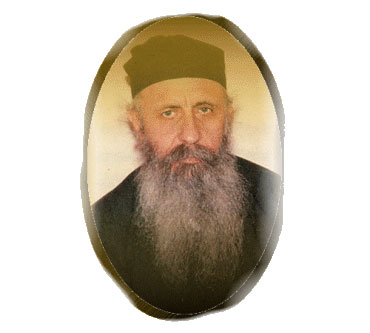
True love is like the flame of a candle. However many candles you light from the flame, the initial flame remains unaffected. It doesn’t lessen at all. And every freshly lit candle has as much flame as the others do.
I want whoever is near me to feel that he has room to breathe, not that he is suffocated. I don’t call anyone to me. I don’t hold onto anyone. I don’t chase anyone away. Whoever wants comes, whoever wants stays, whoever wants leaves. I don’t consider anyone a supporter or a follower.
I am not afraid of death. Not, of course, because of my works, but because I believe in God’s mercy.
Speak more to God about your children than to your children about God…. The soul of the teenager is in a state of an explosion of freedom. For this reason he has a hard time accepting various counsels. So, rather than counseling him continuously and reproaching him now and again, leave the situation to Christ, to the Panaghia (Greek word meaning “All-Holy”. It is perhaps the most beloved term of endearment for the Mother of God in the Greek language) and to the Saints, asking them to bring him to reason.
Don’t be neglectful of prayer! At table, in the morning, afternoon and evening. In particular don’t miss Small Compline for any reason, tired though you may be. It’s a question of self-sacrifice and, in particular, of love. When a beloved person calls you very late at night, how are you able to speak sometimes for a few hours, despite your fatigue, without being put out, but being, rather, pleased?
———-
Deal with your children as with colts, sometimes tightening and other times loosening the bit. When the colt kicks, without abandoning the bit, we loosen it, otherwise it will break. When, however, it is peaceful, then we tighten the bit and take the colt where we like.
———-
Parents should love their children as their children and not as their idols. That is to say, they should love their children as they are and not how they would like them to be-to be like them.
———-
Whoever fears God doesn’t fear anything else.
———-
I am in pain and agonize over the path of the Greek people who are constantly being de-Hellenized, de-Christianized, de-colorized and cut off from their roots, and are losing their identity.
———-
In marriage, abstention solely out of love for God is perfect, “the greatest.”(Elder Epiphanios uses terminology from the grading system at school to make his point. “The greatest” is an “A,” “very good,” is a “B,” etc). When the couple comes together, not obstructing the procreation of children, it is at the level of “very good.” And when they abstain solely to avoid the procreation of children, they are on the level of “good.” In any case all of these categories are above average and are only legitimate with the presupposition that they have been agreed upon by both spouses and not just one. Otherwise it is a sin.
———-
God appointed the salvation of the world to His Son and not to us…. We must first look at our soul and if we can, let’s help five or six people around us.
———-
When someone is free, he has rights and responsibilities. When he marries, he has few rights and very many responsibilities. When, however, he has children, he doesn’t have any rights at all, but only responsibilities.
———-
Why do they put rubber tires with inner tubes on cars? So that they give in, to collapse a little with every little stone or pothole on the road, and in this way they pass obstacles. If the wheels were firm and unyielding, the car wouldn’t be able to move forward. It would fall apart after a short distance because of the vibration from the small inconsistencies of terrain. The same thing happens with yielding to others in the family. In this way many problems are surpassed and continuous spiritual progress is assured.
———-
When people treat us unjustly, God justifies us.
———-
[God allows virtuous people to suffer] so that they might be purified from even the slightest traces of their passions and so that they might receive an even greater crown in Heaven. Furthermore, as He allowed His beloved Son to suffer and to die on the Cross, what can we say for those people who, as holy as they may be, have filth and stains from sin?
———-
Sadness purifies us. Man is truly man in sadness. In joy he is changed, he becomes someone else. In sadness he becomes that which he truly is. And this is the way, par excellence, that he approaches God. He senses his weakness. Many times, when he is in glory and joy, he feels that he is the “eye of the earth” or, if you prefer, the center of the universe: “I am, and nobody else!”
In pain and sadness he feels like an insignificant ant in the universe, that he is completely dependent, and he seeks the help and companionship of God. Those of us who have passed through pains, either psychical or physical, know that we never prayed as hard and with such quality and length, as we did when we were in the bed of pain or when some heavy psychical sadness tested us. While, when we have everything, we forget prayer and fasting, and many things. It is for this reason that God allows pain.
———-
Don’t sit, glued to the television…. Guard yourselves from the means of mass blinding.
We didn’t come here [to the monastery] mainly for handiwork, or for the gardens or for the buildings. For even without these things we can save our soul. We came here primarily for the soul. And in order to save the soul, we must pass the day without sin, with meekness, canon (In this case, the daily rule of prayer, reading, prostrations, and so on, that a monk keeps in his room) and prayer.
———-
I sacrificed everything even before I had anything. I sacrificed a place at the university as a professor. I sacrificed the position of first secretary of the Holy Synod. I sacrificed the position of director of a missionary brotherhood. I sacrificed the position of first priest of a large church. I sacrificed Episcopal (That is, the position of bishop) thrones…. All I have is a little epilrahili (In Greek, literally, “upon the neck.” It is the stole that the priest or bishop wears around his neck when hearing confession (hereafter, “stole”) so as to confess ten souls. Nothing else!
———-
There is no greater satisfaction for me than to remain for hours in the seat of the confessional and to reconcile man to God.
———-
Married and unmarried priests, let us not forget that we are representatives of the gentle and humble-hearted Jesus. We were called to progress in humility and not to quarrel in the holy altar for priority of honor.
Clerics and, in particular, celibate clerics must be chosen from those of a mature age, with excellent education, extreme piety, shining ethos, sterling character and complete spiritual formation: all those things that are acquired with labors and struggles, prayer and study, fasting and vigils, with voluntary poverty and hardships, and through various deprivations. For asceticism is not the privilege or responsibility of monastics alone, but of all the faithful and particularly of clerics, and especially of unmarried clerics. The Orthodox Church is deeply ascetic and those who don’t love asceticism and who are friends of luxury and comfort don’t have a place within Her.
———-
The priest is the incarnation of the absolute, the expression of the constant, stable and unshakeable, the trumpet of Heaven, the image of incorruption, the mile-marker of eternity. May he remain forever unchanged, even in his external appearance, as a reminder and symbol of the ages and of the unchanging truths that he represents.
The priesthood is a very great gift of God toward mankind. It is the conduit of the grace of God.
———-
It seems a blasphemy to me [an archimandrite’s sadness at not having been elected bishop]. If you consider that your shell of a body can take bread and wine and, with the Holy Spirit’s consecration, transform it into the Body and Blood of Christ; that you have been given the power to make the children of Adam partakers of the Cross and resurrection of Christ through baptism, and how you have been given the power to place your hands and your stole over the head of the greatest sinner and to bring him out of confession with a pure and whitened soul, how can you then consider yourself unsuccessful? Because you haven’t put on a mitre? ( ). May God have mercy on us!
———-
I have made an agreement with God: I will empty my pockets in almsgiving and He will fill them. He has never violated our agreement. Will I violate it? May it never happen!
———-
Ah! My fathers, know how much I have ground down my will! I have loved two things in my life: reading and writing, both of which I have been deprived of, and the deprivation of which is as great for me as for him who loses the greatest joy in this world. When I study the Holy Scripture and patristic books, I leave the earth and go to Heaven. As for my own writing, forgive me for what I’m about to say … I get drunk. I see how others desire to write some text, and they erase, write, erase again, write again….
———-
I don’t manage to write my thoughts in time, for I am flooded as with flakes of snow. I feel as though my pen has wings. However, in spite of my writing ability and my desire for study, I deprive myself and sit and pick up the telephone, which rings cons tandy, so as to find a solution to some problem or other. Or else I see people for confession for hours without end, and not only scholars, but also simple and unlettered people. In saying this I don’t undervalue the Mystery of confession as opposed to the work of writing. But the will of God was that I confess people and not that I study and write, though they much enchant me.
———-
How crafty the devil is! To young people who managed to unite in Christian marriage he whispers, “How much better you would be if you went to the monastery and lived the heavenly spiritual pleasures, far from the cares of family life which sever you and keep you down!” While to those who went to the monastery, as they desired the life of virginity in Christ, he whispers, “How much better you would be, if you got married and made your home a temple of God, living the joys of marital life, far from ascetic mortification and the loneliness which depresses you!” And if the married one became a monk and the monk married, he would tell them the opposite. All this to throw the person into despair and to pull him from the path of salvation. For the path of salvation is both blessed marriage and virginity in Christ
———-
The mathematics of God is completely different from the mathematics of humans. For us two and two equal four. For God two and two can make five or fifteen or anyd1ing else.
———-
My heart only has entrances. It doesn’t have exits. Whoever enters remains there. Whatever he may do, I love him the same as I loved him when he first entered into my heart. I pray for him and seek his salvation.
———-
My worst hell is to realize that I have saddened a beloved person.
(Taken from Elder Epiphanios in “Precious Vessels of the Holy Spirit”, Protecting Veil Press)
See Also:
Concerning Miracles
With miracles, the Lord does not give a certificate of correctness of people’s faith. He does them out of love for his creatures.
Οn account of all those who have difficulties with the matter of the Lord’s miracles, Father stressed: When someone accepts the Resurrection of Christ–in other words, that Christ is God-then he can easily explain all the miracles.
Natural Sciences
Natural sciences ί n essence describe and certify. They don’t explain.
The Foolishness is Innumerable
For all the foolishness to be refuted, which is written against Christίanity, the mountains would have to be minds, the trees, pen holders, the sea, ink, and the fields, paper!
Many people write as they smoke and smoke as they write and write whatever the smoke blows.
The Law of Reserves
When you write, my child, do not present all your arguments at first. Keep a few ί n reserves, so that, if there is someone who answers, you can implement the golden «law of reserves. » Thus, you support your positions better.
Bosses
We always have a boss: Either God, or the devil and our passions.
Man has freedom only as regards his choices: Το choose as a boss either Christ or the devil. From there on, the obligations begin both ί n the one case and ί n the other. Many call oppression the obligations of Christianity. We Christίans speak of struggle.
Sin and disbelief
Sin is that which prevents us from believing. Not logic. For this reason, if you tell an unbeliever to live for six months according to the ethics of the Gospel, and he does it, he will become a believer without even realizing it
«God does not exist» is usually said by people who are lewd and unethical. There has not been found nor will there be found an ethical, continent, virtuous, etc. man who will rather easily say: «God does not exist! »
What is Faith?
Faith and trust ί n God are not for you to say in the morning, « Ι believe that ί n a little while the sun will dawn. »
That is merely trust ί n the functioning of natural law and not ί n God. Faith is when, at a time when everything shows that the sun is being led to its setting, you say, « Α little more and the sun will be ί n the middle of the sky, » if the Lord has thus promised.
A Silencing Answer
Once, Father mentioned the following anecdote:
Α certain scholar, after quite a bit of argumentation to prove that God does not exist, said:
«If God exists, let him kill me this instant! » And because, of course, nothing happened, he continued: « You see? If He existed he would have killed me. » Then, an elderly lady told him: «Do you have children? » « Υes, » he answered. «How many? » «Three. » «Are they well behaved? » «Well, not all of them . . . the two listen to me, but the third . . . . » « Ιn other words? » asked the lady. «Well, » said the scholar, «he talks back to me; he doesn’t listen to what Ι tell him, he acts wayward . . . . » «Well then, you should kill him! » the lady told him. « My child? » the scholar said, amazed. «Oh, so there, hah! So, if you do not want to kill your child, how then do you imagine that God would kill you who loves you incomparably more than you love your child? »
He Would Sell Lemons!
Once, a certain father (who was strongly materialistίc) of one of the Elder’s spiritual children visited him to complain that he was exerting an «unacceptable» influence up ο n his son. At one moment, furthermore, he said, smiling mockingly at the Elder: «And don’t tell me, Father Epiphanios, that you, such a smart man, believe the things about Christ, Paradise, Hell, etc. » Then, the Elder got up automatically, set his politeness and meekness aside and, with a loud voice, told him: «Listen, Mister! If Ι did not believe all these things, Ι would prefer to be selling lemons at Omonia, rather than to be fooling you! Ι would prefer to be a completely illiterate labourer, rather than a lettered liar! » After this, the visitor departed with his head bowed . . . .
«God come to find me! »
Once, the Elder visited a certain, Spίritual child of his who was ί ll. There were also some other visitors, among whom was also a certain atheist doctor. After a little while, the conversation turned to religious topics and lasted quite a while. Ι n the end, the Elder addressed the doctor: « My doctor, despite your objections, Ι discern in the depth of your soul a good will and disposition. Without being a prophet, Ι believe that God will not leave you. Ι would like to submit to you one request. Would it be difficult, once a day, to say the following small expression: ‘God, if you exist, come to find me!’? Ι think it will not cost you anything nor does it clash with your conscience. » He accepted. Α few months later, the doctor diagnosed ίn himself neoplasm of the bones, in other words: cancer. He departed abroad. There, the doctors advised him to return to Greece, because it was a rapidly spreading form of cancer and he was quickly approaching his end. Before taking the return road home, he asked to confess and commune. He died ί n repentance a little whίle after his return to Greece.
Nature Doesn’t Recognize Justice
The Elder said: Professor Louvaris formulated ίn a first form the following argument, whose strength Ι have experienced ίn conversations: Marxists proclaim that there exists nothing beyond matter, and natural laws govern everything. However, nature knows οnly the law of strength. The laws of love, compassion and justice are unknown to it. Based ο n this logic, the fate of the lamb is for the wolf to eat it and for the rich person to oppress the poor person without ethical responsibility. Οnly the acceptance of ethical laws, after the rejection of materialίsm can justify the demand for social justice.
There Exists a Solution and You Foolishly Reject It!
Once, a lawyer who met the Elder for the first time asked him about reincarnation. Father Epiphanios answered him. After a lengthy Ρeriοd of discussion, the lawyer insisted on contίnuing on the same subject. So, the Elder said to him: « All right, but don’t you pity your time dealίng with these things? ». «Is it evil, Father? » « Νο, my lίttle child, it is not evil in the sense that you are researching a topic, but you are wasting your time in vain. » « Ι like searching. » «How old are you? » «About forty. » «So, you are forty years and you are still searching? And when will you settle? And after you settle, will you then have years before you ί n which to regulate your life ί n accordance with your settled convictions? Life is very short and leaves quickly! Υou can’t make searching the aim of your life. Υou must, of course, settle somewhere. » «Father, Ι don’t accept the approach ‘believe and don’t research’! » «But Ι am not telling you not to research. Ι am simply telling you that sometime you have to settle somewhere. Υou are already late. » After a little while, the lawyer departed and the Elder commented: «Do you know what it is for your tongue to have dried up from thirst, to have a little spring next to you and yet not approach it to be refreshed, but instead settle for swampy waters? Do you know what it is to tremble from the cold, for the fire to be next to you and for you not to extend your hands to get warm? Miserable people! »
(From the Life and Teachings of Father Epiphanios; taken from «ORHODOX KYPSELI » Publications)
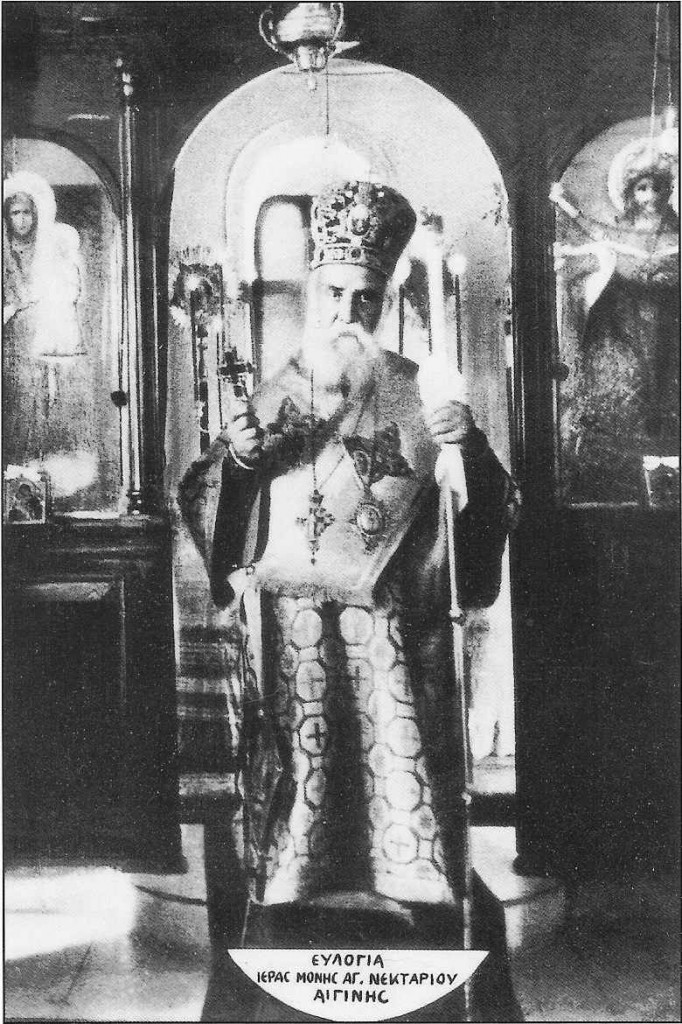
The glorification of Saint Nektarios
Troparion To St. Nektarios
“The offspring of Selybria and the guardian of Aegina, the true friend of virtue who appeared in the last years. O Nektarios, we faithful honor you as a Godly servant of Christ. For you pour out healings of every kind for those who piously cry out, glory to Christ Who has glorified you, glory to Him Who has made you wondrous, glory to Him Who works healings for all through you.”
THE LIFE OF ST. NEKTARIOS
- St. Nektatios was born on October 1, 1846 in Selybria in Thrace to a poor family. His given name was Anastasios Cephalas.
- At the age of 14 he moved to Constantinople (Istanbul) in order to go to work and further his education.
- In 1866 he moved to the island of Chios where he taught school for seven years.
- St. Nektarios became a monk at the age of thirty, which is highly unusual in itself.
- Three years after becoming a monk he was ordained a Deacon, taking the name Nektarios.
- He graduated from the University of Athens in 1885.
- During his years as a student of the University of Athens he wrote many books, pamphlets, and Bible commentaries.
- Following his graduation he went to Alexandria, Egypt, where he was ordained a Priest and served the Church in Cairo with great distinction.
- In recognition of his piety and brilliance as a preacher, as well as his administrative ability, he was consecrated Bishop/Metropolitan of Pentapolis by Patriarch Sophronios, which was an Egyptian See, in 1889.
- He served as a Bishop in Cairo for one year, and was unjustly removed from his post by jealous clerics who envied his popularity with the people. Lies were made up about him by the jealous clergy. Patriarch Sophronios refused to listen to St. Nektarios. He was sent away from Egypt without a trial or explanation, and was never given an opportunity to defend himself.
- After his dismissal, he returned to Greece in 1891, where he sought employment as a preacher. He was appointed preacher in the jurisdiction of Euboia, a large Greek island, north of Athens, where he served for two and a half years.
- In 1893 he was transferred to part of the Greek mainland, west of Athens. He served as preacher there with the same great effectiveness as he had in Euboia.
- In 1894 he was appointed director of Rizarios Ecclesiastical School in Athens where his service was exemplary for fifteen years.
- He developed many courses of study, and wrote numerous books, all while preaching widely throughout Athens.
- In 1904 at the request of several nuns, he established a monastery for them on the island of Aegina. The Monastery was named Holy Trinity Monastery.
- In December of 1908, at the age of 62, St. Nectarios resigned as Director of the Theological school and withdrew to the Holy Trinity Convent on Aegina, where he lived out the rest of his life as a monk. He wrote, published, preached, and heard confessions from those who came from near and far to seek out his spiritual insights.
- While at the monastery, he tended the gardens, carried stones, and helped with the construction of the Monastery buildings that were built with his own funds.
- St. Nektarios died on the evening of November 9, 1920, (The day after the commemoration of St. Michael and St. Gabriel the Archangels), following hospitalization for Prostate Cancer.
- His body was taken to the Holy Trinity Convent, where he was buried by a Priest-Monk named Savas, who later painted the first icon of St. Nektarios.
- The funeral of St. Nektarios was attended by multitudes of people from all parts of Greece and Egypt.
- Many people regarded St. Nektarios as a Saint during his lifetime because of his purity of life, virtues, the nature of his publications, as well as the miracles he performed. St. Nektarios also had a unique gift of foreknowledge.
- The relics of St. Nektarios were removed from the grave on September 2, 1953. His relics gave out a beautiful fragrance.
- Official recognition of Nektarios as a Saint, by the Ecumenical Patriarchate of Constantinople, took place on April 20, 1961.
- The Feast Day of St. Nectarios is celebrated every year on November 9th.
- There have been more than two thousand miracles attributed to the intervention of St. Nectarios.
The first miracle attributed to St. Nektarios:
During the last days of his life, the Saint was in the room for the incurables of the hospital, among many poor patients who were at the point of death. Beside the bed of St. Nektarios was a patient that had been paralyzed for years. As soon as the Saint gave up his spirit, a nurse of the hospital, together with a nun who had accompanied the Saint, began to prepare the holy body for transportation to Aegina for burial. They removed an old sweater from the Saint, and placed it for convenience on the bed of the paralytic and continued to prepare the body. Suddenly, the paralytic patient became well and rose from his bed, praising the Lord. This was the first miracle after the repose of St. Nektarios, through which the Lord confirmed the sainthood of Nektarios.
Akathist to Our Holy Father Nektarios of Aegina Metropolitan of Pentapolis
Orthodox Spirituality Prayers written by St. Nektarios of Aegina
Agni Parthene in Arabic, with views from the inside Monastery and Church of St. Nektarios from Aegina
The Monastery and the Church of St. Nektarios from Aegina
Saint Nektarios Monastery, located in the island Eghina (Aegina), is a monastery dedicated to St. Nectarios – a recent saint of the Orthodox Church. Saint Nektarios has been canonized by the Church of Greece.

(The picture above represents the bigger church “Holy Trinity” built near the monastery and finished after saint reposal)
The Monastery and the church of Saint Nektarios can be reached by bus leaving from Aegina to the opposite side of the mountain Palaiochora. One can get to Aegina island by boat which has a set schedule.

Saint Nektarios Monastery is located at a distance of about 6 kilometers from the downtown of Aegina. The Cathedral St Nektarios from Aegina is one of the largest cathedral in Greece.

Saint Nektarios, the protector of the Aegina island, had helped to raise this monastery between 1904 and 1910. Building a monastery in Aegina was a desire of the faithful nuns from the island. The monastery was built on the ruins of a former old Byzantine monastery.


(Above: photos from inside the nun’ monastery from Aegina)
Although at that time Saint Nektarios was the Metropolitan of Aegina, he worked on raising the monastery, carrying stones, arranging gardens and doing other physical work. The monastery was built as a result of saint love and from his funds.

At that time, the monastery was dedicated to the Holy Trinity. After the death of St. Nektarios, and especially after his canonization, the monastery received a second patron and benefactor: Hierarch Saint Nectarios Thaumaturge (the healer).

(Coffin with the saint’ relics from inside the “Holy Trinity” cathedral’ chapel)
His holy relics are preserved inside the monastery for many faithful pilgrims coming to Aegina to venerate them.
Holy Nektarios pray to Our Lord for us sinners!
Saint Dimitri the New (Basarabov)

Saint Dimitri the New (Basarabov) lived in the 13th century and little is known about his life. He was born in the village of Basarabov, located on the banks of the River Lom, near the town of Russe. A shepherd in his early years, it is said that St Dimitri had later became a monk, dedicating himself to fasting, prayers and vigils. For his humble life, God entrusted him with the power to work miracles. The pious Dimitri knew the moment of his death beforehand, and choose the place of his final rest between two stones that were gradually covered by the river. The place of his rest was unknown until a sick child had a revelation when the pious Dimitri appeared in her dream and said: “If your parents would take me out of the water, I will heal you!”
(1st Chant from the Kanon of St. Dimitri the New, Romanian)
A ray of light had appeared for quite some time at the site where the holy relics were found, leading people to initially believe that a treasure was hidden in that place.
Acting at the girl’s advice, they searched the place and found the relics of pious Dimitri, glittering as gold. The saint’ body was taken to the village of Basarabov. Between 1769 and 1774, during the Russian-Turkiss war, the relics were brought to Romania with the intention of being sent to Russia.
However, Metropolitan Grigorie (Gregory) of Walachia, insisted that they should be given to the Romanian people as a gift for the sufferance they endured during the war. The relics were taken in great procession to the Patriarchal Cathedral of Bucharest.
The saint’s right hand was sent to Kiev, where it has been preserved to this day. The Synod of the Romanian Orthodox Church, had great devotion to Saint Dimitri the New and starting with 1950, the saint was venerated nationwide and recognized as the patron saint of Romania’s capital city.
The Monastery of Saint Dimitri the New
The Monastery of Saint Dimitri Basarabov was founded over the cave where Saint Dimitri the New lived his ascetic life. The Monastery is located near the town of Basarabov, Bulgaria.

The village of Basarabov, initially located 3-4 km from the river Danube, was moved slightly to Ivanovo, near the cave where Saint Dimitri lived.

Located in the picturesque valley of the Lom river, the Basarabov Monastery, is the only monastery in Bulgaria carved in the rock and inhabited since its establishment.

Where river Lom meets the Danube, climbing to Ivanovo, the pilgrim will encounter more then 300 caves dug in the rocky side of river. Almost 40 of these caves were transformed into small churches where Divine Liturgy was served for several hundred years. Many wall frescoes of the original caves have lasted until today. The monastery and the caves of Ivanovo are part of UNESCO patrimony.
The Monastery of Saint Demetrius Basarabov — Brief History
The Monastery of St Dimitri the New was founded by the family of Basarabs and was initially under the care of John the Basarab, and first ruler of Romanian Country.

The present monastery of St. Demetrius was built in 1865. It consists of a church, built in the cave of St. Dimitri, and some cells carved in the rocks nearby.

The Monastery was burned down during the Russian-Turkish war. At that time more than 60 valuable icons from the church were stolen. The village of Basarabov was completely destroyed and the relics could not longer remained in the ravanged church.

The earliest historical evidence about this Monastery dates back to the XV century, in some of the tax records of the Ottoman Empire. An extensive description of the property owned at that time by Vlach leader Ivanko Basarab, the father of Tsar Ivan Alexander – is found in one of these registers, called “Timar” and it’s the oldest written record where the name of the town Basarbov is mentioned.
In 1911, a Committee of historical vestiges was established at the National Museum of Archeology in Sofia. The main task of this committee was to develop an archaeological map for the whole country of Bulgaria.
A Czech pilgrim who took several scientific trips to Bulgaria between 1887 and 1892, was called to be part of the committee. In 1912, Skorpil went on a trip on the river Lom, and at that time he would visit and describe the famous monastery of Basarbov.

Because of the Turkish rules in Bulgaria, it is unknown when the monastery was abandoned by the archaeologists.
The future bishop of Smolyan, Father Tikhon, took care of Basarabov monastery around 1919.
A new committee having the task of raising money to re-build the cells was established in 1937. The monastery cells were finished and blessed on May 14, 1937, but have survived only until 1940, when a flood destroyed the entire building.
Monk Chrysanthos, who settled here from 1937 until 1961, started to raise donations for the restoration of damaged cells. Thus, in less than one month, he gathered enough money to raise two cells near the church and were finished on August 30, 1940.


The new church will retain the iconostasis – carved in wood in 1941. A large icon of Saint Dimitri the New standing up, depicts his wonders. The icon bares an inscription in Cyrillic Greek and Romanian languages.

The monastery also bares the cell and burial place of father Chrysanthos, as well as the remains of other monks that struggled in this place.
Saint Dimitri the New (Basarabov)
Some researchers believe that the new Saint Dimitri of Basarabov have lived during the flourishing of hesychasm, while others believe that he lived in the XII century. Paisius of Hilandar recorded in his chronical that St. Dimitri is a recent saint of our times because he was still living in 1685. In a copy of the Slavo-Bulgarian chronic of monk Panteleimon from Russe, it is said that St. Dimitri lived in the eighteenth century and was buried in the Monastery of Basarabov.
The saint nationality is not clear, as in the eighteenth century many villages in tha region of Russe had mixed population.


According to Paisius of Hilandar and his famous book “the Slavo-Bulgarian History”, Saint Dimitri the New led the simple life of a layman/ peasant. In the notes of Nicholas Nemtov teacher (1898) in Basarabov, it is mentioned that Saint Dimitri attended the Church of St. John, every Sunday and holiday, and the rest of the days he was watching the village’ cows, receiving only bread and water, and only from the wealthy people of the village.
Saint Dimitri will later become a monk in the Monastery of Basarab founded in the outskirts of his village. Teacher Nemtov also describes how the relics of St. Dimitri Basarabov were discovered. It is said that a young maiden from the village of Cherven Voda lost her sight. One night, she was dreaming that she went to the monastery of Basarabov, was washing her face with water from the fountain of St. Dimitri, and regained her sight.

The young girl tells her parents about the dream and decided to go to Basarabov. Arriving at dawn, she remained overnight with her parents, wanting to wash with water from the fountain the next early morning. But at night, having great eye pain, the girl went to the fountain, washed and regained her sight. Looking over the river Lom – passing in front of the monastery, she saw several lit candles and torches, and in the water the holy relics of Saint Dimitri shining as gold.


The girl’s father is called, but he does not see anything. The next day, the body of the saint is found and removed from the river by the priests of Russe. The holy relics of St. Dimitri are taken first to the city of Russe, but the oxen pulling the cart with his relics stopped in front of his father’s house. A church will be built here baring the name of the saint.
The tradition also tells us how the Turks during an attack, in search for a treasure, unearth the saint relics. Finding the relics of St Dimitri, the turks threw then into the river Lom, where they remained hidden between the shore and the rocks, for 33 years until they were found by a pious Christian. They were taken to Basarbov village, where they have worked countless miracles.

In a miracle recorded before the relics were to be taken to the Metropolitan Cathedral in Bucharest, it is said how a Turk tried to steal a silver candle at night from the Church of St. Dimitri. Suddenly his legs became paralyzed and the turk will remained until the next morning in front of the shrine with the holy relics.
During the Russo-Turkish War (1768-1774), his holy relics were transported to Bucharest by General Peter Saltykov, and placed with great devotion and joy in St. Constantine and Helen’ Patriarchal Cathedral, where they are preserved until today.
Holy Great Martyr Demetrius (Dimitri) of Thessalonica
Commemorated October 26 (Nov. 8th by civil calendar)
(Life taken from the Prologue of Ohrid)

This glorious and wonderworking saint was born in Thessalonica of noble and devout parents. Implored of God by childless parents, Demetrius was their only son, and so was raised and educated with great care. Demetrius’s father was a commander in Thessalonica. When his father died, Emperor Maximian appointed Demetrius as commander in his place. As he appointed him, Maximian, an opponent of Christ, particularly recommended that he persecute and exterminate the Christians in Thessalonica. Demetrius not only disobeyed the emperor but openly confessed and preached the Lord Jesus Christ in the city of Thessalonica. When the emperor heard of this he became furious with Demetrius. Then, when he was returning from battle against the Sarmatians, Maximian stopped at Thessalonica to investigate the matter. The emperor summoned Demetrius and questioned him about his faith. Demetrius openly acknowledged his Christian Faith to the emperor and also denounced the emperor’s idolatry. Maximian cast Demetrius into prison. Knowing what was awaiting him, Demetrius gave all his goods to his faithful servant Lupus to distribute to the poor, and joyfully awaited his imminent suffering for Christ the Lord. An angel of God appeared to him in prison, saying: “Peace be to you, O sufferer of Christ; be brave and be strong!” After several days, the emperor sent soldiers to the prison to kill Demetrius. The soldiers found the saint of God at prayer and ran him through with lances [in 306 A.D.]. Christians secretly took his body and honorably buried it. Healing myrrh flowed from the body of the martyr of Christ, curing many of the sick. Soon, a small church was built over his relics.
An Illyrian nobleman, Leontius, was afflicted with an incurable illness. He hastened, with prayer, to the relics of St. Demetrius and was completely healed. In thanksgiving, Leontius erected a much larger church on the site of the old church. The saint appeared to him on two occasions. When Emperor Justinian wanted to translate the relics of the saint from Thessalonica to Constantinople, flaming sparks sprang from the tomb and a voice was heard: “Stop, and do not touch!” And thus, the relics of St. Demetrius have remained for all time in Thessalonica. As the protector of Thessalonica, St. Demetrius has appeared many times, and on many occasions has saved Thessalonica from great calamity. His miracles are without number. The Russians considered St. Demetrius to be the protector of Siberia, which was conquered and annexed to Russia on October 26, 1581.
The Church of St. Demetrios the Great Martyr from Thessalonica
The Church of St. Demetrius the Great Martyr, also known as “the Mirth streaming ‘, is an Orthodox church in Thessalonica, Greece. The Church dedicated to the patron saint of the city: St. Demetrius, dates from the period when Thessalonica was the second largest city of the Byzantine Empire.

The city of Thessalonica, the second largest city in Greece and the principal city of ancient region of Macedonia, was the capital of one of the four Roman districts of Macedonia. The name of this city comes from the wife of Cassander and sister of Alexander the Great – the one who founded the city.

The Christian Community of Thessalonica was founded by St. Paul during his second missionary journey, when he preached in the jewish synagogue of this city.
The everyday life of these Christian communities, as presented by the Apostle Paul in his second epistle to the Thessalonians, can be considered a model, because the life and ministry of the citizens of Thessalonica determined St. Paul’s to always give thanks to God our Lord for them. “We always praise/thank God for all of you, as we remember you in our prayers.” (Thessalonians 1, 2)

St. Demetrios Church is one of the main attractions of the city of Thessalonica, many pilgrims come here to venerate the mirth-streaming relics of St. Demetrios the Great Martyr. The church also belongs to the paleo-Christian and Byzantine Monuments of Thessalonica, being part of UNESCO World Heritage since 1988.

The first church was built on this site in the early fourth century, shortly after the year 313, replacing an existing Roman bath in that area. A century later, a prefect called Leontios, replaced the small church with a much larger one, a basilica with three apses.
The initial Church was destroyed by fire in several occasions and was restored later, (between 629 and 634) into a basilica with five apses. This church, almost identical to that which we see today will quickly become the most important place of worship in the city.

Inside the church , a structure called “ciborium” holds the holy relics of St Demetrios.

The Basilica of St. Demetrius the Great Martyr is famous for its Byzantine art/mosaics and iconography, dating from the last rebuilding of the church to the iconoclastic period of 730.

A mural mosaic depicting St. Demetrius, with those involved in the restoration of the church, is a rare one preserved in the period that followed the sad memory of the death of the Byzantine Emperor Justinian. One of the inscriptions found in the mosaics, gives glory to God for the deliverance from the attacks by the pagan, in the year 612.

The rest of the mosaics that adorn the interior of the church have disappeared during the four centuries when the building functioned as a mosque (1493-1912), or during the great fire of 1917, which, along with roof and upper walls, destroyed a large part of the building. There are a number of black and white photographs that show the value of this priceless Byzantine monument that was destroyed after the great fire.

The full restoration of the church was completed only in 1949. The Church retains an underground crypt, where according to the tradition, the martyrdom of St Demetrios took place.

The excavations have also revealed the ruins of a Roman bath, where it is believed that the Holy Great Martyr Demetrios was imprisoned and, later, executed by the Roman soldiers, and an ancient fountain where, it is believed that the soldiers discarded the body of martyr Demetrius.

The tomb of St. Demetrios is considered an archaeological site since 1918, when it was discovered. Between 1985-1988, a series of excavations took place in the northern part, thus restoring one other part of the tomb.

The Holy Great Martyr Demetrios (the Myrrh Streaming) is commemorated on the 26 of October.
Through the prayers of the Holy Great Martyr Demetrios, Lord Jesus Christ have mercy on us. Amen!
Elder Paisie of Sihastria, a Testament of Divine Love

See also: The Life Of Elder Paisios of Sihastria and of Sihla
From the teachings of Elder Paisius
(Taken from “The Orthodox Word” No. 272, 2010)
ON PRAYER
(The first eleven sections of these teachings have been transcribed from a recording of a talk that Elder Paisius had with a nun, at which other women were present. For this reason the elder sometimes uses a singular address and sometimes a plural)
Any prayer is a gift from God. And we, the weakest, have prayer of the lips. For the time being, we fulfill this, my dear. The well is deep, but the rope is short and the bucket is small. In the morning read the Akathist to the Mother of God and in the evening read her Paraclesis (a supplicatory service to the Mother of God, including the canon to her) the Creed-unfailingly, at least once a day-and Psalm So, two to three times a day. Of course, this rule is voluntary. “Our Father” -without number. “Lord Jesus” (the Jesus Prayer: “Lord Jesus Christ, Son of God, have mercy on me, a sinner) without number. Prostrations-without number. Each one does what he can, just as the bee does not take all the nectar from the flower. But it’s very good if you do a little rule. I know this myself: if! get up and do a little of my rule, it seems as if I’m a different man all day long. But if you get up in the morning and you whirl around the house-because you have this and that to do-then your whole day goes poorly. So do a little of your rule every day, like the righteous Job, who offered sacrifice every day for his children in case they had sinned in their thoughts (cf Job 1:5).
Every day you should do as many prostrations to the Mother of God as you can-at least twelve prostrations-and at each prostration say this, like an old woman: “Mother of God, do not leave me … do not leave me, Sweet Mother of God.” Do not forget the Mother of God, my dear, do not forget her, because our dear Mother is so very good. So, my dear, don’t abandon prayer.. .. Do one more prostration, read one more psalm, say another “Lord Jesus” …. You must do a little bit of a rule, because a dirty shirt is not washed only with water-you must also have soap and something stronger to clean it.
And if you say the Jesus Prayer one hundred times, at least ten times out of the hundred it will be said with real meaning. When you talk with someone, you do not speak without your mind. It should be even more so when you speak with God! That’s what Fr. Daniel taught me: “0 Paisius, brother, don’t let your thoughts leave your cell!”
Thoughts will still come, but don’t talk with them. Don’t pay heed to them. Seek to have your mind occupied with prayer all the time; say “Lord Jesus” all the time. Become accustomed to saying this prayer all the time, and for every Akathist or Paraclesis unread every day, do twenty-four prostrations-at least that many …. Now, at midnight, here at Sihla (and at Sihastria) there is vigil. Try to get up, make the sign of the Cross three times, say “0 Heavenly King;’ “Our Father;’ and whatever else you know, do twenty-four prostrations-and it will count as if you had attended the whole vigil.
When we cannot weep in prayer, this is also for our humility, my dear, so that we will humble ourselves. We do not necessarily need to sob. A sacrifice unto God is a broken spirit; a heart that is broken and humbled God will not despise. (Ps. 50:17)
The devil too can sometimes help you weep, so that afterwards you’ll become prideful and be lost. A woman came here once and said to me, “Father, I do one hundred prostrations every day.” But she had been doing it without a blessing. And so I said to her, “From now on, don’t do one hundred but do only twenty-four prostrations each day. You have a blessing only for that.” And she came to me a month later, crying, and said to me, “Father, I was not able to do those twenty-four prostrations each day. I don’t know what happened, but I can’t do them-I, who had been doing one hundred prostrations, which were very easy for me to do, was not able even for one day to do the twenty-four prostrations that you gave me to do.” Do you see? A fight with the enemy occurred, because these were done with a blessing. When she had done the one hundred, she was doing them with a little pride.
Thus, do everything with the blessing of your spiritual father. Go to your spiritual father where you live and ask him to give you a rule of prayer. He will then know your rule of prayer and how much he has blessed you to do. Do what he gives you, as you have a blessing for that. It’s also good to ask for counsel and a blessing for any good deed you wish to do, such as fasting for a day. Everything you do, perform with the blessing of your spiritual father, my dear, so that the enemy may not gain power over your labor.
On Unbelief and Doubt
What do you mean you don’t believe? Hold your tongue! Who is it that brought you to the monastery? These are the thoughts of the devil. Why do you listen to what the enemy says? The devil’s aim is to make people doubt and believe that there is no God. Because if there is no God, then neither is there any sin, and people can do anything. Doubt is halfway to the renunciation of God; that is why the devil tempts us. The Savior says that the days will come-and, look, they have come (cf Luke 18:8). Some people say that man was made from an ape. It was a madman who said this; man is the image and likeness of God.
Even Jesus was tempted. Satan first said to him thus, Command that these stones be made bread (Matt, 4:3). The Scripture says: “bread” [plural], and not “bread” [singular] in order to show the first temptation of the devil is the temptation of the belly-of luxury, clothes, etc. Then he said to Him: Cast Thyself down [from the temple] for it is written, He shall give His angels charge concerning Thee and in their hands they shall bear Thee up (Matt. 4:6). This is sectarian pride, because the sectarians are constantly saying, “It is written …. ” And the third temptation was, All these things will I give Thee, if Thou wilt fill down and worship me (Matt. 4:9). This is the temptation that the atheists fall into; this is atheism. But Christ was victorious over all these temptations, in order to show us that we too can be victorious.
Don’t allow yourself to be tempted, my dear, since this is from the devil. So what if you don’t sense the fragrance from the holy relics? Ponder upon the deeds of the saint, on his life. Sometimes when I have received the great and holy Chrism (Holy Chrism is made from a special recipe that includes numerous fragrances. It is consecrated on Great Thursday by the Patriarch or chief hierarch of a Local Church, and is used by priests in the Sacrament of Chrismation.- TRANS), it didn’t have a fragrance. Have faith, my dear.
Once there were two old men, and they wanted to go to Jerusalem.
One became sick on the road and went back. The other went further on, but the ship broke into pieces and he lost everything, and so he too had to return. But he remembered that his companion had strongly entreated him to bring him a piece of wood from the Holy Cross. Then, out of love for the sick man, he tore a piece of wood from the ship and returned home with it. He went to the house of the sick man, and he didn’t tell him what had happened to him or that he hadn’t made it to Jerusalem. And that one asked him, “Did you bring me a piece of wood from the Holy Cross?” “Yes.” And he gave him the piece of wood from the ship. And the sick man venerated and kissed it with so much faith that he was made welL And many miracles were performed with that little piece of wood from the ship on all who thought it was wood from the Holy Cross. Look at what faith does. He who has undoubting faith has been saved, is being saved, and will be saved!
ON DESPONDENCY
What is this about despair and despondency? Despondency, despair-this is the greatest sin. Don’t say, “I won’t be saved, I’m praying in vain.” No, say, “Where are these thoughts coming from? Oh, no.
With the help of our dear Mother of God, I will be saved.” The door of Paradise is open, my dear, if we want to enter; God does not force anyone. He may sometimes drag someone in-by sending an illness or a difficulty, but God loves him who gives willingly.
Perhaps it is written somewhere: “Any sin is forgiven, but blasphemy against the Holy Spirit is never forgiven” (cf Matt. 12:31). But, is it your thought? No! It’s his blasphemy, the enemy’s. (St. John Climacus writes concerning blasphemous thoughts, i.e., thoughts against that which is holy: “If you have blasphemous thoughts, do not think that you are to blame. God knows what is in our hearts and He knows that ideas of this kind come not from us but from our enemies [the demons]” (Ladder of Divine Ascent, step 23)·-ED). The devil does this-he gives you blasphemous thoughts in order to bring you to despair, and then he also reminds you that blasphemy against the Holy Spirit is never forgiven. No, my dear, it’s his blasphemy. And you come to Confession and tell what came into your mind: “Father, I have blasphemous thoughts, I have profane thoughts about the Mother of God, about God, about icons, about monks, about priests …. ” Thoughts must be revealed in a timely manner. What is this despair? Come, reveal it and raise yourself again. Confession is a second baptism. Through the mystery of Confession we raise ourselves again. And do this all the time: fall and get up …. Don’t let yourself stay in despair.
How is it possible that you don’t love God? These are thoughts of the devil. Be quiet! What do you mean you don’t believe? Who brought you here to the monastery? Why do you listen to what the enemy says? And why will you not be saved? No, my dear, stop it-with the help of the Mother of God, we will be saved. Because if we were able to accomplish everything [on our own], we’d become prideful and would be even worse: “I have mental prayer, I give alms …. ” But if you see that you can’t do it, then you humble yourself more. The power of God is perfected in weakness (cf. II Cor. 12:9). Do everything that depends on you. Pray more, confess more, go to church more often, partake of Holy Communion more often, at least every month …. And do not be afraid, because you will not go to hell. Fast on Fridays until you are hungry. Read another [spiritual] book. Always say the Jesus Prayer and don’t forget the Mother of God. And take this notebook of mine that I compiled for the benefit of him who wants to imitate Christ. Examine it, study it. It’s like a confession. It teaches you what to do and how to do it. And do everything that depends on you.
So, my dear, let us from now on make a good beginning. We live with hope in the life beyond the grave. When I was a child, my mother would tell me, “We will fast, my dear child, and after the fast is ended, you’ll see red eggs and cheese and stuffed cabbage leaves …. ” It’s still like that. We fast while contemplating what we will eat after the fast has ended.
Sihastria Monastery
On NOT CONDEMNING OUR NEIGHBOR
May you not judge anyone, my dear. It’s a great sin for you to judge.
When you see someone that has sinned, be merciful to him: “0 Lord, the poor thing, look what the devil did to him;’ … and don’t judge anyone. And see everyone the same-don’t say that one is better and another is not as good. Don’t condemn anyone. See everyone as better than yourself And don’t care what others do; take heed to what you do.
There was a brother named Coprius who, seeing that he was unable to fight with heretics, began to pray: “Lord, take so and so from off the earth, because, look, he does so much evil; he is a stumbling block to so many people.” And thus he would pray continually. And one night he dreamt that Jesus descended from the Cross and turned His cheek toward Coprius and said to him, “Strike me, Coprius, strike me …. If I am ready to crucify Myself a second time for this soul, why are you praying for Me to kill him?” So, do you see how things are, my dear?
ON ALMSIVING
Do you have compassion for the poor? Don’t pass judgment on them, my dear. If you can, help them. And even if you don’t give them money, have pity on them. But if you have it, give it. Give alms by works or by word. Do both if you can. Don’t give them too much, so that you end up regretting it. But don’t ever judge them: “If I give to them, do you think I give to them out of compassion? I give to them in order to get rid of them.” And if you give, flee as much as you can from pride. Don’t think: “Well, isn’t my deed great?” There were saints who gave even the clothes off their backs. So we really never do anything great.
Almsgiving must be done in secret. You can also go about in luxurious clothing and give alms so that no one knows.
There are saints in our days who did their good deeds without others knowing. They made St. Jacob (Elder Paisius is speaking of St. John Jacob the Romanian of the Holy Land. He was a monk of Neamts Monastery who went to the Holy Land in 1936 and remained there for the rest of his life. For the last eight years of his life, he labored in the cave of St. Anna, together with one disciple, and reposed on August 5/18, 1960. Twenty years later his relics were found to be incorrupt and he was glorified as a saint. His relics were then brought to the Monastery of St. George the Chozebite, where pilgrims frequently come to venerate them.-ED) sell wine in a tavern, and when someone would come in to buy a drink, the saint would say to him, “Don’t buy so much-buy a little less; you have children waiting for you at home.” Twenty years after his repose, when they dug him up, his clothes and footwear were just as they were when they had buried him. His beard and hair were the same; they even combed it. And no one had known until then. Do you understand? …
Of course, those who have husbands, families, and children must first take care of their own household, and only after they have provided for them should they give alms. The one who gives alms to others-to strangers-and lets his own children go hungry and shiver from the cold, that one does not give alms for God, but for human glory so that people will say, “Why, look how compassionate he is! Look-he gave everything, he sold everything!” Take care of your own family first, and then take care of others. Thus say the canons, thus says the Bible.
ON HUMILITY
An old man once asked me, “Fr. Paisius, what is pride, and how does it come?” (This man wandered about in winter, barefoot in the snow with his head uncovered.) “Brother George, pride is when you consider yourself something more than another, that you are better, nicer than another.. .. ” “Poor me, Fr. Paisius, do I have anything good?” He stayed eight years with me … Fr. Gennadius Avatamanitei. And he had poor eyesight, like me.
Look, this is pride: when you consider that you know more than another, that you can do something better than another. This is pride. And it’s very dangerous, because God does not like this pride. If you consider that you know more, that you’re more capable, that you can do more, take care that you don’t become like the man who pondered on all that he was able to accomplish, on the things that he could set aright, and on his fasting, while the one near the door wept and beat his chest because he had done nothing good. That one near the door obtained more than the one who thought to himself that he was something. This is the story of the Publican and the Pharisee (cf. Luke 18:10-14).
For the Savior says, When ye shall have done all those things which are commanded you, say, we are unprofitable servants: we have done that which was our duty to do (Luke 10:17).
No matter how many times you get angry, anger will not bring about God’s righteousness. When you get angry, know that there is the spirit of rebellion, the spirit of pride, and the spirit of vainglory. It urges you not to humble yourself but to think: “Why, I’m not so bad after all!”
You see, I can say about myself: “Listen, my good men, I am more sinful, stupid, and wicked than any other person.” But if someone starts to call me stupid and ugly, just see how puffed up and angry with him I become. “What is that to you? Why are you concerned with me?” And so on. So, is this humility? When another person insults you and humbles you against your will, then see if you can say: “He had to do this to me-he had to-God commanded him to do this because I have insulted someone else.” This is true humility; not when I myself say that I’m stupid. When another person insults you, then prove your humility and quickly say, “God commanded him to insult me.” When someone takes something from you by force, say, “God commanded him to take it from me because I have also taken from someone else.” When someone forces you to move from one place to another, say, “God has changed my location in order to change my bad habits and ways.” This would be true humility. If someone asks for your coat, give him also your shirt. If someone hits you on your right side, turn to him the other also (cf. Matt. 5:39-40, Luke 6:29). See if you can do this, because we must follow the commandments of Christ. But if someone hits us across the face and we turn around and hit him back four times, we have returned to him fourfold, and we have not followed Christ’s commandment.
When I was younger, the abbot put me to the test. Once he kicked me out of the church. I had been singing in the choir, and I had sung in my own way, “Jesus, Son of God, have mercy on me;’ and it seemed to me that I sang so beautifully. I had become prideful in my heart. And one time the abbot came in, and when he heard me he gave me a jab in the ribs and said: “Get outside! Get out, you donkey, what is this bellowing?” I thought I was singing so nicely, and then look what I experienced. And I think to myself even now: 0 insidious pride, how it clings to all the seams!
A young man once came to me here. He was of a somewhat delicate appearance. He had come from Bucharest to ask me, “Are you Fr. Paisius?” Well, I answered him, “There may be others, too-I can’t be the only one.” And he said: “I have heard about you, and I came to see you.” Then I said to him this word:
Do not believe all that you hear.
Do not do all that you can.
Do not say all that you know.
Do not give all that you have.
Woe to that man who receives praise that exceeds his life and deeds.
Humility springs forth out of love, because if you love someone you don’t upbraid him so that he’s disgusted with himself. You don’t get angry with him so that he languishes, because if you get someone angry, the poor thing can’t even eat, pray, or sleep. Therefore, make sure that in no way do you anger anyone. But it’s impossible to never anger anyone! Perhaps without realizing it, you’ve said a troubling word. So, when you meet the one you’ve angered, immediately make a bow to him, “Forgive me, my dear, for angering you.” And when you’ve said, “Forgive me;’ all the anger goes away at once. It’s completely broken, nothing at all remains. And when the devil looks there, he sees that he was fooled. There’s nothing written there anymore.
Never even think of pleasing men. To be dishonored by men-this is good. And what if people say that you have sins? Don’t you? We must endure insults, my dear, because the Savior Christ praised us for this:
Blessed are ye) when men shall revile you) and persecute you) and shall say all manner of evil against you falsely for My sake (Matt. 5:11). We must endure everything with humility, my dear, endure with humility for the love of Christ, so we can just win not all of Paradise but only a little corner, however small.
Humility seems difficult to you, my dear. But try to lift the rock first and only then say, “I can’t.” Humility of heart springs forth from the love for God, my dear.
[Elder Paisius (Olaru) with Elder Cleopa (Ilie) on right]
ON OBEDIENCE AND LOVE
Obedience-this is of great benefit, my dear. That is, it’s of great benefit not to do your own will. In a monastery you must never do your own will. Say, for example, that you want to rest a little, but it’s not possible-just then you’re called to an obedience. You want to pray, but you’re called to leave your prayer and go. So you have to cut off your own will. But if you go to your obedience and say in your mind, “My, my, see how the enemy put it into his mind to call me, just as I wanted to pray a little-and it just wasn’t possible;’ then He does not receive your prayer, because you reproached the one who called you.
Obedience with love, my dear.
Come to me occasionally, when you’re in the neighborhood. But you should have your regular confessor there, so you can confess more often and partake of Holy Communion as often as he allows you. Heed your confessor, my dear. Follow where he leads you. And don’t go about from confessor to confessor, because what one gives you, the other will take away. But obey your confessor as if he were God.
Oh, how much the abbot tested me to see ifI would obey. Sometimes he would confuse me as only he knew how. I didn’t know what work to do, and he said, “Do this;’ and so I did it. Then he said to me, “Now, this isn’t good. Why did you do it?” He had asked me to do it, and then he asked me why I had done it! Indeed, he would sometimes pick at me, give me a little poke in the ribs ….
ON DEATH
The best teacher for us is death. There was a song: “The Song of the Blind Man.” A blind man would play on the fiddle and sing. He was from Pipirig,7 but he has since died. I heard him sing the song, and I liked it. Would you also consider my song? Here it is:
Death, pitiless death,
You take all from the house,
Whether they be young or old,
Whether they be servant or master,
Whether they be masters of the earth,
You prepare them for the tomb.
Even if he lives quite well,
No one escapes you.
To some you come while they are riding in their car,
To others while weeding the garden,
And to some you come
And stop their heart.
After all,
You come to all for a reason,
And sometimes even without a reason.
You just come and take
Whomever and however you please.
O death, I beg you with tears,
If you are to come to me soon,
Please do not come angrily,
To cut me with your scythe,
Nor put in my glass
Some of your bitter medicine,
But come with a little hammer
And sever me slowly
From head to toe,
So as to heal the wound that hurts.
For your medicine is good,
Too good for words to say.
And your little hammer is holy,
Because it parts me from this earth.
So, death, be good
And comfort me with your hand,
And your mouth, which is forever sweet.
Allow me to sign myself with the sign of the Cross,
So that with my lips I can say
My last prayer,
And with my eyes
Shed many tears,
So as to wet my cheeks
And wash away my sins
With which I have angered the Lord.
And so, with many tears I ask,
Mother of God, help me
To separate myself easily from my body
And to die in peace.
And may the angel of Christ
Show himself joyfully to me
And say, “Come, my dear,
Let me take you to God.” Amen.
Well, now, all of this is my song. I’d like it to be remembered, for it’s not at all easy to live, and it’s so very difficult to die. Those who have died forgot their whole life, and at the hour of death they only remembered what they had done wrong. This was all that remained before their eyes.
There was a man who was hiding under the table, under the bed.
He kept saying, “Don’t leave me, Fr. Paisius, don’t leave me!” “What can I do for you, my dear?” I would say. When I tried to take him out from under there, he would move to the other side. “Don’t leave me, Fr. Paisius!” he kept saying. “What can I give you, my dear-a little piece of sugar?” “No.” “Some candy?” “No.” “Some medicine?” “No.” He was asking for something else. He was asking for something that he should have prepared during his life. And when he died-God forgive him-it wasn’t even warm weather, bur we weren’t able to keep his body in church. They took him outside. They said the prayers for the dead outside. He stayed outside for three days. All the fluids flowed out from his body. Everything, everything flowed out, and it smelled from far away …. There you have it.
My dear daughter, it’s no joke. If we had the fear of death always in our mind, that is, the awareness that at any moment we could die, we would not be able to sin so easily. When the thought of something foolish would come into your mind, by remembering your death you would stop yourself immediately, saying: “God forbid-what if death should take me right now? What would I do?” You’ve seen what the Savior Christ says: “In whatever state I find you when your end comes, in that I will judge you.”(This quotation is taken from the Conversation with Trypho, a ]ew, chap. 47, by St. Justin Mart yr.-ED). If you ponder your death, you’ll immediately stop any sin that comes into your mind. Has it come into your mind to steal? Say to yourself, “No, this is a sin; what if death were to come now?” If you are about to hit someone, say to yourself, “No, it will hurt him, and that’s a sin. What if the Lord calls me now, and I don’t have time to reconcile myself?” It’s said that death is the best teacher, which stops you from all sins.
For this, dear brother,
Whether you will live a long or short life,
Throughout your life never forget,
Do not forget that you will die.
“Do not forget that you will die.” “What if death finds me now when I’ve done something foolish, or thought or said something bad, or am in a quarrel with someone?” And so it is. The immediate thought of death restrains you. “Oh my, if I die in that state …. I’ll certainly no longer steal and no longer quarrel, so that I won’t die in enmity:’ Because however death finds you, that’s how you’ll be judged …
The old blind man continues to sing:
Death knocks at the window,
And I am not prepared.
Even from their swaddling bands,
Babes are destined to die.
After they grow a little,
They are even more comely,
But they are not spared from death.
Youth is also like a Bower
That soon falls onto the road,
Young today, and tomorrow he dies
From a merciless illness.
And old age, my dear brother,
Like a hoarfrost from the east, Always ready to die
And to breathe his last.
For this, dear brother,
Whether you live a long or short life,
Never forget that you will die.
The idea is this: We’re all subject to sin, and if we have a healthy conscience, the moment we bring to mind that we’ve done something bad, immediately our conscience reproaches us. Or, when the enemy puts it into your mind to do something foolish, a healthy conscience immediately brings to your mind that you will die and you stop yourself:
“I may die this very hour … ”
Therefore, being subject to sin and death, we know that we must give up our life immediately whenever the Lord asks it of us, and then the end will come. And if our end is unforeseen, then we should be ready for it all the time. We should have just confessed, and we should be at peace with everyone. We should not somehow pass through life without thinking of death, and then allow death to find us unprepared. Because if you remember your death, you’ll receive much greater benefit, and you’ll humble yourself, thinking to yourself that you’re not eternal on earth, but quickly passing ….
It’s very difficult for a person who avoids Confession until the end of his life, until the moment of death. What can you say when death comes? What can you take with you? Because you don’t have anything you can take ….
When the Russians came in 1944, I was home at Cozancea Skete, and suddenly I heard someone yell, “Oh dear! The Russians are coming!” We couldn’t believe it. We thought to ourselves: “Well then, good men, aren’t these Romanians of ours awfully stupid, letting them come freely here from the Nistru9 River? Isn’t our border on the Nistru? And they couldn’t stop them?” Well, just as I went out to get water, I met the army which had come from the Prut River. “Well, ‘priest: why haven’t you left? We’ll put your head on a stick, ‘priest.'”
Good people, what was I to do? I was about twenty kilometers from the Nistru. I took the pail of water, and I quickly went home. What should I take with me? How should I depart? I needed one change of clothes … I needed a book … I needed the Psalter … I needed the Horologian. I had already filled a shepherd’s bag, but I also needed a blanket. What would I do if I had to sleep on the road? So I put a blanket in the bag. After I had filled two shepherd’s bags the old man, Gennadius, who was staying with me, was watching me prepare to depart, but he didn’t know where I was going. Suddenly I hurled both bags into a corner and, that’s it, I calmed down. I decided not to go. Others left, scattering to the four winds, but Gennadius and I remained. By the next morning, the Russians had filled the whole courtyard. When I came with the key to the church, they were standing there in front of it. They had built a big fire. They had put a cauldron on the fire and a cow into the cauldron, and they were all standing around it. They were all ripping off pieces of the cow and eating it, but most of it was still raw meat. They got hold of me and asked me for vodka. They’d go about looking for women and drink. They would do whatever they pleased. I said to them, “There are no women here. There are only monks here.” They asked, “What are monks?” I said, “This is a monastery.” I also began to tell some lies. I said, “This is a collective farm; here everyone eats together at one table.” Then they asked me, “So, where is the boss?” I said, “He ran away.” They said, “Don’t worry, we’ll catch him.”
They were there for almost a half a year. We submitted to them, and for a time they also learned from us. We also learned from them. Then they took everything that they liked and left. They were planning to go to Berlin.
There you have it, dear one. That’s how it was, my dear.
So, my daughter, for the man who leaves Confession to the moment of his death, it’s like this: “I’m now on the brink of departure and I look here and there to see what I can take with me. Look, I hardly have anything to take.” We must confess and prepare ourselves at all times and in good time, so when the hour comes for us to die we may have our bags packed and ready, tied up at the door. We must be ready to just snatch them and go when our time unexpectedly comes. There is no time for packing when death comes, dear, just as there wasn’t any time for us when the Russians were at the door back in 1944. At the moment of death, you can no longer do it, my dear. Then it’s no longer possible for anybody to prepare. No, my dear, no packing is possible then.
There was an old woman – Catrina was her name. And she would talk about death like we’re talking now, “Holy Death, please tell me when you’ll take me, so that I can prepare myself, Holy Death.” She was always talking like that. One day you would hear her addressing Holy Death, and the next day as well. She would always be speaking about death, but she didn’t see it coming. Then one day, death appeared, saying, “Come on, Catrina. Are you ready? Come on, because I’ve come to take you:’ “Oh, poor me! 0 Holy Death, I’ve asked you for such a long time now to come and tell me when you wanted to take me! I wanted to be told in advance. Why didn’t you come, Holy Death, to tell me?” And death replied, “What do you mean I didn’t come, Catrina? Wasn’t your ear hurting you for a while?” “Well, yes, it hurt me … ” “Wasn’t your head aching, Catrina?” “Why, yes!” “And what about you heart and your feet, Catrina?” “Yes, they hurt me, too.” “Well, that pain was me, Catrina, telling you to prepare yourself, that I would come soon to take you.” “Yes, well, is that the way you were speaking to me, Holy Death?” “That’s the way I know how to speak, Catrina … ” And he took Catrina. So you see, that’s how death speaks with us. It’s just like when you’re guilty of a crime-you’ve committed some foolish act. Before you’re taken to prison, a summons is first sent to you and, after that, a citation, and then follows a warrant-and then, that’s it.. .. It takes you, and it no longer leaves you alone. The summons is a twinge in the side so that you’ll prepare yourself to go confess to a spiritual father. The citation is another pain, so that you’ll receive Communion. And when the warrant comes, it won’t let you go …. That’s it! ”I’m taking you whether you’re ready or not!” “God reward you that I was made ready …. I’m finished. Come on …. ” That’s it, my daughter. I don’t want you to get confused by my crazy talk.
It is said that Alexander the Macedonian, after he had conquered the whole world, said, “When I die, bury me in a coffin with holes for me to extend my hands outside, empty, so that the whole world can see that Alexander the Macedonian, he who conquered the world, took nothing with him to the tomb.” And they buried him just as he desired-with his hands empty, left outside. Do you see? He wasn’t a stupid man; in that era he was a man of great valor. All those who have gone after human glory-which is usually what the whole world goes after-have regretted it in the end, because they tired themselves in vain.
Therefore, it would be very good if, from this moment on, we made a good beginning, my daughter. Things pass, they move downwards, and the moment will come when God will arrange that you take the final exam …. Oh my … that last one is the exam, no joke. Let us pass that one, dear daughter, because then there are no intercessions, no advocates, nor any other studies, but only deeds, if you’ve done them. That’s all that remains: that which you promised at your tonsure.
ON HAPPINESS
So, my daughter, since you happen to be here on these feast days, I wish you many years-but not for them to be too happy, because happiness in this world isn’t really so healthy. When a man is too happy in this world, he forgets God and forgets death.
Do you remember what St. Paul said? “I will not glory but in my infirmities and my weaknesses” (cf. II Cor. 12:5). A night and a day 1 have been in the deep [of the sea] (II Cor. 11:25). He didn’t know where he was for three days. Once they let him down in a basket; he was beaten with rods; he was stoned. Look at what he gloried in. He didn’t rejoice that he performed miracles, that he was educated, that he did something, that he set things right. And when he said: 1 knew a man in Christ above fourteen years ago … such as one caught up to the third heaven) … whether in the body or out of the body) 1 cannot tell… (II Cor. 12:2-3), he knew very well who it was-himself-but he didn’t want to put himself forward thus. And what he saw there … it’s not for us to know; for he was not a man to spend his life scratching his head like I do. For what he saw, what he heard, the mind and tongue of man cannot speak …. Further on, he gives himself away: Through the abundance of the revelations God allowed the messenger of Satan to buffet me (II Cor. 12:7). Here you are! It’s obvious. It was he himself Don’t you see? Lest I be exalted …. For this thing I besought the Lord thrice) that it might depart from me (II Cor. 12:7-8). And He said NO! He said, NO! Because in weakness God works miracles. So that’s how it was for St. Paul in order for him to be a chosen vessel. Therefore, from the great persecutor that he was, he became the most burning zealot, the most devoted, the most chosen vessel among all. He said many times: I am not meet to be called an apostle (I Cor. 15:9), and I am the least of the apostles (I Cor. 15:9). From a persecutor, from a vessel of dishonor, he became a vessel of honor. This is how God works. He can make a sinful man, through repentance and tears, into a believing man, a man who can be of benefit to himself and to others. So, this is how God helps you, dear daughter: from a dirty vessel-like me, my dear, tried by all sorts of lowly misfortunes, sins, and corruption-God makes you a pure vessel, a vessel of honor, in order to serve Him at His table of honor.
I don’t want either wealth or glory or riches for you here, because I know that from these come other troublesome things. If you have, by the grace of God, love and holy desire, then there, beyond the grave, will our future be. And doing God’s will, you’ll have much gain here as well, and beyond the grave you’ll have eternal blessedness, unto the ages of ages. And beyond, we’ll rejoice, where there are neither tears, nor sorrow, nor sighing, but life everlasting. Amen.
We cannot be saved if we love the pleasures of the world.
ON LOVE
Love helps a lot, my dear daughter. “Love with brotherhood surpasses great wealth.” 10 Have love one for another, because from love springs forth mercy. Love suffereth long and is kind … love vaunteth not itself: is not puffed up … seeketh not her own, is not easily provoked, thinketh no evil, rejoiceth not in iniquity …. Love never faileth (cf. I Cor. 13:4-8). If only we had this, then we would have genuine spiritual love! If we have love, we have all of these. Love makes you endure illness and even makes it dear to you, because it cleanses you of all filth. And if you have love for Christ, you’ll endure everything, both abuse and mockery. From love also comes patience. Then you’ll no longer be disgusted by someone who’s sick; it will seem to you that he smells like perfume. The greatest act of love is to take care of a sick person. If you take care of him with love and patience, he’s saved through you, and you’re saved through him.
It’s an impure act when you become angry. Anger does not do the work of God and does not bear the fruit of love. When you’re angry, the Spirit of God is not present, neither is the spirit of love; it’s the spirit of pride and vainglory that’s present.
WORDS ON FAREWELL ADDRESSED TO VICTORIA
Be like the little bees that go about from flower to flower and gather only the juice from which they can make honey. A bee flies from flower to flower-to many flowers. But they don’t stay where there’s no nectar from which they can make honey-they flee. So, may you collect from all only what is good and beneficial to you. Let the rest just slip by, as though through raindrops.
Let me tell you a story: A gypsy was walking along the road. He was very well dressed. He was carrying a tin bucket. There were also a lot of other people traveling on the same road. It began to rain heavily, and everyone took shelter wherever they could, but the gypsy did not have anywhere to hide. What did he decide to do? He took off his clothes and put them in the bucket, turned it upside down and then sat on it until the rain stopped. When the rain ended, he put his clothes back on. The people asked him, “How did you manage to stay dry? How is it that you didn’t get rained on? How did you not get wet?”
And he said, “Through the raindrops-I simply squeezed myself between the raindrops.” So, you, too, must squeeze yourself between the raindrops so that you don’t get wet from the rain of sin ….
What day is it today? August 9, 1981. Let the memory of these places remain with you-the springs, the mountains, and the fir trees-and next year at this time recall: “Hmm, last year at about this time we found ourselves up there at Sihla, talking with an almost completely mute old man (because I didn’t have anything to say), almost completely deaf (because I don’t hear well); a blind old man who tells us some fancies of his while weaving together two pieces of straw:’ and, “I wonder if he’s still alive?” Yes, next year-there’s a long time until next year. At least those who live close by-you’ll wonder, you’ll ask about me-and if love persuades you, don’t forget these places, stop by here again. I believe that there’s no telling whether we will meet again when you return. But I would like for all of you who were here to forgive me, because perhaps some of you may have been offended. Don’t be scandalized by what you’ve seen and heard, for what’s heard is one thing and what’s seen is another. Woe to that man who receives praise that exceeds his life and deeds. You who have benefited-if any of you have benefited from coming here-commemorate me. Commemorate me at least in this way: “Friends, that man wasn’t learned, but he did have a desire, a certain zeal to help us. And he wove together two pieces of straw in order to benefit us by any means-such was his wish. And we-some of us profited and others were offended.”
I think to myself that if I have a few more days to live, these were granted to me because there’s still some rust left that must be scraped off with whatever God deems useful to cleanse me. Everything granted by God is useful, and we must be satisfied with whatever God has in store for us-He knows how much time is still necessary for our cleansing. For example, God calls some youths to Him in heaven so that they may no longer sin; while, on the other hand, He leaves some of the elderly on earth to repent. See God’s judgments? They’re marvelous! Therefore, may God be praised that He is still patient with us, while 1, instead of repenting, continue accruing sins. I still scold people, “Hey, why are you doing this?” “What kind of person would … ?” “What do you think you’re doing?” I’ve blamed people this way, and even though I’ve consoled them afterwards in some way or another, it’s still not a righteous thing to get angry, for wrath doesn’t work the righteousness of God.
1here was a young novice who died on Saturday, after I had tonsured him a monk on Thursday. His name was Gervasius. Before dying, he addressed me, “Father, bring my spiritual father here so I can receive Communion.” After I had carried out all his requests, he said, “Light the candle at once, Father!” I put the lit candle into his hand and decided to help him hold it, but he said, “Let go, Father, I can hold it.” “All right, if you can hold it, then go ahead.” He held the candle for about two minutes. He then looked up, first to the right and then to the left. When he looked to the left, his face darkened, but when he looked to the right, he became slightly joyful. “Father, extinguish it- I still have a bit of time.” After that, he again said, “Fr. Paisius, go tell my spiritual father to come and read the prayers for the departure of the soul for me.” When I heard this, I exclaimed, “You want this, too?” I then went back to the spiritual father and recounted the whole matter. “Father, he’s asking that you come and read the prayers for the departure of the soul.” Gideon, the poor father, was furious. “What are you trying to do, force people to die quicker? No, I’m not coming!” I persisted, and after he gave me a good scolding, I hurried back. Gervasius was waiting for him. “Is that father coming?” “He is.” The father came. “What do you want, Gervasius?” “Father, I want you to read the prayers for the departure of the soul for me.” So he read the prayers and left. By this time, the other fathers of the monastery, who heard what was going on, had come, since by now it was already morning. So I pulled the bed into the middle of the room and we gathered around his bed, looking at the young monk. He was saying, “I hear you but I can no longer see you.” He was seeing something else now. Suddenly he said, “Forgive me.” “May God forgive you;’ we replied. He then appeared to swallow something, took a deep breath, then a short one, and then another lengthy one, and reposed. A monk for three days-and I have been a monk for sixty-some years, and I still haven’t made a good beginning. I still haven’t prepared myself for death. “Hmm, I should add another layer here, maybe another rock, this one is not really suitable here … ” See how the wicked one deceives us? That nineteen-year-old died, after being a monk for three days; as they say in the books: He was an “old youth” and a “young elder.” Early in their lives, God takes to Himself those youths that are good because they haven’t sinned, and He leaves the elderly so that they may repent.
That’s how it is, my dear. May God strengthen you, unite you, and give you wisdom, so that you’ll endure in the monastic life. Carry your cross of suffering to the end through patience, meekness, and obedience, and you’ll be saved. May the good God grant many years to those who are healthy and much patience to those who are sick. May God grant great patience to those in need of it and spiritual joy of soul for the man who is diligent. May you live and labor in obedience, in that which is profitable for salvation. God grant you patience, love, and good hope, and don’t forget the decision that you’ve made-stand by it until the end. Let us pray more, so that God may grant us patience, meekness, and love-because if we have love, we have everything. Let us even endure insults, because this is how the Savior praises us: Blessed are they who are persecuted for righteousness’sake (Matt. 5:10). We will endure all for His love, my dear one, so that we can win, not all of Paradise, but a little corner, however small.
All of you-make a good beginning for yourselves. You who have limped, straighten yourselves; and those of you who haven’t, take charge of yourselves. Never put your faith in people, because man is subject to change-today he gives to you and tomorrow he asks from you; today he praises you and tomorrow he insults you. However, if you place your hope in God’s mercy, you will never encounter failure.
That’s it-that’s about all I’m able to do, because I’m overwhelmed by things which are unseen and which only I feel.
What can I say about myself? Because I can’t see well, I always break something. I put a needle here and it falls down: “Oh, no, where is it? I put it here. Did someone steal it?” And, look here … ! Look how I make mistakes and become suspicious of others. Oh, well! I sin profusely just because I can neither see nor hear, and I suspect others. See how the enemy deceives us?
Yes, that’s how it is, my dear …. Peace in the country, peace in the world, peace in the monastery, peace in your homes. Maybe you’ll no longer find me tomorrow, because it’s already time for me to depart. But you’ll remember these places and long to see these stones. However, with God’s mercy, if we’re still alive next year, remember that last year, a stupid, blind old man wished you well. I am old and will depart when God wills, but we’ll meet again, no doubt, here or there, at the gates of Paradise … not in any other place. May God strengthen you, unite you, and give you wisdom, because there are only two roads: to Paradise or to hell. We must decide which to follow and, until the end, carry our cross of suffering through patience, meekness, love, and obedience-and we’ll be saved.
My dear, I will leave … and I would like everything that you have seen and heard from me to remain in your memory-that it be unto your salvation. Yes, dear one, and commemorate me when you remember, without any obligation. Amen.
On the Passions
(The remaining sections of Elder Paisius’ teachings were addressed to a group of women)
My dear ones, this life is very difficult; you have to fight until death against your nature’s passions. Fire, hell, and fornication-they never say they’ve had enough and are satisfied. There are old men who don’t break free from this passion [fornication]. Don’t you know how terribly tempted the saints were? But the Mother of God watches over you. If you have faith and the fear of God, the Mother of God will also protect you. You’ve seen some of her miracles. But don’t enter into conversation with the thoughts. If you don’t consent to them, you haven’t sinned. The thoughts will come, but don’t talk with them; pay them no heed. So, thoughts and temptations perhaps come to us also; perhaps some thoughts among these have come also to me. But if you take no notice of them, they depart.. .. But they’ll come even more often to those who rarely go to church and forget to pray!
Let us guard our five senses, dear one. May you preserve purity, but not just bodily purity. Purity is also of the heart and of the thoughts. Pray always. And, God forbid, don’t agree with what your thoughts tell you. And when you do have thoughts and passions and temptations, think of the Mother of God and try to sing to her “It is truly meet;’ because the Mother of God protects you. If she has watched over you until now, I believe that she will also watch over you from now on. You must make your way through life like the gypsy through the rain drops. That is how we must go through this life. The body and the devil must be deceived. Say to them, “Leave me alone, leave me alone this year.” And by the following year who knows what will happen? So, my dear, don’t speak with thoughts. Tell them: “Flee from here!” You sin only when you stop and think: “How can I do this, how can I manage to do that…?”
May you keep away from boys like fire. When you see a boy or a man, let it be as if you had seen a rock. And keep away from your imagination. Don’t ever think about a man’s body, or a woman’s body, or anything like this. Let it not interest you, because other thoughts begin from these. For me, thoughts like these perhaps flash through my mind, but they pass by, fly over, like a flock of birds. Now they no longer come to me. Because I neither know about them, nor do they interest me, nor do I want to know them-God forbid! They pass through my head like a lightening flash, like a gleam. Just pray that the thought be sent somewhere else. Don’t talk with it.
You must tell your thoughts in good time to your confessor, my dear.
And at Confession don’t vulgarly say whatever comes into your mind, but say, “Father, I have blasphemous thoughts, I have defiling thoughts, I have passions and desires;’ or, “I have evil and blasphemous thoughts about monastics, about priests; I have dirty passions …. ” So from now on keep away from all the desires and passions that you’ve had. And don’t forget this either: a kiss is the first chapter of sin.
If you want to spend your life in purity, never even consider pleasing people. To be as despised by them as possible-yes, that’s right. And never enjoy being praised, my dear-that too is a form of pride. And when the thought comes into your head that you’re better than others and that you’re worthy of being praised, say this to yourself: “Who has committed more shameful sins than I have?” Because this sin is not a small thing, dear one ….
If you are resolute in living in purity and banish idle thoughts and make the resolve that “I will not do this until I die;’ then the idle thoughts will depart, and they will assault you less.
So, my dear, from these three paths, you must choose one: to marry, to enter a monastery, or stay as you are and preserve your virginity in the world, doing God’s will as you’re able without anyone knowing. In the monastery you’re under a rule of life with vows. If you’re not in a monastery, you’re acting according to your free will, without making vows. There are many who have kept their virginity in the world and did not manage to come to the monastery, and they are reckoned in the ranks of monastics. If you die in the world with your mind in the monastery, then you’re in the ranks of the nuns. The man sanctifies the place; the place doesn’t sanctify the man. You can be saved anywhere in Bucharest or somewhere else. The most important thing is to have sobriety.
Did you make an oath that you’ll go to a monastery? My dear, don’t make any more oaths about this. You must not swear. If you want to go to the monastery, see how the Mother of God draws you, step by step. But don’t swear anymore, my dear. Always say, “Look, if it will lie in my power and if God will help me, I’ll do such and such.” Okay, my dear. Do not lose your good disposition. And if you pray, the Mother of God will enlighten you, my little lamb. You have my complete blessing to love the life of purity. Yes, you made an oath; you made oaths many times that you’ll go to a monastery. If it’s meant to be, you’ll be His bride. It’s much easier in the monastery than in the world, my dear. No one compels you to get married. Know that few have regretted that they entered a monastery, but many more have wept because they regretted marrying. (I’m referring to those who are seeking their salvation.) You can’t take a husband simply in order to look at him. You have obligations, and it’s quite difficult. Then come the children. Little lamb, for the time being, remain in the world with your thoughts in the monastery. Many young people wanted to go to the monastery but have died in the world, and they attained to the monastic ranks. And many monks have lived in the monastery with their mind in the world, and they attained to the ranks of the laity. Have fear of God, be good, and avoid the passions. Don’t forget that indulgence in passions constitutes a kind of suicide. 50 do this, my dear, and the Mother of God will protect you.
Sunday of Luke 8:5-15
and of Holy Fathers from the 7th Ecumenical Council of Nicaea
350 holy Fathers of the Seventh Ecumenical Council, which gathered in Nicaea in 787 under the holy Patriarch Tarasius and during the reign of the Empress Irene and her son, Constantine Porphyrogenitus, to refute the Iconoclast heresy, which had received imperial support beginning with the Edict issued in 726 by Emperor Leo the Isaurian. Many of the holy Fathers who condemned Iconoclasm at this holy Council later died as Confessors and Martyrs for the holy Icons during the second assault of Iconoclasm in the ninth century, especially during the reigns of Leo the Armenian and Theophilus.
“In this parable, our Savior creates four human typology. The first one represents the careless man. A mystical author and philosopher Sir Kierkegaard, called this type the wing man, or the taster understanding those wondering from flower to flower, seeking the joy of this earthy life and ending with their wings broken and trapped into the dust. These are people who reject God’s word but allow themselves to be dragged by all sorts of ideological, Gnostic or philosophical ideas. They have no stability and are berried by all the wrong teachings of this world; like a wall on which is written all the false ideas of the present and past times. Let us be attentive and reflect who among us is like the earth in which the seed falls but bear no fruit?
The second category is (represented by) those who hear the word of God, receive it with joy, but it is enough for one shadow to overcome them. It is sufficient for one disaster to strike, one persecution as it took place and it is still unfolding in our world today – especially in America where the persecution is very subtle and insidious – for them to be lost. And in many aspects, this is perhaps more dangerous than communism, when we knew who was (doing) good and whom evil. It was as the white and black. Now, we do not know where good and wrong is. Everything is gray shaded. So it is Europe, the “United Europe”. And we identify with those who hear the word of God, receive It and are joyful, then a tribulation strikes, or the hot sun… (cf. Luke. 8: 6) as the parable says. The hot sun warms and dries the soil and the seed from our soul, dies.
You know that in communism, during the religious persecution, those who were patriots had separated easily from the traitors. Some had failed, others had compromised or committed evil, while others had suffered and if they haven’t been arrested, they resisted silently under grounds, praising God to help them in this troubled life. I wondered sometime: … how many people back then, had not compromise religiously?
And I was moved to see in the church, how people raised their arms to God screaming loudly Lord, have mercy on me! while I was reading the prayers for forgiveness and I was saying out loudly every name so that the Lord God may hear their prayers and send His mercy.
I was impressed to see such faith, which you do not find in the West. These spontaneous manifestations of the soul crying out to God.
But I was even more troubled when I saw that many of these people have a dual personality: in the church they are believers, they lit candles, they come and may or may not attend the whole service, but when they leave the church they become like beasts. Brother rises against his brother to fight for a piece of land… they deceive each other in many ways. This is a kind of doubled spirit.
In communism, this kind of duality was very different. Beck then many would listen to the Voice of Europe, went to church, but in public will cry that they do not believe and praised Ceausescu or others. This lie has been perpetuated for a long time.
Nowadays, a new form, more dangerous than before is being perpetuated in our country, because now we no longer fear any religious threat. Now, under the pressure of the times, or under the influence of many theories, or simply because it is convenient, some of us deny God and bring no fruit. Reflect on which one of us fit in this category, or we did not so long ago.
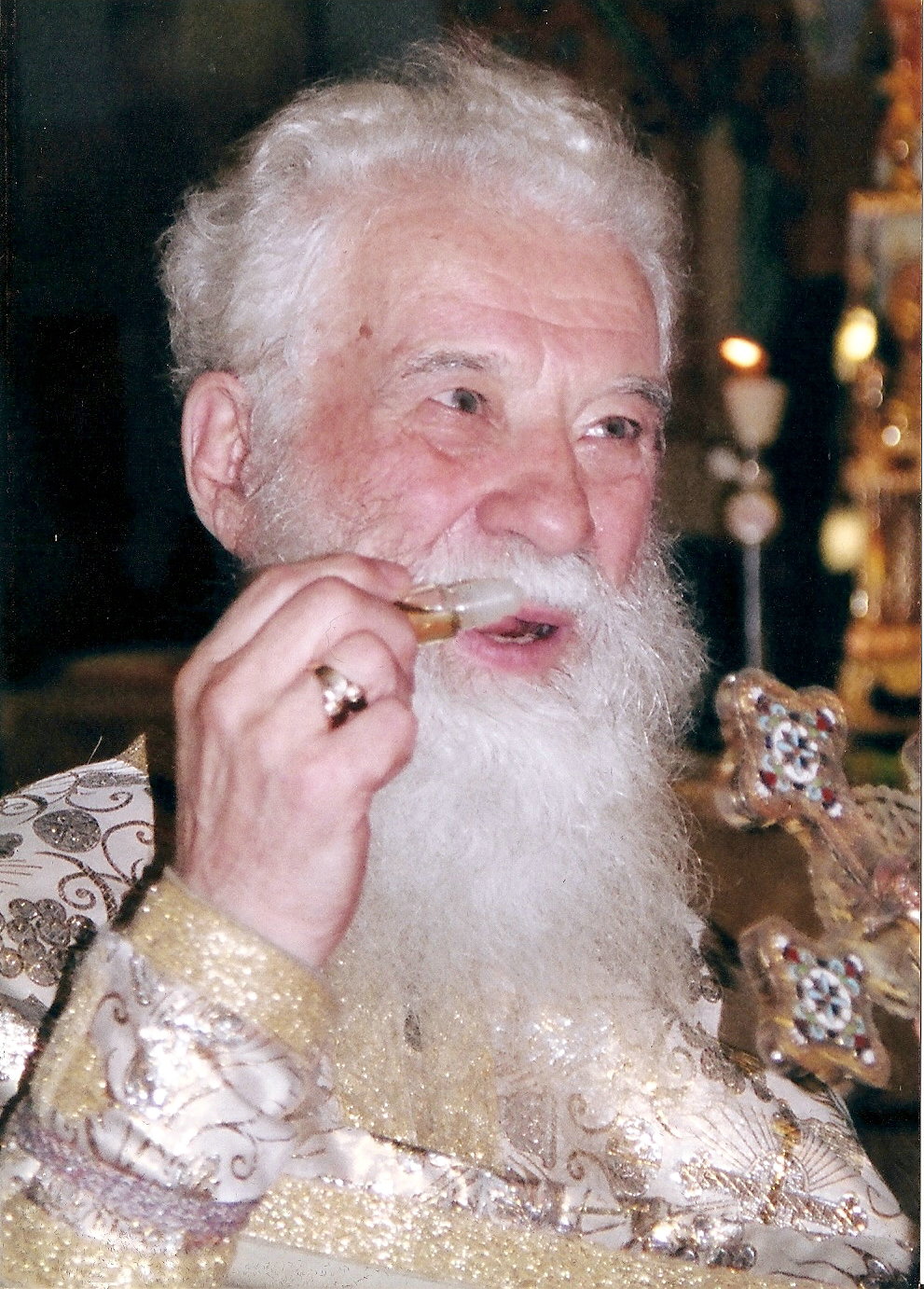
A third category of people are those dominated by passions. And they bear many, all sorts of human passions: fornication, drunkenness, greed, all those passions that make our heart a land filled with weeds, thorns and brambles. And even if the word of God touches us, even if we turn back to Him with love, our passions which we bared for sometime, are stronger than us. And this is because our repentance is not genuine! It’s just a moment of openness towards God which we do not immerse our heart in, we do not make of it the healing source for our soul, we opened for a time then we forget.
Our passions had flared within us stronger than the Call (to Christ) and the virtues that God sows into our heart. And we do not bring forth any fruit, and without fruit we are deemed for eternal punishment. Who among us can identify himself here?
The fourth category of people are those who hear the Word, endeavor in struggle, serving the Lord with joy, are looking to fertilize their spiritual soil, to understand more deeply the word of God; they come to church to confess and commune and do good to those around them, and become a light for the world. Some may struggle less, others more. God has given everyone a talent: to some He gave one talent, to other He gave three talents, and to another He gave five talents. Everyone got something and each of us must bring forth to God a gift equal to the gift he received. Him who got a talent, needs to bring one more. Him who received two talents, let him brings two more, and him who were given five, let him brings five more. He, who bears fruit this way, is truly one who heard the word of God and was fruitful.
And the Lord said also: “He who has ears to hear, let him hear.”
Look around you and within yourself and sincerely see where you are. If you have good intention and do not try to deceive yourself or others, acknowledge exactly where you stand. Then truly, when our Savior had said “He who has ears to hear”, you are those who properly understood.
And your sincere look of where you stand – in this typology that our Savior had created – will convinces me that from now on you will truly begin to serve Christ and to bring forth fruit. Even thought it may seem small, let us strive for it.”
(Taken from: Father George Calciu: “To serve Christ means suffering”, translated by EC)
 Christian Dogma
 Christian Martyrs
 Christian Orthodox Churches and Monasteries
 Christian Sermons and News
 Church's Teachings on Fasting
 Ecumenism – a Great Heresy
 Father George Calciu
 Life_a Sacred Gift form God
 Orthodox Saints and Church Fathers
 Spiritual Elders
 Daily Bible Readings
 Journey to Orthodoxy
 Listen to Ancient Faith Radio
 Orthodox Calendar of Feasts and Saints
 Orthodox Christian Mission Center
 Orthodox Institute
 OrthodoxChristianNetwork TV


Recent Comments