
You are currently browsing the category archive for the ‘Orthodox Sermons & News’ category.
Fragments from a Sermon delivered by Fr. George Calciu on January 1st 2000!

This end of the year – the New Year’ Eve that the world celebrates – not been established or sanctified by the church, cannot be considered sacred, but only a human invention. Do we (Christians) have to celebrate it? Are we to attend the fireworks, the songs and all sorts of scandals, parties? … No.
We praise our Lord in the church. For it is in the church we’re awaiting “the end”. If God would have ordained the end of times tonight, He wouldn’t made His Son’ Nativity at Christmas!
What is the relation between a sacred event and the first of January? Absolutely no connection. And why some say that the end (of the world) is when the world decides – as a new millennium begins – and not when Christ will come? Or at least at the Annunciation!
All these are for the devil’ deceit. The overcrowding of people, the delirium seizing all, the craziness, the fireworks, the drinks, the champagne flowing … I was watching last night what happened in Paris. Someone said that in Rome, where the congregation of the Pope gathered (and I could not understand why he gave blessing to the world and the city on January 1st 2000 when there is no sacred event to celebrate)… we do not know how many millions of bottles of champagne flowed…. And someone else wound announce: more champagne in Paris! Then, more beer in Germany! So, this is the measure of “sanctity” for the New Year!
In general, the beginning of the mundane New Year is something diabolical. It was established by the servants of Satan, to tempt us from the Christian path and the truth of the faith. And our Lord revealed the lies of all. God uncovered the sham of those that wanted to murder a mass crowd of people – I’m referring to the Muslim attacks. God proved the delusion of those who would say Jesus will come tonight so we have to commit murder, suicide, to increase the world’ suffering so God will have “pity on us” and come to end it!
So for the sake of Satan, they proved the deceit. For their inspiration came not from God but from the evil one.
The truth was (here), in the church. Last night we observed Vespers and prayed to the Lord, today we celebrated Divine Liturgy. All those who choose otherwise are far from the Christian truth.

There are people who bare the name of St. Basil the Great and they knew that today is his feast but did not come. We’ve prayed for them, that God will turn their path away from drunkenness and parties and towards Christ, so they may come and celebrate their name in the church. We prayed for those present and those absent for good reasons.
My beloved, I’d like you to know that the life of the church was so striked by worldly prejudices and satanic influences, so as the saints have profesized, there will come a time when churches will be everywhere you look, when the name of Christ will be on everyone’s lips, some churches will even be full, but the true faith and sanctity will be lacking. It will be a false, a deception of Satan. And we live those times […]
(Translation by EC)
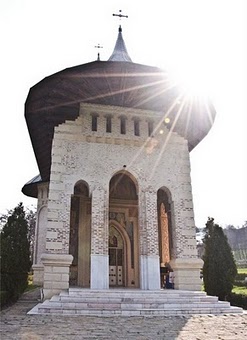
THE PROPHECIES OF THE OLD TESTAMENT (OT)
ON THE MESSAYAH
AND THEIR FULLFILMENT IN THE NEW TESTAMENT (NT)
(Part One)
For Part II see Here
Study done by Archipriest/Hieromonk Michael (Mikhail) Stanciu
(Please do not copy without referencing the original text!)
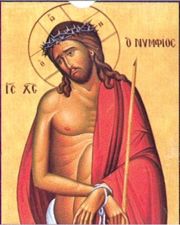
The 1st Prophecy: A WOMAN’ “SEED” TO CRUSH the Head of the SERPENT
THE OT. PROPHECY
[Genesis 3:15] And I will put enmity between thee and the woman and between thy seed and her seed, he shall watch against thy head, and thou shalt watch against his heel.
IT’S FULFILLMENT IN THE NT.
[Galatians 4:4] But when the fulness of the time was come, God sent forth his Son, made of a woman, made under the law…
[Hebrew 2:14] Forasmuch then as the children are partakers of flesh and blood, he also himself likewise took part of the same; that through death he might destroy him that had the power of death, that is, the devil;
[Hebrew 2:15] And deliver them who through fear of death were all their lifetime subject to bondage.
[Colossians 1:13] Who hath delivered us from the power of darkness, and hath translated us into the kingdom of his dear Son…
[Revelation 20:10] And the devil that deceived them was cast into the lake of fire and brimstone, where the beast and the false prophet are, and shall be tormented day and night for ever and ever.
02. A DESCENDENT FROM AVRAAM AND THE BLESSED SEED FOR ALL NATIONS
THE OT. PROPHECIES
[Genesis 12:3] And I will bless those that bless thee, and curse those that curse thee, and in thee shall all the tribes of the earth be blessed.
[Genesis 12:18] And in thy seed shall all the nations of the earth be blessed, because thou hast hearkened to my voice.
[Genesis 26:4] And I will multiply thy seed as the stars of heaven; and I will give to thy seed all this land, and all the nations of the earth shall be blest in thy seed,…
THE NT. FULFILLMENT
[Matthew 1:1] The book of the generation of Jesus Christ, the son of David, the son of Abraham…
[Hebrew 2:16] For verily he took not on him the nature of angels; but he took on him the seed of Abraham.
03. SUCCESSOR OF ISAAC
THE OT. PROPHECY
[Genesis 17:19 p.m.] And God said to Abraam, Yea, behold, Sarrha thy wife shall bear thee a son, and thou shalt call his name Isaac; and I will establish my covenant with him, for an everlasting covenant, to be a God to him and to his seed after him.
ITS FULFILLMENT IN THE NT.
[Luke 3:34] Which was the son of Jacob, which was the son of Isaac, which was the son of Abraham, which was the son of Thara, which was the son of Nachor, …
04. SUCCESSOR OF JACOB
THE OT. PROPHECIES
[Numbers 24:17] I will point to him, but not now; I bless him, but he draws not near: a star shall rise out of Jacob, a man shall spring out of Israel; and shall crush the princes of Moab, and shall spoil all the sons of Seth.
[Numbers 24:19] And one shall arise out of Jacob, and destroy out of the city him that escapes.
THE FULFILLMENT
[Matthew 1:2] Abraham begat Isaac; and Isaac begat Jacob; and Jacob begat Judas and his brethren;
05. DESCENDENT OF THE TRIBE OF JUDAH
THE OT. PROPHECY
[Genesis 49:10]. A ruler shall not fail from Juda, nor a prince from his loins, until there come the things stored up for him; and he is the expectation of nations.
ITS FULFILLMENT
[Luke 3:33] Which was the son of Aminadab, which was the son of Aram, which was the son of Esrom, which was the son of Phares, which was the son of Juda, …
06. Successor of the throne of David
The OT. PROPHECY
[Esaias 9:6,7] For a child is born to us, and a son is given to us, whose government is upon his shoulder: and his name is called the Messenger of great counsel: for I will bring peace upon the princes, and health to him. 7 His government shall be great, and of his peace there is no end: it shall be upon the throne of David, and upon his kingdom, to establish it, and to support it with judgement and with righteousness, from henceforth and forever. The seal of the Lord of hosts shall perform this.
IT’S FULFILLMENT
[Luke 1:32] He shall be great, and shall be called the Son of the Highest: and the Lord God shall give unto him the throne of his father David.
07. NUS and Eternal
The OT. PROPHECIES
[Daniel 9:25] And thou shalt know and understand, that from the going forth of the command for the answer and for the building of Jerusalem until Christ the prince there shall be seven weeks, and sixty-two weeks; and then the time shall return, and the street shall be built, and the wall, and the times shall be exhausted.
[Psalms 44:9] Thou hast loved righteousness and hated iniquity. Wherefore God, Thy God, hath anointed Thee with the oil of gladness more than Thy fellows.
[Psalms 44:10] Myrrh and stacte and cassia exhale from Thy garments;
[Psalms 101:25] Take me not away at the half of my days; in generations and generations are Thy years.
[Psalms 101:27]They shall perish, but Thou abidest; and all like a garment shall grow old, And as a vesture shalt Thou fold them, and they shall be changed;
[Psalms 101:28] But Thou art the same, and Thy years shall not fail.
THE FULFILLMENT
[Luke 1:33] And he shall reign over the house of Jacob for ever; and of his kingdom there shall be no end.
[Hebrew 1:9] Thou hast loved righteousness, and hated iniquity; therefore God, even thy God, hath anointed thee with the oil of gladness above thy fellows.
[Hebrew 1:12] And as a vesture shalt thou fold them up, and they shall be changed: but thou art the same, and thy years shall not fail.
08. BORN IN BETHLEHEM

THE OT. PROPHECY
[Michaeas 5:1] And thou, Bethlehem, house of Ephratha, art few in number to be reckoned among the thousands of Juda; yet out of thee shall one come forth to me, to be a ruler of Israel; and his goings forth were from the beginning, even from eternity.
ITS FULFILLMENT
[Luke 2:4] And Joseph also went up from Galilee, out of the city of Nazareth, into Judaea, unto the city of David, which is called Bethlehem; (because he was of the house and lineage of David:)
[Luke 2:5] To be taxed with Mary his espoused wife, being great with child.
[Luke 2:7] And she brought forth her firstborn son, and wrapped him in swaddling clothes, and laid him in a manger; because there was no room for them in the inn.
09. THE TIME OF HIS BIRTH
THE OT. PROPHECY
[Daniel 9:25] And thou shalt know and understand, that from the going forth of the command for the answer and for the building of Jerusalem until Christ the prince there shall be seven weeks, and sixty-two weeks; and then the time shall return, and the street shall be built, and the wall, and the times shall be exhausted.
ITS FULFILLMENT
[Luke 2:1] And it came to pass in those days, that there went out a decree from Caesar Augustus, that all the world should be taxed.
[Luke 2:2] And this taxing was first made when Cyrenius was governor of Syria.
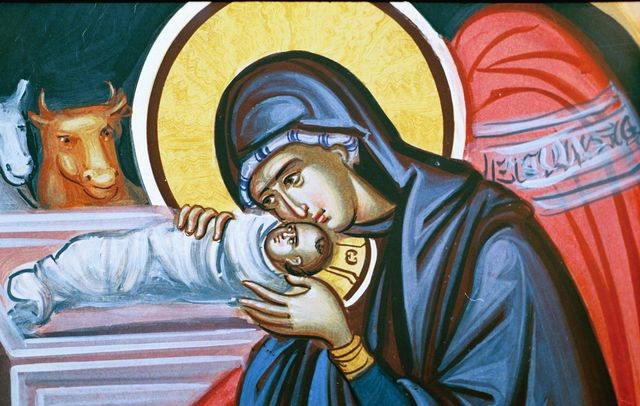
10. BORN OF A VIRGIN
THE OT. PROPHECY
[Esaias 7:14] Therefore the Lord himself shall give you a sign; behold, a virgin shall conceive in the womb, and shall bring forth a son, and thou shalt call his name Emmanuel.
ITS FULFILLMENT
[Luke 1:26] And in the sixth month the angel Gabriel was sent from God unto a city of Galilee, named Nazareth,
[Luke 1: 27] To a virgin espoused to a man whose name was Joseph, of the house of David; and the virgin’s name was Mary.
[Luke 1:30] And the angel said unto her, “Fear not, Mary: for thou hast found favour with God.”
[Luke 1:31] “And, behold, thou shalt conceive in thy womb, and bring forth a son, and shalt call his name JESUS.
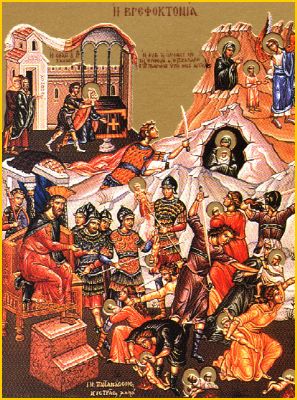
11. HEROD’S MASSACRE OF THE INOCENT
THE OT. PROPHECY
[Jeremias 31:15] Moab is ruined, even his city, and his choice young men have gone down to slaughter.
THE NT. FULFILLMENT
[Matthew 2:16] Then Herod, when he saw that he was mocked of the wise men, was exceeding wroth, and sent forth, and slew all the children that were in Bethlehem, and in all the coasts thereof, from two years old and under, according to the time which he had diligently enquired of the wise men.
[Matthew 2:17] Then was fulfilled that which was spoken by Jeremy the prophet, saying,
[Matthew 2:18] “In Rama was there a voice heard, lamentation, and weeping, and great mourning, Rachel weeping for her children, and would not be comforted, because they are not.”
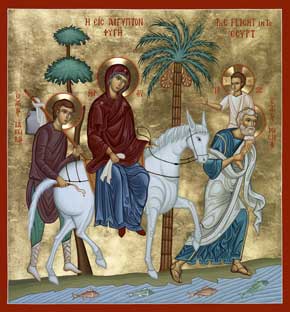
12. THE FLIGHT TO EGYPT
THE OT. PROPHECY
[Osee 11:1] Early in the morning were they cast off, the king of Israel has been cast off: for Israel is a Child, and I loved him, and out of Egypt have I called Him.
THE NT. FULFILLMENT
[Matthew 2:13] And when they were departed, behold, the angel of the Lord appeareth to Joseph in a dream, saying, Arise, and take the young child and his mother, and flee into Egypt, and be thou there until I bring thee word: for Herod will seek the young child to destroy him.
[Matthew 2:14] When he arose, he took the young child and his mother by night, and departed into Egypt
[Matthew 2:15] And was there until the death of Herod: that it might be fulfilled which was spoken of the Lord by the prophet, saying, “Out of Egypt have I called my Son.”
13. GOD PREPARED HIS WAY
THE OT. PROPHECIES
[Esaias 40:3] The voice of one crying in the wilderness, Prepare ye the way of the Lord, make straight the paths of our God.
[Esaias 40:4] Every valley shall be filled, and every mountain and hill shall be brought low: and all the crooked ways shall become straight, and the rough places plains.
[Esaias 40:5] And the glory of the Lord shall appear, and all flesh shall see the salvation of God: for the Lord has spoken it.
THE NT. FULFILLMENT
[Luke 3:3] And he came into all the country about Jordan, preaching the baptism of repentance for the remission of sins;
[Luke 3:4] As it is written in the book of the words of Esaias the prophet, saying, The voice of one crying in the wilderness, “Prepare ye the way of the Lord, make his paths straight
[Luke 3:5] Every valley shall be filled, and every mountain and hill shall be brought low; and the crooked shall be made straight, and the rough ways shall be made smooth;
[Luke 3:6] And all flesh shall see the salvation of God.”
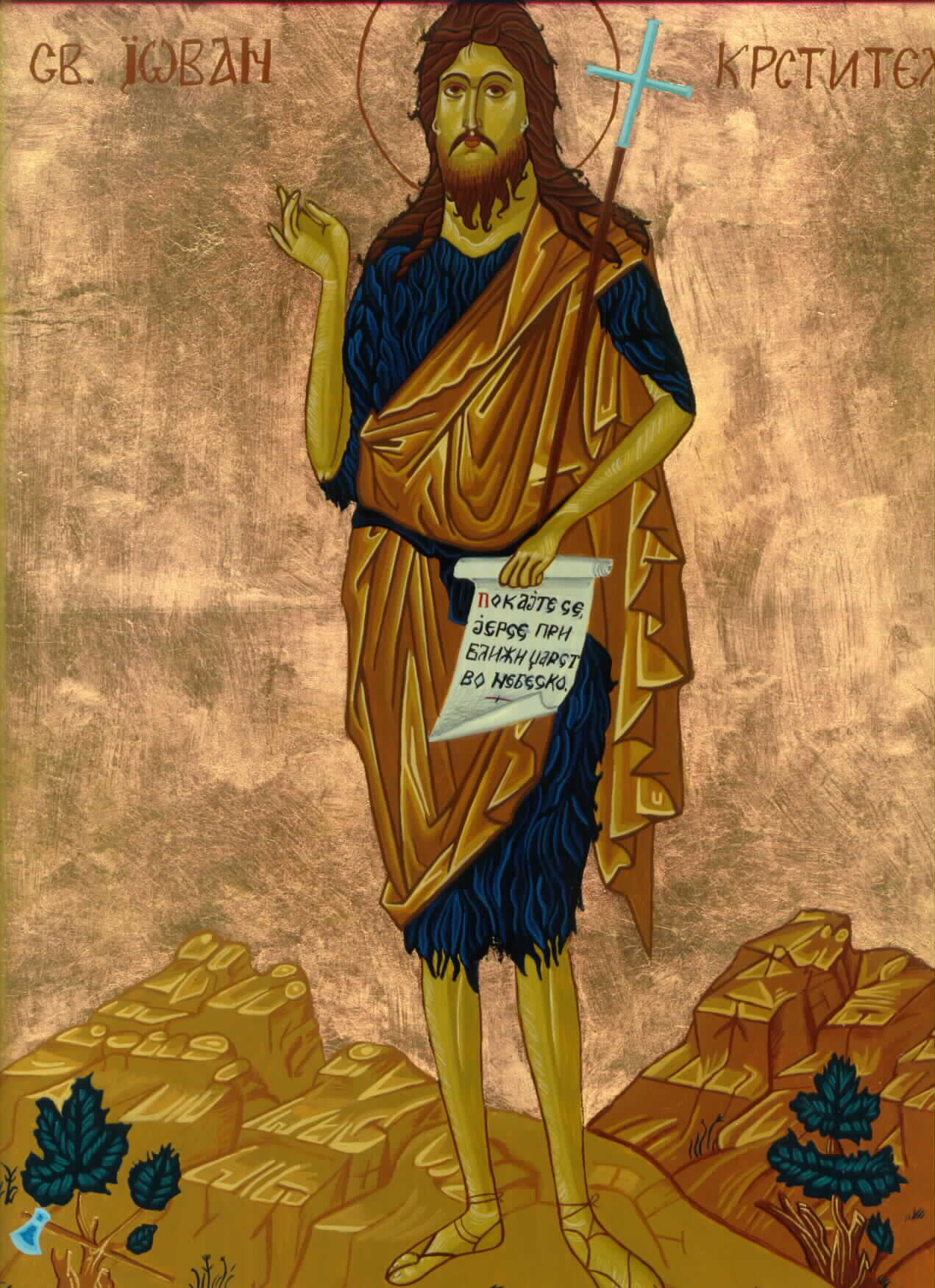
14. THE FORERUNNER (JOHN THE BAPTIST)
THE OT. PROPHECY
[Malachias 3:1] Behold, I send forth my messenger, and he shall survey the way before me: and the Lord, whom ye seek, shall suddenly come into his temple, even the angel of the covenant, whom ye take pleasure in: behold, he is coming, saith the Lord Almighty.
THE NT. FULFILLMENT
[Luke7:24] And when the messengers of John were departed, he began to speak unto the people concerning John, What went ye out into the wilderness for to see? A reed shaken with the wind?
[Luke7:25] But what went ye out for to see? A man clothed in soft raiment? Behold, they which are gorgeously apparelled, and live delicately, are in kings courts.
[Luke7:26] But what went ye out for to see? A prophet? Yea, I say unto you, and much more than a prophet.
[Luke7:27] This is he, of whom it is written, “Behold, I send my messenger before thy face, which shall prepare Thy way before Thee”.
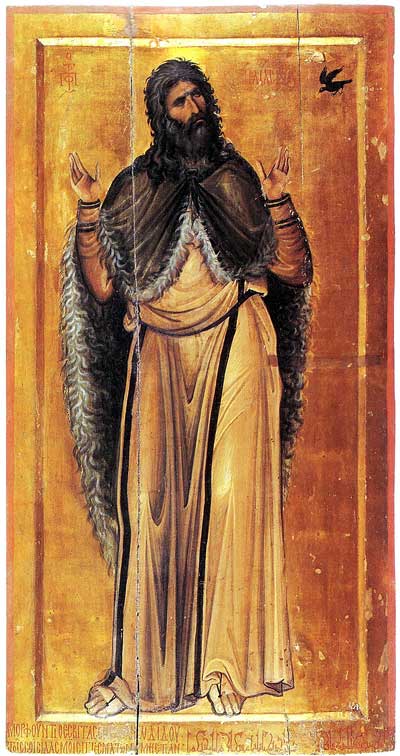
15. PRECEEDED BY ELIAS
THE OT. PROPHECY
[Malachias 3:23] And, behold, I will send to you Elias the Thesbite, before the great and glorious day of the Lord comes…
THE NT. FULFILLMENT
[Matthew 11:13] For all the prophets and the law prophesied until John.
[Matthew 11:14] And if ye will receive it, this is Elias, which was for to come.
16. NAMED THE “SON OF GOD”
THE OT. PROPHECIES
[Esaias 9: 5) For a child is born to us, and a son is given to us, whose government is upon his shoulder: and his name is called the Messenger of great counsel: for I will bring peace upon the princes, and health to him.
[Psalm 2:7] …the Lord said, Thou art my Son, today have I begotten thee.
THE NT. FULFILLMENT
[Matthew 3:17] And lo a voice from heaven, saying, “This is my beloved Son, in whom I am well pleased.“
17. SERVING IN GALILEE
THE OT. PROPHECIES
[Esaias 9: 1] Drink this first. Act quickly, O land of Zabulon, land of Nephthalim, and the rest inhabiting the sea-coast, and the land beyond Jordan, Galilee of the Gentiles.
[Esaias 9:2] O people walking in darkness, behold a great light: ye that dwell in the region and shadow of death, a light shall shine upon you.
THE NT. FULFILLMENT
[Matthew 4:12] Now when Jesus had heard that John was cast into prison, he departed into Galilee;
[Matthew 4:13] And leaving Nazareth, he came and dwelt in Capernaum, which is upon the sea coast, in the borders of Zabulon and Nephthalim:
[Matthew 4:14] That it might be fulfilled which was spoken by Esaias the prophet, saying:
[Matthew 4:15] “The land of Zabulon, and the land of Nephthalim, by the way of the sea, beyond Jordan, Galilee of the Gentiles;
[Matthew 4:16] The people which sat in darkness saw great light; and to them which sat in the region and shadow of death light is sprung up.”
18. ZEAL FOR THE HOUSE OF GOD

THE OT. PROPHECY
[Psalm 68:11] For the zeal of Thy house hath eaten me up, and the reproaches of them that reproach Thee are fallen on me.
THE NT. FULFILLMENT
[John 2:14] And found in the temple those that sold oxen and sheep and doves, and the changers of money sitting:
[John 2:15] And when he had made a scourge of small cords, he drove them all out of the temple, and the sheep, and the oxen; and poured out the changers’ money, and overthrew the tables;
[John 2:16] And said unto them that sold doves, Take these things hence; make not my Father’s house an house of merchandise.
[John 2:17] And his disciples remembered that it was written, “The zeal of thine house hath eaten me up.”
19. HE SPOKE IN PARABLES
THE OT. PROPHECIES
[Psalm 77:2] I will open my mouth in parables, I will utter dark sayings which have been from the beginning…
[Esaias 6:9] And he said, “Go, and say to this people,Ye shall hear indeed, but ye shall not understand; and ye shall see indeed, but ye shall not perceive”.
[Esaias 6:10] For the heart of this people has become gross, and their ears are dull of hearing, and their eyes have they closed; lest they should see with their eyes, and hear with their ears, and understand with their heart, and be converted, and I should heal them.
THE NT. FULFILLMENT
[Matthew 13:13] Therefore speak I to them in parables: because they seeing see not; and hearing they hear not, neither do they understand.
[Matthew 13:14] And in them is fulfilled the prophecy of Esaias, which saith, “By hearing ye shall hear, and shall not understand; and seeing ye shall see, and shall not perceive”.
[Matthew 13:15] For this people’s heart is waxed gross, and their ears are dull of hearing, and their eyes they have closed; lest at any time they should see with their eyes, and hear with their ears, and should understand with their heart, and should be converted, and I should heal them.
[Matthew 13:34] All these things spake Jesus unto the multitude in parables; and without a parable spake he not unto them:
[Matthew 13:35] That it might be fulfilled which was spoken by the prophet, saying, “I will open my mouth in parables; I will utter things which have been kept secret from the foundation of the world.”
20. HE CAME TO HEAL THE BROKEN HEARTS

THE OT. PROPHECIES
[Esaias 61:1] The Spirit of the Lord is upon me, because he has anointed me; he has sent me to preach glad tidings to the poor, to heal the broken in heart, to proclaim liberty to the captives, and recovery of sight to the blind;
[Esaias 61:2] to declare the acceptable year of the Lord, and the day of recompence; to comfort all that mourn;
[Esaias 61:3] that there should be given to them that mourn in Sion glory instead of ashes, the oil of joy to the mourners, the garment of glory for the spirit of heaviness: and they shall be called generations of righteousness, the planting of the Lord for glory.
THE NT. FULFILLMENT
[Luke 4:18] “The Spirit of the Lord is upon me, because he hath anointed me to preach the gospel to the poor; he hath sent me to heal the brokenhearted, to preach deliverance to the captives, and recovering of sight to the blind, to set at liberty them that are bruised,
[Luke 4:19] To preach the acceptable year of the Lord.”
[Luke 4:21] And he began to say unto them, “This day is this scripture fulfilled in your ears.”
21. REJECTED BY HIS PEOPLE
THE OT. PROPHECY
[Esaias 53:3] But his form was ignoble, and inferior to that of the children of men; he was a man in suffering, and acquainted with the bearing of sickness, for his face is turned from us: he was dishonoured, and not esteemed.
THE NT. FULFILLMENT
[John 1:11] He came unto his own, and his own received him not.
[Luke 23:18] And they cried out all at once, saying, Away with this man, and release unto us Barabbas
22. HIM “THE PROPHET”
THE OT. PROPHECY
[Deuteronomy 18:15] The Lord thy God shall raise up to thee a prophet of thy brethren, like me; him shall ye hear…
[Deuteronomy 18:18] I will raise up to them a prophet of their brethren, like thee; and I will put my words in his mouth, and he shall speak to them as I shall command him.
THE NT. FULFILLMENT
[John 6:14] Then those men, when they had seen the miracle that Jesus did, said, This is of a truth that prophet that should come into the world.
[John 7:40] Many of the people therefore, when they heard this saying, said, Of a truth this is the Prophet.
[Luke 24:19] And he said unto them, What things? And they said unto him, Concerning Jesus of Nazareth, which was a prophet mighty in deed and word before God and all the people…
[Acts 3:20] when the times of refreshing shall come from the presence of the Lord ; and he shall send Jesus Christ, which before was preached unto you.
[Acts 3:21] Whom the heaven must receive until the times of restitution of all things, which God hath spoken by the mouth of all his holy prophets since the world began.
(Translated by EC, to be continued)
Testimonies on the Icon of Nativity
A study by Archimandrite Michael (Mikhail) Stanciu
(Please do not copy without referencing the original post!)

Our Lord’ Nativity
A Feast of Lights – the Day of Recreation of the World
Originally celebrated with Epiphany (Theophany) on January 6, the Feast of the Nativity of our Lord and Savior Jesus Christ was established by the early Christian church (in 354) for December 25th. According to St. Gregory of Nazianzus, “the Feast of the Nativity is the re-creation of the world” and the restoration of the human nature fallen in sin.
The Iconographic representation of the Nativity has its scriptural basis in the testimonies of the Holy Gospels of Matthew and Luke: see Mathew 1, 18-25; 2, 1-12 and Luke 2, 4-20.
Icon’ s Composition
In the icon of the Nativity, the focus is placed on three dogmatic aspects of the Incarnation and Nativity of the Son of God:
1st – God in descending motion (kenosis);
2nd – The Miracle of virginal birth (the creature gives birth to her Creator);
3rd– Human Deification.
The scenes from the iconographic image are divided into three parts:
I. The top portion of the icon – the prophetic and theophanic aspect
|
To the Left |
In the Center | To the Right |
| ◦ the angels praising God | ◦ the radius (the star)
◦ the mountains (the rocks) |
◦ the angel proclaiming the Nativity to the shepherds on the field |
II. The central part – the mysterious appearance
|
To the Left |
In the Center | To the Right |
| ◦ the Magi bringing gifts |
◦ Christ the Child ◦ the Virgin ◦ the cave (the manger) ◦ the ox and the ass |
◦ the shepherds |
III. The bottom portion – the human aspect
|
To the Left |
In the Center | To the Right |
| ◦ The Right Joseph sitting/meditating on a rock | ◦ the devil disguised as a shepherd (Thyrros) |
◦ the midwives Salome and Zelemi caring for the child
|
People, edifying symbols and meanings in the icon of the Nativity
I. 1. The Ray of Light – a Revelation of the Holy Trinity

The ray descending from the single radius-circle at the top of the icon signifies The One and Unique Nature of God, the light and coming from the star is divided into three elements to describe the participation of the Three DIVINE PERSONS in the fellowship/ iconomy of our salvation. The iconographic representation of the star suggests that this is beyond just a cosmic phenomenon, the star is being sent by God to preach to the Magi the supernatural birth of the Heavenly King and also to guide them to the place where the miracle took place.
I. 2. The Mountain: an austere mountain suggests an inhospitable world, hostile, a world after the fall of our first parents Adam and Eve and their descendants.
The sharp rocks, also illustrated as steps seem to be united with the sky, indicating the descent of God to man but also the ascent of man to God, both becoming possible with the Incarnation of the Second Person of the Holy Trinity. And the whole earth rejoices.
“Wholly present among those below, yet in no way absent from those above, was the Word that cannot be encircled by words; for thus did God condescend, and not merely descend to a different place. He was born from a God-receiving Virgin…” (the Akathist of the Annunciation – Oikos 8)
“Today, Heaven and earth joined together, today Christ is born, today God descended on earth and man rose up to heaven.” (From the Vespers of the Nativity Feast)
“Every order of angels was amazed at your mighty work when you assumed human nature; for they saw the one who is unapproachable as God become approachable to all as man, dwelling among us and hearing from all…” (The Akathist of the Annunciation; Kontakion 9)
I. 3. The Angels are represented in their dual work: doxology and proclamation (of the good news).
Some angels (the group from the left) are moving towards the Source of Light, unceasingly praising God.

The angel from the right side leans towards the shepherds, proclaiming them the Nativity of the King of Israel. The angelic presence testifies the deity of the Child.
II. 1. The Christ child is either asleep or awake, looking towards His Mother. His changing nappies are shaped like narrow strips similar to the burial shrouds, his arms are crossed over his chest in the sign of the Cross, and the crib where the child is seated resembles a shrine – the later tomb.
All these representations foreshadow Christ’s death and descent into hell. But “The Light shines into the darkness and the darkness comprehended it not.” (John 1, 5) For Christ will rise from the dead as God Almighty.
II. 2. The Virgin is pictured sitting next to the child in the manger, half resting on a bed of the kind carried by the Hebrew in their travels. Its color is red, signifying a royal bed and the honor the Mother of God deserves.
This iconographic depiction of the Mother of God affirms the truth of the supernatural Birth (of a Virgin, barring no pain) of our Savior Jesus Christ, fact that also emphasizes the deity of the Child. (1-see Fr. D. Staniloae)

The three stars from the head and the shoulders of Mary, symbolize her perpetual virginity before, during and after the birth of Christ (the Ever-Virgin Mary).
Her facial expression is one in meditation in anticipation of the suffering she will endure as a Mother of Him Who was to suffer death on the Cross for the salvation of the world. “And Mary kept all these things in her heart.” (Luke 2, 19)
Our most pure Lady was the highest gift that mankind was ever able to bring to Him, the Creator.
“What shall we offer Thee, O Christ? for Thou hast appeared on earth as man for our sakes. Of all the creatures made by Thee, each offereth Thee thanksgiving. The Angels offer Thee the hymn; the Heavens, the star; the Magi, their gifts; the shepherds, their wonder, the earth, her cave; the wilderness, the manger; and we offer Thee a Virgin Mother, O God, Who wast before the ages, have mercy on us” (Menaion for December, Stichera D, Verse #7)
II. 3. The Cave (the Manger)
The place of birth of the Son of God was not an inn, but a place with stalls where animals are kept.
The Gospels do not mention the cave, but the iconographic representation finds its grounds in the Tradition of the church and in its liturgical texts. The opening of the dark cave in the middle of sharp rocks symbolizes the fallen cosmos, the world overwhelmed by sin through the fall of man, the depths of darkness (the inferno/hell), which only Him, the Sun of Righteousness, scattered by His birth. The cave and the manger are an evidence of the profound humility of our Lord Jesus Christ.
II. 4. The ox and the ass are also mentioned in the Gospel, their presence along with Christ Child (inspired by the apocryphal Gospel of Matthew, chapter XIV) suggests the fulfilling of a prophecy (the prophet Isaiah): “The ox knows his master and of the donkey his Lord’s crib, but Israel does not know me, my people, knows me not. “ (Isaiah 1, 3)
The animals presence, appears as a symbolism of the sacrificial bull and of the donkey the the King will ride when entering Jerusalem (see Psalm Sunday). In some Russian icons, a horse is depicted instead of a donkey.

II. 5. The Shepherds are portrayed listening to the message of the angels. Often, one of them adds his (human) art of singing in the choir of angels.
In the middle of everyday activities, they are the first to receive the wondrous news of the birth of Christ, being paradoxically, through their simplicity, closer to the heavenly world.
The shepherds represent the first sons of Israel (God’s chosen people), who worship the Child; they symbolize the beginning of the Church among the Jews, while the magi represent the Church of the Gentiles.
II. 6. The Magi are represented either on horses riding towards the place indicated by the star, or by bringing the Child: threefold – gold, incense and myrrh – foreshadowing the myrrh bearing women, who came to our Lord’ tomb on Easter morning:
◦ Gold – for the King of all ages;
◦ Incense – as to the One who is the God of the Universe;
◦ Myrrh – to the One who died on the cross.
“By the mirth, they pre imagine Thy mortal state, by royal gold Thy majesty and by the incense, Thy Divine nature.” (Nativity Matins, the fifth song, voice, VI)
The Magi are portrayed as three men of different ages, proving that this revelation is given to man regardless of their physical age, but according to their spiritual level and their comprehension of the mysteries of God. The Magi represent the pagan nations that are outside the chosen people. Although they are learned men, however, they have to come a long way towards knowing the true God.
Their presence reveals that the Church receives and sanctifies human knowledge when it leads to the truth of the faith towards the knowledge of God.

III. 1. The Righteous Joseph is depicted in the corner (either left or right, to the bottom part of the icon) sitting away from the Blessed Virgin Mary; this iconographic detail is designed to highlight the truth that the Scriptures and the Church teach that Christ was born of the Virgin Mary, and Joseph was not the father of the Heavenly Child.

His appearance should suggest a man advanced in years (the Holy Tradition holds that he was 84 years old). He is surrounded by a halo to represent his place among the righteous of God (cf. Matthew 1, 19).
Joseph has a meditative expression, somewhat worried, a state of turmoil caused by the virginal birth of Jesus. Joseph illustrates every man weak in faith, whose mind can not exceed the boundaries of this reality, and the difficulty in accepting the supernatural reality of God’s mysteries.
In the person of Joseph, the icon reveals not only his personal drama, but the drama of all mankind, comprehending the mystery not through the eyes of faith, but by the limited mind/rationality.
“ A storm of doubtful thoughts roiled within the prudent Joseph, for he looked on you unwedded and he feared a stolen union, O Blameless One; but on learning that your child-bearing was of the Holy Spirit, he said: Alleluia!”(Akathist Hymn of the Annunciation; Kontakion 4)
He appeared to be listening to a figure representing the voice of the darkened mind.

III. 2. the Strange old man, clad in a letter jacket, leaning before Joseph, represents the deceiver: Satan disguised as a shepherd, and harassing Joseph, the Virgin fiancé, with treacherous questions.
The scene is inspired by the apocryphal Gospel of James which says that the wicked speaks through the Shepherd Thyrros: “As the rod [that is bent or broken= the symbol of his former powers] will not be able to give offspring, so an old man like you just can not conceive a baby and a virgin cannot bare a child “ [but the rod blossomed soon].
III. 4. The Infant bathing scene is based on passages from the apocryphal gospels of Jacob and Matthew (which speak about the presence of two women: Salome and Zelemi, called by Joseph to attend the Virgin birth).
The Infant bathing scene has sparked much controversy and discussion based on the following reasons:
– the bathing does not belong to the canonical gospels;
– the Child was totally clean and did not need washing;
– Our Lady had a supernatural birth (with no pain), and the presence of midwives is unnecessary.

The arguments favoring the representation of a bathing scene were: – that the scene is not mentioned in the canonical Gospels is not a reason to exclude it (the entry into the temple of God of the Virgin Mary is also not mentioned in the New Testament, but the Church did not rejected). Our Lord Christ, through the custom of bathing, had voluntarily agreed to follow a human custom as He will later undergo the practice of circumcision and baptism (which He did not need);
– none of the Holy Ecumenical Councils had opposed the scene;
– during the iconoclasts period when they called into question many iconographic scenes, the bathing scene did not pose an issue;
– even after iconoclasm, when the iconographic representations became a mean to express the dogma, no objections existed to the representation of this scene.
The bathing scene suggests that the Most High God is subject to human habits and customs, this been also a true testimony to the Incarnation of the Lord, Who has become willingly “just as one of his people” (Matins of the Nativity feast, Canon of St. John of Damascus, the fourth song). The scene foreshadows that of His baptism in the Jordan River.
Western innovations in representing the Nativity


Compared to Orthodox iconographic canonical representation, in the Western religious painting several innovations were introduced distorting historical and dogmatic truth and leading to heresy:
– The star is represented as a natural phenomenon, and does not clearly indicate the Child. (St. John Chrysostom interprets that the star guiding the wise men did not remain high –up in the sky, but came down, over the head of the Child);
– The cave is replaced by a man-made construction, the popular image of the crib, giving a more picturesque and naturalist representation;
– The donkey and the ox, and the bathing scene are often removed from the composition;
– A lots of compositional elements and insignificant details: horses, camels, dogs, lots of people etc are introduced, which detract from the real center of interest: Christ the Child.
– The Child is shown naked (in the Orthodox icons, the clothes suggest the mystery that surrounds the deity of Christ);
– Joseph is depicted standing next to the Virgin Mary, kneeling with her before the Child;
– In the physiognomic details, of the western paintings, Joseph appears as a handsome young man, of an age close to the Virgin Mary, detail that brings a lot of confusion regarding the actual relationship full of purity that existed between the old Joseph as the guardian of Mary, and the young Virgin;
– The representation the Holy Family in the western iconography “greatly distorts the truth of the Gospel” (as the Creed: the symbol of our faith confesses) that the word of God came down from heaven and was incarnate by the Holy Spirit and of the Virgin Mary and became man;
– The scene takes on a fantasy look through the sweet atmosphere of a fairy Bethlehem bathed by the light of a sky full of stars…, insisting more on the human aspect rather than on the mystery of the Incarnation (the man-God rather than God-Man).
In the West, the representation of the Nativity, has no edifying symbols for the soul (so consistently depicted in the Orthodox iconography), and it mostly calling upon the natural human feelings, thus remaining at the level of a superficial understanding and far from the true meaning of the Incarnation of the Son of God and His work for the salvation of the world.
It should be noted that the process of de-sanctification of the Catholic theology after the Great Schism of 1054 had gradually led to the distortion in representating God and the Saints. The revival of paganism, which began in the fourteenth century, had lead to the replacing of icons by so called religious paintings where the aura of holiness disappears under the camouflage of the sensuous realism of the fallen human nature. In the Western Europe, the devaluation of the sacred images was synchronous with the deformation concept about God, man and the world, the contemporary Western society been long poisoned by atheism and materialism.
The removal of icons and of the sacraments had depleted the Catholic and the (neo) Protestant world, of a proper understanding of the words of Christ, sinking further into interpretations subjective to human passions, slanders and evil blasphemies.
The Orthodox iconography, through the development and maintenance of certain canons (rules) in representing/revealing the holy images in accordance with the early church tradition, it maintains the true theological knowledge of the spiritual life and it avoids the promotion of artistic means of expression that emphasize emotions or other subjective and shallow interpretations.
The Nativity Icon reveals therefore, in its content two fundamental Christian doctrines:
– the essence of the event, as a visible testimony to the fundamental dogma of the Christian faith: the Incarnation of the Son of God;
– the effect of this event on all creation that had acquired a new meaning – the transfiguration through the Holy Spirit, as the final aim of her existence.
All Orthodox traditions mark the joy of Christ’s coming among us and within us by carols, hymns… and good merriment brought by God’s blessing. These are the real beauties that adorn our soul at Christmas! Amen.
Selective Bibliography:
Father Dumitru Staniloae, Theology of the icon;
Paul Evdokimov, The Art of the icon. A theology of beauty;
Egon Sendler, The Icon, image of the invisible,
Leonid Uspensky, Vladimir Lossky, Lead by the world of icons,
Dionysius of furnaces, The origins of the Byzantine paintings,
Cavarnos Constantine, A Guide to the Byzantine iconography,
Quenot Michel, The icon challenge,
Michel Quenot, From the icon to the nuptial banquet.
(Translation by EC)
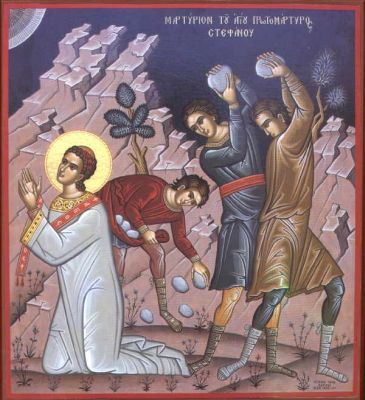
Sermons at the Feast of Archdeacon Stephen the First Martyr
(by Fr George Calciu – 2005)
The Holy Scripture teastifies: “And as they were stoning Stephen, he prayed, “Lord Jesus, receive my spirit.” And he knelt down and cried with a loud voice, “Lord, do not hold this sin against them.” And when he had said this, he fell asleep”(Acts 7, 59-60).
According to the Jewish law of the time, if someone was accused, those witnesses testifying against him had to also be the executors, if a death sentence was set. So, there wasn’t just an outside executioner with no conscience whatsoever and paid for such. In the case of Stephen, the accusers that most likely made use of their Jewish law, had to strip off their clothes, and place them at the feet of a very zealous young Jew, who by being a minor, could not take part in the execution. This young man was named Saul and would later become the Apostle Paul, through conversion. Saul was a persecutor of Christians. And because he could not participate in the stoning of Stephen, he was happy at least to watch the clothes of those who killed Stephen.
I was reflecting on this, making a parallel with what is happening today. If in times of persecution under communism and even in our times, when Christians were denounced to the authorities that convicted and inprisoned them, I thought that those who testified against them were not the executors. If they would have kept the Jewish law – “Those who have testified against him, kill him!” – I think that many would have been hesitat and would avoid to condemn. But because their denouncement was kept anounimously, they seemed to bare no responsibility; and because of this, the human villains and wickedness have multiplied. In this sense, I think that the Jewish law was better: You’ve testified against him, you will be responsible…! And perhaps many people would have given back.
Let us be attentive!
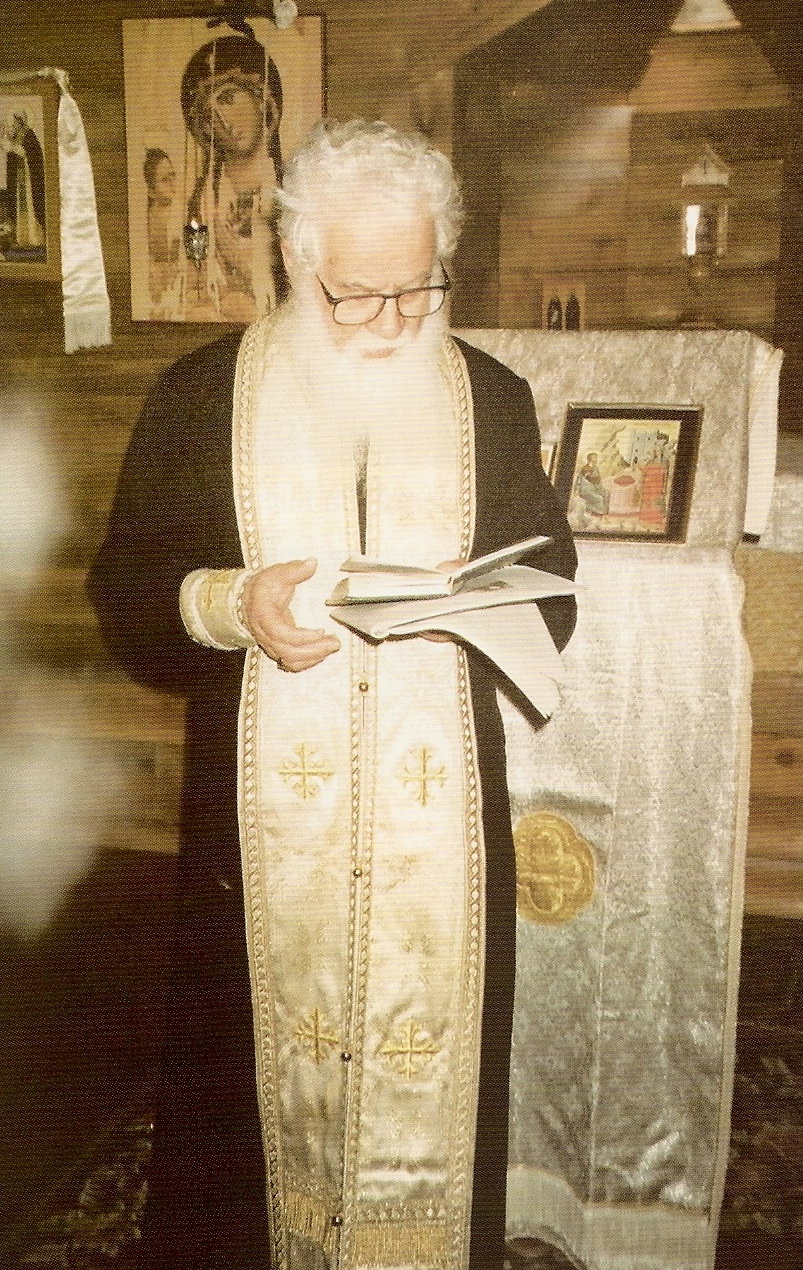
(Fragment from a Sermon delivered by Fr. George in 1999)
Throughout Christian history and its martyrdom either earlier in the Roman times or later in the modern times, this martyrdom takes sometimes violent and other times less violent forms: trials, falsifying the truth, mockery and so on. All these take part in the string of Christian suffering.
We live in a world where Christianity is not too applauded or loved. We live in a world in which modernism, science, libertinism (…) mock (in) Christianity and us. They say that to believe in God means to be mentally retarded, for indeed, those so called semi- docts (and when I say semi-docts I mean people who read a lot… scientists) fail to raise themselves outside the boundaries of intellectual, physical or sensual knowledge. For beyond all these, you ask yourself, is there something else? And they do not ask and know only in part.
Peter Tutea (a Christian philosopher) used to say “all sciences including mathematics reached a high school level, only theology goes beyond and has achieved a license,”… because theology works with things beyond the cognitive and sensory knowledge, it works with the absolute elements of the faith. And I agree with him. That is why, symbolically, he called those people who stayed at the “high school level”: “semi- docts”, because they have no power to know more.
And they do not wish to raise themselves outside this box, because they are the prisoners of their intellect and senses, and the devil holds them back not allowing them to reach God, and because they feared nothing.
It’s not so easy to deny one self and to ascend into the Divine. It is not simple for us to give up some things, (right?): to give up pride, your position, your economic status and to say, “today is Sunday, I will not work and I will go to church; today is a feast day, I’m not going to attend a party, I will go to church, to glorify God” – I can do the rest other days. It’s hard to do these things. (…)
So I am very glad to see you here (in church) and I pray God to keep your heart clean and grounded in faith and despite our infirmities, to be numbered among those who renounce at least a part – of this world so we may receive Christ, to be near Him, to follow the example of St. Stephen and all the great martyrs and in a world where martyrdom is no longer asked of us, we are required at least the courage to confess Christ, to bear the scorn of those who know nothing but what they comprehend with the mind, to bear their shame because we know through faith more than anything: we know God and know Jesus Christ, in our hearts we caved the manger where He was born at Christmas, and we are ready to follow Him to His baptism (Theophany) and beyond, to death on the cross, that we may die with Him and be resurrected with Him! Amen. “
(Translations by EC)
(an OCN radio production)

Inviting Saint Nicholas Into Our Christmas
by Daria Gray and Jan Bear
Every year, Christian parents face a dilemma: what to do about Santa Claus.
He’s everywhere, that “jolly old elf,” hawking tires, toys, and Playboy magazine, sitting in shopping malls taking orders for the latest batteries-not-included whizbang. Although movies about him portray him as someone concerned about the left-out child, his hymnography (think about the words to “Santa Claus Is Coming to Town!”) carries a theology of vengeful justice that is strange to be associated with One who said, “I have not come to call the righteous, but sinners, to repentance” (Luke 5:32).
As a matter of fact, this Santa Claus is not associated with Christ. He may be appropriate to affluent Victorian Christmases with huge candle-laden Christmas trees and middle-class American living rooms (with or without chimneys) where a snack awaits near the comfy chair. But in a stable with the Infant Jesus? They’re from different worlds.
Even the Supreme Court acknowledged the anomaly in Lynch vs. Donnelly (1984), when it ruled that Santa Claus and other secular symbols overcome the religious connection of a crèche in a public display. Santa may have his good points, but he has become our society’s way of keeping a happy winter holiday without facing up to the reality of Christ. So, cut off from the Triune God, the basis of all good, the “good” of Santa is defined by the movies, books, and advertisements that characterize him, and this good is ultimately answerable only to conventional morality. In a commercial society, it’s a commercial “good.”
Another dilemma that parents may find more immediately painful is that every year brings a new decision – whether to maintain the lie of Santa’s existence or to tell children the truth, at the risk of imitating that bah-humbugging (and also fictional) Christmas character, Scrooge.
There is an answer, though: Saint Nicholas, the real Saint Nicholas, a bishop of Myra in Lycea, who died around AD 350.
Romanian Byzantine Christmas Carol
South of the North Pole
No, Myra wasn’t located at the North Pole. It was an important seaport of the early Christian centuries, situated in what is now known as Turkey. Nicholas, a wealthy young man brought up in a godly home, gave away his inheritance to the needy. The young Bishop Nicholas was imprisoned for his faith during the persecutions under the Roman emperor Diocletian, and he was set free when Constantine released the religious prisoners.
One of the most famous legends about his life tells of a poor man who was unable to provide dowries for his three daughters. If he couldn’t get them married, he’d have to sell them into slavery. Hearing of the family’s predicament, Nicholas took a bag (or a sock, as some versions have it) of gold, enough for a dowry, and tossed it into the family’s house through the window (or down the chimney). He repeated his anonymous gift for each of the daughters, enabling the girls to marry.
Another legend says that Saint Nicholas participated in the First Ecumenical Council at Nicea. He was so incensed at some remark of the heretic Arius about Christ and the Theotokos that he punched Arius in the nose. That was considered an inappropriate debating technique, even in that distant time when theology was important enough to fight about, and the leaders of the council took away Nicholas’ bishopric and put him in prison.
Christ and His mother appeared to those leaders, one bearing Nicholas’ omophorion (the stole marked with crosses that he and other bishops of that period wear in iconographic depictions), and the other the book of the Gospel. Taking their meaning, Nicholas’ fellow bishops set him free and returned him to office.
Serbian Christmas Song – Angels are Singing,
verses by Serbian Saint Nikolai Velimirovich
“Saint Nicholas, Hold the Tiller!”
There are many early legends about the miraculous interventions of Saint Nicholas in the lives of those in peril. In one, Bishop Nicholas helped three prisoners wrongly condemned to death. Coming to the scene of their execution, he stopped the executioner and berated the governor until he repented of having taken a bribe to have them killed. Three imperial officers passing through the area learned of these events.
Later, back in Constantinople, these three officers were themselves imprisoned and sentenced to death because of the intrigues of an official in Constantine’s court. Remembering Nicholas’ mercy, the officers prayed to God that through the bishop’s intercession they might be saved. That night, both the unjust official and Constantine himself received a very early visit from Bishop Nicholas, in a dream. The next morning, Constantine and the official agreed to set the officers free.
When sailors in the Christian East bless each other with the words, “May Saint Nicholas hold the tiller!” they are alluding to a story of sailors caught in a terrible storm. Having heard of the holiness and power of the bishop of Myra, these sailors called on his intercession. Nicholas came to them in a vision and took the helm himself and guided the ship into port. When the sailors reached Myra, they went to the Church, where they recognized their mysterious pilot.
Another time, a famine hit Lycea, and ships loaded with wheat came into the harbor on the way from Alexandria to Constantinople. Bishop Nicholas asked the crews to leave some of the wheat for his starving people. The sailors refused at first, afraid of arriving at their destination with less than a full load. At Nicholas’ promise that there would be no trouble, the sailors relented. And even though they left two years’ supply in Myra, the ships were full when they arrived in Constantinople.
Greek Christmas songs
Christmas Carryovers
These and many other acts of virtue (some, indeed, more credible than others) have become Saint Nicholas’ legacy to the Church. His feast day, December 6, goes far back in Christian history – at least to the ninth century, and very likely further than that. And the Church has celebrated his memory in many ways: in processions, in pageants, with special foods – some of which have become American Christmas customs without our even realizing it.
Many of the fun activities that we now associate with the holidays arise from commemorations of Saint Nicholas. Our practice of giving gifts at Christmas time came from the commemoration of the dowries, as well as the gifts of the Magi. The foil-covered chocolate coins that find their way into Christmas stockings are reminiscent of the dowries, as are the stockings themselves. And when we awake to find gifts that arrived anonymously in the night, we can recall the socks full of gold that came through the chimney (or the window) to save the lives of the three young women.
Our hooked candy canes are symbols of the bishop’s crosier. And, early in their history, gingerbread men wore bishops’ robes. The image of Saint Nicholas appeared on Byzantine seals more often than the image of any other person, and stamps are still available to imprint the seal of Saint Nicholas on cookies and other baked goods.
The Spirit of Saint Nicholas
These merriments can save our religious life from a dreary solemnity, but if they’re the whole focus, we’ve missed the point. The more important lesson of Saint Nicholas’ miracles is that he sacrificed to help people in need. And if we look carefully at those miracles, we see that people like the ones he helped are still with us today: The young women about to be sold into slavery? Our cities are full of young people enslaved to drugs, prostitution, and violence. The prisoners? Penitentiary inmates and their families have many needs, which translate into opportunities to serve. The drowning sailors? In many parts of the country, nonprofit organizations provide equipment and rescue teams to save drowning boaters, lost hikers, and snowed-in skiers. The famine in Lycea? We can find hungry people from the downtown of our nearest city to the most remote place in the world.
The more we understand the spirit of Saint Nicholas – the real man behind the myth – the more we can begin to pattern our lives after his godly example. Why should our children’s only glimpse of this saint be that of a phony dime-store Santa with a fake beard, before whom they must wait in line for the opportunity to rehearse their list of Christmas “gimmees”? The real Saint Nicholas has so many wonderful traits around which we all could be patterning our lives.
Instead of spending hours thinking up new and expensive gifts for “Santa” to bring them, many children could clean out their closets of toys they’ve outgrown or grown tired of, passing them on to other children who would be overjoyed to get them. Many adults could do the same with coats and clothes and blankets, sporting goods and books.
Some families might want to return to the ancient practice of giving modest gifts on Saint Nicholas’ feast day, and celebrating Christmas in ways that don’t require a garbage-truckload of wrapping paper. One family we know of anonymously gives five percent of their December income to a needy family. To make the feast of Saint Nicholas a special day, their children give puppet shows with home-made stocking puppets. The parents tell stories about Saint Nicholas to the children and discuss why he is worth imitating. They celebrate December 6 with a festive dinner and decorations.
Some families may wish to give up giving each other gifts altogether for Christmas. Others, though, remembering the model of the Magi and Saint Nicholas, may want to continue to give Christmas gifts, to honor the image of Christ that everyone bears. Remembrance is the key.
Russian Christian Song; Ты с нами Бог – Молодёжный хор
Teaching Our Children
We Americans often lament our lack of roots, the absence of tradition in our lives. And it’s truly a poverty – but it can also be an opportunity. We can look at Saint Nicholas (and other heroes of the faith) and ask, “How can we make this image of Christ tangible to ourselves and our children?” A suburban family will find a different answer than a rural one.
It will take creativity to bring Saint Nicholas to our time, but that can be fun. With a little imagination (and the help of someone who can sew), Dad can trade in that moth-eaten Santa suit for a Saint Nicholas outfit. Families in some places may be able to take a boat ride on the ocean, where the salt air and the swells, even on a calm day, can make it easy to imagine being a frightened sailor with a worthy pilot at the helm. Families or church youth groups can put on plays to illustrate stories of Saint Nicholas’ life.
Children can make a Saint Nicholas bank on his feast day, then collect coins throughout the Nativity fast and feast and give the money to charity.
Or they can make a “wheat candle,” a candle set in a tiny wheat field in a margarine tub, which grows up during the Nativity fast. This little garden commemorates both Saint Nicholas’ response to the famine in Myra and the light and new life in Christ.
These crafts link the Feast of Saint Nicholas and the Nativity of Christ in such a way that each infuses the other with meaning. The ways we find to kindle our children’s imagination today are tomorrow’s traditions – as today’s children, in turn, call the Wonderworker of Myra in Lycea to remembrance for their children.
Choosing the Real Santa
Saint Nicholas models obedience to Christ by feeding the hungry, helping strangers, and caring for prisoners (Matthew 25:34-36). He is an image, an icon, of the Triune God, and that gives his goodness a foundation that challenges every culture. It is not merely the whim of this year’s fashion.
Unlike the mythical Santa running a toy shop far off at the North Pole, Saint Nicholas presents us with an authentic witness of Christian virtue. Instead of beckoning us to join the holiday rat-race, Saint Nicholas calls us to run the great race of faith (II Timothy 4:7). The Church’s traditions can make us aware of this reality by making it tangible, like the twelve stones of Joshua, pointing to the power of God (Joshua 4).
So it’s appropriate, in a way, that the Feast of Saint Nicholas and the Feast of the Nativity have come together in our culture. The Incarnation was God’s arrival among humanity, and Saint Nicholas witnesses to His continued presence among us.
Note from the Authors
For more information about alternative Christmas traditions, read the Sherer family’s Christmas without Santa, available through Alternatives. [See In the Spirit of Saint Nicholas by Mike & Kathe Sherer in OFL! Ed.]
Jan Bear, a news editor and freelance writer, and Matushka Daria Gray, are both members of St. Nicholas Orthodox Church, Portland, OR. Reprinted from …Again, Vol. 13, Iss. 4, pages 13-15.
English: “A Child Was Born”
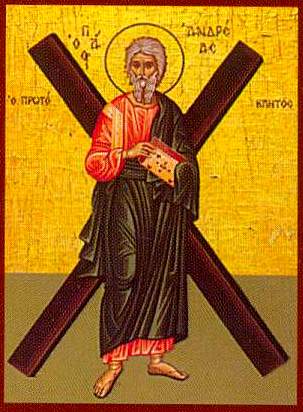
Saint Andrew the Apostle (Greek: ‘Ανδρέας, Andreas; early first century—mid to late first century AD), called in the Orthodox tradition Protokletos, or the First-called, is the brother of Peter the Apostle. The name “Andrew” (from Greek : “ανδρεία”, Andreia, manhood, or valour), like other Greek names, appears to have been common among the Jews from the second or third century BC. No Hebrew or Aramaic name is recorded for him.
For November 30th, 2008, the feast of St. Andrew the First-called Apostle, Fr. Michael Varlamos reads the life of the saint in lieu of the sermon at the Assumption Greek Orthodox Church in St. Clair Shores, MI.
The New Testament records that Andrew was the brother of Simon Peter, by which it is inferred that he was likewise a son of Jonah, or John.[Mt. 16:17] [Jn. 1:42] He was born in Bethsaida on the Sea of Galilee.[Jn. 1:44] Both he and his brother Peter were fishermen by trade, hence the tradition that Jesus called them to be his disciples by saying that He will make them “fishers of men” (Greek: ἁλιείς ἀνθρώπων, halieis anthropon). At the beginning of Jesus’ public life they occupied the same house at Capernaum.[Mk. 1:21-29]
The Gospel of John teaches that Andrew was a disciple of John the Baptist, whose testimony first led him and John the Evangelist to follow Jesus.[Jn. 1:35-40] Andrew at once recognized Jesus as the Messiah, and hastened to introduce him to his brother.[Jn. 1:41] Thenceforth, the two brothers were disciples of Christ. On a subsequent occasion, prior to the final call to the apostolate, they were called to a closer companionship, and then they left all things to follow Jesus.

The new church of St. Andrew
The new church in the city of Patras, in a Byzantine style, was founded in 1908 by King George the I, and it was consecrated in 1974 by Metropolitan – Bishop Nicodemus. The Church of St. Andrew of Patras is the largest church in the Balkans, and it can fit inside a total of 5,500 faithful.

The old church of Patras
Right on the spot where St. Andrew was martyred – the old city of Patras, a new basilica was built over the ruins of a former Byzantine basilica (erected over the ruins of an ancient Greek temple) destroyed by the Turks.

In the gospel Andrew is referred to as being present on some important occasions as one of the disciples more closely attached to Jesus.
Eusebius quotes Origen as saying Andrew preached in Asia Minor and in Scythia, along the Black Sea as far as the Volga and Kiev. Hence he became a patron saint of Ukraine, Romania and Russia. According to tradition, he founded the See of Byzantium (Constantinople) in AD 38, installing Stachys as bishop. His presence in Byzantium is also mentioned in the apocryphal Acts of Andrew written sometime during the second century. This diocese would later develop into the Patriarchate of Constantinople. Andrew is recognized as its patron saint.

Images from inside the Monastery of St Andrew, Romania

The cave of St Andrew, Romania


The Kievan hill where St. Andrew is said to have erected the cross is commemorated by the cathedral dedicated in his name
Andrew is said to have been martyred by crucifixion at Patras (Patrae) in Achaea. Though early texts, such as the Acts of Andrew known to Gregory of Tours, describe Andrew bound, not nailed, to a Latin cross of the kind on which Christ was crucified, a tradition grew up that Andrew had been crucified on a cross of the form called Crux decussata (X-shaped cross) and commonly known as “Saint Andrew’s Cross”; this was performed at his own request, as he deemed himself unworthy to be crucified on the same type of cross on which Christ was crucified.
Remaints of the cross St. Andrew was crucified on, Patras – Greece

The precious head of St. Andrew, Patras – Greece

Andrew is the patron saint of Patras. According to tradition his relics were moved from Patras to Constantinople. Local legends say that the relics were sold to the Romans. The head of Andrew, considered one of the treasures of St Peter’s Basilica, was given by the Byzantine despot Thomas Palaeologus to Pope Pius II in 1461. In recent years, by decision of Pope Paul VI in 1964, the relics that were kept in the Vatican City, were sent back home to Patras, where they belong. The relics, which consist of the small finger, part of the top of the cranium of Andrew and small parts of the cross, have since that time been kept in the Church of St Andrew at Patras in a special shrine, and are revered in a special ceremony every November 30.
Photos from inside of the Church of St Andrew, Patras – Greece


The relics of the Saint in the Church of St Andrew, Patras, Greece
Taken from HOMILY SIX – TO ENCOURAGE FASTING
by Saint Gregory Palamas
(INCLUDING A BRIEF WORD ON THE ORIGIN OF THE WORLD)
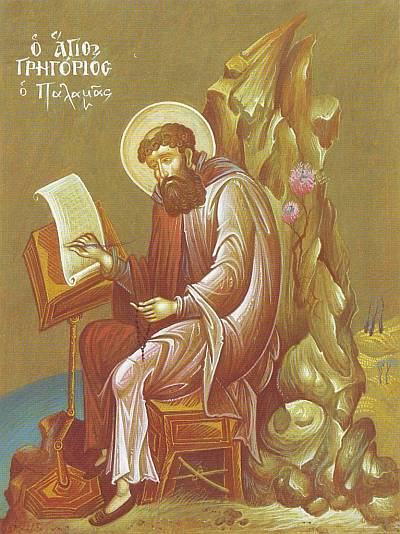
THE INVISIBLE SERPENT, the originator of evil, is inventive, versatile and extremely skillful in contriving wickedness. He has means to hinder our good purposes and actions as soon as they begin. But if he fails to prevent them initially, he sets up other devices by which he can render them useless once they are underway. If he is unable to make them worthless when they are half way to completion, he knows other tricks and ways to invalidate them even once they are finished, and makes them a source not of reward but of harm to all but the most careful. First of all he points out how laborious and difficult to accomplish virtue is. In this way he fills us with laziness and despair, as though we were attempting difficult and impossible things and were therefore incapable of putting our intentions into action. Then he engenders disbelief in the rewards which God has promised to those who struggle.
2. But we, brethren, should rise above this trap by our soul’s courage, eagerness and faith. We should bear in mind the fact that just as the earth cannot yield worthwhile fruit without labor, so the soul cannot acquire anything which pleases God or leads to salvation without spiritual struggles. But while it is possible to find earth which is unsuitable for cultivation, every human soul is naturally suited to virtue. As we are all unavoidably condemned, however, by the judgment given against our forefather, to live by labor and toil, let us turn necessity into an honor and willingly offer to God what is ours not by our own will. Let us give up transitory things in exchange for things that endure, and receive what is beneficial in exchange for what is harmful, transforming short-lived toil into a means to gain eternal ease. If we labor here for the sake of virtue we shall certainly attain to the rest promised in the age to come. He who promised is trustworthy and is at hand to help all who readily take on the struggle for virtue. If He who can do all things gives us His help, is anything impossible to achieve?
3. When we remember this and eagerly apply ourselves to virtuous actions, the evil one, knowing that nothing can be good unless it is done in a good way, strives to persuade us not to accomplish any good work with the object of pleasing God or of winning His approval, but to look for other people’s approval. By this means he can deprive us of our reward from God and of all spiritual and heavenly honors. Let us frustrate these efforts of his by considering the great recompense stored up for those who live as God pleases, and how insignificant other people’s approval is. Not only is it not worth mentioning in comparison with the great and holy glory to come, but it is also insufficient reason to neglect and waste our flesh.
4. Even after suffering this defeat, the originator of evil undermined us with pride, the last and worst abyss. He suggests conceited thoughts and persuades us to boast as though we had managed to be virtuous through our own ability and intelligence. But let us remember that the Truth says, “Without me ye can do nothing” (John 15:5), and fend off all the evil one’s schemes. Let us do good works in a good way, with appropriate humility. If someone has a jar of precious perfume, whether he pours it out on to dung, or pours dung into the jar, he ruins and destroys the perfume. Be aware that, in the same way, whether someone rejects and discards virtue by his inaction, or mixes evil with his virtuous actions, he equally ruins and destroys virtue.
5. I am speaking to your charity on this subject in this present season of fasting, so that we may observe it together for our own sake unalloyed with anything evil. Fasting was of no benefit to that Pharisee in the Gospel, even though he always fasted two days a Week, because he had adulterated it with pride and condemnation of his neighbor (Luke 18:11-12). Not that this means fasting is unprofitable. Moses, Elijah and the Lord Himself showed how beneficial it is for those who fast properly in a way pleasing to God.

6. Moses fasted for many days. Awaken your minds, I entreat You, and lift them up at this opportune time, in company with Moses when he went up the mountain towards God. In this way may you start off afresh on your ascent, and be lifted up together with Christ, who did not merely go up a mountain but up to heaven, taking us with Him. Moses fasted for forty days on the mountain and according to the Scriptures he saw God, not darkly but face to face (Exod. 24:18). He talked to Him as someone would speak to his friend (Exod. 33:11, Deut. 34:10). He learnt from God and taught everyone about Him: that He is He Who eternally Is (Exod. 3:14) and will never cease to be, that He summoned what did not exist into existence, brought all things out of non-being and will not let them fall back into non-existence. In the beginning He brought the whole visible creation out of nothing all at once, just by a nod and His will. “In the beginning”, it says, “God created the heaven and the earth” (Gen. i:i), not empty of course, nor without all that lies between them. The earth was interspersed with water, and both were full of air, animals and plants of various kinds, whereas the heavens were full of the various lights and fires, from which the universe is formed.
7. So then, “in the beginning God made heaven and earth”, as matter able to endure anything and strong enough to bear everything, rightly thereby dealing a blow from a distance to those who falsely hold that matter existed independently beforehand. Then He developed the world and embellished it. In six days He assigned to each of His creatures which made up His world its own due order. By His command alone He made the distinction between things, as if He were drawing out different kinds of treasure stored up in secret. He disposed and composed all things in complete natural harmony between themselves, each in relation to all, and all in relation to each. He surrounded the motionless earth, as a central point, with the higher circle of the perpetually moving heavens, holding them it, place by means of what lies between, all according to His wisdom, that the universe might stay stable while in motion. When the heavenly bodies all around were moving unceasingly and at great speed, the motionless earth had of necessity to take its place at the centre, its stability counterbalancing the motion, test the sphere of the universe roll off its course.
8. When the great Craftsman had assigned to each of the two boundaries of the universe its place, He made fast and set in motion this whole orderly world. He allotted to everything between heaven and earth its own properties. Some of His works He placed aloft and ordered them to move along a high course, going round at the same time as the upper boundary of the universe with beautiful regularity for ever. Such heavenly bodies are light, highly active and can be turned to the advantage of what lies below. They are wisely set very high above the central point so that, turning all around, they can sufficiently disperse the earth’s excessive coldness, while their own extreme heat is contained in its place. In a way they can also restrain the excessive speed of the upper heavenly limits by themselves moving in the other direction, and they keep these limits in place by their counterbalancing orbit. They provide us with the great benefits of distinct annual seasons, a means of measuring periods of time and, to those who are able to understand, knowledge of God who created, arranged and ordered them.
9. So some of His works He set spinning and dancing round in mid-air in the upper regions, both for the sake of the world’s beauty and to bestow a variety of benefits. Others, those which are heavy and have a passible nature, he put low down round the center. By their nature they come into being and pass away, are distinguishable from, yet comparable with, one another. When they suffer change they become more serviceable. He laid down an order for those creatures and how they relate to each other, that the whole might truly be called a world of perfect order.
10. At the creation first one thing was brought into existence, then another, then another and so on in turn. Last of all came man (Gen. 1:26), who was worthy of God’s greater honor and consideration both before and after his creation. All the visible world was made before him for his sake. Immediately after the foundation of the world, before he existed, the kingdom of heaven was made ready for him. A divine Counsel concerning him preceded him, and he was created by God’s hand and in His image. He did not take his whole being from matter or the visible world, like the other living creatures did, but only his body. His soul he took from the heavenly realms, from God Himself when He breathed fife into him in a way that defies description (Gen. 2:7). Man was a great wonder surpassing all else, towering above everything, superior to all. Man was capable of knowing God, as well as receiving Him and declaring Iiim, and was most certainly the highest achievement of the Creator’s sublime majesty. He had paradise for his home, specially planted by God (Gen. 2:8ff). There it was his lot to have sight of God, speak to Him face to face and receive a counsel and commandment from Him concerning the fasting appropriate to that place (Gen. 2:16-17). If he kept and observed this, he would remain free from death, toil and pain for ever.

11. Alas, he chose the treason of the serpent, the originator of evil, in preference to this commandment and counsel, and broke the decreed fast. Instead of eternal life he received death and instead of the place of unsullied joy he received this sinful place full of passions and misfortunes, or rather, he was sentenced to Hades and nether darkness. Our nature would have stayed in the infernal regions below the lurking places of the serpent who initially beguiled it, had not Christ come. He started off by fasting (Matt. 4:2, Luke 4:2, cf. Mark 1: 13) and in the end abolished the serpent’s tyranny, set us free and brought us back to life, as Moses foretold (Deut. 18:15, 18-19, Acts 3:22; 7:37). After fasting on the mountain Moses received tablets, the work of God (Exod. 31:18), and later received again, on a second set of tablets, the law written by the finger of God (Exod. 34:1-4). He instructed the holy nation in the law and by his work he hinted at, and showed a glimpse of, Christ’s future ministry. As Moses appeared as the liberator and savior of Abraham’s race, so later Christ did the same for the whole human race.
12. Elijah, when he too had fasted forty days (I Kgs. 19:8), saw the Lord on the mountain, not in fire, as the elders of Israel had earlier (Exod. 24:9-10, Deut. 5:23), but passing beyond the fiery vision by his God-pleasing fast, he saw the Lord in the sound of a light passing breeze (I Kgs. 19:12 LXX). He had approached more closely to our Lord’s words, “God is a Spirit: and they that worship him must worship him in spirit and in truth” (John 4:24). For the sound prefigured the Truth and the preaching of Him who is Truth Itself, which rang out round all the ends of the earth, and the passing breeze prefigured the Spirit and grace.
13. From this vision while fasting Elijah also received power to anoint a prophet in his stead and bestow upon him a double portion of the grace he possessed, and to mount up above the earth in mid-air (2 Kgs. 2:9-11). This pointed clearly towards Christ’s ascension from earth to heaven which was to happen later (Acts 1:9-11). While Christ Himself was fasting in the wilderness, He defeated our tempter by force and took away his power against mankind (Matt. 4:1-11, Mark 1:13, cf. Luke 4:1-13). Having at last put down his tyranny, he set our nature free and handed him over for sport to all those willing to live according to His Gospel. In this way He fulfilled the words of the prophets and by His works inscribed grace and truth upon the symbolic events which took place in ancient times.
14. You see the benefits of fasting, and how it has made us worthy of so many great gifts? Even from its opposite, unlimited eating and self-indulgence, it is possible to see the advantage of fasting. For the last two weeks our city was given over to gluttony and lack of self-restraint, and straight away we had troubles, shouting, fights, disturbances, shameless songs and obscene laughter. But this week when the fast came it made everything more honorable. It took us away from frivolity’s expensive cares, stopped us tolling for the sake of our useless stomachs, set us instead to works of repentance and persuaded us not to labor for the food which perishes but for the food which endures to eternal life.
15. Where now are the slaughter of animals, the aroma of roasting meat, the variety of sauces and the cooks’ best endeavors? Where are the men who run around the streets and pollute the air with their impure voices? Where are those who beat the drum and make music around houses and tables, and their devotees who join in with applause and eat their fill of the food set before them to the accompaniment of kettledrums and flutes? Where are those who spend their days and nights at parties, who are always looking for places to drink, who keep each other company in drunkenness and the shameful acts that result from it? Once the fast was proclaimed all these evils went away and all things good took their place. Instead of disgusting songs, mouths now sing holy psalms. Instead of obscene laughter, there is salutary sorrow and tears. Instead of undisciplined outings and wanderings, everyone takes one and the same way to Christ’s Holy Church. If unlimited eating produces a dense swarm of sins, fasting is the root of all virtues and the foundation of God’s commandments.

16. Lack of self-control is actually an evil both ancient and modern, though it did not precede its antidote, fasting. By means of our forefathers’ self-indulgence in paradise and their contempt for the fast already in existence there, death entered the world. Sin reigned and brought in the condemnation of our nature from Adam until Christ.
The flood covered the whole earth because of the self-indulgence of Adam’s descendants in this world of ours and their disdain for the chastity which came before. In those days God said to Noah, “My Spirit shall not abide in these men, for they are flesh” (cf. Gen. 6:3 LXX). The deeds of those who are flesh are none other than unlimited eating, drunkenness, sensual pleasure and the evils that spring from them. Because of the abominable depravity and self-indulgence among the men of Sodom, fire fell on them from heaven (Gen. 19:24). “Behold”, says the prophet Ezekiel, “this was the iniquity of the men of Sodom, in fulness of bread they committed abomination” (cf. Ezek. 16:49-50). By means of this abomination, ignoring human nature they fell into unnatural unions. What deprived Esau, Isaac’s firstborn, of his birthright and his father’s blessing? Of course it was lasciviousness and an unreasonable demand for food (Gen. 25:25-34; 26:34-35, Heb. 12:16). Why were Eli’s sons condemned to death, and why did he meet a violent death at the news of the death of his children, whom he had not disciplined with proper care? Surely it was because they took the meat from the cauldrons before the time and used it (1 Sam. 2:12-17; 4:11, 17-18). Also, the whole Hebrew nation, while Moses was fasting on the mountain for their sake, were indulging themselves to their own detriment. They ate and drank and rose up to play, as the Scripture says (Exod. 32:6), and their sport was worshipping an idol, for it was then that the incidents surrounding the fashioning of the calf took place among them.
17. Sensual pleasure causes ungodliness as well as sin, but fasting and self-control result in the fear of God as well as virtue. Fasting must be accompanied by self-control. Why? Because eating our fill, even of humble foods, is a hindrance to the purifying mourning, godly sorrow and contrition in our souls, which bring about unswerving repentance leading to salvation. For without a contrite heart we cannot really lay hold of repentance. It is the restriction of self-indulgence, sleep and the senses according to God’s will that crushes our hearts and makes us mourn for our sins.
18. When that rich man in the Gospel said to himself, “Eat, drink and be merry” (Luke 12:19), the wretch made himself fit for the eternal flames and unfit for this present life. Let us, on the contrary, brethren, tell ourselves to be temperate, to fast, to keep watch, to be restrained, to be humble and to suffer hardship for our salvation. Then we shall finish this present life in a good way pleasing to God and inherit the blessed life without end.
19. May we all attain to this by the grace and love towards mankind of our Lord Jesus Christ, to whom belong glory, might, honor and worship, together with I lis Father without beginning and the life-giving Spirit, now and for ever and unto the ages of ages. Amen.

(From: Saint Gregory Palamas: The Homilies, trans. Christopher Veniamin, Mount Thabor Publishing, Waymart PA, 2009, pp 42-48)
Source and more on Orthodox Fasting
Saint Dimitri the New (Basarabov)

Saint Dimitri the New (Basarabov) lived in the 13th century and little is known about his life. He was born in the village of Basarabov, located on the banks of the River Lom, near the town of Russe. A shepherd in his early years, it is said that St Dimitri had later became a monk, dedicating himself to fasting, prayers and vigils. For his humble life, God entrusted him with the power to work miracles. The pious Dimitri knew the moment of his death beforehand, and choose the place of his final rest between two stones that were gradually covered by the river. The place of his rest was unknown until a sick child had a revelation when the pious Dimitri appeared in her dream and said: “If your parents would take me out of the water, I will heal you!”
(1st Chant from the Kanon of St. Dimitri the New, Romanian)
A ray of light had appeared for quite some time at the site where the holy relics were found, leading people to initially believe that a treasure was hidden in that place.
Acting at the girl’s advice, they searched the place and found the relics of pious Dimitri, glittering as gold. The saint’ body was taken to the village of Basarabov. Between 1769 and 1774, during the Russian-Turkiss war, the relics were brought to Romania with the intention of being sent to Russia.
However, Metropolitan Grigorie (Gregory) of Walachia, insisted that they should be given to the Romanian people as a gift for the sufferance they endured during the war. The relics were taken in great procession to the Patriarchal Cathedral of Bucharest.
The saint’s right hand was sent to Kiev, where it has been preserved to this day. The Synod of the Romanian Orthodox Church, had great devotion to Saint Dimitri the New and starting with 1950, the saint was venerated nationwide and recognized as the patron saint of Romania’s capital city.
The Monastery of Saint Dimitri the New
The Monastery of Saint Dimitri Basarabov was founded over the cave where Saint Dimitri the New lived his ascetic life. The Monastery is located near the town of Basarabov, Bulgaria.

The village of Basarabov, initially located 3-4 km from the river Danube, was moved slightly to Ivanovo, near the cave where Saint Dimitri lived.

Located in the picturesque valley of the Lom river, the Basarabov Monastery, is the only monastery in Bulgaria carved in the rock and inhabited since its establishment.

Where river Lom meets the Danube, climbing to Ivanovo, the pilgrim will encounter more then 300 caves dug in the rocky side of river. Almost 40 of these caves were transformed into small churches where Divine Liturgy was served for several hundred years. Many wall frescoes of the original caves have lasted until today. The monastery and the caves of Ivanovo are part of UNESCO patrimony.
The Monastery of Saint Demetrius Basarabov — Brief History
The Monastery of St Dimitri the New was founded by the family of Basarabs and was initially under the care of John the Basarab, and first ruler of Romanian Country.

The present monastery of St. Demetrius was built in 1865. It consists of a church, built in the cave of St. Dimitri, and some cells carved in the rocks nearby.

The Monastery was burned down during the Russian-Turkish war. At that time more than 60 valuable icons from the church were stolen. The village of Basarabov was completely destroyed and the relics could not longer remained in the ravanged church.

The earliest historical evidence about this Monastery dates back to the XV century, in some of the tax records of the Ottoman Empire. An extensive description of the property owned at that time by Vlach leader Ivanko Basarab, the father of Tsar Ivan Alexander – is found in one of these registers, called “Timar” and it’s the oldest written record where the name of the town Basarbov is mentioned.
In 1911, a Committee of historical vestiges was established at the National Museum of Archeology in Sofia. The main task of this committee was to develop an archaeological map for the whole country of Bulgaria.
A Czech pilgrim who took several scientific trips to Bulgaria between 1887 and 1892, was called to be part of the committee. In 1912, Skorpil went on a trip on the river Lom, and at that time he would visit and describe the famous monastery of Basarbov.

Because of the Turkish rules in Bulgaria, it is unknown when the monastery was abandoned by the archaeologists.
The future bishop of Smolyan, Father Tikhon, took care of Basarabov monastery around 1919.
A new committee having the task of raising money to re-build the cells was established in 1937. The monastery cells were finished and blessed on May 14, 1937, but have survived only until 1940, when a flood destroyed the entire building.
Monk Chrysanthos, who settled here from 1937 until 1961, started to raise donations for the restoration of damaged cells. Thus, in less than one month, he gathered enough money to raise two cells near the church and were finished on August 30, 1940.


The new church will retain the iconostasis – carved in wood in 1941. A large icon of Saint Dimitri the New standing up, depicts his wonders. The icon bares an inscription in Cyrillic Greek and Romanian languages.

The monastery also bares the cell and burial place of father Chrysanthos, as well as the remains of other monks that struggled in this place.
Saint Dimitri the New (Basarabov)
Some researchers believe that the new Saint Dimitri of Basarabov have lived during the flourishing of hesychasm, while others believe that he lived in the XII century. Paisius of Hilandar recorded in his chronical that St. Dimitri is a recent saint of our times because he was still living in 1685. In a copy of the Slavo-Bulgarian chronic of monk Panteleimon from Russe, it is said that St. Dimitri lived in the eighteenth century and was buried in the Monastery of Basarabov.
The saint nationality is not clear, as in the eighteenth century many villages in tha region of Russe had mixed population.


According to Paisius of Hilandar and his famous book “the Slavo-Bulgarian History”, Saint Dimitri the New led the simple life of a layman/ peasant. In the notes of Nicholas Nemtov teacher (1898) in Basarabov, it is mentioned that Saint Dimitri attended the Church of St. John, every Sunday and holiday, and the rest of the days he was watching the village’ cows, receiving only bread and water, and only from the wealthy people of the village.
Saint Dimitri will later become a monk in the Monastery of Basarab founded in the outskirts of his village. Teacher Nemtov also describes how the relics of St. Dimitri Basarabov were discovered. It is said that a young maiden from the village of Cherven Voda lost her sight. One night, she was dreaming that she went to the monastery of Basarabov, was washing her face with water from the fountain of St. Dimitri, and regained her sight.

The young girl tells her parents about the dream and decided to go to Basarabov. Arriving at dawn, she remained overnight with her parents, wanting to wash with water from the fountain the next early morning. But at night, having great eye pain, the girl went to the fountain, washed and regained her sight. Looking over the river Lom – passing in front of the monastery, she saw several lit candles and torches, and in the water the holy relics of Saint Dimitri shining as gold.


The girl’s father is called, but he does not see anything. The next day, the body of the saint is found and removed from the river by the priests of Russe. The holy relics of St. Dimitri are taken first to the city of Russe, but the oxen pulling the cart with his relics stopped in front of his father’s house. A church will be built here baring the name of the saint.
The tradition also tells us how the Turks during an attack, in search for a treasure, unearth the saint relics. Finding the relics of St Dimitri, the turks threw then into the river Lom, where they remained hidden between the shore and the rocks, for 33 years until they were found by a pious Christian. They were taken to Basarbov village, where they have worked countless miracles.

In a miracle recorded before the relics were to be taken to the Metropolitan Cathedral in Bucharest, it is said how a Turk tried to steal a silver candle at night from the Church of St. Dimitri. Suddenly his legs became paralyzed and the turk will remained until the next morning in front of the shrine with the holy relics.
During the Russo-Turkish War (1768-1774), his holy relics were transported to Bucharest by General Peter Saltykov, and placed with great devotion and joy in St. Constantine and Helen’ Patriarchal Cathedral, where they are preserved until today.
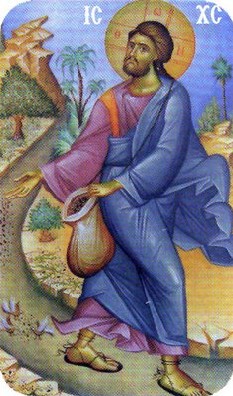
Sunday of Luke 8:5-15
and of Holy Fathers from the 7th Ecumenical Council of Nicaea
350 holy Fathers of the Seventh Ecumenical Council, which gathered in Nicaea in 787 under the holy Patriarch Tarasius and during the reign of the Empress Irene and her son, Constantine Porphyrogenitus, to refute the Iconoclast heresy, which had received imperial support beginning with the Edict issued in 726 by Emperor Leo the Isaurian. Many of the holy Fathers who condemned Iconoclasm at this holy Council later died as Confessors and Martyrs for the holy Icons during the second assault of Iconoclasm in the ninth century, especially during the reigns of Leo the Armenian and Theophilus.
“In this parable, our Savior creates four human typology. The first one represents the careless man. A mystical author and philosopher Sir Kierkegaard, called this type the wing man, or the taster understanding those wondering from flower to flower, seeking the joy of this earthy life and ending with their wings broken and trapped into the dust. These are people who reject God’s word but allow themselves to be dragged by all sorts of ideological, Gnostic or philosophical ideas. They have no stability and are berried by all the wrong teachings of this world; like a wall on which is written all the false ideas of the present and past times. Let us be attentive and reflect who among us is like the earth in which the seed falls but bear no fruit?
The second category is (represented by) those who hear the word of God, receive it with joy, but it is enough for one shadow to overcome them. It is sufficient for one disaster to strike, one persecution as it took place and it is still unfolding in our world today – especially in America where the persecution is very subtle and insidious – for them to be lost. And in many aspects, this is perhaps more dangerous than communism, when we knew who was (doing) good and whom evil. It was as the white and black. Now, we do not know where good and wrong is. Everything is gray shaded. So it is Europe, the “United Europe”. And we identify with those who hear the word of God, receive It and are joyful, then a tribulation strikes, or the hot sun… (cf. Luke. 8: 6) as the parable says. The hot sun warms and dries the soil and the seed from our soul, dies.
You know that in communism, during the religious persecution, those who were patriots had separated easily from the traitors. Some had failed, others had compromised or committed evil, while others had suffered and if they haven’t been arrested, they resisted silently under grounds, praising God to help them in this troubled life. I wondered sometime: … how many people back then, had not compromise religiously?
And I was moved to see in the church, how people raised their arms to God screaming loudly Lord, have mercy on me! while I was reading the prayers for forgiveness and I was saying out loudly every name so that the Lord God may hear their prayers and send His mercy.
I was impressed to see such faith, which you do not find in the West. These spontaneous manifestations of the soul crying out to God.
But I was even more troubled when I saw that many of these people have a dual personality: in the church they are believers, they lit candles, they come and may or may not attend the whole service, but when they leave the church they become like beasts. Brother rises against his brother to fight for a piece of land… they deceive each other in many ways. This is a kind of doubled spirit.
In communism, this kind of duality was very different. Beck then many would listen to the Voice of Europe, went to church, but in public will cry that they do not believe and praised Ceausescu or others. This lie has been perpetuated for a long time.
Nowadays, a new form, more dangerous than before is being perpetuated in our country, because now we no longer fear any religious threat. Now, under the pressure of the times, or under the influence of many theories, or simply because it is convenient, some of us deny God and bring no fruit. Reflect on which one of us fit in this category, or we did not so long ago.
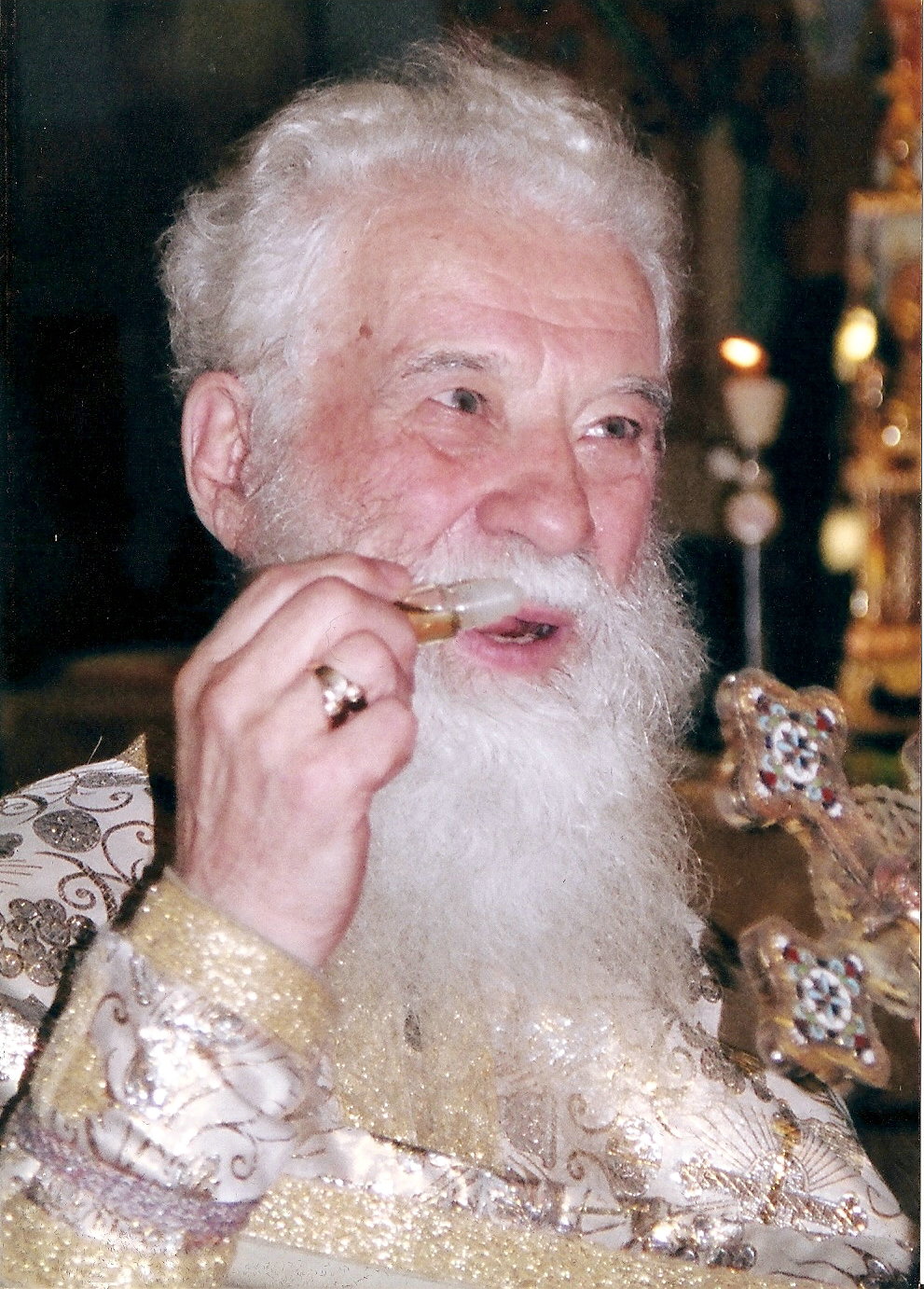
A third category of people are those dominated by passions. And they bear many, all sorts of human passions: fornication, drunkenness, greed, all those passions that make our heart a land filled with weeds, thorns and brambles. And even if the word of God touches us, even if we turn back to Him with love, our passions which we bared for sometime, are stronger than us. And this is because our repentance is not genuine! It’s just a moment of openness towards God which we do not immerse our heart in, we do not make of it the healing source for our soul, we opened for a time then we forget.
Our passions had flared within us stronger than the Call (to Christ) and the virtues that God sows into our heart. And we do not bring forth any fruit, and without fruit we are deemed for eternal punishment. Who among us can identify himself here?
The fourth category of people are those who hear the Word, endeavor in struggle, serving the Lord with joy, are looking to fertilize their spiritual soil, to understand more deeply the word of God; they come to church to confess and commune and do good to those around them, and become a light for the world. Some may struggle less, others more. God has given everyone a talent: to some He gave one talent, to other He gave three talents, and to another He gave five talents. Everyone got something and each of us must bring forth to God a gift equal to the gift he received. Him who got a talent, needs to bring one more. Him who received two talents, let him brings two more, and him who were given five, let him brings five more. He, who bears fruit this way, is truly one who heard the word of God and was fruitful.
And the Lord said also: “He who has ears to hear, let him hear.”
Look around you and within yourself and sincerely see where you are. If you have good intention and do not try to deceive yourself or others, acknowledge exactly where you stand. Then truly, when our Savior had said “He who has ears to hear”, you are those who properly understood.
And your sincere look of where you stand – in this typology that our Savior had created – will convinces me that from now on you will truly begin to serve Christ and to bring forth fruit. Even thought it may seem small, let us strive for it.”
(Taken from: Father George Calciu: “To serve Christ means suffering”, translated by EC)
Motto: (Lk. 6:24-30)
The Lord said to the Jews who had come to him, “But woe to you that
are rich, for you have received your consolation.
“Woe to you that are full now, for you shall hunger.
“Woe to you that laugh now, for you shall mourn and weep.
“Woe to you, when all men speak well of you, for so their fathers did
to the false prophets…

“The Beatitudes” with Elder Paisios of the Holy Mountain
(Taken from the Elder’ Sixth Epistle)
Sister Abbess Philothei, Your blessing,
Today, a kind of craziness took hold of me and I took the pencil, as does the madman who writes his outbursts on the wall with charcoal, and I sat down to write my own things on paper like one crazed, and, again, like a lunatic, to send them to you in writing. I am doing this latter craziness out of much love for my Sisters, that they might be edified, even if only a little.
The reason for the initial craziness was five letters, one after the other, from various parts of Greece on a variety of subjects. While the events described were great blessings of God, those who wrote to me had fallen into despair because they dealt with them in a worldly way.
After replying accordingly to their letters, I took the pencil like a madman, as I have said, and wrote this epistle. I believe that even a fifty-cent piece from your journeying brother will be something toward a flint for each one of the Sisters so as to light a little candle in her cell and offer her doxology to our Good God.
I feel great joy when every Sister, with her particular cross carries out the equivalent struggle with philotimo.
It is a small thing to give to Christ a heart equal in size and as luminous as the sun out of gratitude for His great gifts, and especially for the particular honour He showed us monks by conscripting us with personal summons to His Angelic Order.
A great honour also belongs to the parents who were thus made worthy of becoming related to God. Unfortunately, however, most parents do not realize this and, instead of being grateful to God, are infuriated etc., for they see everything in a worldly way, like those people I mentioned earlier, who became the reason for me to take the pencil and write everything that follows.

1. Blessed are those who loved Christ more than all the worldly things and live far from the world and near God, with heavenly joys upon the earth.
2. Blessed are those who managed to live in obscurity and acquired great virtues but did not acquire even a small name for themselves.
3. Blessed are those who managed to act the fool and, in this way, protected their spiritual wealth.
4. Blessed are those who do not preach the Gospel with words, but live it and preach it with their silence, with the Grace of God, which betrays them.
5. Blessed are those who rejoice when unjustly accused, rather than when they are justly praised for their virtuous life. Here are the signs of holiness, not in the dry exertion of bodily asceticism and the great number of struggles, which, when not carried out with humility and the aim to put off the old man, create only illusions.
6. Blessed are those who prefer to be wronged rather than to wrong others and accept serenely and silently injustices. In this way, they reveal in practice that they believe in “one God, the Father Almighty” and expect to be vindicated by Him and not by human beings who repay in this life with vanity.
7. Blessed are those who have been born crippled or became so due to their own carelessness, yet do not grumble but glorify God. They will hold the best place in Paradise along with the Confessors and Martyrs, who gave their hands and feet for the love of Christ and now constantly kiss with devoutness the hands and feet of Christ in Paradise.
8. Blessed are those who were born ugly and are despised here on earth, because they are entitled to the most beautiful place in Paradise, provided they glorify God and do not grumble.
9.Blessed are those widows who wear black in this life, even unwillingly, but live a white spiritual life and glorify God without complaining rather than the miserable ones who wear assorted clothes and live a spotted life.

10. Blessed and thrice blessed are the orphans who have been deprived of their parents’ great affection, for they managed to have God as their Father already from this life. At the same time, they have the affection they were deprived of from their parents in God’s savings bank “with interest”.
11. Blessed are those parents who avoid the use of the word “don’t” with their children, instead restraining them from evil through their holy life – a life which children imitate, joyfully following Christ with spiritual bravery.
12. Blessed are those children who have been born “from their mother’s womb” (Mt. 19:12) holy, but even more blessed are those who were born with all the inherited passions of the world, struggled with sweat and uprooted them and inherited the Kingdom of God in the sweat of their face (Cf. Gen. 3:19).
13. Blessed are those children who lived from infancy in a spiritual environment and, thus, tirelessly advanced in the spiritual life.
Thrice blessed, however, are the mistreated ones who were not helped at all (on the contrary, they were pushed towards evil), but as soon as they heard of Christ, their eyes glistened, and with a one hundred and eighty degree turn they suddenly made their soul to shine as well. They departed from the attraction of earth and moved into the spiritual sphere.
14. Fortunate, worldly people say, are the astronauts who are able to spin in the air, orbit the moon or even walk on the moon.
Blessed, however, are the immaterial “Paradise-nauts”, who ascend often to God and travel about Paradise, their place of permanent abode, with the quickest of means and without much fuel, besides one crust of bread.
15. Blessed are those who glorify God for the moon that glimmers that they might walk at night.
More blessed, however, are those who have come to understand that neither the light of the moon is of the moon, nor the spiritual light of their soul of themselves, but both are of God. Whether they can shine like a mirror, a pane of glass or the lid of a tin can, if the rays of the sun do not fall on them it is impossible for them to shine.
16. Fortunate, worldly people tell us, are those who live in crystal palaces and have all kinds of convenIences.
Blessed, however, are those who’ve managed to simplify their life and become liberated from the web of this world’s development of numerous conveniences (i.e. many inconveniences), and were released from the frightening stress of our present age.

17. Fortunate, worldly people say, are those who can enjoy the goods of the world.
Blessed, however, are those who give away everything for Christ and are deprived even of every human consolation for Christ. Thus it is that they manage to be found night and day near Christ and His divine consolation, which many times is so much that they say to God: “My God, Thy love cannot be endured, for it is great and cannot be fit within my small heart”.
18. Fortunate, worldly people say, are those who have the greatest jobs and the largest mansions, since they possess all possibilities and live comfortably.
Blessed, however, according to the divine Paul, are those who have but a nest to perch in, a little food and some coverings99• For, in this way, they’ve managed to become estranged from the vain world, using the earth as a footstool, as children of God, and their mind is constantly found close to God, their Good Father.
19. Fortunate are those who become generals and government ministers in their head by way of heavy drinking (even if just for a few hours), with the worldly rejoicing over it.
Blessed, however, are those who have put off the old man and have become incorporeal, managing to be earthly angels with the Holy Spirit. They have found Paradise’s divine faucet and drink from it and are continually inebriated from the heavenly wine.
20. Blessed are those who were born crazy and will be judged as crazy, and, in this way, will enter Paradise without a passport.
Blessed and thrice blessed, however, are the very wise who feign foolishness for the love of Christ and mock all the vanity of the world. This foolishness for Christ’s sake is worth more than all the knowledge and wisdom of the wise of this world.
I beg all the Sisters to pray for God to give me, or rather take from me my little mind, and, in this way, secure Paradise for me by considering me a fool. Or, make me crazy with His love so I go out my self, outside of the earth and its pull, for, otherwise my life as a monk has no meaning. I became externally white as a monk. As I go I become internally black by being a negligent monk, but I justify myself as one unhealthy, when I happen to be so; other times, I excuse myself again for being ill, even though I am well, and so I deserve to be thoroughly thrashed. Pray for me.

May Christ and Panagia be with you,
With love of Christ, Your Brother, Monk Paisios
(“Precious Cross”, December 2, 1972).
 Christian Dogma
 Christian Martyrs
 Christian Orthodox Churches and Monasteries
 Christian Sermons and News
 Church's Teachings on Fasting
 Ecumenism – a Great Heresy
 Father George Calciu
 Life_a Sacred Gift form God
 Orthodox Saints and Church Fathers
 Spiritual Elders
 Daily Bible Readings
 Journey to Orthodoxy
 Listen to Ancient Faith Radio
 Orthodox Calendar of Feasts and Saints
 Orthodox Christian Mission Center
 Orthodox Institute
 OrthodoxChristianNetwork TV


Recent Comments